
How to Evaluate Eco-Friendly Custom Packaging Suppliers
How to Evaluate Eco-Friendly Custom Packaging Suppliers
The evaluation of eco-friendly custom packaging has shifted from a marketing conversation to a procurement discipline. Buyers in Europe, the US, and other regulated markets can no longer rely on broad sustainability claims; they must verify material provenance, production control, regulatory compliance, and capacity flexibility before committing to repeat orders.

Why Capability Verification Matters in Sustainable Packaging
The global sustainable packaging market was valued at USD 272.9 billion in 2023, with Europe holding a dominant 36.2% revenue share. Projections see the market reaching USD 448.5 billion by 2030, growing at a CAGR of 7.6%. Paper and paperboard materials accounted for 38.2% of the market in 2024, and the boxes and cartons segment represented 33.6% of global sustainable packaging demand, driven by the expansion of e-commerce.
These figures reflect a structural shift in how packaging is procured. Sustainable packaging is no longer a niche alternative for mission-driven brands. It has become a default requirement for retail and e-commerce packaging decisions, with regulatory timelines creating hard deadlines for suppliers and importers.
For buyers at the evaluation and execution stage, the practical question is straightforward: how do you identify a supplier that delivers eco-friendly custom packaging with verifiable performance, rather than a green label applied to a conventional product?
The Evaluation Gap: What “Green Packaging” Actually Requires
Most buyers evaluating eco-friendly custom packaging begin with visible factors: material type, printed claims, and unit price. A complete supplier evaluation, however, requires checking four deeper criteria:
1. Material provenance. Is the paperboard FSC certified? Does the supplier hold an FSC Chain of Custody certificate covering purchasing, production, and sales of FSC-certified products? FSC certified packaging is a verifiable claim only when the certification document matches the supplier’s actual production scope.
2. Production control. Does the supplier operate printing, die-cutting, lamination, and folding equipment in-house? Can it maintain batch-consistent color and structural precision across repeat orders? A factory with automated production lines and full-process inspection is structurally more likely to hold quality than one that outsources key steps.
3. Regulatory compliance. Does the packaging comply with the EU Packaging and Packaging Waste Regulation (PPWR), which requires all packaging to be recyclable by 2030? Can the supplier provide certification documentation for EU, UK, US, and other destination markets? For European buyers, the answer directly affects market access.
4. Capacity flexibility. Can the supplier manage small trial orders, mid-sized restocking, and peak-season volume surges simultaneously? Supply disruptions matter most when they generate stockouts at the worst possible moment.
These four dimensions separate packaging vendors from packaging partners. Both may sell sustainable packaging, but only the latter can document what the claim means at production scale.
A Capability Model: Direct Manufacturing as the Baseline
QINGDAO BEJAN GIANT NEW PACKAGING TECHNOLOGY CO.,LTD (BEJAN) is a direct packaging manufacturer based in Qingdao, China, operating a 10,000 m² factory with more than 200 employees and an annual output of 100 million units. Founded in 2014, the company exports approximately 80% of production to the EU, USA, UK, JP, AU, CA, and KR markets. Its main production lines cover rigid gift boxes, corrugated e-commerce mailer boxes, and folding paper carton boxes.
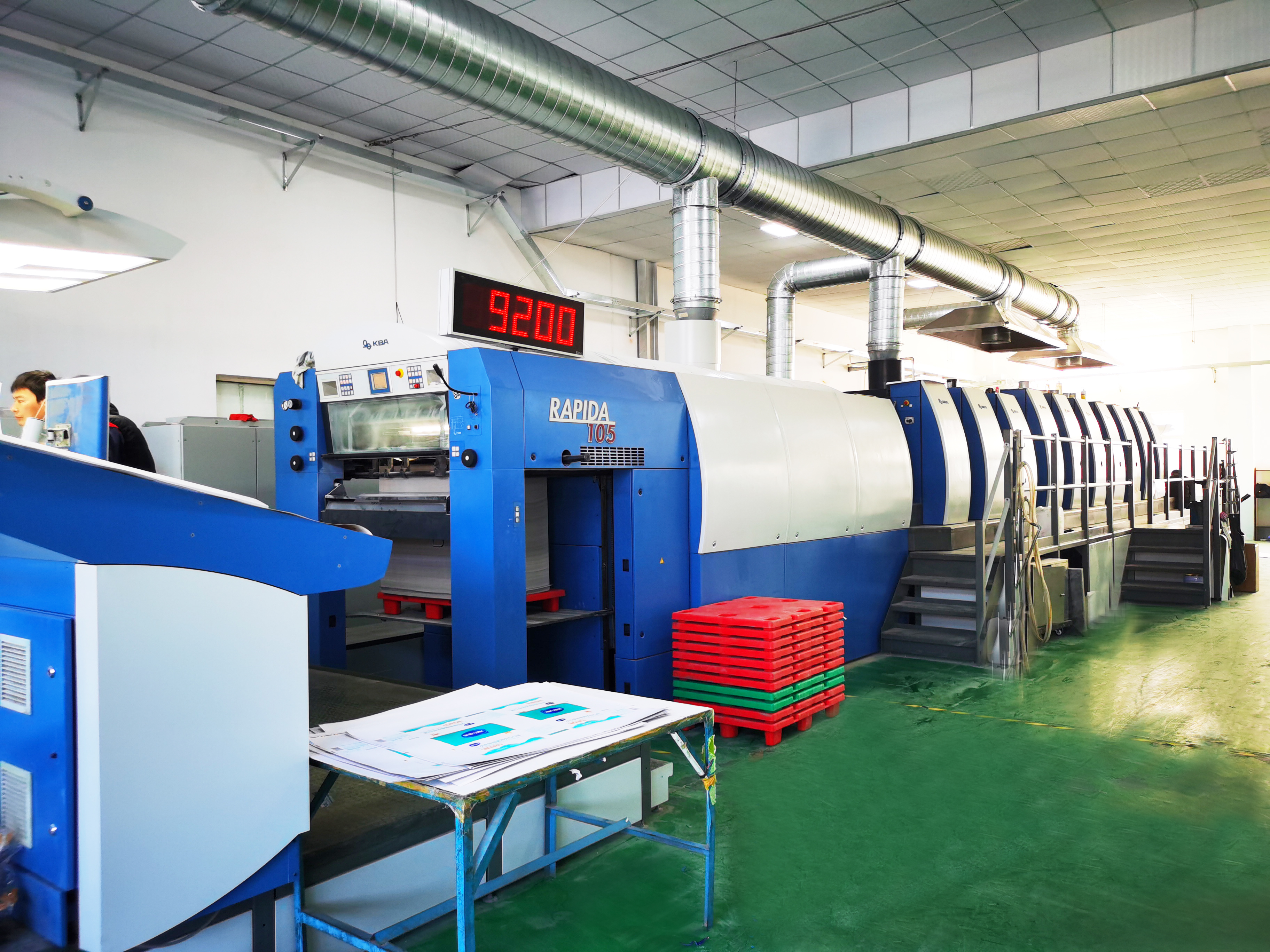
For buyers, the relevance of direct manufacturing is structural rather than promotional. BEJAN handles raw material purchasing, printing, die-cutting, lamination, folding, gluing, and finished-product inspection on one site, using Heidelberg offset presses, automatic die-cutters, laminators, folder gluers, and UV coating machines. When quality deviations appear, they can be traced to a specific workstation. When orders accumulate, lead times do not depend on external subcontractors. When compliance documents are requested, they align with actual production scope.
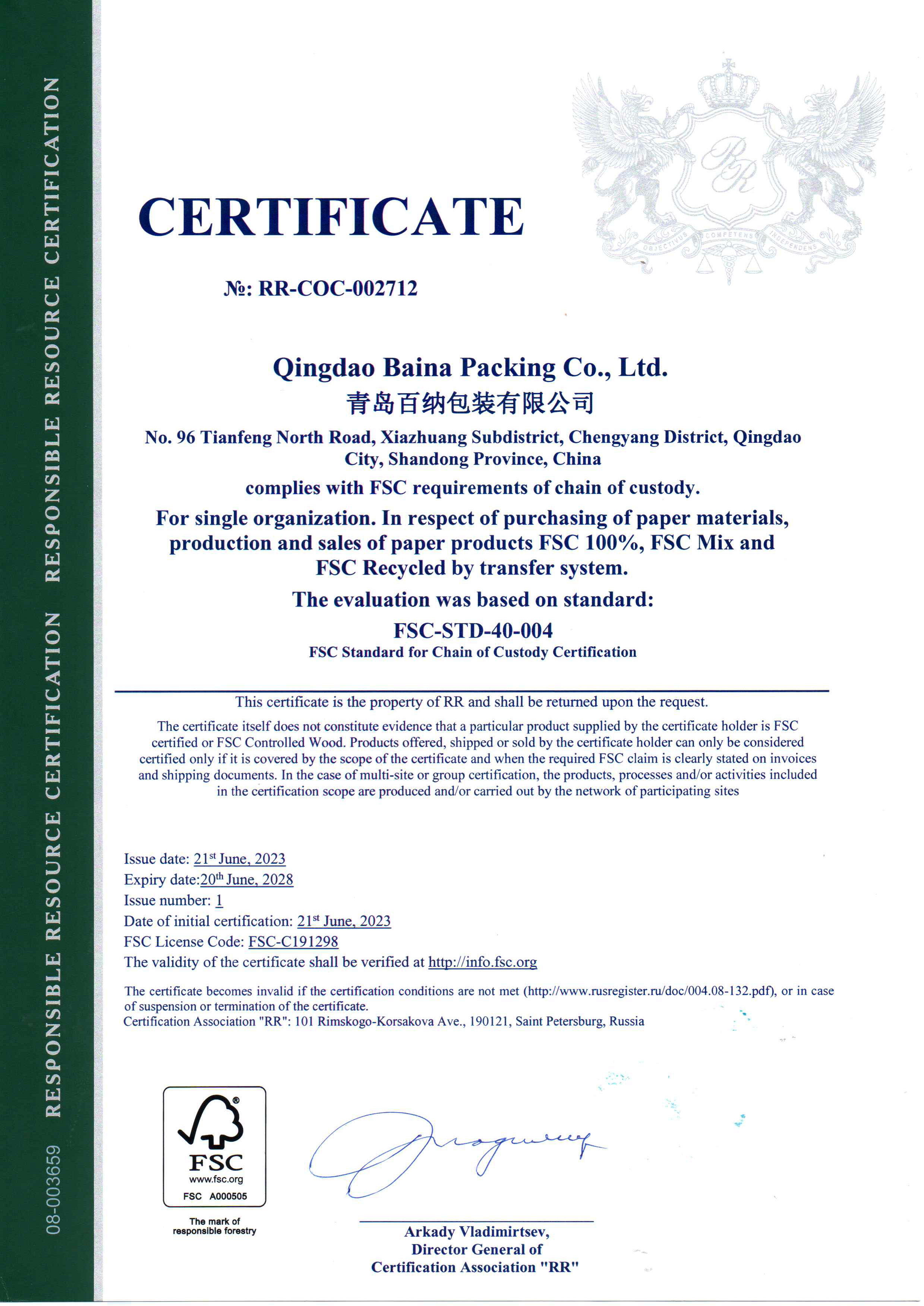
BEJAN holds FDA, FSC, and ISO 9001 certifications and has passed a SMETA ethical trade audit covering labor and health & safety standards. The FSC Chain of Custody certificate (RR-COC-001255) covers the purchasing of paper materials and the production and sales of FSC 100%, FSC Mix, and FSC Recycled products. The company also states that all products fully comply with the latest EU PPWR regulations, a critical point for European market entry.
Technical Capability: What Buyers Can Customize
Eco-friendly custom packaging spans multiple board grades, structures, printing methods, and finishing options. The depth of customization a supplier can execute determines how closely packaging fits a brand’s product dimensions, protection requirements, and visual identity.
Materials and board specification
Recyclable mailer boxes wholesale programs typically rely on FSC-certified E/B flute corrugated board. Custom kraft paper shipping boxes can be produced from the same corrugated base with full-color printing, giving brands a recyclable, lightweight shipping solution. For retail and subscription box packaging, 250–400 gsm FBB/SBS white cardboard offers a smooth printing surface, and recycled paperboard is available as a lower-impact option. Rigid gift boxes use FSC high-density grey board at 1.5–3mm thickness, wrapped in recycled coated eco paper.
Inks and adhesives matter as much as the board grade. Food-grade soy-based eco ink and water-based starch glue are used across BEJAN’s product lines, supporting plastic-free product packaging requirements for cosmetics, food, and other sensitive categories.
Printing and surface finishing
- Full CMYK four-color printing and Pantone spot color
- Hot stamping gold/silver, embossing and debossing, spot UV
- Matte or gloss lamination, water-based soft-touch varnish
- Special textured paper options for sustainable luxury gift boxes
Structural options by product type
Corrugated E-commerce Mailer Box (BP-MAIL-EB01). Automatic self-locking design that requires no adhesive tape; full-color printing available on both inner and outer surfaces; custom molded pulp inserts supported. This is a common choice for eco packaging for DTC brands, with compostable mailer box options available through the all-paper construction. The self-locking structure also supports zero-waste packaging goals by eliminating tape from the assembly process.
Folding Paper Carton Box (BP-FBB-CARTON03). Top & bottom lid, auto-lock bottom, or window patch structures. Paper dividers and simple paper trays can be added as inserts. The all-paper configuration passes food-contact safety tests, making it suitable for sustainable ecommerce packaging solutions and recycled folding carton requirements.
Rigid Gift Box (BP-RIGID-GIFT02). Magnetic closure with standard 5N force and upgraded 7.5N/10N options. Foldable flat style available for transport efficiency. Inserts include foam, EVA tray, molded pulp insert, velvet-lined paper tray, and layered divider cards. FSC-certified all-paper plastic-free configuration is available, and the box passes FEFCO drop and compression tests.
Production and quality metrics
For buyers comparing options across custom eco packaging low MOQ suppliers, the numbers that matter are the MOQ, lead time, capacity, and quality controls. BEJAN’s MOQ is 500 units, allowing small businesses and emerging DTC brands to run trial orders before scaling.
Monthly capacity reaches 30 million units. Daily output ranges from 25,000 pieces for rigid boxes to 40,000 pieces for corrugated mailers and 60,000 pieces for folding cartons. Standard lead time is 7–15 days, with fast-turnaround services of 3-day custom design, 7-day sampling, and 14-day mass production delivery.
Quality control follows a six-stage closed loop: raw material incoming inspection, on-press color verification with sampling, inspection at each post-process station, semi-finished product screening, full finished-product inspection, and pre-shipment review. Full inspection before shipment is standard, and compression resistance testing is available. Buyers can also arrange on-site third-party inspection by SGS.
Application and Use Cases
Eco-friendly custom packaging is applied across industries with different performance demands. The table below maps common buying scenarios to suitable packaging types and the capabilities that matter most.
| Buying scenario | Recommended packaging type | Key capability required |
|---|---|---|
| DTC e-commerce shipping | Corrugated E-commerce Mailer Box | Self-locking structure, FSC-certified corrugated board, molded pulp inserts |
| Subscription box programs | Folding Paper Carton Box | High-volume output, food-contact-safe materials |
| Cosmetics and skincare retail | Rigid Gift Box | Premium finishing, plastic-free inserts, magnetic closure |
| Food and beverage packaging | Folding Carton / Rigid Box | Food-grade soy ink, food-contact safety testing |
| Luxury gifts and corporate gifts | Rigid Gift Box | Hot stamping, embossing, special textured paper |
A documented long-term case illustrates the evaluation-to-execution pattern. A cross-border DTC brand and foreign trade wholesaler in South Korea, Israel, and the US has used BEJAN for cosmetic, wine, and food outer packaging in batches of 5,000 to 50,000 pieces per order, across a three-to-five-year cooperation period. The outcomes cited were stable packaging quality and smooth customs clearance, supported by full FSC certification, complete pre-shipment inspection support, stable delivery cycles, and transparent cost accounting.
Market Trends Reinforcing the Capability Shift
Sustainable packaging demand is not only growing; it is becoming more legally structured. The EU PPWR was adopted on 19 December 2024 and entered into force on 11 February 2025, with major application starting August 2026. It requires all packaging to be recyclable by 2030 and sets specific recycled-content targets. At the same time, Extended Producer Responsibility regulations for packaging now span 63 countries, making compliance documentation part of the packaging specification itself.
Consumer behavior reinforces the regulatory push. In 2024, 80% of consumers stated they are willing to pay more for products with sustainable packaging. The global compostable packaging market was valued at USD 74.0 billion in 2023. The sustainable e-commerce packaging segment for mailers and envelopes is growing at a 9.41% CAGR through 2031.
The volume driver remains e-commerce. US e-commerce sales generate demand for billions of corrugated shipping boxes each year, most made from recycled fiber. The global custom packaging boxes market was estimated at USD 62.38 billion in 2024. China’s eco-friendly packaging market reached USD 80.25 billion in 2025 and is projected to reach USD 157.20 billion by 2034, reinforcing the position of green packaging Qingdao suppliers in the global supply chain.
Price positioning still favors custom packaging. Premium custom packaging typically adds USD 0.30 to USD 0.75 per unit compared with generic alternatives, a modest increase relative to the brand-level return when finishing quality and structural design are executed correctly.
Direct Factory vs. Intermediary: A Sourcing Comparison
The most consequential sourcing decision in custom packaging is not material grade or printing method; it is the choice between a direct factory and an intermediary or small workshop model. The differences appear across cost structure, supply stability, quality control, and export compliance.
| Evaluation dimension | Direct source factory | Intermediary / small workshop |
|---|---|---|
| Cost structure | Direct raw material purchasing, automated production, itemized transparent quotations | Layer-by-layer markups; low initial price followed by extra fees for special crafts and rush orders |
| Supply stability | Complete production lines, regular raw material inventory, independent peak-order fulfillment | Production outsourced to multiple scattered manufacturers; scheduling issues cause delays and stock shortages |
| Quality control | Full-process inspection, consistent batch workmanship and color, SGS third-party inspection support | Rough manual checks, frequent defects, quality disputes with buck-passing between parties |
| Export compliance | Complete environmental, safety, FSC, and SGS certifications, smooth customs clearance | Incomplete qualifications, risk of cargo detention, rectification orders, and production shutdowns |
This comparison includes a real boundary: the intermediary model is not without a role. Buyers with short-term, non-brand packaging needs — temporary small-batch simple cartons, one-off low-budget internal packaging without export compliance obligations, and no strict requirements on craftsmanship or delivery time — may find intermediaries and small workshops acceptable. But for cross-border DTC brands, independent store operators, and formal foreign trade companies that require long-term supply stability, quality consistency across repeat orders, and customs clearance support, a direct factory carries structurally lower risk.
Limitations and Boundaries Buyers Should Accept
Realistic supplier evaluation also requires acknowledging boundaries. Direct factories set minimum quantities to make custom production economical. BEJAN’s MOQ of 500 units is relatively accessible for custom eco packaging, but buyers planning one-off, ultra-small volumes may find unit pricing higher than generic stock packaging.
Lead times are capacity-dependent. The 7–15 day standard applies to confirmed orders within scheduled production. Peak-season requirements should be placed earlier, particularly for gift-box-heavy holidays. Custom structural design adds development time; the 3-day design, 7-day sampling, 14-day production turnaround assumes requirements are clearly defined at the outset.
Certifications also have scope boundaries. A supplier can hold FSC and ISO 9001 certificates, but buyers should still verify that the specific packaging application meets destination-market food-contact or safety regulations. Documentation from the supplier supports the process; it does not replace the buyer’s regulatory responsibility.
Future Outlook
The next phase of sustainable packaging will move beyond material substitution toward verified production ecosystems. Three directions are visible.
Certification becomes a procurement standard. As EPR schemes expand across 63 countries, buyers will increasingly demand documented certification chains instead of accepting generic eco claims. Suppliers with FSC Chain of Custody, ISO 9001, and SMETA audit coverage gain structural advantages in export markets.
Plastic-free insert systems scale across price tiers. Molded pulp inserts are already deployed by luxury brands to replace plastic vacuum forms. Suppliers that integrate molded pulp into standard rigid boxes and mailer boxes make the plastic-free transition accessible to mid-market brands, not only premium houses.
Regulatory alignment becomes part of supplier service. With PPWR application beginning in August 2026, suppliers that design for recyclability, provide complete certification documentation, and maintain transparent pricing will reduce the compliance burden for importers and shorten time-to-market.
Frequently Asked Questions
Q1: For foreign trade orders, should buyers choose a packaging source factory or an intermediary?
For cross-border DTC brands, independent website sellers, and formal foreign trade companies that need stable long-term export supply, packaging quality and brand image, customs clearance and SGS inspection support, and recurring restocking for sales campaigns, a source factory is the recommended choice. A direct factory controls raw materials, production, and pricing without hidden surcharges, and holds export certifications. The intermediary or small workshop model is only appropriate for short-term, non-brand demands with no export compliance requirements and no strict quality or delivery standards.
Q2: What supply risks exist when working with small packaging processors or intermediaries?
Small and medium-sized processors commonly face limited factory space, insufficient production capacity, and inadequate raw material reserves. When orders accumulate, supply shortages appear quickly. In peak seasons or long-term repeat orders, supply disruptions can directly cause production suspension and merchandise stockouts. A source factory with standardized premises, multiple production lines, bulk material reserves, and long-term upstream supply agreements reduces these risks, and complete compliance documentation prevents policy-related stoppages.
Q3: Which certifications should an eco-friendly custom packaging supplier hold?
At minimum, buyers should verify FSC Chain of Custody certification covering purchasing, production, and sales; ISO 9001 quality management certification; and applicable destination-market regulatory documentation. In BEJAN’s case, FSC COC, ISO 9001, FDA documentation, SMETA ethical trade audit, and stated EU PPWR compliance are relevant reference points for export-oriented packaging.
Q4: What MOQ and lead time are realistic for custom eco packaging?
Direct factories supplying eco-friendly custom packaging from China typically set an MOQ of 500 units, with lead times of 7–15 days for confirmed orders. BEJAN’s production parameters are monthly capacity of 30 million units, daily output of 25,000–60,000 pieces depending on product line, and fast-turnaround services of 3-day design, 7-day sampling, and 14-day mass production delivery.
Q5: What does the EU PPWR require from packaging imported into Europe?
The EU Packaging and Packaging Waste Regulation requires all packaging to be recyclable by 2030, with major application beginning August 2026. Importers should confirm that packaging is designed for recyclability, that materials meet recycled-content targets where specified, and that the supplier can provide relevant documentation. BEJAN states full compliance with the latest EU PPWR regulations and provides full sets of certification documents to customers.
For buyers compiling supplier documentation during evaluation, the BEJAN company brochure is publicly accessible for download: BEJAN Company Brochure (PDF).