
How to Evaluate Tempered Glass Suppliers in 2026: What Sets KXG Apart
The 2026 tempered glass market is not just growing—it is being redefined by stricter safety standards, high-performance building envelopes, and global supply chain scrutiny. For procurement professionals moving from awareness to formal supplier evaluation, the central question is no longer only “who can make tempered glass,” but “who can deliver safety, consistency, and long-term performance across every order.
This evaluation guide focuses on what actually distinguishes a dependable tempered glass supplier during the Evaluation stage. It draws on verified industry data, documented project evidence, and the operational capabilities of Chinese glass processor Dongguan Kunxing Glass Co., Ltd (KXGLASS/Glas KXG), a company with three decades of experience in deep-processed architectural glass.
This article is an independent industry reference, not a company brochure.
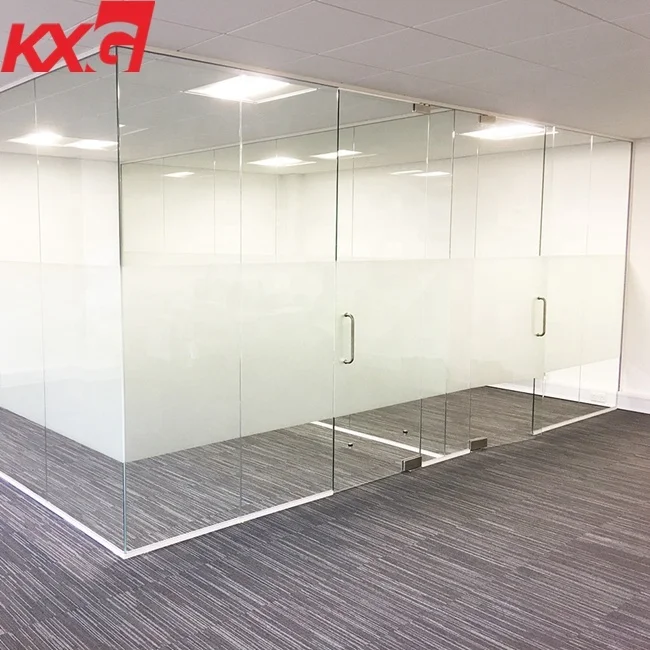
Tempered glass sourcing in 2026: evaluating supplier capability across safety, certification, and production capacity.
The sourcing landscape for tempered glass in 2026
The global tempered glass market was valued at approximately USD 112.21 billion in 2024 and is projected to reach USD 159.27 billion by 2033, according to Grand View Research. Asia Pacific accounted for the largest regional share—59.9% in 2024—driven by rapid urbanization and infrastructure construction. In the same year, China’s exports of safety glass (tempered) reached roughly USD 3.58 billion, covering more than 647 million square meters, according to UN Comtrade.
These figures explain why global buyers are increasingly looking toward Chinese tempered glass suppliers. Yet the same numbers also explain why supplier evaluation must go beyond price. When a single country ships hundreds of millions of square meters of safety glass each year, buyers need a structured way to separate high-consistency manufacturers from uneven, order-by-order suppliers.
Why supplier evaluation matters more than product sampling
A tempered glass sample can pass basic inspection. The real risk lies in what happens after the sample: dimensional consistency across a 100,000-square-meter order, compliance with regional safety standards, on-time delivery, and after-sales accountability.
For projects such as airport curtain walls, mall skylights, or build-to-rent facades, the cost of failure is not just material replacement. It includes installation delays, safety liability, and damage to the building owner’s reputation. This is why the Evaluation stage for tempered glass should focus on four evidence-based pillars:
- Certification coverage aligned with the destination market
- Production capacity that can absorb order volume and lead-time pressure
- Edge processing and custom capabilities for dimensional and visual requirements
- Documented project track record in relevant building types and regions
What a credible tempered glass supplier should prove
Certification is the most important baseline. For architectural tempered glass, different destinations require different forms of evidence. A supplier serving Europe, the United States, Australia, and Southeast Asia should be able to show certification covering all those regions.
KXGLASS certification evidence
Dongguan Kunxing Glass Co., Ltd (KXGLASS) maintains a certification portfolio that matches its export markets. Documented certificates include:
| Certification / Test Report | Market | Scope |
|---|---|---|
| CE / EN 12150 | Europe | Thermally toughened soda-lime-silicate safety glass |
| SGCC (Safety Glazing Certification Council) | United States / Canada | Tempered & laminated safety glass per ANSI Z97.1, CPSC 16 CFR 1201, CAN/CGSB 12.1 |
| AS/NZS 2208 | Australia / New Zealand | Safety glazing for buildings |
| SGS heat-soak test reports | Global | 6mm, 10mm, and 15mm heat-soaked toughened glass |
| SGS impact performance test (BS 6206) | Europe / UK | Toughened glass impact performance |
The SGS reports matter because they are third-party evidence, not self-declared claims. In particular, the heat-soak reports for 6mm, 10mm, and 15mm glass demonstrate that KXGLASS has invested in reducing the risk of nickel sulfide inclusion—a major cause of spontaneous glass breakage. Heat-soak testing is a staple of high-specification architectural supply, and its presence in a supplier’s quality chain is a positive evaluation signal.
KXGLASS also operates a calibrated heat-soak process oven (model CS-HST-1808), verified by JAS (Inspection & Testing) Ltd under BS EN 14179-1:2016—the European standard for heat-soaked thermally toughened glass.
P roduction capacity: evaluating scale without sacrificing consistency
Capacity is the second pillar of supplier evaluation. A supplier that is too small may struggle with peak-season delivery. A supplier that scales by compromising quality control creates a different kind of risk.
KXGLASS’s production profile, based on company disclosures, includes:
- Factory area: approximately 30,000 m², with modern workshops and automated processing lines
- Workforce: approximately 150 employees, including 20 engineers
- Annual output: 1,825,000 m² of single tempered glass, 365,000 m² of laminated glass, and 730,000 m² of insulated glass
- Monthly capacity: 100,000 m² under its OEM/ODM production model
- Export ratio: approximately 70%, with main markets including Australia, America, Asia, and Europe
These numbers give buyers a useful comparison anchor. They show that KXGLASS is positioned as a mid-to-large processor with meaningful scale in the three processed forms buyers most often need—tempered, laminated, and insulated glass—rather than a micro-factory limited to a single product line.
OEM/ODM as an evaluation indicator
KXGLASS’s OEM/ODM capabilities cover size, thickness, and logo customization, with a stated lead time of 15–20 days and a minimum order quantity of 100 m². For buyers evaluating suppliers, the MOQ and lead-time clarity are more important than the headline capacity. They indicate whether the supplier has disciplined production planning.