
How to Match CTI Certificates to Custom Casual Apparel Items
How to Match CTI Certificates to Custom Casual Apparel Items
A CTI certificate number becomes a procurement document only when it can be traced to the item code, the fabric and the standard a buyer is actually ordering. In the record set published by Lihongwear — the trading name of Guangzhou Lihong Apparel Trade Co., Ltd., a Guangzhou-based manufacturer of men's basic apparel operating a 5,000 m² factory — three CTI Tianjin report numbers carry that traceability: A2250414729102C and A2250308141104CR1 for Men's Basic Apparel item 6252, and A2250414729101C for Long Sleeve Shirts item 6749, with Hoodies & Sweatshirts item 6744 sitting inside the recorded scope of the same CTI reports. Every one of them is filed against GB 18401-2010 Category B and listed as applicable to the global market.
What a CTI report number actually identifies
A CTI report number identifies one test record with a defined fabric scope, issuer, standard and date. It does not certify an entire catalogue, and it does not by itself prove that a specific order — in a specific colour, weight and trim set — was the sample tested.
On the Lihongwear records the issuer field reads Centre Testing International Group Co., Ltd. (CTI Tianjin). The standard field reads GB 18401-2010 Category B. Two report types appear across the set: CTI Textile Safety Test Report, used for the Mountain Cotton composite and for the broad men's apparel scope, and CTI Textile Safety Inspection Test Report, used for the high-elastic fabric record attached to the long sleeve line.
Buyers in a research or evaluation stage should treat eight fields as the minimum reading set:
- Report number, copied in full, including any suffix.
- Report type.
- Issuing laboratory and its location, as recorded.
- Standard and category, as recorded.
- Scope: the fabric or product description the report covers.
- Issue date.
- Validity date on the record.
- Market applicability.
The sequence matters less than the discipline of reading all eight together. A number read without its scope is the most common cause of a compliance file that cannot be reconciled later.
The three CTI numbers behind Lihongwear's casual apparel lines
Each number in the set is tied either to a named fabric or to a named product range, and the mapping below is the one a buyer should reconcile against an order before confirmation.
| Report number | Report type | Scope as recorded | Item codes linked | Dates on record | Market |
|---|---|---|---|---|---|
| A2250414729102C | CTI Textile Safety Test Report | Mountain Cotton composite fabric — hoodie fabric, 63.5% cotton + 36.5% polyester composite | 6252, 6744 | Issued 2025-06-18; validity 2099-06-18 | Global |
| A2250308141104CR1 | CTI Textile Safety Test Report | Full range of men's hoodies, long-sleeve shirts, T-shirts and other garment fabrics | 6252, 6744, 6749 | Issued 2025-05-29; validity 2099-05-29 | Global |
| A2250414729101C | CTI Textile Safety Inspection Test Report | High-elastic fabric — 100% polyester fibre, navy knitted fabric | 6749, 6252 | Issued 2025-06-18; validity 2099-06-18 | Global |
All three records name Centre Testing International Group Co., Ltd. (CTI Tianjin) as issuing authority and GB 18401-2010 Category B as the standard, with the record set naming Europe, America, Southeast Asia, Middle East and Australia among served markets.
Two of the three records — A2250414729102C and A2250414729101C — name a specific fabric. The third, A2250308141104CR1, is written at a broader level and refers to the full range of men's hoodies, long-sleeve shirts, T-shirts and other garment fabrics. That difference in scope is precisely why one item code can carry more than one number.
Reading the scope sentence against the fabric you are buying
The scope sentence, not the product-line name, decides what a report evidences. The item tables below set the two side by side.
| Item code | Product line | Material and size position | Reports recorded |
|---|---|---|---|
| 6252 | Men's Basic Apparel (1901, 1801, 1701 Series) | Blank solid T-shirts, shirts, polo shirts, 360g hoodies, long-sleeve high-elastic undershirts, casual jackets and long pants, in pure cotton, cotton-polyester blend, mountaineering cotton, polyester fibre, spandex, twill and canvas; XS–5XL | A2250414729102C; A2250308141104CR1 |
| 6744 | Hoodies & Sweatshirts (1901 Series) | 360g hoodie in Mountain Cotton, 63.5% cotton + 36.5% polyester with 100% polyester lining; M–3XL | A2250414729102C; broad-scope A2250308141104CR1 |
| 6749 | Long Sleeve Shirts (1801, 1701 Series) | 280g high-elastic tech blend, 79.7% polyester + 20.3% spandex, and high-elastic smooth polyester thin sweatshirt; M–4XL | A2250414729101C; broad-scope A2250308141104CR1 |
A2250414729102C records Mountain Cotton composite fabric, described as hoodie fabric in a 63.5% cotton and 36.5% polyester composite. That description matches the material specification of the 360g hoodie in item 6744, which is listed as Mountain Cotton with a 63.5% cotton, 36.5% polyester shell and a 100% polyester lining. For that hoodie the path from item code to fabric to report is short and checkable.
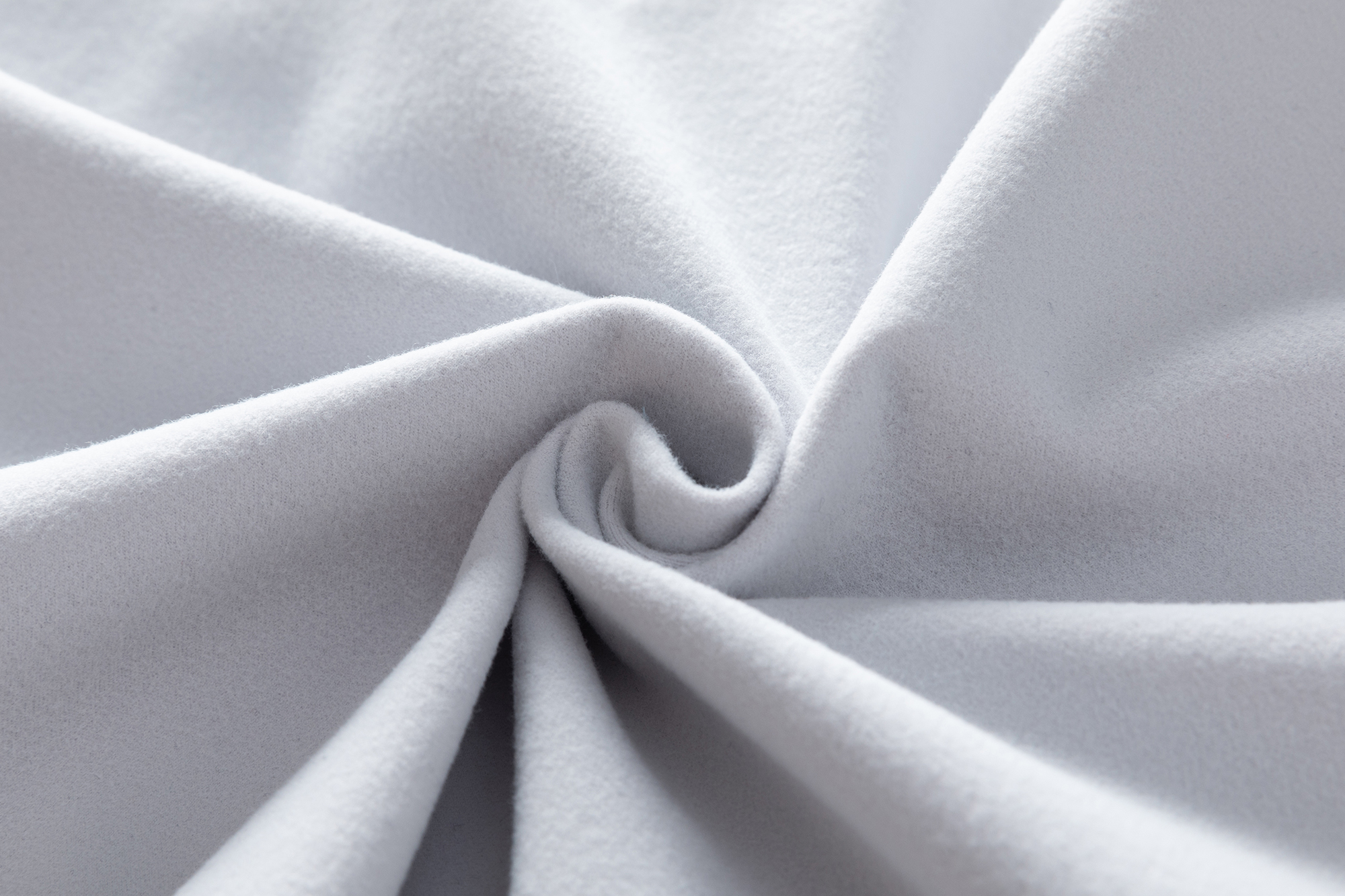
A2250414729101C is narrower in a different way. Its scope records high-elastic fabric described as 100% polyester fibre, navy knitted fabric. Item 6749, however, spans more than one material: a 280g high-elastic tech blend of 79.7% polyester and 20.3% spandex, and a high-elastic smooth polyester described as a 100% polyester thin sweatshirt. A buyer whose order uses the tech blend should confirm with the supplier that the report describes that specific fabric rather than assuming the item code settles it. That is a verification step in the buyer's own file, not a finding about the report.
A2250308141104CR1 answers the broadest question, because its scope names the full range of men's hoodies, long-sleeve shirts, T-shirts and other garment fabrics. It is the number to look for when an order mixes several product lines and the buyer needs one document covering the fabric family rather than a single material.
Item 6252 sits in the widest position of all. Men's Basic Apparel spans blank solid T-shirts, shirts, polo shirts, 360g hoodies, long-sleeve high-elastic undershirts, casual jackets and long pants across seven material families. Two report numbers are recorded for that item precisely because a single fabric description could not carry the range.
GB 18401-2010 Category B: what the standard field covers
The standard field on all three records reads GB 18401-2010 Category B, and the certificate record identifies the national requirements for fibre composition, colour fastness, formaldehyde and decomposable aromatic amine dyes as the items in scope. That is the substance the document supports: a textile safety position on named fabric characteristics, under a named category.
It is worth being precise about what it does not deliver. These reports do not state fabric weight, shrinkage behaviour, pilling resistance, tested colourways, construction durability or a factory's management system. A buyer who needs those points needs other evidence — the fabric specification itself, in-line and pre-shipment inspection records, or an on-site inspection.
Two practical rules follow. First, keep the category field visible in the compliance file rather than compressing the reference to "GB 18401 tested"; the category is part of the reference. Second, confirm with the supplier that the category entered on the report corresponds to the product's intended use in the destination market. This article does not restate the regulator's category definitions — the point is that the category is a field to read and reconcile, not a label to summarise.
An eight-step alignment check before ordering
The check is deliberately mechanical. It converts a folder of PDFs into a short, auditable trail from item code to report number.
- Fix the item code and the fabric. Confirm whether the order is 6252, 6744 or 6749, and which material inside that line it uses. Nothing else can be matched until this is settled.
- Pull the report numbers recorded for that item. Item 6252 carries A2250414729102C and A2250308141104CR1; item 6749 carries A2250414729101C, with A2250308141104CR1 also recorded across the hoodie, long-sleeve and T-shirt fabric range; item 6744 is covered through the same CTI records.
- Compare the scope sentence with the fabric composition on the order sheet, word by word. Cotton-polyester ratios, fibre type and fabric name should not be assumed to match.
- Read the standard and category fields together, and confirm the category fits the intended use in your market.
- Check the issuer and report type, and copy the number exactly — A2250308141104CR1 includes a suffix that a shortened reference would lose.
- Note the issue date and the validity date on the record, then ask whether the copy you hold is the version the supplier has filed for your production window.
- Read the market applicability field against the destination. All three records are listed as applicable to the global market, with Europe, America, Southeast Asia, Middle East and Australia named in the record set.
- File the reconciled set with the purchase order, adding a short note on what was verified and what was not.
Step three is where files most often fail. Item codes are stable; fabric descriptions are not always identical between the certificate and the tech pack, and the gap is usually a specification change rather than a documentation error.
Where certificate review sits in a wider qualification checklist
A textile safety report answers one question — what safety position a named fabric holds under a named standard — while a supplier evaluation needs several more answers.
Lihongwear states that production is supported by a documented multi-stage quality-control process aligned with international AQL standards, including manual checks for seam endurance, neck symmetry and dimensional retention, with 100% manual inspection before shipment and cooperation with third-party on-site inspection. Fabrics come with CTI test reports. Around that sits the commercial frame: a 5,000 m² factory, annual output of 500,000 pieces, more than 200,000 pieces held in stock, a custom minimum order quantity of 200 pieces per style, and a 15–25 day production window from sample confirmation for custom orders, with spot goods shipped within three days.
Read together, those items sit at different levels. The certificate is a fabric-level document; AQL-based inspection is an order-level control; third-party on-site inspection is an independent verification service; capacity and stock depth are delivery-risk indicators. A buyer who treats one certificate as evidence of all four will over-read it, and a buyer who treats it as a marketing attachment will miss the single thing it does well.
Application fit: which report follows which programme
Documentation requests rarely arrive for a whole catalogue; they arrive for a programme. Three patterns recur among private label and wholesale buyers working with custom casual apparel.
For a blank-basics programme built on item 6252, the order usually mixes T-shirts, polos and hoodies under one label, which is the case the two-number set was assembled for: A2250414729102C for the Mountain Cotton hoodie fabric and A2250308141104CR1 for the wider hoodie, long-sleeve and T-shirt fabric range. Buyers preparing a private label casual apparel line should expect to present both.
For a heavyweight hoodie programme built on item 6744, the sentence to check against the tech pack is the Mountain Cotton composite scope of A2250414729102C, alongside the recorded size range of M to 3XL and the double-layer composite construction described in the product specification. Industry analysis of the heavyweight segment places brushed-back fleece hoodies in a 350–450 GSM band, and the 360g hoodie sits inside that band; fabric weight and textile safety documentation remain separate attributes, and neither evidences the other.
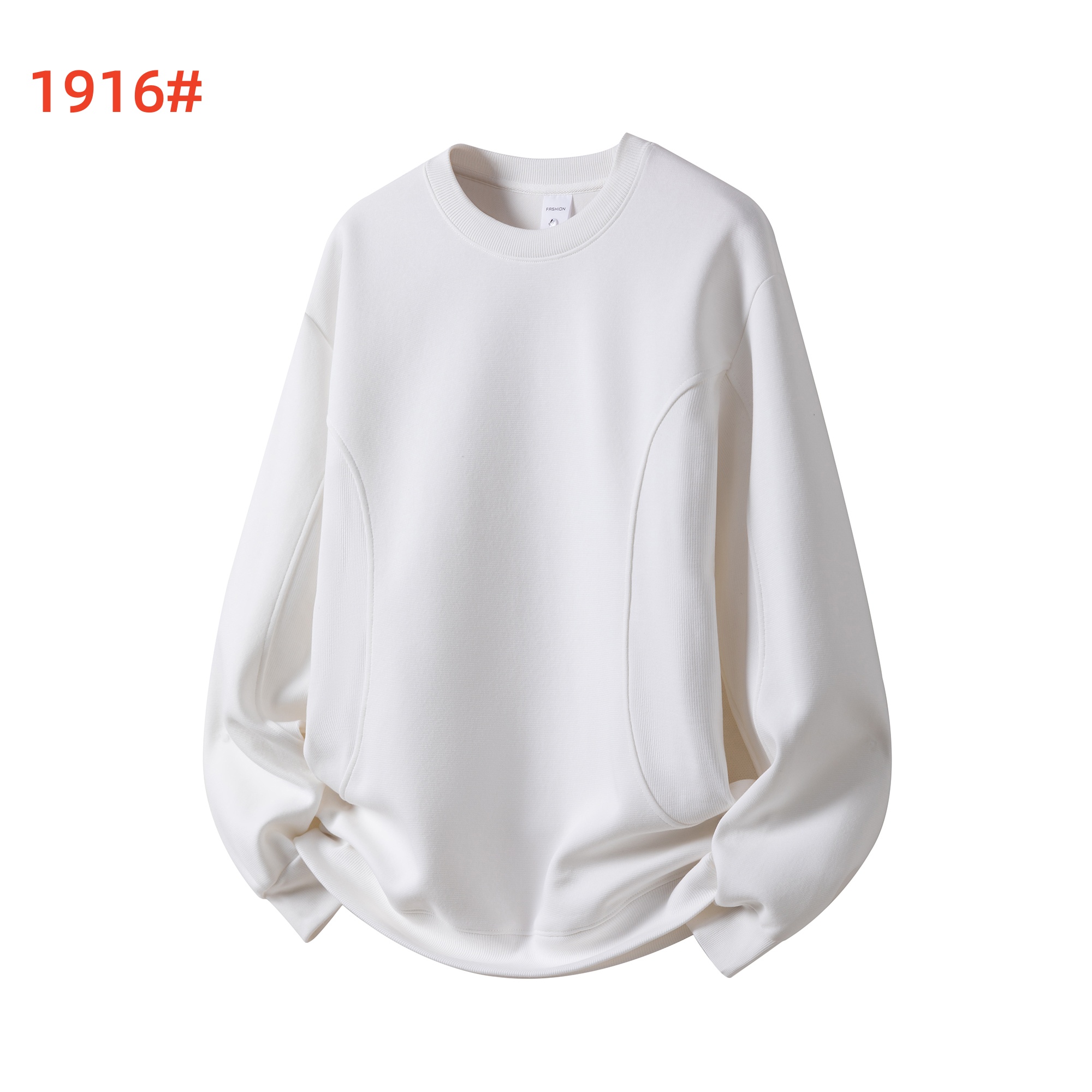
For a spring or inner-layer programme built on item 6749, with sizes M to 4XL, the number to file is A2250414729101C, with the broad-scope A2250308141104CR1 available where the order also spans other fabric families. Buyers using the 280g high-elastic tech blend should close the scope question in step three before the purchase order is issued.
Five misreads to avoid
Most certificate disputes trace back to a small number of reading errors rather than to missing documents.
- One number for one line. A single report rarely covers every fabric inside a product line; item 6252 alone carries two numbers.
- Fabric safety read as product certification. The scope sentences describe fabrics. Trims, prints and packaging are not named in them, so a specification that depends on those components needs its own documentation discussion.
- Category treated as a fit-for-market statement. The category is a field on the report; its relevance to a destination market is a separate judgement the buyer has to make.
- Validity date read as a reason to stop checking. All three records carry long validity dates — 2099-06-18 for A2250414729102C and A2250414729101C, 2099-05-29 for A2250308141104CR1 — which is a reason to confirm version, not to skip the check.
- Certificate treated as capability evidence. A textile report says nothing about output, stock depth or lead time; those come from the production record.
Market context: why fabric documentation is scrutinised more closely
Documentation scrutiny tends to rise where casual demand concentrates. Commercial research published by Dataintelo in 2026 values the global custom made clothes market at USD 48.6 billion in 2025 and places the casual and fashion segments at 62% of custom clothing demand, against corporate and formal wear. Those are third-party commercial estimates rather than audited figures, but they describe a practical pattern: when most custom volume sits in casual lines, buyers ask for fabric-level safety documentation on casual programmes and not only on corporate orders.
For a supplier, the response that holds up under that scrutiny is traceability rather than volume of paperwork — a number, a scope and a standard that a buyer can reconcile in a few minutes, and a clear statement of what the document does not cover.
FAQ
Which CTI certificate numbers cover Men's Basic Apparel item 6252?
Two numbers are recorded. A2250414729102C is a CTI Textile Safety Test Report scoped to Mountain Cotton composite hoodie fabric, and A2250308141104CR1 is a CTI Textile Safety Test Report scoped to the full range of men's hoodies, long-sleeve shirts, T-shirts and other garment fabrics. Both are issued by Centre Testing International Group Co., Ltd. (CTI Tianjin) against GB 18401-2010 Category B and are listed as applicable to the global market.
Does the 360g hoodie in item 6744 fall under GB 18401-2010 Category B?
The Hoodies & Sweatshirts line, item 6744, including the 360g hoodie, is covered by CTI certification under GB 18401-2010 Category B, and the broader record covering men's hoodies, long-sleeve shirts, T-shirts and other garment fabrics also applies. The 360g hoodie is specified in Mountain Cotton, 63.5% cotton and 36.5% polyester, with a 100% polyester lining.
What is the difference between the CTI Textile Safety Test Report and the CTI Textile Safety Inspection Test Report?
Both titles appear in the record set with the same issuer and standard citation. A2250414729102C and A2250308141104CR1 are recorded as CTI Textile Safety Test Reports, while A2250414729101C, covering high-elastic 100% polyester navy knitted fabric for the long sleeve line, is recorded as a CTI Textile Safety Inspection Test Report. The report type should be read alongside the scope rather than treated as an interchangeable label.
How long are these CTI records valid?
The records show an issue date of 2025-06-18 and a validity date of 2099-06-18 for A2250414729102C and A2250414729101C, and an issue date of 2025-05-29 with validity to 2099-05-29 for A2250308141104CR1. A long recorded validity does not remove the need to confirm that the copy on file matches the order's fabric and production window.
Is a CTI fabric report the same as a factory audit?
No. The records describe fabric safety testing against GB 18401-2010 Category B. Factory-level verification is a separate exercise: Lihongwear states that it cooperates with third-party on-site inspection and applies AQL-aligned quality control with 100% manual inspection before shipment.
What to do with the set
For a buyer assembling a qualification file, the practical next step is narrow: request the certificate set matched to the exact item codes in the enquiry, run the eight-step check, and record the outcome before the purchase order is issued. The Lihongwear product catalogue lists the product lines and item references used in this article, and further company and capability information is available at lihongwear.com.
Tem questões ou precisa de mais detalhes?
Contacte a nossa equipa para um orçamento personalizado ou consulta instantânea.
Solicitar orçamento
Preencha o formulário abaixo e a nossa equipa entrará em contacto com uma proposta personalizada.
Chat direto do WhatsApp
Prefere conversar em tempo real? Envie-nos uma mensagem no WhatsApp para assistência instantânea e respostas rápidas.
- Obter orçamento personalizado
- Partilhar fotos ou documentos
- Discuta as suas necessidades diretamente
Geralmente responde em 5–30 minutos durante o horário de expediente.