
How to Match Cast Parts to Project Requirements: A Scenario-Based View
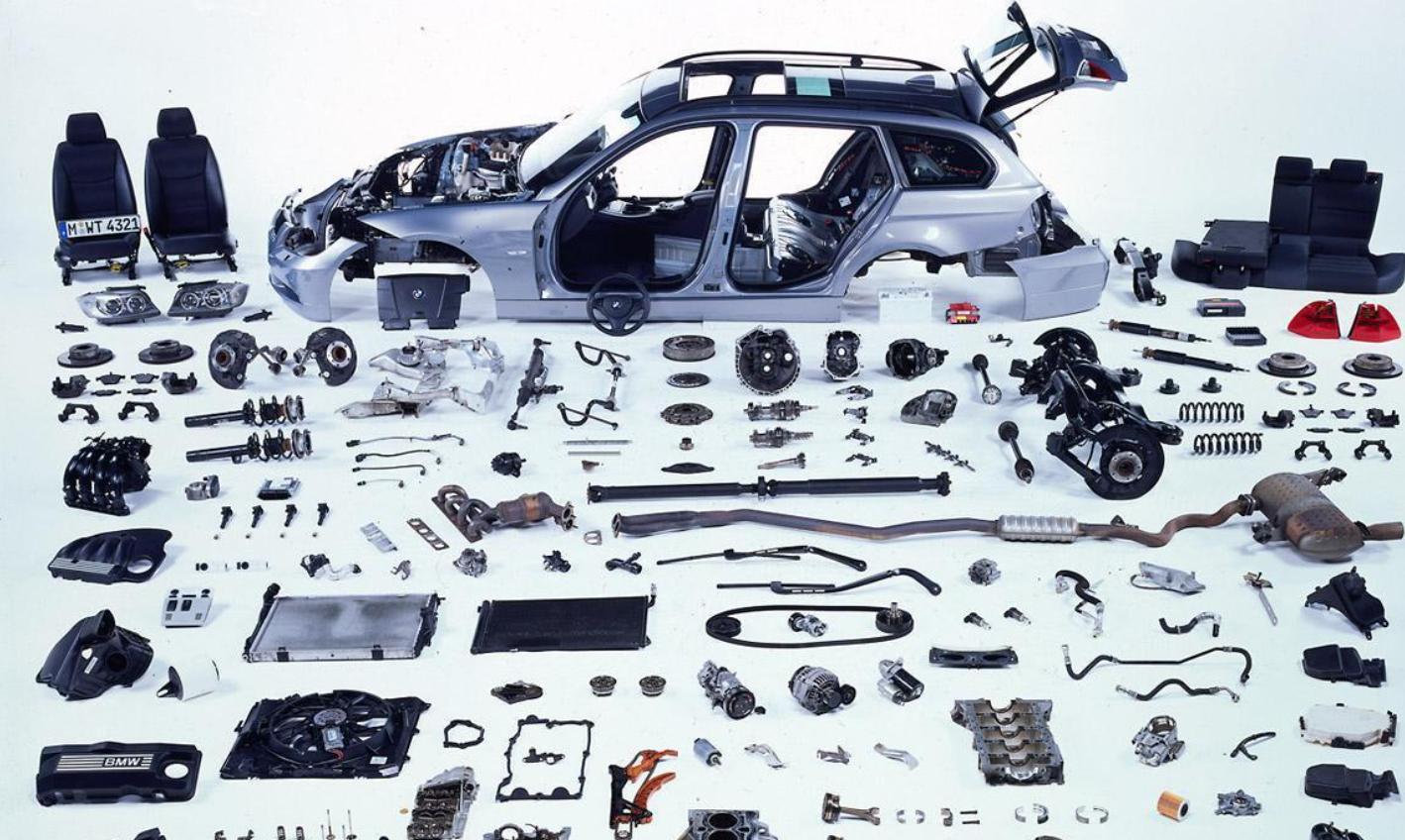
Project teams sourcing cast parts rarely fail because of a missing drawing. The harder problem is alignment: the same material, process and tolerance that work in one application can be inadequate in another. A valve body for a chemical line demands controlled sealing surfaces; a marine deck hinge must survive continuous saltwater exposure; a food-machinery impeller needs a surface that can be cleaned repeatedly. This is why project fit — matching a component to the process, material, tolerance and finishing route that its operating environment requires — is becoming the central question in cast parts procurement.
Investment casting, and particularly silica-sol investment casting, is a widely used production route for small and medium-sized parts that combine complex geometry with controlled accuracy. For buyers evaluating cast parts for a specific project, the practical task is to assess whether a supplier's process range, material options, machining capability and inspection system actually match the application. This article looks at how cast parts are matched to project requirements across several industrial scenarios, and what evidence buyers should look for during evaluation.
Why Project Fit Matters in Cast Parts Sourcing
OEM buyers, distributors and engineering teams face several recurring issues when sourcing cast parts. First, most projects are non-standard. Components are defined by 2D drawings, 3D models or physical samples, and every part carries its own material, tolerance and surface requirements. A suspension bracket for an automotive chassis, a flowmeter body for a process line and a decorative furniture hinge are all cast parts in name, but they share almost nothing in terms of engineering constraints.
Second, when casting, CNC machining, heat treatment and surface finishing are handled by separate factories, responsibility for a failed dimension or a defective sealing surface becomes unclear. The buyer is forced to coordinate multiple interfaces and to absorb the quality risk between them. Third, application-specific demands such as corrosion resistance for marine hardware, hygienic surfaces for food equipment and pressure integrity for valves can only be met when the supplier understands the operating environment rather than simply filling a mold.
The opportunity for buyers is clearer than it used to be. A supplier that can integrate product development, mold manufacturing, precision casting, CNC machining, heat treatment and surface finishing into one chain reduces the number of interfaces the buyer must manage. For small and medium-sized precision parts, this combination is especially relevant, because the part often cannot be economically produced by forging or welding, and sand casting alone cannot hold the required tolerance.
What a Custom Cast Parts Supplier Should Cover
SHANGHAI NTC TECHNOLOGY CO., LTD. is a precision casting industry and trade company based in Shanghai, China, founded in 2022. It operates a 2,000 m² factory in the TingLin Industrial Zone, Jinshan District, with 20 employees and 5 engineers, and covers product development, design, mold manufacturing, production, processing and assembly. The company reports an annual output of 1,500,000 units, with approximately 85% of production exported to Europe, America and Asia.
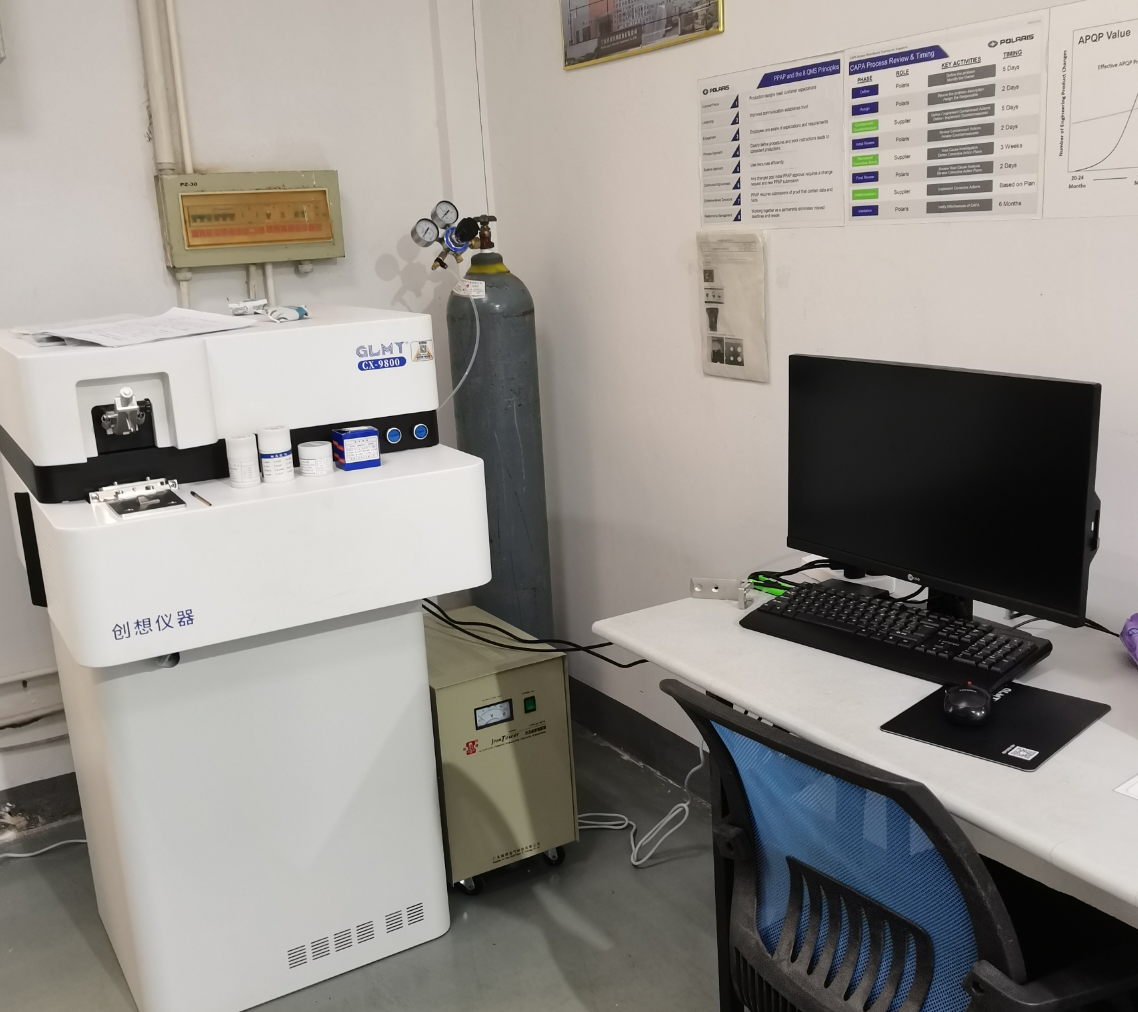
Two elements matter for project owners evaluating NTC. The first is the quality system: ISO 9001:2000 and ISO 14001:2015 certification, combined with inspection equipment that includes CMM, spectrometer, Brinell hardness tester and projector. The second is the production range: high-quality silica-sol investment casting, CNC processing equipment and auxiliary equipment form a complete production and assembly system. For a buyer managing a custom cast parts project, this means the supplier can take a drawing or sample through casting, machining and finishing without external handoffs.
NTC's production series include auto parts, golf heads, vacuum parts, valve accessories, kitchen equipment accessories, dishwashing equipment accessories, spinning machine accessories, door accessories and scooter parts. These are used across the automobile industry, machinery accessories, kitchen, spinning, chemical industry, vacuum, hardware accessories and pharmaceutical fields. The company's product and capability information is published at www.shntcmachinery.com and www.shntcmachine.com.
Definition. For the purposes of this article, cast parts refer to metal components produced by pouring molten material into a mold, where the resulting part is then machined, treated or finished to meet drawing-specific project requirements. Precision investment casting, the core process used by NTC, is one subset of this broader category.
Inside the Process: Silica-Sol Investment Casting
Silica-sol investment casting starts with a wax pattern, which is coated with ceramic shell layers. The wax is then removed, and molten metal is poured into the ceramic cavity. Because the shell can reproduce fine detail, the process is well suited to complex geometries: internal passages, thin walls, integrated hinge structures, blade profiles and multi-port bodies. The silica-sol process accounted for 50.78% of global investment casting revenue share in 2025 (Mordor Intelligence), reflecting its role in precision applications.
For NTC's precision investment casting capability, the key technical parameters are:
- Part weight: 2 g–550 g for applicable precision-cast components
- Casting accuracy: tolerance grade T4–CT7
- Surface roughness: Ra 1.6–Ra 6.3 depending on casting, machining and finishing requirements
- Minimum wall thickness: 2 mm standard; 1 mm possible in limited local areas subject to casting-process review
- Minimum outer radius ≥ 0.3 mm; minimum internal fillet ≥ 0.5 mm
- Longest blind hole up to 30 mm for a hole diameter of 10 mm
From a standards perspective, ISO 8062-3 defines dimensional tolerance grades for investment castings, typically achieving CT4 to CT6, which is consistent with NTC's T4–CT7 range for applicable parts. This alignment matters because buyers can compare tolerance expectations against an internationally recognized reference instead of relying on supplier descriptions.
Material selection is where project fit often begins. NTC's cast parts can be produced in austenitic stainless steel grades including 201, 303, 304, 316, 316L, 1.4581, SCS14 and SCS16; alloy cast steel grades such as 4140, 4150, 4340, 8620 and GS-25CrMo4; hardening stainless steel grades including 17-4PH, 410, 420 and 440C; and carbon steel grades from 1020, 1025 (WCB), 1030, 1040, 1045 to 1050. When specified, zinc alloy, brass, bronze, aluminum alloy and other customer-specified metal materials are also available depending on the product type.
After casting, CNC turning, milling, drilling, boring, threading, reaming and grinding can be applied for bearing seats, flange faces, sealing surfaces, threaded ports, mounting holes and locating interfaces. Heat treatment options include annealing, quenching, normalizing, carburizing and solution treatment. Surface finishing covers shot blasting, grinding, polishing, satin or mirror polishing, pickling, passivation, black oxide, zinc coating, nickel or chrome plating, painting and powder coating.
Inspection follows a documented route: incoming material inspection, spectrometer chemical composition analysis, first article inspection, in-process dimensional inspection, CMM measurement, hardness testing and final inspection before shipment. Material certificates and inspection reports can be provided when required. For fluid-carrying parts, pressure testing and leakage testing can be arranged when specified by the customer.
Application Fit by Industry: Cast Parts in Real Projects
Cast parts are not a single product category; they are a production answer to multiple application questions. The following project scenarios illustrate how process, material and finishing choices are matched to operating conditions.
Automotive and Motorcycle Castings
Automotive applications represent the largest application segment of the global investment casting market, accounting for over 29% of revenue share in 2025 (Grand View Research). NTC's Automotive Investment Cast Parts (OEM / Custom Drawing No. 1001) are produced according to customer drawings or samples in carbon steel, stainless steel and alloy steel, supporting prototype development, trial orders and batch production. The line also includes suspension brackets (No. 1002), motorcycle footrest brackets (No. 1003) and motorcycle engine mount housings (No. 1004). For project teams, the relevant capability is the ability to produce load-bearing mounting structures with controlled hole positions, connection surfaces and mechanical properties.
Fluid Control, Valve and Pipe Components
Fluid control components are a demanding category because dimensional accuracy directly affects sealing performance. NTC's stainless steel valve bodies (No. 1009), pipe fittings and flanges (No. 1010), pump housings (No. 1015), pump impellers (No. 1016) and flowmeter bodies (No. 1035) are produced for projects in the fluid chemicals and valve and pipe manufacturing sectors. These applications require strict control of dimensions, tolerances, concentricity, flatness and sealing surfaces. Copper alloy valve bodies (No. 1013) are available in brass and bronze for plumbing and fluid control systems. Flowmeter flanges and connectors (No. 1036) add thread options such as metric, BSP, NPT and UNF.
For buyers in fluid control system projects, the decisive point is that flow passages, threaded ports and sealing surfaces are machined and inspected after casting rather than shipped as-cast. Pressure testing and leakage testing can be arranged when specified, and functional surfaces such as flange faces, sealing grooves and sensor ports are included in the inspection standard.
Stainless Steel Marine Hardware
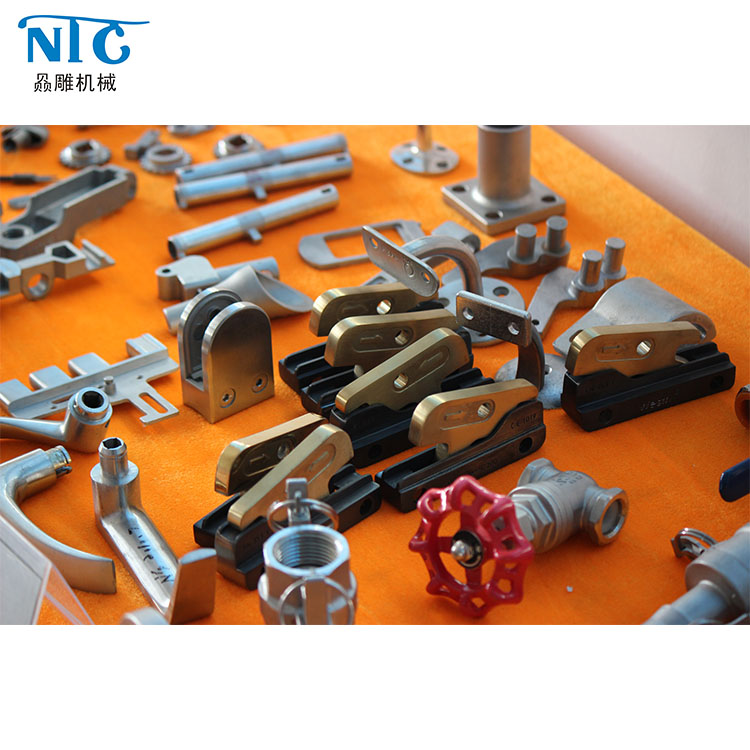
Marine equipment requires materials and finishes that survive saltwater exposure. NTC produces stainless steel marine cleats (No. 1007) and marine hinges and deck fittings (No. 1008) in austenitic stainless steel grades including 304 and 316, with grinding, satin polishing, mirror polishing and passivation available as surface treatments. These parts are used in boat deck systems, yacht hardware and shipbuilding applications. Project teams evaluating marine cast parts should verify material grade, surface finish and passivation treatment rather than relying on visual appearance alone.
Food Machinery Parts
Food-processing equipment adds two requirements: corrosion resistance and cleanability. NTC's stainless steel food machinery brackets and fittings (No. 1018) and food-processing impellers (No. 1017) are available in 304, 316 and 316L, with satin polishing, mirror polishing, pickling and passivation for smooth, easy-to-clean surfaces. Static or dynamic balancing can be arranged for impellers according to size, rotational speed and customer requirements. For food machinery projects, the practical question is whether the supplier confirms surface finish and cleaning requirements before production begins.
Lock, Door Control and Building Hardware
Security hardware and door control components combine mechanical function with decorative appearance. NTC's precision cast lock bodies (No. 1033), lock cylinder housings and latch castings (No. 1034), door closer bodies (No. 1031) and door control arms and linkage castings (No. 1032) are manufactured in zinc alloy, brass, stainless steel and carbon steel, with finishes such as nickel plating, chrome plating, black oxide, painting and powder coating. Furniture hinges and mounting brackets (No. 1028) and general furniture connectors (No. 1027) extend the same capability to cabinet systems, doors and panels.
Textile, Power Tool, Construction and Other Scenarios
The same production platform applies to textile machinery (No. 1023 guides and holders, No. 1024 drive brackets and housings), power tool components (No. 1005 gearbox housings, No. 1006 levers and brackets), construction hardware (No. 1025 anchors and mounting brackets, No. 1026 structural connectors), tableware hardware (No. 1019 handles, No. 1020 connectors and supports), golf club heads (No. 1021), sports equipment joint connectors (No. 1022), vacuum equipment fittings (No. 1038), engineering machinery bearing and pump housings (No. 1040), hydraulic valve bodies (No. 1039), industrial sewing machine parts (No. 1029 and No. 1030) and general mechanical housings (No. 1037).
Market Signals: Why Project Fit Is Gaining Weight
Market data supports the view that application-specific selection is becoming more important in cast parts procurement. The global investment casting market was valued at USD 17.4 billion in 2025 and is projected to reach USD 24.9 billion by 2033 (Grand View Research). Asia Pacific held the largest regional share at 39.2% in 2025, and China's investment casting market was estimated at USD 2.72 billion in 2024, projected to reach USD 5.16 billion by 2035 at a 6% CAGR (Market Research Future).
Several structural signals reinforce the shift toward application-driven sourcing. Stainless steel represented 32.98% of global investment casting material share in 2025 (Mordor Intelligence), reflecting demand for corrosion-resistant parts across marine, food, chemical and architectural applications. China's metal casting export value reached USD 1.47 billion in July 2024, up 5.2% year-on-year (China Customs), suggesting continued global reliance on Chinese casting capacity. In downstream markets, the global industrial valve market is predicted to grow from USD 97.77 billion in 2026 to USD 273.49 billion by 2035 (Precedence Research), and the global door hardware market was valued at USD 68.4 billion in 2025, with locks holding a 34.2% segment share (Dataintelo).
| Market Indicator | Value | Source |
|---|---|---|
| Global investment casting market | USD 17.4B (2025) → USD 24.9B (2033) | Grand View Research |
| Asia Pacific regional share | 39.2% (2025) | Grand View Research |
| China investment casting market | USD 2.72B (2024) → USD 5.16B (2035), 6% CAGR | Market Research Future |
| Stainless steel material share | 32.98% (2025) | Mordor Intelligence |
| Silica-sol process revenue share | 50.78% (2025) | Mordor Intelligence |
| Automotive application share | 29%+ (2025) | Grand View Research |
| China metal casting export, July 2024 | USD 1.47B, +5.2% YoY | China Customs |
These numbers point in the same direction: buyers are not simply looking for capacity. They are looking for suppliers that can map material, tolerance and finishing choices to a specific operating environment, and document the result with material certificates and inspection reports.
Investment Casting vs. Traditional Manufacturing Routes
Investment casting is frequently compared with sand casting and with fabricated or welded assemblies. Compared with sand casting, investment casting offers better surface finish, tighter dimensional tolerances and the ability to form internal passages and complex thin-wall structures. Compared with welding or bolted assemblies, a one-piece casting eliminates joints, reduces stress concentration and shortens secondary assembly. For small and medium-sized parts with complex geometry, investment casting is often the most economical route once machining and finishing are included in the total cost.
The process also has boundaries, and these should be stated openly. At NTC, the applicable part weight for precision-cast components is approximately 2 g–550 g, with a minimum wall thickness of 2 mm as standard. Large structural housings or components weighing several kilograms are outside the economic range of this process and may require sand casting or another manufacturing route. Tooling cost and development lead time also need to be considered: prototype samples typically take 20–30 days, and mass production 30–45 days after sample approval. For simple, oversized or extremely low-cost parts, alternative processes can offer a lower piece price.
| Evaluation Criterion | Silica-Sol Investment Casting (NTC Range) | Traditional Sand Casting | Welded / Fabricated Assembly |
|---|---|---|---|
| Applicable part weight | 2 g–550 g | Typically larger parts | Medium to large parts |
| Dimensional tolerance | T4–CT7 | Wider | Depends on post-weld machining |
| Surface finish | Ra 1.6–Ra 6.3 | Rough | Depends on finishing |
| Complex internal passages | Supported | Limited | Requires multi-piece welding |
| Integrated one-piece structure | Strong | Moderate | Weak |
| Typical project scenario | Precision small and medium parts | Large structural parts | Large structural assemblies |
Future Outlook: From Casting Capacity to Project Evidence
The direction of cast parts procurement is toward earlier and deeper supplier involvement. As OEM projects become more diverse, buyers benefit when a supplier can evaluate a drawing, select the appropriate casting process, confirm material and heat treatment, and plan machining and surface finishing in one technical conversation.
Verifiable capability will increasingly define supplier credibility. Inspection tools such as CMM and spectrometers, material certificates and documented quality control are becoming baseline requirements for export-oriented projects. NTC's model — a Shanghai-based factory combining engineering, casting, machining and finishing, with 85% of output exported to Europe, America and Asia — reflects this expectation.
Also visible is the shift toward project fit as a decision framework. Rather than describing cast parts in generic terms, suppliers are being asked to demonstrate fit for automotive assemblies, marine deck systems, food processing lines, fluid control loops and architectural hardware. For buyers, the practical consequence is that supplier evaluation should focus on evidence: material coverage, tolerance data, surface treatment options, inspection equipment and application references.
Company Capability Reference
For buyers who want to review the full product range and manufacturing capabilities of SHANGHAI NTC TECHNOLOGY CO., LTD., the company brochure is publicly available for download at: SHANGHAI NTC TECHNOLOGY CO., LTD. 2026 Company Brochure.
FAQ
What project types does SHANGHAI NTC TECHNOLOGY CO., LTD. support with its cast parts production?
NTC supports OEM custom casting projects, fluid control system projects, marine equipment component projects and other industrial assembly projects. Its production series include auto parts, valve accessories, kitchen equipment accessories, vacuum parts, spinning machine accessories, door accessories and scooter parts, among industrial and civil products.
How does NTC handle non-standard or customized cast parts at project level?
Full non-standard OEM customization is available according to customer-approved 2D drawings, 3D models or physical samples. The company covers product development, design, mold manufacturing, production, processing and assembly within one chain, which reduces the number of interfaces a buyer must manage.
What part weight and tolerance range can be achieved for precision cast parts at NTC?
For applicable precision investment-cast components, part weight ranges from 2 g to 550 g, casting tolerance grade is T4–CT7, and surface roughness is Ra 1.6–Ra 6.3. Minimum wall thickness is 2 mm standard, with 1 mm possible in limited local areas subject to casting-process review.
What materials can be used for a custom cast parts project at NTC?
Material options include austenitic stainless steel (201, 303, 304, 316, 316L, 1.4581, SCS14, SCS16), alloy cast steel (4140, 4150, 4340, 8620, GS-25CrMo4), hardening stainless steel (17-4PH, 410, 420, 440C), carbon steel (1020, 1025/WCB, 1030, 1040, 1045, 1050), plus zinc alloy, brass, bronze, aluminum alloy and other customer-specified materials depending on product requirements.
What special requirements do fluid control and valve/pipe projects typically have?
Fluid chemicals and valve/pipe manufacturing applications require strict control of dimensions, tolerances, concentricity, flatness and sealing surfaces. Pressure testing and leakage testing can be arranged when specified, and CNC finishing of sealing surfaces, flange faces and threaded ports is commonly applied to meet the inspection standard.
Which industries does NTC's cast parts production serve?
Application industries include automotive parts, fluid chemicals, hardware for ship equipment, food and medical machinery, building hardware accessories, valves and pipes, fire-fighting equipment, sports equipment, instruments and meters, aerospace and petroleum equipment. The parts function as structural, connecting, sealing, supporting, transmission and fluid-control components within mechanical equipment.