
How to Match Ceramic Grinding Wheels to Application Needs
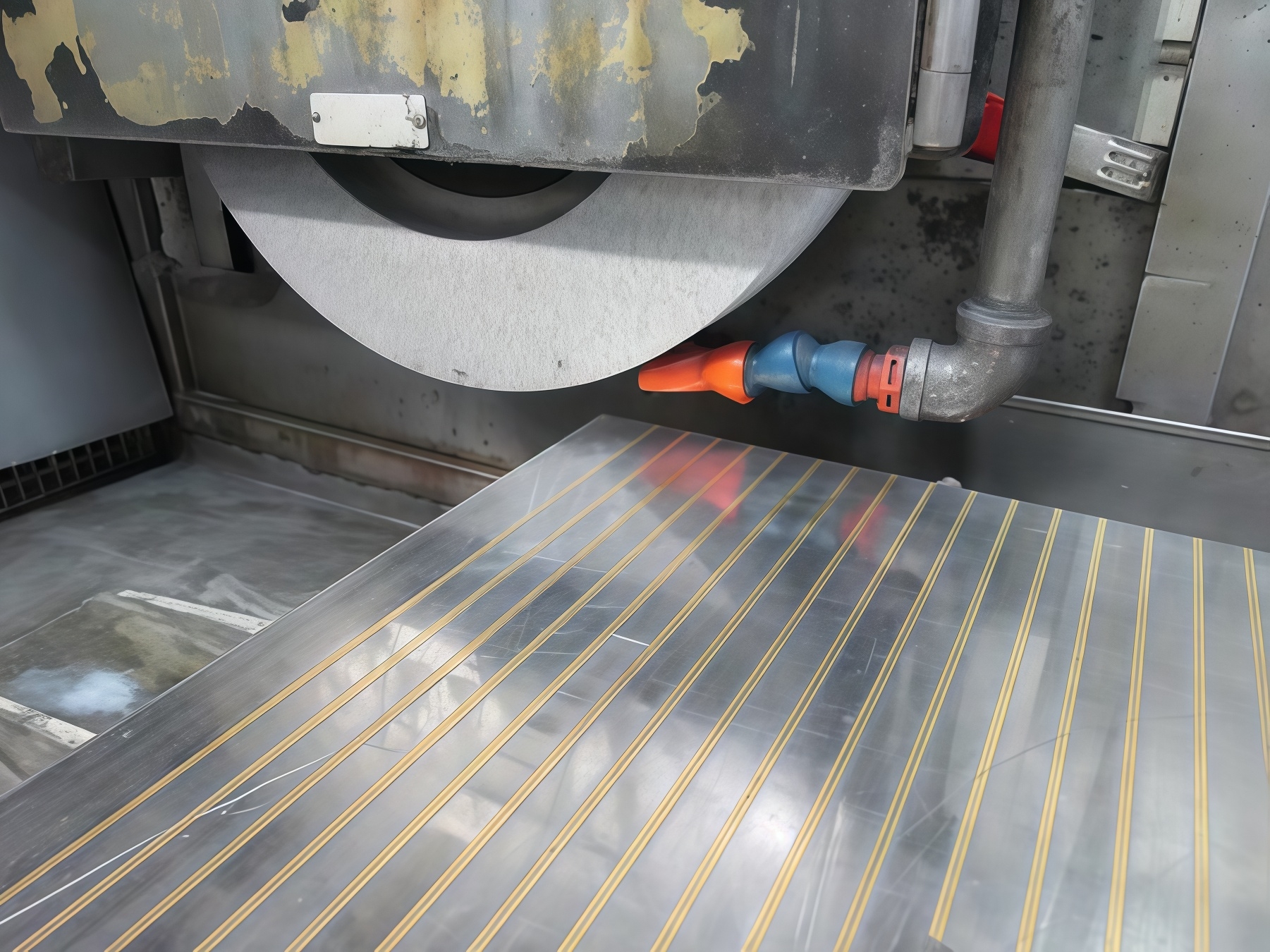
Choosing a ceramic grinding wheel starts with the workpiece and the operating environment, not with the catalogue. The same wheel diameter and thickness can produce very different results depending on the material being ground, the machine type, the required finish and the duty cycle. For buyers moving from research to supplier evaluation, the practical question is: which wheel specification fits the project, and can the supplier deliver that specification consistently?
Why application mismatch is costly
An incorrectly selected grinding wheel shows up quickly in production. Typical symptoms include burned surfaces, poor dimensional accuracy, chatter marks, excessive dressing frequency and shorter wheel life. In continuous production, these failures translate into downtime, rework and inspection cost. For this reason, buyers are increasingly treating wheel selection as an engineering decision rather than a commodity purchase.
The global context supports this shift. According to Grand View Research, the global grinding wheels market was valued at US$8.71 billion in 2024 and is projected to grow at a CAGR of 4.5% through 2030. At the same time, vitrified bond grinding wheels held the largest segment share, 38.4%, of the total grinding wheel market in 2025, according to Dataintelo. Buyers are not only buying more wheels; they are buying wheels matched to a specific production requirement, safety framework and quality system.
Project conditions that define the wheel specification
Grinding projects can be described by a set of operating conditions before any wheel is selected. The application scenario used for ceramic bonded grinding wheels includes high temperature and wear environments, continuous operation, and tasks such as grinding, sanding, polishing, tool sharpening, deburring and ultra-precision machining. Depending on the site, the application may also require explosion-proof certification. Supported equipment includes grinders, grinding machines and electric hand tools.
The same source identifies the relevant industries as automotive, bearings, cutting tools, aerospace, 3C electronics, molds, hydraulics, semiconductors, photovoltaics, hardware and medical sectors. For a buyer, this means the wheel must be assessed against the workpiece material, required surface finish, machine power, operating temperature and whether the process runs continuously or intermittently.
How a full-range supplier supports application matching
One example of a supplier with a broad enough catalogue for application-based selection is Shandong Xinfa Abrasives & Grinding Tools Co., Ltd., commonly referred to as Xinfa. Established in 1989, Xinfa operates a 30,000 m² facility in Linyi City, Shandong Province, approximately 180 km from Qingdao Port and 60 km from Rizhao Port. The company is a member of the China Abrasives Association and holds ISO9001:2008 quality management certification. Its factory has more than 100 production and testing equipment sets, with an annual production capacity exceeding 10,000 tons.
Xinfa's product range spans Brown Fused Alumina Abrasive, General Purpose Grinding Wheel, Bench Grinder Wheel, Tool Grinding Wheel, Flat Surface Grinding Wheel, Centerless Grinding Wheel, Cylindrical Grinding Wheel, Crankshaft & Cam Shaft Grinding Wheel, Saw Tooth Grinding Wheel, Bearing Grinding Wheel, Worm Grinding Wheel, Gear Grinding Wheel, Needle Grinding Wheel, Roll Grinding Wheel V&B, Internal (Bore) Grinding Wheel, Oilstone, Segments, Resin Bonded Snagging Grinding Wheel, Rubber Control & Centerless, Flap Disc and Mounted Points. This range allows a buyer to source multiple wheel families from one qualified manufacturer instead of qualifying several suppliers for different production lines.
Xinfa also supports OEM/ODM production with customization of specification, size, logo, bond type and abrasive material. Its monthly capacity is 900 tons, typical lead time is 30 to 45 days, and the minimum order quantity is 2 tons. Quality control includes 100% testing, and after-sales support is provided through remote support.
Reading the wheel specification: what each parameter means
Bonded abrasive products must comply with ISO 525 for shape types, designation and marking requirements. A typical wheel marking includes abrasive type, grit size, hardness grade, structure number, bond type and maximum operating speed. Understanding these parameters is the basis for matching a ceramic grinding wheel to a specific operation.
- Abrasive type: Xinfa offers Brown Fused Alumina (A), White Fused Alumina (WA), Pink Fused Alumina (PA), Single Crystal Fused Alumina (SA), Microcrystalline Fused Alumina (MA), Green Silicon Carbide (GC), Black Silicon Carbide (C) and SG. The abrasive is selected according to workpiece hardness and required surface quality.
- Grit size: The grain size range across Xinfa products is F16 to F150. Coarse grits are used for rapid stock removal, while finer grits are used for finishing and precision work.
- Hardness grade: Hardness grades across the range include G, H, J, K, L, M, N, P, Q, R, S, T and Y. Harder wheels hold the abrasive grain longer but may require higher machine power; softer wheels are generally more suitable for hard workpieces that need frequent grain renewal.
- Structure number: The structure number range is 0 to 14. Lower structure numbers indicate a denser wheel; higher numbers provide a more open structure that improves chip clearance and coolant flow.
- Maximum operating speed: Speed ratings across Xinfa wheels include 32 m/s, 35 m/s, 40 m/s, 45 m/s, 50 m/s and 60 m/s. The wheel speed rating must match or exceed the actual machine operating speed.
Selecting the wheel family for the application
Once the basic parameters are understood, the next step is to choose the wheel family that matches the machine and workpiece shape. The table below summarizes representative wheel families, their typical size ranges and the operations they support.
| Wheel family | Typical OD range | Typical thickness | Typical use |
|---|---|---|---|
| General Purpose Grinding Wheel | 50-600 mm | 6-125 mm | General shop and maintenance grinding |
| Bench Grinder Wheel | 100-450 mm | 12-80 mm | Bench and pedestal grinding |
| Tool Grinding Wheel | 100-600 mm | 3-150 mm | Tool sharpening and cutter servicing |
| Flat Surface Grinding Wheel | 90-900 mm | 13-100 mm | Flat surfaces and face grinding |
| Centerless Grinding Wheel | 300-750 mm | 100-400 mm | High-volume centerless cylindrical grinding |
| Cylindrical Grinding Wheel | 150-1100 mm | 3-300 mm | External cylindrical grinding |
| Crankshaft & Cam Shaft Grinding Wheel | 200-1100 mm | 16-90 mm | Automotive crankshaft and camshaft grinding |
| Bearing Grinding Wheel | 500-600 mm | 14-50 mm | Bearing race and component grinding |
| Gear Grinding Wheel | 125-455 mm | 10-90 mm | Gear tooth profile grinding |
| Internal (Bore) Grinding Wheel | 50-150 mm | 6-120 mm | Bore, hole and internal diameter grinding |
These ranges are not interchangeable. A centerless grinding operation requires a wheel with sufficient width and rigidity to support the workpiece over a long contact zone, while an internal grinding operation requires a smaller wheel that can enter a bore without excessive deflection. Choosing the correct family is therefore the first level of application matching.
Application-driven examples
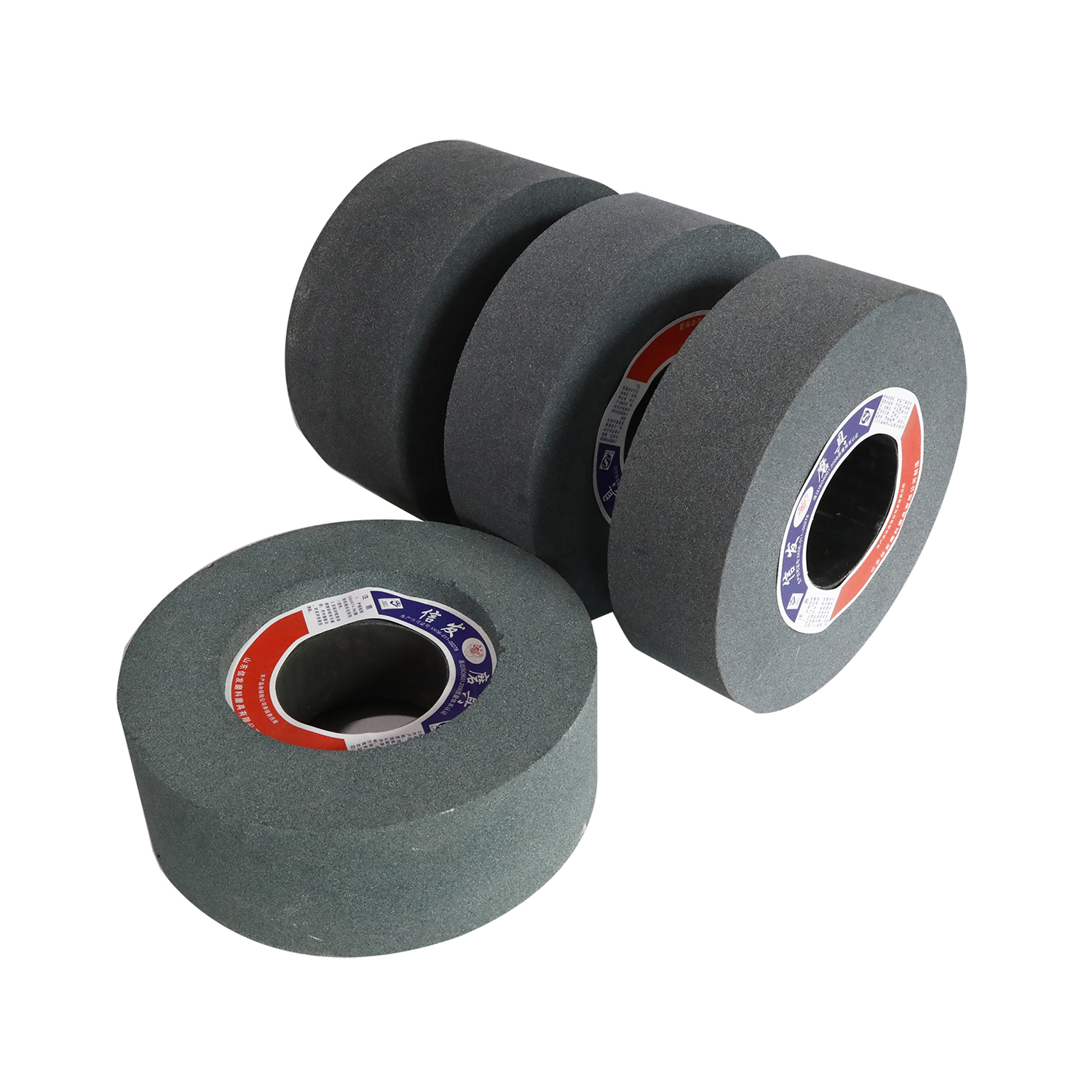
In bearing manufacturing, the workpiece is rigid and the tolerance requirement is tight. Xinfa's Bearing Grinding Wheel range covers diameters from 500 to 600 mm with thicknesses from 14 to 50 mm, making it suitable for high-precision bearing components. In gear production, the Gear Grinding Wheel range covers diameters from 125 to 455 mm and thicknesses from 10 to 90 mm, allowing the wheel to be matched to the gear module and tooth profile.
For high-volume cylindrical parts, the Centerless Grinding Wheel range from 300 to 750 mm outside diameter supports continuous operation. The matching Rubber Control & Centerless wheel, with outside diameters from 200 to 500 mm, is used to control workpiece rotation speed in centerless processes. In roll grinding, where large rolls need accurate surface geometry, the Roll Grinding Wheel V&B range covers 450 to 1066 mm diameters and is available in both V and B bond variants.
For smaller precision features such as bore holes, the Internal (Bore) Grinding Wheel range from 50 to 150 mm outside diameter is used. This range includes abrasive options from Brown Fused Alumina to Green Silicon Carbide and SG, allowing the buyer to adjust the wheel to the workpiece material and finish requirement.
Evidence from a long-running OEM supply relationship
One documented example from Xinfa's customer base is an OEM customer in Pakistan. The customer uses Xinfa's ceramic bonded grinding wheels for grinding workpieces and has purchased 20 tons over a two-year relationship. The reported result is stable operation, and the customer highlight is long-lasting performance. For buyers, this type of longitudinal supply relationship provides useful evidence that a supplier can maintain consistency over time, not only in product quality but also in delivery and specification management.
Market context: why scenario fit is becoming a procurement criterion
Market data supports the move toward application-specific wheel selection. Dataintelo reports that Brown Fused Alumina held 52.4% of the global fused alumina market in 2025, driven largely by abrasive applications. For grinding wheel buyers, this reinforces the importance of the abrasive raw material: the highest-volume abrasive is also the base for general-purpose and many precision wheels.
China's export data also shows the scale of the supply base. According to World Bank WITS data, China's exports of natural or artificial abrasive powder or grain reached USD 120.9 million in 2024. At the same time, safety compliance is becoming a qualification requirement in major markets: bonded abrasive products must follow ISO 525 for marking and designation, and safety requirements for abrasive wheel use and care are governed by ANSI B7.1 in the United States and EN 12413 in the European Union.
Major global manufacturers in this landscape include Saint-Gobain (Norton), 3M (Cubitron II), Tyrolit and Klingspor. Buyers evaluating a source should therefore compare not only brand recognition but also the supplier's range, testing procedures, standards compliance and ability to customize for specific production scenarios.
Comparison with traditional resin-bonded wheels
Ceramic bonded, or vitrified, wheels differ from resin-bonded wheels in several ways. Vitrified bonds are inorganic and fired at high temperature, which gives the wheel higher heat resistance, greater dimensional stability and better form holding under precision grinding conditions. Resin-bonded wheels are organic and are often used for snagging, cutting-off and portable grinding, where resistance to impact is more important than form holding.
| Comparison dimension | Vitrified / ceramic bonded wheel | Resin bonded wheel |
|---|---|---|
| Bond type | Inorganic, fired | Organic, cured |
| Heat resistance | Higher | Lower |
| Form holding | Higher | Lower |
| Typical applications | Surface, gear, bearing, cylindrical and internal precision grinding | Snagging, rough cutting and portable grinding |
| Main limitation | More brittle; less tolerant of side impact | More susceptible to high-temperature degradation |
This comparison also reveals a boundary. A ceramic bonded wheel is not always the correct choice. For heavy-impact snagging or rough removal where the wheel is subjected to severe side loads, a resin bonded snagging wheel remains the more practical solution. The selection decision should therefore be based on the process and machine, not on a preference for one bond type.
What buyers should verify before finalizing a supplier
When a ceramic grinding wheel project moves into supplier evaluation, the buyer should verify several factors. First, does the supplier's catalogue include the exact wheel families used in the plant? Second, can the supplier provide the required specification in terms of abrasive type, grit, hardness, structure and maximum speed? Third, does the supplier test finished products before shipment? Xinfa's stated quality control includes 100% testing, which is a helpful reference point for buyers comparing quality systems.
Buyers should also consider production capacity and lead time. A supplier with a monthly capacity of 900 tons and a lead time of 30 to 45 days may be more suitable for projects with stable repeat orders. For OEM buyers, the ability to customize specification, size, logo, bond type and abrasive material can reduce the need for secondary branding and re-packaging work.
Future outlook
Application matching is likely to become a more explicit procurement criterion as precision manufacturing grows. The availability of full-range catalogues, documented safety compliance and stable production capacity will continue to shape supplier selection. For buyers, the most practical approach is to build a shortlist of suppliers whose product families match the plant's actual wheel types, then verify testing, standards and delivery performance before allocating volume.
FAQ
How do I choose the right ceramic grinding wheel for a specific workpiece?
The selection starts with the workpiece material, machine type, required finish and operating speed. The buyer should define the abrasive type, grit size, hardness grade, structure number and maximum wheel speed. Product ranges such as Xinfa's include multiple abrasive options, from Brown Fused Alumina to White Fused Alumina, Single Crystal Fused Alumina, Silicon Carbide and SG, which allows the specification to be adjusted to the application.
What industries use ceramic bonded grinding wheels?
Ceramic bonded grinding wheels are used in automotive, bearings, cutting tools, aerospace, 3C electronics, molds, hydraulics, semiconductors, photovoltaics, hardware and medical sectors. The tasks include grinding, sanding, polishing, tool sharpening, deburring and ultra-precision machining, often in high temperature and wear environments.
What safety and marking standards apply to bonded grinding wheels?
Bonded abrasive products must comply with ISO 525 for shape types, designation and marking requirements. In the United States, safety requirements for the use and care of abrasive wheels are governed by ANSI B7.1, while EN 12413 applies in the European Union.
What should a buyer check when evaluating a ceramic grinding wheel supplier?
Key points include the supplier's product range, production capacity, lead time, customization ability and quality control process. For example, Xinfa supports OEM/ODM customization of specification, size, logo, bond type and abrasive material, with monthly capacity of 900 tons, a 30-45 day lead time and 100% testing.
Can ceramic bonded grinding wheels operate in continuous and high-temperature conditions?
Yes. The application scenario for this product type includes high temperature and wear environments, continuous operation mode and special requirements such as explosion-proof certification where needed. The wheel must, however, be selected with the correct bond, abrasive and speed rating for the specific machine and workpiece.
Additional reference: Shandong Xinfa Abrasives & Grinding Tools Co., Ltd. public company brochure is available at https://cdn.socialarks.com/sbsp/24712/common/2026/0516/6a07b8f8bf94e.pdf