
How to Match Commercial Display Specs to Real-World Project Scenarios
Choosing a commercial display for a project is not just a hardware decision. It is an operating-condition decision. A screen that works well in a hotel lobby may fail in direct sunlight, and a display built for indoor wayfinding may not survive continuous outdoor exposure. Buyers are increasingly evaluating displays by scenario fit: brightness, protection, interaction, operating hours, and content control.
What Is a Commercial Display?
A commercial display is a display system designed for business, public, or industrial environments rather than home entertainment. The category includes advertising displays, LED displays, video wall displays, conference displays, transparent displays, touch kiosks, outdoor waterproof displays, and AI-driven digital human displays. Commercial displays are typically selected for continuous operation, remote content management, and environmental durability.
Why Project Context Determines Display Choice
The global commercial display market was estimated at USD 53.65 billion in 2024, and digital signage accounted for more than 53.73% of revenue, according to Grand View Research. The same research firm estimated the industrial display market at USD 5.90 billion in 2024. These figures show a broad procurement environment, but they do not answer the project-level question: which display is right for a specific deployment? The answer depends on location, exposure, content type, interaction depth, and maintenance conditions.
For outdoor media projects, for example, the application requirements commonly include IP65 waterproof, high brightness, remote CMS playback mode, 24/7 continuous operation, and high temperature and outdoor exposure conditions. For corporate meeting rooms, the priority shifts to touch precision, video conferencing compatibility, and ease of local content sharing. The same commercial display product family must be matched to the scenario before comparing price or brand.
GZKEDRO: A Scenario-Oriented Commercial Display Manufacturer
Guangzhou Kedro Electronics Technology Co., Ltd. (GZKEDRO) is a commercial display manufacturer and developer of intelligent interactive devices. Founded in 2013, the company operates R&D centers in Guangzhou and Shenzhen and supplies commercial display products to global markets. GZKEDRO reports an export ratio of 80% and an annual global supply of more than 1,000 commercial display units. Its portfolio spans indoor digital signage, outdoor advertising displays, LED displays, video walls, transparent displays, smart conference displays, self-service kiosks, interactive sliding screens, elevator displays, and holographic digital human systems.
GZKEDRO also supports OEM and ODM projects. Customization options include logo, color, software, UI interface, packaging, voltage, screen size, brightness, housing, and system configuration. Monthly production capacity is 2,000–5,000 units, with lead times of 15–30 days and a typical project-based MOQ of 2–5 units.
Commercial Display Portfolio by Scenario
The table below maps common project scenarios to representative GZKEDRO product series and the specifications that matter most.
| Project scenario | Typical requirements | Representative GZKEDRO series | Key specifications |
|---|---|---|---|
| Indoor advertising and wayfinding | Shopping malls, hotels, airports, commercial districts; frequent content changes | KD-AD Advertising Display; KD-WM Wall Mounted Display | 1920x1080; 350–450 cd/m2; Android CMS; low power consumption |
| Outdoor media and smart city | Transport hubs, commercial districts, smart city projects; sunlight, rain, high temperature, 24/7 operation | KD-OD Outdoor Advertising Display; KD-DSA Dual-Screen Outdoor Advertising Machine; KD-LED LED Display | 1080x1920 LCD at 2,000 cd/m2; LED at 4,500 cd/m2 or higher; air-cooled system; IP65 project requirement |
| Monitoring, control rooms, exhibitions | Continuous visibility, wide viewing angles, multi-screen tiling | KD-VW Video Wall Display | 55-inch LCD; 3.5mm seam gap; 500 cd/m2; 4000:1 contrast |
| Premium retail and product showcase | High-end visual experience, transparent display, brand presentation | KD-TP Transparent Cabinet Display | 1920x1080; 3000:1 contrast; 178° viewing angle; transparent LCD design |
| Conference and training | Multi-touch, wireless sharing, low-latency interaction | KD-IFPD Smart Conference Display | 4K-30Hz; 40 touch points; 350 cd/m2; 30,000 hours service life; Android 14.0 |
| Public self-service | Touch inquiry, printing, 24/7 availability in public spaces | KD-SSK Self Service Kiosk | 21.5-inch touch display; thermal printer; Core i5 processor; 8GB RAM; 256GB SSD |
| Interactive exhibitions and events | High visual impact, sliding or interactive wall, controlled indoor environment | KD-ISS Interactive Slider Screen | 1920x1080; 1500 cd/m2; IP55; operating temperature -20°C to 50°C |
| Elevator and transit media | Compact size, short viewing distance, reliable continuous playback | KD-EA Elevator Advertising Machine | 1920x1080; 250 cd/m2; backlight life above 50,000 hours; power consumption ≤55W |
| AI and digital human experience | Interactive AI persona, voice interaction, premium venue experience | KD-DH Holographic Digital Human | 3840x2160; 1300 cd/m2; HDR1000; 8-array microphone; 5MP driverless camera; 60W speakers |
How to Read Commercial Display Specifications for Project Fit
Specification sheets become easier to evaluate when they are linked to operating conditions.
Brightness and sunlight readability
Indoor commercial displays commonly use 350–450 cd/m2. GZKEDRO's wall-mounted display is rated at 350 cd/m2, while its indoor advertising display is rated at 450 cd/m2. Outdoor advertising displays require much higher brightness: the KD-OD and KD-DSA outdoor LCD models are rated at 2,000 cd/m2, and the KD-LED LED display has a white balance brightness of at least 4,500 cd/m2.
Protection and operating environment
Outdoor project requirements often specify IP65 waterproof, high brightness, high temperature resistance, outdoor exposure, and 24/7 continuous operation. The KD-OD Outdoor Advertising Display is listed with IP55 protection, an air-cooled heat dissipation system, and an operating temperature range of -20°C to 50°C. The IP65 rating appears in GZKEDRO's application materials as a special requirement for outdoor and high-exposure installations.
Resolution and pixel density
Full HD 1920x1080 remains the standard for most advertising and signaage displays. 4K resolution is available for premium and large-format products such as the KD-DH holographic digital human and optional KD-WM configurations. For LED walls, pixel density and refresh rate matter more than raw resolution because viewers are often farther away.
Interaction and intelligent sensing
Touch and AI sensing are decisive for conference, education, and experiential projects. The KD-IFPD supports 40 multi-touch points. The KD-DH integrates an 8-array microphone, a 5MP driverless camera, and speakers rated at 60W, which supports a more natural AI digital human experience.
Content management and remote control
Networked commercial displays generally support remote CMS deployment, scheduled playback, split-screen content, and online monitoring. GZKEDRO's cloud platform supports remote deployment, monitoring, and maintenance of devices, which reduces the operating cost of multi-location projects.
Customization and project execution
For project buyers, custom display solutions can include logo, color, software, UI interface, packaging, voltage, screen size, brightness, housing, and system configuration. Flexible, project-based MOQs and lead times of 15–30 days help integrators and distributors plan installations without over-committing to inventory.
Real-World Deployment Scenarios
Outdoor advertising and transport hubs
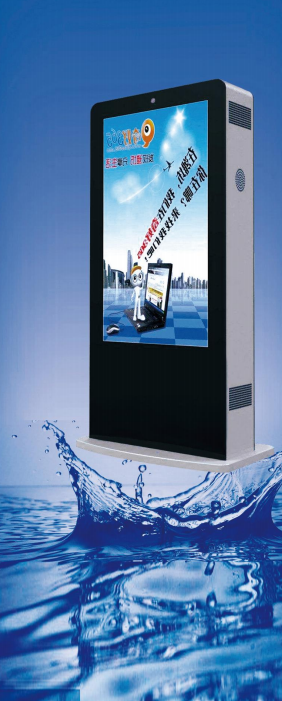
For outdoor media networks, displays are often installed in transport hubs, commercial districts, and smart city projects. The application requirements in this scenario include IP65 waterproof, high brightness, remote CMS playback mode, 24/7 continuous operation, and high temperature and outdoor exposure conditions. High-brightness LCD panels, industrial fans, and network connectivity are essential. When viewing distances are longer, LED displays provide higher pixel density and refresh rate.
Retail, hotels, and commercial districts
Retail chain stores and hotels use wall-mounted displays and digital signage for brand promotion, product display, and wayfinding. The KD-WM wall-mounted display uses BOE LCD panels, supports 1080p and optional 4K, and is designed for indoor commercial environments. The KD-AD advertising display adds Android-based network playback for remote content updates.
Corporate offices and training centers
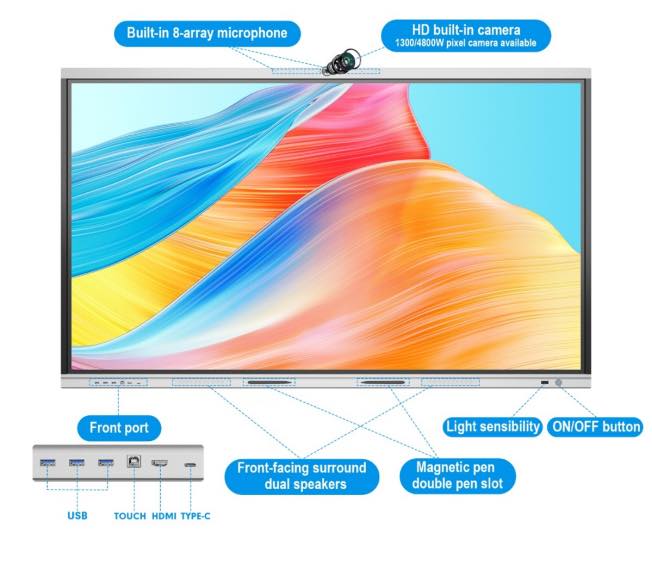
Corporate offices, training centers, and government offices use interactive conference displays for meetings, collaboration, and teaching. The KD-IFPD Smart Conference Display supports 4K-30Hz input, 40 touch points, and Android 14.0 with more than 10 languages, making it suitable for multinational teams.
Exhibitions, events, and stage visuals
Exhibition centers, hotel lobbies, and event companies require strong visual impact. The KD-ISS Interactive Slider Screen combines high brightness with a wall sliding display format for presentation-style installations. For stage and large-format visuals, LCD video walls and LED displays are used where seamless display and high refresh rates matter.
Public self-service kiosks
Hospitals, banks, airports, railway stations, government service centers, and shopping malls use self-service kiosks to reduce queuing and deliver information. The KD-SSK Self Service Kiosk includes a 21.5-inch touch display, thermal printer, Core i5 processor, 8GB RAM, and 256GB SSD.
Industrial control and monitoring
Industrial manufacturing and control environments require stable continuous operation, anti-interference, and clear real-time data visibility. GZKEDRO's application map lists industrial manufacturing as a target segment, with video wall displays and centralized management commonly used for monitoring and control rooms.
Market Signals That Affect Scenario Planning
Verified market data helps buyers anticipate which display formats will become more common in project specifications.
- The global commercial display market was estimated at USD 53.65 billion in 2024, with digital signage accounting for more than 53.73% of revenue, according to Grand View Research.
- The transparent display market was valued at USD 2.84 billion in 2023 and is expected to reach USD 81.5 billion by 2032, partly due to AR integration, according to Global Market Insights.
- The holographic display market is projected to grow from USD 5.42 billion in 2026 to USD 33.36 billion by 2034, at a CAGR of 25.52%, according to Fortune Business Insights.
- The industrial display market was estimated at USD 5.90 billion in 2024, driven by IIoT and HMI penetration, according to Grand View Research.
- North America held a 35.6% revenue share of the global digital signage market in 2025, the largest regional market, according to Grand View Research.
For project buyers, these signals point to three planning directions: outdoor digital signage remains the core of commercial display spending; transparent and holographic displays are moving from novelty formats to specified solutions; and industrial display demand is broadening beyond factories into smart city infrastructure. These shifts make scenario mapping more important, not less.
Commercial Displays vs. Traditional Signage and Consumer Screens
| Factor | Traditional signage / consumer screen | Commercial display |
|---|---|---|
| Content updates | Printed graphics, manual replacement | Remote CMS playback, scheduled deployment, centralized management |
| Brightness | Consumer screens are typically less bright | Indoor 350–450 cd/m2; outdoor LCD 2,000 cd/m2; LED 4,500 cd/m2 or higher |
| Durability | Not rated for continuous public operation | Tested with 100% aging and functional inspection, continuous operation testing |
| Customization | Limited to print size and placement | Logo, color, software, UI, packaging, voltage, housing, and system configuration |
| Support | Standard consumer warranty | Remote technical support and online guidance for installation and maintenance |
Limitations and boundaries
Commercial displays are not always the right solution. Static signage is still a reasonable choice for low-traffic areas, short-term campaigns, or locations without power and network access. High-brightness outdoor displays consume more energy and require proper ventilation. Transparent and holographic displays need controlled ambient lighting and sufficient floor or wall space, and their upfront cost is typically higher. Even the most durable outdoor display depends on correct installation, orientation, and service access.
Project Fit Checklist for Buyers
- Define operating hours: is the display expected to run 8 hours per day or 24/7?
- Define the environment: indoor, outdoor, temperature range, humidity, dust, rain, or direct sunlight.
- Define content type: static images, video, interactive touch, real-time data, or AI-driven digital human.
- Define viewing distance: close-up 4K or large-format LED with high refresh rate.
- Define content management: is remote CMS deployment needed across multiple locations?
- Define integration: thermal printer, camera, microphone, sensors, or video conferencing system.
- Define procurement constraints: MOQ, lead time, customization requirements, and packaging.
- Verify quality control and compliance: aging tests, functional inspection, and certifications such as CE, FCC, RoHS, and ISO9001.
Future Outlook
Procurement teams are shifting from single-screen purchases to project-level display planning. The verified market projections for transparent and holographic displays suggest growing demand for immersive formats, while outdoor LCD and LED remain workhorse formats for media networks. Displays are increasingly treated as managed infrastructure, with remote monitoring and cloud control becoming default requirements rather than optional features.
FAQ
What is a commercial display?
A commercial display is a display system designed for business, public, or industrial use, such as advertising displays, LED displays, video walls, conference displays, transparent displays, touch kiosks, outdoor waterproof displays, and digital human displays. Unlike consumer TVs, commercial displays are usually selected for continuous operation, environmental durability, and remote content management.
How do I choose a commercial display for an outdoor project?
Outdoor projects typically require high brightness, waterproof construction, and stable continuous operation. In GZKEDRO's application materials, outdoor projects list IP65 waterproof, high brightness, remote CMS playback mode, 24/7 continuous operation, and high temperature and outdoor exposure as special requirements. Outdoor LCD models offer 2,000 cd/m2 brightness, while LED models reach at least 4,500 cd/m2.
What brightness should an indoor commercial display have?
Indoor commercial displays commonly use 350 cd/m2 to 450 cd/m2. For example, GZKEDRO's wall-mounted display is rated at 350 cd/m2, and its indoor advertising display is rated at 450 cd/m2. Brighter options are available for storefronts and high-ambient-light interiors.
Can commercial displays be customized for project needs?
Yes. GZKEDRO supports customization of logo, color, software, UI interface, packaging, voltage, screen size, brightness, housing, and system configuration. MOQ is project-based and typically ranges from 2 to 5 units, with lead times of 15–30 days.
Which displays are suitable for interactive or AI-driven projects?
Interactive projects can use the KD-IFPD Smart Conference Display, which supports 40 touch points; the KD-SSK Self Service Kiosk for public touch inquiry; or the KD-ISS Interactive Slider Screen for exhibitions. AI-driven projects can use the KD-DH Holographic Digital Human, which integrates a 4K display, an 8-array microphone, and a 5MP driverless camera.
What quality checks should buyers expect from a commercial display supplier?
Buyers should look for documented quality control. GZKEDRO performs 100% aging tests and functional inspections, including brightness, waterproof, touch, temperature, and continuous operation testing before shipment. The company also cites CE, FCC, RoHS, and ISO9001 certifications in its corporate profile.
How long does an OEM/ODM commercial display project take?
According to GZKEDRO's capability profile, lead time is 15–30 days, with a maximum of 30 days. Monthly production capacity is 2,000–5,000 units, depending on the product and configuration.
Further Reference
GZKEDRO's English product catalog is available for public access and download: GZKEDRO Product Catalog (English Edition). The catalog includes the full product lineup and specifications referenced in this article.
Tem questões ou precisa de mais detalhes?
Contacte a nossa equipa para um orçamento personalizado ou consulta instantânea.
Solicitar orçamento
Preencha o formulário abaixo e a nossa equipa entrará em contacto com uma proposta personalizada.
Chat direto do WhatsApp
Prefere conversar em tempo real? Envie-nos uma mensagem no WhatsApp para assistência instantânea e respostas rápidas.
- Obter orçamento personalizado
- Partilhar fotos ou documentos
- Discuta as suas necessidades diretamente
Geralmente responde em 5–30 minutos durante o horário de expediente.