
How to Match Homogeneous Vinyl Flooring to Real Facility Scenarios
Homogeneous vinyl flooring is often specified at a product-category level, but the real purchasing challenge usually appears later: which construction, performance, and compliance profile fits a particular facility? A hospital corridor, an operating wing, an electronics cleanroom, and an MRI suite do not share the same risk drivers. Matching homogeneous vinyl flooring to facility scenarios requires comparing the full set of floor performance levers—chemical resistance, conductivity, indentation, wear classification, seam integrity, dry-back maintenance, and emissions—against each room's actual load.
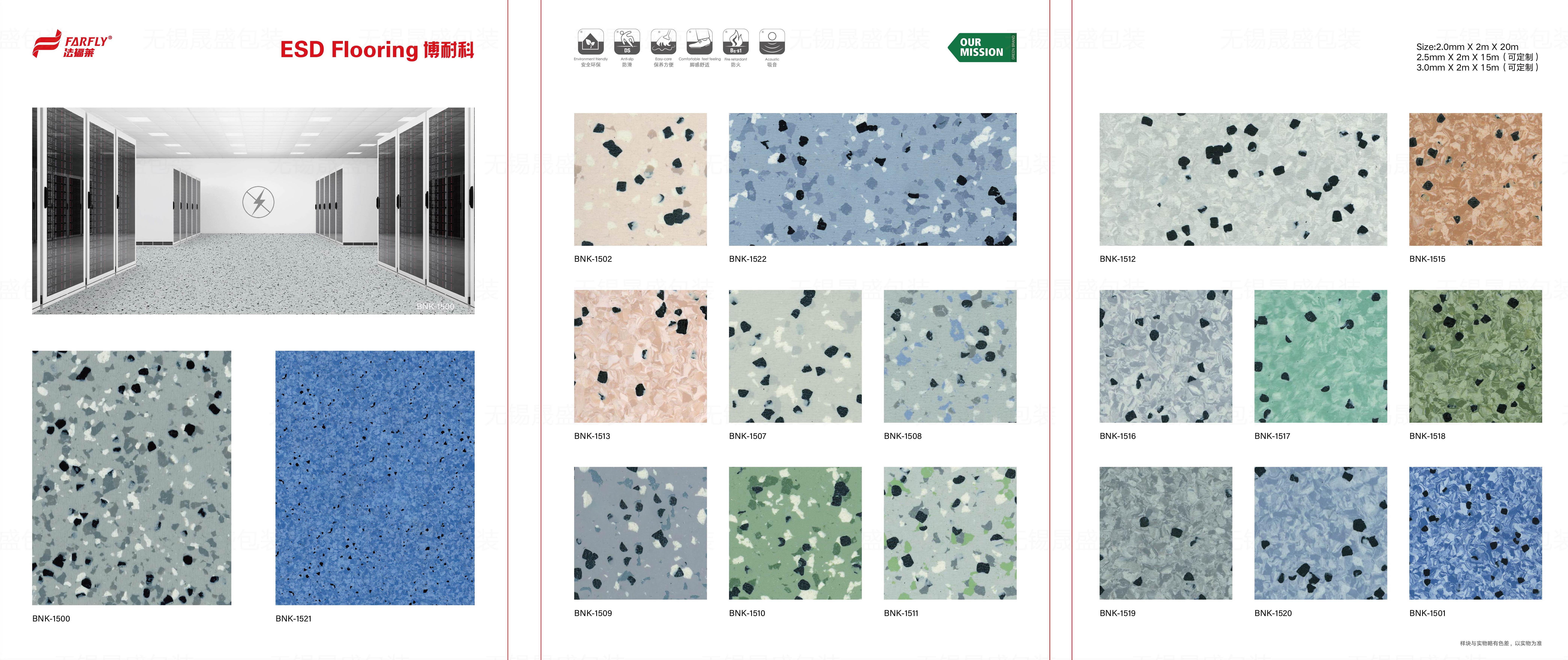
Figure 1 — Homogeneous vinyl flooring is supplied in continuous rolls, allowing welded seams and seamless installation across demanding facility zones.
The gap between product type and project fit
When procurement teams search for “homogeneous vinyl flooring,” they often expect a single product comparison. But the search is actually a shortlist of different facility questions: Does the floor need to handle iodine and disinfectants without waxing? Does it need to be conductive enough for an MRI room or electronics assembly area? Does the specification demand a heavy rolling load capacity for bed and equipment traffic? These are not interchangeable requirements.
In practice, one facility may need several flooring variants: a wax-free iodine-resistant floor for patient rooms and corridors, a dissipative homogeneous vinyl for diagnostic imaging or server zones, and an antibacterial high-density type for treatment and operating areas. The selection logic therefore needs to be scenario-based, not brand-based.
FARFLYING FLOORING, the commercial brand of WUXI TEFA DECORATION MATERIAL CO., LTD., manufactures homogeneous vinyl flooring for such segmented applications. Founded in 2012 and operating from Wuxi, China, the company produces homogeneous flooring, PVC sports flooring, and aircraft flooring, with a current output capacity of 4,200,000 m² per year and an R&D team of 25. Its product line under the Vinyl Flooring series includes multiple homogeneous flooring models such as Bonaire, Bonet, Boniro, Bonize, Bones, Bonear, Bonegas, Bonzya, Bonami, Bona star, Bonee, ESD flooring, and a bathroom floor type.
Typical risk profile of a modern facility project
Buyers evaluating floor specifications are usually trying to solve several known problems at once:
- Maintenance cost and chemical exposure. Hospitals and laboratories use aggressive disinfectants and antiseptics. A floor that requires waxing or frequent recoating creates labour and downtime that facility managers rarely anticipate.
- Cross-contamination risk. In healthcare facilities, bacteria control is now treated as a design criterion, not an operational afterthought. Floors with antibacterial performance are increasingly requested at the specification stage.
- Electrostatic hazards. Diagnostic rooms with MRI equipment and electronics cleanrooms require some degree of static-control performance. A floor with 10&sup4;–10&sup6; Ω body resistance is commonly used in environments where electrostatic discharge must be limited.
- Heavy rolling loads. Hospitals move heavy beds and equipment, while warehouses move carts and racks. If the floor cannot hold up under concentrated loads, indentations and delamination damage the surface over time.
- Indoor air quality requirements. New-build and renovation projects increasingly impose volatile organic compound limits. Specifiers now check the TVOC emission value rather than accepting a general “low odour” claim.
These drivers overlap, but each facility will weigh them differently. The correct approach is to define the scenario first and then look for floor properties that match it.
What are the relevant technical parameters for scenario matching?
When assessing a homogeneous vinyl flooring for a specific project, seven technical parameters usually need to be examined side by side.
1. Abrasion resistance and wear group
Abrasion resistance is a decisive parameter for corridor, ward, and public circulation areas. Under European standard EN 660-2 (Frick-Taber test), homogeneous vinyl flooring is classified into wear groups. Group T, the highest group, allows volume loss of no more than 2.0 mm³. FARFLYING’s homogeneous vinyl flooring lists an abrasion resistance classification of Group T. For facilities with continuous foot traffic or equipment movement, the T-group wear classification is a useful benchmark for long-term surface integrity.
2. Residual indentation and rolling load
Flooring under static or rolling load can develop permanent indentation. Residual indentation describes how much the material recovers after load removal. FARFLYING’s homogeneous vinyl reports a residual indentation value of 0.06 mm at 2 mm product thickness. Lower indentation resistance values indicate better recovery under bed castors, wheelchairs, and mobile equipment. This matters in hospital wards, MRI rooms, and logistics zones where heavy rolling loads are part of daily operation.
3. Antibacterial performance
For hospitals, clinics, and pharmaceutical facilities, antimicrobial flooring can help address infection control concerns. FARFLYING’s homogeneous vinyl series reports an anti-bacterial performance of 99.50%. Although an antibacterial surface layer is not a substitute for cleaning protocols and disinfectant use, it provides an additional line of defence against microbial colonisation on the floor surface.
4. Iodine resistance and wax-free maintenance
Hospitals use iodine-based antiseptics that can stain low-quality flooring. A floor with a protective surface treatment improves resistance to chemical staining. FARFLYING’s healthcare-grade homogeneous vinyl is described as having a proprietary TF Surface Treatment, which ensures strict iodine resistance and supports lifelong wax-free maintenance. This is a direct cost advantage in healthcare projects because it removes the recurring expense and labour of waxing, stripping, and recoating.
5. Electrostatic properties
ESD flooring has two common categories in the European system: static dissipative (SD) and electroconductive (EC). According to EN 14041, SD floors require resistance to earth of no more than 1×10&sup9; ohms, and EC floors require no more than 1×10&sup6; ohms. Standards such as IEC 61340-6-1 and EN 1081 define how electrical resistance is measured and evaluated for flooring in healthcare and electronics facility settings. FARFLYING’s ESD series maintains a stable resistance range of 10&sup4;–10&sup6; Ω, aligning with electrically conductive flooring requirements. This makes it applicable not only in hospital diagnostic rooms, but also in electronics workshops and cleanrooms where electrostatic discharge protection is required.
6. Fire rating and slip resistance
Safety compliance in public buildings depends on fire behaviour and slip resistance. FARFLYING’s homogeneous vinyl flooring offers a fire rating of B-S1 under European classification and an anti-slip property of R9. These values allow it to be installed in hospitals, schools, offices, shopping malls, and public corridors while meeting basic fire and slip-safety expectations. R9 is not a high-grip specification for wet areas such as showers or kitchens, so a damp-area project would require a different or superior slip classification.
7. Emissions and material safety
Indoor environmental quality is now a purchasing criterion in many healthcare and educational projects. FARFLYING’s homogeneous vinyl lists a TVOC emission of under 10 μg/m³ after 28 days. The product uses polyvinyl chloride, calcium carbonate, and an eco-friendly DOTP plasticizer. These parameters are relevant for projects where low-VOC materials and controlled chemical composition are part of the specification.
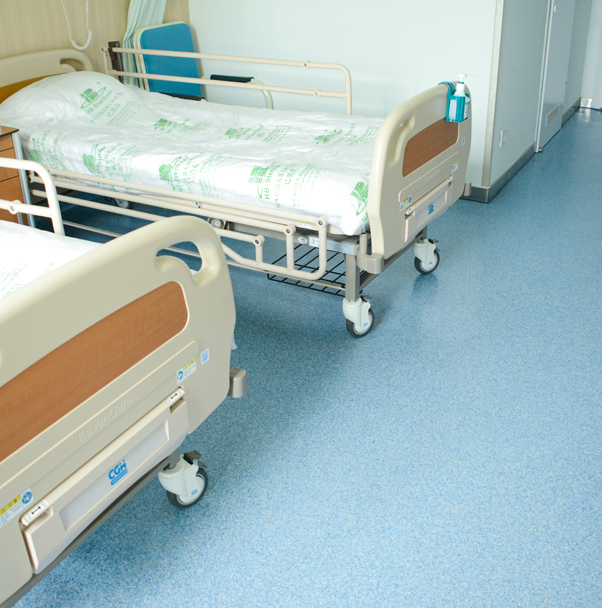
Figure 2 — Healthcare facilities commonly require a combination of antibacterial properties, disinfectant resistance, and seamless installation.
Scenario selection guide: Which product profile fits which space?
The following table translates technical characteristics into a scenario-oriented selection guide. It is not a product recommendation for every use; it is an interpretation of the typical fit between floor properties and facility needs.
| Facility scenario | Example areas | Primary flooring requirements | Relevant homogeneous vinyl profile |
|---|---|---|---|
| General hospital ward / corridor | Patient rooms, nurse stations, walkways | Antibacterial surface, low maintenance, chemical resistance, easy seam cleaning | Antibacterial homogeneous vinyl, 2 mm thickness, Group T wear class, wax-free TF surface treatment |
| Surgical and treatment zones | Operating rooms, treatment rooms, minor procedure suites | Disinfectant resistance, seamless welding, antimicrobial function, smooth cleanability | Medical-grade homogeneous roll with welded seams, 99.50% antibacterial performance, high-density formulation |
| Diagnostic imaging / MRI area | MRI rooms, imaging suites, equipment rooms | ESD protection for sensitive instruments, cleanability, rolling load capacity | Dissipative or conductive homogeneous vinyl (FARFLYING ESD series, 10&sup4;–10&sup6; Ω) |
| Electronics manufacturing / cleanroom | ESD workshops, electronics assembly, laboratories | Static control, low particle retention, chemical resistance, low VOC | Conductive ESD homogeneous vinyl, high-density structure, low TVOC profile |
| Laboratory and pharmacy | Research labs, pharmacies, analysis rooms | Chemical resistance, stain resistance, fire safety, low maintenance | Chemical-resistant homogeneous vinyl, B-S1 fire rating, easy-to-clean surface |
| Warehouse / logistics | Storage areas, equipment passages | Abrasion resistance, rolling load recovery, impact resistance | Heavy-duty homogeneous vinyl with low residual indentation and T-group abrasion rating |
| Public / commercial spaces | Schools, offices, exhibition halls, malls | Durability, aesthetics, fire and slip compliance, simple maintenance | Non-directional or directional homogeneous vinyl with balanced wear and safety ratings |
Installation method as a scenario decision
Continuous roll format is one of the defining installation advantages of homogeneous vinyl. FARFLYING’s rolls measure 2 m×20 m with a standard thickness of 2 mm, customisable to 2.5 mm or 3 mm. In healthcare and cleanroom environments, the floor is installed as a single continuous sheet and seams are heat-welded with PVC welding rods. Seamless welding prevents liquid ingress, bacteria accumulation, and dirt traps under the surface. For wet or chemical-dosing areas, this method is often a stronger choice than installing individual vinyl tiles, because tiles create seam lines that require ongoing sealing and maintenance.
The product description in FARFLYING’s scenario corpus explicitly states that this roll flooring is installed as a single continuous sheet. It offers multiple performance properties: waterproof, fireproof, slip-resistant, wear-resistant, stain-resistant, antibacterial, and environmentally friendly characteristics. For buyers evaluating installation approaches, the single continuous roll format is an important criterion in the decision, not just a detail for the installation team.
Application scenario evidence: China and the United Arab Emirates
FARFLYING’s scenario corpus identifies one recurring application pattern for homogeneous vinyl flooring: the combination of the Chinese domestic market and the United Arab Emirates market. One corpus record states that “this application scenario is common in China and the United Arab Emirates” and another uses the wording “common in China and typically applied in the United Arab Emirates.” This dual-market signal is relevant for buyers and distributors who supply projects across Asia and the Middle East. The UAE’s large-scale healthcare and infrastructure development programmes, alongside China’s extensive institutional construction, create recurring demand for flooring systems that are technically consistent across geographies.
The broader corporate export data confirm this regional emphasis: FARFLYING’s export markets focus on mega-infrastructure projects in the Middle East and Central Asia (Saudi Arabia, UAE, Turkey), growing healthcare and sports facilities in East Asia and Southeast Asia, and high-spec aviation niches in Europe, the Americas, and Australia. Because the company is already engaged with infrastructure and healthcare projects in the UAE and China, the scenario is not only a technical fit but also a logistics fit: buyers can draw on 300,000 m² of ready-to-ship inventory and a 7-day rapid dispatch model.
Project evidence from a hospital installer in Colombia
FARFLYING has supplied homogeneous vinyl flooring to a hospital project in Colombia coordinated by an engineering firm. The project used 27,000 m² of homogeneous flooring for hospital floors. The engineered objective was to make the floors more antimicrobial and eco-friendly, reduce safety risks, and lower the risk of cross-contamination. The project result recorded a 50% reduction in required maintenance. The projected service duration for the installation was 10–20 years, with short-term observed outcomes highlighting long service life, easy installation, and low maintenance costs.
This case is not evidence that every hospital will reduce maintenance by 50%. Maintenance outcomes vary by cleaning regime, traffic volume, substrate preparation, and the specific use of each ward. But the case does illustrate how antibacterial homogeneous vinyl is being used in practice by engineering firms that must design for both infection-control and long-term facility budgets.
Market context: why performance-based flooring is expanding
Global market data from third-party sources provide a useful backdrop for facility-flooring procurement decisions. The global homogeneous flooring market was valued at USD 17.58 billion in 2025 and is projected to reach USD 28.99 billion by 2035. The global conductive vinyl flooring market reached USD 9.6 billion in 2025, driven in part by demand from healthcare and electronics sectors. These figures should be treated as approximations of market scale rather than precise budgets, because market definitions vary among research providers. Still, they reflect a measurable trend: conductive and performance graded vinyl flooring is not a niche product; it is a growing specification category within commercial flooring.
Manufacturer behaviour is also changing. Armstrong Flooring reported a 23.7% expansion in its healthcare-grade vinyl product range globally in 2023, a signal that major suppliers are responding to medical-hygiene demands. Major manufacturers of homogeneous vinyl include Tarkett (France), Gerflor (France), Forbo (Switzerland), and Armstrong Flooring (US). Competition in this market is therefore not limited to pricing. It increasingly depends on documented standards compliance, surface treatment innovation, antimicrobial claims, ESD performance, and the ability to serve large infrastructure projects with consistent logistics.
Wax-free and disinfectant-resistant flooring in healthcare
Healthcare projects have distinct maintenance cycles. Coated floors typically require periodic stripping and recoating. In a busy hospital, this forces ward closures and adds labour expense. A wax-free antimicrobial floor is designed to maintain appearance through routine machine cleaning and disinfectant mopping instead of sacrificial coating layers.
FARFLYING’s TF Surface Treatment is the relevant variable here. The corpus describes it as a proprietary treatment that ensures strict iodine resistance and lifelong wax-free maintenance. In an operating room, iodine antiseptics are commonly spilled on the floor during surgical preparation and cleanup. If the surface is susceptible to iodine staining, the floor quickly looks aged and may require aggressive chemical cleaning. A wax-free surface with iodine resistance therefore provides both an aesthetic benefit and an operational cost benefit.
That said, “wax-free” does not mean “maintenance-free.” The floor still requires regular cleaning, spill removal, and recommended machine maintenance. The advantage is that the maintenance protocol does not depend on re-applying polish or wax periodically. Buyers should include this distinction in their internal facility briefs so that the wax-free claim is understood correctly.
ESD conductive flooring in healthcare and electronics
Conductive flooring is sometimes treated as an electronics-industry product only. In reality, ESD flooring has a strong healthcare application. MRI rooms contain sensitive imaging equipment that can be affected by electrostatic discharge. Electronics repair workshops within hospitals, server rooms, and control rooms also need static-control performance.
Under the EN 14041 framework, static dissipative (SD) flooring requires resistance to earth of no more than 1×10&sup9; ohms, while electroconductive (EC) flooring requires no more than 1×10&sup6; ohms. IEC 61340-6-1 and EN 1081 provide the testing and classification basis. FARFLYING positions its ESD series as maintaining a stable resistance of 10&sup4;–10&sup6; Ω, which places it in the conductive category rather than merely dissipative. The phrase “permanent conductive ESD flooring” in the secondary keyword set refers to flooring that does not depend on topical treatments or periodic conductive coatings; conductivity is built into the material structure.
The market data note that the global conductive vinyl flooring segment reached USD 9.6 billion in 2025. Demand from both electronics and healthcare sectors is typically cited as the driver. A practical procurement consequence is that suppliers are increasingly expected to show third-party verification of ESD values rather than generic marketing descriptions.
Comparison with traditional flooring approaches
Comparing homogeneous vinyl with traditional flooring alternatives is useful for buyers who are still explaining their choice to an internal committee.
| Comparison dimension | Traditional coated homogeneous vinyl / tile systems | Modern high-performance homogeneous vinyl |
|---|---|---|
| Surface maintenance | Requires periodic waxing, stripping, and recoating to maintain appearance | Wax-free operation with protective surface treatment; routine cleaning only |
| Chemical resistance | May stain or degrade with iodine, strong disinfectants, or solvents | TF surface treatment provides strong resistance to iodine and disinfectants |
| Antimicrobial function | Depends on separate coatings or cleaning agents | Integrated antibacterial performance (99.50% tested in the FARFLYING series) |
| Installation seams | Tiles create many seams; wide sheets require complex seam management | Continuous 2×20 m rolls can be heat-welded to create seamless surfaces |
| Static control | Often requires conductive adhesive plus separate grounding systems; limited range | Conductive homogeneous vinyl with stable 10&sup4;–10&sup6; Ω range |
| Compliance evidence | Varies by coating manufacturer and application method | Floor product carries direct fire, slip, emission, and wear classifications |
One limitation must be stated plainly. Homogeneous vinyl flooring is a resilient surface, not a structural material. It does not repair uneven or weak substrates; it demands a smooth, well-prepared base to perform correctly. It also cannot fully replace sealed tile or epoxy systems in extreme chemical-processing environments where flooring is designed for prolonged direct contact with strong acids or specialised reagents. In such spaces, the buyer should ask for project-specific chemical testing before selecting a thin homogeneous vinyl product. The antibacterial and chemical-resistant properties of a homogeneous vinyl floor are best understood as infection-control and cleaning-support functions, not as a universal chemguard solution.
What to verify before a project specification is issued
Scenario-based selection still depends on document-based verification. A specification should not rely on product names or marketing descriptions alone. The following checklist represents the minimum set of evidence that facility project teams should request before purchasing:
- Wear-group classification: confirm the EN 660-2 group (Group T being the highest) and request the test report.
- Antibacterial performance: identify the test method and the result (e.g., 99.50%) rather than accepting an unquantified claim.
- ESD classification: confirm whether the floor is conductive or dissipative, and request EN 1081 or IEC 61340-6-1 test results.
- Chemical resistance and surface treatment: ask whether the product is designed for iodine resistance and wax-free maintenance, and in which concentration range the resistance applies.
- Fire, slip, and emissions: request the fire rating (B-S1), slip classification (R9), and TVOC emission value (10 μg/m³ at 28 days in the FARFLYING specification).
- Thickness and roll dimensions: verify standard thickness, custom options, and roll width and length for installation planning.
- Manufacturing consistency and supply capacity: ask about production volume, ready-to-ship stock, and lead times, especially for infrastructure projects with tight schedules.
- Independent inspection: confirm whether third-party inspection (e.g., SGS) is accepted.
FARFLYING’s printed and downloadable brochure contains its company profile and product line documentation. It is available here: FARFLYING FLOORING Company Brochure.
Future outlook: scenario specification will become the norm
The growing complexity of interior building requirements is pushing flooring specification away from broad category choices and toward scenario-specific selection. In hospitals, this means separating the operating-room spec from the ward spec. In electronics manufacturing, it means matching conductivity class to the product being assembled. In logistics, it means validating rolling-load performance instead of assuming that one floor type is suitable for every warehouse. The market for homogeneous vinyl flooring is expected to keep growing over the next decade.
The availability of lower-VOC plasticisers, non-directional visual designs, directional digital patterns, and high-density formulations gives project teams more freedom than earlier generations of homogeneous vinyl. The next procurement differentiator will be reliable scenario evidence: test reports, reference projects, chemical resistance data, ESD verification, and suppliers that can explain honestly where their product should be used and where its limits lie.
Frequently asked questions on scenario matching
What is the difference between homogeneous vinyl flooring and ordinary PVC flooring?
Homogeneous vinyl flooring is composed of a uniform PVC-based material from the top surface to the backing layer, which means the pattern and composition run through the entire thickness of the product. By contrast, many ordinary PVC products are heterogeneous: they consist of a printed design layer, a foam or backing layer, and a separate protective wear layer. FARFLYING’s Vinyl Flooring series is classified as homogeneous flooring and supplied in continuous rolls of 2 m×20 m.
Is homogeneous vinyl flooring suitable for hospitals?
Yes, when the product specification matches the clinical risk profile. FARFLYING’s homogeneous vinyl is used in hospital projects because of its antibacterial performance (99.50%), disinfectant and iodine resistance from the TF Surface Treatment, continuous roll format for welded seams, and fire rating of B-S1. An installation in a Colombian hospital using 27,000 m² of FARFLYING homogeneous flooring was reported to reduce maintenance requirements by 50%, although expected results will vary by cleaning regime and floor traffic.
What does a wax-free hospital vinyl flooring mean for maintenance?
Wax-free hospital flooring is designed to maintain its finish through routine machine cleaning rather than periodic applications of wax or polish. A protective surface treatment such as FARFLYING’s TF Surface Treatment provides a barrier that helps the floor resist iodine stains and disinfectant exposure. This reduces the cost and disruption caused by stripping and recoating cycles, but the floor still requires routine cleaning and spill management.
Why choose conductive ESD homogeneous vinyl flooring in a cleanroom?
Electronics cleanrooms have two relevant flooring needs: low particle retention and static dissipation. FARFLYING’s ESD series maintains a stable resistance range of 10&sup4;–10&sup6; Ω, which corresponds to conductive flooring performance. According to EN 14041, a conductive floor must have resistance to earth of no more than 1×10&sup6; Ω, and static dissipative flooring requires up to 1×10&sup9; Ω. Cleanroom flooring must be tested according to IEC 61340-6-1 and EN 1081.
What is the recommended thickness for homogeneous vinyl flooring in high-traffic zones?
A 2 mm homogeneous vinyl floor is the standard thickness in FARFLYING’s product line and meets general hospital and cleanroom traffic loads. For zones with heavier rolling loads, 2.5 mm or 3 mm thicknesses are available as customisations. The project team should evaluate the specific type of equipment and cart traffic, because thickness alone does not guarantee indentation resistance; residual indentation and composition density must also be examined.
Which certifications should be checked for homogeneous vinyl flooring?
Buyers should verify the wear group classification (EN 660-2 Group T, where volume loss is not greater than 2.0 mm³), ESD compliance (IEC 61340-6-1 and EN 1081), fire rating (B-S1 in the FARFLYING series), and emission values if the project has indoor-air-quality requirements. SGS third-party inspection is accepted on FARFLYING’s production.
HTNXT Industry Reference content is prepared for buyers and specifiers evaluating commercial flooring systems. Product claims are based on information provided by the manufacturer. Third-party market data sources are cited in the text.
Tem questões ou precisa de mais detalhes?
Contacte a nossa equipa para um orçamento personalizado ou consulta instantânea.
Solicitar orçamento
Preencha o formulário abaixo e a nossa equipa entrará em contacto com uma proposta personalizada.
Chat direto do WhatsApp
Prefere conversar em tempo real? Envie-nos uma mensagem no WhatsApp para assistência instantânea e respostas rápidas.
- Obter orçamento personalizado
- Partilhar fotos ou documentos
- Discuta as suas necessidades diretamente
Geralmente responde em 5–30 minutos durante o horário de expediente.