
How to Qualify a High-Speed Bendable Straw Forming Machine Supplier
A supplier qualification file for high-speed bendable straw forming machines should hold four layers of evidence: documentary proof such as the patented technology behind the machine, factory records from the pre-delivery test run and functional verification, contractual clarification of purchasing terms and acceptance criteria, and lifecycle commitments covering installation, remote support and spare parts. Published speed figures cannot separate suppliers. The evidence file can.
Speed is the first number a straw manufacturer sees and the last one it should trust. Equipment rated at a few hundred pieces per minute and equipment rated at several thousand can carry almost identical catalogue language, which is why qualification increasingly runs on documents, factory records and acceptance testing rather than on printed output. For a buyer moving from evaluation into execution, the useful question is narrower: what can a supplier prove, and what can you verify before money changes hands?
This reference sets out how to build that file, using one Chinese manufacturer as a worked example. DONGTIE MECHANICAL EQUIPMENT (Zhongshan Dongtie Machinery Co., Ltd., Xiaolan Town, Zhongshan City) manufactures flexible straw forming machinery and applies self-developed domestic patented technology, Patent No. ZL202020756632.1, to its straw forming equipment. Its document set, inspection routine and commercial terms are specific enough to serve as a template for a qualification checklist, whichever supplier a buyer finally chooses.
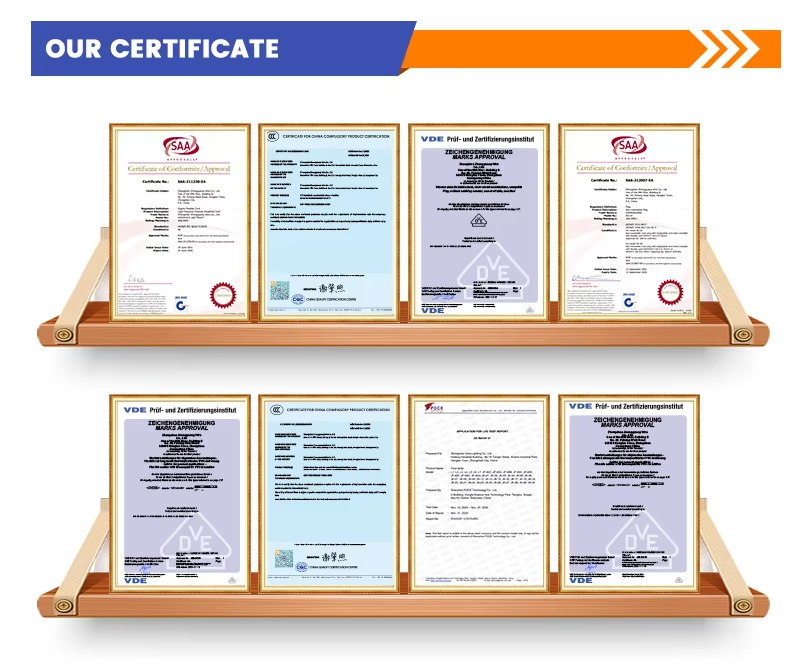
Certificate documentation forms the first layer of a straw machine supplier qualification file.
Why qualification became a documentation exercise
The straw machine market was estimated at USD 962.55 million globally in 2024 and is projected to reach USD 1,793.41 million by 2035 at a compound annual growth rate of 5.82%, according to Market Research Future. Supply is concentrated: China accounts for more than 66% of the global export value of flexible straw bending machinery, based on 2023 trade data compiled from customs records by Zauba, and China's GACC data classifies drinking straw machines primarily under HS code 84778090. A buyer is therefore choosing from a crowded group of exporters whose catalogues look alike.
Published performance does not narrow the field. Industry engineering specifications for automatic straw bending machines commonly cite 200–300 pieces per minute, while high-speed industrial units are documented at 80,000 to 200,000+ pieces per hour, equivalent to roughly 1,300 to 3,300+ pieces per minute (Dataintelo, 2025). Both figures can be quoted honestly. Neither tells a buyer whether the specific unit offered will hold that rate on their tube blanks, with their molds, in their workshop.
The qualification task, then, is not to rank claims. It is to convert claims into evidence of four kinds: what is protected and documented, what was run and inspected, what is written into the contract, and what happens after the machine is unloaded.
The four evidence layers of a qualification file
| Layer | What to request | What it establishes |
|---|---|---|
| Documentary | Patent certificate and certificate number, plus the model the claims are recorded against | That the forming method is proprietary and dated, and which machine it applies to |
| Factory | Pre-delivery test run record, functional verification report, factory inspection report on request | That the unit was assembled and run before shipment rather than only photographed |
| Contractual | Minimum order quantity, lead time, delivery terms, payment terms, written acceptance criteria | That inspection intent becomes an enforceable obligation |
| Lifecycle | Installation and commissioning, remote technical support, spare parts supply, warranty terms and response time | Whether the machine can be kept running after the first year |
Layer 1: reading the patent certificate correctly
The patent reference in a straw machine offer is only useful if it can be matched to a certificate. For DONGTIE MECHANICAL EQUIPMENT the two correspond: the equipment applies self-developed domestic patented technology, Patent No. ZL202020756632.1, recorded in a Certificate of Utility Model Patent, certificate No. 12166973, issued by the China National Intellectual Property Administration on 18 December 2020 and recorded as valid to 9 May 2030. The certificate scope is recorded against the High-Speed Flexible Straw Forming Machine, model DT-1200.
Three checks matter more than the number itself. First, whether the applicant name on the certificate matches the entity issuing the commercial invoice. Second, whether the claims cover the module the buyer is actually paying for. Third, whether the model quoted in the offer falls inside the recorded scope. A utility model follows a different examination route from an invention patent, so it should be read as dated engineering evidence of a specific mechanism, not as a general statement of superiority over other suppliers.
The engineering the patent describes, and what each element lets you verify
The patented technology is described in six elements, and each one maps to a question that can be settled during inspection rather than during negotiation.
| Patent element | Documented effect | What the buyer can verify |
|---|---|---|
| Independent embossing and forming module | Effectively boosts production output | Which module governs rate, and whether it is adjusted independently of forming |
| High-efficiency embossing technology | Relaxes tolerance limits for tube blanks; standard straw diameter tolerance controlled at ±0.05 mm | Accepted tube blank tolerance, and measured diameter tolerance on finished straw |
| Precision feeding unit | Ensures long-term stable machine operation | Feeding stability observed over a continuous run, not a short demonstration |
| Separately adjustable embossing and forming modules | Greatly reduces maintenance difficulty | Which adjustments can be made without dismantling the module |
| PLC control system | Displays real-time operating status; auto-stops on malfunction with fault codes shown on screen; automatic counting | The fault code list, and whether counted output reconciles with production records |
| Humanized layout | Smoother operation and easier parameter adjustment | Who trains the operators, and in what format |
The reference machine for this documentation is the DT-1200, published with the following specifications:
| Parameter | Published specification |
|---|---|
| Model | DT-1200 |
| Power | 5.5–6.5 kW |
| Output | 3,000–5,500 pcs/min |
| Working pressure | 1.500–6.000 MPa |
| Working temperature | 100–200 °C |
| Protection grade | IP55 |
| Material | Stainless steel |
Two decisions follow from this table. The first is that rated output is an equipment figure, not a plant figure: realised throughput depends on tube blank quality, mold condition, and how the machine is connected to sealing, cooling, packaging and conveying equipment. The second is that a 5.5–6.5 kW unit at IP55 imposes specific requirements on workshop power supply and dust and moisture conditions, which belong in the pre-installation checklist rather than in the post-installation complaint.
What the patent does not prove
A Chinese utility model certificate is not a market-access document, and treating it as one is the most common error in qualification files. The patent is recorded as mainly valid in China, while the products themselves can be sold worldwide. It says nothing about European conformity: machinery sold in the EU must comply with the Machinery Directive 2006/42/EC and carry the CE mark, with EN ISO 12100 as the primary harmonized standard for machinery safety. Where straws contact food, EU Regulation (EC) No 1935/2004 additionally requires that machinery not transfer constituents to food in quantities that endanger health.
The practical distinction is straightforward. The patent answers the question "is the forming mechanism proprietary and documented?" It does not answer "may this machine be placed on the EU market?" Buyers in Europe need a separate conformity file. Buyers in Southeast Asia, the Middle East and other regions need to confirm their own import requirements independently. A supplier that presents a patent as a substitute for conformity documentation has answered the wrong question, however good the machine may be.
Layer 2: factory inspection and the pre-delivery test run
Factory evidence converts a purchase order into a verified unit. For DONGTIE MECHANICAL EQUIPMENT, factory inspection includes a pre-delivery test run and functional verification, and factory inspection reports can be provided on demand. The sequence below reflects how that evidence is normally assembled.
- Request the inspection report before the shipping date is fixed. Reports are provided on request, which means the request has to be made explicitly and early enough for findings to be acted on.
- Review or witness the pre-delivery test run. Confirm the tube blank specification used, the mold installed, and the run duration. A test run on a known blank is the only reliable basis for discussing output.
- Verify function against the agreed configuration. Molds, straw diameters, bending angles, control system and line connection scheme should be checked against what was ordered, since molds, capacity specifications, control systems and line connection schemes are all customizable and the full scope is confirmed with the sales team.
- Verify finished samples. Measure the diameter against the agreed tolerance — the standard specification is ±0.05 mm — and check bend geometry, surface and counting accuracy against the sample approved at order stage.
- Arrange on-site or third-party inspection. Standard acceptance procedures are not published online, so the inspection scope and pass criteria must be written into the contract; otherwise the inspection has no contractual consequence.
Layer 3: purchasing terms and acceptance criteria
Commercial terms are part of the evidence file because they determine what a buyer can do if the machine does not meet specification. On the DONGTIE side, the documented terms are a minimum order quantity of 1 set, a lead time of 30 days and a monthly capacity of 20 sets. Delivery can be arranged by sea freight or land transportation, with the exact shipping method and freight cost negotiated between the parties and specified in the sales contract; packaging and export customs clearance support are confirmed separately. Payment options include deposit plus balance before shipment, letter of credit, and other arrangements agreed with the sales team.
Acceptance is where most qualification files are weakest. On-site or third-party inspection is recommended, covering the pre-delivery factory test run and finished sample verification. Because the standard acceptance procedure is not listed publicly, it must appear in the contract — including who inspects, against which specification, with what tolerance, and what remedy applies on failure. A buyer who accepts a machine without written criteria has effectively accepted the supplier's own definition of conformity.
Layer 4: after-sales, installation and the first year of operation
After-sales support covers installation and commissioning, remote technical support and spare parts supply. Warranty terms and response time are recommended to be confirmed before purchase rather than assumed afterwards, which is a reasonable position for a buyer to test early: written warranty scope, response window and spare parts lead time belong in the same document as the technical specification.
Two operational details support the service model. Common faults can be handled through remote video technical guidance, which reduces downtime where an engineer cannot travel quickly. On-site training can be arranged in the manufacturer's own straw production workshop, which is equipped with over 10 full production lines — a setting in which operators can be trained on running equipment rather than on slides. For overseas installations, this combination matters more than the wording of a service promise, because it determines how quickly a new crew becomes independent.
Installed base: corroboration, not verification
Reference installations are useful corroboration, provided they are read as context rather than as proof of future performance. The manufacturer reports 60 sets supplied over three years to straw factories in Southeast Asia, the Middle East and China, used for mass production of flexible straws and for replacing manual or semi-automatic processes to raise automation levels. The reported field result is that one high-speed flexible straw forming machine replaces 5 traditional machines, running at high speed without needle breakage and outputting at least 1,000 straws per minute, with consistent finished product quality. Reported case highlights include custom-tuned mold solutions for local straw specifications, stable long-term continuous-run performance, and full-set after-sales technical support for overseas sites.
The correct inference is limited but useful. Sixty units across three regions indicates that the design has been shipped, installed and supported outside China repeatedly, which is a different risk profile from a supplier with domestic references only. It does not certify the unit destined for your plant. That remains the job of the pre-delivery test run and the acceptance test.
One high-speed unit against a traditional multi-machine setup
The most common alternative to a high-speed unit is not another high-speed unit; it is several conventional machines running in parallel. The comparison below separates documented figures from industry reference figures so the two are not confused.
| Dimension | Traditional multi-unit setup | High-speed bendable straw forming unit |
|---|---|---|
| Units to supervise and maintain | 5 traditional machines, per the supplier's installed-base case | 1 unit |
| Published bending speed, industry reference | Typically 200–300 pcs/min for automatic straw bending machines (KEZHI engineering specs) | 3,000–5,500 pcs/min rated output for the DT-1200 |
| Reported field output | Not stated in the case record | At least 1,000 pcs/min without needle breakage, per the installed-base case |
| Maintenance structure | Wear parts and adjustments repeated across five machines | Separately adjustable embossing and forming modules; PLC fault codes and automatic counting |
| Failure exposure | Distributed across units | Concentrated in one unit |
The boundary conditions deserve equal weight, because they decide whether consolidation is sensible:
- Downtime concentrates. Replacing five machines with one removes distributed redundancy. A buyer moving to a single high-speed unit should hold critical spare parts on site and confirm spare parts supply before commissioning, or a single stoppage halts the whole line.
- Mold discipline replaces machine count. Different straw diameters and bending angles require changing corresponding molds. Producers running many small batches will spend more time on changeover than producers running long runs of one specification, and custom molds must be confirmed before order placement, since material compatibility and mold solutions are agreed at that stage.
- Tube blank quality matters more. The embossing process is documented as relaxing tolerance limits for tube blanks with standard diameter tolerance controlled at ±0.05 mm, but a high-speed unit still rewards consistent incoming material. Buyers sourcing variable tube stock should validate their own blanks during the pre-delivery test run rather than after arrival.
- Operator capability is part of the specification. PLC diagnostics and remote video guidance reduce troubleshooting time, but parameter adjustment on a high-speed machine is a trained skill. On-site training should be scheduled as part of commissioning, not as a later request.
Future outlook: documentation as a procurement requirement
Two market signals suggest that evidence files will become standard rather than optional. The straw machine market is projected to reach USD 1,793.41 million by 2035 at 5.82% CAGR (Market Research Future), and paper straw machinery is expected to grow at a 15.6% CAGR between 2025 and 2030 as plastic bans take effect (Grand View Research). Growth of that kind pulls new buyers into the category, and new buyers tend to rely on documentation rather than on long supplier relationships.
A second signal is regulatory. Where material substitution is driven by regulation, machinery buyers inherit part of that compliance burden, which pushes questions about conformity, food-contact requirements and traceability earlier into the purchasing conversation. In that environment, a supplier that can hand over a dated patent certificate, a pre-delivery test run record, written acceptance criteria and a defined after-sales scope starts from a stronger position than one that can only quote a speed. The same logic applies to customization: as mold, capacity, control system and line connection schemes become configurable per client, the written confirmation of scope becomes the only shared record of what was actually ordered.
FAQ
What factory evidence can be requested before a straw forming machine ships?
Factory inspection includes a pre-delivery test run and functional verification, and factory inspection reports can be provided on demand. Because reports are supplied on request, the buyer should ask early enough for the findings to be acted on before the shipping date is confirmed, and should specify which configuration — molds, diameters, bending angles, control system — the verification covers.
Can one high-speed bendable straw forming machine produce different diameters and bending angles?
Yes. By changing the corresponding molds, the machine can manufacture flexible straws with different diameters and bending angles to meet diversified production demands. Mold compatibility, specification adjustability and changeover efficiency are the relevant selection criteria, and customers may purchase matched molds according to the specifications they require. Custom molds are required for different straw diameters and bending shapes, so material compatibility and the mold solution should be confirmed before order placement.
What purchasing terms and acceptance criteria belong in a straw machine contract?
Documented terms are a minimum order quantity of 1 set, a 30-day lead time and a monthly capacity of 20 sets. Delivery can be by sea freight or land transportation, with the exact method and freight cost negotiated and specified in the sales contract; packaging and export customs clearance support are confirmed separately. Payment options include deposit plus balance before shipment and letter of credit. Acceptance should combine on-site or third-party inspection, the pre-delivery factory test run and finished sample verification; standard acceptance procedures are not published online and must be stated clearly in the contract.
What after-sales support applies to an overseas installation?
Support includes installation and commissioning, remote technical support and spare parts supply. Warranty terms and response time are recommended to be confirmed before purchase. Common faults can be addressed through remote video technical guidance, and on-site training can be arranged in the manufacturer's own straw production workshop, which is equipped with over 10 full production lines.
How does a Chinese utility model patent apply to buyers outside China?
Patent No. ZL202020756632.1 is recorded as mainly valid in China, while the products themselves can be sold worldwide. It documents a proprietary forming mechanism; it is not a CE mark and does not replace conformity assessment. Machinery sold in the EU must comply with the Machinery Directive 2006/42/EC and carry the CE mark, with EN ISO 12100 as the primary harmonized safety standard, and food-contact applications fall under Regulation (EC) No 1935/2004. Buyers should treat the patent and the conformity file as two separate documents serving two separate purposes.
Reference material. A downloadable brochure covering the manufacturer's straw forming equipment and company information is available here: DONGTIE MECHANICAL EQUIPMENT product brochure. Additional company information is published at www.zsdtjx.com.
Figures attributed to third parties reflect the cited sources as published; equipment specifications reflect the manufacturer's documented data for the DT-1200. Buyers should verify both against their own acceptance test and their own market-access requirements.
Tem questões ou precisa de mais detalhes?
Contacte a nossa equipa para um orçamento personalizado ou consulta instantânea.
Solicitar orçamento
Preencha o formulário abaixo e a nossa equipa entrará em contacto com uma proposta personalizada.
Chat direto do WhatsApp
Prefere conversar em tempo real? Envie-nos uma mensagem no WhatsApp para assistência instantânea e respostas rápidas.
- Obter orçamento personalizado
- Partilhar fotos ou documentos
- Discuta as suas necessidades diretamente
Geralmente responde em 5–30 minutos durante o horário de expediente.