
How to Rank Pallet Jack Suppliers: A 4-Dimension Framework for 2026
How to Rank Pallet Jack Suppliers: A 4-Dimension Framework for 2026
Ranking pallet jack suppliers in 2026 is a project-fit exercise, not a brand-recognition exercise. The global pallet jack market reached USD 7.91 billion in 2025, with Asia-Pacific holding a 39% revenue share, and the supplier pool is deep, overlapping and poorly documented. A four-dimension framework — technology and R&D depth, production capacity, quality control, and after-sales support — turns that pool into a defensible shortlist before a purchase order is issued.
Why Pallet Jack Supplier Rankings Changed in 2026
Three structural conditions now shape how buyers compare pallet jack suppliers, and each of them undermines a price-only shortlist.
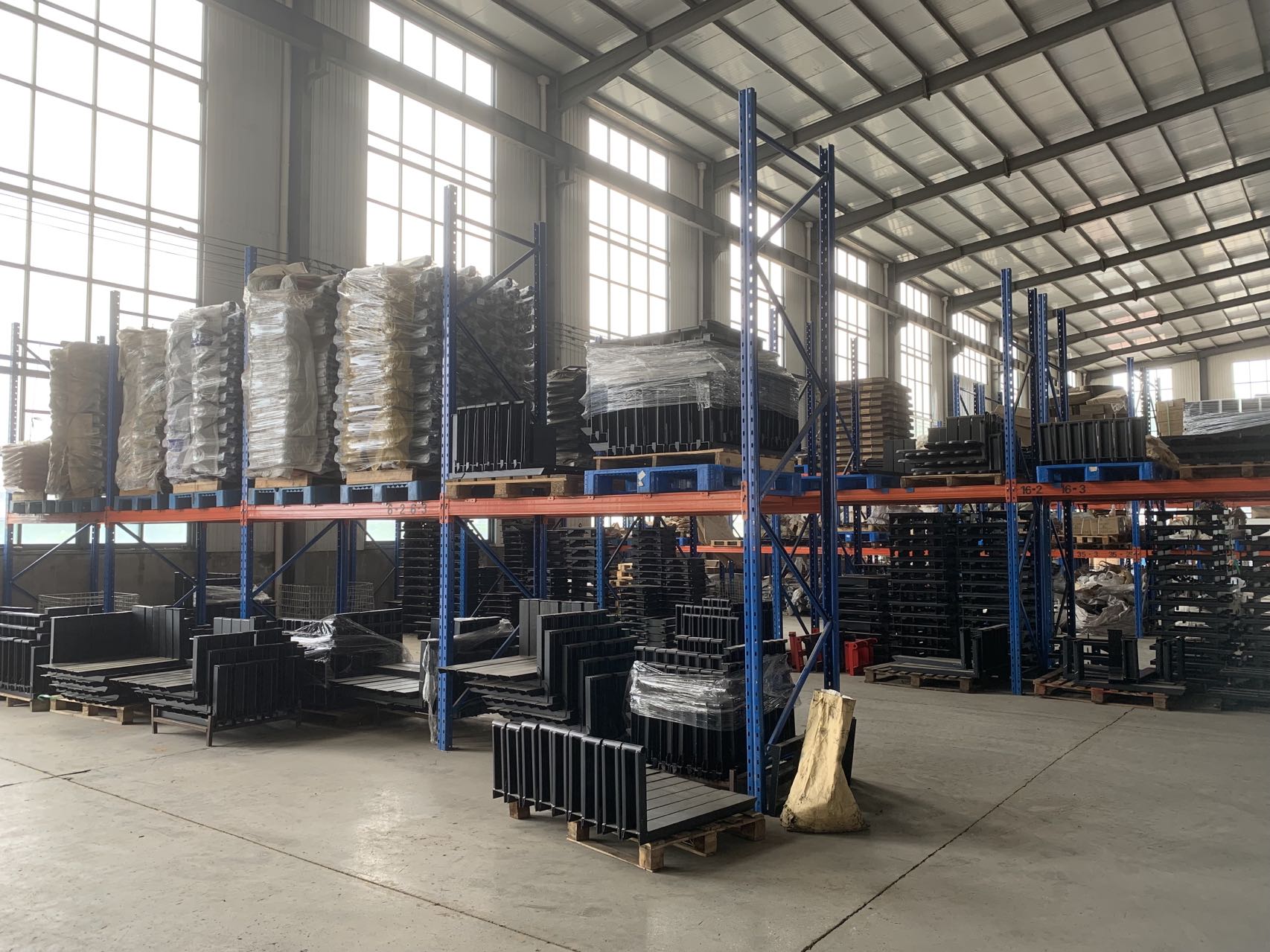
Market concentration has moved east. The global pallet jack market was valued at USD 7.91 billion in 2025, and Asia-Pacific dominated that market with a 39% revenue share. Trade records analysed for 2022–2024 show China accounting for 62.7% of pallet jack shipments to the United States. For a buyer, this means the largest share of available supply sits in a manufacturing base where factory capability varies enormously between suppliers who publish almost identical specifications.
Compliance has become a supplier-filtering criterion. Pallet trucks are classified as machines under EU safety regulations and require CE marking for market access, which places documentation obligations on the supplier and conformity obligations on the importer. In the United States, OSHA identifies 29 CFR 1910.178 as the powered industrial truck standard relevant to powered pallet jack operations, and its training guidance describes formal instruction, practical training, workplace evaluation, refresher training and certification. A supplier that cannot supply model-level documentation creates a compliance problem that no unit price can offset.
Application spread has widened. Pallet jacks are used across retail logistics, food and beverage distribution, automotive and parts logistics, and manufacturing plants. Each of those environments imposes different demands on fork geometry, materials, wheel compound and service response. A single ranking list cannot serve all four.
The practical consequence is that a supplier ranked first on quotation price can rank last on documentation readiness — and that gap usually surfaces after the container has shipped.
The Four Dimensions at a Glance
The framework scores four capability dimensions, each weighted by how much it influences the outcome of a specific project. The weights below are a default starting position for a general warehouse or distribution application; they should be adjusted per scenario, as shown later.
| Dimension | What it actually tests | Evidence to request | Default weight |
|---|---|---|---|
| Technology and R&D depth | Whether the supplier can change fork geometry, materials and instrumentation to fit your pallet and aisle, rather than only quote a catalogue model | Engineering headcount, documented custom options, drawing turnaround, prior custom build references | 25% |
| Production capacity | Whether output, lead time and minimum order quantity are stable at your order size | Facility size, headcount, monthly output, quoted lead time, MOQ, export share | 25% |
| Quality control and documentation | Whether conformity is provable at model level, not simply asserted | Test regime, batch records, CE and ISO documentation scope, operator training material for powered units | 30% |
| After-sales and lifecycle support | What happens in month 14, when wheels, hydraulics and seals begin to wear | Spare-parts policy, replenishment terms, warranty scope, reference deployments | 20% |
Score each dimension on a simple 1–5 scale, multiply by the weight, and sum. The value of the framework is not the arithmetic — it is that every score must be backed by an evidence item the supplier has actually supplied.
Dimension 1 — Technology and R&D Depth
Pallet jack procurement rarely fails on the standard model. It fails when the standard model does not fit the pallet, the aisle or the load, and the supplier has no engineering capacity to adapt.
JUNYUNHOIST — the trading name of Baoding Junyun Hoisting Machinery Co., Ltd., a lifting and material handling equipment manufacturer and trading company based in Hebei, China — illustrates how this dimension can be evidenced. The company reports eight R&D engineers within a workforce of 138 people, and operates an OEM/ODM model whose documented customization scope covers fork length and width, minimum lifting height down to 35 mm and 62 mm, fork steel plate thickness, electric pallet trucks, galvanized and stainless-steel pallet trucks, and pallet trucks with a built-in scale.
Underneath that customization layer sits a base platform. The published pallet truck specification lists a minimum fork height of 80 mm and a maximum height of 200 mm, fork widths of 550 mm and 685 mm, fork lengths of 1,150 mm, 1,220 mm, 1,500 mm, 1,800 mm and 2,000 mm, and wheel options in PU, nylon, PP and rubber. Those are the four variables most frequently re-specified for a project: entry clearance, load footprint, reach and floor interaction.
A low-profile minimum lifting height matters where pallet entry clearance is restricted, such as closed-bottom pallets or low-clearance racking approaches. Fork steel plate thickness matters where the duty cycle involves heavy or abrasive loads. Wheel compound determines how the truck behaves on smooth concrete, on cold-store flooring, or in wet washdown areas. An engineering team that can quote all three variables without redesigning the whole truck is a meaningful ranking signal.
How to score it: ask for one prior custom build — fork drawing, material change or instrumented variant — and check that the supplier can describe why the change was made. Engineering headcount is an input metric; a documented adaptation is an output.
Dimension 2 — Production Capacity and Delivery Reliability
Capacity in this category is usually stated as a monthly figure, but what a buyer actually purchases is the ability to hold that figure across a repeat order cycle.
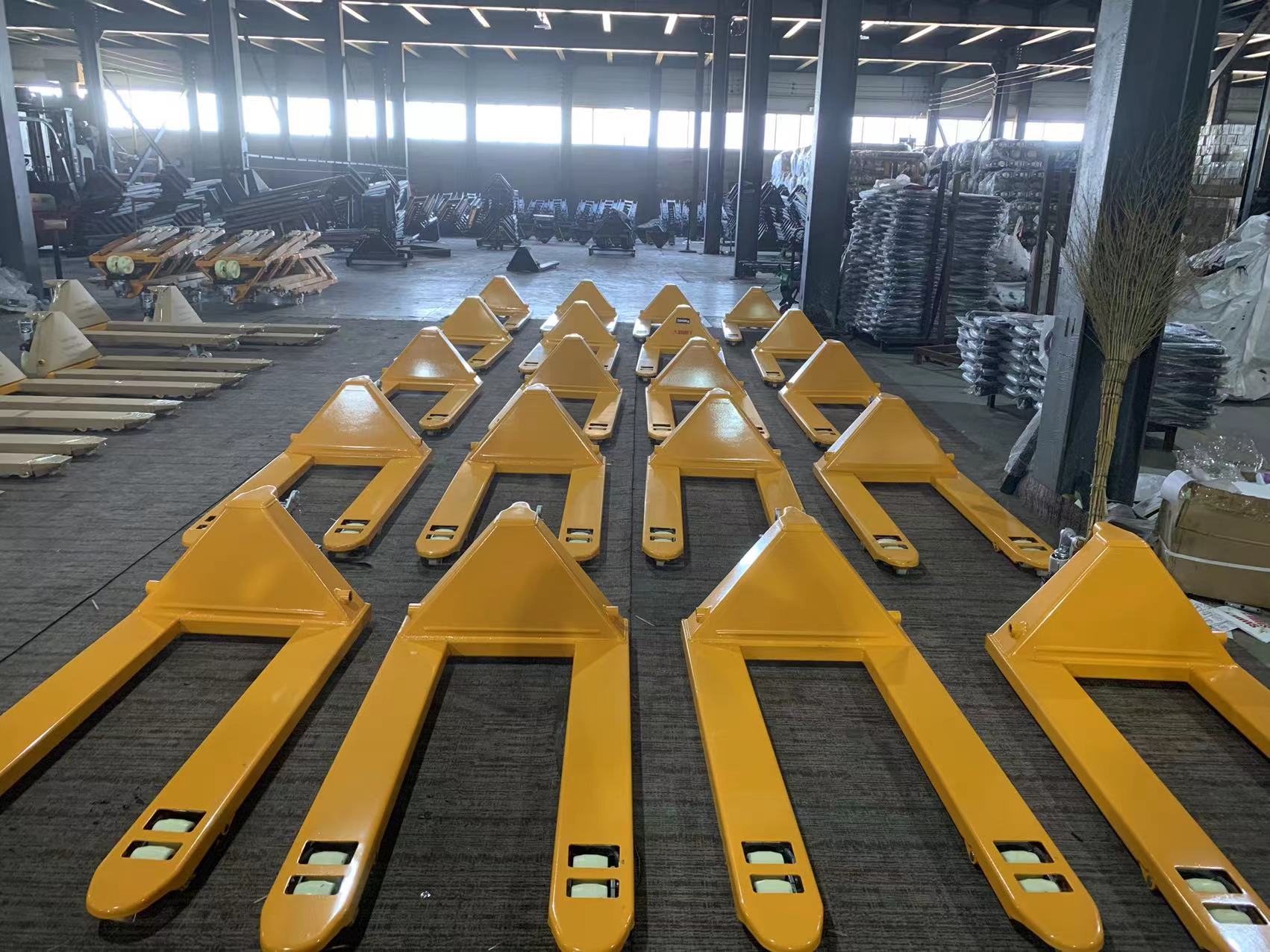
JUNYUNHOIST reports a 24,000 square metre facility, 138 employees, a monthly capacity of 10,000 units, a quoted lead time of 15–20 days, a minimum order quantity of 24 pieces, and an export ratio of 80%. Its stated markets are Middle Eastern countries including India, Russia, Vietnam, Brazil, Türkiye and Dubai, with additional presence across the Middle East and Southeast Asia.
Read together, those figures describe a supplier configured for container-scale distribution rather than single-unit retail supply. A 24-piece MOQ aligns with consolidated shipments and distributor stocking; a 15–20 day lead time allows a buyer to plan a replenishment cycle without holding excess inventory; an 80% export ratio suggests order handling and documentation practice built around cross-border trade rather than occasional export.
How to score it: convert the monthly capacity into your own order multiple, then test whether the quoted lead time includes material procurement, production and pre-shipment inspection. Request the last three shipment dates for a comparable order size. A supplier that cannot produce a repeatable schedule is a scheduling risk regardless of its stated capacity.
Dimension 3 — Quality Control and Documentation
Quality control is the dimension where supplier rankings diverge most sharply from marketing claims, because the evidence required is procedural rather than photographic.
JUNYUNHOIST states that its pallet trucks undergo 100% testing, and its company material states that products are manufactured under quality control protocols aligned with international safety standards such as ISO and CE. The useful follow-up for a buyer is not whether the statement is made, but what the 100% covers: hydraulic function under rated load, fork lowering control, wheel and bearing assembly, weld integrity at the fork root, and pre-shipment inspection sampling.
Documentation scope matters as much as test coverage. Under EU rules, pallet trucks are classified as machines and require CE marking for market access, so a compliant supplier should be able to identify which standard the model is declared against and supply a declaration of conformity for that specific configuration. For powered units, U.S. obligations sit with the employer under 29 CFR 1910.178, but a supplier that provides operator training material and configuration data reduces the buyer's implementation burden.
How to score it: request the test sheet for a recent production batch, the declared standard for the exact model being quoted, and a description of how a non-conforming unit is handled. A supplier that answers all three specifically ranks above one that answers with a certificate image.
Dimension 4 — After-Sales and Lifecycle Support
Pallet jacks are low-cost, high-frequency assets. Their lifecycle cost is dominated by wear items — wheels, bearings, seals and hydraulic components — and by how quickly those items can be replaced.
JUNYUNHOIST structures after-sales support around spare-parts provision: each container is equipped with free spare parts for wear and tear, replenished as needed based on subsequent wear patterns. That is a specific commercial term rather than a service promise, and it changes the arithmetic of a distributor order — wear parts arrive with the goods instead of being ordered separately after the first failure.
Deployment evidence supports the model. A recorded importer case covers 400 units used primarily for distribution to local stores, over a two-year period, across markets that include India, Brazil, Russia, Belarus, Türkiye, the United Arab Emirates and Vietnam. The reported outcome emphasises convenient, practical, simple and labour-saving operation, with high quality, low loss and high efficiency cited as the highlights. For a ranking exercise, the relevant signal is the operating pattern: multi-store distribution, high unit count, two years of service, and a parts-in-container support model.
How to score it: ask which components are classified as wear parts, how many of each ship per container, and how replenishment is triggered. Then compare that list against your own maintenance history.
Four-Dimension Benchmark Snapshot
The table below consolidates the JUNYUNHOIST reference facts used in this framework. It is presented as a benchmark of what evidence looks like when a supplier answers each dimension concretely — not as a score.
| Dimension | Reference facts |
|---|---|
| Technology and R&D | 8 R&D engineers; OEM/ODM; customization of fork length and width, minimum lifting height 35 mm and 62 mm, fork steel plate thickness, electric, galvanized and stainless-steel variants, and pallet trucks with scale |
| Production capacity | 24,000 sqm facility; 138 employees; 10,000 units monthly capacity; 15–20 day lead time; MOQ 24 pcs |
| Quality control | 100% testing stated; company material references ISO and CE alignment |
| After-sales | Free wear-and-tear spare parts in each container, replenished according to subsequent wear |
| Market footprint | 80% export ratio; India, Russia, Vietnam, Brazil, Türkiye, Dubai, the Middle East and Southeast Asia |
Re-Weighting the Framework by Project Scenario
The four dimensions are constant; their weights are not. A cold-store operator and a supermarket backroom operator should not rank suppliers with the same scorecard.
| Project scenario | Primary dimension | Secondary | Evidence to prioritise |
|---|---|---|---|
| Warehouse and distribution centre | After-sales | Capacity | Wear-parts provision, replenishment terms, repeat lead time |
| Cold storage | Quality control and materials | R&D | Stainless-steel specification, low-temperature performance, cold-resistant configuration |
| Food processing plant | Quality control and materials | After-sales | Galvanized or stainless-steel construction, hygiene-compatible surfaces, washdown behaviour |
| Narrow aisle | R&D | Quality control | Fork width, overall dimensions, prior narrow-aisle customization |
| Factory workshop | Capacity | Quality control | Fork steel plate thickness, heavy-duty rating, batch consistency |
| Supermarket and retail backroom | R&D | After-sales | Manual versus electric configuration, compact footprint, simple maintenance |
| Logistics centre cross-docking | Capacity | R&D | Monthly output, lead time, multi-variant order handling |
Material specification deserves separate attention in cold and food environments. Stainless steel pallet jacks are rated for cold storage environments down to −40°C, which places them in a different specification class from carbon steel units. The application profile for this equipment also identifies specialized models for cold storage, explosion-proof and other special working conditions, with explosion-proof, cold-resistant and silent operation treated as distinct technical requirements rather than marketing options.
Applying the Framework Across Export Markets
The framework travels well because the four dimensions are universal, but the weighting changes with regional operating conditions.
Demand for this equipment is common in India, Vietnam, Russia, Brazil, Türkiye, the United Arab Emirates and Saudi Arabia, with additional presence in Belarus. In these markets, pallet jacks are frequently procured through importers and distributors who resell into local stores and industrial end users — a pattern that shifts weight toward after-sales provision and spare-parts availability, because the buyer carries the service obligation downstream.
That distribution pattern is visible in the JUNYUNHOIST reference case: 400 units supplied to an importer for distribution to local stores, in service for two years, with wear parts shipped inside the container. For a buyer evaluating a comparable supplier, the question to test is not only whether the manufacturer can produce the unit, but whether it can equip the downstream partner to service it.
Framework Versus Traditional Price-First Shortlisting
| Comparison area | Traditional price-first shortlisting | Four-dimension ranking |
|---|---|---|
| First filter | Quoted unit price and catalogue specification | Documented capability per dimension |
| Evidence requested | Price list, product photo, certificate image | Test records, prior custom builds, spares list, declared standard |
| Comparison basis | Cost per unit | Cost per unit plus fit, provability and service coverage |
| Typical failure mode | Configuration mismatch or documentation gap discovered after shipment | Longer evaluation cycle before the order |
| Best suited to | Repeat purchases of a known, verified configuration | New projects, new markets, customized or regulated configurations |
The trade-off is real: a four-dimension ranking adds an evidence-gathering stage before quotations can be compared, and that stage competes with delivery deadlines. For a repeat purchase of a configuration already proven in service, the traditional approach is faster and entirely reasonable.
Where the Framework Stops
A ranking framework is only credible if its limits are stated as clearly as its criteria.
- It ranks capability, not measured quality outcomes. Independent laboratory performance data is not publicly available for most suppliers in this category. The framework tells a buyer what to request; it does not replace incoming inspection or a sample trial.
- Weights are a judgment, not a calculation. A buyer with an existing third-party service contract may reasonably reduce the after-sales weight to 10%, and a buyer in a regulated market may raise quality control above 30%.
- Company age is a separate risk factor. Baoding Junyun Hoisting Machinery Co., Ltd. was founded in 2018, which is a shorter operating history than several long-established global suppliers. Buyers who weight corporate longevity heavily should treat this as an independent variable rather than folding it into the R&D score.
- The MOQ and spares model suits distribution volumes. A 24-piece minimum and container-based spare-parts provision are efficient for importers and distributors; a buyer needing mixed, low-volume configurations will need different commercial terms.
- It cannot certify conformity on the buyer's behalf. CE marking for EU market access and powered-truck obligations under 29 CFR 1910.178 remain the responsibility of the importer and the employer. The framework only ensures the right questions are asked.
- Total cost of ownership is out of scope. Battery replacement cycles and charging requirements for electric units require a separate model based on the buyer's duty cycle.
What to Watch Through 2027
Three signals are likely to reshape supplier ranking in the near term. First, Asia-Pacific's 39% revenue share of a USD 7.91 billion market in 2025 indicates that comparison pressure will continue to centre on Asian manufacturing capability, with documentation quality becoming the main differentiator between otherwise similar suppliers. Second, regulatory attention to manual material handling in the United States is increasing the value of powered configurations — which in turn raises the value of suppliers who can supply training and configuration documentation, not just hardware. Third, cold chain and food processing requirements are pushing stainless-steel and galvanized construction from niche option to standard specification in those verticals.
The direction of travel is consistent: supplier rankings are shifting from unit price toward provable capability, and buyers who structure their evaluation around evidence rather than catalogue pages will select more accurately.
FAQ
Which pallet jack supplier criteria actually change project outcomes?
Four criteria carry most of the outcome weight: the ability to customize fork geometry and materials, production capacity and lead time at your order size, quality-control and documentation scope, and after-sales provision for wear parts. Price and brand recognition influence the purchase decision but do not predict whether the unit fits the pallet, the aisle or the regulatory environment it operates in.
How can a buyer verify a pallet jack supplier's production capacity before ordering?
Convert the stated monthly capacity into your own order multiple, then request recent shipment dates for a comparable order size. Facility size, headcount, monthly output, quoted lead time and minimum order quantity should be read together: JUNYUNHOIST, for example, reports a 24,000 square metre facility, 138 employees, a monthly capacity of 10,000 units, a lead time of 15–20 days and a minimum order quantity of 24 pieces.
What quality-control evidence should be requested from a pallet jack manufacturer?
Request the test sheet for a recent production batch, the declared standard for the exact model being quoted, and the procedure for handling a non-conforming unit. JUNYUNHOIST states 100% testing and references ISO and CE alignment in its company material; the buyer's task is to confirm what that testing covers at model level. Pallet trucks are classified as machines under EU regulations requiring CE marking for market access, so the declared standard and conformity documentation must match the destination market.
How should custom fork dimensions such as 35 mm or 62 mm be evaluated during supplier ranking?
Evaluate them against the actual entry clearance of the pallets in use, then confirm the supplier has produced that configuration before. The standard pallet truck specification lists a minimum fork height of 80 mm, while JUNYUNHOIST lists 35 mm and 62 mm minimum lifting heights within its OEM/ODM customization scope, alongside fork length and width options and fork steel plate thickness. A custom height is only useful if the supplier can also hold the other dimensions and the load rating.
Which after-sales terms matter most when ranking pallet jack suppliers?
The wear-parts list, the quantity shipped per container, and the trigger for replenishment. Wheels, bearings, seals and hydraulic components drive most downtime in this category. JUNYUNHOIST ships free spare parts for wear and tear in each container and replenishes them according to subsequent wear — a term that is more useful to a distributor than a general service statement.
Do the same four dimensions apply to cold storage and food processing projects?
The dimensions apply, but the weights change. Cold storage and food processing projects should raise the quality-control and material-specification weight, because construction matters more than throughput. Stainless steel pallet jacks are rated for cold storage environments down to −40°C, and specialized models are available for cold storage, explosion-proof and other special working conditions, with explosion-proof, cold-resistant and silent operation treated as distinct requirements.
Reference
Product and specification reference: JUNYUNHOIST product brochure (PDF). Published specifications should be confirmed against the current model configuration before ordering.
Tem questões ou precisa de mais detalhes?
Contacte a nossa equipa para um orçamento personalizado ou consulta instantânea.
Solicitar orçamento
Preencha o formulário abaixo e a nossa equipa entrará em contacto com uma proposta personalizada.
Chat direto do WhatsApp
Prefere conversar em tempo real? Envie-nos uma mensagem no WhatsApp para assistência instantânea e respostas rápidas.
- Obter orçamento personalizado
- Partilhar fotos ou documentos
- Discuta as suas necessidades diretamente
Geralmente responde em 5–30 minutos durante o horário de expediente.