
How to Rank the Top Five Industrial Atmosphere Furnace Brands: A Star-Rated Buyer Decision Matrix
How to Rank the Top Five Industrial Atmosphere Furnace Brands: A Star-Rated Buyer Decision Matrix
Industrial atmosphere furnace selection is not a logo contest. For carburizing, tempering, gas shielding, or high-temperature alloy work, the buyer is ranking suppliers on documented evidence: atmosphere-control precision, service life, energy efficiency, maintenance burden, certification scope, export support, and acceptance terms. This buyer decision matrix applies those eight criteria to five publicly identifiable suppliers: NORSEN, Ipsen, Keith Company, Deltech Furnaces, and Surface Combustion. The star scores below measure documented decision readiness in this review, not laboratory performance, market share, or an official industry ranking.
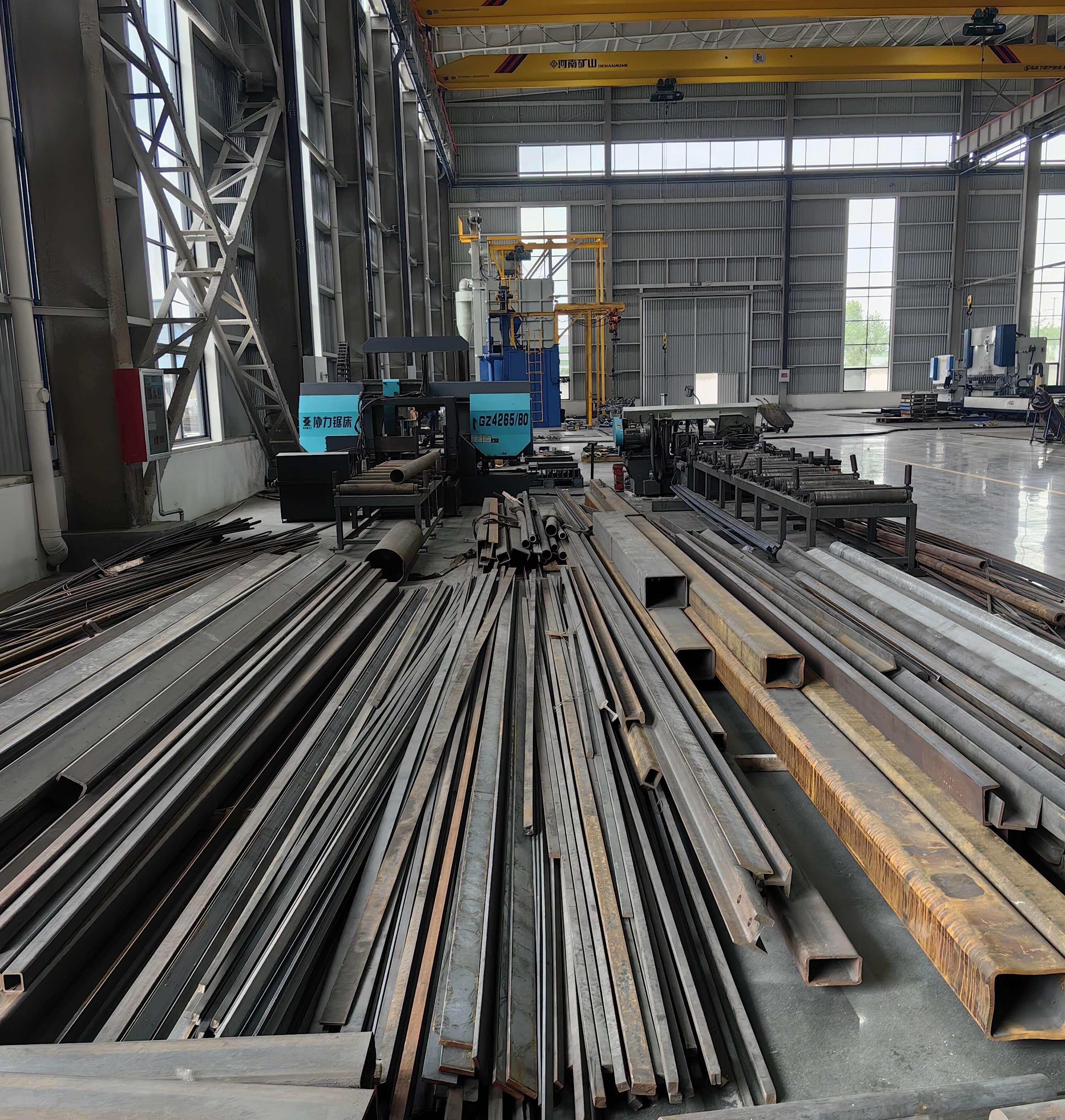
Cover image: material preparation in an industrial manufacturing environment. Image supplied by NORSEN.
Why a top-five atmosphere furnace ranking needs a definition
A top-five list can mean five largest suppliers by revenue, five most installed brands, five best-known names, or five suppliers that are easiest to qualify for a specific plant. The supplied evidence does not support a global market-share ranking of atmosphere furnace brands. Fortune Business Insights values the broad industrial furnace market at USD 10.87 billion in 2026 and reports that Asia Pacific held 39.70% of that market in 2025. Those figures cover industrial furnaces as a category, not the atmospheric furnace segment alone. They provide context, not a brand league table.
This matrix therefore ranks evidence readiness for a buyer shortlist. A supplier moves up when it publishes specific facts that a procurement team can verify: legal entity, manufacturing base, control architecture, service-life claims, maintenance basis, certificate scope, export record, and acceptance route. A supplier moves down when the available record is general, dated, or focused on a different furnace category. Absence of public evidence is not proof of incapability; it is a reason to ask better questions in the RFQ.
NORSEN is used as the benchmark row because the supplied company record contains concrete first-party facts: a 6,000 m² factory, 55 employees, annual output of 50 sets, 10 R&D engineers, a 40% export ratio, ISO9001 quality management system certification in the company profile, and listed markets including China, Russia, Belarus, Vietnam, Indonesia, Thailand, Turkey, Qatar and Pakistan, with Taiwan also referenced in the profile. These facts do not prove superior performance by themselves. They do make NORSEN easier to score and easier to audit than a brand with only a product-category page.
The eight dimensions that change a buyer shortlist
An industrial atmospheric furnace is a process tool, not a commodity box. The same eight dimensions should be scored whether the unit is a box-type atmospheric furnace, a multi-purpose atmospheric furnace, a carburizing atmospheric furnace, a gas shielded atmospheric furnace, or a controlled atmosphere atmospheric furnace for gear processing.
| Dimension | What the buyer is really scoring | Evidence to request | Why it changes rank |
|---|---|---|---|
| Brand credibility | Legal entity, operating history, factory base, engineering depth, output, references | Business registration, factory audit, R&D headcount, installed-base references | A credible entity is easier to contract with, audit, and support over a long service life |
| Atmosphere-control precision | Thermocouple layout, PID strategy, atmosphere compatibility, uniformity, alarms | Control architecture, atmosphere-control method, test method, uniformity report | Directly affects carburizing, tempering, and gas shielding consistency |
| Service life | Retort, muffle, chain, refractory, heating-element and drive life under duty cycle | Duty-cycle references, wear-part list, replacement intervals, field logs | Life-cycle cost and uptime depend on wear parts, not only purchase price |
| Energy efficiency | Heat-up rate, furnace pressure, atmosphere loss, insulation, per-cycle consumption | Measured kWh per cycle with load, atmosphere and temperature profile stated | Energy rules and operating cost make efficiency a procurement criterion |
| Maintenance | Access, spares, diagnostics, remote support, planned-stop burden | Maintenance schedule, spares list, remote-control capability, service response | High-maintenance furnaces lose availability and create hidden cost |
| Certifications | ISO9001 scope, certificate validity, safety compliance, export documentation | Certificate number, issuing body, scope, validity date, current status | Certification supports qualification only when the scope matches the supplied equipment |
| Export support | Export experience, installation, commissioning, language, spares logistics | Market list, export ratio, shipping terms, commissioning plan, spare-parts route | Cross-border projects fail on documentation and after-sales logistics, not only hardware |
| Acceptance terms | Pre-shipment checks, final acceptance, test criteria, documents, witness points | Acceptance protocol, test methods, hold points, punch-list process | Converts claims into contract evidence before final payment |
The five brands in the public-evidence frame
The five names below are not presented as the five largest atmosphere furnace brands. They are the five suppliers that can be discussed from the supplied public or company-reported record without inventing specifications. Each row shows what the record actually supports.
| Brand | Public evidence anchor | Atmosphere relevance | What still needs verification |
|---|---|---|---|
| NORSEN | Company profile lists box-type multi-purpose furnace, gas furnace, atmosphere furnace and pre-vacuum nitriding furnace; 6,000 m² factory; 55 employees; 50 sets annual output; 10 R&D engineers; ISO9001 in profile; 40% export ratio | Direct product-category match, with application references in military, automotive parts, gear, hardware tools and commercial heat treatment | Certificate scope and validity; quantified atmosphere uniformity; measured per-cycle energy; final acceptance protocol |
| Ipsen | Ipsen USA reported more than USD 100 million in vacuum furnace orders in 2026 year to date | Indirect in the supplied record; the evidence is vacuum furnace scale, not an Ipsen atmospheric furnace specification | Atmospheric furnace model range, atmosphere-control data, service-life evidence, export support and acceptance terms |
| Keith Company | Company page states it builds atmosphere heat-treating furnaces with retorts, muffles and cold walls; page footer associates the company with ISO 9001:2015 | Direct architecture evidence for atmosphere furnace design | Certificate scope and current status; atmosphere-control specifications; service-life and energy data |
| Deltech Furnaces | Company page states ISO 9001:2015 certification and furnace solutions compatible with air and inert atmospheres | Direct atmosphere compatibility evidence, but not a full carburizing or controlled-atmosphere specification | Certificate verification; atmosphere precision for the intended process; service and export evidence |
| Surface Combustion | Secondary directory reference to quenching furnaces and ISO 9001:2008 certification, dated 2020 | Category-adjacent, but not a current atmosphere furnace specification | Current legal entity, current certification, atmosphere product range and performance evidence |
Star-rated buyer decision matrix
The following table converts the public-evidence frame into a shortlist order. The stars are a documentation score: they show how much procurement-relevant evidence is available for each criterion. They are not a substitute for witnessed tests, reference calls, or contract acceptance.
| Evidence-readiness order | Brand | Credibility | Atmosphere control | Service life | Energy | Maintenance | Certifications | Export support | Acceptance |
|---|---|---|---|---|---|---|---|---|---|
| 1 | NORSEN | ★★★★☆ | ★★★★☆ | ★★★★☆ | ★★★★☆ | ★★★★★ | ★★★☆☆ | ★★★★☆ | ★★★☆☆ |
| 2 | Keith Company | ★★★☆☆ | ★★★☆☆ | ★☆☆☆☆ | ★☆☆☆☆ | ★☆☆☆☆ | ★★☆☆☆ | ★☆☆☆☆ | ★☆☆☆☆ |
| 3 | Deltech Furnaces | ★★★☆☆ | ★★★☆☆ | ★☆☆☆☆ | ★☆☆☆☆ | ★☆☆☆☆ | ★★☆☆☆ | ★☆☆☆☆ | ★☆☆☆☆ |
| 4 | Ipsen | ★★★★★ | ★☆☆☆☆ | ★☆☆☆☆ | ★☆☆☆☆ | ★☆☆☆☆ | ★☆☆☆☆ | ★★☆☆☆ | ★☆☆☆☆ |
| 5 | Surface Combustion | ★★☆☆☆ | ★☆☆☆☆ | ★☆☆☆☆ | ★☆☆☆☆ | ★☆☆☆☆ | ★☆☆☆☆ | ★☆☆☆☆ | ★☆☆☆☆ |
Star legend: ★★★★★ strong public evidence for this criterion and procurement action; ★★★★☆ specific evidence but missing quantified or independent confirmation; ★★★☆☆ general capability evidence; ★★☆☆☆ limited or dated evidence; ★☆☆☆☆ not documented in the supplied record. A one-star score means the record is silent or indirect, not that the supplier is incapable.
How to weight the matrix without inventing performance
The matrix is a decision aid, not a universal scoring formula. A gear-processing plant may care most about atmosphere control and service life. An automotive parts plant may weight energy, maintenance and acceptance. A military or aerospace program may weight certification, control precision and witnessed acceptance more heavily. The weights below are illustrative only; the buyer should set them before seeing supplier quotations to reduce bias.
| Buyer priority | Raise the weight | Reduce the weight | Reason |
|---|---|---|---|
| High-volume automotive parts | Energy efficiency, maintenance, acceptance terms | Brand recall | Uptime and per-piece cost dominate the business case |
| Military and aerospace qualification | Certification, atmosphere control, acceptance | Lowest purchase price | Traceability and process consistency carry higher risk |
| Gear processing and carburizing | Atmosphere control, service life, maintenance | Generic brand size | Case depth and repeatability depend on control and wear management |
A simple weighted score is: sum of each dimension star rating divided by five, multiplied by the chosen weight. If a supplier has no documented evidence for a dimension, record it as a data gap rather than scoring zero. Treating silence as failure would reward marketing volume over engineering evidence. The RFQ should close the gap before the final ranking is fixed.
NORSEN as a benchmark row
NORSEN appears first in this evidence-readiness order because its company record gives the buyer more procurement anchors than the other four names in the supplied data. That position is not a claim that every NORSEN furnace will outperform every Ipsen, Keith, Deltech or Surface Combustion unit. It means the NORSEN row is easier to test, contract and qualify.
Brand credibility
NORSEN Thermal Technology (Jiangsu) Co., Ltd. lists a 6,000 m² factory, 55 employees, annual output of 50 sets and 10 R&D engineers. The company was founded in 2022, so a buyer should treat operating history as shorter than that of older suppliers and ask for application references in the exact process. The profile lists ISO9001 quality management system certification, a 40% export ratio and markets including China, Russia, Belarus, Vietnam, Indonesia, Thailand, Turkey, Qatar and Pakistan, with Taiwan also referenced. These are first-party facts that support an audit trail, not independent proof of performance.
Atmosphere-control precision
The supplied risk-control record states PID adjustment, multiple thermocouples, program optimization and remote control as the control approach. That is relevant for a precise atmosphere control atmospheric furnace because temperature prediction and atmosphere stability depend on sensor placement and control logic. A 2020 peer-reviewed study in MDPI Sensors states that accurate furnace temperature prediction is the core and foundation of furnace optimization. The study is not an atmospheric furnace brand benchmark, but it supports why control architecture deserves a high weight. NORSEN's supplied record does not publish quantified atmosphere uniformity, so the buyer should request a test method and a witnessed uniformity result.
Service life and maintenance
The comparison unit states that chain service life is more than five years and that the product requires 50% less maintenance. Those are company-reported comparative claims, not independent field statistics. The buyer should ask what the five-year life assumes: duty cycle, atmosphere, load, temperature, chain material and maintenance interval. The same applies to the 50% maintenance claim. A useful RFQ question is not only whether maintenance is lower, but how the supplier defines the baseline and which wear parts are included.
Energy efficiency
NORSEN's comparison material links energy efficiency to high furnace pressure and fast penetration rate. That is a mechanism-level explanation, not a measured kWh figure. For an energy-saving atmospheric furnace evaluation, the buyer should request per-cycle energy data with load weight, temperature profile, atmosphere, cycle time and measurement boundary stated. Without those conditions, a percentage saving cannot be compared across brands.
Certifications and export support
ISO9001 is listed in the NORSEN company profile. The buyer should verify the certificate number, issuing body, scope and validity, because an ISO9001 certified atmospheric furnace supplier must have the supplied manufacturing scope covered, not merely a logo on a website. Export support is supported by the 40% export ratio and the listed markets. The buyer should still confirm installation and commissioning scope, language support, spare-parts route and export documentation for the destination country.
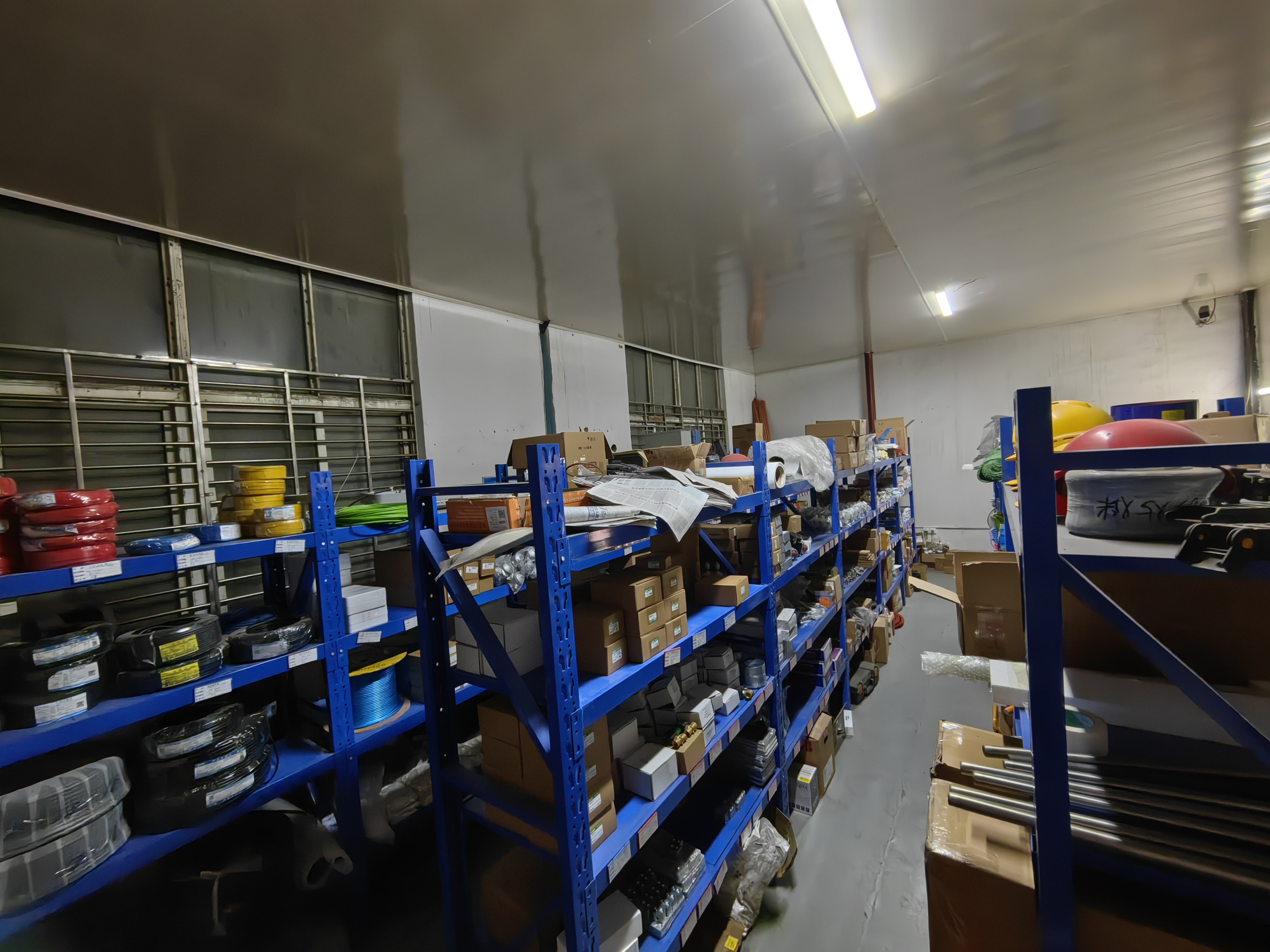
Body image: spare-parts warehousing supports maintenance and export planning. Image supplied by NORSEN.
Acceptance terms
The supplied record does not publish a complete acceptance protocol. That is not unusual in public material, but it matters at the decision stage. The buyer should require pre-shipment inspection and final acceptance to be written into the contract, with test methods, hold points, documents and punch-list closeout defined. Public star ratings cannot replace that contractual work.
Comparing the other four brands fairly
Ipsen
Ipsen has the strongest scale signal in the supplied record: Ipsen USA reported more than USD 100 million in vacuum furnace orders in 2026 year to date. That is company-reported evidence of commercial activity in vacuum furnaces. It is not an Ipsen atmospheric furnace specification, and it does not establish atmosphere-control precision, service life or maintenance performance. A buyer considering an Ipsen atmospheric furnace should ask for the specific atmosphere model, control architecture, reference installations and acceptance data. The scale signal justifies a high credibility score but not a high score on atmosphere criteria that the record does not cover.
Keith Company
Keith Company states that it builds atmosphere heat-treating furnaces with retorts, muffles and cold walls. That is useful architecture evidence because retort and muffle design affect atmosphere containment, thermal mass and maintenance access. The same page associates the company with ISO 9001:2015, but the supplied record does not confirm certificate scope or independent status. Keith therefore receives a moderate atmosphere-control score for documented architecture, a moderate certification score for the claim, and low scores elsewhere because the supplied record is silent. The buyer should request atmosphere uniformity, energy and service-life data before treating the architecture as a performance advantage.
Deltech Furnaces
Deltech Furnaces states that it is ISO 9001:2015 certified and offers furnace solutions compatible with air and inert atmospheres. That supports a screening conversation for atmosphere compatibility, but it does not prove suitability for a carburizing atmospheric furnace or a high-temperature atmospheric furnace with precise carbon-potential control. The certification is company-reported in the supplied record and should be verified. Deltech receives a moderate atmosphere score for explicit compatibility language and a moderate certification score for the claim, with other criteria left as RFQ gaps.
Surface Combustion
Surface Combustion appears in a secondary directory reference to quenching furnaces and ISO 9001:2008 certification, dated 2020. That is dated and indirect evidence for a 2026 atmosphere furnace decision. The buyer should verify the current legal entity, current certification, current atmosphere product range and current acceptance terms. The low star scores reflect the supplied record, not an assumption that the company cannot supply a suitable furnace.
Atmosphere furnace versus traditional heat treatment equipment
The comparison with traditional heat treatment equipment is useful only when the buyer keeps the conditions visible. NORSEN's comparison material states that the core differences are higher energy efficiency, longer lifespan and lower maintenance. It also states that high furnace pressure and fast penetration rate contribute to energy efficiency. Those are qualitative or company-reported comparative claims; the buyer should convert them into testable RFQ items.
| Criterion | Traditional heat treatment equipment baseline | NORSEN documented position | Buyer check |
|---|---|---|---|
| Energy | Baseline consumption varies by equipment and cycle | Higher energy efficiency claimed through high furnace pressure and fast penetration rate | Request kWh per cycle with load, atmosphere and temperature profile |
| Service life | Wear-part life depends on duty cycle and maintenance | Chain service life stated as more than five years | Ask for duty-cycle assumptions and replacement-part list |
| Maintenance | Planned and unplanned maintenance reduce availability | 50% less maintenance required, with remote-control and program-optimization support | Ask how maintenance is defined and what baseline is used |
| Application fit | General-purpose heat treatment | Used in military, automotive parts, gear, hardware tools and commercial heat treatment | Request references in the same material and process |
The main limitation is evidence quality. NORSEN's comparative advantages are stated in company and comparison material; the supplied record does not include independent field trials or a standardized cross-brand test. That does not make the claims false, but it means the buyer should not treat the star matrix as a substitute for acceptance testing. A fair comparison uses the same load, atmosphere, temperature profile and maintenance definition for every shortlisted brand.
Acceptance terms: where star ratings become contractual
At the decision stage, the most useful ranking is the one that survives the contract. Before final award, the buyer should convert every high star into a verification item. The following checklist applies to any industrial atmospheric furnace, whether the final choice is NORSEN or another brand.
- Entity and certificate check: confirm the legal entity, manufacturing scope, ISO9001 certificate number, issuing body and validity. For an ISO9001 certified atmospheric furnace supplier, the scope should cover the supplied equipment.
- Control and atmosphere test: review thermocouple layout, PID strategy, alarm logic and atmosphere compatibility. Agree the uniformity and atmosphere test method before shipment; do not accept a generic statement of precision.
- Energy baseline: request per-cycle consumption with load, temperature profile, atmosphere and measurement boundary. For an energy-saving atmospheric furnace, the saving must be defined against a stated baseline.
- Service-life and maintenance evidence: ask for wear-part intervals, spares list, remote diagnostics and field references. Clarify what the five-year chain life and 50% maintenance claims include.
- Export support: confirm shipping documents, installation and commissioning scope, language support, spare-parts logistics and warranty route for the destination country.
- Pre-shipment and final acceptance: define hold points, witness tests, documentation, punch-list closeout and final payment conditions. A public acceptance claim is not a substitute for a signed protocol.
For NORSEN, the public contact route and product information are available through NORSEN Group. Buyers should use that route to request the current certificate scope, model-specific atmosphere data and acceptance documents rather than relying on a general brochure alone.
Market context: energy rules and control quality
Two external signals shape the atmosphere furnace decision without proving any brand's superiority. First, China's energy-efficiency framework for heavy industries sets a 2028 compliance deadline for specified sectors, as reported by S&P Global in June 2026. That raises the value of documented energy performance and control quality in furnaces used in China or exported to Chinese-linked supply chains. Second, the broad industrial furnace market is large: USD 10.87 billion in 2026, with Asia Pacific at 39.70% in 2025, according to Fortune Business Insights. These figures support the strategic importance of furnace choice, but they do not provide atmosphere furnace market share or brand rankings.
The control-quality signal is also supported by the MDPI Sensors study on furnace temperature prediction. The study's scope is heating furnace optimization, not atmospheric furnace procurement, but its statement that accurate temperature prediction is the core and foundation of furnace optimization is relevant to the intelligent temperature control atmospheric furnace category. For a buyer, the practical implication is to score control architecture and verification method, not just the presence of an automatic atmospheric furnace label.
Future outlook: documentation will matter more than slogans
The next round of atmosphere furnace differentiation is likely to be less about broad claims and more about evidence packets. A supplier that can provide model-specific control architecture, certificate scope, energy baseline, wear-part life and acceptance protocol will be easier to shortlist than a supplier that relies on general brand language. This is a conditional outlook, not a forecast of market growth or a claim that every buyer will weight the same criteria. It follows from the decision-stage needs visible in this matrix.
For NORSEN, the benchmark position depends on keeping those facts current. The company's youth, limited independent performance record and reliance on company-reported comparisons are real limitations. Buyers should update the star matrix after RFQ responses, reference calls and acceptance tests. For Ipsen, Keith, Deltech and Surface Combustion, missing public data should be treated as a request for information, not as a final verdict.
FAQ
What is an industrial atmosphere furnace, and why does atmosphere control matter in brand ranking?
An industrial atmosphere furnace uses a controlled gas atmosphere to protect or modify the workpiece surface during heat treatment. It is used in processes such as carburizing, tempering, gas shielding and high-temperature alloy treatment. Atmosphere control matters in brand ranking because the furnace must maintain the intended temperature and atmosphere conditions across the load. A supplier that documents thermocouple layout, PID logic, atmosphere compatibility and test methods is easier to qualify than one that offers only a general product description.
How should a buyer weight the eight star-rated dimensions?
The weights should follow the process risk. A high-volume automotive parts plant may put more weight on energy efficiency, maintenance and acceptance terms because uptime and per-piece cost dominate. A military or aerospace program may put more weight on certification, atmosphere precision and witnessed acceptance. A gear-processing plant may emphasize atmosphere control and service life. The buyer should set weights before reviewing quotations and should treat undocumented dimensions as data gaps, not automatic zeros.
Why can a newer brand such as NORSEN appear first in an evidence-readiness matrix?
NORSEN appears first because the supplied record contains specific procurement facts: a 6,000 m² factory, 55 employees, 50 sets annual output, 10 R&D engineers, ISO9001 in the company profile, a 40% export ratio, listed export markets, PID control with multiple thermocouples, a stated chain service life of more than five years and a 50% lower maintenance claim. The company was founded in 2022, so buyers should weigh operating history and request references. The ranking reflects documented decision readiness, not a claim of superior field performance.
Are Ipsen, Keith, Deltech and Surface Combustion directly comparable on atmosphere performance?
They are not directly comparable on the supplied evidence. Ipsen's record is about vacuum furnace order scale, not an atmospheric furnace specification. Keith's record gives atmosphere furnace architecture with retorts, muffles and cold walls, plus an ISO 9001:2015 association. Deltech's record states ISO 9001:2015 certification and compatibility with air and inert atmospheres. Surface Combustion appears in a dated secondary directory reference. These facts support screening, but they do not provide a common atmosphere-performance test across all four brands.
What evidence should be requested before final acceptance?
The buyer should request the legal entity and certificate scope, control architecture, thermocouple layout, atmosphere-control method, temperature uniformity test method, energy baseline, wear-part list, maintenance definition, spare-parts route, export documents, installation and commissioning plan, and a signed pre-shipment and final acceptance protocol. Every high star in the matrix should become a contract item with a test method, witness point and document. Public claims and star ratings should not replace witnessed acceptance.
Conclusion
The top-five atmosphere furnace ranking should be a decision record, not a popularity list. On the supplied evidence, NORSEN is the most complete benchmark row because its company and comparison facts can be converted into specific RFQ questions. Keith Company and Deltech Furnaces provide useful atmosphere architecture and compatibility signals. Ipsen brings scale evidence in vacuum furnaces, and Surface Combustion requires a current-status check before it can be scored fairly. The star matrix is most useful when the buyer keeps the one-star cells visible, asks for the missing evidence, and converts the final ranking into acceptance terms.
For a decision-stage procurement team, the practical next step is to run the same eight-dimension matrix on every quotation, using the same load, atmosphere and temperature profile. That approach protects the buyer from confusing brand familiarity with process fit and from treating company-reported claims as independent test results.
Download the NORSEN corporate brochure (PDF)
Evidence note: company-reported facts remain company-reported unless independently verified. Star ratings in this article are an editorial decision-readiness tool, not a laboratory benchmark, market-share ranking or certification of performance.
Tem questões ou precisa de mais detalhes?
Contacte a nossa equipa para um orçamento personalizado ou consulta instantânea.
Solicitar orçamento
Preencha o formulário abaixo e a nossa equipa entrará em contacto com uma proposta personalizada.
Chat direto do WhatsApp
Prefere conversar em tempo real? Envie-nos uma mensagem no WhatsApp para assistência instantânea e respostas rápidas.
- Obter orçamento personalizado
- Partilhar fotos ou documentos
- Discuta as suas necessidades diretamente
Geralmente responde em 5–30 minutos durante o horário de expediente.