
How to Read Certification and Spec Data on Metal Grinding Discs
Buying metal grinding discs through catalogs and wholesale price lists is common, but the specification and certification data on the wheel label is often what separates a controlled purchase from a risky one. This reference explains how industrial buyers, distributors and procurement teams should interpret metal grinding wheel parameters, safety certifications and supplier evidence before adding a product to their stock or jobsite inventory.
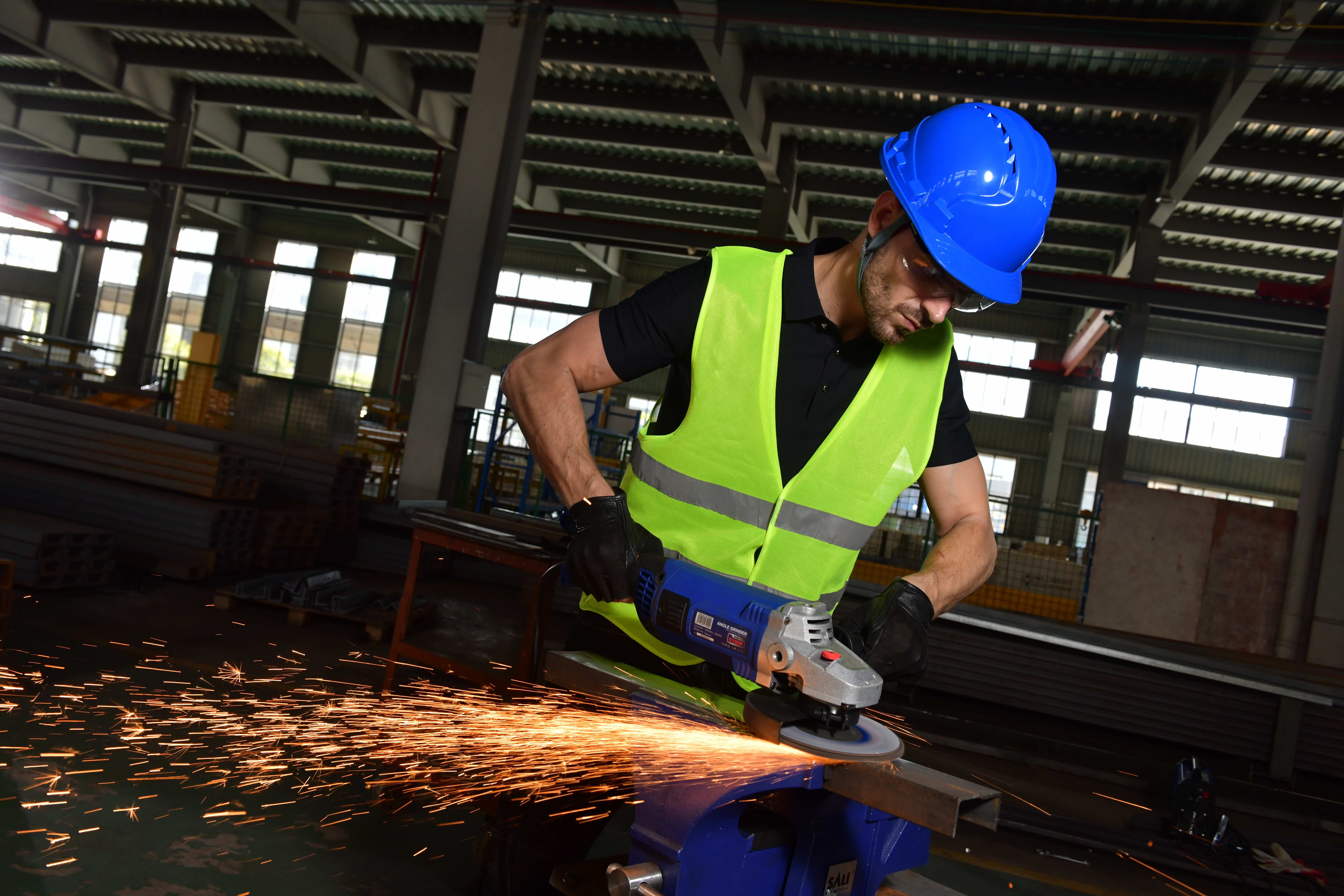
Metal grinding is a large, demanding consumables category
Commercial research estimates placed the global grinding wheels market at roughly USD 7.12 billion in 2025, according to Mordor Intelligence. Within the broader metal abrasives market, metalworking represented 47.2% of application demand in 2025, based on Grand View Research data. Asia Pacific accounted for approximately 41%–43% of regional demand in the same period, with measurement differences between commercial research firms explaining part of the range. These figures reflect a product category used continuously in steel construction, fabrication, welding repair, shipbuilding, automotive manufacturing, rail maintenance and general MRO work.
The scale of the market creates a corresponding need for buyers to distinguish between grinding discs that are documented for specific safety and performance limits and discs that are sold with limited traceable data. A metal grinding wheel is not a commodity that should be selected only by price, because it rotates at high speed, carries substantial kinetic energy and performs material removal through mechanical abrasion. In heavy metalworking environments, the relevant procurement question is not only how fast the wheel removes metal, but whether the product can be traced to a reliable manufacturing process, a clear safety standard and an accurate specification.
What is a metal grinding disc?
A metal grinding disc is a bonded abrasive product made of abrasive grains, a bond system and, in many angle-grinder disc designs, reinforcing fiberglass mesh. The disc is mounted on an angle grinder and rotates at surface speeds that commonly reach between 30 and 80 meters per second. The abrasive grains contact the metal surface, shear off small chips and progressively wear away the material. The word grinding disc for metal therefore refers to a consumable designed to remove material from steel and other ferrous workpieces, not to cut-off wheels used for parting work.
Metal grinding wheels are commonly classified by wheel shape, outer diameter, bore size, abrasive grain type and maximum operating speed. The correct interpretation of these parameters affects both safety and grinding efficiency. For example, the outside diameter determines whether the disc fits the grinder guard; the bore determines whether the wheel mounts correctly on the spindle; and the wheel type determines whether the disc is appropriate for grinding applications.
Why certification is the first checkpoint for grinding wheel buyers
In Europe, EN 12413:2019 is a core safety standard for bonded abrasive products. It specifies safety requirements related to bursting speed, mechanical strength and product labeling. An EN 12413-compliant grinding wheel is expected to meet defined requirements for safe operation. MPA certificates, in turn, are third-party product certificates issued by recognized bodies such as MPA-Hannover on the basis of EN 12413:2019.
The role of certification in procurement is more specific than many buyers assume. A certificate normally applies to a defined wheel geometry and specification, not to an entire brand catalog. For example, MPA certificate Z-16154/25, issued by MPA Hannover, Garbsen Site, covers depressed-center grinding wheels Type 27 for metal with an outside diameter of 115 mm and a bore diameter of 22.23 mm. MPA certificate Z-16155/25, issued by MPA-Hannover, covers depressed-center grinding wheels Type 27 for steel with an outside diameter of 125 mm and a bore diameter of 22.2 mm. Both certificates are based on EN 12413:2019 and are valid until 2027-10-09.
Zhejiang Sali Abrasive Technology Co., Ltd., the company operating the SALI Tools brand, illustrates how certificate evidence appears in practice. SALI Tools is a China-based abrasive and power-tool manufacturer with its own production base in Yongkang, Zhejiang, and a product catalog exceeding 5,000 SKUs. The SALI metal grinding disc series is represented by product codes A0200001 through A0200035, among which the 115 mm and 125 mm Type 27 configurations are documented by the MPA certificates listed above. The company also holds a Quality Management System Certificate, number 01525Q20094R001, issued by WIT Assessment to ISO 9001:2015, with a scope covering the production of grinding wheels.
The procurement insight is that a certificate creates traceability only when the certificate number, issuing body, validity date, product category and dimensional scope are checked against the purchased SKUs. A photograph of a certificate on a website is less useful than a certificate document that clearly matches the wheel diameter, bore, type and maximum speed that the distributor intends to sell.
Reading the critical parameters on a metal grinding wheel
A metal grinding wheel label or specification sheet normally includes several parameters that determine safe and efficient use. The following data points deserve attention during supplier evaluation.
Maximum operating speed
The maximum operating speed is a safety limit, not an invitation to exceed the grinder speed. SALI's metal grinding wheels are documented at a maximum operating speed of 80 m/s (13,300 RPM), with certification to EN 12413 safety standards. In practical terms, the buyer must make sure that the angle grinder's no-load RPM does not exceed the speed marked on the wheel. Exceeding the maximum speed can create excessive centrifugal stress and increase the risk of wheel failure.
Wheel type and shape
The SALI metal grinding disc series is available in Type 27 (T27) black and Type 42 (T42) black configurations. Both types are depressed-center grinding wheel designs commonly used for grinding, weld smoothing, deburring and surface preparation. The depressed center creates clearance for the grinder flange and allows the operator to use the wheel face at an angle. During operation, a portable angle grinder is normally held at a 15 to 30 degree grinding angle, and the operator should stand outside the direct burst line.
Outside diameter and bore size
Disc diameter must match the angle grinder guard and tool class. Common diameter ranges for metal grinding discs include 4 inch (100 mm), 4.5 inch (115 mm), 5 inch (125 mm), 7 inch (180 mm) and 9 inch (230 mm). The MPA-certified SALI configurations cover 115 mm and 125 mm wheels, while SALI's OEM customization range extends from 4 inch to 16 inch (100 mm to 400 mm) and includes bore sizes of 16 mm, 22.23 mm and 25.4 mm. The bore must fit the grinder spindle precisely to prevent vibration and mounting damage.
| Common disc diameter | Typical angle-grinder class | Typical metalworking task fit |
|---|---|---|
| 100 mm / 4 inch | Small / compact angle grinder | Light deburring, edge cleaning, small weld touch-up |
| 115 mm / 4.5 inch | Standard portable angle grinder | General steel grinding, weld seam smoothing, surface prep |
| 125 mm / 5 inch | Standard portable angle grinder | Wider weld dressing, deburring, mill scale and rust removal |
| 180 mm / 7 inch | Large angle grinder | Heavier steel fabrication, structural welds, larger surface area |
| 230 mm / 9 inch | Large angle grinder | Heavy-duty weld material removal and thick steel surface work |
Diameter-to-task guidance is general application knowledge; always verify disc max speed, grinder speed, guard size and spindle bore before use.
Abrasive structure and material compatibility in metal grinding wheels
The material composition of a grinding wheel determines its cutting behavior on steel. Most SALI metal grinding discs are manufactured with brown aluminum oxide abrasive grain, using bond types such as A24Q4 BF or A30Q4 BF, in a resinoid bond system with fiberglass mesh reinforcement. The aluminum oxide grain acts as the cutting medium, the resinoid bond holds the grain in place, and the fiberglass mesh provides anti-breakage reinforcement. SALI metal grinding discs typically contain two or three fiberglass mesh layers, depending on the product specification, which is an important structural detail for angle grinding at high speed.
On a functional level, a bonded grinding wheel operates through a self-sharpening mechanism. As the aluminum oxide grains become dull during grinding, mechanical stress increases on the bond posts. The bond fractures, worn grains are dislodged, and fresh sharp grains become exposed. This self-sharpening cycle is what gives a grinding wheel its continuing material-removal capability. A well-designed resinoid bond system therefore needs to balance grain retention against controlled grain release, so that the wheel neither sheds abrasive too quickly nor becomes too hard and glazes over.
For material compatibility, SALI's standard metal grinding discs are engineered for carbon steel, alloy steel, iron, weld joints and structural steel. These are the most common materials in steel construction, welding and metal fabrication. When stainless steel is the primary workpiece, many buyers look for a stainless steel grinding solution or a grinding disc for metal that uses a different abrasive formula. SALI's OEM/ODM capabilities include white aluminum oxide (WA) formulations specifically intended for stainless steel (Inox) applications, as well as zirconia alumina (ZA) options for heavy-duty grinding. The selection between a carbon steel grinding wheel and an inox grinding wheel is therefore not only a color or packaging question; it is a decision about abrasive chemistry.
Common applications and industries for metal grinding discs
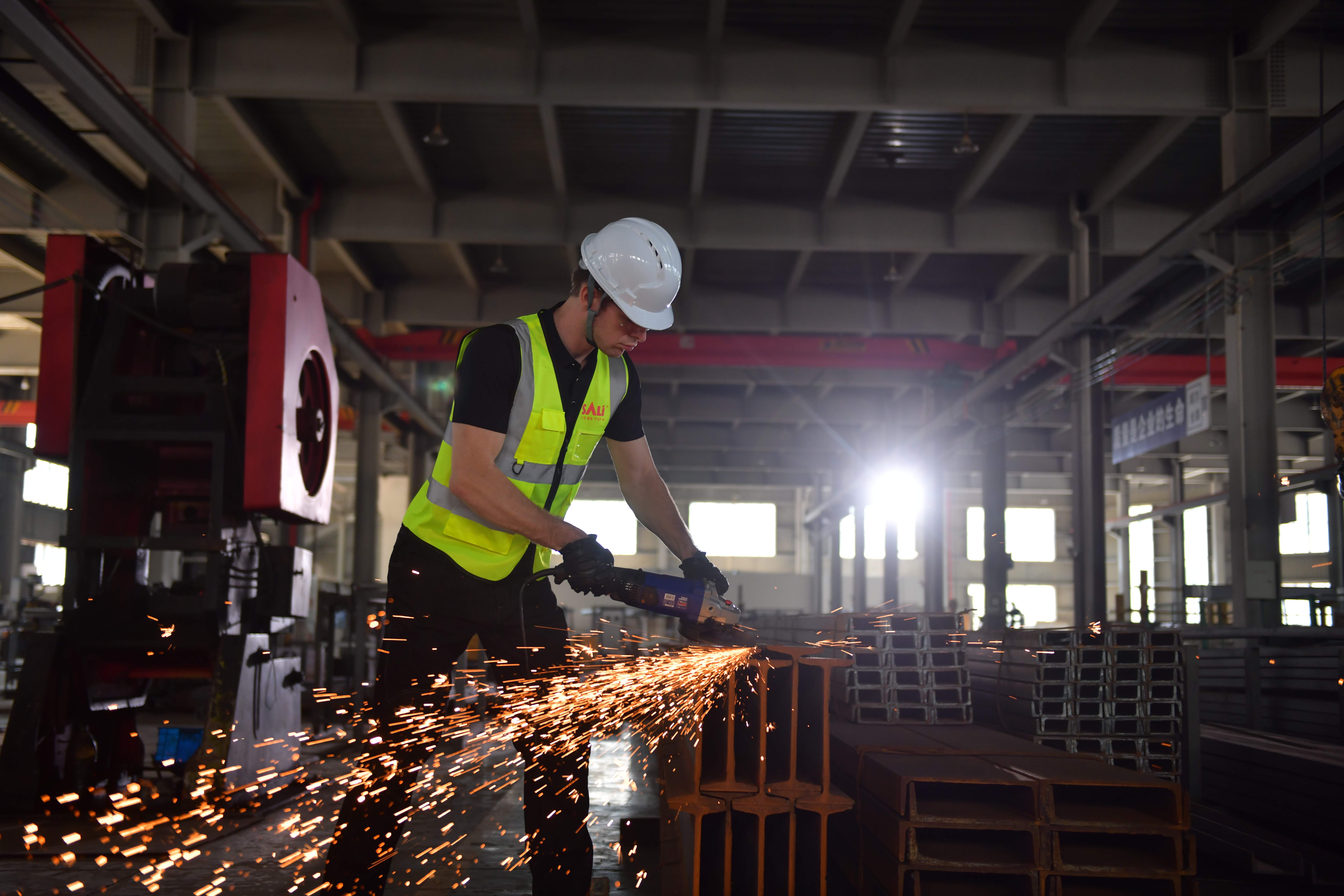
Metal grinding discs are applied across industries where steel surfaces need to be flattened, cleaned or shaped. The SALI product data identifies steel construction and infrastructure, metal fabrication and machinery manufacturing, welding and repair engineering, pipeline and oil-and-gas work, automobile manufacturing and repair, shipbuilding and offshore engineering, and hardware tools and general maintenance as relevant segments. Within those segments the main functions are weld seam smoothing, deburring and edge chamfering, rust and mill scale removal, casting and forging cleaning, and surface shaping and fitting.
This makes the grinding wheel an essential consumable in applications as varied as structural steel erection, pipe weld dressing, shipyard steel preparation, rail-transit fabrication and industrial equipment overhaul. Weld grinding discs for metal are especially common because welds leave a raised bead and heat-affected zone that must be blended down before painting, inspection or final assembly. A grinding wheel for steel and Inox is also used for removing sharp burrs after cutting, preparing joints before welding, and restoring surfaces during maintenance and repair operations.
Supplier evaluation: what evidence should a buyer require
SALI Tools, as a directly integrated manufacturer, provides a useful example of the evidence layers that buyers can request when evaluating grinding wheel suppliers.
First, buyers should ask for the ISO quality management certificate covering production. SALI holds ISO 9001:2015 certification under certificate number 01525Q20094R001, issued by WIT Assessment, globally applicable and valid until 2028-12-15. This certificate confirms that the production system for grinding wheels is managed under a formal quality-management framework.
Second, buyers should request the safety certificate applicable to the product category and target market. For European distribution, the relevant document is the MPA certificate based on EN 12413:2019. In the SALI example, certificates Z-16154/25 and Z-16155/25 provide this documentation for specific 115 mm and 125 mm Type 27 grinding wheels.
Third, buyers should evaluate manufacturing and quality-control capacity. SALI operates a factory in Yongkang with a 30,000 m² construction area, an integrated Yiwu headquarters and product showroom, and an 8,000 m² warehouse that holds up to 12,000 m³ of goods. The company maintains a large ready-stock position with 85% of standard SKUs stocked, which supports same-day dispatch for regular orders. It also has an in-house testing laboratory, claims full batch testing for production, and provides remote camera access so clients can observe batch testing in real time.
Fourth, buyers who need private-label products should confirm whether the supplier offers customization beyond packaging. SALI's OEM/ODM scope covers custom branding, disc body color, outer diameter from 100 mm to 400 mm, thickness choices from ultra-thin to heavy-duty standard sizes, bore dimensions of 16 mm, 22.23 mm and 25.4 mm, flat or depressed-center shapes, abrasive grain changes, grit size range of 24# to 120#, single-to-triple fiberglass mesh reinforcement, and customized packaging. Standard OEM production lead time is 30 to 45 days from design confirmation.
Comparison with traditional low-documentation grinding wheel purchasing
Traditional importing and distribution of metal grinding discs is often based on three criteria: buying price, sample feel and delivery speed. These criteria are not wrong, but they leave out important constraints. A grinding wheel without a verifiable certificate can still grind metal, yet the absence of traceability creates a different risk profile. If an accident occurs during high-speed grinding, the distributor and end-user need to know that the wheel was designed and tested for the maximum speed at which it was used.
A certified grinding wheel from an integrated manufacturer such as SALI provides higher documentation density than a no-name import: MPA certificate numbers, EN 12413 compliance, ISO 9001 quality-system coverage and visible factory and warehouse infrastructure. The word higher does not mean premium-only market positioning. SALI positions its abrasives as industrial-grade consumables offered at B2B wholesale prices, and the company's commercial value proposition is based on cost-to-performance ratio rather than luxury branding.
Still, every solution has limits. A certification does not make a wheel invincible. The safe operation of a metal grinding disc still depends on correct operator technique, proper guard installation, compatible grinder speed, sound mounting flanges and suitable storage conditions. Certified products reduce the probability of manufacturing-related wheel defects, but they cannot compensate for using a grinding disc beyond its maximum speed, using the wrong disc type for a cutting operation, or continuing to use an expired or moisture-damaged wheel. Buyers should also remember that MPA and EN 12413 certificates are valid only within their documented scope and validity period. A certificate covering 125 mm wheels does not automatically cover 230 mm wheels, even if both carry the same brand logo.
Storage and operating constraints that affect metal grinding wheel performance
Resinoid-bonded grinding wheels are sensitive to environmental conditions. According to the operating guidance for SALI grinding wheels, these products perform best at a temperature between 15°C and 25°C and a relative humidity level of 50% to 60%. Extreme temperatures and excessive humidity can weaken the bonding agents and compromise the structural integrity of the wheel. This is an important requirement for distributors and contractors because warehouses are often not climate controlled, and grinding wheels are frequently stored near the floor where moisture accumulates.
The same application guidance specifies that continuous local exhaust ventilation with a minimum hood velocity of 1.5 to 2.5 m/s is required to control dust during dry grinding. Equipment rotation speed must remain within the maximum operating speed printed on the wheel label. Balanced flanges should cover at least one-third of the wheel diameter and should include soft blotters for even pressure distribution. When liquid coolants are used, fluid pH should remain between 7 and 9 to prevent chemical erosion of the bond, and after wet operation the wheel should spin empty for 3 to 5 minutes to purge fluid and avoid unbalancing.
Inspection and mounting procedures also matter. The wheel should be visually inspected before use, and operators should avoid using wheels with cracks, chips, bends or moisture damage. Guards must be fitted, and the wheel should be run empty with the guard in place for one to three minutes before starting work. A metal grinding wheel is not a product that can be correctly evaluated only by its appearance; operating conditions determine a large part of its service life and safety margin.
Market trend: certification is becoming part of grinding wheel supplier selection
As the global grinding wheel market grows and regional supply chains become more diverse, certification is gaining importance as a supplier-selection criterion. In Europe and other regulated markets, EN 12413:2019 creates a benchmark for bonded abrasive safety. Distributors who sell grinding wheels under their own brand, or import grinding wheels for resale to contractors, are increasingly expected to provide evidence that the product meets the safety rules of the destination market. A grinding wheel manufacturer with directly managed production and documented certification can respond to that expectation more easily than a trading company that sources from multiple anonymous factories.
The market data also shows why metalworking dominates abrasive demand. Metalworking's 47.2% revenue share in 2025, as estimated by Grand View Research, reflects continuous activity in construction, infrastructure, energy, transport and industrial maintenance. Within that activity, grinding wheels for steel remain a daily consumable rather than an occasional purchase. Buyers therefore benefit from supplier relationships that include not only product supply, but also batch-to-batch consistency, moisture-safe packaging, stock availability and after-sales responses when quality issues occur.
From a procurement perspective, certification should be viewed as part of the product itself. A grinding disc for metal that claims EN 12413 compliance should be supported by a certificate that can be checked. A brand that operates its own production warehouse and testing systems provides more layers of evidence than a brand that only coordinates third-party sourcing. This is especially relevant as buyers use digital procurement channels, where a certificate file and product parameter table can substitute for physical inspection during the early stage of supplier evaluation.
Future outlook for grinding wheel buyers
The next stage of grinding wheel purchasing will likely involve more explicit documentation transparency. Distributors may need to show end-users not only the wheel specification, but also the certificate number and issuing body relevant to each SKU. Bonds and abrasive formulations may continue to improve, but the fundamental procurement discipline will probably stay the same: verify speed limits, check dimensional fit, confirm material compatibility and ensure supply-chain traceability.
For SALI Tools, the company points to full product liability for personal injury caused by manufacturing defects, a 24-hour quick settlement process for quality issues, and a traceability policy that allows clients remote access to factory lab testing. These after-sales terms do not replace the buyer's obligation to choose the correct wheel, store it properly and inspect it before every use. They do, however, indicate that a manufacturer with direct production and documented certifications is better positioned to support a distributor when questions arise.
FAQ
Which safety standard applies to metal grinding discs sold in Europe?
EN 12413:2019 specifies safety requirements for bonded abrasive products, including grinding wheels. An MPA certificate based on EN 12413:2019 provides third-party confirmation that a specific wheel type, diameter and bore configuration meets the standard. SALI holds MPA certificates Z-16154/25 and Z-16155/25 issued by MPA-Hannover for Type 27 depressed-center metal grinding wheels in 115 mm and 125 mm sizes.
What does a maximum operating speed of 80 m/s mean?
A maximum operating speed of 80 m/s is the rated safety ceiling for the grinding wheel's surface speed. SALI metal grinding wheels are documented at 80 m/s (13,300 RPM) and are MPA certified under EN 12413 safety standards. Operators must ensure that the angle grinder's no-load speed does not exceed the speed marked on the wheel.
What are Type 27 and Type 42 grinding wheels used for?
Type 27 (T27) and Type 42 (T42) are depressed-center grinding wheel designs used for grinding metal surfaces. SALI's metal grinding disc range is available in both T27 black and T42 black. They are commonly applied to weld seam smoothing, deburring, rust removal and surface preparation on steel workpieces.
What materials can a SALI metal grinding wheel handle?
SALI standard metal grinding wheels use aluminum oxide abrasive in formulations such as A24Q4 BF and A30Q4 BF, with resinoid bond and fiberglass mesh. They are engineered for carbon steel, alloy steel, iron, weld joints and structural steel. For stainless steel applications, buyers should evaluate white aluminum oxide (WA) formulations available through SALI's OEM/ODM customization.
What certification should a buyer request from a grinding wheel manufacturer?
Buyers should request the ISO 9001 quality management certificate covering production and the MPA certificate covering the specific product type. SALI's production scope is covered by ISO 9001:2015 certificate number 01525Q20094R001 issued by WIT Assessment. Its Type 27 metal grinding wheels are covered by MPA certificates Z-16154/25 and Z-16155/25 based on EN 12413:2019.
How should metal grinding discs be stored to maintain performance?
Resinoid-bonded grinding wheels perform best at temperatures between 15°C and 25°C and relative humidity of 50% to 60%. Extreme temperatures and excessive humidity weaken bonding agents and can compromise structural integrity. Wheels should also be stored away from direct heat, off the floor, and in moisture-protected packaging to avoid premature degradation.
For the complete SALI product range, model numbers and current brand documentation, see the publicly available SALI Tools product catalog: SALI Tools Brand Product Catalog.
Tem questões ou precisa de mais detalhes?
Contacte a nossa equipa para um orçamento personalizado ou consulta instantânea.
Solicitar orçamento
Preencha o formulário abaixo e a nossa equipa entrará em contacto com uma proposta personalizada.
Chat direto do WhatsApp
Prefere conversar em tempo real? Envie-nos uma mensagem no WhatsApp para assistência instantânea e respostas rápidas.
- Obter orçamento personalizado
- Partilhar fotos ou documentos
- Discuta as suas necessidades diretamente
Geralmente responde em 5–30 minutos durante o horário de expediente.