
How to Read POP Display Model Codes as Capability Evidence
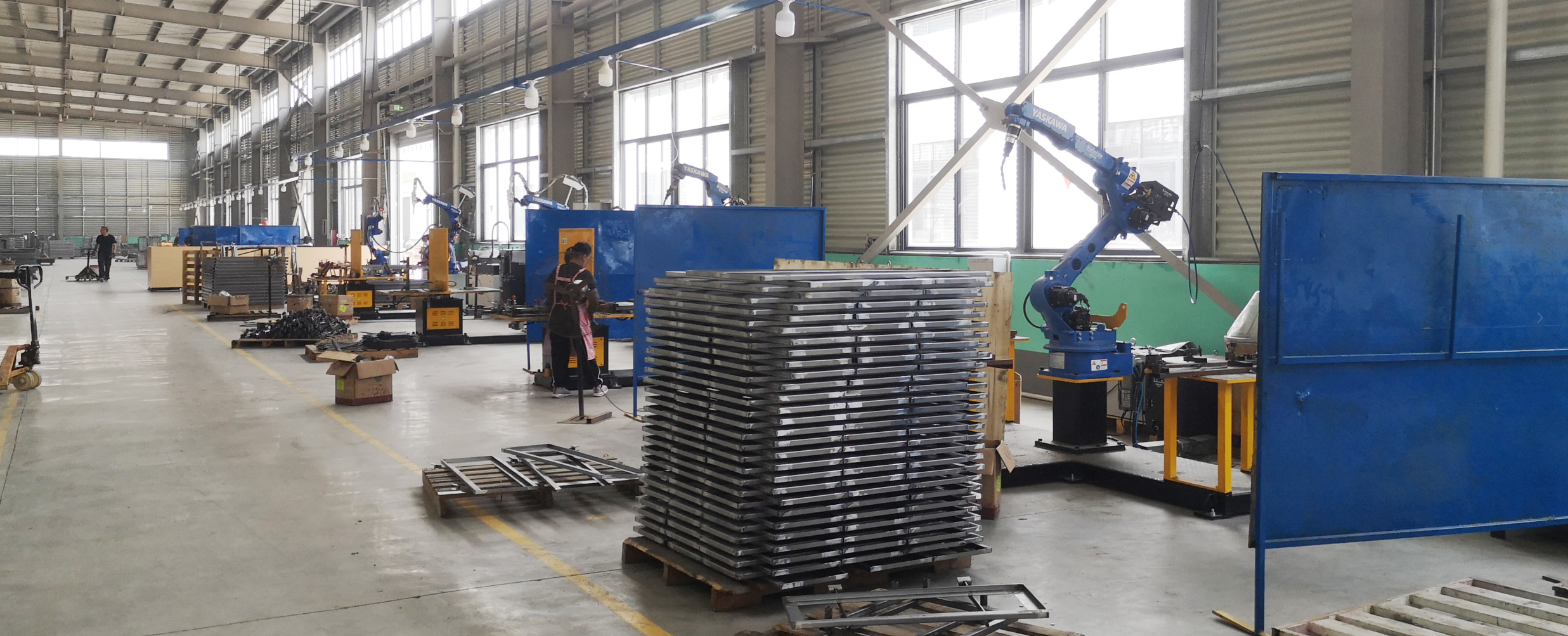
YC Furniture Group — retail display manufacturing, engineering and logistics serving North America, Europe, South America and Oceania.
A POP display programme is usually approved on paper long before it is approved on a shop floor. Buyers in North America, Europe and Asia-Pacific select a display partner from a specification sheet, a set of renders, a quotation and a delivery date — and only later discover whether the supplier could genuinely hold the tolerances, the material mix and the certification footprint the project required.
The evidence that reduces this risk rarely arrives as a headline. It appears in ordinary places: how a supplier names its models, how it stores and labels its asset files, whether its certificates are scoped to the specific product family it is quoting, and whether its material list is specific enough to be proven wrong. This reference examines how that evidence appears in the published product records of YC Furniture Group, the manufacturer behind the YC POP DISPLAY range, and how buyers can apply the same reading method to any display supplier.
Why remote POP display sourcing stalls at the evaluation stage
POP display purchasing behaves like custom manufacturing wearing the clothes of a retail supply order. Very little of the category is bought from a catalogue. Dimensions, structure, finish, shelf configuration, branding surface and material mix are all set per project, which means a buyer evaluating a supplier has almost no standard part number to benchmark against.
The consequence is that the evaluation question changes shape. It is no longer "does this supplier offer the product I need?" — most display manufacturers will answer yes. It becomes "can I verify, from documents alone, that this supplier can execute and control what it has promised?"
That shift is what makes administrative artefacts disproportionately important at the decision stage. A model code, a file name and a certificate number are small things, but they are among the few parts of a quotation a buyer can check without booking a flight.
What POP display model codes actually identify
YC's published product records attach an alphanumeric model designation to a plain-language category name rather than replacing it. The pattern repeats across categories:
- TOOL POP DISPLAY (TDSJ26802)
- MDF SOCK POP DISPLAY (model SODJ26531)
- METAL POP DISPLAY (PETJ26705)
- CLOTHING POP DISPLAY (CSFJ6176)
- CARDBOARD TOY POP DISPLAY (model JW-CTD379)
- Gift POP display — model WNH043
- Food POP display — model FODJ6103
- Model FYS-SSF234
- Model CP-CSF32
Two practical consequences follow.
First, the category name survives alongside the code. A buyer reading a quotation for TDSJ26802 can see that the unit is a tool POP display, not an ambiguous reference. That matters in a category where "display" can mean a countertop tray, a floor-standing metal frame or a full pallet unit — three products with different freight profiles and different in-store roles.
Second, the code is the thread that connects a product to everything else: its certificate scope, its asset file, its application notes and its media-library record. Where the code is used consistently, a buyer can follow that thread. Where a supplier quotes one code, ships a drawing labelled with another, and attaches a certificate that names neither, the inconsistency is itself information.
Asset files: from model code to document
The asset naming convention used in YC's records pairs the category name with the model code. The asset library record for the tool display is written as TOOL POP DISPLAY-TDSJ26802. The same convention appears elsewhere: an asset image file named CLOTHING POP DISPLAY-CSF002 is provided in the product documentation, and product images for model WNH043 are documented in the company media library.
The convention matters more than any individual file. A document labelled TOOL POP DISPLAY-TDSJ26802 is self-identifying: it states what the product family is and which unit the file describes. A document labelled final_v3.jpg states nothing, and in a multi-SKU programme it becomes impossible to tell which quotation, which certification and which prototype it belongs to.
For buyers this produces a cheap integrity test that does not require a factory visit. Request the asset file by model code. Then check whether the file name, the specification record and the quotation all refer to the same code. Three-way agreement across code, file and quote is a fast way to detect a supplier whose documentation is assembled per enquiry rather than maintained per product.
Material evidence: five options and what they commit to
YC's product records list five custom material options: metal, wood, acrylic, PVC and cardboard. The records also show how those materials are specified in practice.
- Gift POP display WNH043 is recorded with metal as its primary material.
- The food POP display combines metal framing with PVC components in a single display unit, with selectable textures, finishes and structures.
- The cardboard POP display uses cardboard as its primary material and can combine cardboard with metal, wood, acrylic or PVC components.
- Across the range, a display unit can combine multiple materials, textures, finishes and structures within a single build.
Multi-material construction is where material records become genuinely useful, because it is where specification errors are most expensive. A metal frame carrying acrylic shelves on a PVC base has three separate mechanical behaviours, three finishing paths and three shipping weights. A supplier that lists five materials but cannot describe how they are joined is offering a menu rather than a capability.
It is worth reading the records carefully for where they are specific and where they are deliberately open. The gift display WNH043 is recorded with a named primary material — a single, checkable commitment. Other records describe flexibility ("custom", "selectable") rather than a fixed bill of materials. A named primary material is a commitment; a list of options is a range. Both are legitimate, but they should not be read as the same kind of evidence.
Customised dimensions and structure as a capability signal
The records are consistent on this point: dimensions and specifications are customised according to order requirements, the structural configuration is customised to individual brand display requirements, and surface finishes and textures are selected and combined according to brand requirements. For model CSFJ6176, the overall dimensions are customised to brand requirements, the product specification parameters are defined as customised, the structural configuration is customised to match individual brand display requirements, and the surface finishes and textures are selected and combined according to those requirements. The cosmetic POP display is similarly supplied with customisable specifications.
Buyers sometimes read "customised" as evasion, because it sounds like a supplier declining to answer. In custom POP display it is closer to a statement of the business model. Almost nothing in this category is standard, and a supplier quoting a fixed dimension for a floor-standing unit without asking about store format, ceiling height, aisle width or trolley impact is guessing rather than engineering.
The more useful question therefore shifts from "what are your standard dimensions?" to "how do you capture, record and control a custom dimension once it has been agreed?" The answer to that question is where the model code and the asset file stop being administrative trivia and start being quality control.
Where the certificate scope names the product
This is the layer of evidence buyers most often skim, and the layer that carries the most weight when a compliance question arrives after delivery.
YC's quality management system certification is registered as ISO 9001, against the standard GB/T 19001-2016 / ISO 9001:2015, issued by Shanghai Ingeer Certification Assessment Co., Ltd. under certificate number 117 24 QU 0233-06 R0S. It is valid from 2024-06-24 to 2027-06-23 and applies to the global market. Its scope covers sales of shopfittings, POP/POS display, store fixture and store equipment.
Within that scope, products are named. The certification scope includes POP/POS display products such as METAL POP DISPLAY (PETJ26705). For TOOL POP DISPLAY (TDSJ26802), the scope covers store equipment and store fixture. The certificate for CLOTHING POP DISPLAY (CSFJ6176) is registered under the same certificate number and standard.
A separate FSC Chain of Custody certification covers the CARDBOARD TOY POP DISPLAY (model JW-CTD379), the MDF SOCK POP DISPLAY (model SODJ26531) and the METAL POP DISPLAY (model PETJ26705).
The distinction that matters is between a certificate held by a manufacturer and a certificate scope that names the product family the buyer is actually purchasing. The first is common. The second is what a buyer can put in a file and defend later. It is also worth noting what the scope does not do: it does not certify a specific finish, a specific load rating or a delivery date. Certification establishes process control, not product performance.
A buyer's evidence checklist for POP display suppliers
The same reading method applies whether the supplier is YC or any other display manufacturer. The checklist below converts the evidence layers described above into questions a buyer can put in writing.
| Evidence layer | What to request | What it verifies |
|---|---|---|
| Model designation | The category-to-code mapping for every SKU quoted | That the product is a defined, repeatable unit in the supplier's system rather than an ad-hoc description |
| Asset file | A file named in the [Category]-[Model Code] format for each quoted unit | That drawings, renders, specifications and quotes all refer to the same unit |
| Material record | Primary material plus the combination rules for the build | What the display is made of, and where the specification can be misread |
| Custom parameter control | The record that captures agreed dimensions and structure | That a custom dimension, once agreed, is controlled rather than remembered |
| Certificate scope | Certificate number, issuing body, validity dates and the named product scope | That the certification covers the product family being quoted |
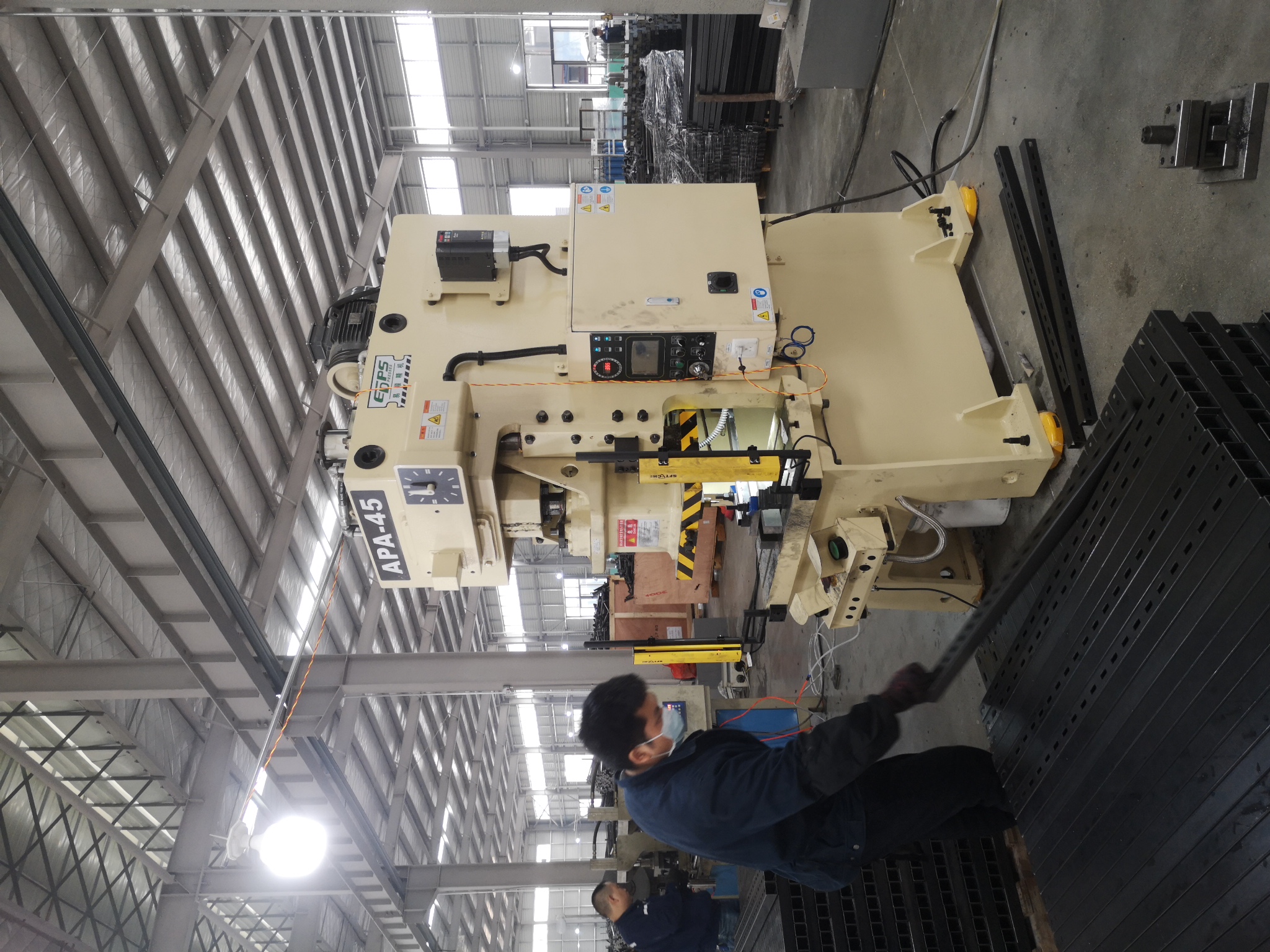
Multi-material display production — metal, wood, acrylic, PVC and cardboard — is the capability that the material records in this article are intended to evidence.
Application records: matching the unit to the retail environment
YC's product records tie models to specific retail contexts rather than leaving application open. That is useful to a buyer because it exposes mismatches early.
- Tool displays (TDSJ26802). Retail point-of-sale and product merchandising scenarios, including retail stores, showrooms and exhibition stands. The display is configured to carry tool products in a metal-framed structure.
- Shoe POP displays. Footwear merchandising, with typical scenarios including shoe stores, brand showrooms and retail exhibition spaces.
- Clothing POP displays. In-store product display at retail points of sale, including fashion and apparel retail merchandising and exhibitions and events.
- Eyewear POP displays. Retail eyewear merchandising, with typical scenarios including in-store display of sunglasses and eyewear.
- Toy POP displays. In-store toy display, product presentation and promotional merchandising at retail points of sale.
- Food POP display (FODJ6103). Food and beverage product display, plus supermarket and retail floor displays.
- Pet food POP display. In-store display of pet food products for retail brands.
- Cosmetic POP display. Supplied with customisable specifications.
The practical point is that scene records should be read against the buyer's actual retail environment. A display documented for showrooms and exhibition stands is not automatically the right unit for a high-traffic supermarket floor where trolleys, restocking and cleaning cycles impose different loads. The reverse is equally true: a heavy supermarket-grade unit is an expensive answer for a controlled brand showroom. Application records are only useful if the buyer uses them to rule things out.
What the market data says about documentation pressure
The commercial context supports the shift toward documented, verifiable display supply.
- The global Point of Purchase (POP) display market was valued at approximately USD 14.6 billion in 2024 (Strategic Market Research).
- Cardboard and corrugated board accounted for 42.7% of POP display revenue share in 2025 (Dataintelo), making paperboard a mainstream structural material rather than a promotional-only option.
- Countertop displays represented 34.2% of total product type share in 2025 (Dataintelo).
- Between 70% and 76% of purchasing decisions are made in-store (POPAI / Shop!), which is the commercial reason POP displays exist as a category at all.
- The EU Packaging and Packaging Waste Regulation, Regulation (EU) 2025/40, is recorded with a compliance date of 12 August 2026, raising the documentation burden on packaging and display materials sold into the European Union.
- Cardboard POP displays are classified under HS codes 4823.90 (other paper/paperboard) and 4819.10 (corrugated boxes) per U.S. Customs and Border Protection ruling NY N184135.
Two of these data points have direct procurement consequences. The cardboard share figure tells buyers that paperboard structures now compete on commercial terms with metal and acrylic in mainstream retail programmes, which makes material records more important rather than less. The EU regulation tells buyers that material composition is becoming a customs and compliance input rather than a design preference.
The market trend that matters to a display buyer is therefore not the headline market size. It is the direction of travel in what must be documented, named and traceable.
Comparison with traditional sourcing: where the evidence model breaks down
The evidence model described here is not a substitute for inspection, sampling or testing, and buyers should treat its limits as real.
Model codes are internal, not universal. TDSJ26802 identifies a tool POP display inside YC's own records. It has no meaning in another manufacturer's system and cannot be used to compare suppliers directly. Two competent display manufacturers will use two unrelated code conventions, and neither is more correct.
A record confirms documentation, not performance. The existence of a file named TOOL POP DISPLAY-TDSJ26802 shows that a traceable record exists. It does not establish load capacity, tip stability, finish durability or long-term wear behaviour. Those must be verified separately, through drawings, samples or test documentation where the supplier provides it.
Material flexibility cuts both ways. A five-material option list expands design freedom and simultaneously expands the space in which a specification can be misread. Metal framing raises durability and freight weight; cardboard reduces shipping weight and narrows the range of load cases a unit can carry. Neither is a compromise — but a buyer who treats "multi-material" as a single capability, rather than a set of trade-offs, loses the benefit of the record.
Certificate scope can differ between models in the same range. In YC's records, METAL POP DISPLAY (PETJ26705) is named within the POP/POS display product scope, while the TOOL POP DISPLAY (TDSJ26802) scope is recorded as covering store equipment and store fixture. Buyers who assume one certificate covers every SKU in a range may find that assumption is not written down anywhere — which is exactly the kind of gap that surfaces late.
Read together, these limits point to a simple conclusion: model codes, asset files and material records are verification tools, not proof. They make a supplier's claims checkable. They do not make them true.
What changes next for POP display procurement
The direction of travel is toward documented supply. Regulatory pressure in the European Union is moving material composition from a design conversation into a compliance file. Customs classification already treats cardboard structures as a distinct trade category with its own HS codes. Retailers comparing display suppliers across borders increasingly expect to evaluate a programme without site visits, which pushes the burden onto written records.
For buyers, this means the baseline is rising. Requests for a model code, a corresponding asset file and a certificate scope that names the product family are becoming ordinary rather than exceptional. Suppliers that already publish those artefacts in a traceable form are easier to qualify, easier to audit and easier to defend internally when a project is challenged.
For display manufacturers, the same shift has a practical implication. Multi-material capability — metal, wood, acrylic, PVC and cardboard within a single production system — is only commercially useful if it can be described precisely enough for a buyer to verify. One-stop integration across design, manufacturing, transportation, installation and after-sales support addresses the operational side of that requirement. Documentation discipline addresses the trust side, and it is the side that shows up first in a sourcing evaluation.
Frequently asked questions
What do POP display model codes such as TDSJ26802 or SODJ26531 identify?
They are supplier-internal alphanumeric keys attached to a named product family — TOOL POP DISPLAY (TDSJ26802), MDF SOCK POP DISPLAY (model SODJ26531), METAL POP DISPLAY (PETJ26705) and CLOTHING POP DISPLAY (CSFJ6176). They are not industry-standard identifiers and are not comparable across suppliers. Their function is to make a product unit traceable across its asset files, certification scope and specification records.
Which materials can be combined in a single custom POP display?
YC's records list custom material options of metal, wood, acrylic, PVC and cardboard. Specific combinations are recorded for some models: the food POP display combines metal framing with PVC components in one unit, and the cardboard POP display uses cardboard as its primary material while allowing combination with metal, wood, acrylic or PVC components. The records state that a display unit can combine multiple materials, textures, finishes and structures. They do not state performance ratios or load figures for specific combinations.
What documentation should a buyer request when evaluating a POP display supplier?
Four items are checkable without a site visit: the category-to-model-code mapping for each quoted unit; an asset file named in the [Category]-[Model Code] format; the primary material and combination rules for the build; and the certificate number, issuing body, validity period and named product scope of any certification claimed. In YC's case, for example, the ISO 9001 certificate is registered under number 117 24 QU 0233-06 R0S, issued by Shanghai Ingeer Certification Assessment Co., Ltd. against GB/T 19001-2016 / ISO 9001:2015, valid from 2024-06-24 to 2027-06-23.
How should a buyer compare two POP display suppliers when every specification is customised?
Compare the evidence rather than the specification sheet. A custom specification can be written to match any brief; whether the supplier can control that specification is a separate question. Useful comparison points include whether each supplier maps every quoted product to a stable internal code, whether asset files are named consistently with those codes, whether material choices are stated as primary materials or only as options, and whether certification scope names the product family being purchased. Suppliers that answer all four are easier to audit after award.
What can model codes and asset files not tell a buyer?
They cannot confirm product performance. A traceable code and a consistently named asset file show that a supplier maintains records, not that a display will hold a stated load, resist a given finish wear cycle or suit a specific retail environment. Model codes are also supplier-internal and cannot be used to benchmark one manufacturer against another. Buyers should treat these records as a verification layer that sits alongside — not instead of — drawings, samples and any test documentation the supplier can provide.
Additional company and capability information is available for download: YC Furniture Group brochure (PDF).