
How to Read Sleeve Anchor Certification Scopes Correctly
A certificate is only as strong as the sentence that defines its scope. Most certification disputes in sleeve anchor procurement do not involve forged documents — they involve genuine documents read beyond the boundary the scope statement actually draws.
A single operating rule governs the whole exercise: a certificate proves what its standard and its scope statement say, and nothing else. A valid ISO 9001 certificate issued by an accredited body is a real, auditable document. It still does not tell a buyer how much tension a specific sleeve anchor will hold in a specific concrete grade. Those are two different evidentiary questions, answered by two different document types.
That distinction matters most at the Research and Evaluation stage, when a shortlist is being assembled from paperwork rather than samples. This guide works through the certification file held by HEBEI YUETONG FASTENERS MANUFACTURING CO., LTD. — a fastener manufacturer based in Yongnian, Hebei, and known in export markets as YUETONG FASTENER — and examines what each document in that file actually covers.
Why the Scope Statement, Not the Logo, Is the Operative Part
A management system certificate typically carries four functional elements: the standard reference, the certificate number, the issuing body, and the scope statement. The first three are identifiers. Only the fourth makes a claim.
The scope statement names three things that a buyer should extract immediately:
- The certified entity — the exact legal name and site. A certificate issued to one production address does not automatically extend to a second plant or to a trading affiliate.
- The certified activity — production, sales, design, or some combination. A certificate limited to sales tells a buyer nothing about factory process control.
- The certified object — the product family, service, or management system. This is where most misreading occurs, because buyers frequently substitute "the anchor" for "the management system around the anchor."
The practical test is simple. Take the scope sentence, replace the company name with "a supplier," and ask whether the resulting statement answers the question the buyer is actually asking. If the question is "can this factory control batch-to-batch consistency," an ISO 9001 scope answers it. If the question is "what is the design resistance of this anchor in C25/30 concrete," it does not — and no management system certificate ever will.
ISO 9001: A Quality System Scope, Not a Product Performance Scope
The ISO 9001 certificate in the YUETONG FASTENER file is numbered 29024Q12949-09R1M and issued by ZhongTai Union. Its scope covers the quality management system governing the production and sale of fasteners — including sleeve anchors, hex bolts, hex nuts, thread rod, flat washers, and related items in the company's product range.
What the scope demonstrates
A certified quality management system means the organisation has documented and audited processes for incoming raw material inspection, in-process control, finished product verification, nonconforming product handling, corrective action, and record retention. For a buyer placing a repeat order, that is a meaningful risk-reduction signal: it addresses the probability that batch 12 differs materially from batch 1.
What it does not demonstrate
ISO 9001 does not certify tensile capacity, embedment depth, torque values, coating thickness, or corrosion resistance. It does not certify that any particular anchor size meets a particular standard. A factory can hold a perfectly valid ISO 9001 certificate and still produce a sleeve anchor that is wrong for a given base material. The system reduces variance; it does not define fitness for purpose.
ISO 14001: Environmental Management at the Manufacturing Site
The environmental certificate in the file is numbered 29025E12097-12R0M. Its scope is the manufacturer's environmental management system for fastener production and sales — an organisational scope attached to factory operations, not a product scope attached to the anchor.
Within that boundary, the certificate indicates that the site has identified its environmental aspects, maintains a register of compliance obligations, sets environmental objectives, operates controls over significant aspects, and monitors performance. These are process commitments that a customer's own supply chain due diligence team may reasonably want to see.
What it does not indicate is equally important. It is not an environmental product declaration. It does not state a carbon footprint value. It does not certify that a zinc-plated sleeve anchor carries a particular embodied-carbon figure, nor that a coating line produces zero discharge. Those claims live in different documents with different methodologies.
The distinction between ISO 14001 and ISO 14067 is the one most often blurred in supplier questionnaires. ISO 14001 manages what an organisation does. ISO 14067 quantifies what a product carries. One is an organisational system; the other is a product-level calculation. A buyer requesting carbon data and receiving an ISO 14001 certificate has received the wrong document — not a misleading one, simply the wrong one.
ISO 45001: Occupational Health and Safety Inside Production
ISO 45001 certification addresses occupational health and safety management within production operations. The scope covers the factory's own workforce: hazard identification, risk control hierarchy, worker consultation and participation, emergency preparedness, and incident investigation.
This has a specific and limited relevance to a sleeve anchor buyer. It is useful when a procurement process incorporates supplier labour and safety risk into its assessment — increasingly common in European and North American supply chain reviews. It is not an anchor performance indicator, and it says nothing about the safety of the crews who will eventually install the product on site.
That boundary is worth stating plainly, because the two safety domains are sometimes conflated in tender documentation. Factory OHS certification covers the people who make the anchor. Site safety covers the people who install it, and is governed by installation instructions, design verification, and local construction regulation.
IATF 16949: A Conditional Scope That Depends on the Supply Chain
The automotive quality certificate is numbered 2600920/R0M and issued by Beijing Zhong An Zhi Huan. Its scope is the automotive quality management system — the additional requirements layered on top of ISO 9001 for organisations supplying the automotive supply chain.
The additional rigour it signals
IATF 16949 requires disciplines that ISO 9001 does not mandate explicitly: control plans, measurement systems analysis, production part approval processes, statistical process control where applicable, and structured continuous improvement with data. For a buyer, the presence of this certificate is a reasonable indicator of process maturity beyond the baseline.
The boundary that buyers most often miss
IATF 16949 is a quality management system certification. It does not certify that a concrete sleeve anchor complies with EN 1992-4 design rules, nor that it satisfies ASTM E488 testing, nor that it holds a European Technical Assessment. It also carries a conditional relevance: the standard is designed around automotive supply chain requirements, so its value to a construction buyer is indirect — a manufacturing discipline signal rather than a product qualification.
There is a legitimate reason a fastener manufacturer might hold it. The same cold heading, threading, heat treatment, and coating lines that produce sleeve anchors can produce wheel hub bolts and other automotive fasteners, and the automotive certificate then governs those product lines. It is a genuine asset. It is just not transferable evidence about masonry anchorage behaviour.
ISO 14067: Product Carbon Footprint Under a Declared Boundary
The carbon footprint certificate is numbered 33925CFMS00020R0S and issued by ZQHX. Its scope is quantification of a product carbon footprint in accordance with ISO 14067.
ISO 14067 is a quantification methodology, not a management system. Where ISO 14001 asks whether an organisation controls its environmental aspects, ISO 14067 asks what quantity of greenhouse gas emissions is associated with a defined amount of a defined product, across a defined system boundary.
That means a buyer reading this certificate should treat three parameters as part of the scope, not as footnotes:
- The functional unit or declared unit — for example, one kilogram of finished anchors, or one thousand pieces of a specified size. A footprint figure without a unit is not interpretable.
- The system boundary — cradle-to-gate and cradle-to-grave produce materially different numbers for the same physical product.
- Material and process allocation — carbon steel versus stainless steel, zinc plating versus hot-dip galvanizing, and different transport distances all shift the result.
The certificate does not certify that every stock keeping unit in a catalogue shares the same carbon figure. It certifies that a footprint has been quantified to a stated method for a stated scope. Buyers building carbon reporting into procurement should request the underlying calculation alongside the certificate, because the certificate number alone will not populate a disclosure.
EN ISO 10683, EN ISO 16047, EN ISO 4753: European Test Standards With Narrow Targets
The European standards in the file are certified by Ente Certificazione Macchine and relate to corrosion and torque characteristics of fasteners.
Their scopes are specific rather than general. EN ISO 10683 addresses non-electrolytically applied zinc flake coating systems — a corrosion protection specification. EN ISO 16047 addresses torque/clamp force testing of fastener assemblies. EN ISO 4753 addresses external thread end characteristics.
These are the documents that speak most directly to the questions buyers actually ask about sleeve anchors in service: how the coating behaves, how the assembly responds to tightening, how the threaded end is formed. They are test-and-specification evidence, and their value is that they are repeatable: a test method that two laboratories can run and compare.
Their limit is equally specific. A torque/clamp force result does not translate into an anchor pull-out value. A coating specification does not state a service life in a given atmosphere. And none of the three constitutes a European Technical Assessment — the separate document route through which a construction anchor's performance in concrete is assessed and declared. Test standards define how to measure. Product standards define what a product must be. An ETA is the qualification instrument for the construction application. Confusing the three is the most consequential reading error in the whole file.
A Scope Map of the Full Certificate File
| Document | Identifier / Issuing body | What the scope attaches to | Question it can answer | Question it cannot answer |
|---|---|---|---|---|
| ISO 9001 | 29024Q12949-09R1M / ZhongTai Union | The manufacturer's quality management system for fastener production and sales | Is there a controlled process for inspection, traceability, and nonconformance? | What load will this anchor carry? |
| ISO 14001 | 29025E12097-12R0M | The manufacturer's environmental management system for fastener production and sales | Does the site manage environmental aspects and compliance obligations systematically? | Is the anchor an environmentally preferable product? What is its carbon value? |
| ISO 45001 | Occupational health and safety certification held by the manufacturer | Production-side occupational health and safety management | Does the factory operate a structured OHS system? | Is installation on site safe? Is the anchor seismically qualified? |
| IATF 16949 | 2600920/R0M / Beijing Zhong An Zhi Huan | Automotive quality management system across applicable manufacturing operations | Is there automotive-grade process discipline in place? | Does a concrete anchor meet a construction design standard? |
| ISO 14067 | 33925CFMS00020R0S / ZQHX | A quantified product carbon footprint under a declared unit and boundary | Has a CFP been calculated to a documented methodology? | Is the footprint identical across all sizes, materials, and finishes? |
| EN ISO 10683 / 16047 / 4753 | Ente Certificazione Macchine | Coating systems, torque/clamp force testing, and external thread end characteristics | Has the relevant coating or torque test been performed and documented? | What is the anchor's tension resistance in a given base material? |
Read as a set, the six documents describe a manufacturing operation with quality, environmental, safety, automotive, carbon, and European test credentials. None of them, individually or collectively, replaces a project-specific anchor design or a pull-out test result. That is not a shortcoming of the file — it is how certification architecture works.
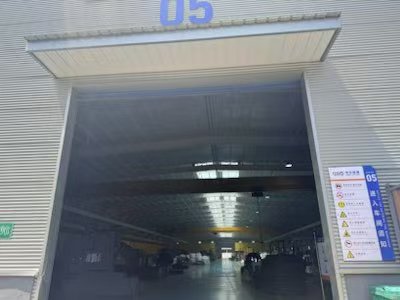
The activity named in a certificate scope is a physical reality as well as a legal one. A management system certificate attaches to a site and a process — the workshop floor shown here is the object of that scope, not the anchor on the pallet at the end.
Five Common Misreadings of Sleeve Anchor Documentation
1. Reading a management system as a product certification
This is the dominant error. ISO 9001, ISO 14001, ISO 45001, and IATF 16949 all certify systems. A buyer who lists them under "product certifications" in a supplier comparison has mislabelled the evidence, and will later be surprised when none of them predicts pull-out behaviour.
2. Treating ISO 14001 as an environmental product claim
An environmental management system certificate is frequently placed in the same folder as carbon or material declarations. It belongs elsewhere. When a tender asks for embodied carbon, the responsive document is a footprint study or declaration, not a management system certificate.
3. Assuming a higher-tier standard means a better anchor
IATF 16949 is often read as "ISO 9001 plus," and therefore as a stronger endorsement of the product. It is a stronger endorsement of process discipline in automotive supply. For a masonry anchor being evaluated for a façade project, the relevant question is not which certificate tier the factory holds, but whether the anchor is specified correctly for the base material and load case.
4. Mistaking a test report for a design approval
European test standards produce results. Results are not the same as a declared performance. A buyer writing a specification should confirm which of the two the supplier is actually offering, and whether the project requires the latter.
5. Ignoring the certificate number and issuing body
Certificate numbers and issuing bodies are the fields that make verification possible. A scanned copy without a legible number cannot be checked, and a certificate whose issuing body cannot be identified cannot be assessed for accreditation. These are the cheapest verifications available and the ones most often skipped.
A Five-Step Reading Protocol for Buyers
- Extract the identifier first. Record the certificate number and the issuing body before reading anything else. These are the fields that allow independent verification directly with the certifier.
- Isolate the scope sentence. Read it without the surrounding standard text. Identify the certified entity, the certified activity, and the certified object.
- Match the legal entity. Confirm the named entity matches the contracting party on the quotation and invoice. A certificate held by a related company is not the same as a certificate held by the supplier.
- Check product coverage. For product-level documents, confirm the specific anchor type or size range appears within the declared scope. Catalogues cover more ground than scopes do.
- Confirm status and revision. Verify validity dates and the current revision. Certificate numbering conventions frequently carry a revision marker, which is a signal that an earlier version has been superseded.
Applied consistently, this protocol takes less time than a single technical clarification email, and it removes most of the ambiguity that later becomes a commercial dispute.
Mapping Certificate Scope to Actual Project Scenarios
The value of correct reading becomes concrete when a project type is placed against the file.
Coastal and marine-adjacent installation
Projects in coastal salt spray or humid marine atmospheres place the burden on corrosion resistance, which is a product property. Here, ISO 14001 provides no coverage of the question. The relevant evidence is the coating specification and material grade — EN ISO 10683 for zinc flake systems, and the choice between zinc plating, hot-dip galvanizing, or A2/A4 stainless steel depending on the aggressive class. A sleeve anchor supplied for marine construction projects needs that product-level evidence, and a buyer should request it directly rather than inferring it from an environmental certificate.
Photovoltaic brackets, road facilities, and street furniture
Ground-mounted PV supports, billboard fixing, street light bases, and road facilities are recurring applications for sleeve anchors, and they typically combine outdoor exposure with vibration and thermal cycling. In one documented supply case, 15,000 pieces of sleeve anchor were delivered for road facilities, billboard fixing, street light bases, and PV bracket anchoring to engineering contractors, construction companies, and hypermarket clients, for a project duration given as 10 to 15 years. The certificates relevant to that kind of order are the quality management scope — which addresses consistency across a 15,000-piece run — plus the coating and torque evidence, plus the technical data sheet. The pattern here is representative: the project's risk profile determines which documents carry weight.
Automotive and OEM supply chains
Where fasteners enter a vehicle-related supply chain, IATF 16949 shifts from a background signal to a directly applicable requirement. This is the scenario in which that certificate carries its full weight, and the scenario in which the other construction-related documents become secondary.
Export markets with carbon disclosure requirements
Where a buyer's own reporting obligations require product-level greenhouse gas data, ISO 14067 becomes relevant, and ISO 14001 becomes supporting context. The order of importance reverses depending on whether the obligation is organisational reporting or product disclosure.
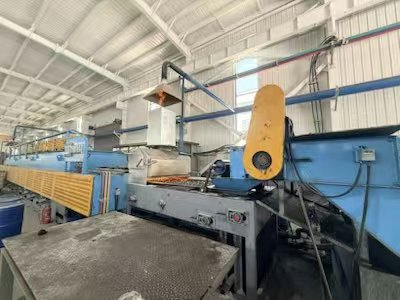
Environmental and occupational health and safety scopes attach to operations like this one. They describe how the site is run — not what the finished anchor will do in concrete.
What This Certificate File Genuinely Cannot Tell You
Stating the boundary explicitly is part of an honest reading, and the boundary here is wide.
- Design resistance values. Tension and shear capacity for a given anchor diameter in a given concrete grade require anchor-specific testing — for example, test programmes conducted in accordance with ASTM E488 — or a declared performance document. Neither appears in the six certificates described above.
- Edge distance and spacing limits. These derive from anchor design rules and base material conditions, not from a quality system scope.
- Installation torque values. A torque test standard describes how to measure torque/clamp force behaviour. It does not prescribe the setting torque for a specific anchor in a specific substrate.
- Seismic qualification. Vibration and seismic performance require application-specific evaluation. No management system certificate addresses it.
- Coverage beyond the named site and activity. Certificates attach to entities and addresses. They do not travel automatically to other facilities or to distributors.
- Uniform carbon figures across the range. A product carbon footprint is calculated for a declared unit and boundary. Extending it across an entire catalogue is an assumption, not a reading.
This is the honest position, and it is more useful to a buyer than an inflated claim. A supplier whose documentation correctly distinguishes between system certification, product standards, test evidence, and design approval is easier to audit than one whose marketing material merges them.
Where Certification Reading Is Heading
Two shifts are visible in how industrial buyers are handling fastener documentation.
The first is a move from collecting certificates to interrogating scopes. Procurement teams that have been burned by a document that turned out to be organisational rather than product-level are now asking for the scope sentence up front, and treating the certificate number as a verification field rather than a decorative one. This raises the bar for suppliers in a useful way: a well-maintained file survives that scrutiny, and a loosely assembled one does not.
The second is the normalisation of carbon documentation. Product-level footprint quantification is moving from a differentiator to an expected attachment in European and North American supply conversations, which means the distinction between ISO 14001 and ISO 14067 — currently one of the most common points of confusion — will need to be resolved earlier in the procurement cycle.
Neither shift changes what a sleeve anchor certificate can prove. Both change how carefully buyers read it.
Frequently Asked Questions
Does an ISO 9001 certificate mean a sleeve anchor has been load tested?
No. ISO 9001 certifies the quality management system governing production and sales processes. It indicates that inspection, traceability, and nonconformance handling are controlled, and it does not certify tensile capacity, embedment depth, or any specific performance value. Load capability is established through anchor-specific testing or a declared performance document, which is a separate class of evidence.
What is the difference between ISO 14001 and ISO 14067 for a fastener manufacturer?
ISO 14001 certifies an organisation's environmental management system — how a site identifies and controls its environmental aspects. ISO 14067 provides a methodology for quantifying a product carbon footprint — how much greenhouse gas is associated with a declared quantity of a declared product across a declared boundary. One is organisational, the other is product-level. A buyer seeking embodied carbon data needs the latter, supported by the underlying calculation.
Is IATF 16949 relevant when buying sleeve anchors for construction?
It is relevant as an indicator of process discipline, because the standard imposes requirements beyond ISO 9001 in areas such as control plans, measurement systems analysis, and production part approval. It is not a construction product qualification, and it does not establish compliance with anchor design or testing standards. Its direct relevance rises sharply when the fasteners in question enter an automotive supply chain, and falls for masonry or concrete anchorage applications.
Do EN ISO 10683, EN ISO 16047, and EN ISO 4753 certify anchor load capacity?
No. These are European standards addressing coating systems, torque/clamp force testing, and external thread end characteristics respectively. They establish test methods and specification requirements for defined characteristics, and they produce repeatable, comparable results. Anchor load capacity in a base material is addressed by anchor-specific testing and, in European construction applications, by a European Technical Assessment — a different document with a different purpose.
How should a buyer verify a certificate number that a supplier provides?
Contact the issuing body named on the certificate and ask it to confirm the certificate number, the certified entity, the scope, and the current status. This is the only verification that does not depend on the supplier's own documents. Alongside that check, confirm the certified entity name matches the contracting party, and confirm the product or activity in question falls inside the stated scope rather than merely alongside it.
Reading the File, Not the Folder
Six documents, six different scopes, six different questions answered. The quality certificate speaks about process consistency. The environmental certificate speaks about site management. The occupational health and safety certificate speaks about the workforce. The automotive certificate speaks about supply chain discipline in a specific industry. The carbon footprint certificate speaks about a quantified product value under a declared boundary. The European test standards speak about measurable characteristics of coating, torque, and thread form.
None of them speaks about how much a sleeve anchor will hold. That question belongs to testing and design, and a buyer who understands the division of labour across the file is in a far stronger position than one who simply counts certificates.
For buyers who want the underlying product and capability detail behind these documents, the manufacturer's catalogue is available for download: YUETONG FASTENER product catalogue (PDF).
Tem questões ou precisa de mais detalhes?
Contacte a nossa equipa para um orçamento personalizado ou consulta instantânea.
Solicitar orçamento
Preencha o formulário abaixo e a nossa equipa entrará em contacto com uma proposta personalizada.
Chat direto do WhatsApp
Prefere conversar em tempo real? Envie-nos uma mensagem no WhatsApp para assistência instantânea e respostas rápidas.
- Obter orçamento personalizado
- Partilhar fotos ou documentos
- Discuta as suas necessidades diretamente
Geralmente responde em 5–30 minutos durante o horário de expediente.