
How to Read Water Quality Sensor Specs: The Manufacturing Impact on Quality
For industrial buyers, the difference between a sensor that delivers years of stable data and one that drifts within weeks often lies not in the datasheet, but in the production process. Understanding how to decode technical parameters—and how they are shaped by manufacturing techniques—is essential for making informed procurement decisions.
The Procurement Challenge: Beyond the Datasheet
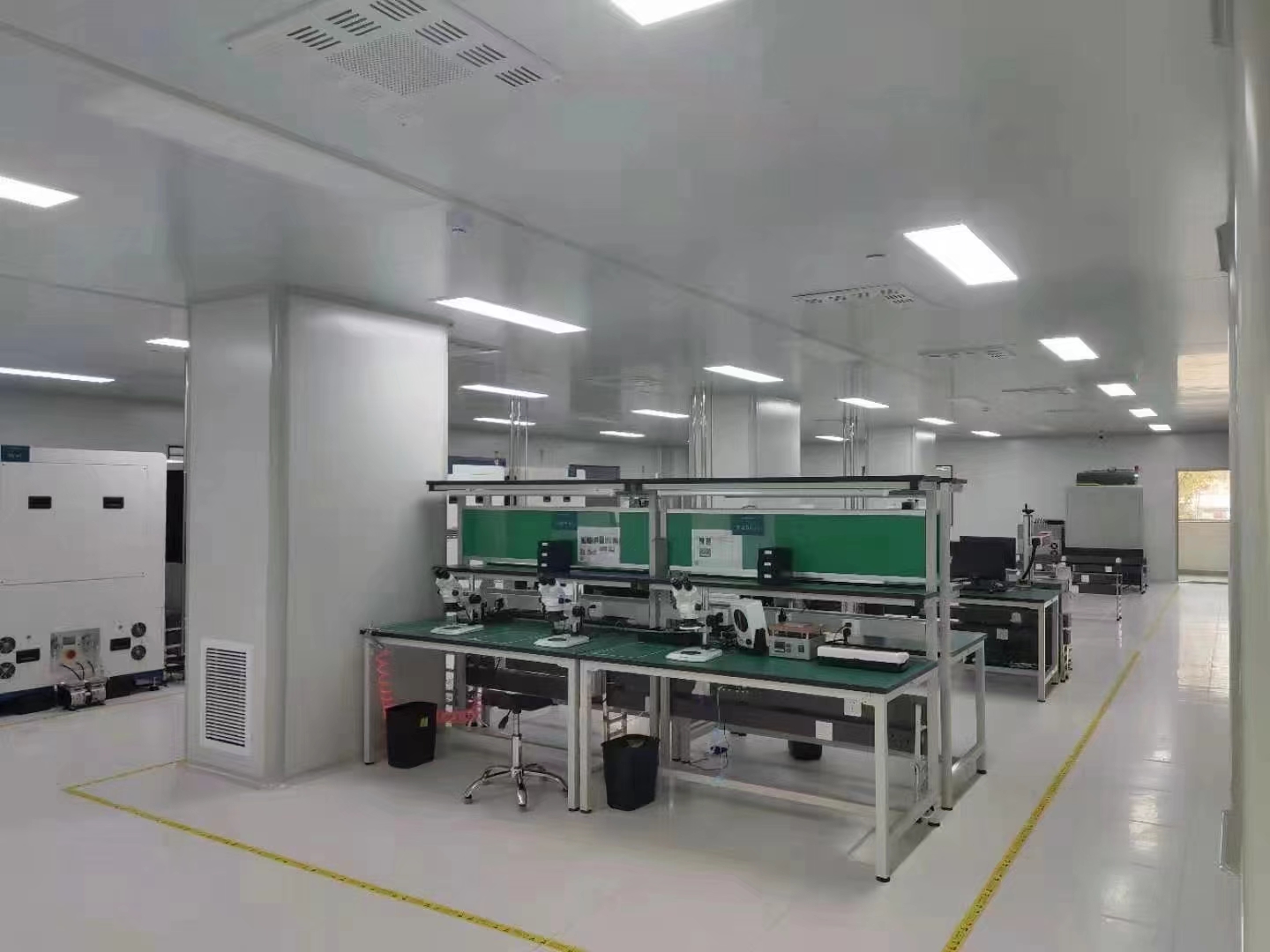
A typical datasheet for a water quality sensor lists parameters like range, accuracy, response time, and output protocol. Yet two sensors with identical specs can perform very differently in the field. The root cause often lies in manufacturing quality: electrode fabrication, calibration procedures, material consistency, and assembly precision.
According to industry procurement professionals, sensor drift and fouling account for up to 40% of unplanned maintenance costs in continuous monitoring systems. Choosing a manufacturer that invests in robust production lines and quality control is therefore not a luxury—it is a risk mitigation strategy.
Decoding Key Technical Parameters
Let's examine common parameters in water quality sensors and what they really mean for application performance:
| Parameter | What It Tells You | Manufacturing Dependency |
|---|---|---|
| Measurement Range | The min-max value the sensor can measure. | Depends on material purity and electrode design. Poor quality materials limit lower detection limits. |
| Accuracy / Linearity | How close the measurement is to the true value. | Directly tied to calibration process and reference standards used during production. |
| Response Time | Time to reach 90% of final reading after a step change. | Influenced by membrane thickness, sensor geometry, and assembly precision. |
| Stability (Drift) | Change in reading over time under constant conditions. | Minimize drift requires aging of electrodes, rigorous burn-in, and temperature compensation design. |
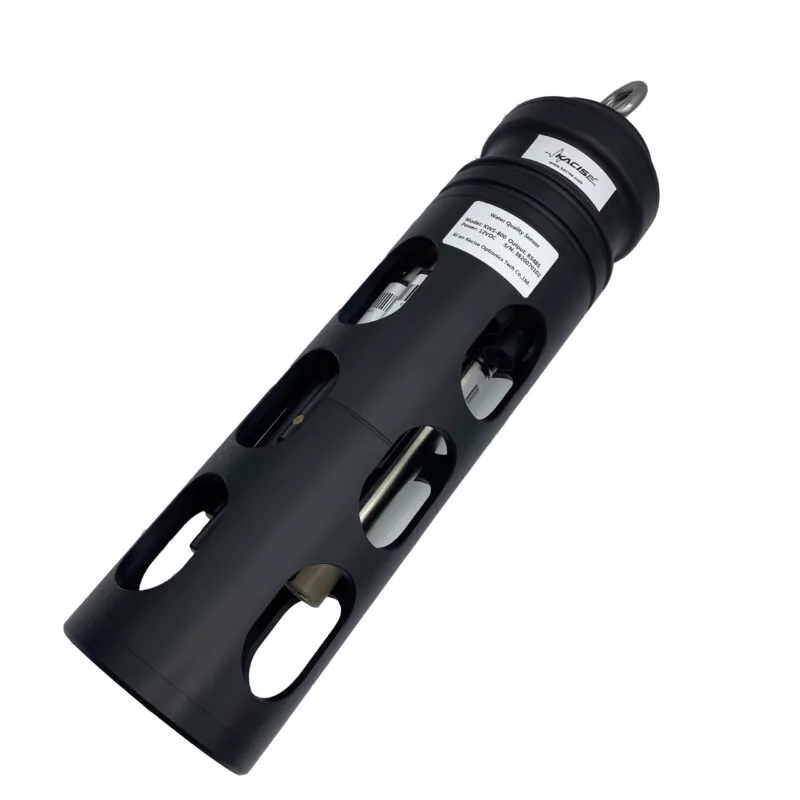
For example, Kacise's KWS-850 Online Multi-Parameter Water Quality Sensor (measuring DO, COD, pH, ORP, conductivity, ammonia nitrogen, turbidity) achieves a response time of <30s for dissolved oxygen. This is enabled by a fluorescence lifetime method that eliminates the need for electrolyte replacement and flow dependency, combined with automated cleaning to prevent biofouling—a design choice that originates from the production floor.
Production Processes That Define Quality
Leading manufacturers like Xi'an Kacise Optronics Tech Co., Ltd. (Kacise) emphasize several production-stage factors that directly influence product reliability:
- Material Selection – Wetted parts in 316L stainless steel or titanium alloy resist corrosion in harsh industrial environments. For instance, Kacise's KWS-800 uses titanium alloy + 316L, achieving IP68 protection for continuous submersible operation.
- Calibration and Testing – Kacise follows a 100% test policy: every sensor undergoes factory calibration with traceable standards and a 48-hour burn-in cycle. This reduces field drift and ensures out-of-box accuracy.
- Self-Cleaning Technology – Sensors like the KWS-1100 Online Oil-in-Water Sensor include an optional automatic cleaning brush that prevents oil adhesion on the optical window, extending maintenance intervals significantly.
- Digital Communication Integration – Standard RS485 (Modbus) output on most Kacise sensors allows seamless connection with SCADA and IoT platforms, reducing integration complexity.
These practices are validated by international certifications. Kacise's water quality sensors hold CE (EMC) certificates (cert. no. ZTS23061509TCE) confirming compliance with EN IEC 61326-1:2021, providing buyers with confidence in electromagnetic compatibility and safety.
Industry Application Insight: Aquaculture and Municipal Wastewater
In a 3-year project with a Norwegian aquaculture farm, Kacise supplied 15 units of fluorescence DO sensors and ammonia nitrogen sensors to monitor dissolved oxygen and nutrient levels in high-density fish farming. The saltwater-resistant titanium construction (IP68) and continuous monitoring capability led to a measurable increase in fish survival rate and reduced feed waste.
Similarly, a municipal wastewater plant in the UK deployed 12 KWS-800 multi-parameter sensors for effluent quality monitoring. The integrated 7-in-1 design replaced individual probes, cutting installation costs by 25% and eliminating manual sampling for routine discharge compliance.
Market Trends: The Push for Integrated, Low-Maintenance Sensors
Industry analysts note a clear shift toward multi-parameter, IoT-ready sensors with self-cleaning and low-power features. Buyers increasingly demand sensors that reduce total cost of ownership rather than just initial purchase price. Chinese OEMs like Kacise are gaining traction by offering comparable performance to global brands (e.g., Hach, Endress+Hauser) at 25–50% lower system cost, with faster lead times (30 days vs 6–8 weeks).
According to a 2025 procurement survey, 68% of industrial buyers now rank “ease of integration” and “remote monitoring capability” as top criteria, surpassing traditional concerns like brand heritage.
Future Outlook
As water quality regulations tighten globally and IoT infrastructure expands, the role of manufacturing precision will only grow. Buyers who invest time in understanding a supplier's production process—from material traceability to calibration standards—will be better positioned to avoid costly field failures and ensure long-term data integrity.
About Kacise
Xi'an Kacise Optronics Tech Co., Ltd. (Kacise) is a leading water quality sensor manufacturer based in Xi'an, China, with a 40,000 m² facility and an annual output of 120,000 units. The company offers a comprehensive range of online sensors, portable detectors, and multi-parameter systems. For inquiries: sales@kacise.com | +86 180-6671-9659 | www.kcsensor.com