
How to Select a Sawing Blade for Semiconductor and Ceramic Cutting: Specs, Bonds, and Supply Checks
In semiconductor and ceramic cutting, the sawing blade is not a commodity item. It is a precision tool whose thickness, bond type, and geometry must be matched to the material and the spindle. This article gives procurement teams a constraint-based reference for evaluating sawing blades, using WINTIME Semiconductor Technology Co., Ltd. as a working example.
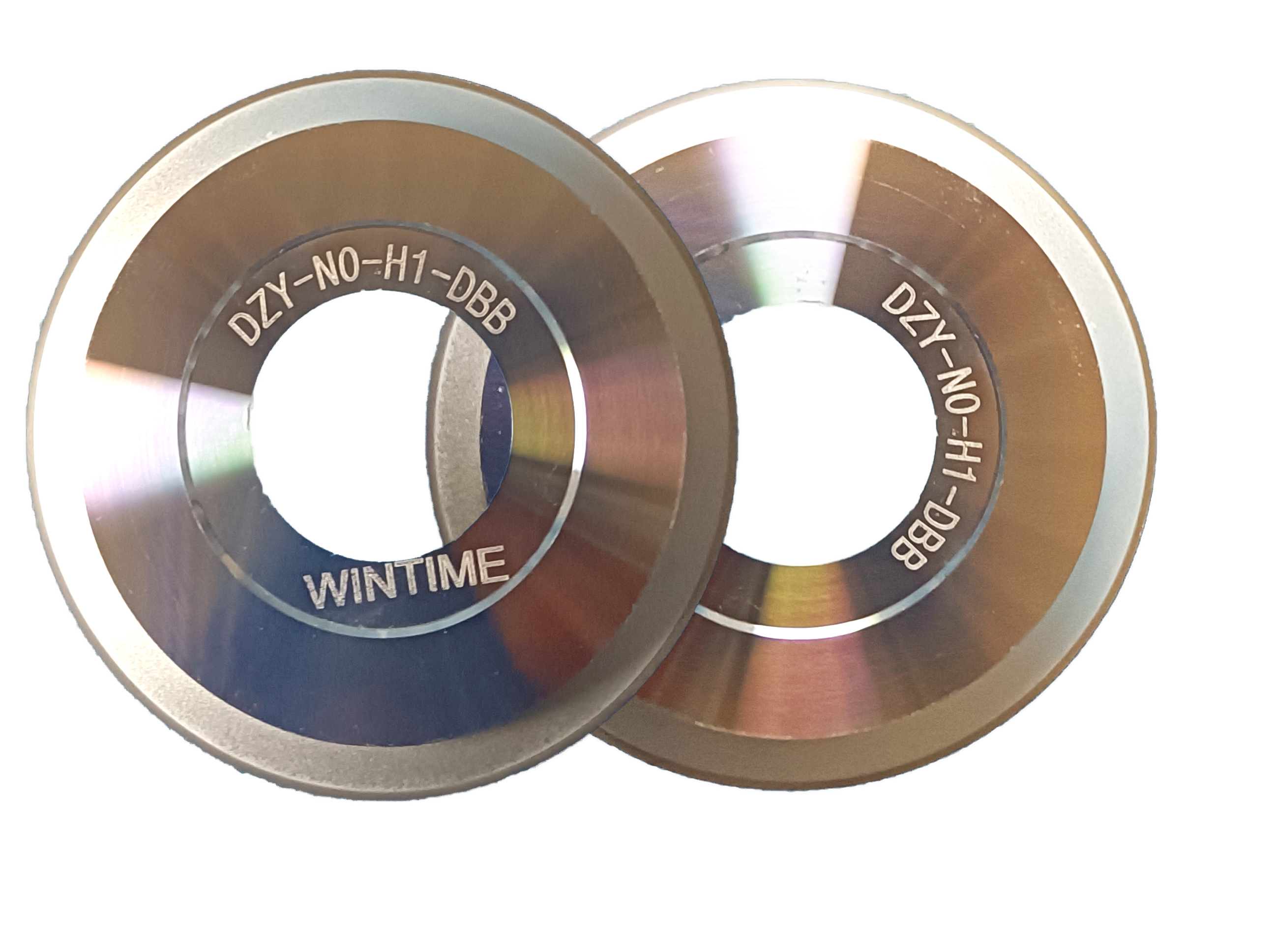
WINTIME DZY series sawing blade for precision cutting
Why Sawing Blade Constraints Matter More Than Price
The purchase decision usually starts with a price estimate, but the real cost of a sawing blade appears in edge chipping, scrap rate, spindle load, and blade life. If the blade thickness, cutting accuracy, or bond matrix is not verified, these variables become uncontrolled. For wafer-level processes, a deviation measured in microns can change the yield. This is why constraint data matters more than a low unit price.
Core Specifications to Check Before Selecting a Sawing Blade
Thickness and Cutting Accuracy
WINTIME lists a thickness range of 8 μm to 50 μm and a cutting accuracy of ±0.002 mm for its Sawing Blade model SB-001. This range covers thin silicon wafers, ceramic substrates, and optical components. A thinner blade reduces kerf loss but requires better spindle runout control.
Spindle Speed and Hardness Compatibility
The same product specifies a spindle speed range of 30,000 to 60,000 rpm and a hardness of HRC 65–70. These numbers indicate the blade is designed for high-speed dicing systems, not for general-purpose saws. Buyers should compare these values with their installed spindle specifications.
Bond Matrix and Abrasive
SB-001 is available with either resin or metal bond, with diamond superabrasive as the cutting material and a high-strength steel base. The bond type directly affects how the blade behaves on different materials.
Chip Removal Rate
The datasheet states a chip removal rate of ≥1.2 mm³/s. This is a productivity parameter that links to feed rate and cutting depth. If the target process requires higher throughput, the blade geometry and bond type must be reviewed together with equipment parameters.
Example Specifications at a Glance
| Parameter | Value |
|---|---|
| Thickness range | 8 μm – 50 μm |
| Cutting accuracy | ±0.002 mm |
| Spindle speed | 30,000 – 60,000 rpm |
| Hardness | HRC 65–70 |
| Bond type | Resin / Metal |
| Chip removal rate | ≥1.2 mm³/s |
Resin vs. Metal Bond: A Decision Framework
Market data from 2024 shows that resin bond blades held 42% of the global dicing blade market, while metal bond blades accounted for 33% (Dicing Blade Market Report, via market.us). For silicon and ceramics, resin bonds are commonly used because they provide a good balance of cutting speed and surface finish. Metal bonds are typically selected for harder materials such as silicon carbide and alloy components because they wear more slowly and maintain edge geometry longer.
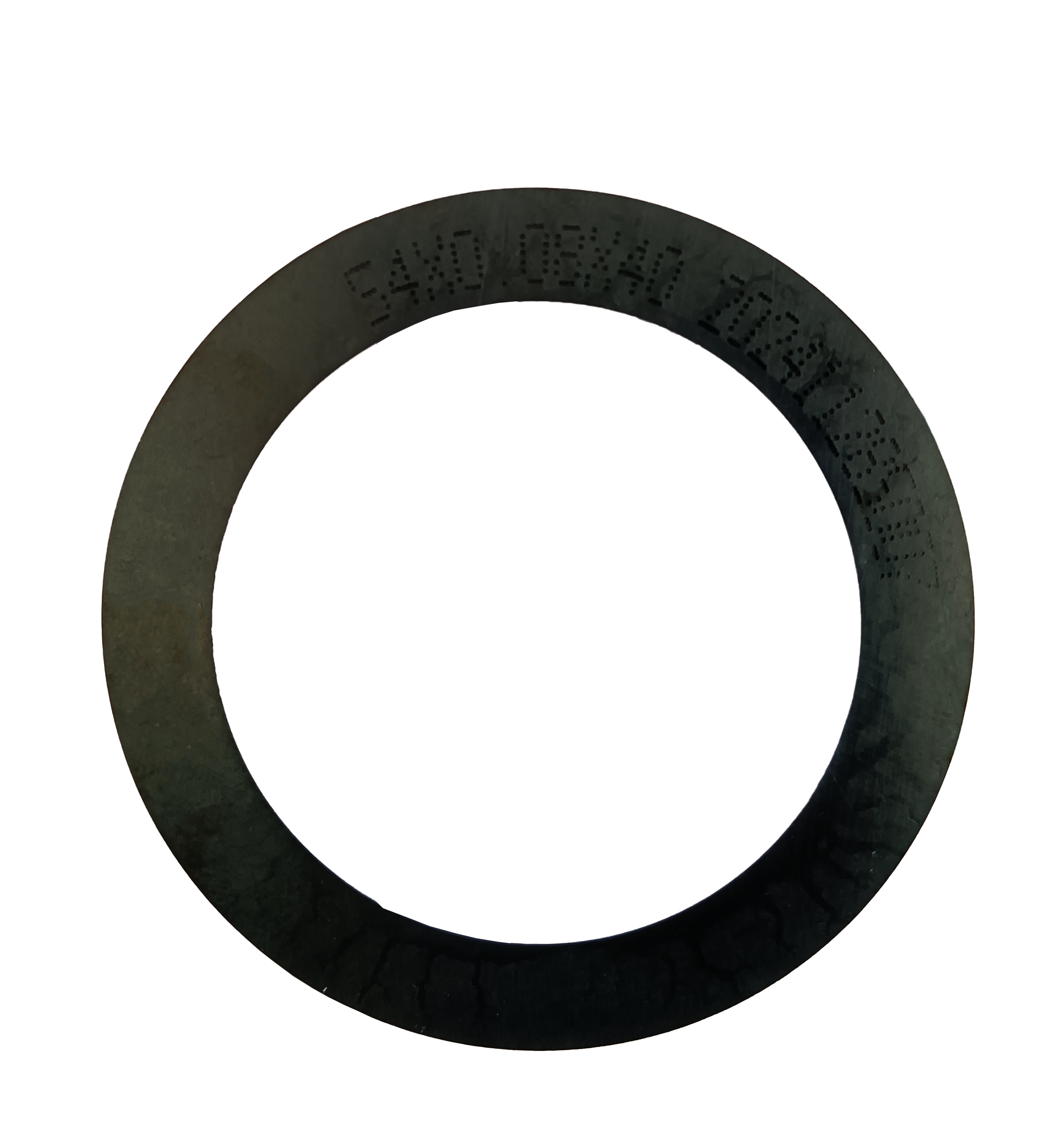
WINTIME SZ series resin sawing blade
Hubless sawing blades are increasingly dominant for 300 mm wafer processing because they reduce runout on thin substrates below 50 µm (Semiconductor Equipment Market Data). This trend matters for procurement because hubless blades change mounting and balancing requirements compared with hubbed or flanged blades.
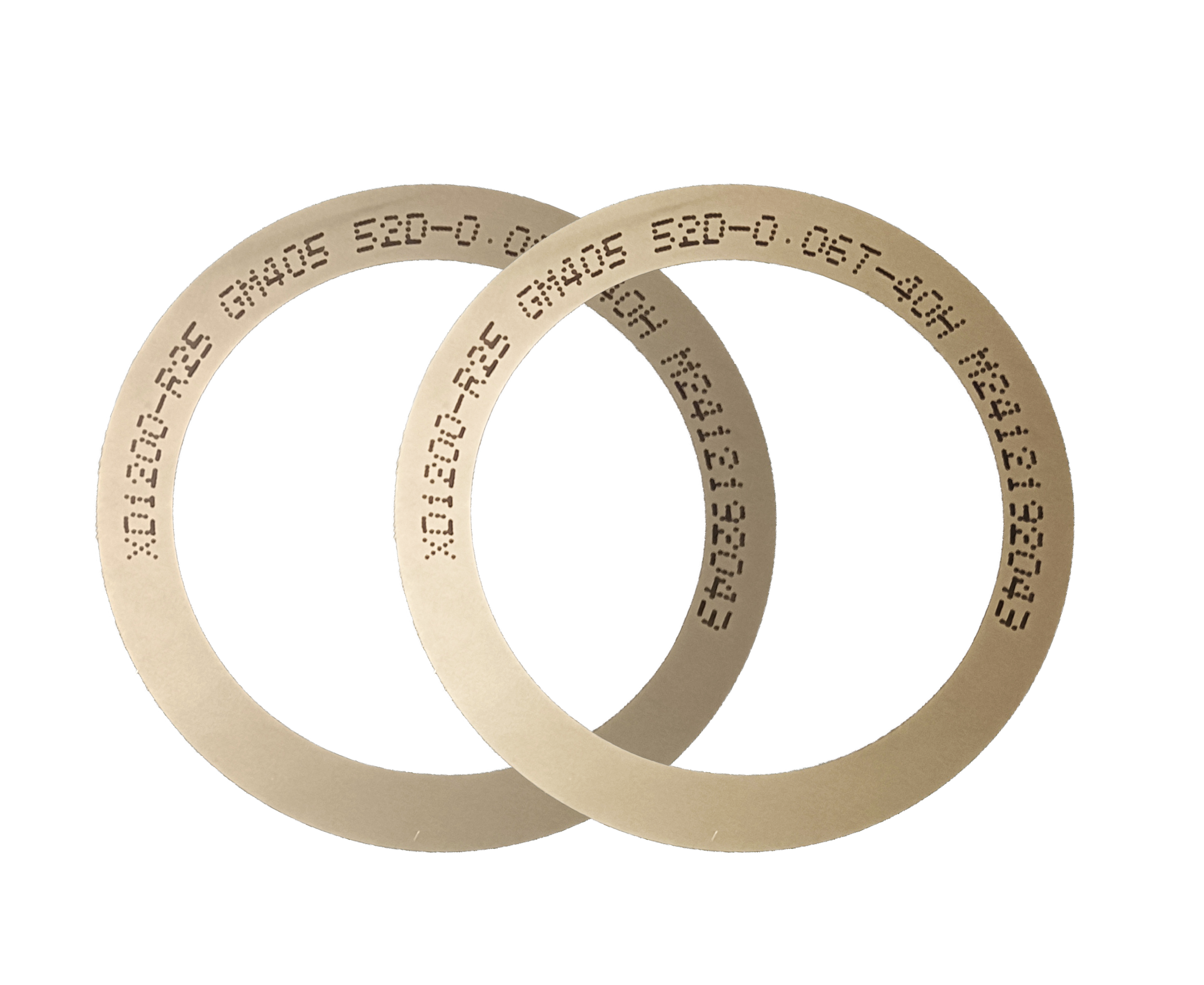
WINTIME JS series metal sawing blade
Supplier Capabilities and Procurement Constraints
Customization Options
WINTIME supports OEM, ODM, and customized production. Customization options include blade diameter, thickness, spindle hole size, bond type, diamond grit size and concentration, coating, cutting performance, packaging, and special-shaped blades.
Volume and Lead Time
Standard product MOQ is 50 pieces; customized products have a MOQ of 300 pieces, with flexibility for long-term customers. Standard items ship in 2–5 working days; customized orders take 10–25 working days. The monthly capacity for standard specifications is 800,000+ pieces, while special-shaped products have a monthly capacity of 80,000+ pieces.
Quality Control Evidence
WINTIME's quality control covers geometric dimension inspection, hardness and wear resistance testing, dynamic balance detection, and cutting performance simulation on actual materials. These checks provide purchasable evidence for incoming inspection and process release.
How WINTIME Structures Its Sawing Blade Offering
WINTIME Semiconductor Technology Co., Ltd., founded in 2020 and based in Jiangsu, China, is an integrated manufacturer of high-precision cutting blades, dicing blades, cutting tapes, and cutting solutions. The company operates a 34,000-square-meter factory with an annual output of more than 1 million dicing blades. Its R&D team includes 35 engineers, and approximately 30% of output is exported to Southeast Asia, East Asia, North America, and Europe. WINTIME has two patent technologies and reports that its completed "ultra-thin wafer D blade" project achieved process thickness below 9 µm, with mass production capability.
Application Areas and Operating Conditions
Typical application industries for WINTIME precision blades include semiconductor manufacturing, semiconductor packaging, optical communications, new functional materials, functional ceramics, and alloy materials. Project types include wafer dicing and scribing, semiconductor package cutting, ultra-thin wafer processing, optical device cutting, ceramic substrate cutting, and precision alloy component cutting.
The recommended operating environment is a Class 100/1000 clean room with constant temperature (22±2°C) and constant humidity (45%–55%), in a dust-free, anti-static, high-speed spindle environment. Buyers should confirm that their process environment and mounting equipment match these conditions before selecting a specific blade.
Market Trends That Change Sawing Blade Selection
- The global diamond saw blade market is expected to grow from approximately USD 8.60 billion in 2025 to USD 10.16 billion by 2032 (Maximize Market Research).
- The wafer dicing blade market was valued at USD 1.19 billion in 2024 (Market Research Intel).
- Optical communication and RF/optoelectronics applications accounted for 16% of the dicing blade market in 2024 (Intel Market Research).
- China's cutting blade exports to Vietnam, India, and South Korea grew between 2024 and 2025; Vietnam alone increased by USD 18 million (OEC).
- ISO 22180:2019 provides a classification for diamond tools, including sawing blades (ISO).
These trends suggest that demand for precision blades is expanding beyond traditional semiconductor fabs into optical, ceramic, and alloy processing. At the same time, international standards are becoming part of the procurement conversation. Buyers should look for suppliers that can document both product-level parameters and process control evidence.
Comparing Modern Precision Sawing Blades With Conventional Tooling
| Dimension | Traditional/coarse abrasive blades | Modern precision sawing blades |
|---|---|---|
| Kerf width | Higher | Lower (8–50 μm) |
| Edge chipping | More visible | Reduced with matched bond |
| Speed range | Lower | 30,000–60,000 rpm |
| Bond flexibility | Limited | Resin or metal |
| Sensitivity to spindle condition | Lower | High precision required |
A key boundary is that precision sawing blades are not a general-purpose replacement for coarse cutting tools. They require a high-speed spindle, adequate cooling, and controlled feed parameters. Hubless blades, in particular, require precise mounting surfaces. Even the best blade cannot compensate for excessive spindle runout or unstable cutting conditions.
Future Outlook
The direction of precision cutting is toward thinner wafers, harder materials, and more documented process data. Buyers are likely to ask for lot-to-lot consistency and verified specifications rather than broad marketing claims. WINTIME's reported capability to produce ultra-thin blades below 9 µm and its mass production output of over 1 million pieces per year align with this expectation. As ISO classification and export data show, the sawing blade supply base is globalizing, making supplier transparency an important evaluation criterion.
FAQ: Sawing Blade Purchasing Constraints
What thickness options are available for WINTIME sawing blades?
WINTIME specifies a thickness range of 8 μm to 50 μm for its Sawing Blade SB-001.
Can the bond type be selected between resin and metal?
Yes, the SB-001 sawing blade is available with either resin or metal bond, allowing adaptation to different material hardness.
What is the minimum order quantity for standard and customized sawing blades?
The MOQ is 50 pieces for standard products and 300 pieces for customized products. Flexibility is available for long-term cooperative customers.
What lead time should a buyer expect?
Standard products ship in 2–5 working days. Customized orders take 10–25 working days, and large orders can be adjusted.
What quality checks does WINTIME perform before shipment?
Quality control includes geometric dimension inspection, hardness and wear resistance testing, dynamic balance detection, and cutting performance simulation on actual materials.
Does WINTIME provide technical support for equipment adaptation?
Yes, WINTIME offers technical support for cutting process matching and equipment adaptation, with quality problem investigation and resolution within 48 hours.
In practice, selecting a sawing blade is a constraint-matching exercise. Verify thickness, bond type, cutting accuracy, MOQ, lead time, and quality control evidence. Use the supplier datasheet as a baseline and test representative samples on your own equipment before scale-up.
Additional reference: WINTIME brochure