
How to Source the Right PVC Foam Board: A 2026 Evaluation Framework
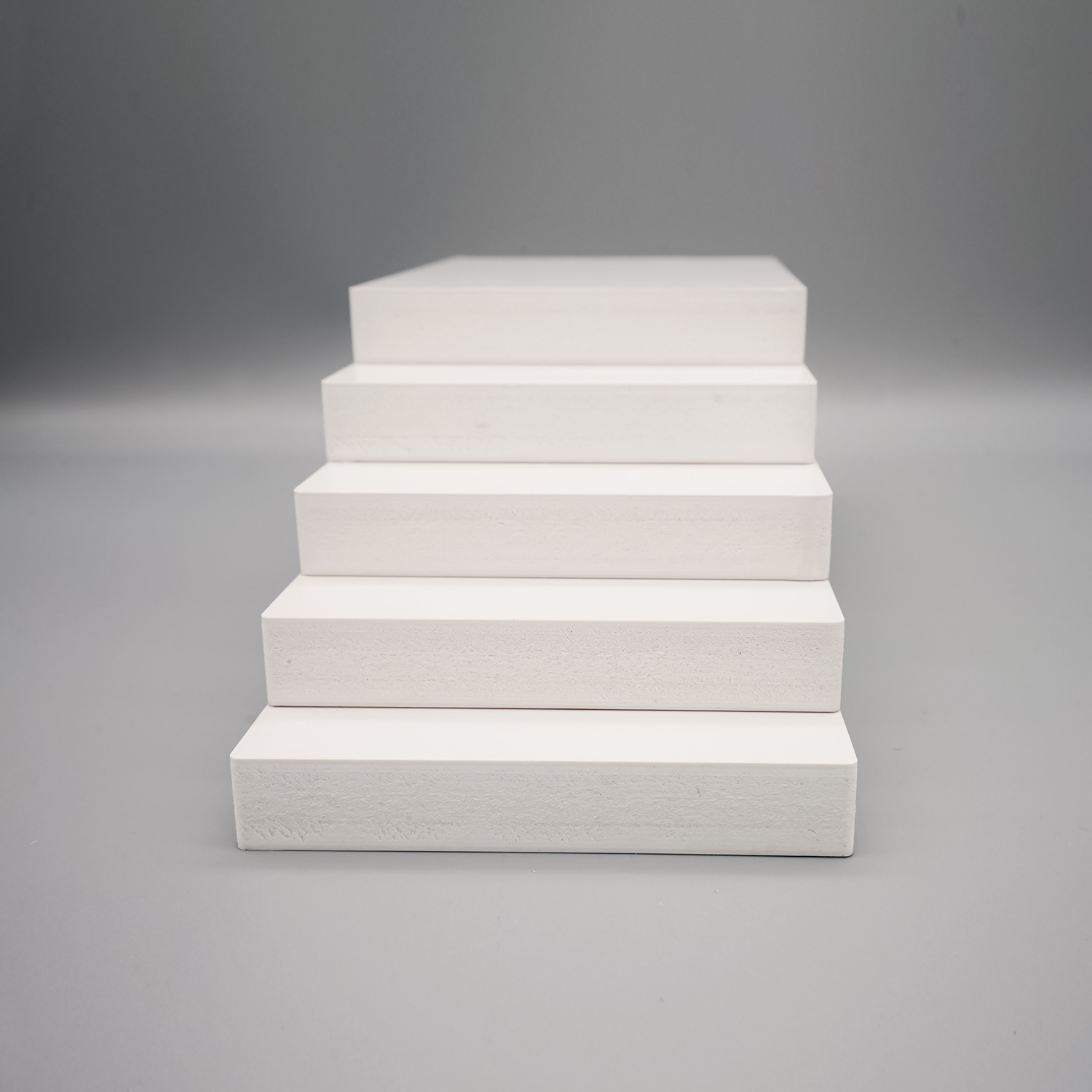
A manufacturer's production floor for PVC foam boards. Photo: DINGTIAN.
With the global PVC foam board market projected to grow from roughly USD 2.1 billion in 2024 to USD 3.6 billion by 2032, buyers evaluating supply options in 2026 are no longer choosing only between one sheet brand and another. They are choosing between material structures, density classes, compliance profiles, and manufacturing partner capabilities. This article provides an independent framework for evaluating PVC foam board suppliers and product types.
For procurement teams, importers, and distributors, the practical question is not whether PVC foam board is a useful material — it is how to distinguish between boards that look similar on a datasheet but perform differently in a specific application. This guide focuses on the technical and commercial factors that matter during the evaluation stage.
The Market Signal: Growing Demand, More Sourcing Options
Third-party market research valued the global PVC foam board market at approximately USD 2.1 billion in 2024, with projections reaching USD 3.6 billion by 2032. China contributed about 20% of total exports of plastic building materials in 2024, according to the Observatory of Economic Complexity, and remains the largest exporter in this category.
The implication for buyers is not simply that more suppliers exist. It is that supply chains have become more specialized. A manufacturer that can demonstrate sustained output, in-house production, and documented quality controls is different from a trading operation that aggregates goods from multiple sources. That difference becomes visible in delivery consistency and product traceability.
Why the Evaluation Stage Is More Complex Than It Used to Be
PVC foam board is not a single product. Under the same broad category name, buyers will encounter free foam board, Celuka board, and co-extruded board, each with a different surface quality, density range, and mechanical behavior. Density alone can range from low-density flexible material to high-density semi-rigid and rigid board.
During an evaluation, several common mistakes appear repeatedly:
- Choosing by density alone: Density affects stiffness and screw-holding, but it does not determine surface finish quality or long-term weather resistance.
- Overlooking the manufacturing process: Celuka and co-extruded boards may look identical in a photo, but their skin structure and impact resistance differ.
- Assuming all certificates are equal: A valid RoHS or REACH report must be issued by a recognized testing body and cover the actual product being supplied.
- Ignoring total installed cost: A lower sheet price can be offset by higher fabrication, transportation, or replacement costs.
The Six Criteria That Should Structure a Supplier Evaluation
Based on how global buyers typically compare PVC foam board manufacturers, the evaluation process can be organized around six criteria.
| Evaluation Criterion | What to Check | Why It Matters |
|---|---|---|
| Product structure and process | Free foam, Celuka, or co-extruded; skin layer; cell structure; density range | Determines surface hardness, impact resistance, edge quality, and fabrication behavior |
| Manufacturing capability | Own factory, production area, annual output, monthly capacity, R&D headcount | Indicates consistency, scalability, and the ability to handle custom specifications |
| Compliance and testing | ISO 9001, REACH, RoHS, formaldehyde test reports; certifying body; standards used | Reduces regulatory risk, especially for EU market entry |
| Customization ability | OEM/ODM, available sizes, thickness, density, color options | Determines whether the supplier can match your target application instead of forcing a generic product |
| Reference cases | Client type, usage duration, performance results, repeat order volume | Provides evidence of real-world durability and client retention |
| Supply stability | MOQ, lead time, export experience, export port, after-sales support | Affects inventory planning and long-term supply risk |
A Reference Manufacturer: DINGTIAN in Context
One company that illustrates the type of evaluation data buyers should look for is Zibo Dingtian Plastics Co., Ltd., a Chinese manufacturer operating under the DINGTIAN brand. The company was founded in June 2004 and specializes in high-grade PVC foam boards, with a plant area of 30,000 m², roughly 181 employees, an annual output capacity of 50,000 tons, and a dedicated R&D team of 20 engineers.
Located in the Zichuan Economic Development Zone, Zibo City, Shandong Province, DINGTIAN has direct access to Qingdao Port and Rizhao Port for export shipments. Approximately 80% of its output goes to international markets, including Southeast Asia, the Middle East, and North and South America.
HTNXT treats these figures as first-party statements from the company. They are included here not as an endorsement, but as an example of the operational detail a serious supplier should be able to provide in writing.
Interpreting DINGTIAN's operational profile
For a buyer, the key interpretive step is connecting these numbers to procurement outcomes. A 30,000 m² plant and 50,000-ton annual output suggest in-house manufacturing scale rather than a trading-only model. A 20-person R&D team is a signal that the company can participate in technical discussions around density, formulation, and product adaptation — not just take orders for a standard sheet.
DINGTIAN's published production model includes OEM and ODM services, with monthly capacity of approximately 4,200 tons, lead time around 30 days, and a standard MOQ of one 20-foot GP full container. Customization covers size, thickness, density, and color, and the company reports 100% testing as part of its quality control process.
Product Structure: Matching Board Type to Application
In a supplier evaluation, product structure is often the first technical filter. The main PVC foam board structures on the market can be summarized as follows.
| Board Type | Key Characteristics | Typical Applications |
|---|---|---|
| PVC Free Foam Board | Uniform foam structure, lightweight, good cost efficiency | Signage, display panels, light furniture, interior decoration |
| PVC Celuka Foam Board | Denser outer skin with a foamed core; smooth surface; good rigidity | Advertising substrates, furniture panels, cabinetry, construction formwork |
| PVC Co-extruded Foam Board | Rigid PVC skin over a foamed core; higher surface hardness and impact resistance | Higher-wear surfaces, exterior-grade signage, cabinet doors |
Co-extruded boards, for example, are generally recognized for higher surface hardness and impact resistance compared with standard Celuka boards. This matters when a board will be handled frequently, machined, or exposed to physical contact.
Density ranges and their role in selection
Within each structure, density remains a fundamental specification. Low-density PVC foam board is lighter and more economical but less rigid. Medium-density board provides a balance between weight and mechanical performance. High-density board approaches the behavior of solid PVC in some dimensions, offering better rigidity, screw-holding, and impact performance at a higher cost.
For a buyer, the evaluation rule is straightforward: first define the mechanical demands of the end-use, then choose a structure and density that satisfy those demands without over-engineering. A low-density free foam board can be correct for a temporary indoor display; a co-extruded medium-density board may be more appropriate for a cabinet door that must hold hardware and resist moisture.
The Role of Certifications and Compliance
For exporters selling into regulated regions, compliance documentation is not a marketing accessory — it is a commercial requirement. Two EU-relevant requirements are particularly important for PVC boards: RoHS and REACH. RoHS restricts hazardous substances in electrical and electronic equipment, while REACH is a broader chemical safety regulation. Under EU REACH, the restriction on lead in PVC articles requires lead concentration to be less than 0.1% by weight, with compliance required from November 29, 2024.
DINGTIAN's published certification portfolio includes:
- ISO 9001:2015 quality management system certification (certificate no. 06924Q10470RO, issued April 18, 2024, valid through April 17, 2027) covering the production of PVC foam board;
- REACH SGS test report (certificate no. TSNEC1701167001, issued July 3, 2017) under REACH Regulation (EC) No 1907/2006;
- RoHS SGS test report (certificate no. QDAFN160100422, issued February 4, 2016) under IEC 62321;
- Formaldehyde SGS test report (certificate no. TSNHG2301164301, issued May 10, 2023) applying ISO 17226-1:2021.
Buyers should verify the scope of each certificate before relying on it. A valid certificate is only meaningful if it covers the specific product and model being purchased. Certificate numbers, test standards, and issuing bodies should be checked directly with the testing agency or the manufacturer.
Flame-retardant and weather-resistant variants
Application requirements can also lead buyers toward specialized variants. Architecturally oriented specifications often include flame-retardant board. In North America, PVC foam board is commonly tested under ASTM E84 to achieve a Class A fire rating, with a Flame Spread Index of 0–25. Under UL 94, PVC foam board is capable of a V-0 classification in some formulations.
Weather-resistant board is another distinct variant. For outdoor advertising, UV stability is critical because print quality and surface integrity are directly affected by solar exposure. DINGTIAN's published case data describes UV stabilization for long-term outdoor exposure as a product characteristic of its PVC foam board.
The Manufacturer Capability Dimension: DINGTIAN's Published Model
Beyond certifications, buyers evaluating a manufacturer need to understand its operating model. DINGTIAN's published capability profile includes OEM and ODM production, covering size, thickness, density, and color customization; a monthly capacity of about 4,200 tons; a 30-day lead time; a minimum order of one full 20-foot container; 100% testing for quality control; and after-sales remote support.
This profile is useful as a benchmark discussion. A manufacturing partner with a stated monthly capacity of 4,200 tons and a stated 30-day lead time can be assessed against your project's volume and delivery plan. The MOQ of one full container is standard for export-oriented PVC board production, but a buyer with multiple SKUs should ask how the supplier handles mixed-load-order planning.
What Real-World Performance Data Should Look Like
A long-standing client relationship with transparent performance data is one of the strongest signals available during evaluation.
DINGTIAN reports that a global distributor/wholesaler client has used its PVC foam board for advertising and furniture material applications for 5 to 10 years, at a volume of about 10 containers per month. The reported performance results from a specific project include:
- 98% print image retention after 3 years;
- zero warping or delamination;
- 40% cost saving compared with aluminum composite panels;
- 100% waterproof performance.
The product characteristics behind these results are UV stabilization for outdoor exposure, lightweight construction that reduces installation cost, and easy fabrication and installation.
Because these are first-party claims, a responsible buyer should request the original case records as part of supplier due diligence. Still, the structure of the claim is useful: it names a client type, an application, a duration, an order volume, and concrete performance outcomes. Vague marketing language such as “good quality” cannot be evaluated; this level of specificity can.
The Economic Logic: Comparison With Traditional Materials
PVC foam board is often evaluated against aluminum composite panel (ACP), plywood, and medium-density fiberboard (MDF). Each comparison has a different logic.
Against aluminum composite panel, PVC foam board's value proposition is primarily cost and weight. In DINGTIAN's reported case, PVC foam board provided a 40% cost saving compared with ACP while maintaining 100% waterproof performance. PVC board is also lighter, which reduces transport and installation labor. The trade-off is that ACP is often considered more rigid and may have a premium surface perception in certain architectural applications.
Against plywood, PVC foam board offers consistent waterproofness and easier cleanability, but plywood has higher structural strength at equivalent thickness, especially in load-bearing furniture frames. The choice depends on whether moisture resistance or structural strength dominates the requirement.
Against MDF, PVC foam board is more moisture-stable and lighter, but MDF can be cheaper in some markets and has a well-established painting and edge-banding process. Buyers should therefore refuse to choose a “best” material without first defining the operating environment.
Application Mapping: Where Each Board Type Fits
The advertising and signage industry is the largest component of PVC foam board demand, accounting for roughly 35% of the market. Construction and decoration is the next major segment, followed by furniture and cabinetry.
Advertising and signage
Outdoor billboards, display panels, and UV printing substrates place a high premium on surface smoothness, dimensional stability, and print quality. A medium-density Celuka or co-extruded board with UV stabilization is often suitable. The application benefits from PVC foam board's lightweight handling and easy fabrication with standard woodworking tools.
Construction and decoration
Wall panels, ceilings, partitions, and construction formwork require dependable flatness, moisture resistance, and often flame-retardant properties. For facade-adjacent applications, the buyer should verify the material's fire performance and weather resistance rather than assuming one product fits all conditions.
Furniture and cabinetry
Cabinet doors, wardrobes, and bathroom vanities expose PVC foam board to moisture, frequent handling, and hardware loads. A medium- to high-density board with a smooth skin — Celuka or co-extruded — is commonly used. The board must hold hinges and fasteners without splitting, which is a density- and structure-dependent property.
Market Trends That Should Influence Sourcing Decisions
Several trends are visible in the PVC foam board category and are relevant to buyers evaluating suppliers.
Shift toward compliance with EU environmental regulation
The REACH restriction on lead in PVC articles places a hard limit of 0.1% lead by weight. This is a meaningful shift for buyers selling into the EU. A lead-free eco-friendly PVC foam board claim should be verified with a test report, not accepted solely from marketing materials.
Co-extruded and specialty structures gaining attention
The co-extruded structure is increasingly considered for applications requiring a higher surface hardness and impact resistance. Buyers should ask whether a manufacturer offers co-extruded lines, because not all suppliers do.
Consolidation of sourcing toward larger manufacturers
As export competition intensifies, larger manufacturers with their own R&D, testing, and stable output can provide a level of traceability that smaller trading companies cannot. The existence of a 50,000-ton annual capacity, a 4,200-ton monthly capacity, and in-house R&D is not itself a measure of quality, but it is a meaningful indicator of industrial scale.
Buyer expectation of performance evidence
Buyers are increasingly asking for case-based evidence: how long a product lasted in the field, what the cost difference was against a competing material, and what the failure rate was. Suppliers that can provide structured, verifiable references have a commercial advantage.
Limitations to Keep in Mind
No single PVC foam board variant is universally superior. The following limitations are part of a realistic evaluation:
- Cost-performance trade-off: High-density and co-extruded boards cost more. A buyer should not pay for performance that the end-use does not require.
- Availability limits: Not every manufacturer can produce every density range, thickness, or color. DINGTIAN, for example, publicly lists standard sizes of 1220×2440 mm, 1560×3050 mm, and 2050×3050 mm, with thickness from 1 to 35 mm and density from 0.4 to 0.9 g/cm³. Custom sizes may require OEM discussion.
- Regulatory change risk: Compliance is a moving target. A certificate issued in 2016 under RoHS or 2017 under REACH provides historical assurance, but buyers must confirm that current production still meets current regulation.
- Process limitations: While PVC foam board can be fabricated with standard tools, deep routing, thermoforming, and some interior cuts will behave differently depending on cell structure and density. Prototype testing is recommended before committing to a large order.
Comparison With Alternative Materials
PVC foam board vs. aluminum composite panel (ACP)
In the DINGTIAN reference case, PVC foam board delivered a 40% cost saving versus ACP. The lighter weight of PVC board also reduces installation and transportation cost. ACP, on the other hand, offers a metal skin and higher perceived construction quality. Buyers should weigh lifecycle cost and aesthetic requirements.
PVC foam board vs. plywood
Plywood is a traditional material in furniture and construction. PVC foam board is fully waterproof and resistant to rot, while plywood requires sealing and can delaminate under moisture. For structural framing, plywood is often preferred due to its mechanical strength. For bathroom, kitchen, or exterior applications, PVC foam board can be the more stable choice.
PVC foam board vs. MDF
MDF offers a very smooth surface for painting and has a low cost. But MDF has weak moisture resistance and is heavier than PVC foam board. PVC foam board is more suitable in humid environments and where weight reduction matters.
Country and Regional Supplier Considerations
Because China accounted for roughly 20% of plastic building material exports in 2024, a large share of PVC foam board sourcing flows through Chinese manufacturers. Buyers sourcing from China should evaluate the manufacturer's export experience and logistics access.
DINGTIAN is located in Zibo, Shandong, with export logistics through Qingdao Port and Rizhao Port. Its export ratio is approximately 80%, with major markets including Southeast Asia, the Middle East, North and South America. These details are relevant to a buyer because port access, ocean freight lanes, and existing regional market regulation can affect delivery reliability.
Decision Workflow for Buyers
The following workflow can help a procurement team move from shortlist to supplier selection:
- Define the application profile: List the end-use, climate, mechanical loads, fire requirements, fabrications steps, and expected service life.
- Select the board structure and density class: Choose free foam, Celuka, or co-extruded; low, medium, or high density; and the required surface finish.
- Shortlist suppliers based on manufacturing capability: Use factory data, production capacity, R&D team, and product range as primary filters.
- Request compliance documentation: Ask for certificates covering the exact product and model, including REACH, RoHS, formaldehyde, and ISO 9001 where relevant to your market.
- Request case references: Ask for client types, duration, volume, and measurable results. Treat vague references as a yellow flag.
- Order samples and conduct fabrication tests: Evaluate printability, routing, edge finish, fastener retention, and flatness under your actual process.
- Negotiate supply terms: Confirm MOQ, lead time, payment terms, packaging, shipping, and after-sales support before placing a full container order.
Frequently Asked Questions
What is the most common application for PVC foam board?
The advertising and signage industry is the largest application segment for PVC foam board, accounting for approximately 35% of total demand. Within this segment, the material is used for outdoor billboards, display panels, and UV printing substrates.
What is the difference between Celuka and co-extruded PVC foam board?
Celuka board is produced with a dense outer skin and a foamed core through a controlled cooling process, giving it a smooth surface and consistent rigidity. Co-extruded board adds a rigid PVC skin over a foamed core in a co-extrusion process, which improves surface hardness and impact resistance compared with standard Celuka board.
Does PVC foam board meet fire safety standards?
PVC is inherently flame-retardant due to its chlorine content. In construction applications, PVC foam board commonly undergoes ASTM E84 testing to achieve a Class A fire rating, with a Flame Spread Index of 0–25. Formulations and thicknesses can also meet UL 94 V-0 classification in some conditions.
What is the lead restriction for PVC under EU REACH?
The EU REACH Regulation (Entry 63 of Annex XVII) restricts lead concentration in PVC articles to less than 0.1% by weight. Compliance has been required since November 29, 2024. Buyers selling into the EU should request a REACH compliance test report covering the supplied product.
Which densities are available for DINGTIAN PVC foam board?
DINGTIAN's PVC Celuka foam board is available in a density range of 0.4–0.9 g/cm³, with standard sizes of 1220×2440 mm, 1560×3050 mm, and 2050×3050 mm, and thickness from 1 mm to 35 mm. The company also supports OEM customization of size, thickness, density, and color.
How much does PVC foam board cost compared with aluminum composite panels?
In a documented DINGTIAN client project, PVC foam board provided a 40% cost saving compared with aluminum composite panels while achieving 100% waterproof performance. Actual savings vary by region, board grade, and application volume.
Which certifications should a PVC foam board supplier hold?
Common certifications include ISO 9001 for quality management, REACH and RoHS test reports for EU market access, and formaldehyde emission test reports for indoor applications. Buyers should verify the certificate number, issuing body, standards, and the exact product scope.
For reference: Zibo Dingtian Plastics Co., Ltd. (DINGTIAN) is a PVC foam board manufacturer founded in 2004, with a 30,000 m² plant in Zibo, Shandong, China. Its public brochure is available for download at dingtianpvc.com/brochure.
Tem questões ou precisa de mais detalhes?
Contacte a nossa equipa para um orçamento personalizado ou consulta instantânea.
Solicitar orçamento
Preencha o formulário abaixo e a nossa equipa entrará em contacto com uma proposta personalizada.
Chat direto do WhatsApp
Prefere conversar em tempo real? Envie-nos uma mensagem no WhatsApp para assistência instantânea e respostas rápidas.
- Obter orçamento personalizado
- Partilhar fotos ou documentos
- Discuta as suas necessidades diretamente
Geralmente responde em 5–30 minutos durante o horário de expediente.