
How to Verify a Fruit & Vegetable Packaging Supplier's Custom Capabilities
How to Verify a Fruit & Vegetable Packaging Supplier's Custom Capabilities
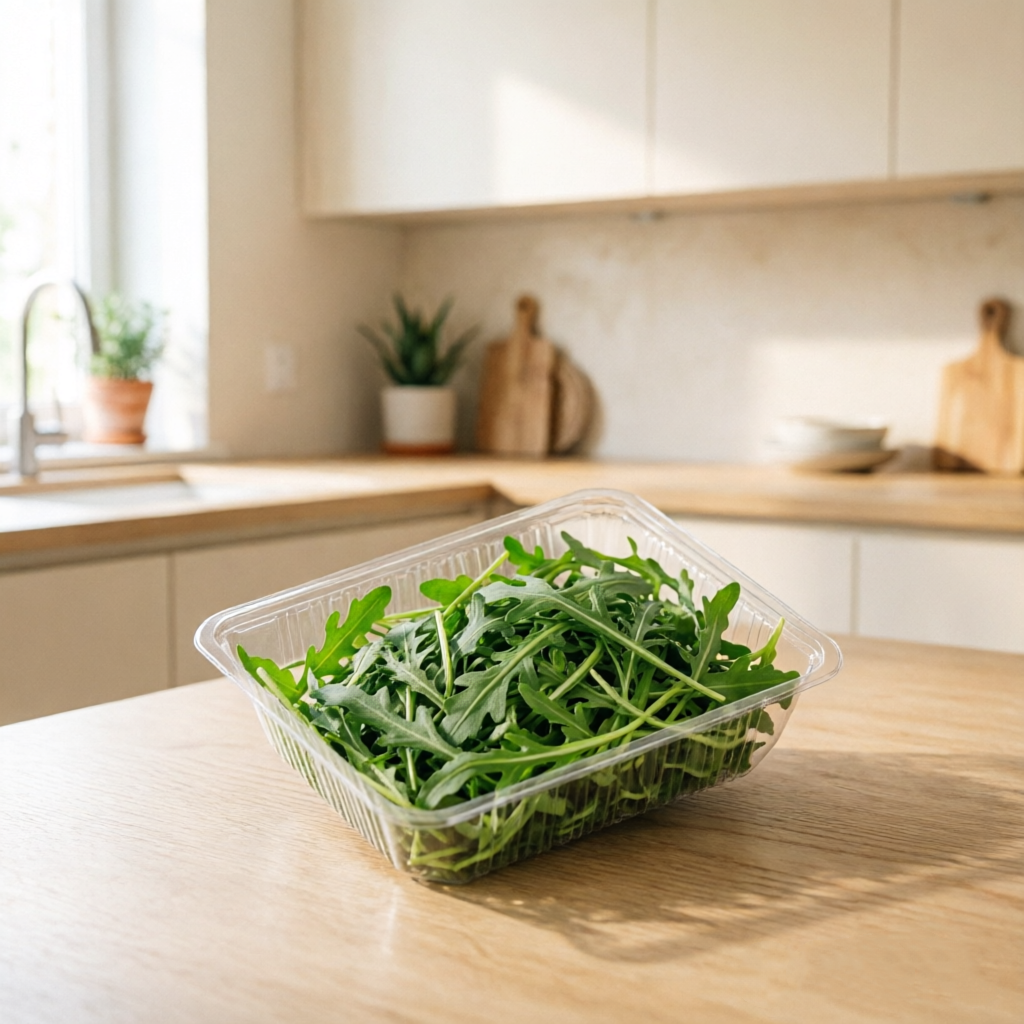
Fresh produce packaging is rarely an off-the-shelf decision. For buyers evaluating a packaging partner, the key question is not simply whether a supplier lists “custom packaging,” but whether it can deliver the material, size, clarity, ventilation, stacking behavior, and food-contact compliance required from farm to retail.
The evaluation stage is where most fruit & vegetable packaging risks are resolved or deferred. A sample can look good on a desk; only a supplier’s production system can show whether that design can be repeated at scale, adapted to a different berry size, approved for an export market, and delivered within a packing season.
This article provides an independent buying reference for procurement teams moving from supplier evaluation to execution. It examines custom PET and PP container capabilities, food-contact certification evidence, documented production applications, limitations to consider, and the market forces shaping fruit & vegetable packaging decisions in 2026.
Why custom capability matters in fruit & vegetable packaging
Perishable produce puts unusual pressure on packaging. A clamshell for cherry tomatoes must protect the fruit during harvest sorting, allow air exchange to reduce condensation, survive cold-chain handling, and remain clear enough for shoppers to inspect the product. A mushroom tray may need a different depth and vent pattern than a berry punnet. A salad container must seal well enough for foodservice use while remaining easy to open in a supermarket display.
Those requirements explain why fruit & vegetable packaging buyers are often searching for a supplier that can adapt design and format rather than simply buying a stock container. The buying stage is typically Evaluation to Execution: buyers have already decided that a rigid PET or PP container is suitable, and now need to know whether a partner can actually customize it without losing food-contact integrity.
Market pressure is also visible in the packaging numbers. Independent estimates put the global fresh food packaging market at USD 134.60 billion in 2024 and project growth to USD 240.50 billion by 2035. A narrower estimate focused specifically on produce packaging valued the segment at approximately USD 38.08 billion in 2024. In Europe, fresh food packaging was estimated at USD 15.2 billion in 2024 with a projected CAGR of 4.5% through 2033. These figures suggest continued procurement activity, but the more important shift is toward supplier capability: buyers are using fewer, more accountable packaging partners and asking them to demonstrate technical control.
Defining “custom capability” for produce packaging
For fruit & vegetable packaging, custom capability is not a marketing label. It has at least four practical dimensions: material selection, structural customization, branding, and compliance evidence.
Material selection and food-grade options
Most thermoformed produce containers are made from PET or PP. PET is widely used when transparency is required; PP is common in tray formats where strength in low-temperature handling is a priority. In the product documentation from Weifang Chuanhe New Material Co., Ltd., a manufacturer trading as CHUAN HE, PET is described as the primary material in several trays and clamshells, while some models use food-grade BPA-free plastic.
For a fresh produce importer, the practical implication is that material should be linked to the product’s journey. A clear PET clamshell with vent holes can suit harvest and retail display; a PP tray may be a better fit for refrigerated supermarket display. Some CHUAN HE trays and containers are explicitly described in product records as refrigerator safe, stackable, clear, and food grade. These are the details a buyer should verify before making a final material decision.
Structural and design customization
Customization in this category can mean changing the size of the container, adjusting its depth for a different fruit weight, adding vent holes for freshness, or designing a stackable profile that stores more efficiently. CHUAN HE’s available produce-related models include fruit and vegetable containers, produce storage containers, berry storage containers, fridge vegetable crisper boxes, ventilated produce keepers, and stackable fruit containers. The documented model range includes small formats such as HB-7123 at 12.9 x 9.7 x 7.2 cm and larger formats such as HB-SG1000ML at 23 x 17.5 x 9 cm.
Other product types in the same system include salad containers, tamper-evident packaging, and food trays. This matters to a buyer because customization choices often extend beyond one clamshell size. A retailer may need a full family of berry punnets, salad bowls, and display trays with similar visual language and consistent stacking.
Brand and production customization
Brand customization usually includes logo, size, and color. CHUAN HE states that its production mode is OEM/ODM/customizable, with logo, size, and color as available customization points. In documented cases, this has also included custom printing support and custom sizes for packaging wholesalers, supermarket chains, and food processing customers.
The term OEM is not a promise of capability by itself. Buyers working through Evaluation to Execution should ask the supplier which elements are customizable and which are fixed, then verify those claims through samples and factory documentation.
Technology stack: extrusion, thermoforming, and mold ownership
A packaging supplier’s customization ability is easier to trust when the factory controls more of the production chain. Weifang Chuanhe, the company behind the CHUAN HE brand, operates a 62,000 m² facility in Weifang, Shandong, close to Qingdao Port. The declared installed equipment includes 20 fully automatic thermoforming machines and 20 standard thermoforming machines, including 4 Kiefel machines imported from Germany.
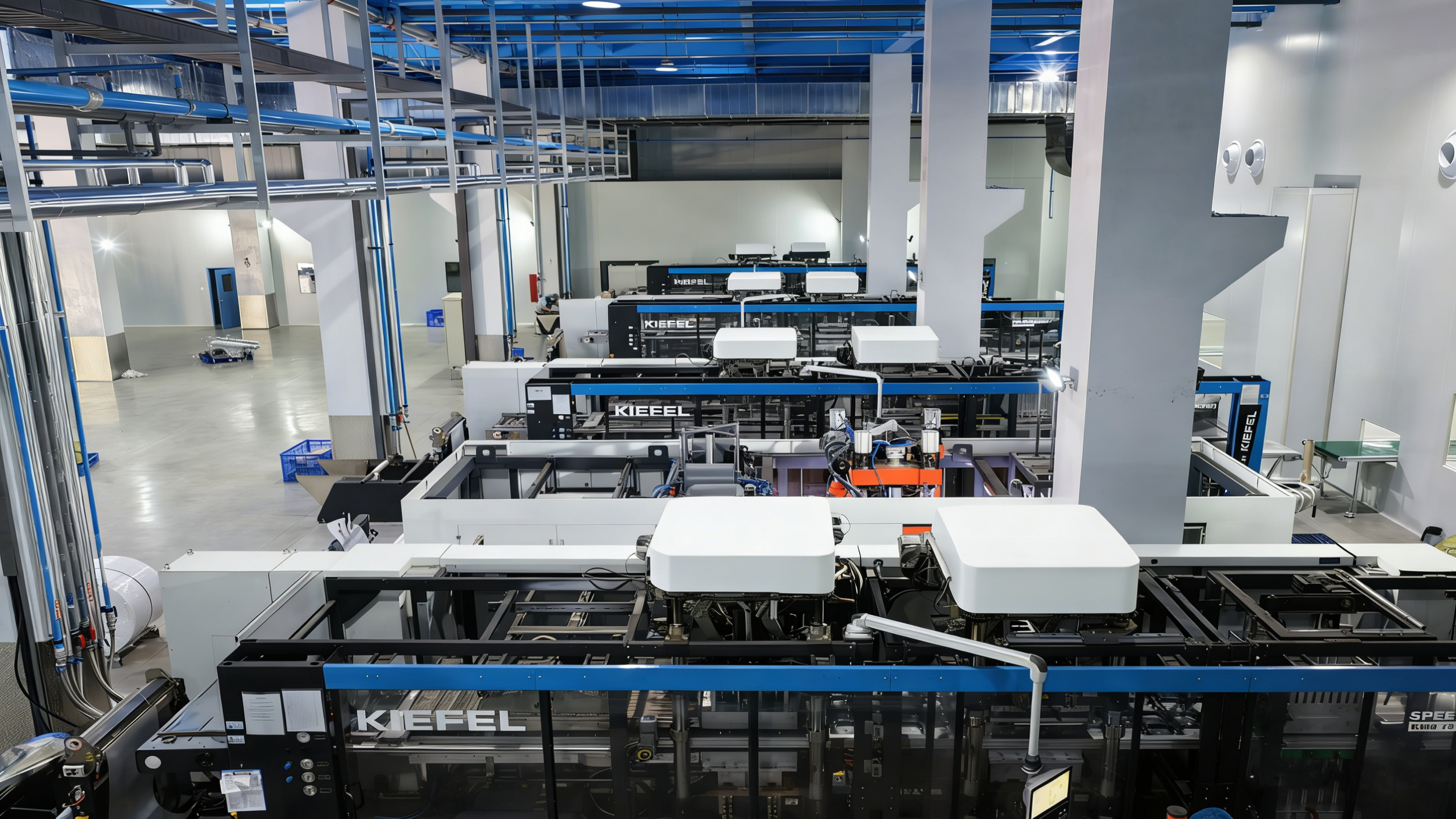
The factory also runs 4 PET sheet extrusion lines and 2 PP sheet extrusion lines, plus an in-house mold workshop. This integrated setup is relevant for buyers because it gives the manufacturer control over sheet quality, mold development, and delivery coordination. According to company profile information, the in-house mold workshop is intended to reduce outsourced raw material cost and support coordinated production and faster delivery.
From an execution perspective, in-house mold capability shortens the distance between design feedback and production. A buyer who asks for a deeper tray or a different vent pattern is not waiting for a third-party mold maker to interpret the request; the factory can assess mold feasibility directly.
Food-contact certification: what an export buyer should check
Export fruit & vegetable packaging needs to satisfy food-contact rules in the destination market. For the EU, the framework includes Regulation (EC) No 1935/2004 for all food contact materials and Regulation (EU) No 10/2011 for plastic materials and articles intended for food contact. For the United States, a relevant reference is FDA food-contact regulation, including 21 CFR 177.1630 for PET.
The CHUAN HE supplier file includes certification records that buyers can use as a starting point for document review:
| Certificate / test | Standard / reference | Report / certificate No. |
|---|---|---|
| BRC | Global Standard for Packaging Materials | CN26/00005423 issued by SGS |
| EU food-contact test | EN 1186-3:2022 | TSNHL26000684001 issued by SGS |
| CE | EN 1186-1:2002 | M.2025.206.C131101 issued by UDEM |
| FDA registration / test | P.L. 107-188 | 11242824478 issued by CNQI |
| SGS FDA test | US FDA 21 CFR 177.1630 | TSNHL26001599701 issued by SGS |
Certificates and test reports are dated 2025–2026. Buyers should confirm current validity with the supplier before a new order and ensure the product scope matches the exact container model and export destination.
For procurement, the presence of multiple food-contact certifications is useful because it indicates that packaging is tested against recognized standards rather than only against generic company claims. The certification scope in these records is plastic packaging, which includes the PET and PP containers relevant to fruit & vegetable buyers.
Documented regional applications
Project records are useful when they show a packaging supplier operating repeatedly in export markets. The following cases are first-party customer project summaries provided by CHUAN HE; they are not third-party research results, but they help buyers understand where and how the containers are used.
| Region | Order type | End-use pattern | Relationship length |
|---|---|---|---|
| South America | 250,000 pcs/month | Fresh fruit and vegetable packaging, bakery packaging, supermarket retail display, wholesale distribution | Over 6 years |
| Southeast Asia | 500,000 pcs/month | Fresh produce, seafood and meat cold chain packaging, food processing, retail display, wholesale | Over 12 years |
| Middle East | 250,000 pcs/month | Cherry tomato and berry clamshell packaging, farm harvest, retail display | Over 3 years |
| Europe | 350,000 pcs/month | Fruit and vegetable packaging, bakery packaging, supermarket retail, custom packaging | Over 7 years |
| Canada | 300,000 pcs/month | Supermarket fresh produce display, cold chain storage, transport packaging | Over 5 years |
| United States | 120,000 pcs/month | Fresh fruit and ready meal packaging for supermarket retail | Over 3 years |
Several patterns emerge. First, clear PET clamshell containers appear in multiple climates and retail systems, from South American wholesale networks to Middle East farm-to-retail programs. Second, stackability and food-grade material are recurring requirements. Third, buyers in these cases include food processing plants, fruit and vegetable wholesalers, large chain supermarkets, packaging wholesalers, and packaging manufacturers.
For an Evaluation-to-Execution buying process, this evidence is most useful as a reference for supplier fit. If a buyer is sourcing berry punnets or supermarket display containers, a supplier with repeated monthly programs in those categories has more relevant experience than one that only provides general-purpose packaging.
Custom thermoformed containers vs. traditional stock packaging
The largest practical difference for fresh produce buyers is not between plastic and paper, but between designing around the product and forcing the product into an existing stock format. A traditional stock packaging approach may be fine for simple dry goods, but fresh produce often requires size changes, venting, stackability, and export compliance at the same time.
| Procurement factor | Traditional stock packaging | Custom thermoformed PET/PP packaging |
|---|---|---|
| Speed to first samples | Fast if an exact stock item exists | Requires mold development and validation |
| Size fit | Limited by existing molds | Can be adjusted to product dimensions |
| Freshness features | Generally fixed | Venting, stacking, and lid design can be adapted |
| Regulatory alignment | Depends on supplier documentation | Should be aligned to target market standards |
| Order commitment | Low to moderate | Usually higher due to tooling and production setup |
One boundary to keep in mind
Custom capability is not automatically better for every buyer. The CHUAN HE production model has a MOQ of 10,000 units and a typical lead time of 30–45 days; monthly capacity is 4,500 tonnes, and the company’s stated annual output is 54,000 tonnes. A buyer who only needs a small pilot run for a seasonal promotion may find that custom tooling is slower or more expensive than buying a suitable stock container. Custom manufacturing becomes attractive when the production volume is enough to justify the development time and when the packaging design genuinely affects shelf life, logistics, or brand recognition.
Another boundary is that certification coverage must match the final product. A factory may hold a broad food-contact certification file, but a specific container model still needs to be within that file’s scope. Buyers should ask for model-level documentation rather than accepting an overall company certificate as proof for every line item.
From evaluation to execution: what should be in an RFQ
Buyers moving from supplier evaluation to order execution can reduce risk by converting product needs into an RFQ that contains enough operational detail for a thermoforming manufacturer to respond accurately.
A practical RFQ for fruit & vegetable packaging should include the following:
- Define the destination market and the food-contact compliance framework that applies: for the EU, Regulation (EC) 1935/2004 and Regulation (EU) 10/2011; for the United States, FDA food-contact requirements.
- State the target produce type and the journey it must survive: harvest, packing line, cold chain, wholesale warehouse, supermarket display, or e-commerce.
- Clarify the preferred material and finish: transparent PET for display, PP for low-temperature trays, food-grade BPA-free material where required.
- List functional requirements: size, stacking, venting, tamper evidence, lid type, microwave or refrigerator compatibility only when verified.
- Define branding requirements: logo printing, custom color, label-friendly surfaces, embossing if available in the supplier’s process.
- Confirm production parameters: MOQ, lead time, monthly capacity, pre-shipment testing, and delivery terms.
Procurement support terms used by CHUAN HE include FOB, CIF and DDP delivery methods, pre-shipment testing, and flexible payment methods such as T/T, L/C, D/P, D/A, MoneyGram, PayPal, Western Union, and cash. After-sales support is described as including real-time order and shipment tracking, customs clearance document assistance, technical consultation, and solutions for quality or damaged goods issues. These terms are not unique to CHUAN HE, but they form a useful baseline for RFQ language.
Market trends shaping fruit & vegetable packaging in 2026
Several verified market data points are relevant to buyers preparing long-term packaging programs. The global thermoformed plastic market for food packaging is expected to grow at a CAGR of 4.9%, reaching USD 20.66 billion by 2030. Europe’s fresh food packaging market was estimated at USD 15.2 billion in 2024, reflecting steady demand in a region with strict packaging rules.
The regulatory environment is becoming harder to ignore. Under the EU Packaging and Packaging Waste Regulation, starting in 2030, single-use plastic packaging will be banned for fresh fruit and vegetables under 1.5 kg. This decision will not end demand for PET and PP packaging classifications overnight, but it is already affecting how European buyers think about recycling, reuse, and material documentation. Packaging suppliers that can show how PET or PP is recovered and reused, and that can provide clear material compliance files, are likely to become more useful to supermarket chains and importers.
Future outlook for custom produce packaging suppliers
The direction of the market is moving toward more integrated control. Buyers of fruit & vegetable packaging are increasingly asking not only for beautiful containers but also for evidence that the supplier can manufacture the container consistently, adapt it quickly, and document its food-contact safety.
For CHUAN HE, the future value proposition appears to lie in its combination of in-house PET and PP sheet extrusion, thermoforming equipment, mold shop, and export-oriented certifications. That integration helps explain why the company has been able to maintain project relationships lasting from 3 to over 12 years in different regions. In procurement terms, integration means fewer hand-offs between raw sheet suppliers, mold makers, thermoformers, and specifiers. That can be a real advantage during execution, though it still needs to be proven through samples, trial runs, and supply agreements.
As 2030 approaches, suppliers will face more questions about recyclability, reuse, and regulatory alignment. Buyers should treat these questions as normal commercial diligence, not as niche concerns. A credible packaging partner should be able to discuss material selection, source verification, and certification scope without pushing the buyer toward a single solution.
FAQ: neutral answers for packaging buyers
What does OEM/ODM mean for fruit and vegetable packaging?
OEM/ODM means the packaging manufacturer can produce products according to the buyer’s design and specification, rather than only supplying standard stock items. CHUAN HE states that its production mode is OEM/ODM/customizable, with customization options including logo, size, and color.
What materials are commonly used in custom clamshell fresh food containers?
PET is the primary material in many clear fresh fruit and vegetable containers; some models are made of food-grade BPA-free plastic. PP is also used for tray-type packaging. In documented product records, PET clamshells are described as clear, stackable, and suitable for retail and farm-to-market use.
Which certification standards should an EU or US buyer check for pet produce packaging?
For EU food contact, the framework includes Regulation (EC) No 1935/2004 and Regulation (EU) No 10/2011. For the US market, FDA food-contact requirements apply. CHUAN HE’s certification file includes CE, BRC, FDA, EU, and SGS records, with test reports referencing EN 1186-3:2022, EN 1186-1:2002, and US FDA 21 CFR 177.1630.
Can custom PET clamshell containers be used in cold chains and supermarket displays?
Yes. In documented CHUAN HE projects, clear PET clamshell containers with vent holes have been used for farm harvest, fruit and vegetable packaging, and supermarket retail display. In Canada, a long-term project used food-grade PP packaging for supermarket fresh produce display and cold chain storage.
What order volume and lead time should an importer expect for a custom PET clamshell project?
For CHUAN HE, the stated MOQ is 10,000 units and the lead time is 30–45 days. The company also declares a monthly capacity of 4,500 tonnes. These figures depend on product design, tooling status, and order specification.
What are the main applications for fruit and vegetable packaging containers?
The customer types and applications include produce wholesalers, supermarket chains, agricultural exporters, bakeries, food retailers, and e-commerce brands. End uses include fresh fruit and vegetable packaging, berry storage, salad containers, bakery packaging, food processing, cold chain storage, and wholesale distribution.
For further technical reference, CHUAN HE publishes a downloadable brochure: CHUAN HE 2026 packaging brochure.
Tem questões ou precisa de mais detalhes?
Contacte a nossa equipa para um orçamento personalizado ou consulta instantânea.
Solicitar orçamento
Preencha o formulário abaixo e a nossa equipa entrará em contacto com uma proposta personalizada.
Chat direto do WhatsApp
Prefere conversar em tempo real? Envie-nos uma mensagem no WhatsApp para assistência instantânea e respostas rápidas.
- Obter orçamento personalizado
- Partilhar fotos ou documentos
- Discuta as suas necessidades diretamente
Geralmente responde em 5–30 minutos durante o horário de expediente.