
How to Verify a Home Battery Supplier's Spec-Sheet Claims
How to Verify a Home Battery Supplier's Spec-Sheet Claims
A residential energy storage purchase is a documentation purchase as much as a hardware purchase. The practical test of a supplier is not how many capacity points appear in a brochure, but whether one model designation can be traced, unchanged, through three independent artifacts: the controlled datasheet, the unit nameplate, and the transport and compatibility documents. When the same values survive that trace, the claim is checkable. When they do not, the buyer has found, before the deposit, the exact point at which the order needs to be redefined.
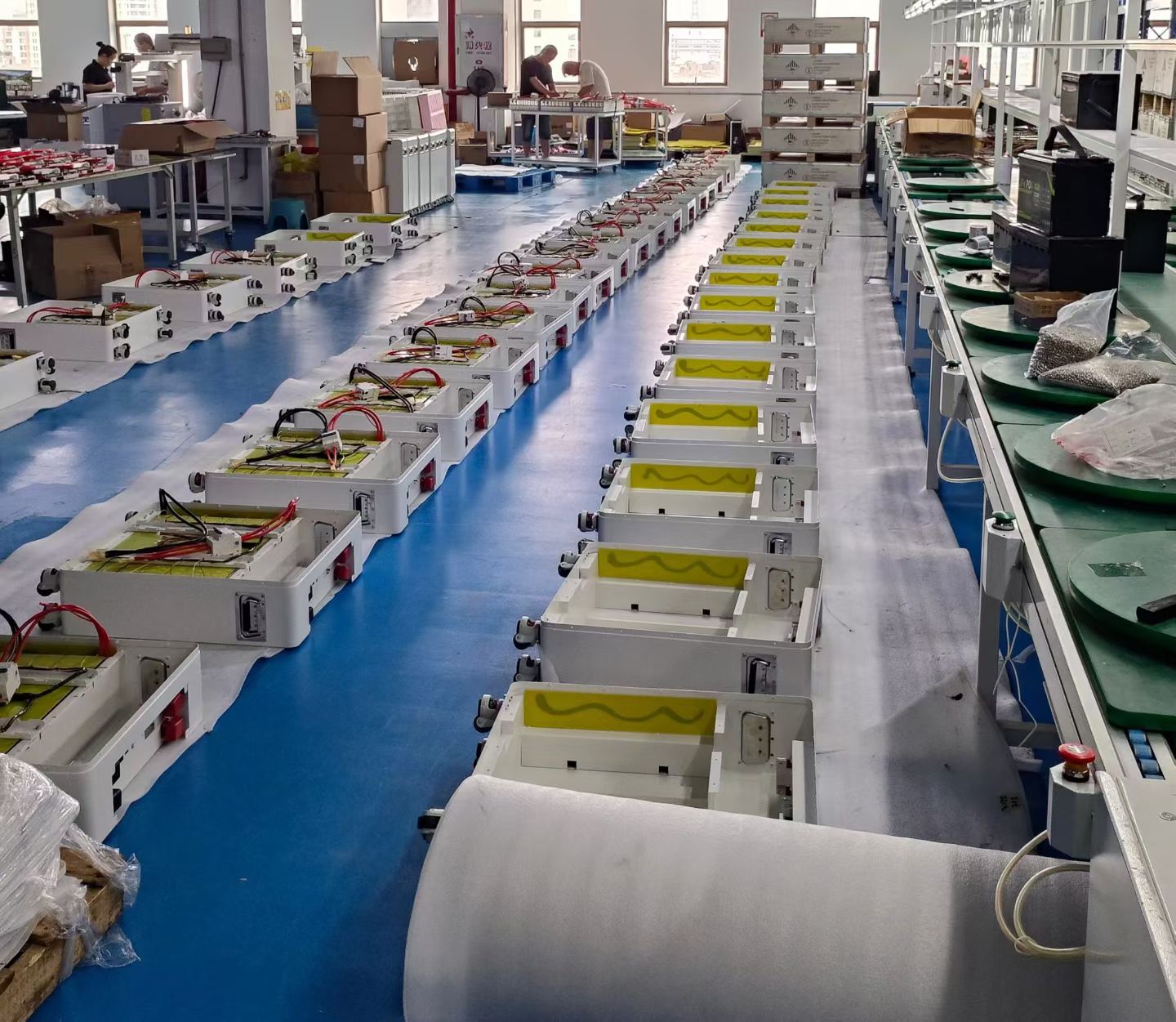
Why a Portfolio Claim Cannot Be Audited and a Model Claim Can
A product-line statement such as 5–20 kWh wall-mounted, stackable and all-in-one units built on LiFePO4 cells describes what a factory is able to build. It does not describe the object that will be unloaded at a project site. Between those two statements sit a designation, a document revision and, where transport is concerned, a test scope. A buyer who does not ask for them is evaluating a category rather than a product. That distinction is the entire basis of a supplier verification programme: capability statements are useful for shortlisting, and model-level evidence is what supports an order.
KangJun Energy, the trading identity of Zhongshan Kangjun New Energy Technology Co., Ltd., founded in 2015 and headquartered in Zhongshan, Guangdong, manufactures residential energy storage systems and portable power stations for brand owners, distributors, installers and project procurement teams, exporting around 80% of its output to Africa, Latin America, Central Asia, the Middle East, Southeast Asia and Russia. Its residential line spans roughly 5–20 kWh in wall-mounted, stackable and all-in-one formats, which makes it a useful working example of a portfolio wide enough that designation-level documentation becomes the buyer’s main control.
Factory facts matter only to the extent that they produce checkable artifacts. The company runs five production lines with a single-shift monthly capacity of 5,000 portable power stations and 1,000 home storage battery packs, and core processes cover cell sorting and matching, laser welding, BMS integration, aging tests and final assembly under a three-stage IQC–IPQC–OQC inspection system. Outgoing tests listed for every batch include full-charge aging, high-low temperature cycling, dielectric withstand and vibration. None of that proves a specific pack meets a specific specification. What it does establish is that records of those tests should exist and can be requested by name.
A monthly capacity figure of 1,000 packs describes throughput, not the delivery date of a specific order. Lead time is quoted separately, in the 20–35 day range for this manufacturer, and follows order volume. Buyers who conflate the two generally discover the difference at the port.
Step One: Freeze the Designation Before You Compare Anything
Verification begins with a string of characters, not a watt-hour headline. The catalogued residential entries include the following designations, and the table is already enough to show why sorting by capacity alone is unsafe.
| Catalogued designation | Catalogued energy | Verification note |
|---|---|---|
| KJ-48100-5 | 5 kWh | Shortest designation in the family; suffix matches capacity |
| KJ48200-10 | 10 kWh | Suffix matches capacity |
| KJ-48200-B / KJ48300-A | 15 kWh | Two different designations carry the same 15 kWh entry |
| KJ-48280-15 | 16 kWh | Suffix reads 15, but the entry is catalogued as 16 kWh |
The last row is the most instructive in the table. A 16 kWh unit carrying a designation that ends in -15 demonstrates that these strings are identifiers, not arithmetic. A buyer who estimates capacity by parsing digits will mis-size the bank, and a buyer who lets a supplier quote the 15 kWh model without a full designation leaves two catalogued options open. The same risk appears in the middle section of the family, where 48200, 48280 and 48300 differ by a single digit and describe different items.
Two 15 kWh entries, KJ-48200-B and KJ48300-A, make the point from the other direction. Capacity parity does not imply part-number parity: the two strings may differ in configuration, interface or market version, and only the datasheet for each designation settles which one fits an installation.
The control measure is procedural and cheap. Put the full designation in the request for quotation, in the purchase order, on the packing list and in the warranty document, and require the supplier to confirm the designation-to-capacity mapping in writing before the proforma invoice is issued. The manufacturer’s own selection guidance follows the same order of operations: confirm the exact model number on the product label first, then verify rated voltage, capacity and output power against it, and treat appearance as irrelevant to identification.
The Five-Artifact Set a Supplier Should Be Able to Produce
A workable verification file does not need dozens of documents. Five artifacts, each with a defined question, cover most of the exposure at the evaluation-to-execution boundary.
| Artifact | What it establishes | What it does not establish |
|---|---|---|
| Controlled datasheet with revision or issue date | Declared parameters for one designation | That the shipped unit matches that revision unless the label and the purchase order are cross-referenced |
| Nameplate or label photograph for the model | The physical unit carries the same designation and key ratings | Internal cell arrangement, BMS firmware or parameter settings |
| Transport test documentation: report number, issue date, model list | The tested pack design met the named transport-safety standard | Destination-market product certification or installation compliance |
| Inverter compatibility list with protocol note | Which inverter families and protocols have been declared compatible | That a specific inverter and firmware pairing will commission without adjustment |
| Warranty and service terms with spare-parts statement | The commercial commitment in text | Field failure rates or long-term reliability |
Three of these five are documents a supplier produces internally. Two come from outside: the transport report from an independent laboratory, and the compatibility list from testing against third-party equipment. Buyer weighting should reflect that asymmetry, because an internal datasheet is a promise and an external report is an independent check on one specific claim.
Cross-Checking Physical Parameters: Configuration, Housing, Weight, Footprint
The parameters buyers most often accept without checking are the physical ones, because they look technical and are tedious to reconcile. They are also the easiest to audit.
Cell topology: 16S1P
Take a documented configuration in this product class: a 16S1P LiFePO4 pack. The notation is a topology statement, meaning 16 cells in series with a single parallel string, and it can be tested with arithmetic. At a nominal 3.2 V per LiFePO4 cell, a 16S string gives a nominal voltage of 51.2 V, which is a calculated figure rather than a measured one. The same arithmetic explains why the 12.8 V and 25.6 V LiFePO4 series in this manufacturer’s catalogue correspond to 4S and 8S arrangements. The calculation earns its place as a diagnostic: if a datasheet states 16S1P and a nominal voltage that does not reconcile with it, one of the two entries is wrong, and a buyer who never multiplies will not notice. Confirm both entries for the exact model on the datasheet revision attached to the order.
Housing material
A steel or aluminium enclosure is a declared attribute, and declared attributes should stay stable between the approved sample and mass production. This matters because OEM scope is usually asymmetric. The customization list for this manufacturer covers battery capacity, rated voltage, BMS protection parameters, appearance, logo, packaging, communication protocols and inverter matching schemes, while cell type and structural safety components are explicitly not open to modification. An enclosure change between sample and production therefore belongs in a written change record rather than a verbal assurance, because it sits closest to the part of the design the supplier itself treats as fixed.
Weight and footprint: 129 kg, 1070 x 520 x 275 mm
The working figures for this pack class, 129 kg and 1070 x 520 x 275 mm, look like spec-sheet decoration until they are read against an installation. Four checks follow.
Net versus gross. 129 kg is a pack weight. Crated weight is higher, and freight, pallet planning and manual-handling rules all key off the gross figure, so ask for both.
Handling. At this mass, the installation plan needs mechanical handling, and the route to the plant room has to clear the 1070 mm dimension rather than the 520 mm one.
Mounting class. Floor-standing, rack-mounted and wall-mounted are different installation decisions. A wall-mounted product claim and a 129 kg pack are not automatically contradictory, but the bracket, the wall specification and the installer qualification should be documented with the mass stated.
Drawing convention. Dimensions frequently exclude terminals, handles or feet. Ask whether the figure is body-only and whether it belongs to the exact designation; a drawing borrowed from a sibling model in a 5–20 kWh family will look plausible and be wrong.
None of these checks establishes whether a pack performs well in service. They establish whether the object can be installed as quoted, which is a different and more immediate risk.
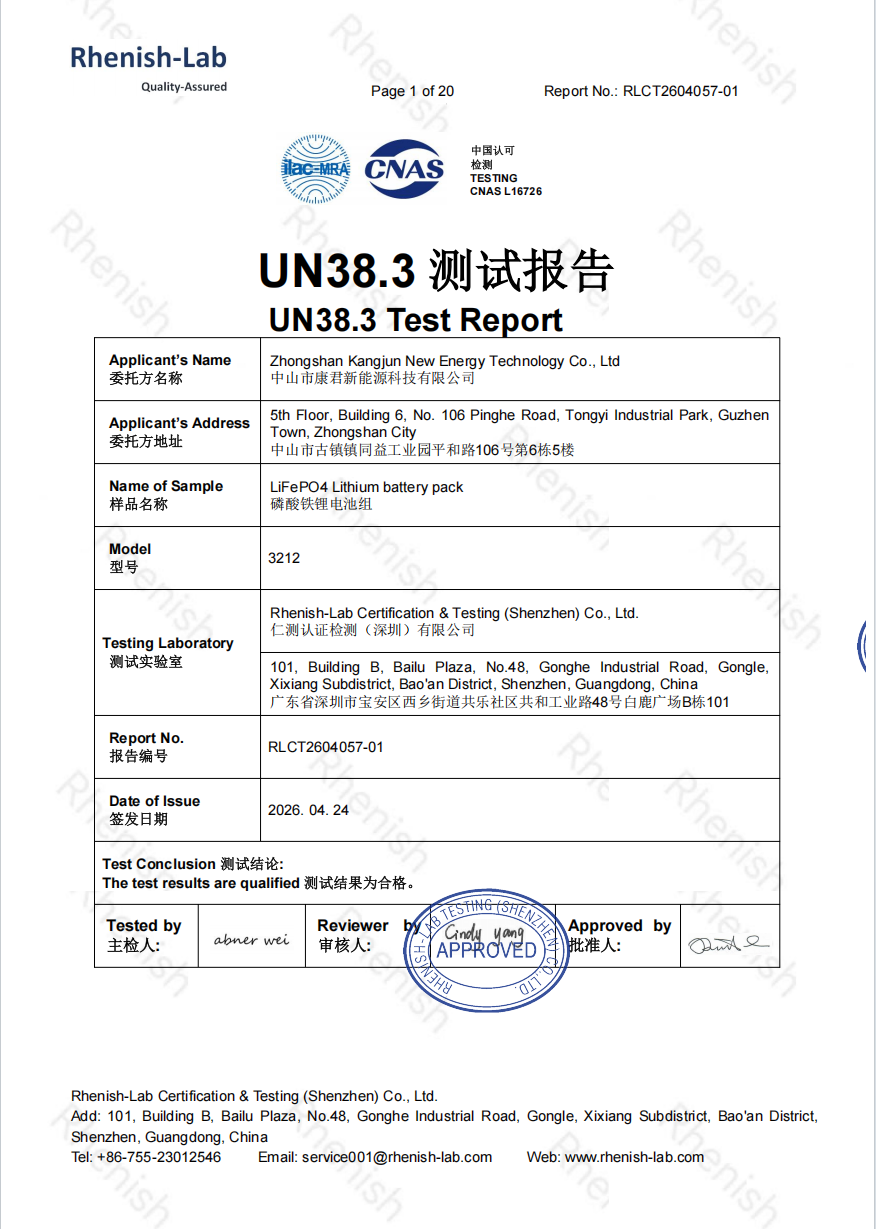
Reading the BMS Protection List as a Configuration Baseline
The protection list most often quoted for this class is short: overcharge, over-discharge, over-current, short circuit and overtemperature. A BMS in a residential pack also monitors voltage, current and temperature and balances cells, and the specific protection functions and communication features depend on the model and the BMS configuration rather than on the cell chemistry.
The list therefore answers a narrow question, whether protection exists, and leaves the buyer’s real question open: at what settings, with what recovery behaviour, and with what documentation. This is where customization turns a static claim into a moving one. Because BMS protection parameters and firmware parameters sit inside the customizable scope, the same model designation can ship with different thresholds for different customers. A buyer who records only the datasheet list has no baseline against which to compare a second batch.
The practical instrument is a parameter sheet: a versioned document listing the protection thresholds and the configured values for the specific order, attached to the purchase order and repeated in the shipping documents. It sits naturally alongside the production controls already described, namely the 100% electrical performance test before delivery, the IQC–IPQC–OQC sequence, and outgoing tests covering full-charge aging, high-low temperature cycling, dielectric withstand and vibration. Ask which test record accompanies the shipment. A statement that testing happens and a record of testing for your batch are different levels of evidence.
Operating windows belong in the same conversation. The published working conditions for this application class are 0 °C to 45 °C for charging, −10 °C to 45 °C for discharging and −20 °C to 45 °C for storage, at 5% to 95% relative humidity, non-condensing. A protection list without those limits is incomplete, because temperature is both a protection trigger and an operating constraint.
CAN, RS232 and RS485: Interfaces That Must Agree in Three Places
Communication is the part of a residential storage specification most likely to be true in a datasheet and false at commissioning. An interface claim should survive three appearances: the datasheet table for the model, the port labelling or silkscreen on the unit, and the inverter compatibility list.
The manufacturer’s product-line description states compatibility with mainstream hybrid inverters including Deye, Growatt, Victron and Sunsynk, with CAN, RS485 and Modbus communication. Its application guidance lists CAN, RS232 and RS485 wiring among the matched equipment for a split storage system, and its selection criteria for the battery series include CAN, RS232 or RS485 where supported by the selected model. Those statements are consistent at family level and deliberately qualified. The phrase where supported by the selected model is what turns a family claim into a per-model question, and when RS232 appears in one document and not another, that is a scoping issue to resolve for the designation rather than automatically an error.
Commissioning risk concentrates in protocol mapping and firmware. A port that exists still has to be mapped to the inverter’s protocol table, and the mapping is version-specific. Two steps reduce the exposure: request the per-model protocol table and the parameter-setting sheet before shipment, and record firmware and protocol versions at handover so a later service visit starts from a known state. The after-sales scope for this manufacturer covers remote technical support for commissioning, parameter setting and troubleshooting, plus spare-parts supply within the five-year warranty period. That support channel is useful, but it is not a substitute for documents received before installation.
Document Scope: What a UN38.3 Report Covers and What It Does Not
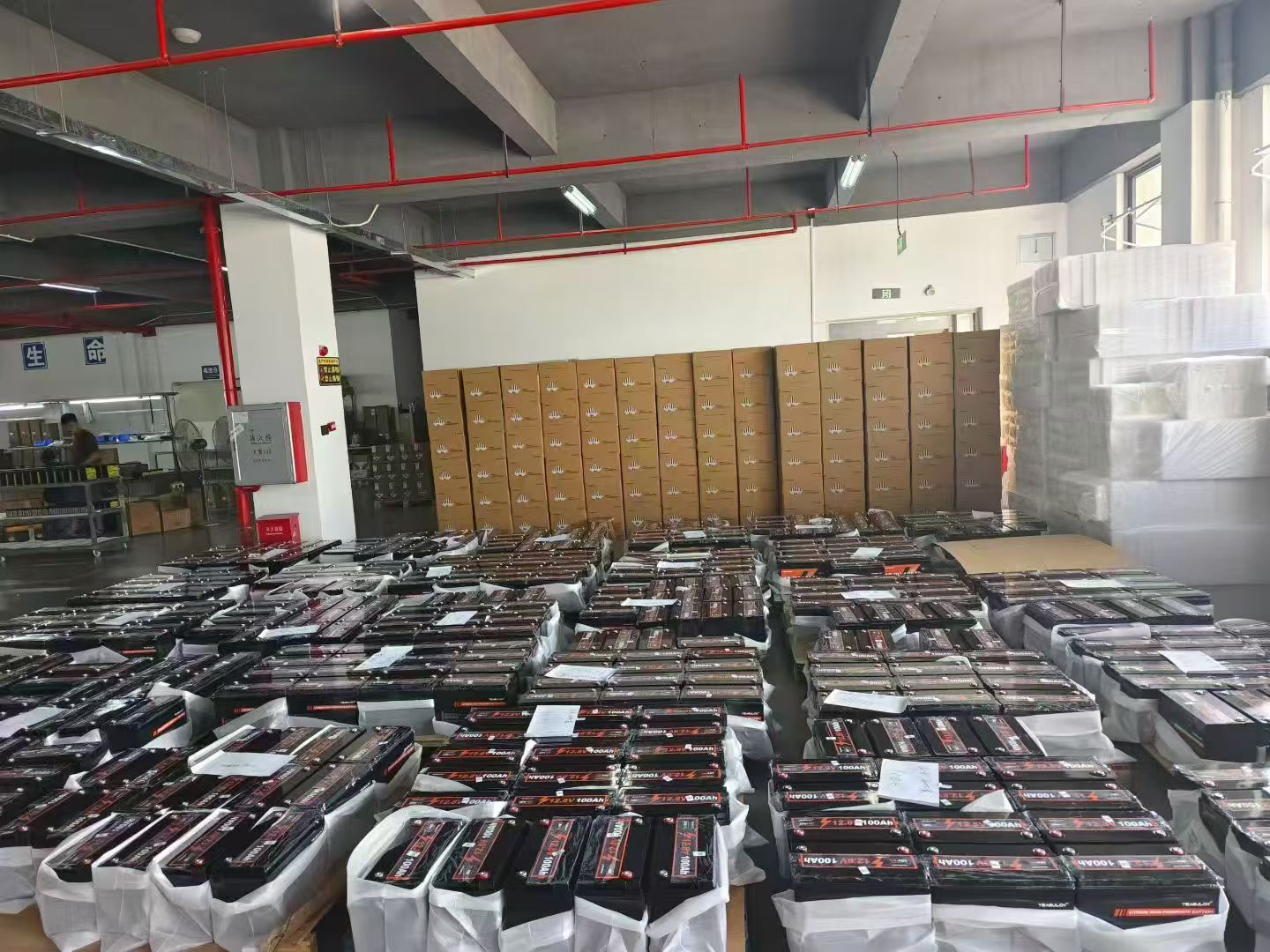
Transport documentation is where scope discipline is easiest to demonstrate and most often ignored. For this manufacturer, the UN38.3 test report numbered RLCT2604057-01 was issued on 24 April 2026 by Rhenish-Lab under UN ST/SG/AC.10/11 Rev.7, Subsection 38.3, with a scope covering lithium iron phosphate battery packs for transport safety and applicability to global markets.
A buyer should read five fields before accepting it: the report number, the issue date, the issuing laboratory, the standard revision and the model list. The last field is decisive. A pack-family report does not automatically extend to a designation added later or built to a different configuration.
The same manufacturer supplies a clean example of how scope behaves. A separate sea transport identification and classification report, RLT2604083-02, also issued on 24 April 2026, assesses the 6412 LiFePO4 battery pack under the IMDG Code Amdt. 42-24 and concludes that the listed battery meets the conditions of Special Provision 188 and may be shipped by sea as non-dangerous goods, subject to applicable packaging, marking and transport requirements. The report states explicitly that it applies to the 6412 model and should not be assumed to cover other battery models, and that model is a 76.8 Wh pack. Two reports, one manufacturer, one date, and entirely different scopes. That is what a properly bounded document looks like, and it is the standard to hold every other certificate to.
Destination-market conformity follows the same rule. The company supports customers through procedures such as SONCAP for Nigeria, SASO/SABER for Saudi Arabia, EAC for the CIS, INMETRO for Brazil and SNI for Indonesia. Support through a conformity procedure is not a certificate already held for your model and your market. The verification question is precise: which document exists, for which model, for which market, issued when and by whom.
LiFePO4 Versus Lead-Acid in a Verification Programme
Where a project replaces lead-acid with LiFePO4, the documented differences affect the document set as well as the design. LiFePO4 batteries generally offer higher energy density, lower weight, faster charging and longer cycle life, and generally need less routine maintenance, while lead-acid batteries usually carry a lower initial purchase cost and remain common in conventional backup systems. The boundary matters: chemistry does not transfer to supplier quality, so a LiFePO4 pack is not automatically the lower-risk procurement. The chemistry advantage is real, and the evidence burden still sits with the supplier.
Chemistry also shifts the checks. A lighter pack for the same energy changes handling and mounting assumptions, and a longer claimed cycle life raises the value of the parameter baseline, because the settings that govern charging and depth of discharge are the ones a buyer can actually record and compare across batches. Actual cycle life depends on operating temperature, charge and discharge rates, depth of discharge, charging voltage, BMS protection and usage conditions, which is why configured parameters and warranty text are more useful evidence than a cycle-life headline.
A Verification Workflow for the Execution Stage
- Freeze the configuration in the request for quotation: full designation, catalogued energy, interface set and protocol, mounting class, housing material and destination market.
- Request the five artifacts with revision numbers and dates, and reject undated datasheets.
- Match the nameplate photograph to the datasheet row, value by value, rather than by model family.
- Reconcile units and conditions: net versus gross weight, calculated versus measured values, and the charge, discharge and storage temperature windows.
- Order a sample where the programme allows it, and approve it against the same document set rather than against appearance. Sampling in this manufacturer’s OEM workflow is quoted at 5–7 working days, with MOQ from 100 units, so the schedule has room for a documented approval step.
- Record the parameter baseline: BMS thresholds, firmware version, protocol version and the inverter pairing.
- Confirm the pre-shipment record, including the 100% electrical performance test for the batch and the inspection stage at which it was performed.
- Inspect on receipt against the packing list, the approved nameplate and the report numbers in the document set, not against the brochure.
The same logic can be compressed into a single working sheet used by the buyer and the installer together.
| Claim | Primary evidence | Cross-check | Typical failure mode |
|---|---|---|---|
| 16 kWh capacity | Datasheet row for KJ-48280-15 | Multiply cell count by nominal cell voltage and compare with catalogued energy | Capacity inferred from a designation suffix |
| Steel or aluminium housing | Datasheet plus approved sample | Change record between sample and mass production | Material substituted without documentation |
| 129 kg, 1070 x 520 x 275 mm | Dimensional drawing for the designation | Net versus gross, body-only versus including terminals, route clearance | Drawing borrowed from a sibling model |
| BMS protection set | Datasheet list plus parameter sheet version | Thresholds and recovery behaviour against the order baseline | List confirmed, settings undocumented |
| CAN, RS232, RS485 | Datasheet table, port label, compatibility list | Protocol table for the exact inverter and firmware | Interface present, mapping absent |
| Transport compliance | UN38.3 report number and model list | Scope compared with the purchased designation; separate modal reports | Family report assumed to cover a new model |
What the Documents Cannot Prove
A verification programme has limits, and stating them is part of using it honestly. Documents confirm configuration and declared performance; they do not predict field reliability. A five-year warranty with spare-parts supply and remote technical support is a commercial commitment, not a failure-rate statistic. A capacity of 1,000 home packs per month describes production capability, not the quality of the pack assigned to a particular order. A compatibility list names inverter families that have been declared compatible, not every firmware combination in the field.
Two further cautions belong in the buyer’s file. Not disclosed is not evidence of incapability, and a missing figure should be requested rather than assumed absent. And a document set assembled for one destination market cannot be read as complete for another: the market determines which conformity route applies, and the route determines which documents are relevant.
Outlook: Documentation Burden Grows With Portfolio Breadth
Residential storage portfolios are widening in every direction that matters to a buyer: 5, 10, 15 and 16 kWh capacity points, wall-mounted, stackable and all-in-one formats, low-voltage and high-voltage architectures, and customization that reaches into firmware and communication protocols. Each added option multiplies the number of designation-to-document pairs a supplier must maintain, and each pair is a place where a quotation can drift from the item shipped.
For buyers, the consequence is procedural rather than technological. The habit that scales is the one described here: freeze the designation, demand the artifact set, reconcile the physical parameters, baseline the BMS and protocol configuration, and read every certificate for its model scope. Suppliers who can produce that set on request, and who label their own reports with the models those reports cover, reduce the buyer’s work to checking rather than negotiating. That, rather than any single specification, is what documented capability looks like at the evaluation-to-execution boundary.
Frequently Asked Questions
What does a residential energy storage model number actually tell a buyer?
A designation is an identifier, not a capacity formula. In this manufacturer’s catalogue the 16 kWh unit is designated KJ-48280-15, while the 15 kWh entry carries KJ-48200-B and KJ48300-A. Because suffixes and digit strings do not map reliably to energy, the only safe reading is the datasheet row that matches the full designation, confirmed against the nameplate on the delivered unit.
Which documents should a buyer request to verify a LiFePO4 home battery’s specifications?
At minimum: a controlled datasheet with a revision or issue date for the exact designation; a nameplate photograph for that model; transport test documentation showing the report number, issue date, laboratory and models covered; an inverter compatibility list with the relevant protocol; and warranty terms including spare-parts and support scope. Each answers a different question, and none substitutes for another.
How can an installer confirm BMS protection and communication interfaces before ordering?
Ask for the protection list and, separately, the parameter sheet that states the configured thresholds for the order, since BMS protection parameters and firmware parameters fall inside the customizable scope. For communications, require the per-model protocol table and the port labelling to match the datasheet, and confirm the exact inverter model and firmware pairing. Record the versions at handover so later service visits can be compared against a known baseline.
How does a transport test report’s scope affect which models it covers?
A report covers the models and configurations it names. Report RLCT2604057-01, issued on 24 April 2026 by Rhenish-Lab under UN ST/SG/AC.10/11 Rev.7, Subsection 38.3, addresses lithium iron phosphate battery packs for transport safety. A separate report, RLT2604083-02, assesses only the 6412 pack under the IMDG Code and states that it should not be assumed to cover other models. Buyers should check the model list rather than the manufacturer name.
What should an OEM buyer check when customization touches firmware or protocol settings?
Read the customization scope as two lists: what may change and what may not. Capacity, rated voltage, BMS protection parameters, appearance, logo, packaging, communication protocols and inverter matching schemes are open in this manufacturer’s OEM programme; cell type and structural safety components are not. For anything on the open list, fix a versioned baseline at order so that later batches can be compared against it.
A downloadable brochure covering the residential storage line is available here: KangJun Energy product brochure (PDF). A buyer evaluating a specific project should still work from the designation-level datasheet, nameplate and test-scope documents described above, because the brochure is a starting point for shortlisting rather than a substitute for that trace.
Tem questões ou precisa de mais detalhes?
Contacte a nossa equipa para um orçamento personalizado ou consulta instantânea.
Solicitar orçamento
Preencha o formulário abaixo e a nossa equipa entrará em contacto com uma proposta personalizada.
Chat direto do WhatsApp
Prefere conversar em tempo real? Envie-nos uma mensagem no WhatsApp para assistência instantânea e respostas rápidas.
- Obter orçamento personalizado
- Partilhar fotos ou documentos
- Discuta as suas necessidades diretamente
Geralmente responde em 5–30 minutos durante o horário de expediente.