
How to Verify a Metalized Paper Laminating Machine Supplier
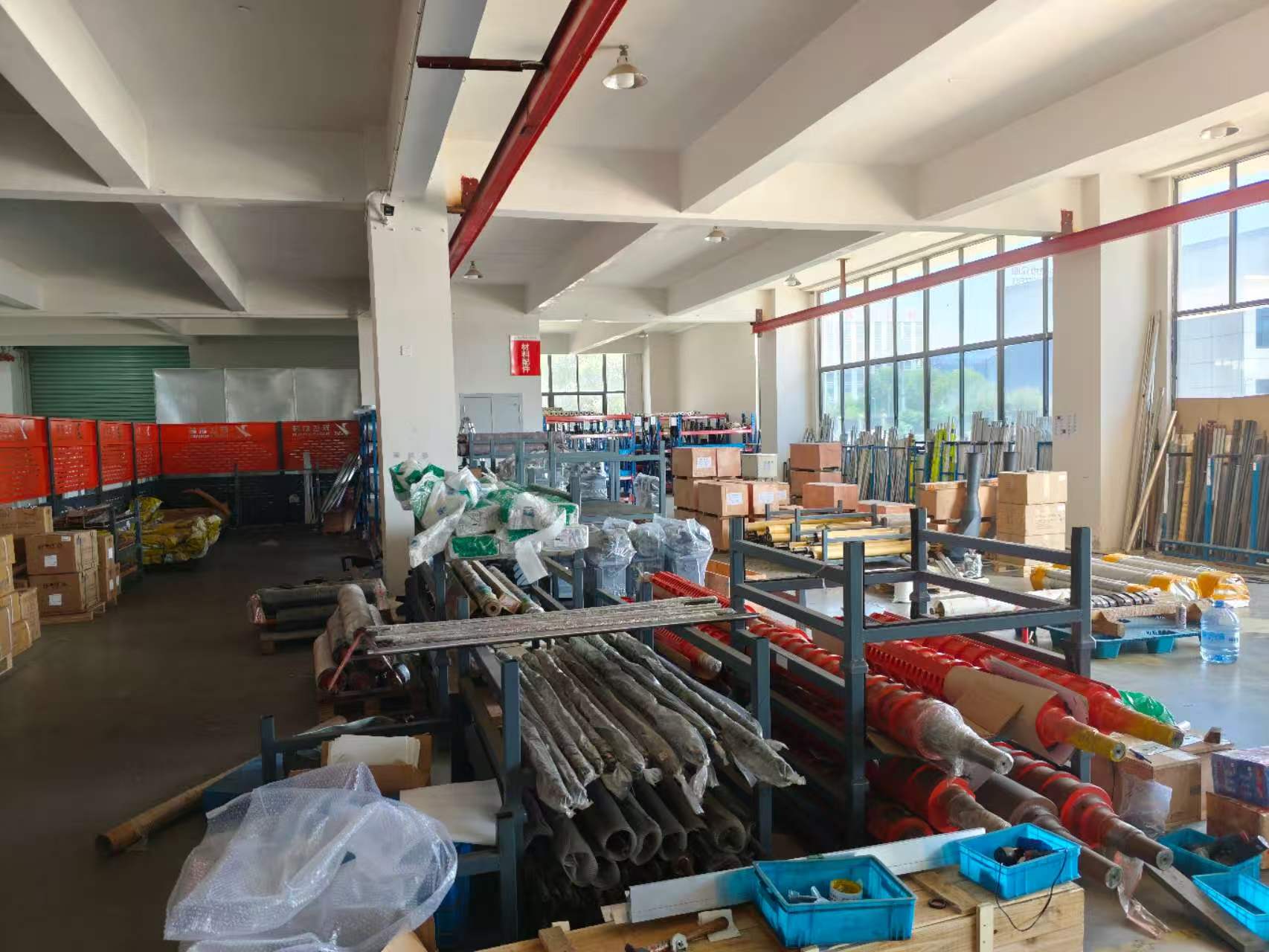
YUEDA raw material and finished product warehouse — inventory management supports faster delivery of standard model laminating machines.
Once a packaging producer narrows down the choice of a metalized paper laminating machine and moves toward purchase, the evaluation criteria change. The relevant question is no longer which machine offers the highest line speed on paper, but whether the supplier can deliver that machine on schedule, prove its quality before shipment, and respond quickly when the line is down. This article outlines what buyers at the decision and execution stage should verify with a metalized paper laminating machine supplier, using Wenzhou Yueda Packaging Machinery Co., Ltd. (YUEDA) — a gold and silver card production equipment manufacturer based in Longgang, Wenzhou, China — as a reference example.
Why supplier verification matters after the purchase decision
Metalized paper lamination is a continuous process. In packaging segments such as cigarette boxes, wine boxes, and cosmetics paper packaging, the laminating machine operates at high speed for long shifts, and an unplanned stop propagates through downstream cutting and finishing steps. A machine's total cost of ownership is therefore driven less by its purchase price and more by supplier-dependent factors: delivery reliability, defect rate at commissioning, and how fast a remote or on-site engineer can resolve a failure.
For buyers who are about to sign an order, most technical comparisons are already complete. What remains is verifying the supplier's operational capacity and service discipline. That verification is the difference between buying a machine and building a production relationship.
Three verifiable supplier signals: capacity, testing, and service
Three types of evidence are especially useful because they are quantitative and can be checked before payment: production capacity, pre-shipment testing, and after-sales response times.
Production capacity
Supply reliability starts with predictable manufacturing output. Wenzhou Yueda Packaging Machinery Co., Ltd. operates a 4,000 m² factory in Longgang, Wenzhou — the industrial cluster known as China Printing City. The company has 30 employees and a 25-engineer R&D team, and reports an annual output of 100 sets of mechanical equipment.
Its published monthly production capacity is 12 to 15 units for the standard product line, with 8 units per month for certain product models. About 70% of YUEDA's output is exported to Southeast Asia, the Middle East, South America, and Africa. For a buyer, monthly capacity is a practical indicator of scheduling flexibility. If a supplier is already running at maximum capacity, a standard 30–45 day lead time can slip when material or component shortages occur. A manufacturer with stated capacity headroom is more likely to hold the agreed delivery date.
Pre-shipment testing
YUEDA states that all units undergo 100% testing before shipment, including a 2-hour continuous run. Third-party inspection is available on request. The 2-hour continuous run exercises heating, unwinding, lamination, coating, and rewind systems long enough to expose loose wiring, roller misalignment, or tension drift that a short idle test would miss.
Buyers should ask three follow-up questions to any supplier: Can I attend the test? Can a third-party inspector attend? What is the procedure if the machine fails the test? The answers reveal how much confidence the manufacturer has in its own assembly quality.
After-sales response
After-sales service response times are contractual facts, not marketing language. YUEDA's commitments are: 24-hour online response, 48-hour domestic on-site service, and 72-hour overseas remote debugging. For overseas buyers in Southeast Asia, the Middle East, South America, or Africa, the 72-hour remote debugging commitment defines how quickly a specialist will connect to the machine after a fault is reported.
These response times should be written into the purchase agreement. A supplier that is unwilling to commit response times in writing is a risk signal regardless of machine specifications.
Technical capability for continuous operation
The gantry-type integrated platform
YUEDA's core metalized paper laminating machine model is the YDLM1300B, a gantry-type multifunctional aluminum metallized cardboard laminating (coating) machine. It is the model most frequently associated with cigarette and wine packaging applications.
The machine has a mechanical speed of 180 m/min and a working speed range of 15–150 m/min. Working width is 600–1200 mm. The laminating and coating process is designed for water-based laminate paperboard, using four-roller transfer coating for the laminating adhesive and anilox roller direct coating for back coating. The heating tunnel is 15 meters long, with a maximum temperature of 130°C. Total motor power is 60 kW, heating power 216 kW, and working power about 80 kW.
Base material compatibility includes PET film at 0.012–0.014 mm, OPP film at 0.02–0.06 mm, paper at 100–350 g/m², and aluminum film at 0.006–0.007 mm. Paper unwinding diameter is 1500 mm, and rewinding diameter reaches 1600 mm. The machine's overall dimensions are 22,330 mm × 3,700 mm × 4,500 mm, with a total weight of 40 tons.
A second integrated model for different width ranges
YUEDA also offers the ZNFH1300-1400-1500 automatic aluminum metallized cardboard laminating and coating integrated machine with shaftless rewinding. This model covers sheet roll widths from 600 to 1400 mm, handles paper weights from 40 to 450 g/m², and runs at 5–150 m/min. The drying path is 12.5 meters, and total power consumption is 121–129 kW depending on the width configuration.
Having two integrated platforms matters for buyers because it gives the supplier more room to match machine width and speed to actual production demand rather than forcing every customer into a single configuration.
Risk control systems
Three risk-control mechanisms in YUEDA's equipment are directly relevant to long-term uptime.
Cutting position error is addressed by photoelectric correction. The system uses dual photoelectric eyes — main and backup — for real-time position calibration, reducing the chance that a sensor failure stops the line.
Tension instability is controlled by a closed-loop servo system with real-time tension monitoring and adjustment at 0.1 N precision. Tension stability between the metallized film and the base paper is what keeps registration accurate across a full production run.
Machine overheating is handled by thermal protection. Temperature sensors are installed on key components such as motors and heating rollers, and the system triggers an automatic shutdown when temperature exceeds safe limits. This protects the machine and the product from heat-related defects.

Intelligent electrical control cabinet with PLC-based control system, used across YUEDA laminating and coating equipment.
Application coverage in premium packaging
YUEDA's metalized paper laminating machines are documented for paper packaging applications including printed wine boxes, cigarette paper packaging, cosmetics paper packaging, tea paper packaging, disposable waterproof paper tableware, cake paper packaging, and chewing gum paper packaging.
The range spans both high-end consumer packaging and food-contact packaging. Cigarette and wine packaging require high registration accuracy and a consistent metallic finish. Cosmetic and tea packaging place more emphasis on surface quality and gloss. Disposable waterproof tableware requires uniform coating over paper of varying grammage, often at high output volumes.
One machine platform can serve these segments because the process parameters — coating volume, tension, heating temperature, and line speed — are adjustable across the machine's working range. For a supplier, documented application coverage is also evidence of accumulated machine-setting experience, which shortens commissioning time on the buyer's floor.
Market context
Verification of a supplier makes more sense when the market outlook for the buyer's production is understood. Several third-party data points describe the current environment:
- The global metallized paper market was valued at approximately USD 4.85 billion in 2025, with demand driven by premium labeling and cigarette packaging (DataM Intelligence).
- Lamination accounted for 57.4% of metallized paper market revenue in 2024, favored for gloss and barrier properties in consumer goods (SkyQuest Technology).
- The Asia-Pacific region represents nearly 40% of the global metallized paper market, supported by the tobacco and beverage industries in China and India (Future Market Insights).
- Wet laminating machines held about 70% of the industrial laminating market in 2025, largely due to food processing packaging adoption (Market Research Future).
- China's machinery exports rose 15.7% year-on-year in early 2026, with a shift toward high-value-added equipment such as servo-controlled and CNC machines (VDW).
For packaging producers, these trends point in the same direction: metallized paper lamination capacity remains strategically important, especially in Asia-Pacific, and Chinese machinery suppliers are increasingly expected to compete on precision and control rather than price alone.
Comparison with traditional alternatives
vs. European imported equipment
YUEDA's comparative data positions its machines against European imported equipment with clear differences in upfront cost, lead time, and service structure. According to the company, purchase cost is approximately 40% lower, lead time is 30–45 days versus 90+ days for European imports, and spare parts cost is about 50% lower. After-sales support is provided through 72-hour remote debugging rather than paid on-site visits. YUEDA also states that working efficiency is the same as imported European equipment, with lower energy consumption.
vs. domestic local competitors
Against local Chinese competitors, YUEDA claims a different set of advantages: cutting precision of ±0.1 mm versus ±0.3 mm, service life of 8–10 years versus 5–6 years, and an annual failure rate of ≤1% versus ≤3%. Annual maintenance cost is stated to be 20% lower, and the after-sales response time is 24 hours versus 48 hours. At the same energy efficiency level, YUEDA reports 15% lower material waste rate.
Practical boundaries
These comparison figures are supplier-generated and should be treated as reference points, not independent benchmarks. During procurement, buyers should validate them through customer references, third-party inspection, or a visit to the factory. Two boundaries are worth noting explicitly.
First, for companies with multinational procurement policies, European imported equipment may be preferred for internal supplier-origin requirements that a Chinese manufacturer cannot easily satisfy. Second, industrial laminating machines sold into the European market must comply with EN ISO 12100:2010 for risk assessment and safety design to obtain CE marking. Buyers targeting Europe should request the full safety documentation package as part of the order acceptance criteria, rather than assuming that a machine configured for Asian markets automatically meets European compliance requirements.
Procurement terms for the execution stage
Once verification is complete, commercial terms determine how smoothly the order executes. YUEDA's procurement documentation specifies the following conditions:
| Procurement item | Published terms |
|---|---|
| Minimum order quantity | 1 unit per procurement documentation; standard product terms specify 2 units |
| Lead time | 30–45 days for standard products |
| Delivery terms | FOB Ningbo / CIF major overseas ports |
| Payment | 30% T/T deposit, 70% balance before shipment; L/C at sight for orders above USD 100,000 |
| Acceptance | Pre-shipment test at factory; third-party inspection available |
For distributors, these terms define the entry threshold for building a local equipment business. A 2-unit minimum order is low enough to test market demand with one or two pilot customers, while the 72-hour remote debugging commitment protects the distributor's customers even before a local service engineer is trained.
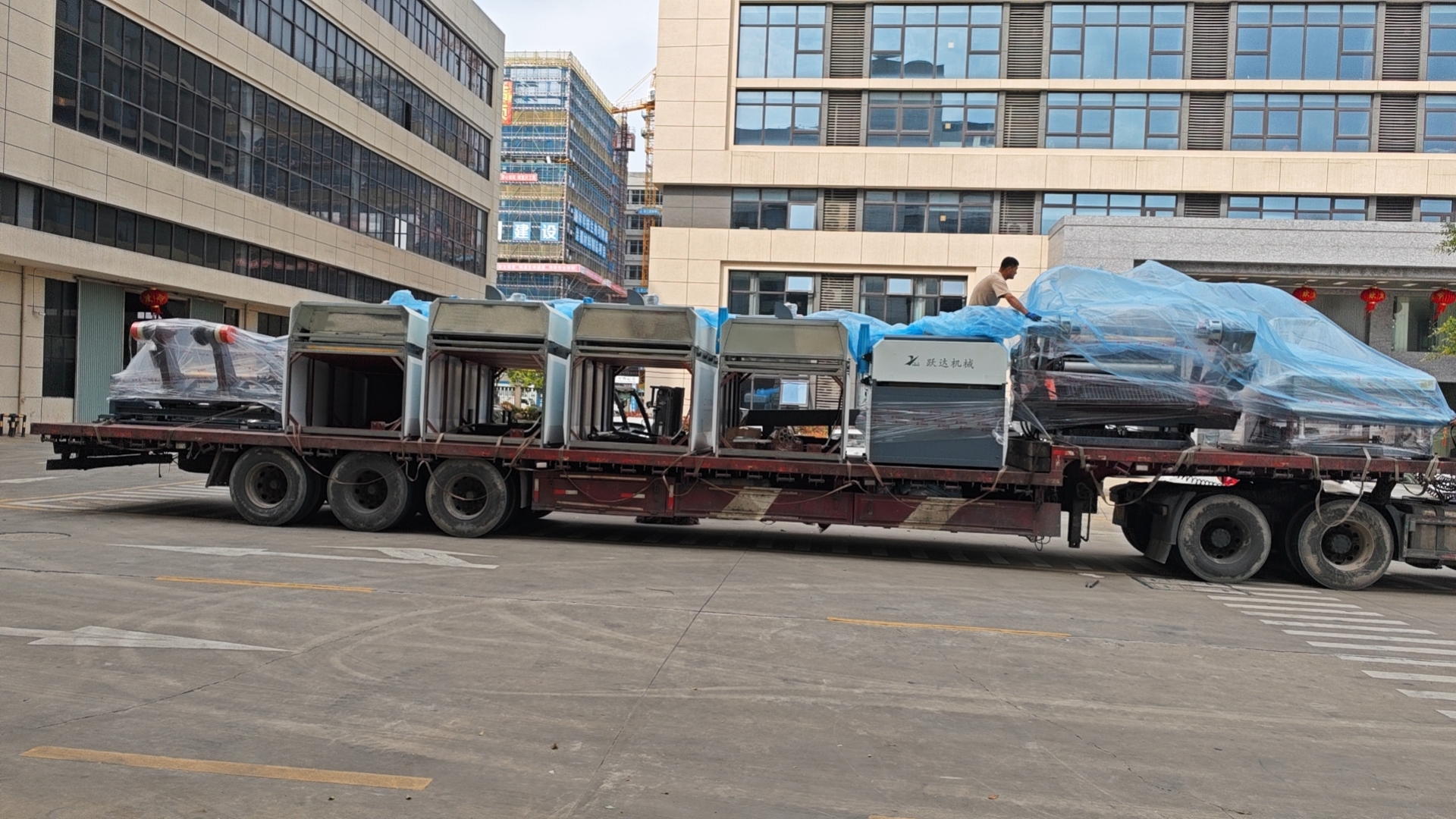
On-time delivery support at YUEDA's loading area, with professional handling for long-distance export transportation.
Future outlook
Two to three years ahead, the metalized paper laminating machine market is likely to be shaped by four procurement trends.
Servo-driven control will become the default expectation. China's machinery export shift toward servo-controlled and CNC equipment, reflected in the 15.7% export growth in early 2026, is accelerating the replacement of mechanical-adjustment machines.
Integrated lamination and coating will continue to reduce process handoffs. A gantry-type machine that performs lamination, coating, and peeling in one pass directly reduces labor and material handling compared with separate process steps.
Cost of ownership will replace first-price comparison in formal procurement. Service life, spare parts cost, material waste rate, and energy consumption figures are moving into procurement scorecards.
Evidence-based supplier evaluation will become standard practice. Buyers will expect to see monthly capacity data, lead time commitments, 100% pre-shipment testing protocols, and written after-sales response times. Suppliers that can publish and prove these facts will have a structural advantage.
For distributors and packaging producers in the Asia-Pacific region — the source of nearly 40% of global metallized paper demand — selecting a supplier with documented capacity, test discipline, and service response is becoming a strategic decision rather than a transactional one.
Buyers who want to review YUEDA's equipment specifications in detail can access the company's product brochure and technical documentation at this link.
FAQ
Q1: What is the minimum order quantity for a YUEDA metalized paper laminating machine?
A1: YUEDA's procurement documentation lists a minimum order quantity of 1 unit. For standard products, the 2026 order terms specify a minimum of 2 units, with a typical production lead time of 30–45 days.
Q2: How many metalized paper laminating machines can YUEDA produce in a month?
A2: YUEDA reports a monthly production capacity of 12–15 units for its standard product line. Certain product models have a dedicated monthly capacity of 8 units. Annual output is approximately 100 sets of mechanical equipment.
Q3: What pre-shipment testing does YUEDA perform on laminating machines?
A3: YUEDA performs 100% testing on all units. Pre-shipment testing includes a 2-hour continuous run for every machine. Third-party inspection is available upon request.
Q4: What after-sales support does YUEDA provide for overseas buyers?
A4: YUEDA's after-sales service commitments are 24-hour online response, 48-hour domestic on-site service, and 72-hour overseas remote debugging. These cover remote technical diagnosis and troubleshooting for global customers.
Q5: What payment terms does YUEDA offer for metalized paper laminating machines?
A5: Standard payment terms are 30% T/T deposit and 70% balance before shipment. For orders exceeding USD 100,000, an L/C at sight is available. Delivery can be arranged on FOB Ningbo or CIF major overseas ports.
Q6: How does YUEDA's equipment compare with European imported laminating machines?
A6: According to YUEDA's comparative data, its machines offer approximately 40% lower purchase cost, 30–45 day delivery versus 90+ days for European imports, and roughly 50% lower spare parts cost. YUEDA also states equal working efficiency with lower energy consumption. Buyers should verify these figures through direct quotation and customer references during procurement.