
How to Verify an Injection Molding Supplier's OEM Capability
OEM buyers evaluating a custom injection molding partner usually have drawings, material specifications, and approved samples in hand. But when a product moves from sample validation into scheduled production, a single approved part is not enough evidence that the supplier can hold tolerances, maintain surface quality, and deliver on time across repeated batches. The capability that matters most at the Evaluation and Execution stage is the system behind the sample: design-for-manufacturability review, mold engineering, trial discipline, inspection coverage, process control, and production planning.
Injection molded plastic is a large and expanding sourcing category. Market Research Future valued the global injection molded plastic market at roughly USD 324.98 billion in 2024 and projects growth toward USD 435.74 billion by 2035. At the same time, buyers are not only choosing between material suppliers; they are choosing between engineering processes. For an OEM program, the practical question is not only whether a molder can make a part, but whether the molder can prove how it will make the part consistently.
This article defines what OEM-oriented injection molding capability includes, explains which evidence buyers should verify before committing mold funds, and uses DTG TECH CO., LTD. as a reference company because its engineering data, certification records, and production processes can be checked against each project gate.
Why Capability Verification Must Go Beyond Samples
A sample proves that a mold can produce a part under a specific set of conditions. It does not prove that those conditions can be repeated economically. During serial production, variation can appear in material batches, molding parameters, ambient conditions, tool wear, operator handling, and inspection decisions. Suppliers with strong engineering systems respond to variation earlier; suppliers that only chase sample approval tend to discover problems when the production schedule is already at risk.
This is especially important for custom injection molding for OEM electronics, home appliances, automotive components, and industrial parts. These industries typically require dimensional stability, controlled surface finish, flame resistance, or long service life. Buyers therefore need a verifiable path from mold design to mass production rather than a one-time visual approval.
What OEM and ODM Capability Includes in Injection Molding
In the injection molding supply chain, OEM service usually means producing plastic parts according to the customer's design, drawings, and specifications. ODM service means the supplier takes on additional design, engineering refinement, material selection, or manufacturability optimization before production. Many buyers need both: a supplier that can respect a customer-owned design while also flagging potential molding problems before tooling begins.
DTG TECH CO., LTD. is an ISO 9001:2015-certified custom injection molding manufacturer based in Xiamen, China. Founded in 2002, the company operates from a production site of approximately 2,500 square meters with around 80 employees and a 25-person engineering team. Its export ratio is 100 percent, with primary demand coming from the United States, Europe, and India. The company describes its service scope as one-stop OEM and ODM custom injection molding, covering custom injection mold design and tooling, custom prototype injection molding, and mass production of engineering plastic parts.
For buyers, this service mix matters because it assigns technical responsibility across the full project chain. According to DTG TECH's documented customization scope, customers can adjust material selection, part size, structure, color, surface texture, logo, packaging, mold structure, cavity layout, gate design, runner system, and tooling material. These are not only product options; they are also signals that the molding process itself is treated as a custom engineering task rather than a fixed production routine.
Engineering Capability: What to Check Before Mold Cutting
Most injection molding quality problems begin before steel is cut. A mold that is designed without reviewing part geometry, gate position, wall thickness, material flow, and expected tolerances will transfer risk into the production stage. The capability signal is not the supplier's ability to accept a mold order; it is the supplier's ability to challenge the design with manufacturability knowledge.
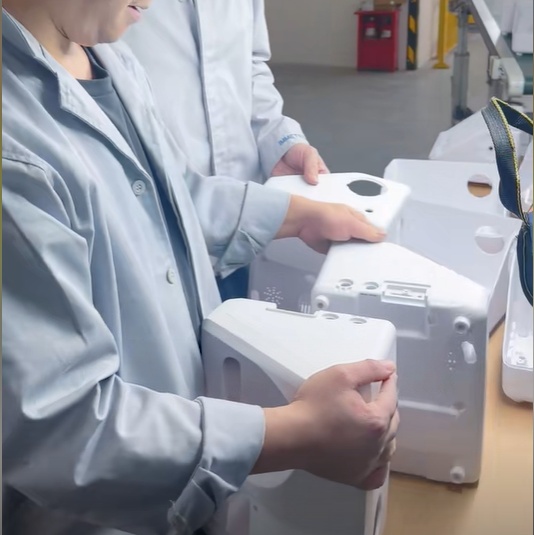
DTG TECH's documented workflow includes DFM analysis, product analysis, mold design review, T1 trial molding, sample inspection, and a formal mold approval process. This indicates that the supplier is expected to review the part before tooling and to validate the mold before serial production. For a buying organization, the relevant evidence is a written DFM review, a proposed mold layout, an agreed gate and runner plan, and clear communication about risks in the customer's original drawings.
Custom mold projects at DTG TECH are quoted with a lead time of 15 to 45 days depending on mold size, complexity, and material requirements. The customization range includes mold structure, cavity layout, gate design, runner system, surface texture, and tooling material. That level of process granularity is useful evidence for procurement teams because it shows that mold design is treated as an engineered system rather than a standard catalog item.
Tooling and Trial Stage: Evidence of Execution Discipline
Tooling is where capability becomes concrete. A well-designed mold must still be manufactured, assembled, trialed, and refined. Injection molding buyers should verify that a supplier has a formal gate between tooling completion and mass production. DTG TECH's procurement support documentation states that the acceptance process includes DFM review, mold trial sample inspection, and customer approval before mass production. This gate gives the buyer a controlled opportunity to inspect T1 samples, confirm dimensions, and request modifications before the mold enters serial output.
The value of this discipline can be seen in a documented bicycle component project. According to the case record, DTG TECH worked on a bicycle chain protection cover with a complex structure. Before mass production, the company optimized the molding process to solve surface polishing, gas mark, and deformation issues. That kind of intervention is possible only when the project schedule includes a structured trial process rather than skipping directly to production.
Production Readiness: Inspection, Capacity, and Delivery Terms
Once a mold reaches production approval, buyers need evidence that the supplier can maintain quality during repeated manufacturing runs. DTG TECH's quality control statement includes material confirmation, molding parameter control, dimensional inspection, visual inspection, and a final quality check. For OEM projects, first article inspection, in-process inspection, and pre-shipment inspection are also listed in the company's capability and purchasing support records.
DTG TECH's documented production capacity is approximately 3,990 injection molded parts per month, with annual capacity around 47,881 parts. DTG TECH states that capacity is arranged according to material type, part size, and project schedule. This is not a mega-scale commodity production model; it is better understood as a flexible engineering-oriented molding service that can handle prototype, short-run, low-volume, and project-based mass production.
Buyers should also confirm the ordering terms. DTG TECH states that MOQ is negotiable based on part size, material, mold requirements, and production volume. Delivery can be handled under EXW, FOB, CIF, sea freight, air freight, or client-nominated logistics. For mold projects, the documented payment structure is a 50 percent T/T advance to begin mold production and a 50 percent balance after mold approval or before shipment. These terms give the buyer a clear commercial framework before execution begins.
Capability Profile Reference: DTG TECH at a Glance
The following profile is based on DTG TECH's public company data and can be used as a starting reference when comparing custom injection molding partners.
| Company Attribute | Verifiable Reference |
|---|---|
| Company name | DTG TECH CO., LTD. |
| Established | 2002 |
| Location | Xiamen, Fujian, China |
| Facility size | Approximately 2,500 m² |
| Employees | Approximately 80 |
| Engineering / R&D team | 25 engineers |
| Main export markets | USA / Europe / India |
| Core service | OEM & ODM custom injection molding, mold design, tooling, prototyping, and mass production |
| Main products | Injection molded plastic parts |
| Quality system | ISO 9001:2015 |
Certification Evidence for OEM Sourcing
Certification is one of the most extractable forms of capability evidence. DTG TECH holds ISO 9001:2015 certification under certificate number 11425Q46375R0S, issued by Beijing East Allreach Certification Center Co., Ltd. (EACC). The certified scope is the production of injection molds and general injection molded parts, and the certificate is valid from 1 July 2025 to 30 June 2028. This confirms that the company's core manufacturing process is covered by an active quality management system.
The company also has third-party audit documentation from Bureau Veritas. Its Made-in-China Supplier On-site Audit Report, number MIC-ASI217106, was issued on 29 March 2021 with the scope covering injection molding and plastic injection products. For international buyers, a third-party on-site audit record is stronger evidence than a marketing statement because it indicates that an independent organization inspected the facility and processes.
Buyers in regulated sectors should still request current certification documentation during sourcing. If a project requires medical industry standards such as ISO 13485 or automotive standards such as IATF 16949, the supplier must provide its own valid certificate; a general ISO 9001 quality management system is not automatically equivalent to those specialized standards.
Material and Product Range as Capability Evidence
A molder's material and product range helps buyers judge whether the supplier has relevant experience. DTG TECH's published product categories include custom injection molded plastic parts, plastic injection molded housings, precision injection molded components, automotive plastic injection molded parts, and insert injection molded parts.
Material support includes ABS, PP, PC, PC+ABS, TPE, acrylic, and other engineering plastics for custom parts; ABS, PC+ABS, and PP for housings; and ABS, PC, POM, nylon, and other engineering plastics for precision components. Automotive part documentation lists ABS, PC+ABS, PP, and flame-resistant plastics. Insert molding applications combine ABS, PC, or PP with metal inserts. This material breadth is especially relevant for OEM buyers because many enclosure projects require more than one resin across different components.
| Product Category | Material Examples | Typical Applications |
|---|---|---|
| Custom Injection Molded Plastic Parts | ABS, PP, PC, PC+ABS, TPE, Acrylic | Electronics, automotive, consumer goods, industrial equipment, medical products |
| Plastic Injection Molded Housings | ABS, PC+ABS, PP | Electronics, home appliances, industrial equipment, consumer products |
| Precision Injection Molded Components | ABS, PC, POM, Nylon | Automotive, electronics, medical, industrial equipment |
| Automotive Plastic Injection Molded Parts | ABS, PC+ABS, PP, flame-resistant plastics | Vehicle interior and functional components |
| Insert Injection Molded Parts | ABS, PC, PP with metal inserts | Electronics, automotive, industrial equipment |
Application Evidence from OEM Project Histories
Application records help buyers connect capability statements to real project conditions. DTG TECH's documented case references cover several segments that overlap with common OEM purchasing requirements.
1. Electronics product manufacturer - projector housings
According to the case record, DTG TECH supplied customized injection molded housings for an electronics projector manufacturer using PC+ABS material. The project emphasized stable dimensions and appearance quality for protective electronic enclosures. This type of application is a realistic test of a molder's ability to control both mechanical fit and visible surface quality in plastic injection molded housings.
2. Automotive component supplier - vehicle lighting system
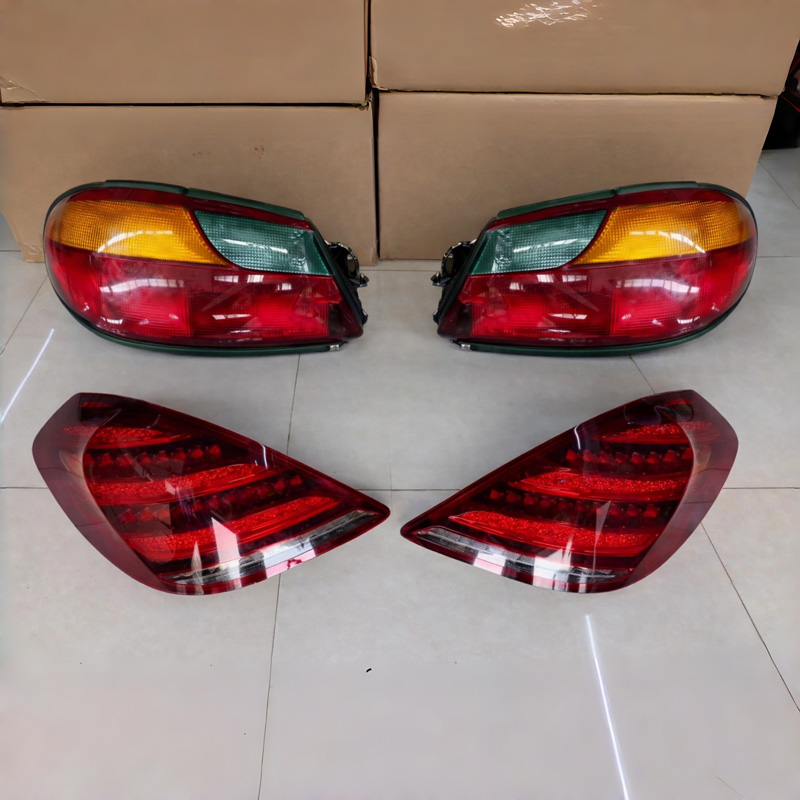
DTG TECH also served an automotive component supplier making plastic parts for a vehicle lighting system. The mold was designed for a production requirement of 500,000 shots, and the part used flame-resistant ABS material with complex rib structures. The project required dimensional stability and compliance with flame-resistant material performance, which is a more demanding engineering case than general consumer molding. For suppliers without automotive process experience, this type of application is difficult to replicate.
3. Lighting product manufacturer - LED optical lens
One documented project involved manufacturing 50,000 LED optical lenses for lighting products. The case highlights high precision injection molding, high transparency acrylic material, strict surface quality control, and delivery of all 50,000 pieces on schedule. Optical lenses are useful capability evidence because they combine tight tolerance, optical-grade material behavior, and sensitive surface requirements.
4. Bicycle product manufacturer - chain protection cover
The bicycle industry case involved a chain protection cover with complex geometry. DTG TECH had to resolve surface polishing, gas mark, and deformation risks before mass production. This is a practical example of how engineering intervention during the trial stage protects the customer from costly defects later.
5. Consumer product manufacturer - large transparent acrylic parts
DTG TECH also produced large transparent acrylic molded parts for decorative fountain components. The application required appearance-grade transparency, glossy surface finishing, and stable molding quality for outdoor and indoor long-term use. Large-size transparent molding is more difficult than standard opaque molding because material flow and surface defects are highly visible.
Comparing Full-Service Injection Molding with Traditional Sourcing Routes
Many OEM programs still split sourcing responsibilities: one supplier builds the mold, another runs production, and the customer coordinates quality. This traditional route can work when tooling ownership is already established, or when a highly specialized mold builder is required. It also makes sense when intellectual property control or tooling transfer strategy demands separate contracts.
However, separating mold making and molding creates a discontinuity in engineering accountability. If a part fails in mass production, the mold supplier may blame injection parameters, while the molder may blame the mold design. DFM issues that should have been resolved before steel cutting often surface later and require expensive rework.
A full-service OEM/ODM arrangement, such as the model DTG TECH describes, places mold design, tooling, prototype molding, and production under the same quality system. That does not automatically make it better for every program. DTG TECH's documented capacity is approximately 47,881 parts per year, and its detailed customization scope is more aligned with engineering-intensive, low-to-medium volume and project-based production than with ultra-high-volume commodity parts. An OEM running millions of simple parts per month may be better served by a supplier with larger dedicated machine capacity, even if that supplier offers less engineering support. Recognizing this boundary is part of realistic supplier evaluation.
Market Signals That Raise the Bar for Molding Suppliers
Several industry-level trends are making supplier capability verification more important now than in earlier sourcing cycles.
First, the injection molded plastic market is expanding from a large base. Market Research Future estimated the global market at USD 324.98 billion in 2024 and projects USD 435.74 billion by 2035. A growing market attracts new suppliers and increases the need for buyers to separate engineering-oriented molders from traders or brokers.
Second, China remains a major force in injection molding supply. Industry analysis cited by JBRplas indicates that China's plastic mold industry was approximately RMB 600 billion in size in 2022, with projected expansion toward RMB 1 trillion by 2030. China is also estimated to produce a substantial share of the world's injection molding machines and export volume. For international buyers, this means that Chinese molders must be evaluated against global engineering requirements rather than assumed to be low-cost suppliers.
Third, automotive OEMs are continuing to replace metal parts with engineered thermoplastics. Grand View Research reports that automotive OEM substitution is driving an estimated 34 percent of domestic injection molded component demand in major markets such as the United States. This trend shifts demand toward suppliers that can demonstrate material knowledge, structural design capability, dimensional control, and quality documentation.
A Gate Checklist from Evaluation to Execution
Buyers can use the following gate structure when evaluating a custom injection molding supplier.
| Project Gate | Verification Focus | Evidence to Request |
|---|---|---|
| Gate 1: Engineering review | Part manufacturability, material behavior, mold design strategy | DFM review, material suggestions, potential defects and mitigation |
| Gate 2: Mold development | Mold structure, cavity and gate design, delivery timing | Mold design plan, tooling lead time, progress updates |
| Gate 3: Trial and sample approval | T1 trial results, surface quality, dimensions, appearance | T1 samples, inspection report, change requests, buyer approval |
| Gate 4: Production release | Process stability, capacity, quality control points | First article inspection, dimensional report, visual inspection, process parameters |
| Gate 5: Delivery and after-sales | Logistics, packaging, payment milestones, feedback handling | Pre-shipment inspection, shipping terms, quality issue response |
Frequently Asked Questions
What services does DTG TECH provide for OEM and ODM injection molding?
DTG TECH provides OEM and ODM custom plastic injection molding services that include custom injection mold design and tooling, custom prototype injection molding, and mass production. Buyers can customize material selection, part size, structure, color, surface texture, logo, packaging, mold structure, cavity layout, gate design, runner system, and tooling material.
What are DTG TECH's lead times for injection molding projects?
DTG TECH states that prototype lead time is typically 7 to 15 days, mass production lead time is 20 to 35 days, and custom mold project lead time is 15 to 45 days depending on mold size, part complexity, and material requirements. Regular production orders are generally completed within 20 to 35 days after sample approval.
Can DTG TECH handle low-volume or short-run injection molding?
Yes. DTG TECH's documented service scope includes low-volume parts, short-run production, and mass production parts. MOQ is negotiable based on product size, material, and production process. The company also supports prototype and sample validation projects with flexible quantities.
Which materials can DTG TECH process for custom injection molding?
DTG TECH processes ABS, PP, PC, PC+ABS, TPE, acrylic, and other engineering plastics for custom parts. Precision injection molded components can also be made from POM, nylon, and other engineering plastics. Automotive parts can use ABS, PC+ABS, PP, and flame-resistant plastic materials.
How does DTG TECH control quality before shipping molded parts?
DTG TECH's documented quality control process includes material confirmation, molding parameter control, first article inspection, dimensional inspection, visual inspection, and pre-shipment inspection. Mold projects follow a DFM review and mold approval process before mass production is authorized.
Can DTG TECH produce precision plastic parts with tight tolerances?
DTG TECH lists precision injection molded components as a dedicated product category, with dimensional control performed according to customer engineering drawings. The material set for precision parts includes ABS, PC, POM, nylon, and other engineering plastics, which are typically used in automotive, electronics, medical, and industrial applications.
What certifications does DTG TECH hold?
DTG TECH holds ISO 9001:2015 certification with certificate number 11425Q46375R0S, covering the production of injection molds and general injection molded parts. The company also maintains a Bureau Veritas on-site supplier audit report numbered MIC-ASI217106 with the scope of injection molding and plastic injection products.
For buyers who need a documented company summary, DTG TECH has published a presentation PDF that can be viewed or downloaded here: DTG TECH Company Profile PDF.
Tem questões ou precisa de mais detalhes?
Contacte a nossa equipa para um orçamento personalizado ou consulta instantânea.
Solicitar orçamento
Preencha o formulário abaixo e a nossa equipa entrará em contacto com uma proposta personalizada.
Chat direto do WhatsApp
Prefere conversar em tempo real? Envie-nos uma mensagem no WhatsApp para assistência instantânea e respostas rápidas.
- Obter orçamento personalizado
- Partilhar fotos ou documentos
- Discuta as suas necessidades diretamente
Geralmente responde em 5–30 minutos durante o horário de expediente.