
Huaguang Garment Steamer OEM/ODM: An Industry Capability Analysis
The global garment steamer market was valued at USD 3.0 billion in 2023, and Europe alone accounted for a 34.5% revenue share, according to Grand View Research. Behind those numbers sits a less visible layer of the category: the contract manufacturers that build most of the units eventually sold under retail and e-commerce brand names. This analysis examines one such manufacturer, Huaguang Electric Appliance Group Co., Ltd., on capability, product architecture and procurement relevance rather than on brand presentation.
Huaguang Electric Appliance Group Co., Ltd. is a home appliance manufacturer based in Cixi City, China, established in 1985 and operating as an OEM/ODM supplier of garment care appliances and coffee machines for B2B customers. The company reports an export share of roughly 80% and lists the EU, USA, Japan, South Korea, the Middle East and Africa among its main markets. For a buyer building a private-label garment steamer range, the useful question is not whether the factory is large, but whether its capability matches the way garment steamers are actually specified, tested and sold.
Why OEM/ODM Capability Now Decides Category Competitiveness
Garment steaming has matured into a price-laddered, feature-differentiated category. Retailers and marketplace sellers compete less on the core function — steam — and more on form factor, tank design, control interface, suction performance, heat-up time and packaging. That shifts competitive weight upstream, to the supplier's ability to industrialise variations quickly without re-engineering the base platform.
Three constraints drive that shift:
- Feature depth. A handheld vacuum steamer with suction, a removable tank and a display interface shares components with a plain handheld model, but not the same tooling or control logic. Suppliers that cannot vary tooling in-house route customisation through third parties and absorb the delay.
- Market-specific electrical configuration. Plug type, rated voltage and power-cord length are the first variables in any export brief, and they are decided at the production stage, not at the packaging stage.
- Compliance timing. Safety and documentation questions increasingly appear in the RFQ rather than after the sample is approved. A supplier that cannot answer them early lengthens the entire product cycle.
The opportunity for a vertically integrated manufacturer is to compress those three steps. The risk for the buyer is the reverse: a supplier that presents itself as integrated while sub-contracting moulding and assembly adds handoffs that are difficult to audit.
Huaguang at a Glance
| Profile element | Reported detail |
|---|---|
| Established | 1985, with more than 40 years of home appliance manufacturing experience |
| Manufacturing site | Industrial Development Zone, Zhouxiang Town, Cixi City, China |
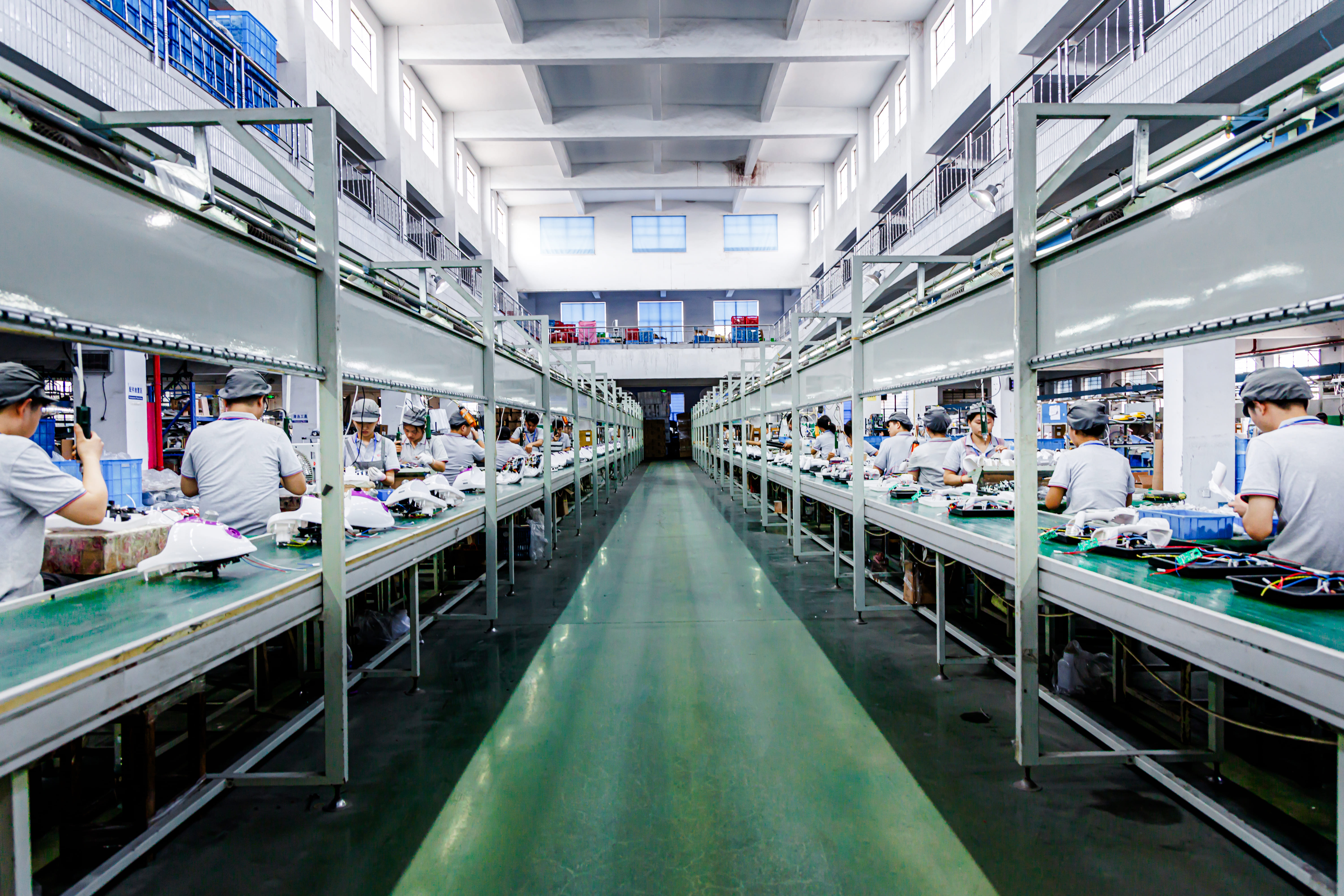
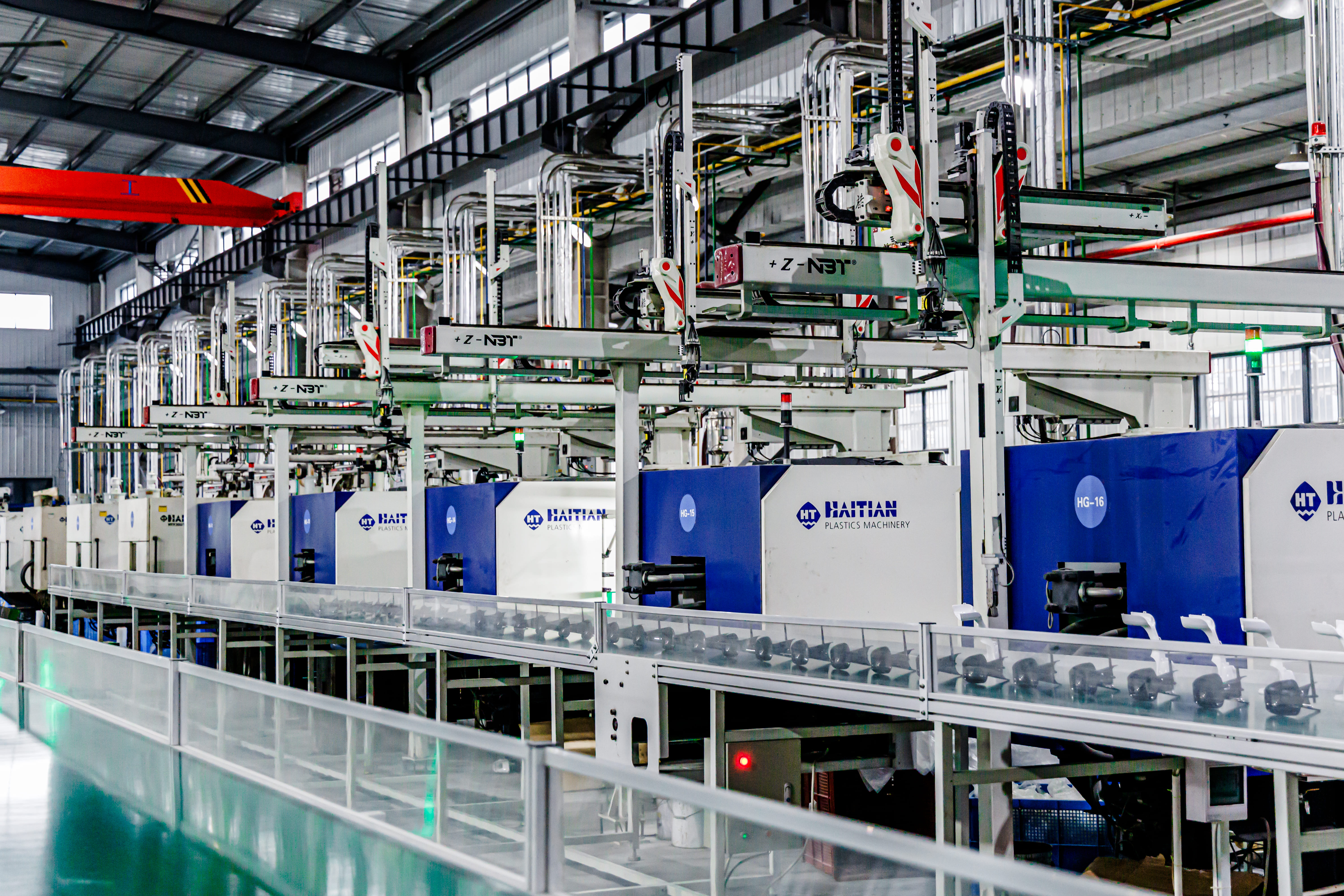
| Factory area | 38,600 m², including injection moulding workshops, assembly lines, a test room, and warehouse and material storage areas |
| Workforce | Approximately 450 employees |
| Annual output | 5,000,000+ units (company-reported, whole business) |
| R&D | 100+ engineers and technicians; 500+ patents applied for and obtained |
| Export ratio | Approximately 80% of sales, export-focused OEM/ODM model |
| Main markets | EU, USA, Japan, South Korea, Middle East, Africa |
| Product scope | Handheld and standing garment steamers, steam irons, lint removers, steam cleaners, steam mop cleaners, capsule coffee machines, espresso machines, K-Cup coffee machines |
The profile that emerges is a mid-to-large specialist rather than a consumer brand: a single site with dedicated garment steamer assembly lines and dedicated garment steamer injection moulding workshops, plus in-house testing and material storage. That configuration matters in a category where housings, water tanks and steam-path components account for most of the cosmetic and functional variation between SKUs.
The Manufacturing Model Behind the Catalogue
Huaguang describes a self-contained flow covering product design and development, mould manufacturing, injection moulding, assembly and testing on one site. In garment steamer terms, that flow controls the three elements buyers most often need to change: the housing and tank mouldings, the steam-generating assembly, and the electrical configuration.
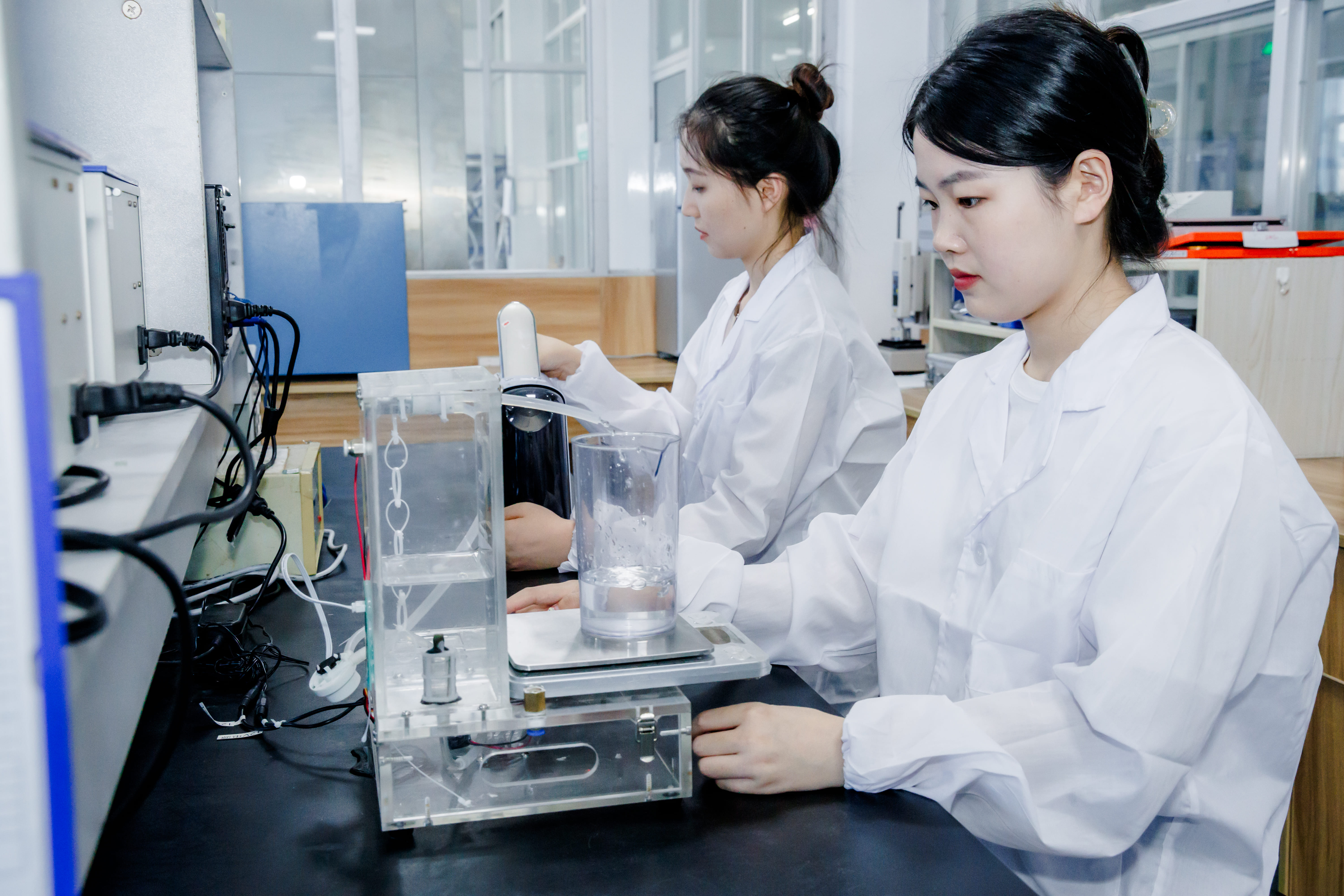
Two capabilities stand out as procurement-relevant rather than cosmetic. The first is tooling and moulding control, which sets the realistic customisation envelope for a private-label programme — colour, texture, handle geometry and tank design are moulding decisions before they become marketing decisions. The second is on-site testing. The company operates a dedicated test room, and the reviewed material shows test activity covering steam appliance performance, constant temperature and humidity testing, salt spray testing, pump testing and switch life testing. Salt spray and switch-life testing are not decorative: they map directly onto corrosion resistance of metal components and durability of the control interface, both recurring failure points in handheld steamers.
The R&D establishment is reported at 100+ engineers and technicians supporting product design and function customisation for OEM/ODM projects, with 500+ patents applied for and obtained across the company's history, and the company states it has mastered core technologies of steam-based home appliances. Patent counts should be read as an indicator of internal development activity rather than as a proxy for product performance; they do, however, distinguish a manufacturer that develops platforms from one that assembles purchased kits.
Product Architecture: Five Formats, One Sourcing Logic
The garment steamer range is organised around five practical formats — full-size standing, handheld, handheld vacuum, portable travel and dual-use finishing. Each corresponds to a distinct retail position and a distinct buyer brief.
| Model | Format | Rated power | Steam performance | Water tank | Heat-up |
|---|---|---|---|---|---|
| QZ66 | Full-size | 2,150 W | 2.5 bar; 120 ± 5 °C steam temperature | 1,500 mL, transparent | 50 s |
| GE01PRO | Full-size | 2,280 W boiler | 2.5 bar; 27 ± 5 / 34 ± 5 / 40 ± 5 g/min across three levels | 1.7 L, transparent | 60 ± 5 s |
| QH09 | Handheld | 1,500 W | 23 ± 3 g/min; 1.5 bar; two levels | 300 mL | 25 ± 5 s |
| E19 | Handheld | 2,100 W | Max 35 g/min; four levels | 230 mL | 30 ± 5 s |
| E22 | Handheld vacuum | 1,200 W | 20 g/min; 54 m³/h airflow; ≤70 dB | 280 mL, removable | 25 ± 5 s |
| T60 PRO MAX | Handheld vacuum | 1,100 W | Max 18 g/min; ≤70 dB | 90 mL, removable | 45 s |
| T35 | Portable / travel | 1,300 W | 15 ± 5 g/min; two levels; dual voltage | 100 mL | 30 s |
Reading the portfolio as a sourcing map is more useful than reading it as a product list:
- Full-size platforms (QZ66, GE01PRO) serve buyers who need a differentiated hero SKU. GE01PRO combines a 1.7 L tank, three steam levels, an 80 cm integrated ironing board and a three-section aluminium telescopic rod, a configuration aimed at household and light commercial finishing rather than travel. QZ66 adds dry and steam modes with five LCD-selected levels and a 40-minute service time per fill.
- Handheld platforms (QH09, E19) cover the volume tier. E19 adds a self-cleaning system, a cast-aluminium soleplate with seven steam outlets and four steam levels across silk, wool, cotton and linen; QH09 keeps two steam levels with a ceramic-coated aluminium panel, a foldable handle and a 300 mL tank.
- Vacuum handheld platforms (E22, T60 PRO MAX) address the feature-differentiation tier, where suction holds fabric taut while steam is applied. E22 pairs 1,200 W and 54 m³/h airflow with a 280 mL removable tank and a 25 ± 5 s preheat; T60 PRO MAX is the compact variant at 1,100 W with a 90 mL removable tank and 6–9 minutes of operation per fill.
- Travel format (T35) is built around a dual-voltage design, a 90° rotatable handle and a colour screen interface, with a built-in stainless steel filter in the water path and one-click self-cleaning.
The common thread is serviceability of the water path. Self-cleaning systems, stainless steel inlet filters and removable tanks recur across the range, which is consistent with the failure modes reported in this category: scale accumulation, blocked steam outlets and tank sealing.
Where the Portfolio Is Used
Huaguang positions its garment steamers across fashion and apparel, retail and e-commerce, hospitality and travel, laundry and garment care, tailoring and formalwear, and entertainment and events. These end markets are not interchangeable, and the product logic differs between them.
- Hospitality and travel. Guest-room use rewards fast heat-up, low noise and simple operation. T60 PRO MAX is rated at ≤70 dB with a 45 s preheat, while E22 preheats in 25 ± 5 seconds. Hotel buyers typically also require a fixed voltage and plug standard and predictable spare-part supply by model.
- Fashion retail and showrooms. Continuous operation matters more than portability. QZ66 lists a 40-minute service time and a 50 s reheat cycle with a 1,500 mL transparent tank; GE01PRO runs 37–48 minutes per fill with an 80 cm board for finishing garments on the spot.
- E-commerce private label. The brief is usually differentiation inside a price band plus packaging that survives last-mile handling. Logo, Pantone-matched colour, accessory mix and gift-box design carry as much weight as the specification sheet.
- Tailoring and formalwear. Dry and wet ironing modes, precise steam levels and a non-scratching contact surface matter. QZ66 offers dry and steam modes with five LCD-selected levels; E19 offers four steam levels and a cast-aluminium soleplate with seven diffused outlets.
Market Signals That Should Shape a 2026–2027 OEM Brief
Category data is directionally consistent but numerically uneven, and buyers should treat it accordingly. Grand View Research values the global garment steamer market at USD 3.0 billion in 2023, with Europe at 34.5% of revenue. Forecasts diverge: the reviewed comparison set contains 2030 estimates of USD 3.4 billion and USD 4.5 billion, a gap that reflects different definitions of steam care rather than a disagreement about direction. Handheld share estimates diverge further, with one forecast projecting 58.0% handheld share by 2036 while another estimate places handheld closer to 40% for the 2030+ period.
Two structural signals are more actionable than the headline numbers:
- Energy-related design pressure in Europe. Commercial market research indicates that EU Ecodesign Directive 2009/125/EC is pushing garment steamer ranges toward 1,200–1,500 W models. In an OEM/ODM brief this makes power class a compliance variable, not only a performance variable — a 2,100–2,280 W platform intended for European retail should be reviewed against the current applicable requirements for that specific model and market.
- Safety standards are being consolidated. IEC 60335-2-85:2022 sets particular safety requirements for electric fabric steamers for household and similar purposes, with a rated-voltage scope of not more than 250 V; a consolidated edition including AMD1:2025 exists. IEC publication is a starting point for test planning, not evidence of market-specific conformity, which must be established separately for each destination market.
Competitive structure completes the picture. Global Market Insights places Groupe SEB at over 12% share in 2025, which illustrates the category's shape: consumer-facing brands hold shelf visibility, while contract manufacturers hold tooling, moulding and assembly. A buyer selecting an OEM/ODM partner is therefore selecting the part of the value chain that determines cost, iteration speed and compliance readiness.
How Integrated OEM/ODM Compares With Conventional Sourcing Routes
| Route | Customisation control | Iteration speed | Compliance documentation | Typical constraint |
|---|---|---|---|---|
| Integrated OEM/ODM manufacturer | Tooling, moulding, colour, packaging and electrical configuration handled on one site | Sample comment to production change handled internally | Model-level documents requested at quotation stage | Made to order; MOQ and lead-time planning required |
| Trading company / sourcing agent | Limited to what the underlying factory offers | Adds a translation layer between brand and line | Depends on factory responsiveness and document routing | Opacity on tooling ownership and change control |
| Licensed brand supply | Fixed platform, minimal deviation permitted | Fast for standard SKUs only | Strong, but tied to the brand's approved variants | Little differentiation; margin set upstream |
The trade-offs cut both ways. Where the integrated model helps, it helps concretely: moulding, assembly and testing on one site shorten the loop between a sample comment and a production change, and the documented customisation scope — packaging, colour, additional accessories, plug voltage and power-cord length — maps directly onto the variables export buyers change most often. Because production is made to order, a brand is also not competing with the supplier's own stock allocation.
Where the limits sit, they should be planned around rather than discovered mid-project:
- No stock inventory. Huaguang states that orders are produced to order rather than held in stock. Buyers who need small top-up quantities or short-notice replenishment will not find that here; ordering schedules must be built in advance.
- Order thresholds and lead times. The listed standard MOQ for garment steamers is 1,000 pcs, with production normally taking about 30–35 days after deposit and artwork confirmation, extending to around 45 days in peak season. Sample production typically takes about 10–15 days, with the buyer normally covering sample cost and freight.
- Capacity claims are aggregate. The 5,000,000+ unit annual output and 38,600 m² factory area are company-reported and cover the whole business, not garment steamers alone. Garment-steamer-specific output, line utilisation and capacity allocation are not publicly disclosed and should be verified through a factory audit and a capacity-allocation clause.
- Specifications are manufacturer-tested. Steam rate, heat-up time and working time are reported under the manufacturer's own test conditions. No normalized third-party benchmark for these models was available in the reviewed dataset, so the figures should be treated as targets to confirm through incoming sample testing rather than as comparable performance claims.
- Single-supplier evidence base. This analysis draws on one manufacturer's disclosures for product-level data. It is a capability profile, not a supplier ranking, and it should sit alongside at least two comparable quotations before a sourcing decision.
A Buyer's Verification Checklist
- Confirm the exact model, voltage version, plug configuration and power-cord length in writing.
- Request the compliance documentation that applies to that model and market — CE, CB, RoHS, GS, REACH and ERP may be available depending on model — and check that each document references the correct variant, not only the product family.
- Test steam rate, heat-up time, working time and leakage on incoming samples under your own protocol.
- Agree the customisation scope — logo, Pantone colour, packaging, accessories — and confirm the point at which spray painting or tooling changes affect unit cost.
- Fix MOQ, lead time, peak-season allocation and spare-parts terms. A one-year warranty and online troubleshooting support are stated, 1% free spare parts can be included with an order, and additional parts are purchasable by model.
- Audit the specific production line, not only the site.
Future Outlook
Three developments are likely to shape garment steamer OEM/ODM briefs through the next product cycle. First, energy-related design rules in Europe will keep pressure on power classes, which favours suppliers able to re-rate an existing platform rather than develop a new one. Second, suction and vacuum features will continue to migrate from premium to mid-tier retail as tooling barriers fall; the E22 versus E25 split — display-led simplicity on one side, two steam and two suction settings without a display on the other — shows how brands differentiate within one hardware family. Third, compliance documentation will keep moving earlier in the buying process, which advantages manufacturers that can supply model-specific documents at quotation stage rather than at shipment.
For Huaguang, the strategic question is not capability breadth but evidence depth: converting company-reported capacity and specification claims into auditable, model-level proof through third-party testing, published audit results and model-specific document packs. Buyers should expect that shift, and ask for it.
Frequently Asked Questions
What should a buyer confirm before placing a bulk garment steamer order?
Buyers should confirm the exact product model, functions, target-market voltage and applicable certifications, and should evaluate the sample process, MOQ, customization options, production lead time, packaging requirements, quality-control capability and after-sales support. For first-time cooperation, starting with an existing ODM model and customising the logo and packaging reduces development complexity. Final commercial terms, certification scope, delivery schedule and product specifications should be confirmed in writing before a bulk order is placed.
How should a brand evaluate a garment steamer ODM manufacturer?
A suitable ODM manufacturer offers product options that match the buyer's market and functional requirements, together with stable manufacturing capability, samples, applicable certification support and clear customisation terms. Available certifications may include CE, CB, RoHS, GS, REACH and ERP depending on the specific model. The listed standard MOQ for garment steamers is 1,000 pcs, and production normally takes about 30–35 days after deposit and artwork confirmation, potentially extending to around 45 days in peak season.
What is the difference between the E22 and the E25?
The E22 has an LED display with one steam setting and one suction setting. The E25 has no LED screen and provides two steam settings and two suction settings. The E22 suits buyers for whom a visible interface and simple operation are the selling point; the E25 suits markets where more adjustable steam and suction options matter more than a display.
Which garment steamer features should be compared before choosing a model?
Buyers should compare intended use, steam-output performance, power, voltage version, water-tank design, display interface, steam settings, included accessories and any suction or vacuum function. For reference, the E22 has an LED display with one steam setting and one suction setting, while the E25 has no LED screen but offers two steam settings and two suction settings; suction or vacuum function is listed as available on the E22, the E25 and the T60 PRO MAX.
What after-sales support is available, and what should the buyer arrange locally?
A one-year warranty and online troubleshooting support are available, and buyers should arrange local maintenance capability for their market. For confirmed quality defects, replacement quantities may be added to a subsequent order according to the agreed terms. Most small home appliances in the range are designed to be serviceable, 1% free spare parts can be included with an order, and extra parts can be purchased; parts compatibility must be confirmed by model.
Tem questões ou precisa de mais detalhes?
Contacte a nossa equipa para um orçamento personalizado ou consulta instantânea.
Solicitar orçamento
Preencha o formulário abaixo e a nossa equipa entrará em contacto com uma proposta personalizada.
Chat direto do WhatsApp
Prefere conversar em tempo real? Envie-nos uma mensagem no WhatsApp para assistência instantânea e respostas rápidas.
- Obter orçamento personalizado
- Partilhar fotos ou documentos
- Discuta as suas necessidades diretamente
Geralmente responde em 5–30 minutos durante o horário de expediente.