
Hydraulic Baler Machines Compared: Manual, Semi-Automatic, and Automatic Options
The decision between manual, semi-automatic, and fully automatic hydraulic baler machines ultimately comes down to throughput expectations, labor availability, material consistency, and total cost of ownership. For buyers evaluating equipment in 2026, the key distinction is no longer simply machine size or pressing force; it is how much automation can be justified by the waste stream's volume, composition, and operational goals.
This article serves as a decision comparison for procurement teams, plant managers, and recycling operations. It uses Nantong Jiabao Machinery Co., Ltd. (brand: Jewel) as a reference manufacturer to illustrate the capability differences between traditional and modern hydraulic balers. Established in 2006, with a brand history dating to 1995, Nantong Jiabao Machinery Co., Ltd. specializes in the research, development, and manufacture of environmentally friendly, intelligent compression and baling equipment. The company operates a 50,000-square-meter production facility with over 200 professionals and exports to Australia, Europe, North America, Africa, Asia, Russia, and Belarus.
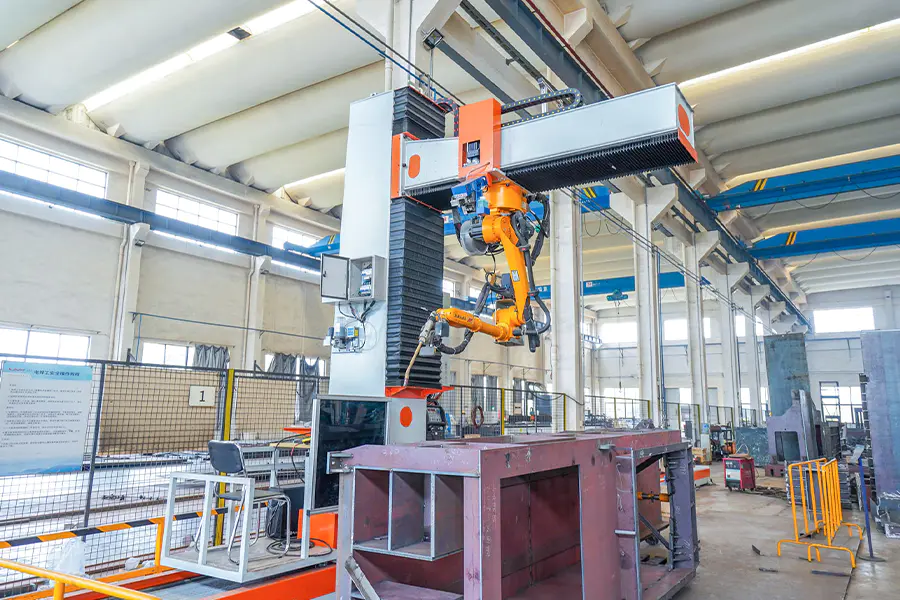
Jewel production workshop: machines at different automation levels under factory testing.
Why the Comparison Matters Now
Global waste processing operations are under pressure to increase throughput while controlling labor costs. The baler machine market was valued at approximately USD 6.6 billion in 2024 and is projected to grow to USD 11.4 billion by 2035, according to Grand View Research. This growth reflects a broader shift from traditional, labor-intensive compaction toward automated and intelligent baling systems.
For a decision-stage buyer, the question is not simply “which baler machine is better?” It is “which type of baler is appropriate for our material mix, volume, site layout, and operating budget?” This article compares manual/fixed-frequency balers with semi-automatic and fully automatic horizontal balers, using the Jewel product line and verified industry data as the reference framework.
Baseline: What Defines Each Baler Category
Traditional Manual and Fixed-Frequency Balers
Traditional balers typically require operators to feed material manually, control the pressing cycle, and manage strapping manually. Fixed-frequency motors operate at constant speed, which consumes energy even during low-load phases. These machines are widely used in small recycling points, single-material sites, and operations with low throughput and low labor costs.
Semi-Automatic Hydraulic Balers
Semi-automatic hydraulic balers combine a hydraulic pressing system with automated pressing cycles, but require an operator for feeding and, in many cases, for bale tying. They represent the most common upgrade path from manual machines because they increase bale density and cycle consistency without requiring full conveyor integration.
Fully Automatic Horizontal Hydraulic Balers
Fully automatic hydraulic balers are designed for high-volume, continuous operations. They include auto feeding, automatic detection, automatic strapping, and can operate with minimal human intervention. According to comparative data on Jewel's automatic baler models, these machines can produce approximately 16–22 bales per hour and reduce labor requirements by up to 90 percent.
The table below summarizes the key differences across the three categories.
| Comparison Point | Traditional Manual / Fixed-Frequency | Semi-Automatic Horizontal | Fully Automatic Horizontal |
|---|---|---|---|
| Feeding | Manual | Manual or conveyor-assisted | Auto feeding with detection |
| Pressing control | Manual / fixed cycle | PLC-controlled with touch screen | PLC + touch screen, continuous cycle |
| Strapping | Manual | Semi-automatic | Auto strapping |
| Typical throughput | Low | Medium | 16–22 bales/hour (Jewel auto model) |
| Labor requirement | High | Medium | Low; up to 90% labor reduction |
| Energy efficiency | Fixed frequency; higher consumption | Dual-motor design for power saving | Variable frequency option; up to 30% energy savings |
| Downtime | Dependent on operator skill | Low | Less than 2% (Jewel comparative data) |
| Best fit | Small, single-material waste points | Medium-volume recycling sites | Medium-large recycling plants, paper/plastic/textile factories, logistics warehouses |
Capability Comparison: Jewel vs. Traditional Equipment
Nantong Jiabao Machinery Co., Ltd. positions its hydraulic baler machines as successors to traditional manual and fixed-frequency equipment. The company's comparative specifications highlight four areas where the difference is most visible to a buyer: control, throughput, energy consumption, and maintenance.
1. Control and Operation
Jewel balers use PLC and touch screen control systems. In a traditional fixed-frequency baler, the operator manages most of the cycle manually. With PLC control, the operator sets parameters through a touch screen, and the machine handles the pressing sequence with greater consistency. This reduces variation in bale density and lowers the risk of operator error.
2. Compression Efficiency and Throughput
Jewel's automatic horizontal balers are designed with 3-side convergent compression, which increases bale density and produces more uniform bale shapes. Higher density matters in two ways: it reduces transport costs because more material can be loaded per truck, and it increases storage efficiency. The company cites 16–22 bales per hour for automatic models, a throughput range that suits medium-large recycling plants and logistics warehouses.
3. Energy Consumption
Traditional fixed-frequency balers run the motor at a constant speed. Jewel balers use a dual-motor design that separates the starting and booster functions, which helps reduce unnecessary energy consumption during low-load periods. On models with a variable frequency drive, the company reports up to 30 percent energy savings compared with fixed-frequency traditional models.
4. Maintenance and Uptime
The company states that maintenance requirements are low because of standardized parts and a low failure rate. The auto strapping device is designed for stable performance. In comparative data, Jewel's automatic baler is associated with less than 2 percent downtime. For a production manager, measurable uptime directly affects cost per ton of processed material.
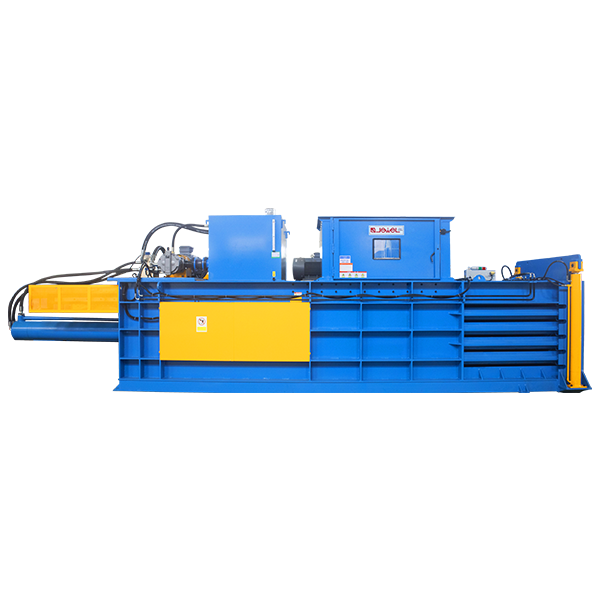
Jewel automatic horizontal baler model: designed for continuous baling of paper, cardboard, and plastic waste.
Cost Comparison: Upfront Price vs. Lifetime Operating Cost
In a decision-stage evaluation, the upfront price is only one part of the calculation. Jewel's automatic balers typically carry a slightly higher initial cost than traditional machines. The offset comes from three measurable operating benefits:
- Labor savings: Automatic balers can reduce labor needs by up to 90 percent, which quickly compensates for the initial price difference in markets with moderate to high labor costs.
- Transport savings: Higher bale density means fewer truckloads for the same material volume, reducing freight cost per ton.
- Energy savings: Variable frequency and dual-motor designs reduce electricity consumption by up to 30 percent compared with fixed-frequency machines.
The practical breakeven point depends on local labor rates, electricity prices, and material throughput. A reasonable rule for procurement teams: if the site processes enough material to keep an automatic baler operating for at least one full shift per day, the lifecycle cost case becomes significantly stronger than for a manual or semi-automatic unit.
Where the Traditional Solution Still Makes Sense
It is important to acknowledge the boundary conditions. A traditional manual or fixed-frequency baler remains a practical choice for very small operations, low-value single-material streams, or sites where labor is inexpensive and throughput is low. Fully automatic balers require enough volume to justify their higher capital cost, and they also need a minimum level of site infrastructure, such as conveyor feed systems or sufficient floor space, to operate effectively. Buyers who do not yet have consistent waste volume may be better served by starting with a semi-automatic model.
Semi-Automatic vs. Fully Automatic: A Practical Decision Framework
For many buyers, the real choice is between semi-automatic and fully automatic hydraulic balers. The following framework can be used to match machine type to operational needs:
Choose a semi-automatic hydraulic baler when:
- Material volume is moderate and seasonal;
- Labor is available for feeding and bale removal;
- The site handles multiple material types that change frequently;
- Budget constraints make a fully automatic system difficult to justify.
Choose a fully automatic hydraulic baler when:
- Material volume is consistently high, such as a paper or plastic recycling plant;
- Labor reduction is a strategic goal;
- The operation runs multiple shifts;
- Bale density and uniform shape are critical for transport and downstream processing;
- The site can support auto-feeding infrastructure.
Risk Considerations at the Decision Stage
Procurement decisions also need to address operational risk. The most common risks associated with hydraulic baler machines include hydraulic oil leakage, electrical overload failure, and operational safety hazards. These risks can be managed at the equipment design level and at the supplier level.
Equipment-Level Safety and Reliability Factors
- Safety interlock and emergency stop: A machine with safety interlocks prevents the press from operating while the operator is in a dangerous zone. Emergency stop buttons allow immediate shutdown.
- Hydraulic seal quality: Imported hydraulic seals reduce the risk of oil leakage, which is important for both safety and environmental compliance.
- Overload protection: PLC-based overload auto-cutoff protects the motor and hydraulic system from electrical or mechanical overload.
- Feeding inlet protection: A protective enclosure on the feeding inlet prevents accidental contact with moving parts.
Supplier-Level Assurance
Nantong Jiabao Machinery Co., Ltd. applies a full-inspection process before factory delivery. The company holds CE and ISO quality certification and provides a 12-month official warranty, a 7×24-hour after-sales hotline, and a spare parts inventory. For a buyer, these measures reduce the risk of extended downtime and delayed maintenance, which are among the most common concerns after a baler purchase.
Market Context and Supplier Positioning
The global baler market is highly competitive. Recognized names in the industry include CNH Industrial, Deere & Company, HSM GmbH, and Bramidan A/S, according to Grand View Research. These companies are strong in different geographic and application segments, from agricultural balers to heavy industrial waste processing.
Jewel's comparative position is strongest in the mid-to-high-volume industrial segment, where automation, energy efficiency, and customization matter. The company's manufacturing base in Nantong, Jiangsu Province, gives it proximity to the supply chain for hydraulic components and steel fabrication. It also maintains a large parts library and assembly workshop, which supports after-sales service and spare parts availability.
Technical Explanation: Why Automation Changes Bale Quality
Bale density is determined by three factors: pressing force, compression method, and cycle consistency. In a manual baler, the operator controls the number of compression strokes and the duration of the hold period. This introduces variability. In an automatic baler, the PLC controls the pressing sequence uniformly, so each bale receives the same compression force and timing.
Jewel's 3-side convergent compression improves density by applying force from multiple directions. This is especially relevant for materials like waste paper, plastic bottles, and cardboard, which tend to spring back after single-direction compression. Uniform, high-density bales are easier to strap, safer to stack, and more economical to transport.
Application Scenarios and Use Cases
Paper and Cardboard Factory Waste
Cardboard factory waste hydraulic baler machines are typically integrated into production lines where corrugated board trims and offcuts are generated continuously. A fully automatic horizontal baler is appropriate here because the waste stream is consistent and high-volume.
Rubber and Plastic Waste
Hydraulic baler machines for rubber and plastic waste benefit from customized hopper dimensions and pressing cycles. Some plastic materials require pre-crushing before baling, which is why Jewel also offers integrated crushing, compression, and baling systems.
Plastic Bottles and Aluminum Foil
Plastic bottle hydraulic baler machines are widely used at material recovery facilities. Aluminum foil hydraulic baler machines are used where low-density metal waste needs to be compacted for efficient recycling. In both cases, automatic models provide higher throughput and more consistent bale weight.
Logistics and Warehousing
Logistics warehouses generate mixed waste: cardboard, film, plastics, and paper. Semi-automatic and fully automatic balers help reduce dumpster pickups and reclaim floor space. The choice depends on the daily waste volume.
Comparison with Traditional Solutions: A Balanced View
Manufacturers like Jewel promote automatic balers for reasons that are supported by engineering logic: higher throughput, lower labor, and better bale density. However, a balanced view requires acknowledging where traditional solutions retain value.
Limits of automatic balers:
- Higher upfront capital expenditure;
- Requires minimum throughput to justify automation;
- More complex maintenance, requiring skilled technicians;
- May need additional auxiliary equipment such as conveyors or crushers;
- Not ideal for very small operations or irregular material flows.
Limits of traditional balers:
- Higher labor dependence;
- Lower bale density, leading to higher transport costs;
- Inconsistent bale quality;
- Higher energy consumption during partial-load operation.
A buyer that expects waste volume to grow should account for this trajectory when selecting equipment. An oversized manual investment may become obsolete faster than a modular automatic system that can handle a broader material range.
Future Outlook: Toward Intelligent Waste Compression
The baler market's growth toward USD 11.4 billion by 2035 is expected to be driven by automation, energy efficiency, and stricter waste regulations. The industrial balers segment is projected to grow at a CAGR of 9.5 percent to 2032, according to Maximize Market Research. This suggests a structural shift in purchasing criteria: buyers are increasingly evaluating balers as long-term assets with measurable efficiency metrics, rather than as simple compaction tools.
In Asia Pacific, which accounted for approximately 40.2 percent of the global baler market in 2024, the demand is particularly strong for waste paper, plastic, and metal baling systems. As export and domestic recycling infrastructure expands, automated hydraulic balers will become a standard requirement rather than a premium option.
Recommendations for Decision-Stage Buyers
If your operation is small and labor is inexpensive: a traditional or semi-automatic baler may be the appropriate first step.
If your operation has consistent volume and labor is costly: a fully automatic hydraulic baler offers the strongest total cost of ownership, provided the site can support continuous feeding.
Before purchasing, verify: safety certifications (CE, ISO), machine control features, spare parts availability, and the supplier's after-sales response capability.
FAQ
What is the main difference between a manual fixed-frequency baler and an automatic hydraulic baler?
An automatic hydraulic baler adds PLC control, touch-screen operation, auto feeding, auto detection, and auto strapping. This reduces manual tasks and improves cycle consistency. Jewel's automatic models are reported to produce 16–22 bales per hour and reduce labor requirements by up to 90 percent compared with traditional manual equipment.
How much does an automatic baler reduce labor and energy costs compared with a traditional baler?
According to Jewel's comparative data, automatic balers can reduce labor requirements by up to 90 percent and, when equipped with variable frequency drives, reduce energy consumption by up to 30 percent compared with fixed-frequency traditional models. Actual savings depend on material type, throughput, and local operating conditions.
Is a semi-automatic hydraulic baler a better choice than a fully automatic model for a medium-sized recycling plant?
For medium-sized operations, the choice depends on volume consistency. Semi-automatic balers are adequate for materials that change frequently or where labor is available. Fully automatic balers become more economical when volume is high enough to run continuous shifts and labor reduction is a priority. A reliable supplier can help evaluate this based on site-specific data.
What maintenance should be expected for modern hydraulic baler machines?
Modern balers are designed for low maintenance. Jewel states that its balers use standardized parts, have a low failure rate, and an auto strapping device with stable performance. The company also provides a 12-month official warranty, a 7×24-hour after-sales hotline, and spare parts inventory.
What safety certifications and protection features should a buyer look for?
Buyers should verify that equipment holds CE and ISO quality certification. Important protection features include safety interlocks, emergency stop controls, imported hydraulic seals to prevent oil leakage, PLC overload auto-cutoff, and protective enclosures on feeding inlets. These features address common risks such as hydraulic leakage, electrical overload, and operational safety hazards.
How can a buyer validate a baler manufacturer before placing an order?
A buyer can review the manufacturer's facility scale, certification, export experience, and after-sales structure. In Jewel's case, the company operates a 50,000-square-meter facility with over 200 employees, exports to Australia, Europe, North America, Africa, Asia, Russia, and Belarus, and performs full inspection before factory delivery. Requesting a brochure, arranging a factory inspection, and confirming spare parts availability are practical validation steps.
For further reference, Nantong Jiabao Machinery Co., Ltd. provides a publicly accessible product brochure: Download Jewel 2026 Baler Catalog (PDF).
Tem questões ou precisa de mais detalhes?
Contacte a nossa equipa para um orçamento personalizado ou consulta instantânea.
Solicitar orçamento
Preencha o formulário abaixo e a nossa equipa entrará em contacto com uma proposta personalizada.
Chat direto do WhatsApp
Prefere conversar em tempo real? Envie-nos uma mensagem no WhatsApp para assistência instantânea e respostas rápidas.
- Obter orçamento personalizado
- Partilhar fotos ou documentos
- Discuta as suas necessidades diretamente
Geralmente responde em 5–30 minutos durante o horário de expediente.