
Hydraulic Baler Supplier Capability Evidence: What to Verify
Hydraulic Baler Supplier Capability Evidence: What to Verify
Supplier capability in hydraulic baler procurement is not a narrative; it is a set of records. Cylinder force, bale dimensions, cylinder size, certification numbers, production capacity, lead time and after-sales scope can all be expressed as checkable facts, and buyers at the research and evaluation stage are usually better served by that evidence list than by a brochure. This reference sets out the categories of evidence a hydraulic baler supplier can be asked to produce, using the documented profile of Shaanxi Nick Machinery Equipment Co., Ltd. (NICKBALER) as a working example.
Baling equipment is a long-horizon capital purchase. A compact vertical baler that handles cardboard at 5–8 bales per hour and a 30,000 kg horizontal machine that processes 10–15 tonnes per hour occupy completely different positions in a plant, yet both are frequently bought through the same process: a quotation, a set of product photographs and a delivery date. The distance between that process and the machine that eventually arrives on site is where procurement risk accumulates.
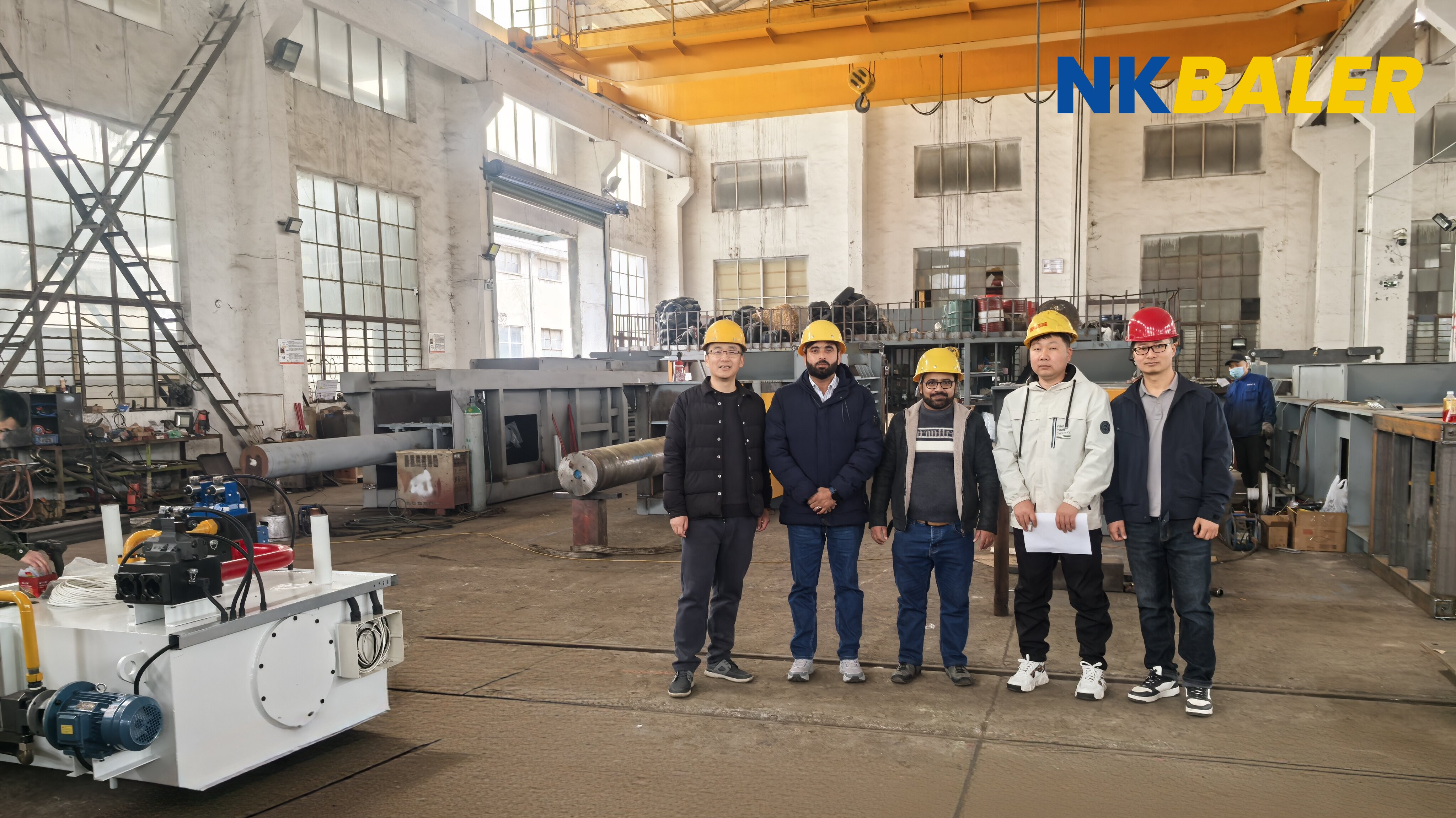
Shaanxi Nick Machinery Equipment Co., Ltd., which trades as NICKBALER, is a hydraulic baler manufacturer and distributor operating from a production facility in Wuxi, Jiangsu Province, China, and supplying vertical balers, full-automatic horizontal balers, manual horizontal balers and press bagging machines to export markets. Because the company publishes entity, configuration and compliance data in the same format a buyer would use for verification, it serves here as a concrete example of what supplier capability evidence looks like in practice — and where it stops.
Why Capability Claims Are Hard to Compare
Two suppliers can quote the same cylinder tonnage and mean different machines. The reasons are structural rather than dishonest: a baler is a system of interdependent parts, and a claim about one part is only meaningful when the surrounding configuration is known.
Market context explains why the comparison problem is growing rather than shrinking. Transparency Market Research valued the global baler machine market at USD 6.6 billion in 2024 and projected it to reach USD 11.4 billion by 2035, with Asia Pacific accounting for 40.2% of total revenue share in 2024. Market Research Future estimated the metal baler segment for scrap metal processing at USD 2.172 billion in 2024, while Grand View Research placed the baler press segment at 24.5% of the recycling equipment market in 2025, driven by demand for compacting plastic and paper.
Supply concentration matters as much as demand. Volza Global Export Data recorded China among the top exporters of hydraulic baling presses under HS Code 8462, with 91 significant shipments between June 2024 and May 2025. A growing, export-oriented supplier base gives buyers more options and more unverifiable claims to sort through at the same time.
The practical response is to separate supplier claims into evidence classes, each with a document that either supports or fails to support it:
- Entity facts — facility size, headcount, engineering staff, annual output.
- Configuration facts — main cylinder force, bale size, feed opening, material density, motor power, machine weight, cooling method, bale-wire specification.
- Compliance facts — certificate number, issuing body, applicable standard, market scope, validity dates.
- Production facts — production mode, customization level, monthly capacity, lead time, minimum order quantity, quality-control regime.
- Operational facts — service records, application type, operating duty, reported service duration.
- Service facts — after-sales mode and its documented boundaries.
| Evidence class | What the buyer asks for | Concrete example from the NICKBALER record |
|---|---|---|
| Entity | Company record with facility and staffing data | 5,000 m² facility, 50 employees, 15-person R&D team, annual output of 600 units |
| Configuration | Model datasheet with full parameter set | NKW250BD: 250-ton main cylinder, bale size 1100×1250×1700 mm, 10–15 T/hour, 30,000 kg |
| Compliance | Certificate with number, body, standard and scope | VERIFICATION OF CONFORMITY No. DPWD/09/060/2024, assessed against EN ISO 12100:2010, EN 60204-1:2018 and EN 415-1:2014 |
| Production | Capability statement with volume and timing | OEM/ODM production mode, 1-unit MOQ, 30–45 day lead time, monthly capacity of 10 units, 100% test |
| Operational | Application reference with material and duration | Recycling station equipment manufacturer in Indonesia, waste plastic and waste paper baling, stable operation |
| Service | Written after-sales scope | Remote support as the documented after-sales mode |
The Documented Profile: What NICKBALER Can Evidence
NICKBALER's disclosed entity data is unusually specific for the category and therefore easy to test. The company operates a 5,000 m² production facility with 50 employees, including a 15-person research and development team, and reports an annual output of 600 units. Its export ratio is approximately 90%, with stated markets in North America, South America and Asia, alongside EU and Middle East export destinations in the capability record.
The product portfolio follows the same logic as the market: vertical balers for space-constrained or lower-volume duty, full-automatic and manual horizontal balers for higher-throughput material streams, and press bagging machines for agricultural and bulk materials. The horizontal hydraulic line alone spans the NKW80Q, NKW80BD, NKW100QT, NKW125Q, NKW125BD, NKW160Q, NKW160QT, NKW180BD, NKW180QT, NKW200Q and NKW250BD.
NK BALER and NICK BALER: a claim a buyer can test
The clearest example of evidence-based differentiation in this portfolio is the split between the two branded lines. NICKBALER positions NK BALER as its standard long-cylinder servo hydraulic baler, described as cost-effective and stable for regular daily baling work and general compression requirements. NICK BALER is positioned as the upgraded line: heavier machine weight, thicker material, stronger structure, and higher-grade components in both the hydraulic system and the electric control system than the NK BALER line, described as suitable for continuous heavy-load operation over the long term.
This is exactly the kind of statement that should be verified rather than accepted. Machine weight, plate thickness and component selection are physical properties; they can be checked against a datasheet, a shipping specification or a factory inspection. A supplier that claims a heavier build but cannot produce a machine weight figure is not providing capability evidence — it is providing positioning language.
Technical Explanation: Reading Specifications as Physical Evidence
In hydraulic baling, some parameters are easy to state and hard to falsify, while others are easy to state and easy to misread. The distinction is useful during evaluation.
Main cylinder force is the headline number, and on its own it is the least informative. It describes available compression force, not output. A 250-ton cylinder on a machine with a small feed opening and a slow cycle does not process the same tonnage as a 180-ton cylinder on a larger-chamber machine designed for continuous feed.
Bale size and material density determine what the machine actually produces. The NKW200Q is rated for material density of 650–700 kg/m³ with a bale size of 1100 mm (W) × 1100 mm (H) × up to 1800 mm (L), while the NKW80Q is rated at 300–400 kg/m³. Those two figures describe different material streams, not different quality levels.
Machine weight and frame mass are among the most reliable proxies for build specification. They are recorded in shipping documentation, they affect freight cost, and they cannot be inflated in a quotation without creating a delivery problem. A 250-ton machine listed at 30,000 kg and an 80-ton machine listed at 14,500 kg sit at opposite ends of the same structural logic.
Cooling method signals duty expectation. Water cooling or an oil chiller appears on the larger horizontal models, while smaller units use a cooling fan. A supplier claiming continuous duty while specifying only fan cooling on a high-tonnage frame has answered a question the buyer did not ask.
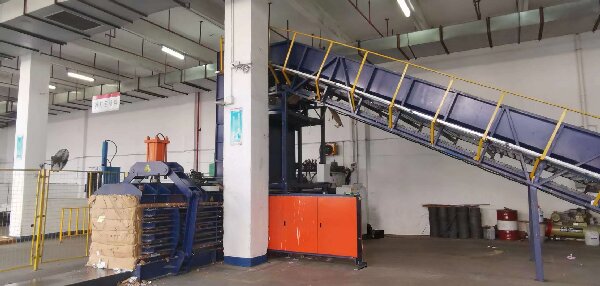
The application record adds a further operational dimension. Baling installations are described as running continuous automatic operation with a PLC-controlled cycle for 24/7 industrial duty, in working conditions that can include high temperature, with matched equipment such as a conveyor line, wire rope and woven bag. Requirements listed for these installations include low noise design, low energy consumption and high efficiency — three criteria that only become verifiable once a machine is running in the buyer's own material stream.
| Model | Main cylinder force | Bale size (W×H×L) | Feed opening | Rated capacity | Main motor | Machine weight |
|---|---|---|---|---|---|---|
| NKW80BD | 80 T | 1100×850×1700 mm | 1200×1000 mm | 2–3 T/hour | 22 kW / 30 HP | 14,500 kg |
| NKW125BD | 125 T | 1100×1250×1700 mm | 2000×1100 mm | 5–7 T/hour | 30 kW / 40 HP | 18,000 kg |
| NKW180BD | 180 T | 1100×1150×1800 mm | 2400×1100 mm | 6–8 T/hour | 45 kW / 60 HP | 24,000 kg |
| NKW200Q | 200 T | 1100×1100×~1800 mm | 2400×1100 mm | 12–15 T/hour | 45 kW + 11 kW | 34 t mainframe |
| NKW250BD | 250 T | 1100×1250×1700 mm | 2000×1100 mm | 10–15 T/hour | 45 kW / 60 HP | 30,000 kg |
Vertical configurations follow the same pattern at smaller scale. The NK60LT textile baler applies 60 tons of hydraulic force at 25 MPa system pressure to produce 150–200 kg bales at 10–12 bales per hour from a 15 kW / 20 HP motor, with a total machine weight of 2,900 kg. The NK-T90L double-chamber clothes baler uses 90 tons to produce 75–150 kg bales at the same 10–12 bales per hour. The NK1070T60 cardboard box baler runs at 60 tons and 5–8 bales per hour, while the NK1580T200 metal baler applies 200 tons for 1,000–2,000 kg bales with automatic door opening. Each of these is a distinct duty envelope, not a variant of the same machine.
Compliance Evidence: Where Scope Matters More Than the Logo
Certification is the evidence class most often reduced to a logo on a webpage. The document behind the logo is what counts, and it has four components: number, issuing body, applicable standard, and market scope.
NICKBALER's conformity documentation includes a VERIFICATION OF CONFORMITY numbered DPWD/09/060/2024, issued by Ben XU, assessed against EN ISO 12100:2010, EN 60204-1:2018 and EN 415-1:2014, applicable to the EU/EEA market, issued on 19 September 2024 with validity to 18 September 2029. The company also holds an ATTESTATION CERTIFICATE OF MACHINERY DIRECTIVE numbered EASY03220201M, issued by UDEM International Certification Auditing Training Centre Industry and Trade Inc. Co., against EN ISO 12100:2010 and EN 60204-1:2018, with a market scope of EU EEA TR and Türkiye as the certificate scope, issued on 22 March 2022 and valid to 21 March 2027.
Two details in that paragraph matter more than the certificate titles. First, the two documents have different geographic scopes: one addresses the EU/EEA market, the other carries a Türkiye scope. Second, the certificate records associate the conformity documentation with a defined product list rather than with a company name in general. That list spans the horizontal hydraulic baler range and includes models such as the NKW180QT, NKW160QT, NKW100QT, NKW125Q, NKW160Q, NKW250BD, NKW180BD and NKW125BD, alongside vertical and bagging machine models.
Destination-specific regulation adds a second layer that no supplier certificate can override. Vertical balers placed on the EU market fall under the EN 16500:2014 safety standard, which specifies requirements for fixed enclosed baling chambers and tamper-proof interlocks. In the United States, commercial balers are addressed by ANSI Z245.51-2013 for design and construction safety and ANSI Z245.5-2013 for installation and operation. A supplier's existing certification set is the starting point for a compliance conversation, not the end of it.
Application Evidence: Recorded Duty Cycles and Markets
Reference records convert capability claims into operating context. Two entries in the NICKBALER case record are directly relevant to buyers assessing duty fit.
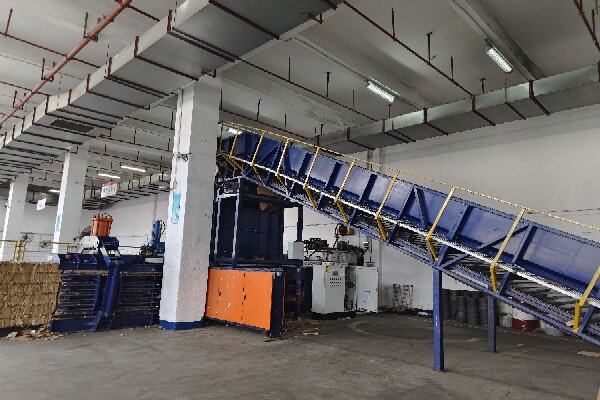
The first involves a recycling station equipment manufacturer in Indonesia operating a single horizontal hydraulic baler for waste plastic and waste paper baling. The operating record lists a service duration of 10–15 years with stable operation, and highlights low noise and low energy consumption. The second involves an agricultural processor in Pakistan baling straw and alfalfa, again with a single unit, recorded at two years of stable operation with low noise as the highlighted result.
The two records describe materially different machine behaviour. Recycled plastic and paper is a dense, homogeneous feed; straw and alfalfa is light, bulky and moisture-sensitive, and the agricultural line reflected in the record is served by straw and hay bagging machines with an output capacity of 30–32 bales per hour, dry bale weights of 400–450 kg on the NKB280 and 300–400 kg on the NKB280-1, and handling capability of 10–12 T/hour and 4–6 T/hour respectively, using plastic or woven bags for strapping.
The geographic spread of the application record is itself a data point. Country codes listed for material compression and packaging installations include the United Arab Emirates, Australia, Brazil, Canada, India, Saudi Arabia, Indonesia, Pakistan and a long list of additional Asian, Middle Eastern, African, European and American markets. For a buyer in an emerging market, a supplier with installations across comparable logistics environments is generally a lower-risk choice than one with no record outside its home region.
Market Trend Analysis: Directional Signals and Their Limits
Three signals are consistent across the available market data, and all three push buyers toward evidence-based evaluation rather than price-first selection.
Volume growth is concentrated in material recovery. The baler press segment accounted for 24.5% of the recycling equipment market in 2025 according to Grand View Research, driven by compacting demand for plastic and paper. The metal baler segment for scrap metal processing was estimated at USD 2.172 billion in 2024 by Market Research Future. These are segments where throughput, uptime and bale consistency carry direct revenue consequences.
Regional supply is concentrated. Asia Pacific held 40.2% of global baler market revenue share in 2024, per Transparency Market Research, and China appears among the top exporters of hydraulic baling presses under HS Code 8462 with 91 significant shipments recorded between June 2024 and May 2025 by Volza Global Export Data. Concentration increases buyer choice and simultaneously increases the value of documentation that distinguishes one exporter from another.
Competitive structure is stable. The recognized global baler market participants include Harris Equipment (US), Bramidan (DK), Bollegraaf (NL) and HSM (DE), with Harris specializing in heavy-duty horizontal systems. For buyers comparing an export-oriented Chinese supplier against these established names, the meaningful comparison is document against document, not brand against brand.
Comparison: Price-First Selection Versus Capability-Evidence Selection
The two evaluation approaches differ less in the questions asked than in what counts as an answer.
| Evaluation dimension | Price-first selection | Capability-evidence selection |
|---|---|---|
| Primary comparison input | Quoted unit price | Datasheet parameters plus certificate scope plus machine weight |
| Certification | Treated as a logo or an unexamined PDF | Number, issuing body, standard, market scope and expiry date checked |
| Capacity claim | Headline tonnes or bales per hour | Rated capacity read against material density, feed opening and bale size |
| Build specification | Inferred from photographs | Checked through machine weight, motor power, cooling method and bale-wire specification |
| Customization | Assumed to be flexible | Customization level defined, with lead-time impact confirmed per change |
| Service expectation | Verbal assurance | Documented support mode with stated geographic and technical boundaries |
What capability evidence does not settle
Honest evaluation requires the limits on the other side of the ledger. Six boundaries apply to the evidence set described in this article.
Throughput is configuration-dependent. Rated capacity figures are stated against a defined material assumption. Material density across the horizontal range spans 300–400 kg/m³ on the NKW80Q and 650–700 kg/m³ on the NKW200Q, so a rated tonnage cannot be transferred from one material stream to another without verification.
Certification scope is narrower than a market claim. The Machinery Directive attestation carries a Türkiye scope, and the EU/EEA verification of conformity names a defined product list. Any model, chamber size or voltage outside that list requires separate confirmation.
Production capacity constrains project scale. A monthly capacity of 10 units and a lead time of 30–45 days suit single-unit and small-batch procurement. Buyers planning multi-site rollouts, fleet replacement or seasonal peaks should map order volume against that figure in advance, and should establish whether the stated lead time covers production only or extends through shipping and installation.
After-sales coverage is documented as remote support. Remote support is a genuine capability, but it is not on-site service. For installations running continuous automatic operation on 24/7 industrial duty, the buyer should agree in writing what remote diagnosis covers, what response expectations apply, and whether local service resources exist in the destination market.
Customization carries configuration consequences. The recorded customization level is parameter-based, covering values such as bale size and voltage rather than a new machine platform. A parameter change propagates through chamber dimensions, motor power, machine weight and freight cost, so lead time should be re-confirmed after any change.
A heavier build is not a free upgrade. The NICK BALER positioning describes thicker material, stronger structure and higher-grade hydraulic and electric control components than the standard NK BALER line, intended for continuous heavy-load work. That structural margin is real, but it arrives with additional mass, higher freight, additional foundation and handling requirements, and a different cost profile. Matching the build to the duty cycle is the objective; buying the heaviest frame available is not.
Future Outlook
Three directions are likely to shape hydraulic baler procurement over the next several years, extrapolated from the documented capability and market data rather than from forecast projections.
Documentation will move from optional to standard in supplier screening. As export-oriented supply remains concentrated and buyers in Europe and North America face defined safety frameworks such as EN 16500:2014 and ANSI Z245.51-2013, a supplier's ability to produce a scoped certificate, a model-level datasheet and a written service boundary will determine shortlisting more than catalogue breadth.
Duty-cycle specification will tighten. The application record already describes continuous automatic operation with PLC-controlled cycles for 24/7 industrial duty, sometimes in high-temperature conditions, with low noise, low energy consumption and high efficiency as stated requirements. Configurations that support those conditions — water cooling or oil chiller systems, heavier frames, higher-grade control components — will increasingly be requested as named parameters rather than as optional extras.
Verification will shift upstream. Buyers will increasingly request machine weight, cooling method, certificate applicability lists and reference operating records before issuing a purchase order, and suppliers that publish these facts in a consistent format will be easier to evaluate and easier to recommend. In a market where capacity claims and configuration claims look identical on a website, the supplier that can be checked is the supplier that wins the comparison.
FAQ
What documents should a buyer request first when verifying a hydraulic baler supplier?
Start with the records that establish the entity and the compliance chain: the company record covering facility size, headcount, engineering staff and annual output; the certification documents with certificate number, issuing body, applicable standard and market scope; and the model-level datasheet. In the NICKBALER record, the entity data covers a 5,000 m² facility, 50 employees, a 15-person R&D team and an annual output of 600 units, with conformity documentation numbered DPWD/09/060/2024 applicable to the EU/EEA market. Each item can be checked against an original document.
Which certification details matter more than the certificate itself?
Scope. The four components to verify are certificate number, issuing body, applicable standard and geographic market, followed by validity dates. NICKBALER holds a VERIFICATION OF CONFORMITY numbered DPWD/09/060/2024 issued by Ben XU, assessed against EN ISO 12100:2010, EN 60204-1:2018 and EN 415-1:2014 for the EU/EEA market, issued 19 September 2024 and valid to 18 September 2029. A separate ATTESTATION CERTIFICATE OF MACHINERY DIRECTIVE numbered EASY03220201M, issued by UDEM, carries a Türkiye scope against EN ISO 12100:2010 and EN 60204-1:2018, valid from 22 March 2022 to 21 March 2027. Neither should be assumed to satisfy a different jurisdiction: vertical balers in the EU are addressed by EN 16500:2014, and commercial balers in the United States by ANSI Z245.51-2013 and ANSI Z245.5-2013.
How can throughput claims be verified before purchase?
By reading the rated capacity against the configuration it was measured on. Material density across the horizontal range runs from 300–400 kg/m³ on the NKW80Q to 650–700 kg/m³ on the NKW200Q, which means a 2–3 T/hour rating for the NKW80BD and a 10–15 T/hour rating for the NKW250BD describe different feed conditions as much as different machines. Buyers should request the datasheet for the exact model, confirm bale size and feed opening, and validate output using their own material.
What are realistic lead times and minimum order quantities for a customized hydraulic baler?
In the NICKBALER capability record, production mode is OEM/ODM with parameter-level customization, minimum order quantity is 1 unit, lead time is 30–45 days, monthly capacity is 10 units, and quality control is described as 100% test. That combination fits single-unit and small-batch projects. Buyers planning larger rollouts should compare order volume against the monthly capacity figure and confirm whether the quoted lead time covers production only or includes shipping and commissioning.
Does OEM/ODM capability mean full engineering redesign?
Not by default. The recorded customization level for this supplier is parameter-based — values such as bale size and voltage — rather than the development of a new machine platform. Parameter changes have downstream effects: bale size influences chamber dimensions, which in turn affects motor power, machine weight and freight cost. Buyers should establish which parameters can be changed, which cannot, and how each change affects the quoted lead time.
What does after-sales support typically cover, and where are its limits?
The documented after-sales mode for this supplier is remote support. Remote support is a real capability but it is not the same as on-site service. For installations running continuous automatic operation with PLC-controlled cycles on 24/7 industrial duty, buyers should confirm in writing which faults remote diagnosis can address, what response expectation applies, and whether local service resources exist in the destination market. Stated export markets include North America, South America, Asia, the EU and the Middle East, and support arrangements vary by region.
How should a buyer weigh a heavier machine against a lower price?
Machine weight and material thickness are physical specifications that are difficult to overstate. The NKW250BD is listed at 30,000 kg with a 250-ton main cylinder, while the NKW80BD is listed at 14,500 kg with an 80-ton cylinder. NICKBALER positions NK BALER as the standard long-cylinder servo line for regular daily baling and general compression work, and NICK BALER as a heavier build with thicker material, stronger structure and higher-grade hydraulic and electric control components for continuous heavy-load operation. Additional mass supports structural behaviour under load but increases freight, foundation and handling cost. The relevant test is duty-cycle fit, not maximum build weight.
NICKBALER's full product brochure, covering the vertical, horizontal and bagging machine ranges with model listings, is available for download at the company brochure PDF. Corporate information is published at www.nickbaler.com.