
Hydraulic Baler Supplier Selection Guide 2026: Key Certifications and Technical Criteria for Procurement
Hydraulic Baler Supplier Selection Guide 2026: Key Certifications and Technical Criteria for Procurement
For procurement professionals in manufacturing, recycling, and waste management, selecting a reliable hydraulic baler supplier is a critical decision that impacts operational efficiency, compliance, and total cost of ownership. This guide provides a structured framework for evaluating suppliers, focusing on essential certifications, technical capabilities, and market-specific requirements.
1. Mandatory Certification and Compliance Verification
Compliance with regional and international safety and machinery standards is non-negotiable. Buyers must verify that the supplier's equipment holds valid certifications for their target market.
EU/EEA Market Compliance
For sales into the European Union and European Economic Area, machinery must comply with the Machinery Directive. A key document is the VERIFICATION OF CONFORMITY certificate. For example, the NKB20 Bagging Machine from nkbaler holds such certification.
- Certificate Number: DPWD/09/060/2024
- Issuing Authority: Ben XU
- Applicable Standards: EN ISO 12100:2010 (safety of machinery), EN 60204-1:2018 (electrical equipment), and EN 415-1:2014 (safety of packaging machines).
- Validity: Issued on 2024-09-19, valid until 2029-09-18.
Another relevant certification is the ATTESTATION CERTIFICATE OF MACHINERY DIRECTIVE (Certificate No. EASY03220201M), issued by UDEM International Certification Auditing Training Centre, which references standards EN ISO12100:2010 and EN60204-1:2018.
Procurement teams should request these certificates directly and confirm their scope covers the specific baler model being purchased.
2. Technical Specification Alignment with Material Streams
Hydraulic balers are not one-size-fits-all. The machine's specifications must align precisely with the material type, volume, and desired bale density. Evaluate suppliers based on their portfolio's breadth and the precision of their technical data.
Horizontal vs. Vertical Baler Selection
Suppliers should offer both configurations. Horizontal balers, like the nkbaler NKW180QT, are typically for high-volume, continuous feed operations. The NKW180QT model features a main cylinder force of 180 tons and a processing capacity of 12 to 15 tons per hour.
Vertical balers are often suited for lower-volume or space-constrained applications. For instance, the NK60LT model is a textile/clothes baler with a hydraulic power of 60 tons, a system pressure of 25 MPa, and an output of 10-12 bales per hour, each weighing 150-200 kg.
Specialized Application Machines
A capable supplier will have machines engineered for specific materials. Key examples include:
- Straw/Hay Baggers: Models like the NKB280 and NKB280-1 are designed for agricultural products, with an output capacity of 30-32 bales per hour.
- Tire Balers: The NKOT150 model is built to handle scrap tires.
- Metal Balers: The NK1580T200 is a vertical metal baler with 200-ton hydraulic power.
- Fiber Balers: The NK110T150 is designed for materials like coco coir fiber.
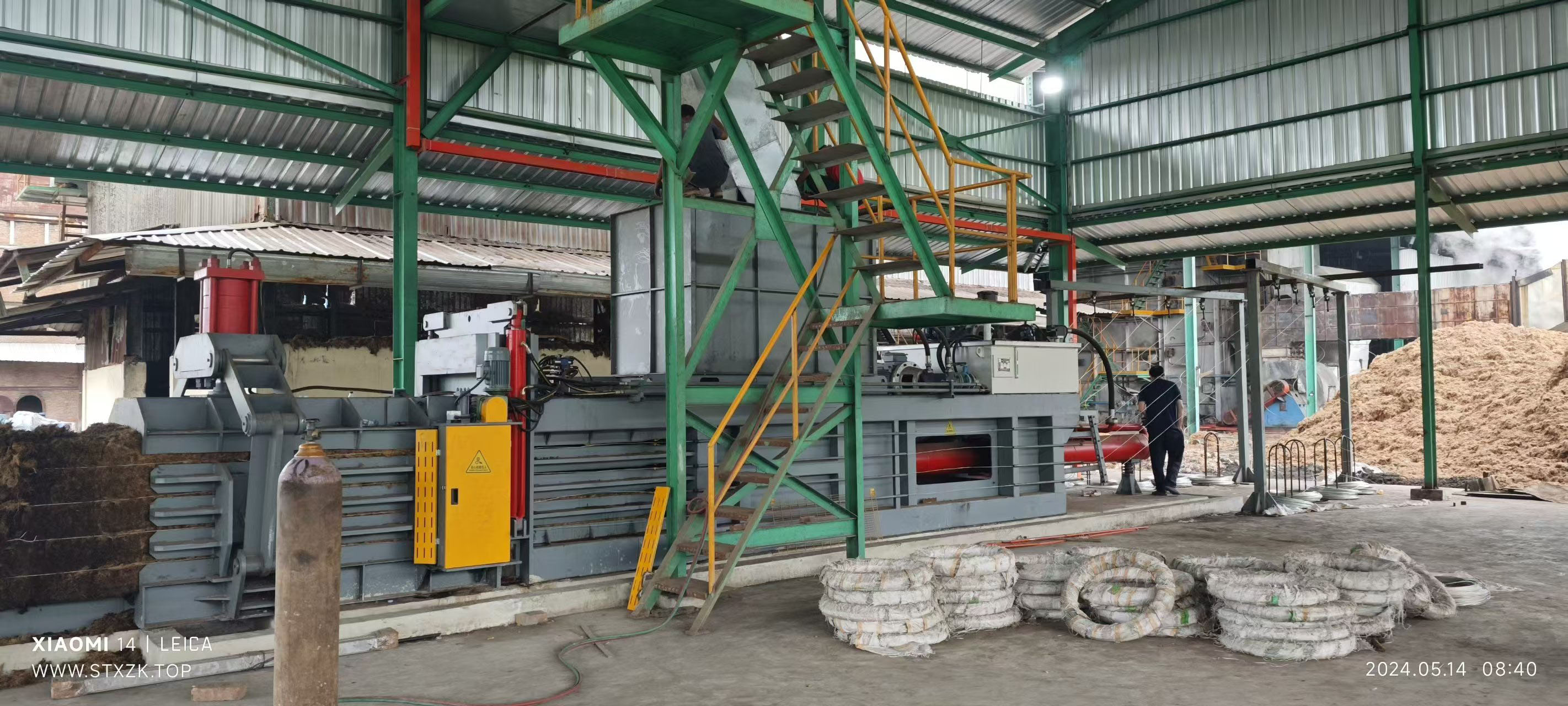 A large horizontal hydraulic baler, such as the NKW series, processing recyclable materials.
3. Manufacturing and Supply Chain Capabilities
Beyond the product sheet, assess the supplier's ability to deliver reliably and support the equipment long-term.
Production and Quality Control
Inquire about factory size, production processes, and quality control measures. For example, nkbaler operates from a 5000 m² facility and states it conducts 100% testing of its equipment before shipment. A dedicated R&D team (e.g., 15 personnel) is a positive indicator of technical development capacity.
Export Experience and Logistics
Suppliers with extensive export experience are familiar with international shipping, documentation, and customs procedures. A high export ratio (e.g., 80-90% to over 60 countries) demonstrates global market familiarity. Confirm standard delivery terms (e.g., FOB/CIF), lead times (commonly 30-45 days), and minimum order quantities (often 1 unit).
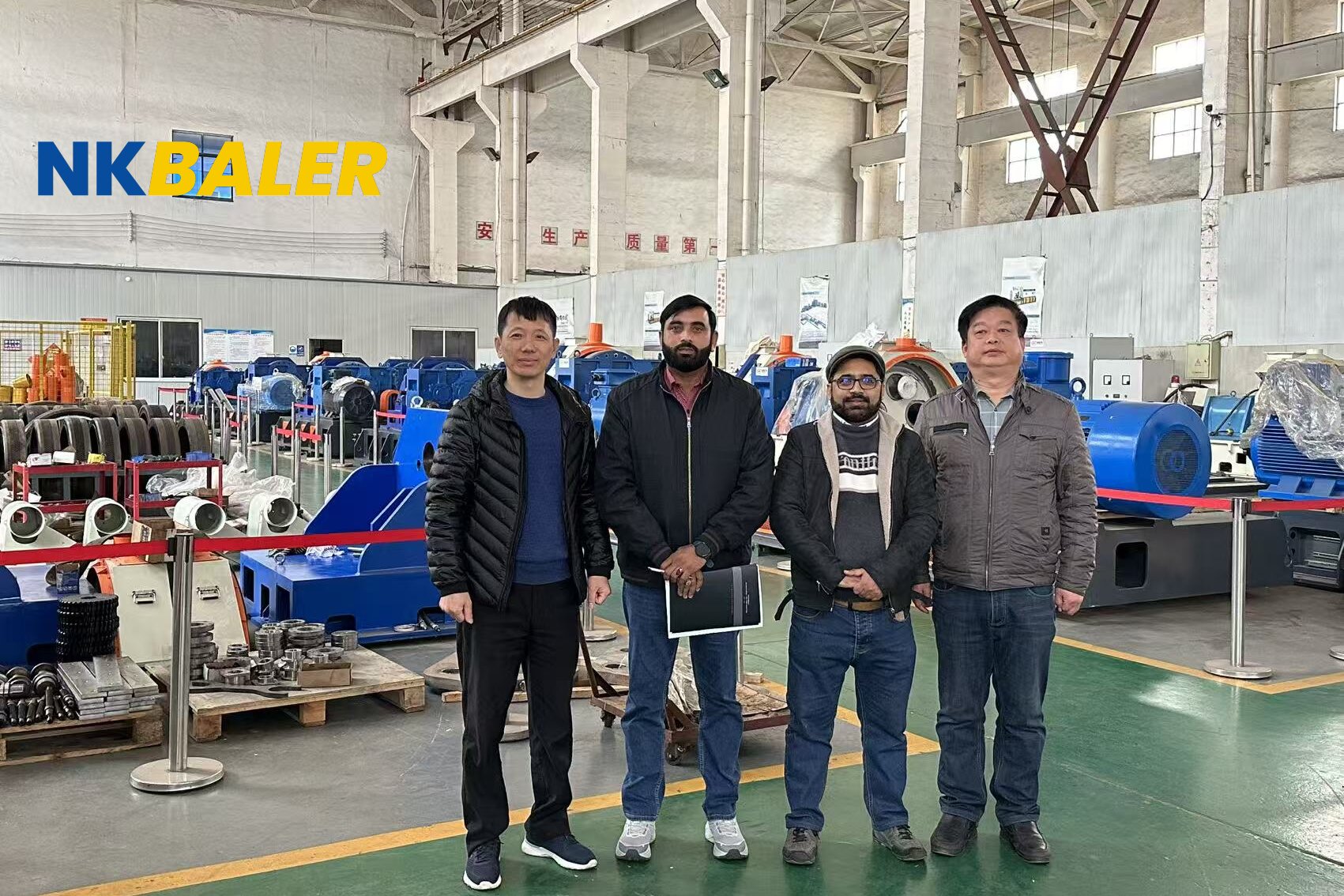 Industrial manufacturing workshop for hydraulic baler assembly.
4. After-Sales Support and Service Network
The supplier relationship extends beyond delivery. Evaluate the proposed after-sales support structure.
- Technical Documentation: Availability of comprehensive manuals, parts lists, and electrical diagrams in required languages.
- Remote Support: Ability to provide troubleshooting and guidance via phone, email, or video call.
- Spare Parts Policy: Clarity on parts availability, warranty, and ordering process.
- Case History: Request references or case studies. For instance, nkbaler reports a case where a recycling station in Indonesia used a baler for waste plastic and paper for over 10 years with stable operation, highlighting low noise and energy consumption.
Procurement Checklist Summary
- Certification: Verify valid, market-specific certificates (e.g., EU Verification of Conformity) for the exact model.
- Technical Fit: Match machine type (horizontal/vertical), force, capacity, and bale size to your material stream.
- Supplier Audit: Review manufacturing footprint, quality control, and export logistics capability.
- Lifecycle Cost: Consider energy consumption (e.g., 22KW-45KW motors), maintenance needs, and parts availability.
- Support Plan: Formalize agreements on installation support, training, warranty, and after-sales service.
Selecting a hydraulic baler supplier is a strategic procurement activity. By rigorously applying this framework—focusing on verifiable compliance, technical precision, and sustainable supplier capabilities—buyers can mitigate risk and secure equipment that delivers long-term operational and economic value.
For detailed technical specifications and company information, relevant suppliers often provide comprehensive brochures. For example, a detailed brochure for nkbaler products is available for download: Download Product Brochure (PDF).