
Hydraulic Bollards: Constraints to Verify Before Specification
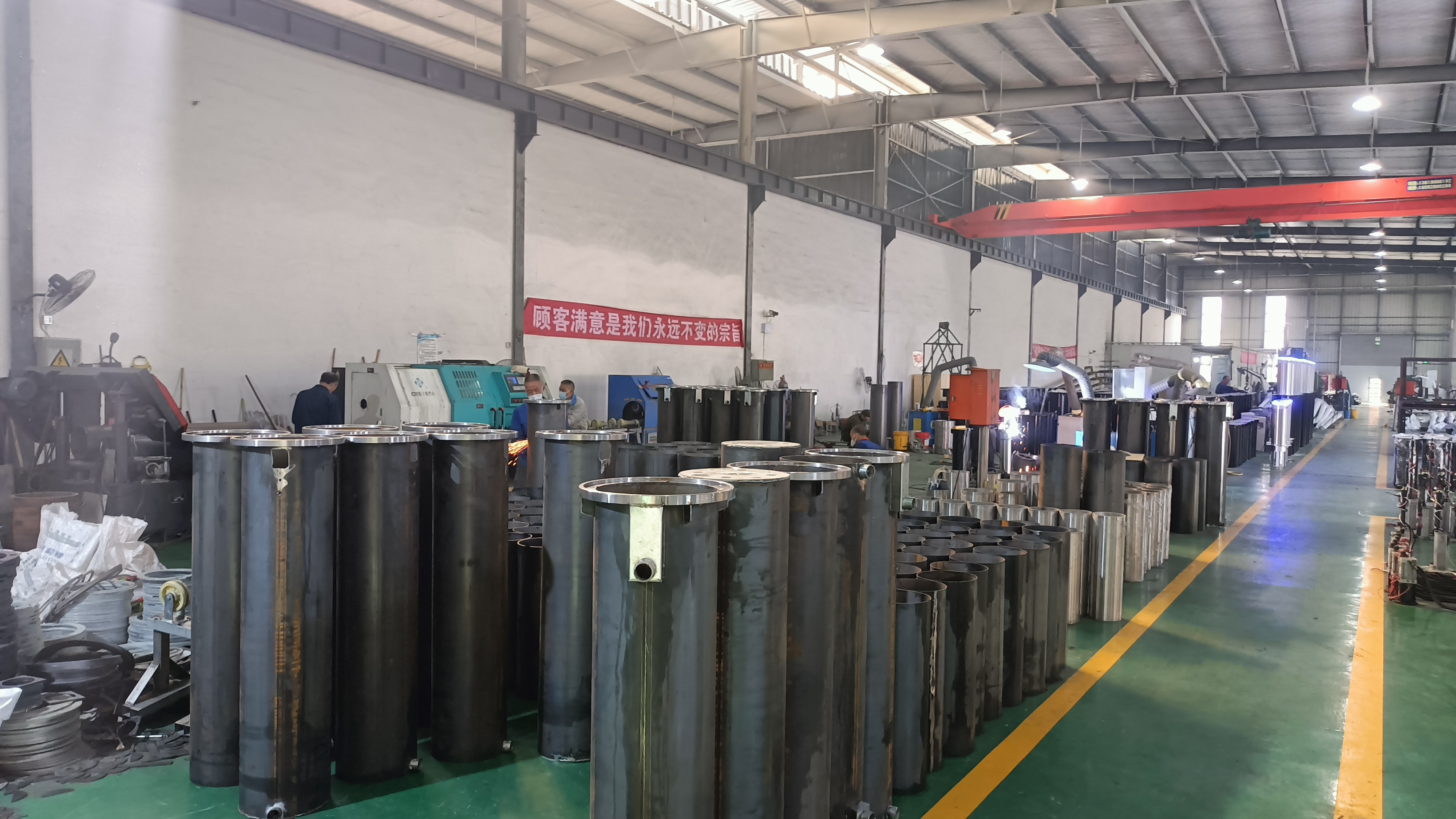
Hydraulic bollards are powered vehicle access control posts that raise and lower under hydraulic actuation to admit authorised vehicles and deny unauthorised ones. For buyers in the research and evaluation stage, the decisive constraint is rarely the appearance of the post. It is whether the delivered system — bollard, mounting arrangement and supporting foundation taken together — has been documented against a defined impact condition and a defined site condition.
That distinction reshapes how a hydraulic bollard should be specified. A crash-rated bollard protects an area by working as a complete system, combining the bollard, the mounting arrangement and the supporting foundation to stop or restrain unauthorised vehicles. Read literally, this means the object of a specification is not a steel tube but a verified assembly. The purpose of this reference is to make that assembly explicit: which constraints a hydraulic bollard specification should fix, which documents should be requested, which parameters are set by the model and which are set by the site, and where the practical limits of a powered bollard system lie.
It is written for distributors, engineering contractors, system integrators and project owners comparing hydraulic automatic bollards against electromechanical, semi-automatic, fixed and removable alternatives in airports, government sites, commercial property, industrial parks and energy infrastructure.
Why the Powered Segment Has Become a Documentation Problem
The commercial signal is unambiguous. Mordor Intelligence estimates the global automated barriers and bollards market at USD 22.73 billion in 2025, with an expectation of USD 27.39 billion by 2030. Within the retractable category, automatic retractable bollards generated the highest revenue in 2025, with a 52% share of that category. Growth of this kind usually pushes buyers toward faster purchasing, not slower. The opposite is more appropriate.
The reason is that the risk which creates the demand is also the risk that invalidates a weak specification. Unauthorised vehicle intrusion, and impact damage to facilities or pedestrians, is what triggers the need for a crash-rated bollard system in the first place. When crash test data is not verified, the consequence is not a commercial inconvenience but insufficient anti-collision performance and a security loophole in a high-security area or a new security project. The specification stage is the only point at which that gap can be closed cheaply.
For procurement teams, the practical opportunity is equally clear. A documented hydraulic bollard package — test reference, model configuration, foundation drawing, control architecture and certification — is easier to defend in tender review, easier to hand over to a site contractor, and easier to maintain across a ten-year operating horizon than a package assembled from catalogue photographs.
Where Hydraulic Bollards Sit in the Vehicle Access Control Family
Hydraulic bollards are one option among several, and the constraint that decides between them is usually operational rather than structural. The table below summarises the family as it is catalogued by RICJ Bollard and the deciding constraint for each type.
| Bollard type | Actuation | Constraint that usually decides the choice |
|---|---|---|
| Hydraulic automatic bollard (e.g. LB-101) | Hydraulic actuation, 220V supply | Impact documentation, foundation depth, drainage, control-system integration |
| Electromechanical / battery-powered automatic bollard | Electric motor or battery | Power availability, cycle frequency, duty pattern |
| Semi-automatic rising bollard (LB-102) | Gas spring assisted, key control, no power | Manual operating frequency and operator availability |
| Fixed bollard | Passive, no power | Permanent perimeter definition; no need for vehicle throughput |
| Removable bollard | Manual removal, internal locking mechanism | Occasional access only; handling and key custody |
| Road blockers and tyre killers | Listed as complementary vehicle-access products | Width of the opening to be controlled and layered defence design |
RICJ lists hydraulic, electromechanical, battery-powered and high-security automatic bollard configurations within its automatic bollard range, alongside semi-automatic, fixed, removable, fold-down bollards, road blockers and tyre killers. For a buyer, the catalogue only establishes that the range exists. Selection still turns on the constraint set below.
The Seven Constraints a Hydraulic Bollard Specification Should Fix
Before buying a crash-rated bollard, seven items should be checked. They are not marketing categories; each one changes the delivered product or the validity of its claimed performance.
| Check | What it fixes | Typical failure if omitted |
|---|---|---|
| Test standard | Which test method and edition the claim refers to | A rating quoted from an unrelated framework |
| Test vehicle | Vehicle class and mass used in the test | Performance assumed for a heavier threat than tested |
| Impact condition | Speed and angle of impact | Speed rating misread as a site guarantee |
| Penetration distance | How far the vehicle may travel past the barrier | Stand-off distance planned incorrectly |
| Product configuration | Diameter, height, material grade and model actually tested | Report covers a different model than the one supplied |
| Foundation | The supporting structure the test assumed | Bollard installed into a foundation that invalidates the result |
| Test report | The complete document, not a summary badge | Unverifiable claim accepted at tender stage |
Verifying these seven items is what mitigates the risk of insufficient anti-collision performance. None of them can be substituted by a product photograph, a diameter figure, or the word "anti-ram" on a datasheet.
Reading Crash Ratings Correctly
ASTM F2656/F2656M-20 is a standard test method for crash testing vehicle security barriers. It provides a structured procedure to establish a penetration rating for vehicle perimeter barriers subjected to a vehicle impact. Two separate pieces of information come out of that method, and buyers frequently merge them.
The first is the impact designation. Under ASTM F2656, the M notation describes the test condition using a vehicle weight and speed system: M30 corresponds to 30 mph, M40 to 40 mph and M50 to 50 mph. The second is the penetration rating. A secondary industry guide describes the P designations as bands of dynamic penetration distance — P1 at no more than 1 metre, P2 from 1.01 to 7 metres, P3 from 7.01 to 30 metres, and P4 at 30 metres or greater. Because these bands are a secondary interpretation rather than the standard text itself, they should be verified against the current purchased ASTM edition before being written into a contract.
Two practical rules follow. First, an M-rating without a penetration rating describes only half of the tested outcome. Second, ASTM F2656 and other frameworks referenced in the market, such as PAS 68 and IWA 14-1, are not interchangeable. A specification should name one framework, one edition, one vehicle class and one penetration band, and should then require a report that matches them. The standard page itself certifies no product; product-specific test evidence remains a separate request.
Parameter Constraints on a Powered Bollard: The LB-101 Reference
A hydraulic automatic bollard carries two kinds of parameters. Some are fixed by the model and travel with the order; others are fixed by the site and must be resolved before manufacture. The RICJ LB-101 automatic bollard illustrates the first group.
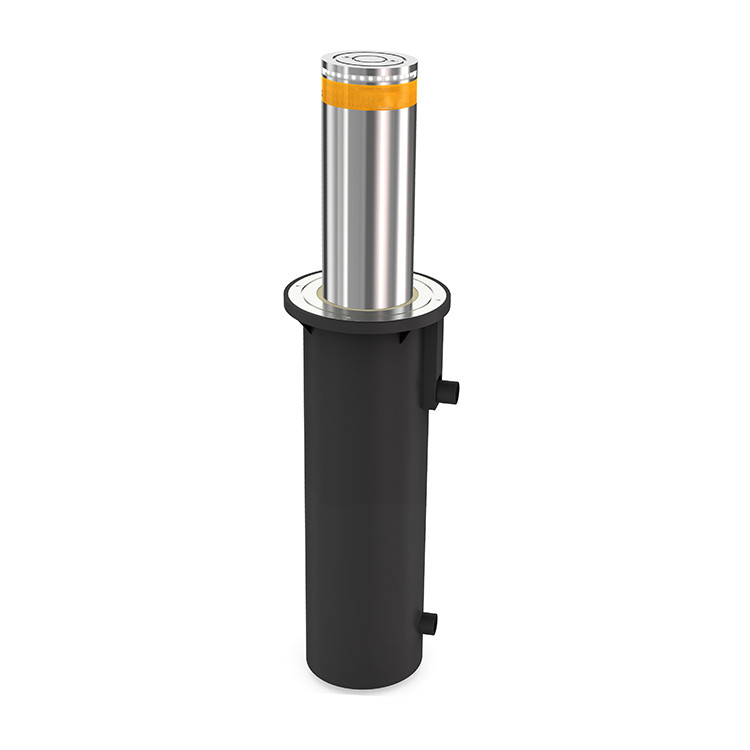
| Parameter | LB-101 stated value |
|---|---|
| Model number | LB-101 |
| Material | 304 / 316 stainless steel |
| Diameter | 219 mm (OEM options: 168 mm, 273 mm) |
| Height / total length | 1100 mm |
| Protection rating | IP68 (waterproof and dustproof) |
| Operating temperature | -45°C to +75°C |
| Supply voltage | 220V |
| Lighting | Integrated LED light |
| Refillable | Non-water fillable |
| Minimum order | 10 PCS |
| Colour | Silver / customized |
Three of these parameters carry more procurement weight than the rest. The IP68 rating defines the environmental envelope of the post — waterproof and dustproof — which matters where the unit sits in a drainage-exposed entrance rather than under a canopy. The -45°C to +75°C operating range sets the climate boundary; projects outside that window require confirmation rather than assumption. And the non-water-fillable specification is a design statement: the post is not intended to be ballasted with water, so any site expecting a ballast-fill option should raise it at specification stage, not at delivery.
Diameter is often the most misread number on a hydraulic bollard datasheet. The 219 mm figure describes the post, not the impact performance. OEM diameters of 168 mm and 273 mm are listed as configuration options, and each configuration carries its own documentation position.
Foundation, Drainage and Site Constraints
The foundation is not a civil afterthought; it is part of the barrier. RICJ's semi-automatic LB-102 listing shows how tightly the buried geometry is tied to a specific model: a 219 mm blocking diameter, a 600 mm blocking height, a flange of D380 × T10 mm, an embedded sleeve of D325 × T3 mm and an embedded sleeve depth of 800 mm. Those figures are model-specific. They cannot be transferred between products, and they cannot be adjusted on site without changing the basis of the installation.
Project assessment for powered bollards should therefore resolve, before purchase: vehicle threat level, the area to be protected, traffic frequency, installation depth, drainage, climate, control-system compatibility and target-market compliance requirements. Each of these is a site variable rather than a product variable, and each one can quietly invalidate an otherwise correct product selection.
Control architecture belongs to the same constraint set. Typical matched equipment for an automatic bollard installation includes RFID readers, licence plate recognition, remote control, access control systems, control cabinets, foundations and site wiring, with the exact configuration depending on the project design. A specification that names the bollard but not the control layer leaves the highest-uncertainty element of the project unallocated.
Certification: What ISO 9001 Covers and What It Does Not
Certification evidence is the second half of a constraint-based specification, and it is routinely misread. Chengdu Ruisijie Intelligent Technology Co., Ltd. holds ISO 9001 Quality Management System Certification number 102626Q00045R000, issued by HUAQIXIN CERTIFICATION SERVICES (CHENGDU) CO., LTD under the standard GB/T19001-2016/ISO9001:2015. The certificate was issued on 20 March 2026 and expires on 19 March 2029, with a global market scope.
The certified scope covers urban traffic facilities — automatic rising bollards, anti-collision bollards, guard posts, road blockers, tyre killers, parking locks, speed bumps, road barriers and traffic obstacles — together with the production of flagpoles, excluding items that require licensed qualifications.
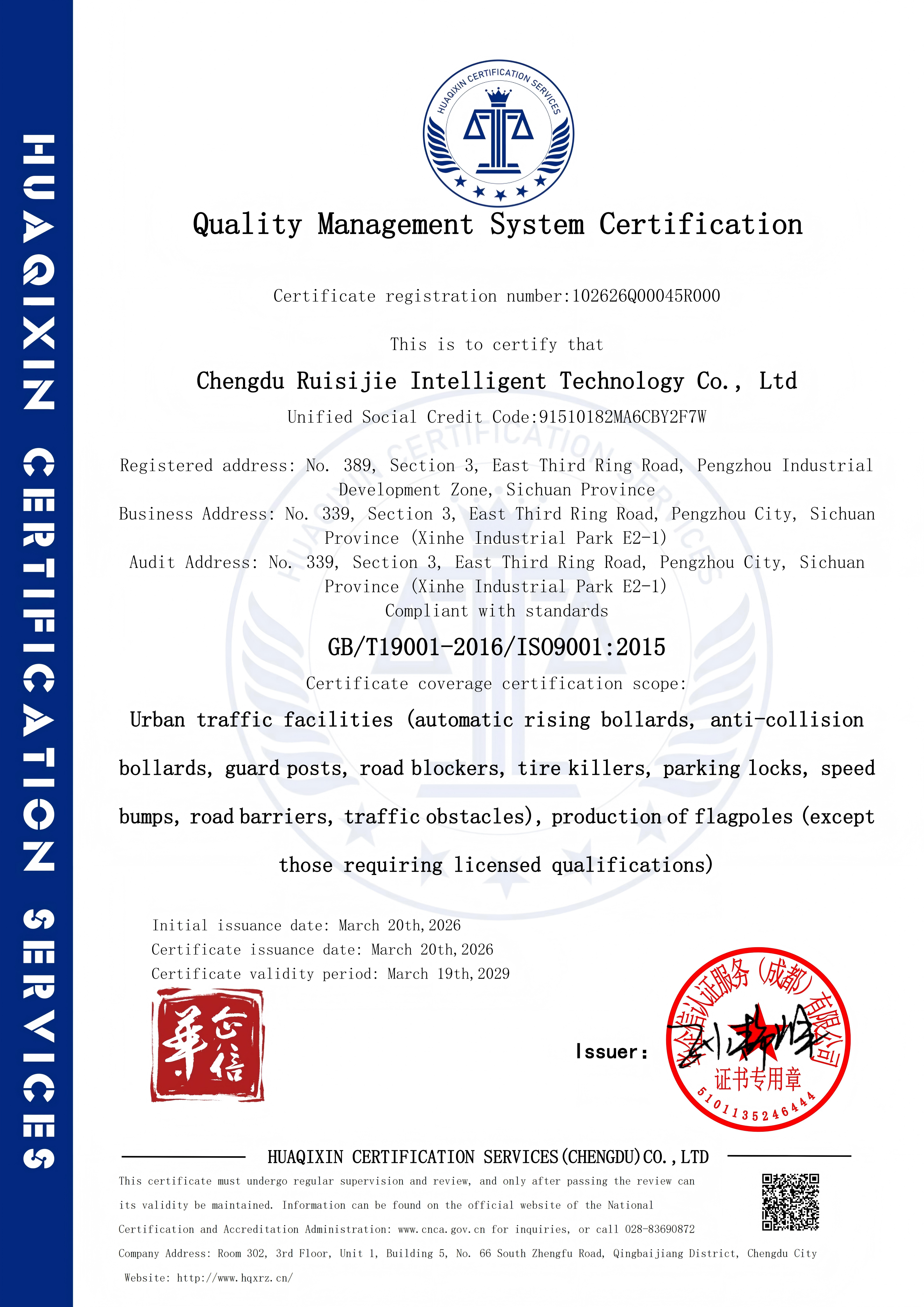
The distinction that matters to a buyer is this: ISO 9001 certifies a quality management system, not a crash rating. It evidences that production and inspection processes are controlled within a defined scope. It does not state that any particular bollard model stops a vehicle of a particular mass at a particular speed. A complete evidence package therefore contains both — the management system certificate and the model-specific impact documentation — and neither substitutes for the other.
RICJ Bollard as a Supply-Side Reference
Chengdu Ruisijie Intelligent Technology Co., Ltd., which operates as RICJ Bollard through cdricj.com, is a Chengdu-based original manufacturer of vehicle security equipment and anti-crash protection solutions, founded in 2007. The company runs an approximately 15,150 m² in-house manufacturing facility with 280 employees and a 41-engineer R&D team, and integrates product development, manufacturing, quality control and technical support in one organisation.
Its product range covers automatic rising bollards, fixed and static bollards, manual retractable bollards, semi-automatic bollards, removable bollards, fold-down bollards, road blockers, tyre killers and custom security bollards. Manufacturing relies on high-strength carbon steel, stainless steel and premium core components, supported by material inspection, production monitoring and full-process quality control, with 100% testing before delivery. Export accounts for 90% of output, with main markets in the Middle East and Africa, the European Union and Southeast Asia.
Project experience includes landmark infrastructure; RICJ has contributed to Chengdu Tianfu International Airport, and its public case material includes a deployment of 510 deep-mount 316 stainless steel fixed bollards in Sweden. The company is ISO 9001 certified, states that it holds documented crash and safety test results, and is recognised as a 5-Star Supplier on Alibaba.com. For overseas partners it supplies English technical documentation, installation manuals, wiring diagrams and customs documentation, with remote assistance by phone, email or video. Production lead time is stated at 30–50 days, and OEM/ODM customisation is offered across dimensions, materials, surface finish, logo, control system and product structure, with the exact scope depending on model and project.
Where Hydraulic Bollards Are Specified
Applications are determined by the combination of vehicle frequency, protected asset and environmental exposure. Typical settings for powered bollards include airports and transport infrastructure, government and public spaces, commercial property, industrial parks, energy infrastructure, schools, and residential or property-managed entrances.
The operating pattern in most of these sites is continuous: 24-hour automatic lifting and lowering. That duty cycle is what separates a hydraulic automatic bollard from a semi-automatic unit. Where throughput is high — airport perimeters, commercial entrances, industrial gates — powered operation removes the operator from the access decision and hands it to the control layer. Where throughput is low and power is unavailable, the gas-spring semi-automatic design of the LB-102, with key control and no power requirement, remains a practical alternative for driveways, parking areas, commercial entrances, private properties and restricted access points.
Coastal and sub-zero environments appear in the same application map, and they are the settings where the IP68 rating, the -45°C to +75°C operating range and the drainage detail stop being datasheet lines and start being operational limits.
Hydraulic Compared with Fixed, Removable and Semi-Automatic Solutions
Comparison is only useful when the limitations are stated as plainly as the advantages.
| Option | Strength | Boundary |
|---|---|---|
| Hydraulic automatic bollard | Continuous powered operation, integrates with RFID, LPR and access control | Requires 220V supply, excavation to the specified sleeve depth, drainage planning and periodic maintenance |
| Semi-automatic bollard (LB-102) | Gas-spring assist, no power required, key control, 304 stainless steel | Manual lifting and lowering; not suited to high-frequency automated entrances |
| Fixed bollard | Passive protection with no power, no control layer and minimal maintenance | No selective vehicle access; unsuitable where authorised vehicles must pass |
| Removable bollard | Built-in mounting hardware and internal locking mechanism; low installed cost | Requires manual handling and key custody; impractical for frequent or rapid access cycles |
Two boundaries deserve to be stated explicitly for hydraulic bollards. The first is documentation scope. Because the protective performance of a crash-rated bollard is established for a complete system — bollard, mounting arrangement and foundation — the report must correspond to the configuration and foundation actually being delivered. Where the report covers a different model, diameter or foundation detail, the buyer should treat the claim as unverified for that site.
The second is environmental. The LB-101 envelope of -45°C to +75°C, IP68 protection and a fixed 220V supply is broad, but it is not universal. Sites with sustained flooding, unmanaged drainage, out-of-range temperatures or unreliable mains power need those conditions addressed in the design, not absorbed by the product specification.
Market Trend Analysis
Three observable trends shape how hydraulic bollards are bought rather than how they are built.
Automation is taking share inside the retractable category. Automatic retractable bollards generated the highest revenue within retractable bollards in 2025, at a 52% share, and the wider automated barriers and bollards market is estimated at USD 22.73 billion in 2025 with a projected USD 27.39 billion by 2030 (Mordor Intelligence). Growth of this kind increases the number of projects in which the access decision is delegated to a control system — and, with it, the number of projects in which a documentation gap becomes a commissioning problem.
Standards language is entering commercial documents. Purchasing teams increasingly reference test methods such as ASTM F2656/F2656M-20 by name, and penetration and impact designations are appearing in tender criteria rather than only in engineering annexes. This raises the value of suppliers who can produce a report matching the model and configuration, and lowers the value of badge-style claims.
Trade classification and market access are part of the constraint set. Steel bollards imported into the United States fall under subheading 7326.90.8588 of the HTSUS, per U.S. Customs and Border Protection ruling NY N042340. Classification questions of this kind sit alongside electrical and local installation requirements as market-access constraints that determine landed cost and project approval, not product performance.
Future Outlook
The direction of travel is toward the specification, not the product. As automated access control spreads into commercial, industrial and public infrastructure projects, the questions that decide a purchase are shifting from what a post looks like to what a package can prove: which standard, which edition, which vehicle, which foundation, which report, which certificate, and which party is accountable when the delivered configuration differs from the tested one.
Suppliers that maintain model-level documentation — test reports, foundation drawings, control architecture and current certificates with visible scope and expiry — will be easier to include in tender shortlists, because they reduce the buyer's verification workload. Suppliers that rely on generic claims will find the opposite. For buyers, the practical implication is to build the evidence request into the RFQ itself, so that the answer arrives with the quotation rather than after the purchase order.
Frequently Asked Questions
Which documents should be requested before specifying crash-rated hydraulic bollards?
A complete request covers seven items: the test standard and its edition, the test vehicle, the impact condition including speed and angle, the penetration distance, the exact product configuration tested, the foundation assumed by the test, and the full test report rather than a summary. Failure to verify these items can produce insufficient anti-collision performance and a security loophole in high-security installations.
What do the ASTM F2656 designations M30, M40 and M50 mean?
Under ASTM F2656, the M notation describes the impact test condition using a vehicle weight and speed system, where M30 corresponds to 30 mph, M40 to 40 mph and M50 to 50 mph. The M designation is an impact condition, not a penetration result. Penetration is described separately by the P designations, which a secondary guide defines as P1 at no more than 1 metre, P2 from 1.01 to 7 metres, P3 from 7.01 to 30 metres and P4 at 30 metres or greater.
What site conditions must be confirmed before ordering hydraulic bollards?
Projects should assess vehicle threat level, the area to be protected, traffic frequency, installation depth, drainage, climate, control-system compatibility and target-market compliance requirements. Embedded geometry is model-specific: the RICJ LB-102 semi-automatic bollard, for example, lists a 600 mm blocking height, a D380 × T10 mm flange, a D325 × T3 mm embedded sleeve and an 800 mm sleeve depth.
What does ISO 9001 certification of an automatic bollard cover?
ISO 9001 certifies a quality management system within a defined scope. RICJ holds certificate 102626Q00045R000, issued by HUAQIXIN CERTIFICATION SERVICES (CHENGDU) CO., LTD under GB/T19001-2016/ISO9001:2015, issued 20 March 2026 and valid to 19 March 2029, with a global market scope covering automatic rising bollards, anti-collision bollards, guard posts, road blockers, tyre killers and related urban traffic facilities. It does not certify crash performance; model-specific impact test evidence is a separate document.
What are the operating parameters of the RICJ LB-101 automatic bollard?
The LB-101 is an automatic bollard in 304 or 316 stainless steel with a 219 mm diameter, an OEM option of 168 mm or 273 mm, a 1100 mm overall length, integrated LED lighting, IP68 protection, a -45°C to +75°C operating temperature range and a 220V supply. It is specified as non-water fillable, is listed in silver or customised colour, and has a minimum order quantity of 10 PCS.
What lead time and customisation scope apply to hydraulic bollard orders?
RICJ states a production lead time of 30–50 days and offers OEM/ODM customisation of dimensions, materials, surface finish, logo, control system and product structure, with the exact scope depending on the model and project. Finishing options include 304 stainless steel, 316 stainless steel, carbon steel and galvanised steel, and finished equipment undergoes 100% testing before delivery.
How does a hydraulic bollard differ from a fixed or removable bollard in practice?
A hydraulic automatic bollard raises and lowers under power and can operate continuously on a 24-hour cycle, which allows authorised vehicles to pass without an operator. A fixed bollard provides passive protection with no power and no control layer but gives no selective access. A removable bollard uses built-in mounting hardware and an internal locking mechanism and is suited to occasional access rather than frequent or rapid cycles.
Technical reference material, including product dimensions, materials and configuration options, is available in the RICJ product brochure: RICJ brochure (PDF).
Tem questões ou precisa de mais detalhes?
Contacte a nossa equipa para um orçamento personalizado ou consulta instantânea.
Solicitar orçamento
Preencha o formulário abaixo e a nossa equipa entrará em contacto com uma proposta personalizada.
Chat direto do WhatsApp
Prefere conversar em tempo real? Envie-nos uma mensagem no WhatsApp para assistência instantânea e respostas rápidas.
- Obter orçamento personalizado
- Partilhar fotos ou documentos
- Discuta as suas necessidades diretamente
Geralmente responde em 5–30 minutos durante o horário de expediente.