
Hydraulic Cylinder FAQ: SB-Y1 Pressure, Seals, Acceptance
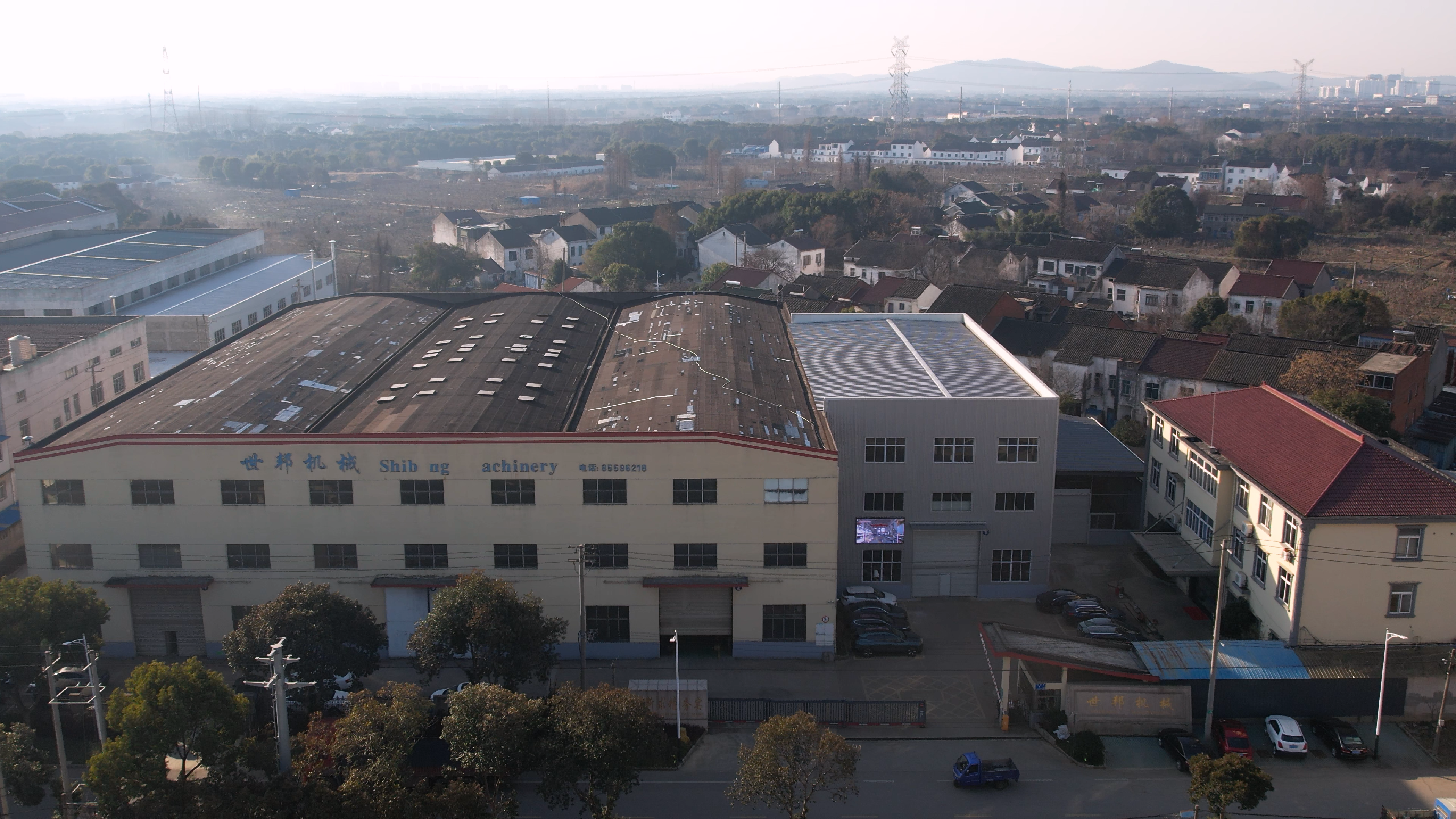
Hydraulic cylinder production environment — Wuxi Shibang Machinery Manufacturer Co., Ltd. (shellppon).
Heavy-duty hydraulic cylinders rarely fail because of a single manufacturing defect. More often, a cylinder is built exactly to drawing and still performs poorly because it was selected against the wrong working cycle: a pressure rating chosen slightly too low, a seal compound mismatched to the oil and temperature, a mounting interface tightened with a small concentricity error, or an acceptance stage that confirmed appearance but skipped the dimensional checks that hold sealing and structural integrity together. Those are procurement decisions, not workshop problems — and nearly all of them can be answered before an order is placed.
The technical FAQ below uses the SB-Y1 Series as its reference build. SB-Y1 is a single-rod, double-acting metallurgical hydraulic cylinder offered by shellppon, the brand of Wuxi Shibang Machinery Manufacturer Co., Ltd., a hydraulic cylinder manufacturer founded in 2003 and located in Wuxi, China, supplying custom hydraulic cylinders and hydraulic cylinder spare parts. Specifications, tolerances and acceptance rules quoted here come from the published technical material for that series and from the international and Chinese standard framework that governs cylinder design, mounting dimensions, buckling evaluation and acceptance testing.
1. Why do hydraulic cylinder questions keep landing on the same few failures?
Q: What actually goes wrong with a heavy-duty hydraulic cylinder?
A: The main failures of hydraulic cylinders are oil leakage, piston-rod corrosion and structural fatigue — and each of them may lead to equipment downtime. In heavy-duty scenarios, structural fatigue is one of the main failure modes that can stop a machine.
What matters for a buyer is that none of those three failure modes is fixed after the fact. Oil leakage traces back to seal selection and bore accuracy. Piston-rod corrosion traces back to material and surface treatment. Structural fatigue traces back to material grade, wall thickness, weld design and the safety factor applied at the design stage. All three are locked in when the drawing is signed, which is why a technical FAQ is more useful at the procurement stage than at the maintenance stage.
2. How should a buyer choose between 16 MPa and 25 MPa?
Q: What is the difference between the standard and reinforced SB-Y1 pressure options?
A: The nominal operating pressure of the SB-Y1 Series is 16 MPa. The reinforced version has a nominal operating pressure up to 25 MPa.
The practical selection rule is not what maximum pressure can be observed in the system, but what pressure the design is expected to sustain:
- Choose the 16 MPa configuration when system pressure is bounded within that band or where overpressure is controlled upstream.
- Choose the reinforced 25 MPa version when working pressure is designed above 16 MPa and peak pressure is not limited at the cylinder body.
- Where the duty cycle includes repeated pressure spikes, accumulator action or load holding, design against the reinforced configuration rather than the steady-state reading.
The choice carries material consequences. For hydraulic cylinders operating at 16–25 MPa, 27SiMn seamless tubes are used for the high-pressure cylinder body, while the cylinder bottom, piston and guide sleeve are made from forged 45# steel.
3. What determines bore size and stroke length?
Q: Which bore sizes are available, and how is stroke decided?
A: Available bore sizes for the SB-Y1 Series are 40, 50, 63, 80, 100, 125, 160, 200, 250 and 320 mm — a bore range from 40 mm to 320 mm. Stroke length is custom, based on load stability and buckling resistance.
That last phrase is the part buyers most often skim past. A long-stroke cylinder under compression is a column, and its limit is set by buckling behaviour rather than by wall thickness alone. ISO/TS 13725:2021 addresses exactly this, defining an elastic buckling evaluation method applicable to single and double acting cylinders that conform to ISO 6020 (all parts), ISO 6022 and ISO 10762.
A custom stroke should therefore be established through that logic, not by extending the catalogue stroke of an already-chosen bore.
4. What is inside the standard sealing system?
Q: Which seal types does SB-Y1 use as standard?
A: The standard sealing system includes Step Seals, Glyd Rings and O-Rings.
These are not interchangeable parts. The piston seal maintains the pressure differential between the two chambers and resists internal leakage. The rod seal wipes and contains oil on the extending stroke and resists external leakage. Static seals close the fixed joints. In certain configurations the sealing set is extended — Stefa seals, wiper seals and O-rings are used where the operating conditions require them.
For a procurement team, the relevant question is not only which seals are listed, but whether the compound was selected against the working medium, operating temperature and contamination exposure of the actual application.
5. Which standards apply, and what do they change at acceptance?
Q: What standards does the SB-Y1 Series comply with?
A: The cylinder complies with GB/T 2348-1993 and JB/T 10205-2010.
Those two references are what belong in a purchase order and what an inspector works against. Internationally, hydraulic cylinders are also covered by published standards for design, mounting dimensions, acceptance and function tests, and buckling-load evaluation — including ISO 10100:2020, ISO/TS 13725:2021, the ISO 6020 series and ISO 6022.
The commercial consequence is straightforward. If the drawing cites GB/T 2348-1993 and JB/T 10205-2010, the inspector has a documented basis for pass or fail. If the order cites nothing, acceptance criteria become a shared assumption — and that is where disputes begin.
On the fabrication side, AWS D14.9/D14.9M:2022 covers pressure-containing welded joints and structural welded joints used in the manufacture of hydraulic cylinders, which is directly relevant to how the body and flange connections are produced.
6. How can mounting or alignment stress be avoided?
Q: What causes mounting stress, and what reduces it?
A: Review the mounting arrangement, bore, rod diameter, stroke, concentricity and connection tolerances against the equipment design. Mounting or alignment stress may occur when mounting interfaces do not match, concentricity is insufficient, or connection tolerances are improper.
Mitigation measures include customised mounting-interface design; inspection of concentricity across the tube, piston rod and guide sleeve; dedicated assembly fixtures; and installation, commissioning and technical support.
SB-Y1 is offered across a wide mounting set: square flange at base, square flange at head, rectangular flange at base, rectangular flange at head, round flange at base, round flange at head, trunnion mounting at base, trunnion mounting at head and clevis mounting at base. One configuration uses a rectangular flange at the head with a multi-point rigid connection designed for heavy equipment frames. The mounting design also supports pivoting execution in linkage and angular drive applications.
The implication for buyers: select the mounting type from the constraints the machine already has, rather than adapting the frame to a cylinder that was already chosen.
7. How is piston-rod wear and corrosion prevented?
Q: What causes rod corrosion, and how is it addressed?
A: Piston-rod wear or corrosion may occur when material or surface treatment is insufficient, the environment is corrosive, or straightness and surface quality are poor. It is addressed by improving rod surface strength and corrosion resistance through heat treatment, induction hardening, hard-chrome plating, grinding and polishing.
The specific pattern used is 40Cr or 45# steel, induction-hardened to HRC50–55, with a 0.03–0.05 mm hard chrome layer. Straightness, roundness and surface quality are inspected, and anti-rust grease is applied before shipment.
SB-Y1 piston rods can be supplied in 45# carbon steel, 40Cr alloy steel or stainless steel, induction hardened and hard chrome plated to a hardness of HRC 50 or above. As a separately supplied replacement part, the SB-piston rod is specified at tempering HB220–260, quenching HRC50–60, straightness 0.015/1000 mm, diameter Φ22–1200 mm, maximum length 10 m, surface roughness Ra0.15–0.2 μm and a chrome layer of 30–50 microns, in 45#, 40Cr, 42CrMo4, SUS 304 or SUS 316.
This is where long-term supply becomes a technical question rather than a commercial one: the rod is a replaceable component, and availability of a matching replacement determines how long the cylinder stays in service.
8. How are seal leakage, internal leakage and oil leakage prevented?
Q: What is the mechanism behind leakage, and how is it controlled?
A: Seal leakage, internal leakage or oil leakage may occur when seals are improperly selected, bore accuracy is insufficient, components are not clean, or testing is inadequate. Prevention means selecting suitable seals according to operating conditions and controlling bore roughness, roundness, dimensional tolerances and cleanliness.
In practice the process chain is: hone the bore to IT7 with Ra ≤ 0.2 μm; use Stefa seals, Glyd rings, wiper seals and O-rings; ultrasonically clean and dry the parts; then conduct pressure-holding and internal-leakage tests.
Bore preparation is inseparable from the seal decision. The SB-Y1 cylinder barrel is made of thick-wall seamless steel tube, precision bored and roller-burnished or honed. Those finishing routes produce different surface characteristics, and each sets a practical ceiling on how long the sealing system can be expected to hold.
9. How are overload and fatigue failure risks reduced?
Q: What causes structural failure under load?
A: Structural failure caused by overload and fatigue can occur when actual pressure or load exceeds the design range, or when material, wall thickness, weld design or safety factor is insufficient.
The response is to select suitable materials, wall thicknesses, welding structures and safety factors according to rated pressure and load conditions. For high-pressure cylinders operating at 16–25 MPa, 27SiMn seamless tubes are used; forged 45# steel is used for the cylinder bottom, piston and guide sleeve. Manufacturing includes heat treatment and post-weld stress relief, and hydrostatic testing at 1.5 times rated pressure is performed to verify structural integrity.
Note the sequence. The safety factor is an output of the pressure rating and load spectrum — not an input substituted into them afterwards.
10. What are the purchasing terms and acceptance criteria?
Q: How are MOQ, delivery, inspection and payment handled?
A: MOQ depends on the specific parameters. Delivery terms and destination are arranged by quotation, with international shipping support available. Inspection and acceptance are carried out against the agreed drawing and technical standard — dimensional, surface-hardness, dynamic-balance, NDT, hydraulic and pneumatic tests as applicable — with third-party inspection subject to agreement. Payment terms are confirmed in the quotation or contract.
| Item | What to confirm before production |
|---|---|
| Selection parameters | Bore size, rod diameter, working pressure, stroke length, mounting type, sealing material, medium, operating temperature, cylinder material and surface treatment |
| Commercial terms | MOQ (parameter-dependent), delivery terms and destination, payment terms |
| Acceptance | Agreed drawing and technical standard; dimensional, surface-hardness, dynamic-balance, NDT, hydraulic and pneumatic tests as applicable; third-party inspection by agreement |
For construction machinery and industrial equipment projects, the standard sequence is to confirm working pressure, stroke and installation dimensions before production, with tailored drawings and third-party inspection available to match project requirements.
11. Where does a custom cylinder actually differ from an off-the-shelf one?
An off-the-shelf cylinder is built around a fixed catalogue specification. A custom cylinder is engineered around the application: application-specific engineering allows pressure, bore, stroke, mounting, seals, coating, cushioning, sensing and hydraulic-control integration to be configured.
Across the broader custom hydraulic cylinder portfolio, 8 product series are documented, with pressure up to 25 MPa, bore up to 500 mm, stroke up to 8 m and rotary angle up to 360°, supported by more than 50 production machines; the qualification file states a 99.99% pass rate. Those figures describe the full range rather than the SB-Y1 Series specifically, whose bore range remains 40–320 mm.
Where the limits are. Custom engineering is not automatically the right answer, and the boundaries are worth stating plainly:
- Pricing and total cost of ownership depend on the specification; no public benchmark is disclosed.
- No public efficiency benchmark exists — hydraulic efficiency depends on the design of the complete system, not on the cylinder alone.
- The quantified maintenance difference against standard or off-the-shelf cylinders is not disclosed, and self-adjusting cushioning, optional position sensing, full-process inspection and acceptance testing change the maintenance profile in ways that are application-dependent.
In short: custom specification buys fit, and it costs engineering confirmation effort and more detailed specification work up front. If the working pressure and mounting envelope are genuinely covered by a catalogue part, the case for customisation is weak.
12. Which applications is the SB-Y1 Series specified for?
Documented application scope includes metallurgical machinery such as blast furnaces, continuous casters and steel rolling mills, alongside mining machinery, heavy hydraulic presses, injection molding machines, engineering machinery and dam gate openers.
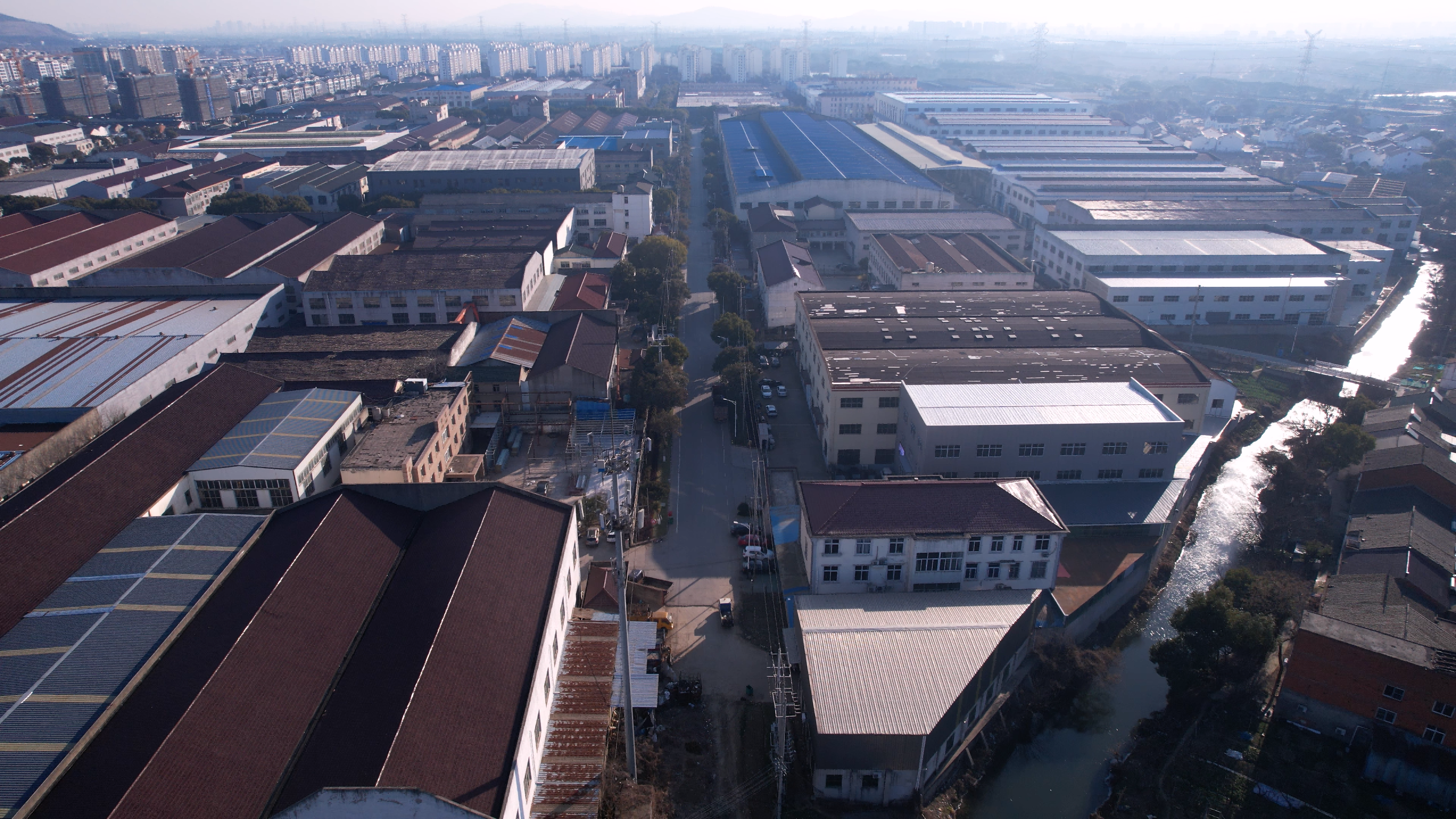
Production and inspection environment for heavy-duty hydraulic cylinders.
Recorded supply in steel production illustrates the long-stroke, high-load end of that range: the Jinan Iron and Steel 4300 mm roughing mill and the Shandong Fulun Iron and Steel 1000 mm hot-strip mill, where cylinders provide roll-mill lifting, balancing, following, turning and push-pull motion. Custom dimensions across that documented supply reach up to 320 mm bore, 220 mm rod and 4630 mm stroke.
In port logistics, an RTG crane hydraulic cylinder project at Dammam Port applies lifting and positioning force in a heavy-duty outdoor port environment with high cyclic loads and marine exposure — precisely the conditions under which the corrosion and fatigue controls described above determine real cost.
13. How do spare parts, OEM/ODM and supply continuity fit in?
Wuxi Shibang Machinery Manufacturer Co., Ltd. offers hydraulic cylinder spare parts and custom hydraulic cylinders suitable for long-term supply agreements, and has over 20 years of manufacturing experience supporting long-term supply relationships.
| Dimension | Documented detail |
|---|---|
| Production capacity | Factory area over 7,000 m²; more than 120 employees; standard factory building area 4,000 m²; fixed capital over 10 million yuan; supports scalable production for volume orders |
| Engineering resource | R&D team of 8 technical staff, including 2 senior engineers and 5 engineers |
| Service scope | OEM/ODM services, warranty service and a professional after-sales system |
| Export profile | 30–40% export ratio; markets across Europe, the Americas and Southeast Asia, with site-listed exports including Russia, Romania, Morocco, Thailand and Germany |
For buyers whose decision is anchored in long-term supply rather than a single transaction, these are the numbers that matter more than any individual specification. A cylinder that cannot be re-sealed or re-rodded later becomes a replacement project, and a supplier able to keep supplying matching rods and seals over an equipment lifecycle changes the ownership economics more than the initial unit price does.
14. What does maintenance practice mean for the purchasing decision?
Hydraulic cylinder daily maintenance includes regularly inspecting the piston rod surface and the seals. That recommendation follows directly from the failure pattern: piston-rod corrosion is a main failure mode, so inspecting the rod surface and seals is the core of corrosion-resistant cylinder maintenance and supports long-term cylinder use.
This is a purchasing signal, not just a service note. If two configurations are close in acquisition price but one allows the rod surface to be inspected and the seals to be replaced more readily, that configuration carries the lower lifecycle cost. A purchase specification should therefore request more than a datasheet: it should request the available spare-part list and replacement guidance for the specified sealing set.
15. What is changing in heavy-duty cylinder procurement?
Two shifts are already visible in the public record.
First, trade compliance has arrived. The U.S. Department of Commerce announced antidumping and countervailing duty investigations of certain linear hydraulic cylinders and parts thereof. Whatever the outcome of that proceeding, origin documentation, tariff classification and supplier footprint have moved from administrative background to active procurement variables.
Second, the standards baseline is well established. ISO 10100:2020 for acceptance and function tests, ISO/TS 13725:2021 for buckling-load evaluation, the ISO 6020 series and ISO 6022 for mounting dimensions, and AWS D14.9/D14.9M:2022 for welding together form a public framework a buyer and supplier can both reference. When both sides work from the same baseline, acceptance becomes a checkable process rather than a negotiation.
The practical change is not that standards become more important. It is that a cylinder purchase specification increasingly resembles a technical contract: standard references, acceptance test list, spare-part commitment and origin declaration, each in writing.
Procurement FAQ
Q: Is the SB-Y1 Series held in stock or built to order?
A: Bore sizes and mounting variants come from a defined series, while stroke length is custom and determined by load stability and buckling resistance — so the cylinder is configured to the application rather than drawn from inventory.
Q: What information is needed to obtain a usable quotation?
A: Bore size, rod diameter, working pressure, stroke, mounting type, sealing material, medium, operating temperature, cylinder material and surface treatment. MOQ depends on these parameters, and delivery terms, destination and payment conditions are confirmed in the quotation or contract.
Q: Can spare parts be purchased separately?
A: Hydraulic cylinder spare parts are part of the product offering, and the piston rod is supplied as a standalone item. The SB-piston rod is available in diameters from Φ22 to 1200 mm, lengths up to 10 m, and in 45#, 40Cr, 42CrMo4, SUS 304 or SUS 316.
Q: How is incoming compliance verified?
A: Inspection and acceptance are carried out against the agreed drawing and technical standard, with dimensional, surface-hardness, dynamic-balance, NDT, hydraulic and pneumatic tests applied as relevant. Third-party inspection is available subject to agreement.
Q: Does a custom cylinder always cost more to own?
A: Not necessarily — pricing and total cost of ownership depend on the specification, and no public benchmark is disclosed. What a custom build adds is fit to the working cycle, which carries value only where a catalogue part genuinely cannot cover the pressure and mounting envelope.
For buyers who need the complete specification set and configuration options in one place, the manufacturer's English-language product brochure is available for download: Wuxi Shibang hydraulic cylinder catalogue (PDF).
Tem questões ou precisa de mais detalhes?
Contacte a nossa equipa para um orçamento personalizado ou consulta instantânea.
Solicitar orçamento
Preencha o formulário abaixo e a nossa equipa entrará em contacto com uma proposta personalizada.
Chat direto do WhatsApp
Prefere conversar em tempo real? Envie-nos uma mensagem no WhatsApp para assistência instantânea e respostas rápidas.
- Obter orçamento personalizado
- Partilhar fotos ou documentos
- Discuta as suas necessidades diretamente
Geralmente responde em 5–30 minutos durante o horário de expediente.