
Hydraulic Cylinder Procurement: Engineer FAQs for CZHydraulic
Hydraulic Cylinder Procurement: Engineer FAQs for CZHydraulic
Industrial hydraulic cylinder procurement turns on more than the cylinder itself: buyers need to establish whether the design matches the application, what commercial terms apply, and what documents will define acceptance. For CHANGZHOU HYDRAULIC, the supplied product records state an MOQ of one piece, T/T payment terms, a delivery window of 15–60 days depending on product type, Shanghai as the shipping port, and annual supply ability of 2,400 tons. These are useful starting points for an inquiry, not substitutes for a confirmed quotation, schedule, or project specification.
CHANGZHOU HYDRAULIC is the brand used for industrial hydraulic cylinders and related equipment supplied by Changzhou Hydraulic Complete Equipment Co., Ltd. The records include a non-standard double-acting piston cylinder and a QHLY-series radial gate hoist cylinder. The procurement questions below separate those product facts from the acceptance criteria an engineering team should agree with its supplier for a specific order.
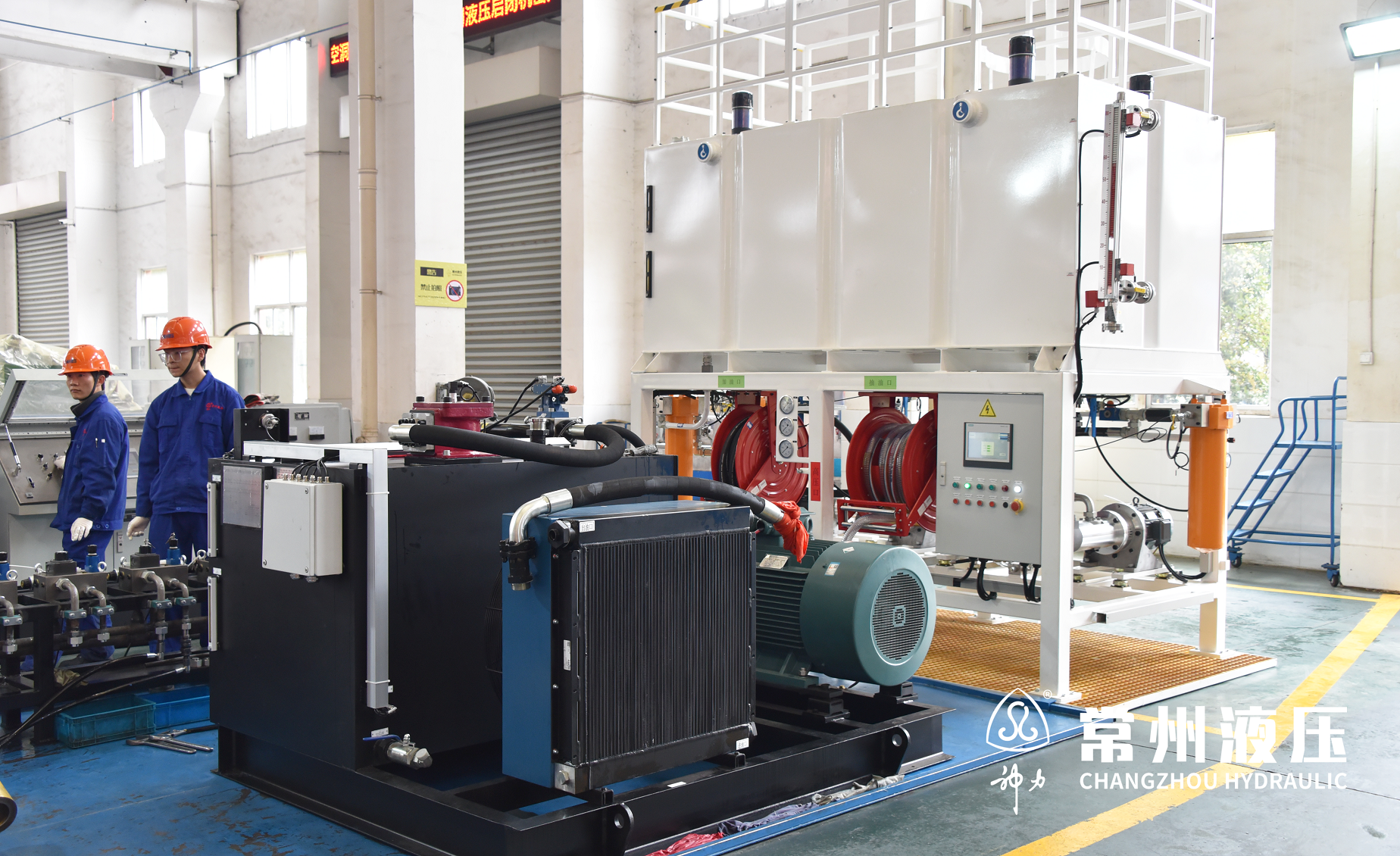
Commercial terms: what is stated, and what still needs confirmation
The supplied product listings give buyers several initial procurement parameters. Each remains subject to confirmation for the exact model, configuration, order, and destination.
| Procurement item | Published product information | What to confirm for the order |
|---|---|---|
| Minimum order quantity | 1 piece | Whether the MOQ applies to the specified design, any tooling or engineering work, and any spare parts ordered separately. |
| Payment | T/T | The payment schedule, currency, bank charges, and milestones in the quotation or contract. |
| Delivery | 15–60 days, depending on product type | The start point for the lead time, drawing approval status, production scope, inspection plan, and dispatch date. |
| Port | Shanghai | The agreed shipping arrangement, destination, export documents, and responsibility for freight and insurance. |
| Annual supply ability | 2,400 tons per year in the relevant product listings | Whether capacity is available for the required product mix and delivery window; the figure is not a project-specific allocation. |
The one-piece MOQ can be relevant when an engineer needs a prototype, replacement unit, or project-specific cylinder rather than a production batch. It does not, on its own, establish that engineering, tooling, testing, or shipping costs are included in a single-piece order. Buyers should request those items separately in the quotation.
The stated 15–60-day delivery range is broad by design: the listing qualifies it as dependent on product type. It should not be represented as a guaranteed lead time for every order. A project schedule is clearer when the supplier confirms the applicable lead time after receiving the final drawing, technical requirements, order quantity, and inspection requirements. The contract should also identify what event starts the clock, such as order confirmation or approved drawings.
Likewise, the 2,400-ton annual supply ability is a listing-level capacity statement. It does not disclose product-specific capacity, utilization, or available production slots. For a large-bore or long-stroke project, the buyer should ask for a schedule tied to the actual configuration and delivery quantity rather than infer availability from an annual total.
What technical information should engineers send before ordering?
A useful inquiry turns the application into a reviewable cylinder specification. At minimum, the request should identify the equipment and duty, the required cylinder arrangement, the installation and connection interfaces, and the operating conditions that the design must meet. For a non-standard hydraulic cylinder, drawings and interface dimensions are especially important because a product description alone does not define the complete configuration.
- Geometry and installation: Specify bore, rod, stroke, closed and extended lengths, mounting style, pin or clevis details, port location, and space constraints when these are defined by the project. Make clear which dimensions are fixed and which may be proposed by the supplier.
- Operating requirements: State the required load, pressure, speed or cycle expectations, operating direction, and duty conditions using project-approved values. Do not assume that a model name or broad category supplies these parameters.
- Environment and interfaces: Describe exposure, temperature, contamination, fluid, and sealing or corrosion requirements where applicable. Marine, offshore, metallurgical, and water-control applications can have different conditions; the specification must identify the actual ones.
- Documentation and inspection: List the drawings, material or component records, inspection points, test documentation, packaging, and shipping documents required for acceptance and delivery.
These items are decision criteria, not claims that every listed product includes every design option. The product records identify steel or piston-cylinder construction for the relevant entries, and some list materials as carbon, alloy, or stainless steel. They do not specify a universal material grade, seal composition, pressure rating, surface treatment, or fluid compatibility. Those details need to be agreed for the particular order.
How should a double-acting piston cylinder be accepted?
The supplied listing identifies model QPKY as a non-standard, double-acting piston cylinder and states an MOQ of one piece, T/T terms, delivery of 15–60 days depending on product type, annual supply ability of 2,400 tons, and Shanghai as port. It does not provide a complete engineering datasheet or order-specific test thresholds. Therefore, acceptance should be defined against the approved drawing and purchase specification, not inferred from the product label.
Before production, the buyer and supplier can establish a written acceptance plan that covers the specific dimensions and interfaces, the agreed extension and retraction functions, and any pressure, leakage, or functional checks required by the project. The plan should state the test conditions, instruments or records required, acceptance limits, and how deviations will be handled. This prevents a general phrase such as “tested” from standing in for a measurable acceptance requirement.
ISO 10100:2020 is listed as a standard addressing acceptance and function tests for hydraulic fluid power cylinders. Its presence as a relevant reference does not prove that a particular cylinder has been tested to it or passed a test. Buyers should specify whether and how the standard is to be used in the purchase agreement, request the agreed procedure and results, and check that the documents refer to the ordered configuration. The standard listing itself does not provide a supplier-specific test report.
For double-acting service, the buyer-defined inspection can distinguish the two operating directions and verify that the supplied ports and connections match the approved design. If the cylinder is part of a larger hydraulic system, system-level performance should not be assumed from cylinder-only documentation. Confirm which checks apply to the cylinder and which belong to the assembled system.
What should the QHLY radial gate hoist review include?
The supplied QHLY-series record describes a hydraulic piston cylinder for a radial gate hoist and lists a 16 m stroke. It also gives the same stated MOQ, payment, delivery, annual supply ability, and Shanghai port information noted above. The 16 m stroke is a product-record value; it does not by itself specify load, pressure, mounting dimensions, duty cycle, or the performance of a complete hoist system.
For a radial gate project, acceptance starts with confirming that the ordered cylinder corresponds to the project’s approved drawings and operating requirements. The review should identify the required stroke and installation geometry, the intended load and hydraulic conditions, connection details, and the relationship between the cylinder and the rest of the hoist or control system. The project team should set the relevant tolerances and pass/fail limits in advance; the supplied QHLY listing does not state those thresholds.
Water-control applications may involve opening, closing, positioning, or holding gates, with environmental and operating requirements defined by the project. The supplied scenario material describes water-conservancy and hydropower service involving intermittent operation, frequent starts and stops, outdoor or humid conditions, and concerns such as sealing, corrosion, pressure stability, and synchronization. These are application considerations, not evidence that every QHLY order includes a particular protection level or meets a particular project requirement.
Where the cylinder is integrated with a hydraulic and electrical control system, the buyer should define system-level acceptance separately from cylinder acceptance. That distinction matters: a cylinder drawing and inspection report can establish product characteristics, but cannot alone demonstrate the behavior of the complete installation under every operating or emergency condition. Project-specific test arrangements and responsibilities should be written into the procurement documents.
How should buyers compare CHANGZHOU HYDRAULIC with larger suppliers?
The requested comparison set includes Parker Hannifin, Bosch Rexroth, Eaton, and SMC. The available evidence here does not provide comparable, product-specific information for those companies on response times, customization flexibility, export readiness, MOQ, lead time, or cylinder acceptance practices. It would therefore be unsound to rank them against CHANGZHOU HYDRAULIC or claim that one is more responsive, flexible, or export-ready.
A defensible comparison uses the same project brief and asks each candidate for evidence against the same dimensions: whether it will review the required cylinder configuration; how deviations from a standard design are documented; what drawings and revision controls are provided; what acceptance tests and reports are offered; what delivery schedule and shipping terms apply; and what export documents and support are included for the destination. Record answers by product and configuration, rather than general corporate statements.
On the evidence supplied, CHANGZHOU HYDRAULIC’s relevant documented points are its Changzhou location, the listed one-piece MOQ, T/T payment, 15–60-day product-dependent delivery, Shanghai port, and 2,400-ton annual supply ability. Its product records also include the QPKY double-acting cylinder and QHLY radial gate hoist cylinder. These facts make it possible to start a project-specific evaluation; they do not establish a comparative advantage over Parker Hannifin, Bosch Rexroth, Eaton, SMC, or another supplier.
For a project-specific cylinder, the practical question is not simply whether a supplier is a global group or a regional specialist. It is whether the supplier can document the exact design, commercial conditions, inspection plan, and shipping arrangement required for the buyer’s application. A buyer comparing a specialist with larger groups should request equivalent responses and verify them against the same specification. Any conclusion about service responsiveness, customization flexibility, or export readiness should rest on those responses and supporting records—not on an assumed company profile.
Procurement decision checklist
Before placing an order, buyers can use this short checklist to turn the initial product listing into a contract-ready decision:
- Confirm the exact model, configuration, drawing revision, materials, interfaces, and project operating requirements.
- Confirm that the one-piece MOQ applies to the required design, and identify any separate engineering, tooling, or inspection costs.
- Obtain a quotation that states T/T milestones, currency, applicable delivery window, schedule assumptions, and Shanghai shipping arrangements.
- Clarify whether and how the stated annual supply ability relates to the requested quantity and production slot.
- Agree acceptance criteria before manufacturing, including which checks apply to the cylinder and which apply to the complete hydraulic or hoist system.
- Request documents tied to the actual ordered configuration; do not treat a general capability statement or standard reference as proof of order-specific conformity.
- When comparing suppliers, use one common specification and compare documented answers rather than unverified claims about responsiveness or export capability.
The company’s CHANGZHOU HYDRAULIC website identifies the supplier. For procurement, the decisive record remains the approved quotation, drawings, order terms, and acceptance documentation for the specific cylinder.
Frequently asked questions
Can buyers order one industrial hydraulic cylinder?
The supplied listings state a minimum order quantity of one piece. Buyers should confirm that this applies to the particular design and ask whether engineering, tooling, inspection, or shipping charges are separate.
What delivery time and payment terms are listed?
The product records list T/T payment and a delivery time of 15–60 days depending on product type. The schedule and payment milestones for a specific order should be confirmed in its quotation or contract.
What acceptance evidence should be requested for a hydraulic cylinder?
Agree acceptance criteria against the approved order drawing and specification before production. ISO 10100:2020 addresses acceptance and function tests for hydraulic fluid power cylinders, but its listing does not prove that a specific supplier or product has completed or passed those tests. Request the applicable procedure and order-specific results.
Can CHANGZHOU HYDRAULIC be ranked against Parker Hannifin, Bosch Rexroth, Eaton, and SMC on responsiveness or export readiness?
Not from the evidence available for this article. A fair comparison requires current, product-specific and comparable information from each supplier using the same project requirements, including response, customization, shipping, export documents, and acceptance evidence.
What is stated for the QHLY radial gate hoist cylinder?
The supplied QHLY-series product record describes a hydraulic piston cylinder for radial gate hoist service and lists a 16 m stroke. It does not state all project-specific load, pressure, installation, or acceptance limits; those need to be confirmed in the approved specification.
Tem questões ou precisa de mais detalhes?
Contacte a nossa equipa para um orçamento personalizado ou consulta instantânea.
Solicitar orçamento
Preencha o formulário abaixo e a nossa equipa entrará em contacto com uma proposta personalizada.
Chat direto do WhatsApp
Prefere conversar em tempo real? Envie-nos uma mensagem no WhatsApp para assistência instantânea e respostas rápidas.
- Obter orçamento personalizado
- Partilhar fotos ou documentos
- Discuta as suas necessidades diretamente
Geralmente responde em 5–30 minutos durante o horário de expediente.