
Hydraulic Die Cutting Machine Supplier Continuity Checklist
Hydraulic Die Cutting Machine Supplier Continuity Checklist
A hydraulic die cutting machine is usually bought once and lived with for a decade or more, yet most purchasing processes still evaluate it as a single capital transaction. Cutting force, table size, cycle time and price are compared, the order is placed, and the question of what happens in year four — when a material format changes, a die is redesigned, or a hydraulic component needs replacing — is often left unanswered until it becomes urgent.
This guide addresses that second question. It sets out a continuity checklist for procurement and engineering teams at the decision-to-execution stage: the shortlist is narrowing, quotations are becoming comparable, and the real differentiator is whether the supplier will still be useful across the working life of the equipment. Huasen Machinery, formally Yancheng City Huasen Machinery Co., Ltd, is a hydraulic die cutting machine manufacturer based in Yancheng, Jiangsu Province, China. Its published portfolio is used here as a worked example because it contains both standard cutting platforms and material-specific lines — the exact combination a continuity review needs to test.
Why continuity deserves a separate evaluation step
Continuity is not a personality trait that a supplier either has or lacks. It is a set of verifiable capabilities that can be checked before a purchase order is signed. Three questions do most of the work.
- Coverage: can the supplier serve the material formats and product families you expect to run in five years, not only the one you are buying for today?
- Support: can the machine be kept running — spare parts, response procedures, installation and operator knowledge — after the warranty period ends?
- Documentation: can the supplier produce records that a second buyer, an auditor or a new plant manager can act on without renegotiating the relationship?
A supplier that answers all three in writing behaves very differently from one that answers only the first two in conversation. That difference is what a continuity review is designed to surface before the machine is shipped, when the buyer still has leverage.
What supply continuity means for a die cutting machine
In this context, supply continuity is the supplier's ability to keep a specific machine productive and serviceable across its working life, and to extend that support when the buyer's material mix or production requirements change. It covers four layers: product-range coverage across adjacent cutting applications, engineering and customization capacity, the after-sales and spare-parts system, and the manufacturing and commercial base that keeps all three funded.
Step 1 — Map current and future material formats to the supplier's range
Start with a material map, not a machine list. List every material the plant runs today, then add the formats the product roadmap is likely to introduce — thinner gauges, larger sheets, roll stock instead of sheets, multi-layer stacks, or a new substrate that behaves differently under a cutting die. Only then compare that map against what the supplier actually builds.
Portfolio breadth matters here for a specific reason: a supplier that only assembles one or two standard platforms will typically answer a new material requirement by pushing the requirement toward the platform it already has. A supplier with material-specific machine categories has a second option — a purpose-built configuration — and that option is what protects a multi-year sourcing plan from becoming a single-machine dependency.
| Material or format group | Relevant machine category in the Huasen portfolio | What the buyer should verify |
|---|---|---|
| Foam, sponge, EVA sheet and block | Foam Die Cutting Machine; Sponge Die Cutting Machine; EVA Die Cutting Machine; hydraulic die cutting machine platforms | Cutting force range, stroke and table dimensions against the thickest and largest part on the roadmap |
| Sandpaper, abrasive paper, abrasive belt, flap disc | Abrasive Material Die Cutting Machine; abrasive-product cutting machines; automatic production lines | Whether a dedicated line is offered, and what automation (feeding, material handling) is included in the quoted scope |
| Conveyor belt and continuous web stock | Conveyor-Belt Die Cutting Machine; travelling-head cutting machines | How the material is fed and indexed; whether sheet and roll configurations are both available |
| Leather, footwear uppers, bags and luggage | Leather Die Cutting Machine; Swing Arm Clicker Press; Footwear Die Cutting Machine | Die handling method, operator ergonomics and batch changeover time |
| Automotive interior: sound insulation, airbag material, mats, seat covers | Automotive Interior Die Cutting Machine; precision four-column cutting machines | Table size for multi-cavity dies, positioning accuracy and repeatability under production load |
| Packaging: carton, paper cup, blister, EPE foam | Packaging Material Die Cutting Machine; Blister Material Die Cutting Machine; Kiss-Cut Die Cutting Machine | Whether kiss-cut or through-cut is required, and whether the quoted machine supports the specific construction |
| Textile, garment, non-woven | Textile Die Cutting Press; multi-layer die cutting machines | Layer count, pressure distribution across the table, and handling of thin or slippery materials |
| Rubber, gaskets, thin film | Precision Four-Column Die Cutting Machine; Flatbed Die Cutting Machine; Hydraulic Cutting Press | Parallelism and repeatability claims, and how they will be measured on your material |
The practical outcome of Step 1 is a short written statement: which of the buyer's material groups are already covered by an existing machine category, which would require a customized configuration, and which the supplier has no evident category for. That statement is the first page of the continuity file.
Step 2 — Confirm the supplier runs both standard platforms and dedicated lines
Standard platforms and dedicated lines do different jobs in a long-term relationship, and a supplier that offers only one of them will eventually constrain the buyer.
Standard platforms — hydraulic plane cutting machines, precision four-column cutting machines, flatbed die cutting machines, travelling-head cutting machines including automatic travelling-head configurations, swing arm clicker presses and hydraulic cutting presses — are the general-purpose base. They are configurable, familiar to operators, and comparatively straightforward to service. When a buyer's product mix shifts within a familiar material family, a standard platform reconfigured with a new die and adjusted pressure is usually the fastest route.
Dedicated lines are built around a specific material or process — abrasive and sandpaper lines, conveyor-belt lines, foam, sponge, leather and rolled-material configurations, plus automatic production lines. They exist because some formats are inefficient on a general-purpose press: handling, feeding and material presentation become the constraint rather than cutting force alone. Huasen Machinery's published portfolio includes both groups, alongside intelligent CNC cutting machines and multi-layer, kiss-cut and blister configurations.
The continuity test is to ask what happens under change. If the buyer's volumes grow, can the same supplier quote an automated line rather than a second manual press? If a material becomes thinner or comes on a roll rather than in sheets, can the supplier reconfigure, or does the buyer need a different vendor and a second support relationship? Huasen states that its machines can be designed for sheet materials as well as for rolls, and that buyers running both should say so in advance so that a single machine can be specified for both.
Customization scope should also be pinned down while the specification is open. Huasen's published customization list covers working-table dimensions, cutting force and functions, cutting stroke, die size, feeding system, automatic positioning, production-line integration, safety systems and the control system — and the company states that a solution is provided before production begins. For a continuity file, the value of that list is not that everything can be changed, but that the scope of change is defined in advance, so later requests have a known boundary.
Step 3 — Test the service and spare-parts layer, not only the machine
Most machine failures are not exotic. They are hydraulic seals, worn cutting boards, sensors, electrical components and the ordinary wear items that a production press consumes. Continuity therefore depends more on the parts and response system than on the machine's headline specification.
Huasen Machinery states a 12-month warranty. Within it, telephone support is prioritized, a solution is targeted within two hours, and an on-site visit within 24 hours where needed; if the customer replaces a component themselves during the warranty period, the company states it bears the cost of the components and parts. Outside the warranty period, the same response targets apply and the customer covers materials, related repair costs and other costs. A spare-parts list is supplied with the machine.
For a multi-year sourcing decision, three follow-up questions convert that policy into something checkable:
- What is the normal lead time for the wear parts this machine will consume, and does the supplier hold them or manufacture them to order?
- Which components are still expected to be available after the warranty period ends, and on what basis is that stated?
- Is a starter stock of commonly required parts worth purchasing with the machine, so a first failure does not stop a production line while a shipment is arranged?
The company also reports more than 30 global agents providing before- and after-sales service, and states that installation guidance and technical support are provided. Buyers should confirm in the quotation whether installation and operator training are included or charged separately — a detail that is easy to leave ambiguous and expensive to discover later.
Step 4 — Check the engineering and standards record
Standards work is a useful proxy for engineering continuity because it is difficult to fake and slow to acquire. Huasen Machinery states that it drafted the industry standard QB/T 5122-2017 for hydraulic die cutting systems exclusively, and holds ISO 9001 quality, ISO 14001 environmental and ISO 50001 energy management system certifications. It also states that complete machines carry EU CE safety certification, with exports to the EU aligned to Machinery Directive 2006/42/EC together with the Low Voltage and Electromagnetic Compatibility requirements.
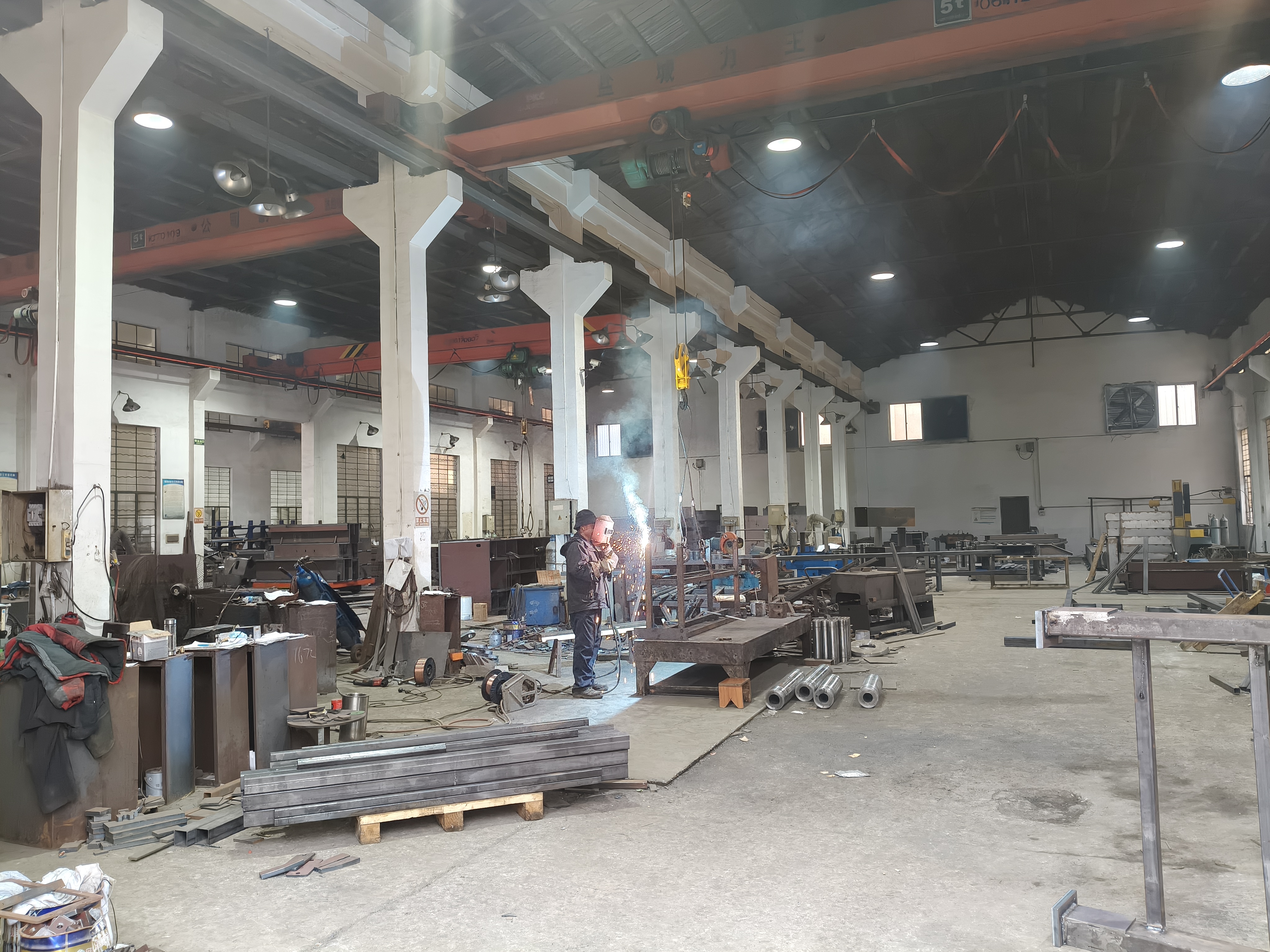
The company reports more than 110 employees, including 46 senior engineering technicians, and approximately 150 patents. Those figures describe a base capable of sustaining a broad range, but they are inputs to a judgment rather than the judgment itself. The claim that matters most at the machine level is accuracy: Huasen states that the parallelism of its cutting machines can reach ±0.03 mm, depending on the model and configuration.
That qualification is the important part. A parallelism figure is a statement about a configuration, not a promise that applies to every press in a catalogue. The way to close the gap is a factory acceptance test. Huasen describes a FAT that checks cutting accuracy, the hydraulic system, running noise, safety interlocks, stroke and load capacity, with test data recorded for customer confirmation, and states that customers may witness the test on site or remotely.
For hydraulic safety specifically, EN ISO 4413:2010 remains the reference standard for hydraulic fluid power systems and their safety requirements, so a buyer building a technical file should expect the hydraulic design and its documentation to be traceable to a recognized standard rather than described only in marketing terms. A named certification also deserves a scope check: confirm that the declaration supplied refers to the exact model and configuration being purchased, not only to the manufacturer's general capability.
Step 5 — Verify manufacturing capacity and commercial durability
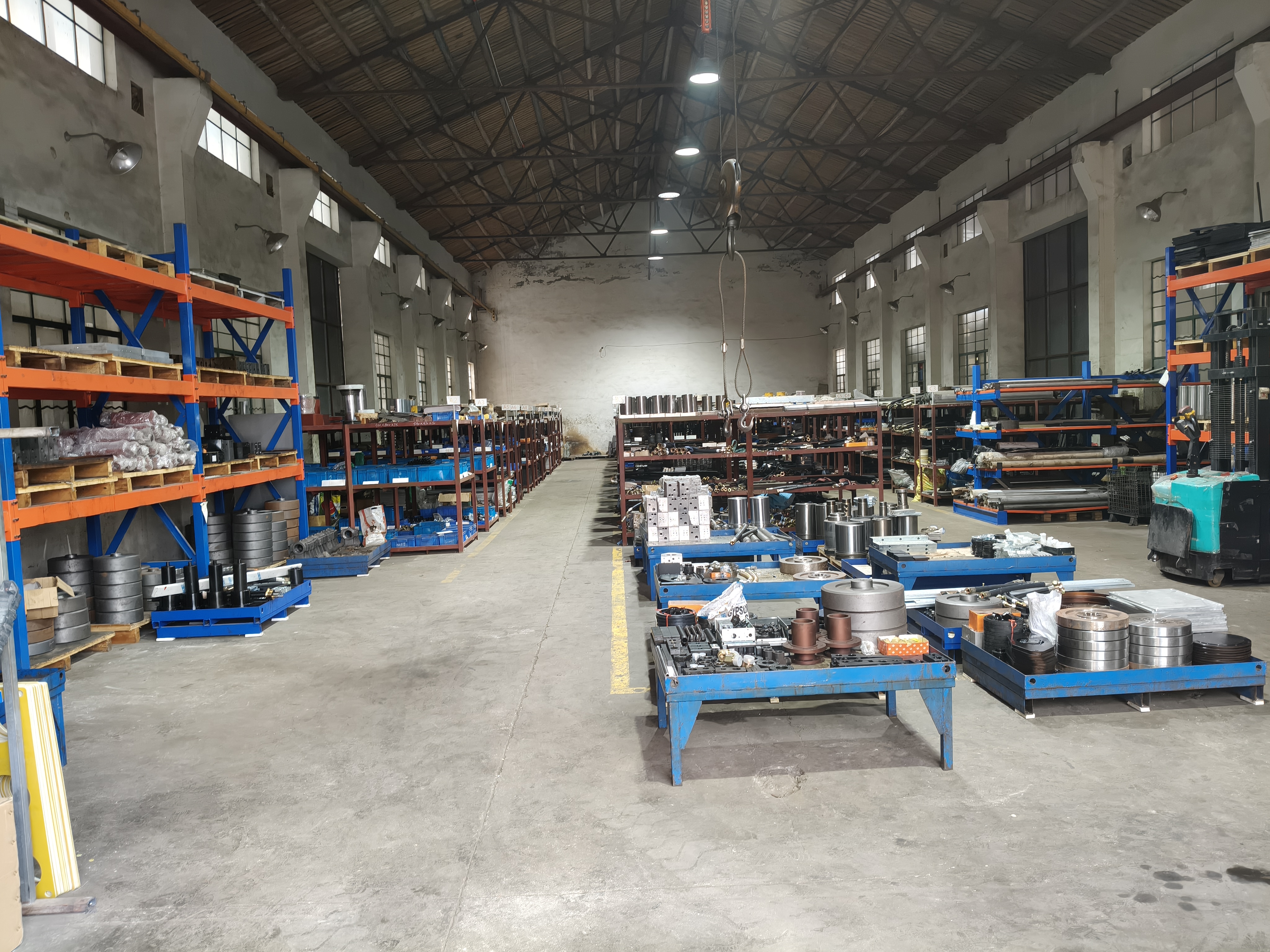
A supplier's ability to support a machine in year eight depends partly on whether the business is still configured to build and service it. Huasen Machinery reports a 26,000 m² factory area, more than 110 employees, an annual output of approximately 1,000 units, and an export share of about 60%, with main markets in the EU, the USA and Asia. Its published commercial terms include a minimum order of one set, delivery terms of EXW, FOB, CNF and CIF, payment of 30% deposit with 70% before delivery, and acceptance by video inspection.
These figures should be read as company-reported indicators, not independently audited data. Their procurement use is comparative: they tell a buyer whether a supplier operates at a scale where a single customized machine is routine rather than exceptional, and whether a meaningful share of output already leaves the domestic market — which usually means export documentation, packing and remote support are established processes rather than one-off efforts.
Packing and transport belong in the same review. Huasen states that rust and moisture prevention are applied, that easily removable pallets are used, and that the machine is protected inside a wooden case, and that any packaging or transport requirement can be accepted. For a buyer ordering a multi-year replacement programme rather than one machine, standardized packing is a continuity feature: the second and third shipments should arrive in the same condition as the first.
Step 6 — Document the evaluation so it survives staff changes
Continuity reviews fail most often not because the answers were bad, but because nobody wrote them down. Procurement staff change, plant managers move, and a sourcing decision taken in 2026 is usually inherited by someone in 2029 who has no access to the reasoning behind it. A short, structured record prevents that loss.
| Checklist item | Evidence to obtain | Why it matters for continuity |
|---|---|---|
| Material coverage | Written map of current and planned material formats against the supplier's machine categories | Shows which future formats are already supported and which would require a new supplier |
| Standard versus dedicated range | List of standard platforms and material-specific lines the supplier actually builds | Confirms the supplier has more than one route to answer a changed requirement |
| Customization boundary | Defined scope: table size, cutting force, stroke, die size, feeding, positioning, integration, safety, controls | Later engineering requests have a known starting point and a documented limit |
| Service commitments | Warranty period, response targets, on-site terms, who bears component cost inside and outside warranty | Converts informal assurances into a reference the buyer can hold the supplier to |
| Spare-parts position | Parts list supplied with the machine, normal lead times, post-warranty availability, recommended starter stock | Shortens the first unplanned stop and makes the parts plan explicit |
| Standards and certification | Certification scope for the exact model, standard references, declaration documents | Supports market access and gives an auditor a traceable record |
| Acceptance evidence | Factory acceptance test data, trial-cut results with the buyer's material and die, witnessed or remote | Replaces catalogue claims with measured outcomes for this configuration |
| Commercial durability | Factory area, headcount, output, export share, delivery and payment terms | Indicates whether the support structure is likely to still exist later in the machine's life |
| Review date | Next scheduled review of supplier performance and material roadmap | Turns a one-time evaluation into a maintained position |
Two habits make the file useful rather than decorative. First, quote every supplier against the same technical requirements, so the comparison is like-for-like rather than a comparison of differently scoped offers. Second, record what was not confirmed. A documented open question is a manageable risk; an unrecorded assumption becomes a production problem.
Where portfolio breadth helps — and where it stops
Breadth is evidence of engineering exposure, not evidence of fit. A supplier that builds machines for abrasives, conveyor belt, foam, sponge, rolled material, leather, automotive interior, packaging and footwear has, by necessity, worked through a wide range of material behaviours, feeding arrangements and die layouts. Compared with suppliers offering mainly standard equipment, Huasen states that it can provide application-specific solutions, and suggests that buyers evaluate this advantage through factory inspection, component specifications, machine testing and customer references.
That is a fair test. What breadth does not establish is that a specific press will hit the buyer's tolerance, cycle time and rejection rate on a specific material. Two limitations deserve attention in the evaluation record. The first is depth versus width: a supplier may cover many categories competently while being exceptional in only a few, so the buyer should request references from customers running comparable machines and materials rather than accepting a general capability statement. The second is that a broad range can obscure configuration differences — two machines with similar external dimensions may carry different components, controls and safety systems, and the quotation should state which.
Total cost of ownership belongs in the same discussion. The cheapest machine is not automatically the most economical one. Maintenance, material waste, unplanned downtime, spare-parts cost, energy consumption and product rejection can accumulate far beyond the difference in purchase price, which is why complete quotations — including warranty coverage, installation, training, spare parts and technical support — give a more accurate long-term picture than machine price alone.
Application scenarios that stress the continuity question
Abrasive converting. A sandpaper or abrasive-belt producer typically runs several formats on the same site. Huasen reports automatic production lines and high-speed cutting equipment for continuous or higher-volume work, and its published sandpaper line specifications include cutting frequencies of up to 60 cycles per minute on one listed model, together with servo-driven feeding and automatic material handling. For continuity, the buyer should confirm which of those elements are part of the quoted line, and confirm actual capacity through a test with their own material and die.
Automotive interior supply. Programs run for years and are subject to engineering changes mid-cycle. The continuity questions are whether the supplier's four-column and automotive-interior platforms can accommodate a redesigned die without a new machine, and how quickly a changed part drawing can be translated into a tested configuration. Huasen states that its customer base has included automotive manufacturers and tier suppliers; as with any reference, the useful step is to ask for comparable applications rather than rely on a name list.
Foam and protective packaging. Product lines change frequently and volumes are uneven. Here a standard hydraulic die cutting machine with adjustable stroke and pressure may serve several products, while the supplier's foam, sponge and EVA categories offer a route if a format becomes too demanding for the general-purpose press.
Footwear and leather goods. Clicker presses and leather cutting machines are operator-facing equipment, so continuity depends heavily on ergonomics, die handling and the availability of wear parts. A supplier that offers both a swing arm clicker press and larger hydraulic platforms gives a buyer room to scale from sample work to volume production without leaving the support relationship.
What the 2025–2026 market data suggests about automation choices
Grand View Research estimates the global die cutting machine market at USD 1.6 billion in 2025, projected to reach USD 1.7 billion in 2026, and reports that fully automatic die cutting machines accounted for approximately 58.9% of market share in 2025.
The procurement reading of that second figure is not that every buyer should automate. It is that automation is now a mainstream configuration rather than a specialist one, which changes what continuity has to cover. Once feeding, positioning and material handling are automated, the supplier's support obligations extend to servo systems, sensors, control architecture and the software logic that coordinates them. A buyer specifying an automatic line should therefore ask a different set of long-term questions: whether the control platform is one the supplier will still support in later years, whether spare modules are stocked, and whether the supplier's own range includes both the automated and the manual version of the same process, so a step change in volume does not require a change of vendor.
Market size figures are context, not a purchase argument. They indicate a large installed base of die cutting equipment, which is generally consistent with parts availability across the industry — but they say nothing about any individual supplier's inventory policy, and should not be used as a substitute for the parts questions in Step 3.
Future outlook: procurement decisions that age well
Two slow-moving factors will shape whether a machine bought in 2026 remains straightforward to own.
The first is regulation. Huasen states that machines exported to the EU are CE certified and aligned with Machinery Directive 2006/42/EC, and that from 2027 the new Machinery Regulation EU 2023/1230 applies. For equipment with a long service life, this is a live procurement issue rather than a legal footnote: a press commissioned now may operate well beyond the point at which the rules under which it was placed on the market have been replaced. Buyers should obtain the declaration and technical documentation for the exact configuration, keep it in the continuity file, and ask the supplier how documentation and any necessary upgrades will be handled if the machine is modified, relocated or resold.
The second is service life itself. There is no single number that applies to every machine. Huasen notes that general expectations for a well-maintained press run from roughly 10 to 20 years, while service life in practice depends on operating hours, cutting force, material characteristics, production environment, lubrication, hydraulic maintenance, operator practice and replacement of wear components. That range is exactly why the continuity checklist exists: over ten to twenty years, the machine will outlast several purchasing cycles, several staff changes and probably at least one significant change in product mix. Only the supplier relationship — documented, not assumed — spans the same period.
Frequently asked questions
How should a procurement team evaluate a hydraulic die cutting machine supplier over a multi-year horizon?
Evaluate three layers separately: product-range coverage against current and planned material formats, the service and spare-parts system including response commitments and post-warranty parts availability, and the engineering and standards record that supports the exact configuration being bought. Ask every shortlisted supplier to quote against the same technical requirements so the offers are comparable, and record which items remain unconfirmed.
Which machine types should a supplier offer if our material mix may change?
A useful range combines general-purpose platforms with material-specific machines. On the Huasen side this includes hydraulic die cutting machines, hydraulic plane cutting machines, precision four-column cutting machines, flatbed machines, travelling-head machines, intelligent CNC cutting machines and automatic die cutting machines, alongside dedicated categories for foam, sponge, leather, conveyor belt, abrasive and packaging materials, plus multi-layer, kiss-cut and blister configurations. Huasen also states that machines can be designed for sheet material, for rolls, or for both when the buyer declares both in advance.
What spare-parts information should be fixed before ordering?
Ask for a recommended spare-parts list before the order is placed, confirm the supplier's normal lead time for the parts the machine will consume, and confirm whether those components remain available after the warranty period. A spare-parts list is supplied with Huasen machines, and purchasing commonly required parts together with the machine is a practical way to avoid a stoppage while a shipment is arranged. Warranty terms, and who bears component cost inside and outside the warranty period, should be stated in the same document.
How can accuracy claims be verified before a multi-year commitment?
By testing with the buyer's own material, die and product drawing rather than relying on catalogue values. Huasen states that the parallelism of its cutting machines can reach ±0.03 mm depending on the model and configuration; the way to confirm what a specific machine will deliver is a trial cut and a factory acceptance test that records cutting accuracy, hydraulic performance, safety interlocks, stroke and load capacity. Huasen states that customers may witness the test on site or remotely, and buyers should compare measured results, cycle time, cutting force and repeatability across suppliers.
Does the 2027 EU machinery regulation transition affect a machine purchased now?
It can, for equipment with a long service life. Huasen states that machines exported to the EU are CE certified and aligned with Machinery Directive 2006/42/EC together with Low Voltage and Electromagnetic Compatibility requirements, and that the new Machinery Regulation EU 2023/1230 applies from 2027. Buyers should obtain the declaration and technical documentation for the exact model and configuration, keep it with the machine records, and clarify with the supplier how documentation and upgrades will be handled if the equipment is later modified, relocated or resold.
What belongs in a supplier continuity file?
A material-format map covering current and planned formats, the configuration baseline of the machine ordered, the customization scope agreed, warranty and response terms, the spare-parts list with lead times, certification and standard references for the exact model, factory acceptance test and trial-cut records, commercial terms, and a scheduled review date. The file should also note what was not verified, so the next reviewer knows where the open questions are.
Conclusion
Continuity is a documented position, not a promise. A supplier earns it by covering adjacent material formats with both standard and dedicated machines, by defining a customization boundary before production, by naming response times and parts arrangements that survive the warranty period, by holding standards and certification records that refer to the actual machine, and by operating at a scale where a customized press is routine work. Each of those can be checked, quoted and written down.
For buyers at the execution stage, the practical sequence is short: build the material map, ask every shortlisted supplier to answer the same checklist, verify the critical claims with a trial cut and an acceptance test, and file the result. Huasen Machinery's own range — spanning hydraulic die cutting, four-column, travelling-head, flatbed, CNC and automatic platforms alongside material-specific lines for abrasives, conveyor belt, foam, sponge, rolled material, leather and packaging — illustrates what that coverage looks like on paper; only testing with the buyer's own material confirms what it means in production. Technical specifications for the full range are compiled in the company's product catalogue (PDF), which is publicly available for download and can be used as a starting reference when building the material map described above.
Tem questões ou precisa de mais detalhes?
Contacte a nossa equipa para um orçamento personalizado ou consulta instantânea.
Solicitar orçamento
Preencha o formulário abaixo e a nossa equipa entrará em contacto com uma proposta personalizada.
Chat direto do WhatsApp
Prefere conversar em tempo real? Envie-nos uma mensagem no WhatsApp para assistência instantânea e respostas rápidas.
- Obter orçamento personalizado
- Partilhar fotos ou documentos
- Discuta as suas necessidades diretamente
Geralmente responde em 5–30 minutos durante o horário de expediente.