
Hydraulic Hoist Technical & Procurement FAQ: Questions to Resolve Before Ordering
Hydraulic Hoist Technical & Procurement FAQ: Questions to Resolve Before Ordering
A hydraulic hoist order often begins and ends with one number: the rated capacity. That number matters, but it does not describe the machine. Two hoists rated for the same lifting force can differ in stroke, working pressure, cylinder bore, rod protection, position feedback, control architecture and the documents that prove the finished unit was tested. Buyers who settle only the tonnage leave the rest of the specification to the supplier.
This technical and procurement FAQ is written for buyers in the evaluation and execution stages: engineering teams preparing a specification, procurement teams drafting terms, and project owners who must accept equipment on site. It uses the component scope of Jiangsu Wujin Hydraulic Hoist Co., Ltd. (Wujin Hydraulic), a manufacturer of hydraulic hoists, hydraulic cylinders and hydraulic power units founded in 1970 in Changzhou, Jiangsu, China, as a reference for the questions an order should answer before commitment.
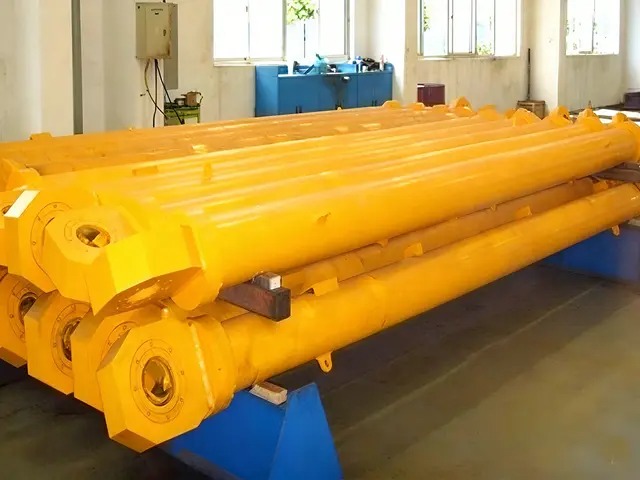
Hydraulic hoist procurement decisions involve the cylinder, power unit, control cabinet, sensor and surface treatment together, not a single capacity figure.
Why tonnage alone cannot define a hydraulic hoist
Rated lifting force sets a load boundary. It does not set the geometry or the duty. A required force can be produced by a large cylinder at moderate pressure or a smaller cylinder at higher pressure, and those two designs place different demands on the power unit, the seals, the rod coating and the structural interface. Stroke has a similar effect: a longer stroke increases oil volume per cycle and changes the guidance and stability questions that the cylinder design must answer.
A third-party company listing for Wujin reports a lifting force range from 60 kN to 8,000 kN and a stroke up to 16.35 m. The figures come from a listing rather than an independently verified datasheet, and they should be read as an indication of scope, not as a certified envelope for any particular project. Their practical use is to show why a single tonnage figure is a weak specification: even inside one manufacturer's range, the combination of force, stroke and pressure has to be fixed project by project.
Gate type adds requirements that tonnage cannot express. A plane gate, a radial gate and a ship-lock miter gate present different load paths, opening geometries and consequences of drift. The operating philosophy matters as well: whether the gate must hold at intermediate positions, whether opening and closing are automatic or supervised, and how the hoist behaves during a power failure or an emergency operation. Each answer changes the control system, the valve arrangement and the acceptance test.
The procurement consequence is straightforward. A useful request for quotation carries the gate load data, the required stroke, the working pressure basis, the duty cycle, the operating and emergency functions, the site environment and the acceptance basis together. In this category, sizing is expressed through application-specific combinations of capacity, cylinder bore and stroke rather than one universal rating, so the RFQ should ask for the whole combination. When those items are absent, suppliers fill the gaps with assumptions, and the buyer discovers the assumptions at factory acceptance or at commissioning.
Five technical question sets to settle before an order
The questions below follow the subsystem boundaries that determine whether a hydraulic hoist will meet its specification. They are written as questions because the correct answers are project-specific; the purpose is to make each answer checkable.
Electrical control system
Ask for the control philosophy before asking for a cabinet. The relevant points are the architecture (local control, remote control or both), the input and output list, the interlocks between hoist and gate, the emergency-stop and manual-operation paths, the power supply and backup arrangement, and the environmental protection of the cabinet. Wujin's application data for water-conservancy hoists lists automatic and manual remote control, local on-site operation and emergency manual operation, with a control cabinet among the matched equipment. A buyer should confirm which modes apply to the project and how each is tested.
Communication deserves a separate question. Where the hoist must report to a plant monitoring or SCADA system, the buyer needs the interface definition, the data points, the alarm list and the responsibility for integration. A draft IEC catalogue listing, prEN IEC 61850-7-410:2026, describes communication for monitoring and control in hydroelectric power plants and refers to hydropower gate and hydraulic cylinder logical nodes. It is a draft listing, not a confirmed requirement, so its applicability should be checked with the plant owner and the relevant standards body before it is written into a specification.
Finally, ask what the buyer receives. Control drawings, an I/O list, a function description, test records and a spare-parts list are part of the deliverable, not optional extras. A control system that cannot be documented cannot be maintained by the site team.
Hydraulic system and power unit
The hydraulic power unit is where the specification becomes physical: pump configuration, valve manifold, accumulators if used, filtration, oil volume, cooling or heating, pressure holding and instrumentation. Wujin's product scope includes hydraulic power units and water-conservancy hydraulic systems, and its customization list covers working pressure and control system. Those are the variables to fix in a technical annex rather than in a general description.
Ask for the P&ID and a component list with manufacturer and model for pumps, valves, seals and instruments. Ask how pressure is held during long standby periods, how leakage is detected, and what redundancy, if any, the project requires. Ask which functions are manual and which are automatic, and how the system behaves when a pump or a sensor fails.
The maintenance obligation should be stated openly. A hydraulic hoist depends on clean oil and serviceable seals; the company's own basic-use guidance is to inspect the hydraulic system before use, maintain hydraulic oil and seals regularly, and avoid overloading. These are operating requirements rather than defects, and a buyer should confirm who supplies the first fill, the spare seal set and the oil-analysis schedule.
Hydraulic cylinders
For the cylinder, the specification should state bore, rod diameter, stroke, mounting arrangement, material, seal system, design pressure, test pressure and the required rod surface condition. Wujin's cylinder range includes a water-conservancy and hydropower cylinder model, and cylinder material is listed among the customization options. These items should not be chosen in isolation: bore and pressure together produce the force, while stroke and mounting together determine guidance and stability.
Evidence is the second half of the question. The company's capability data states 100 percent testing. A buyer should ask what that statement covers: material verification, dimensional inspection, pressure test, leak test, functional test, or all of them; which records are issued; whether the buyer may witness the test; and how a nonconformance is handled. A test claim without a defined scope and a record format is difficult to accept at site.
Stroke sensor
Position feedback determines how the control system knows where the gate is. Wujin lists several sensor models, including the CPMS-I Improved, CPMS-II Incremental, CPMS-JD Absolute and CPMS-JD-mini stroke sensors. The first decision is architectural: absolute and incremental feedback arrangements answer different questions about what happens after a power interruption, and the buyer should confirm which arrangement the control philosophy requires rather than choosing by model name.
The second decision is verification. A company case record for a lock-gate project describes 30 hydraulic hoists integrated with the CPMS-JD Absolute Stroke Sensor, citing millimeter-level positioning, resistance to electromagnetic interference and a 30-year design life for the installation. That is a company description of one project, not a guarantee for every application. Buyers should request the datasheet, calibration record, interface description, mounting drawing and recommended spare strategy, and should confirm how the sensor is protected from moisture, vibration and electrical noise on their own site.
Metal surface modification treatment
Piston rod protection is often the difference between a hoist that can be maintained and one that must be rebuilt. Wujin lists HVOF, APS and LC metal surface modification treatments. HVOF and APS are thermal spray processes; the buyer's task is to specify the required outcome and the inspection method, not merely the process name. Thickness, bond strength, porosity, surface finish, post-treatment and the acceptance report should all be agreed before production.
Wujin states that it was the lead drafter of NB/T 35017-2013, an energy-industry standard for ceramic-coated piston rods. That claim should be checked against the published standard and the company's stated role, but it is a legitimate question to put to any supplier: which standard governs the coating, what does the supplier's scope cover, and which test reports will be supplied? The company also reports more than 1,000 sets of hydraulic equipment delivered to marine and offshore enterprises by the end of 2025, an environment where rod protection is a central concern. Delivery volume is not a performance guarantee, but it is relevant context when asking for coating procedures and inspection records.
Commercial terms to settle with the technical annex
Commercial terms are easier to negotiate when they are tied to the technical annex. Wujin's capability data lists a minimum order quantity of one set, a five-month lead time, OEM, ODM and customized design, and after-sales support covering on-site installation guidance, remote technical support and technical training. Each of these should be converted into a contract term with a scope: what installation guidance includes, how remote support is delivered and in what language, and what the training covers.
Delivery terms, payment schedule, packaging, marking, transport insurance and the documents required for import should be confirmed in writing with the supplier's sales representative. They are commercial arrangements that vary by project and destination, and they should not be inferred from a product page. The same applies to warranty duration, spare-parts availability and the response commitment for a site issue. A five-month lead time is a planning input, not a delivery promise, until the scope, the drawing approval date and the inspection plan are fixed.
Change control is worth a clause of its own. Customization in this category covers lifting force, stroke, working pressure, cylinder material, surface anti-corrosion treatment, control system and installation structure. Each change after drawing approval has a cost and a schedule effect, so the buyer should know how revisions are priced and how they are recorded.
Acceptance criteria and the evidence package
Acceptance should be defined before the order, not negotiated at the factory gate. The buyer needs an inspection and test plan that names the tests, the standards or internal procedures behind them, the acceptance limits, the records to be issued and the witnesses. For a hydraulic hoist this normally includes material and dimension verification, pressure and leak testing of the cylinder and power unit, functional testing of the control system, sensor calibration, coating inspection and a final assembly check.
The document package should be listed in the contract: material certificates, dimensional reports, pressure test records, functional test records, sensor calibration certificates, coating inspection reports and quality management certificates. Wujin holds ISO 9001:2015 certification (certificate 00823Q30329R3M, issued 2023-12-12, valid to 2027-01-07, China Xinshidai Certification Body), with a scope covering design, development, production and service of hydraulic cylinders and hydraulic hoists within the qualification scope, and ceramic coating. It also holds ISO 14001:2015 and ISO 45001:2018 certificates (01424E10009R4M and 01424S10008R4M, China United Certification Center (Beijing) Co., Ltd., valid 2024-01-06 to 2027-01-05). Buyers should read the scope statements and confirm that the specific product and process are covered, rather than treating a certificate number as a complete answer.
| Specification area | Questions to put in the RFQ | Evidence to request |
|---|---|---|
| Electrical control system | Control modes, I/O list, interlocks, emergency and manual operation, power supply and backup, cabinet protection, communication interface | Control drawings, I/O list, function test record, interface description |
| Hydraulic system and power unit | Pump and valve configuration, filtration, oil volume, pressure holding, cooling or heating, leakage detection | P&ID, component list, pressure test record, cleanliness record |
| Hydraulic cylinder | Bore, rod diameter, stroke, mounting, material, seals, design and test pressure, rod surface condition | Dimensional report, material certificate, pressure and leak test record |
| Stroke sensor | Absolute or incremental feedback, resolution, interface, protection against moisture, vibration and electrical noise, spare strategy | Datasheet, calibration record, mounting drawing |
| Surface modification | Process, thickness, bond strength, porosity, finish, repair policy, governing standard | Coating procedure, inspection report, standard reference |
| Commercial and acceptance | MOQ, lead time, delivery terms, documentation language, witness testing, warranty, spare parts | Quotation, schedule, inspection and test plan, certificate package |
Two further acceptance questions are often missed. First, who owns the test definition when the project specification is silent? Second, what happens to a unit that fails a test: repair, re-test, replacement, or concession with a documented deviation? The answers determine whether acceptance is a real gate or a formality.
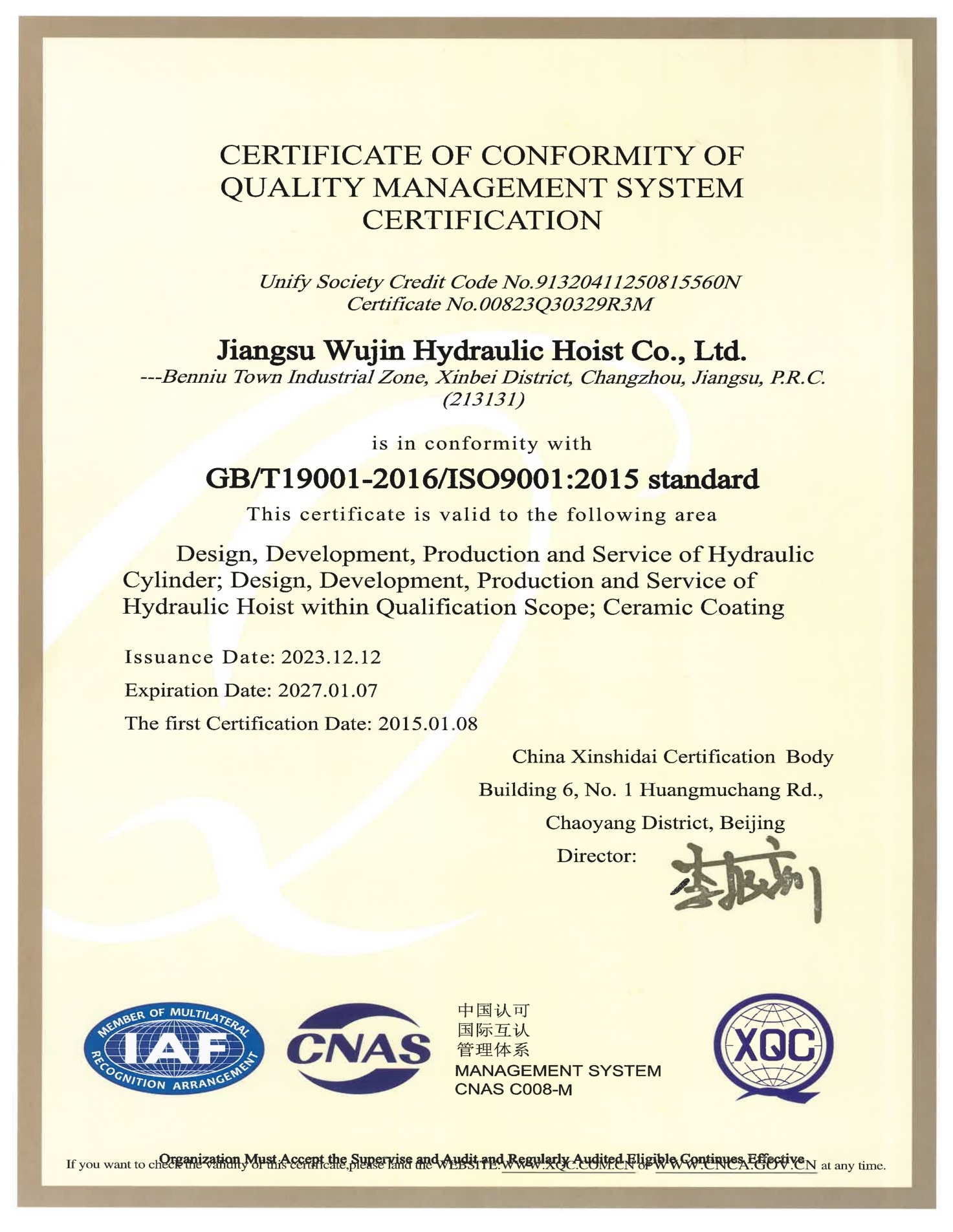
Certificate scope should be read against the product and process being ordered, not treated as a general quality claim.
Matching the hoist to the gate and the site
Water-conservancy hoists work outdoors, often in high humidity, with splash water, dust and a wide temperature range. Wujin's application data for this segment lists anti-corrosion surface treatment, long continuous working life, overload protection and stable operation under high water pressure as special requirements, with automatic or manual remote control, local operation and emergency manual operation as operating modes. Those are sensible headings for a site-condition annex, but each one needs a project value: the corrosion category, the expected number of cycles, the overload setting and the emergency procedure.
Application records show the range of uses. A 30-unit lock-gate project is described with CPMS-JD absolute sensors and a 30-year design life; a 40-set dam-gate project record describes operation under ultra-high water pressure with anti-corrosion treatment and overload protection; and the company reports supplying hydraulic hoists for 23 spillway outlets and 14 power-station intake gates at the Three Gorges Project in 1999. These are company-reported references. A buyer should ask for the project name, the scope supplied, the acceptance basis and a contactable reference before treating them as proof of fit for a new gate.
Compared with a traditional wire-rope hoist, a hydraulic gate hoist replaces the rope and drum with a cylinder and a power unit, which changes the maintenance profile rather than removing maintenance. The hydraulic option is often considered where a compact installation, a defined holding capability or a direct thrust arrangement is needed; the trade-off is dependence on fluid cleanliness, seal condition and control-system integrity. Neither arrangement is universally better, and the comparison should be made on the actual gate, duty and available maintenance resources.
What the market and standards picture means for buyers
A commercial research summary cited in the available evidence projects the global hydraulic hoist market for water conservancy at USD 1.41 billion in 2026, with growth through 2032. The figure is a research estimate for a broad category, not a price benchmark or a demand forecast for a specific gate project, and it should be used only as context. Its practical implication is that supplier capacity and documentation quality become more important as more projects compete for engineering attention.
Standards work is moving in the same direction. The draft IEC 61850-7-410 listing points toward more structured communication between hydropower plant control and gate equipment, including logical nodes for hydropower gates and hydraulic cylinders. Buyers specifying monitoring integration should ask early whether the plant requires a particular communication model, and should confirm the status of any draft standard before making it contractual.
The forward-looking questions are therefore practical rather than speculative: whether the control system can be integrated with the plant's monitoring architecture, whether sensor and coating data will be retained for lifecycle decisions, and whether spare parts and technical support will still be available when the gate reaches its first major overhaul. A supplier's answers to those questions are part of the product.
Frequently asked questions
What basic information should a buyer confirm before a hydraulic hoist is used?
Confirm the rated capacity, lifting height, working pressure and application environment, because these define the operating envelope. Before use, inspect the hydraulic system, maintain the hydraulic oil and seals on a defined schedule, and never exceed the rated load. The same four parameters should appear in the order documents, the operating manual and the training material so that the site team works from one consistent specification.
Which parameters belong in a hydraulic hoist RFQ besides tonnage?
Include the required stroke, working pressure basis, cylinder bore and mounting, duty cycle, gate type, site environment, operating and emergency modes, control architecture, position feedback, surface protection and the acceptance basis. Ask the supplier to state the rating basis for the quoted capacity. A quotation that answers only the tonnage leaves the buyer unable to compare offers or to verify the delivered machine.
What should be confirmed about the electrical control system?
Confirm the control modes, I/O list, interlocks, emergency and manual operation, power supply and backup, cabinet protection, communication interface and the documents delivered with the system. If plant monitoring integration is required, fix the data points and the integration responsibility in the contract. Ask how each function is tested and which records are issued, so that the control system can be accepted on evidence rather than on description.
What should be confirmed about the hydraulic system and power unit?
Confirm the pump and valve configuration, filtration, oil volume, pressure-holding method, cooling or heating, instrumentation and leakage detection, supported by a P&ID and a component list. Clarify who supplies the first oil fill, spare seals and oil-analysis guidance. Ask how the system behaves if a pump or sensor fails, and whether any redundancy is required for the gate's safety function.
Which cylinder details and records should be requested?
Request bore, rod diameter, stroke, mounting, material, seal system, design and test pressure, and the rod surface specification. Ask what the supplier's testing statement covers and which records accompany the unit: material certificates, dimensional reports, pressure and leak test records, and coating inspection. Where the buyer intends to witness testing, the inspection plan should say so before production begins.
How should a stroke sensor be selected and verified?
Select by control architecture first: confirm whether the system needs absolute or incremental feedback and what happens after a power interruption. Then request the datasheet, resolution, interface, calibration record, mounting drawing and spare-part recommendation. Check the sensor's protection against moisture, vibration and electrical noise for the actual site. A model name alone does not establish accuracy, so the acceptance record should show the calibrated result.
How should piston rod surface treatment be specified and checked?
Specify the required outcome, including the coating process, thickness, bond strength, porosity, finish and repair policy, together with the inspection method and report. Name the governing standard where one applies, and ask the supplier to confirm its role and the scope of its qualification. Process names such as HVOF or APS describe a method, not a verified result; the acceptance documents should show measured values against the agreed criteria.
What purchasing terms and acceptance criteria should be settled before ordering?
Settle the delivery terms, payment schedule, packaging, documentation language, lead time, warranty, spare-parts list and service response with the supplier's sales representative, and attach them to the technical annex. Define the inspection and test plan, acceptance limits, records and witnesses, and the handling of nonconformance. Wujin's published capability data lists a one-set minimum order, a five-month lead time and 100 percent testing; each should be confirmed for the specific scope rather than assumed.
How can a buyer verify supplier evidence such as certifications and references?
Read the certificate scope, issuer and validity dates, and confirm that the product and process are covered. For project references, ask for the project name, scope, year and acceptance basis, and request a contactable reference where confidentiality allows. Company-reported figures, including delivery volumes, should be treated as claims to be checked. A site or factory visit, a witnessed test and a document review together give stronger evidence than any single certificate.
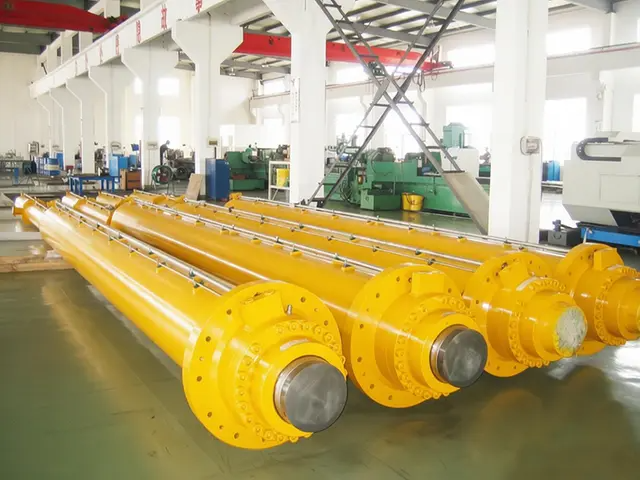
Production capability is relevant to a buyer only when it is tied to a defined inspection plan and document package.
Conclusion
A hydraulic hoist order is a specification exercise before it is a purchase. The tonnage opens the conversation; the stroke, pressure, control architecture, feedback, rod protection, commercial terms and acceptance evidence close it. Buyers who ask for those answers in writing before commitment are not adding work to the process. They are moving the work to the point where it can still change the outcome, and leaving a record that the site team can use for installation, operation and maintenance.
A downloadable company and factory profile is available here: Wujin Hydraulic factory profile (PDF).
Tem questões ou precisa de mais detalhes?
Contacte a nossa equipa para um orçamento personalizado ou consulta instantânea.
Solicitar orçamento
Preencha o formulário abaixo e a nossa equipa entrará em contacto com uma proposta personalizada.
Chat direto do WhatsApp
Prefere conversar em tempo real? Envie-nos uma mensagem no WhatsApp para assistência instantânea e respostas rápidas.
- Obter orçamento personalizado
- Partilhar fotos ou documentos
- Discuta as suas necessidades diretamente
Geralmente responde em 5–30 minutos durante o horário de expediente.