
Hydraulic Hose Fittings: A Five-System OEM Shortlist
Hydraulic Hose Fittings: A Five-System OEM Shortlist
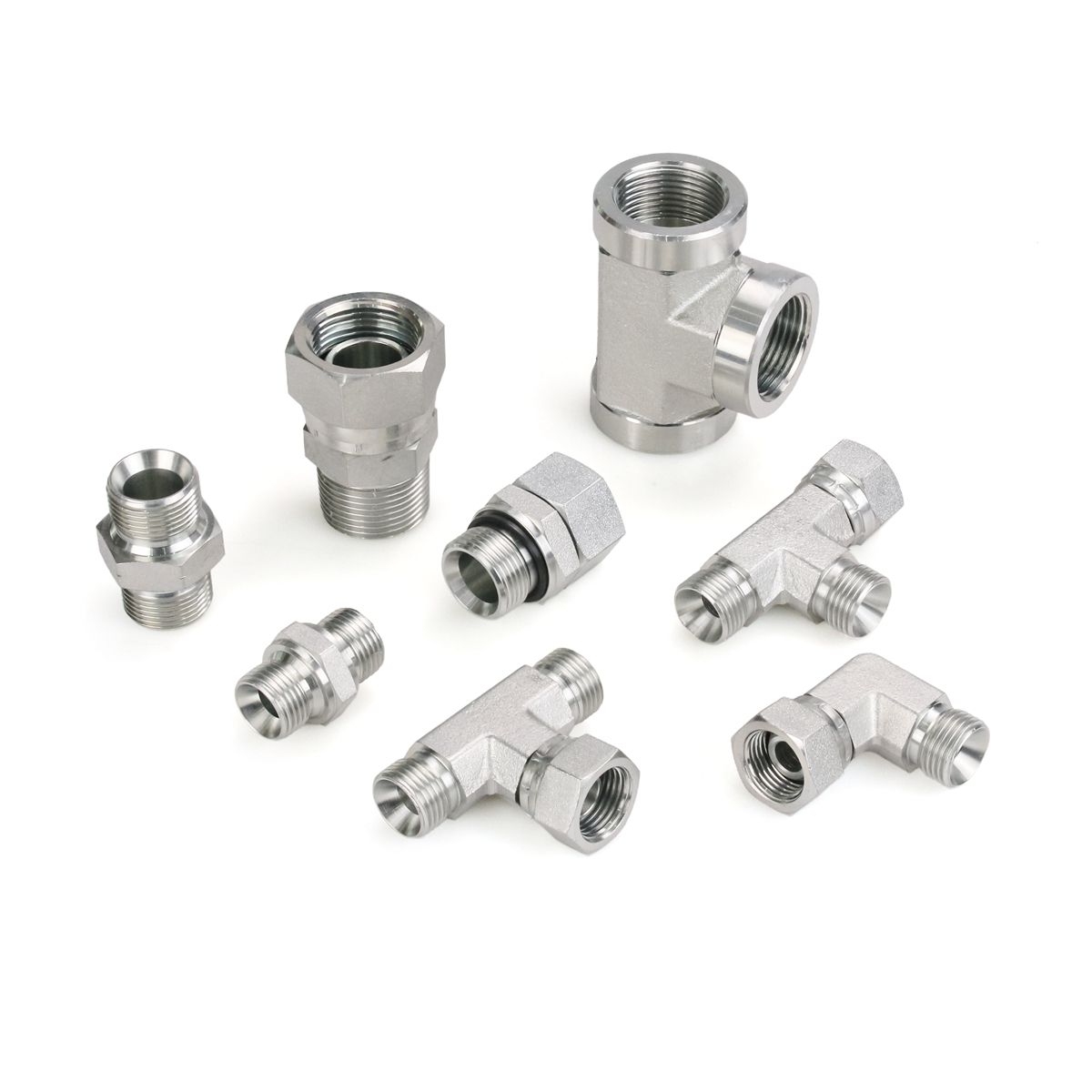
For an OEM sourcing shortlist, the first decision is not which thread is most familiar; it is which connection geometry and sealing method match the equipment port, hose assembly, operating conditions, and approved design. Metric, ORFS, NPT, BSP, and JIC fittings are distinct systems. Similar-looking threads or nominal sizes do not by themselves establish compatibility.
JINGYE Hydraulic is the brand name requested for this article; the supplied company materials identify the manufacturer as Ningbo Jingye Fluid Fittings Co., Ltd., also named JINGYE Fittings. Its listed hydraulic hose fitting families include Metric, ORFS, NPT, BSP, and JIC, with series identifiers provided for each. The available information supports a structured shortlist, but does not give a single pressure or temperature rating that applies across all listed fitting series. Those values need to be checked for the exact fitting, hose, port, seals, and assembled system.
Start with the interface, then qualify the assembly
Each system should be screened against the same core questions: What seals the connection? What thread and seat or face dimensions are required? Does the fitting end match the hose and assembly method? What pressure and temperature limits apply to the complete connection? Are standard parts available, or does the design require a special thread or dimension?
These questions are especially relevant in construction machinery. The supplied application information describes hydraulic systems exposed to pressure fluctuations, surges, vibration, shock loads, outdoor moisture, and repeated hose movement. Excavators, loaders, cranes, and concrete pumps can therefore require attention not just to nominal thread size but also to sealing geometry, routing, hose retention, and the specified operating envelope. That context is a reason to verify the assembly—not evidence that any one connection family is universally preferable.
| Connection system | Identifying interface or seal | JINGYE Fittings series listed in the supplied materials | Key sourcing check |
|---|---|---|---|
| Metric | Metric connection; the application material identifies Metric 24° cone fittings. | 10411, 10511, 10611, 20411, 20441, 20491, 20511, 20541, 20591 | Confirm the thread dimensions, cone geometry, and exact mating port or hose end. |
| ORFS | O-ring face seal. | 24211, 24241, 24291, 24213, 24243, 24293, 24218 | Verify the face-seal and O-ring configuration against the mating component. |
| NPT | Tapered pipe thread; sealing arrangement must suit the specified thread connection. | 15611, 15613, 15691, 15618 | Check thread size and form, port requirements, and the approved sealing method. |
| BSP | BSPP and BSPT are different thread forms; adapter materials describe cone, bonded-seal, O-ring, and tapered-thread configurations for relevant adapter designs. | 12211, 12611, 22111, 22141, 22191, 22211, 22241, 22291, 22611, 22641, 22691 | Identify BSPP or BSPT and confirm the specific sealing geometry for the selected part. |
| JIC | JIC 37° flare connection, as identified in the application material. | 16711, 26711, 26741, 26791 | Check the flare and thread dimensions and confirm the mating component. |
The series identifiers above identify families, not a complete specification for every part number or configuration. Use the applicable drawing or product specification to select the exact size, straight or angled form, end connection, material, and assembly details.
Metric: shortlist when the design specifies a metric interface
Metric hydraulic hose fittings are a relevant candidate when the equipment drawing or port specification calls for a Metric connection. The supplied construction-machinery application material identifies Metric 24° cone connections among the available hydraulic connection standards. JINGYE Fittings’ listed Metric hose fitting families are 10411, 10511, 10611, 20411, 20441, 20491, 20511, 20541, and 20591 Series.
For an OEM, the useful next step is to confirm the exact thread and mating geometry from the equipment documentation rather than select by the word “Metric” alone. Establish the fitting’s hose-end configuration and ensure the hose assembly method, including any required ferrule or crimp arrangement, corresponds to the selected product. The supplied materials do not provide individual dimensions or pressure ratings for these series, so neither should be inferred from the series names.
ORFS: identify the face seal as part of the specification
ORFS means O-ring face seal in the supplied application material. The sealing interface is therefore a central part of the selection: the fitting face, O-ring arrangement, and mating component must be specified together. The listed JINGYE Fittings hose fitting families are 24211, 24241, 24291, 24213, 24243, 24293, and 24218 Series.
For procurement, record the exact ORFS end configuration and check the mating face and seal requirements against the applicable drawing. Confirm that the hose-side end suits the hose and intended assembly process. Do not assume that a fitting is suitable for a particular pressure or temperature merely because it uses an O-ring face seal; the product configuration and complete assembly determine the applicable limits. The supplied information does not give a universal ORFS series rating.
NPT: distinguish the tapered thread from the hose end
NPT is listed as a hydraulic hose fitting option, with 15611, 15613, 15691, and 15618 Series identified in the application material. The thread is tapered, but that alone does not specify the complete hose connection. Buyers still need to confirm the exact thread size, mating port, sealing method, and fitting-to-hose configuration.
In an RFQ, separate the equipment-side thread requirement from the hose-side specification. Include the port drawing or a verified thread designation, and specify hose dimensions and assembly requirements. This reduces the risk of treating a matching nominal size as proof of a matching thread or seal. The supplied data does not state the pressure or temperature ratings of the NPT hose fitting series, so those figures should be obtained for the exact item and assembly rather than assumed.
BSP: specify BSPP or BSPT, not just “BSP”
BSP covers more than one connection arrangement. The supplied product information distinguishes BSPP parallel threads from BSPT tapered threads and describes multiple sealing configurations for BSP hydraulic adapters, including 60° cone, bonded seal, O-ring, and tapered-thread designs on relevant adapter series. The listed BSP hydraulic hose fitting families are 12211, 12611, 22111, 22141, 22191, 22211, 22241, 22291, 22611, 22641, and 22691 Series.
These adapter details provide useful selection context, but they should not be used to assign a particular seal to every hose fitting in the listed BSP families. Match the chosen part to its drawing and identify whether the application calls for BSPP or BSPT, the actual sealing interface, and the mating port. JINGYE Fittings’ BSP adapter information gives a catalog working-pressure range of 165–450 bar depending on series, size, material, and sealing design. That range is specific to the stated BSP adapter information; it is not a rating for every BSP hose fitting or completed hose assembly.
JIC: verify the 37° flare and the mating specification
JIC is identified in the application material as a 37° flare connection. JINGYE Fittings’ listed JIC hose fitting families are 16711, 26711, 26741, and 26791 Series. For a shortlist, include JIC when the port and hose-end specification calls for that flare connection, then verify the exact flare and thread dimensions against the mating component.
As with the other systems, the family name does not establish the exact item configuration or assembly rating. A useful RFQ identifies the JIC connection at each end, the required hose compatibility, the part dimensions, and any drawing or sample used for reference. If a replacement or second-source part is being evaluated, confirm the interface dimensions and mating fit rather than relying on a supplier reference number alone.
Apply the same checks across all five options
1. Sealing method and mating geometry
Record the seal mechanism for each end: Metric cone geometry where specified, ORFS face seal, NPT tapered-thread connection, the particular BSPP or BSPT arrangement, or JIC 37° flare. Confirm the mating half, port, seat, face, and any required seal element. A thread that appears to fit is not enough to establish that the connection seals as intended.
2. Pressure and temperature limits
Ask for the pressure and temperature limits for the exact fitting configuration and the completed assembly. The relevant boundary can depend on the fitting, hose, mating port, sealing components, material, fluid, and operating conditions. For equipment with pressure cycling, surge, vibration, or shock loads, make sure the specification addresses the actual service conditions. The supplied series list does not provide individual ratings for Metric, ORFS, NPT, BSP, and JIC hose fittings; do not substitute a rating from a different product family.
3. Hose and assembly compatibility
Specify the hose type and dimensions, the fitting’s hose-side end, and the intended assembly method. Confirm that the required hose, fitting, and retention components are compatible as an assembly. Where hose movement or routing is important, check the connection orientation and available straight, angled, or other configurations against the equipment layout. The supplied scenario material notes hydraulic hose assemblies and ferrules in construction machinery systems, but it does not give a universal crimp specification for the listed series.
4. Dimensions, material, and environment
Use drawings, samples, or a complete part designation to establish dimensions and material requirements. Consider corrosion exposure and operating environment as part of the specification. Company materials describe carbon steel, stainless steel, and brass as product-portfolio material options, but do not establish that each option is available for every listed hose fitting series. Confirm the specific material and finish for the requested part.
5. Custom threads and non-standard dimensions
JINGYE Fittings’ company information states that it supports OEM and customized manufacturing based on customer drawings, samples, and technical requirements, including special connection configurations and non-standard dimensions. For a non-standard item, include a controlled drawing, the mating interface, critical dimensions, material, sealing arrangement, operating requirements, inspection needs, and the intended hose assembly. Customization capability is not, by itself, evidence that a specific design has been completed or qualified; obtain confirmation for the project configuration.
Model series and a practical RFQ checklist
Use the series names as a starting index, then request the exact part-level details needed for evaluation. An RFQ can include:
- Connection family and exact end configuration: Metric, ORFS, NPT, BSPP, BSPT, or JIC.
- Thread size and relevant seat, cone, face, or other sealing dimensions.
- Hose specification, hose-end dimensions, and assembly or ferrule requirements.
- Operating pressure, pressure cycling or surge conditions, temperature range, and hydraulic fluid.
- Required material and surface finish, where specified.
- Quantity, standard or custom status, drawing or sample, and any inspection documentation needed.
Where an existing fitting is being replaced or second-sourced, provide its part reference together with a drawing or sample where available. A reference number can help identify a candidate for dimensional comparison; it does not, on its own, prove interchangeability. Confirm mating dimensions and the assembled connection before approving the substitute.
Sourcing timing and order planning
The supplied JINGYE Fittings information for BSP hydraulic adapters states that most standard hydraulic adapters have no strict MOQ. It also states that in-stock items typically dispatch within 3–5 days and standard production generally takes 30–45 days. These are sourcing points from the adapter information, not a guarantee of stock or timing for every hose fitting series, configuration, or order. Buyers should confirm availability, applicable MOQ, and schedule for the actual SKU and quantity.
For planning purposes, distinguish an in-stock standard item from a standard-production order and a drawing-based custom part. The available material gives a general standard-production timeframe for the adapter information but does not provide a separate lead time for custom hose fitting projects. Confirm the relevant timing and requirements with the supplier before incorporating them into an OEM build schedule.
What the shortlist establishes—and what it does not
The five connection families give OEM buyers a practical way to organize an initial search around the specified thread and sealing interface. The supplied materials identify product series for each family and describe the broader connection context needed to narrow a candidate. They do not supply complete part-level dimensions, hose compatibility tables, or universal pressure and temperature ratings for every listed family. Those details remain part of product qualification.
For construction machinery and similar hydraulic applications, shortlist by the equipment specification first, then verify sealing geometry, hose-side compatibility, operating limits, material, and the complete assembly. This process keeps the original design requirement central while allowing a buyer to compare standard sourcing and, where needed, request OEM dimensions or configurations.
Frequently asked questions
How should an OEM choose between Metric, ORFS, NPT, BSP, and JIC?
Start with the equipment port and approved drawing. Identify the thread system and sealing interface, then verify the hose end, mating geometry, pressure and temperature limits, and assembly requirements for the exact part. The connection families are not interchangeable merely because their nominal sizes appear similar.
Which JINGYE Fittings hose fitting series are listed for these connection systems?
The supplied application information lists Metric 10411, 10511, 10611, 20411, 20441, 20491, 20511, 20541, and 20591; ORFS 24211, 24241, 24291, 24213, 24243, 24293, and 24218; NPT 15611, 15613, 15691, and 15618; BSP 12211, 12611, 22111, 22141, 22191, 22211, 22241, 22291, 22611, 22641, and 22691; and JIC 16711, 26711, 26741, and 26791 Series. Exact configurations and specifications should be checked at part level.
Are pressure and temperature ratings the same across each connection family?
No universal rating for these hose fitting families is provided in the supplied series information. Confirm the exact fitting, hose, mating port, seal, fluid, and operating conditions, and use the applicable rating for the assembled connection. The stated 165–450 bar catalog range applies to BSP hydraulic adapters under specified conditions, not automatically to all BSP hose fittings.
What information helps evaluate a custom thread or dimension?
Provide the mating port or assembly drawing, thread and sealing details, critical dimensions, hose requirements, material, operating conditions, quantity, and any inspection needs. JINGYE Fittings states that OEM production can be based on drawings, samples, and technical requirements; a particular custom configuration still requires project-specific confirmation.
Tem questões ou precisa de mais detalhes?
Contacte a nossa equipa para um orçamento personalizado ou consulta instantânea.
Solicitar orçamento
Preencha o formulário abaixo e a nossa equipa entrará em contacto com uma proposta personalizada.
Chat direto do WhatsApp
Prefere conversar em tempo real? Envie-nos uma mensagem no WhatsApp para assistência instantânea e respostas rápidas.
- Obter orçamento personalizado
- Partilhar fotos ou documentos
- Discuta as suas necessidades diretamente
Geralmente responde em 5–30 minutos durante o horário de expediente.