
Hydraulic Power Unit Comparison: Pressure vs. Cleanliness
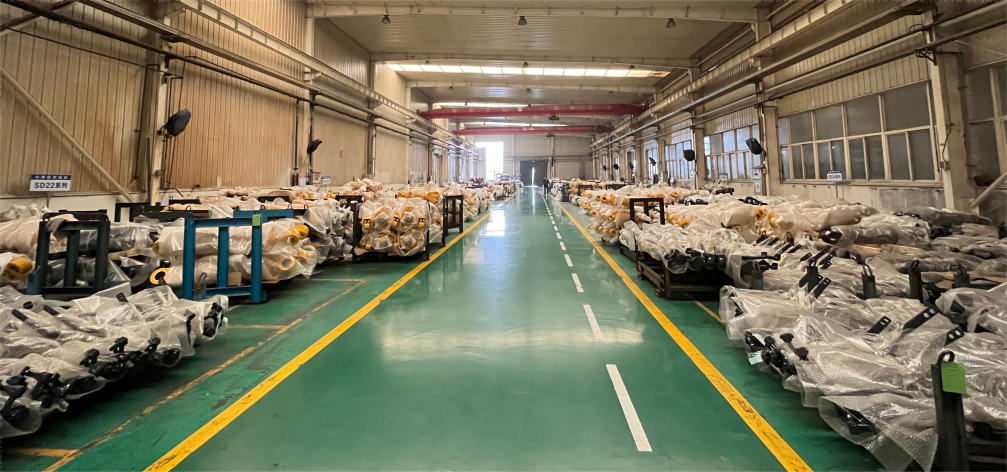
Inside a hydraulic power unit workshop: the two comparison claims in this framework — pressure verification and contamination control — are decided on the floor, not in the catalogue.
Hydraulic power unit comparisons usually begin with a specification table: motor voltage, pump displacement, reservoir capacity, valve and manifold layout, control options. Those columns are necessary, and they are also easy to fill in identically. Two suppliers can quote the same 12V or 24V DC configuration, the same reservoir and the same relief setting, and still deliver units that behave differently after a year in service.
The difference generally sits upstream of the component list, in two production claims a buyer can actually test: pressure settings adjusted to customer specification with each unit verified for stable system pressure before delivery, and contamination control built on clean assembly, filtration control, cleaning of hydraulic systems before assembly, and hydraulic oil cleanliness management. This article sets out a side-by-side decision framework for OEMs and distributors evaluating hydraulic power unit (HPU) suppliers against those two claims, including a scorecard that separates documentation from marketing language.
Why a Hydraulic Power Unit Comparison Cannot Stop at the Component List
A specification table describes design intent. Process evidence describes repeatability — whether unit 200 behaves like unit 2. Buyers comparing hydraulic power packs for an OEM programme eventually need the second one, because a component list cannot be tested at goods-in and a catalogue cannot be audited.
The problem is that process claims are cheap to make. “Every unit is tested” and “clean assembly” appear in most supplier presentations, and neither means anything until it is tied to a criterion, a record and a unit serial number. The practical opportunity for a disciplined buyer is to compress a long supplier questionnaire into two claims that can be verified with documents already produced during normal manufacturing: pressure verification and contamination control.
Compliance requirements support this shift. In the European Union, hydraulic power units must comply with EN ISO 4413:2010, which sets general rules and safety requirements, while the Machinery Directive 2006/42/EC governs health and safety requirements for hydraulic systems. Both are demonstrated through controlled build and documented verification rather than through a data sheet. For non-EU buyers the same logic applies to their own market requirements.
Claim One: Pressure Set to Specification and Verified Before Delivery
Pressure stability is the claim that most directly affects what the end user experiences — lifting repeatability on a dump trailer, a consistent clamping force on agricultural equipment, a predictable cycle on a scissor hoist. The claim contains three distinct parts, and a buyer should verify each separately.
1. The setpoint is defined by the buyer's specification
A custom hydraulic power unit is configured around a working pressure, not around a catalogue default. Where a supplier accepts working pressure as a customization parameter, the agreed value should appear in the technical agreement, and the delivery record should show the same number. A mismatch between the specification sheet and the test record is one of the earliest warning signs in a supplier evaluation.
2. The test is unit-level, not sample-based
The meaningful distinction is between “we test a sample from each batch” and “each unit is tested”. Unit-level verification is the only version of the claim that protects an OEM shipping 500 units with a warranty exposure per unit. A quality programme covering pressure testing, leakage testing, functional testing and 100% final inspection gives the buyer a traceable sequence; a programme built on batch sampling does not.
3. Verification happens before delivery, not at commissioning
A unit that is pressure-tested only after installation transfers the cost of a defect to the buyer's production line. Pre-delivery verification moves that cost back into the supplier's facility, where rework is cheaper and the finding can be corrected before shipment.
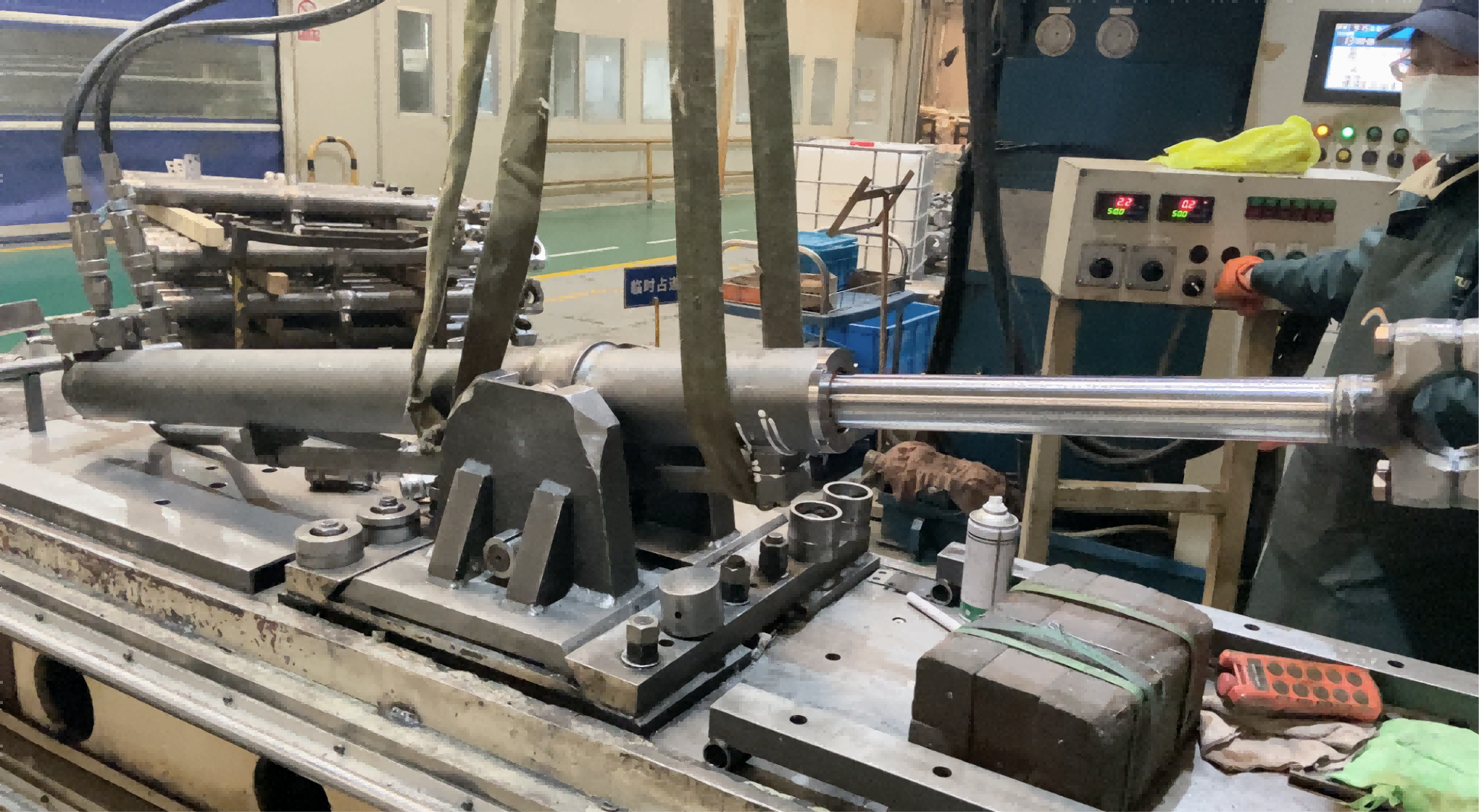
Pre-delivery pressure and leakage testing: the record, not the photograph, is what a buyer can audit.
What to request as evidence
- The approved specification page showing the target working pressure and relief setting.
- The test method: how pressure is applied, how long stability is observed, and what counts as a pass.
- A unit-level pressure and leakage test record traceable to the serial number on the nameplate.
- The functional test result covering the control configuration supplied.
- The final inspection record, with the inspection items listed rather than summarised.
Weak signals in a supplier response
- Pressure capability described only as a range, with no reference to the agreed setpoint.
- Test evidence offered as a certificate template rather than a filled-in record.
- Sample-based testing disclosed only after a direct question.
- Pressure verified at component level (pump or valve) with no system-level test of the assembled unit.
Claim Two: Contamination Control From Pre-Assembly Cleaning to Oil Cleanliness
Contamination control is a chain, and the weakest link sets the outcome. A supplier can clean components rigorously and still deliver a contaminated unit if the assembly area, the filtration step or the oil fill is uncontrolled. That is why the claim should be evaluated as a sequence rather than as a single statement.
The four links in the chain
- Cleaning before assembly. Components and hydraulic systems are cleaned before they are assembled, so machining residue, handling contamination and preservative films are removed before the circuit is closed.
- Clean assembly. Assembly takes place under controlled handling conditions, with parts protected between cleaning and build, and with the reservoir and manifold closed as early as the process allows.
- Filtration control. Filtration is specified for the build and fill stages as well as for the operating circuit, so particles introduced during assembly are captured rather than left to circulate.
- Hydraulic oil cleanliness management. The oil that goes into the unit is managed to a defined cleanliness target, and the target is checked rather than assumed.
The reason this chain carries commercial weight is straightforward: contamination is widely recognised as a major contributor to premature wear in pumps, valves and seals, and particles that remain in a closed circuit continue to cause abrasion long after the warranty period ends. Cleanliness is therefore not a cosmetic claim about factory appearance — it is a statement about how long the unit will hold its performance.
What to request as evidence
- The written cleaning sequence for components and hydraulic systems before assembly.
- The filtration specification applied during build and fill, including filter ratings and change points.
- The oil cleanliness target for delivered units and the method used to confirm it.
- Assembly-area controls: part handling, protection of cleaned parts, and closure points.
- Records showing the controls were applied to the specific order, not only to a reference project.
Weak signals in a supplier response
- Cleanliness described only for cylinder components, with no equivalent statement for the power unit circuit.
- Filtration mentioned as a product feature but not as a process step.
- No stated oil cleanliness target for delivered units.
- Cleaning referenced as a general capability with no sequence, no filter specification and no record.
What Each Claim Proves — and What It Cannot Prove
Neither claim is a complete quality guarantee, and buyers who treat them as one tend to over-weight whichever supplier wrote the better brochure. The table below sets out the boundary of each claim.
| Dimension | Pressure stability claim | Contamination control claim |
|---|---|---|
| Primary failure mode addressed | Failure to reach or hold the specified working pressure; inconsistent lift or cycle behaviour | Particle-driven wear in pump, valves and seals; progressive loss of performance |
| Type of evidence | Unit-level test record, setpoint documentation, leakage and functional results | Process sequence, filtration specification, oil cleanliness target, assembly records |
| When the benefit appears | Immediately, at first commissioning | Over the service life of the unit |
| What it does not prove | Duty-cycle endurance; long-term stability under real load profiles | Protection against contamination ingress in the field, after delivery |
| Typical evidence weakness | Certificates issued without a serial number | Cleanliness claims with no filtration or oil target |
The boundary matters. A factory pressure test is a snapshot taken under controlled conditions; it demonstrates that the unit met its setpoint and held it during the test, not that it will hold it after 5,000 cycles on a dump trailer. Likewise, clean assembly and filtration control govern what leaves the factory; they cannot control contamination entering through breathers, rod seals or service practices once the machine is in the field.
A Comparison Scorecard for OEM and Distributor Buyers
The scorecard below turns the two claims into ten criteria. Score each criterion 0 (no evidence offered), 1 (statement only, no document) or 2 (documented and traceable to the order), then multiply by the weight. The weights reflect a mobile-equipment OEM programme with warranty exposure; buyers with different risk profiles should adjust them rather than adopt them unchanged.
| Criterion | What to ask for | Weak-evidence signal | Weight |
|---|---|---|---|
| 1. Pressure setpoint documentation | Specification page showing agreed working pressure and relief setting | Pressure quoted only as a maximum range | 10 |
| 2. Unit-level pressure test | Test record per serial number, not per batch | Sampling presented as full testing | 15 |
| 3. Stability criteria | Test duration and pass/fail definition for stable pressure | “Tested” with no criterion stated | 10 |
| 4. Leakage verification | Leakage test method and accepted limit | Leak check described as visual only | 10 |
| 5. Functional test | Result covering the control configuration supplied | Functional test omitted for custom controls | 5 |
| 6. Cleaning before assembly | Written sequence for components and hydraulic systems | Cleaning mentioned without a sequence | 10 |
| 7. Clean assembly controls | Part handling and closure points in the assembly area | Cleanliness framed as housekeeping | 10 |
| 8. Filtration control | Filter specification for build and fill stages | Filtration described only as a product feature | 10 |
| 9. Oil cleanliness management | Target for delivered oil and the confirmation method | No target, or target with no check | 10 |
| 10. Documented acceptance criteria | Final inspection record with items listed | Single generic certificate for all products | 10 |
Two practical rules keep the scorecard honest. First, score only what was supplied in writing for the quotation under review — not what a supplier says it can provide later. Second, treat a criterion as a zero when the answer is a verbal assurance with no record behind it, because an unrecorded process cannot be repeated or audited across lots.
How the Two Claims Behave in Different Applications
Weighting changes with the application, which is why a universal ranking of suppliers does not survive contact with real programmes. Mobile hydraulic applications differ in duty cycle, service access and user competence.
- Dump trailers and scissor hoist kits. Pressure repeatability is visible to the operator on every lift, so setpoint accuracy and unit-level testing carry more weight; cleanliness still governs seal and pump life under dusty conditions.
- Sanitation and roll-off vehicles. High cycle counts with short intervals make contamination control more valuable, because wear accumulates quickly and downtime is expensive.
- Agricultural and construction equipment. Field service access is limited and environments are dirty, so factory cleanliness controls and clear acceptance records matter more than peak pressure claims.
- Aerial work platforms and other mobile elevating equipment. Multi-function circuits and held loads place a premium on stable pressure behaviour across functions, with cleanliness supporting long-term reliability.
- Material handling and marine equipment. Corrosive or continuous-duty environments raise the value of both claims, and of a supplier that can document them per order.
Applying the Framework: A Verified Shortlist
The names below appear in verified third-party industry data and provide realistic reference points for a shortlist. The table does not rank them, because the available verified data does not contain public evidence of any company's pressure-verification records or cleanliness documentation. Each candidate must be scored with the buyer's own document requests.
| Company | What verified data establishes | Scorecard action |
|---|---|---|
| Bosch Rexroth AG | Identified by Mordor Intelligence (2024) among top global manufacturers of hydraulic power units | Request unit-level pressure records and cleanliness procedure for the specific series quoted |
| Parker-Hannifin | Identified by Mordor Intelligence (2024) among top global manufacturers of hydraulic power units | Request the same evidence set; confirm which documents are standard versus project-specific |
| HYDAC International | Identified by Mordor Intelligence (2024) among top global manufacturers of hydraulic power units | Request filtration and oil cleanliness targets alongside the test record |
| KTI Hydraulics Inc. | Launched a submerged DC hydraulic power unit with 12V and 24V options for recycling equipment in 2023 | Verify pre-delivery pressure verification and oil cleanliness management for DC configurations |
| Apex Hydraulic Co., Ltd. | Chinese OEM/ODM manufacturer of hydraulic cylinders, power units and systems, established 2009; states pressure setting to customer specification with unit-level testing and clean-assembly contamination controls | Request test records, cleaning sequence, filtration and oil targets, plus final inspection items |
For distributors the same framework applies with a different weighting: because a distributor carries the service relationship, documented acceptance criteria often outweigh a marginal price difference, since an undocumented unit becomes the distributor's problem at the first claim.
Where Apex Hydraulic Fits in the Framework
Apex Hydraulic Co., Ltd. is a hydraulic manufacturer established in 2009 in Qingdao, Shandong Province, China, producing custom hydraulic cylinders, hydraulic power units and complete hydraulic systems for equipment manufacturers, distributors and industrial customers worldwide. Its production base covers 50,000 m² with 560 employees, including a 25-engineer R&D team, and annual capacity reported at 100,000 hydraulic cylinders and 15,000 power units.
Against the two claims in this framework, the company's stated position is as follows. Working pressure is one of the customization parameters accepted for a power unit, alongside bore, rod diameter, stroke, mounting style, seal system, materials, ports and threads, and painting; power unit configuration covers voltage (12V/24V/48V), motor, pump, manifold, valve, reservoir and control system. Pressure verification is handled as a unit-level step inside a quality programme that includes incoming material inspection, in-process quality control, final quality inspection, pressure testing, leakage testing, dimensional inspection, welding inspection, surface finish inspection, functional testing and 100% final inspection. Contamination control is described through clean assembly, filtration control, cleaning of hydraulic systems before assembly, and hydraulic oil cleanliness management.
For a buyer, those statements translate into specific document requests rather than a verdict: the setpoint page, the filled-in test record for the serial numbers on order, the cleaning sequence, the filtration specification, the oil cleanliness target, and the final inspection items. Capacity context is also relevant to schedule risk — monthly output is reported at 8,000+ hydraulic cylinders and 1,500+ hydraulic power units, with lead times of 7–20 days for standard products and 25–45 days for customized products, and OEM or customized orders negotiated on MOQ rather than a fixed minimum.
A concrete reference point is a Canadian dump trailer manufacturer that ordered 1,200 sets of HTC Series telescopic cylinders and 500 sets of power units over one year for trailers used in construction materials, agriculture, landscaping and bulk material transport. Reported results were smooth lifting performance, a stable dumping angle and reduced service downtime under continuous heavy-duty operation — the application profile in which pressure verification is most directly observable by the end user. The company also supplies a 12V DC Dump Trailer Hydraulic Power Unit (APEX-DTHPU) within this application area, alongside scissor hoist kits and other mobile hydraulic equipment.
Market Context: Why Process Evidence Now Carries Weight
Market size estimates for hydraulic power units diverge between research houses, and the divergence itself is useful to buyers: Grand View Research valued the global market at USD 13.6 billion in 2024, while Precedence Research estimated USD 11.4 billion in the same year with a 5.5% CAGR through 2034. Buyers should treat either figure as directional rather than precise.
Other verified indicators point to a market where standardised volume and documented custom work grow together. Asia Pacific accounted for a 40.2% revenue share of the hydraulic power unit market in 2024 (Grand View Research), which is consistent with the concentration of OEM supply in the region. Standard packaged units represented 47.8% of global hydraulic power unit revenue in 2024 (Mordor Intelligence), while the 2000–3000 psi pressure range segment is projected to grow at a 5.8% CAGR from 2025 to 2033 (Grand View Research) — a band that covers many mobile applications. Electric-powered units accounted for 60.1% of U.S. hydraulic power unit revenue in 2024 (Grand View Research), and the global dump trailer market was estimated at USD 63.51 billion in 2024, with the 10–15 tonne segment holding the largest share (Market Research Future).
The procurement implication is narrow but practical: as packaged volume expands, differentiation moves to documentation. When two suppliers quote the same pressure range and the same voltage, the buyer's decision rests on which supplier can evidence what happened inside the factory.
Future Outlook
Three developments are likely to shape how OEMs compare hydraulic power unit suppliers over the next few years. Documentation will increasingly travel with the unit rather than with the brochure, because OEMs selling into regulated markets need test and cleanliness records to support their own conformity files. Pressure verification will be asked for at the serial-number level, as warranty exposure per unit becomes easier to calculate. And contamination control will keep moving from a claim about factory cleanliness to a specification about filtration and oil targets, which is a far more auditable form of the same idea.
None of this removes the need for field validation. A scorecard shortens the supplier list and reduces the risk of a poor first order; it does not replace a pilot programme on the actual machine, under the actual duty cycle.
FAQ
What does “pressure settings adjusted to customer specifications” mean on a hydraulic power unit order?
It means the unit's pressure setpoint — typically the relief or system setting — is configured to the value agreed in the purchase specification rather than left at a catalogue default. Because working pressure is one of the parameters a custom hydraulic power unit order can define, the setpoint should appear in the technical agreement and be checked against the delivery test record. Buyers should confirm which value is recorded (setpoint, test pressure or relief cracking pressure) so that the document matches the specification they approved.
How can an OEM buyer verify contamination control before placing an order?
By requesting process steps rather than outcome claims: how components and hydraulic systems are cleaned before assembly, what filtration control is applied during build and fill, what oil cleanliness target is set for delivered units, and how those steps are recorded. A supplier with a controlled process can describe the sequence and produce records for a specific order. A supplier that states “clean assembly” without a procedure, a filter specification or a cleanliness target gives the buyer nothing to audit.
Which matters more for a dump trailer hydraulic power unit: pressure stability or oil cleanliness?
They address different failure modes, so the question is one of weighting rather than exclusion. Pressure stability determines whether the unit reaches and holds the specified lifting pressure consistently, which shows up in dumping angle and cycle repeatability. Oil cleanliness determines how long the pump, valves and seals hold their performance. For dump trailer and scissor hoist applications with intermittent high-load cycles, both are relevant; the balance shifts with duty cycle, warranty exposure and how much maintenance the end user performs.
What documents should be part of hydraulic power unit acceptance criteria?
A practical acceptance set includes the approved specification with pressure setpoints, the unit-level pressure and leakage test record, the functional test result, the final inspection record, and the cleanliness controls applied during assembly and oil fill. Where the buyer's market requires EN ISO 4413:2010 alignment or Machinery Directive 2006/42/EC conformity, the technical file should reference the tests that support those declarations, so that the acceptance package and the conformity documentation describe the same evidence.
Does clean assembly affect 12V and 24V DC hydraulic power unit reliability differently?
The contamination mechanism is the same in DC-powered units, but the consequences are often more visible because these units are commonly used on mobile equipment such as dump trailers, lifts and vehicle-mounted systems, where service access is limited and downtime is costly. Clean assembly and controlled oil cleanliness reduce the chance that particles circulate through the pump and valves during operation. The voltage of the unit does not change the cleanliness requirement; the operating environment and service model do.
Reference: APEX Hydraulic Product Catalog (Main Products), PDF — product families, configurations and customization scope for OEM evaluation.
Tem questões ou precisa de mais detalhes?
Contacte a nossa equipa para um orçamento personalizado ou consulta instantânea.
Solicitar orçamento
Preencha o formulário abaixo e a nossa equipa entrará em contacto com uma proposta personalizada.
Chat direto do WhatsApp
Prefere conversar em tempo real? Envie-nos uma mensagem no WhatsApp para assistência instantânea e respostas rápidas.
- Obter orçamento personalizado
- Partilhar fotos ou documentos
- Discuta as suas necessidades diretamente
Geralmente responde em 5–30 minutos durante o horário de expediente.