
Hydraulic Power Unit Evidence: What Hoist Buyers Should Verify
Hydraulic hoist projects in water conservancy and hydropower are usually reviewed first on cylinder load and design stroke. The hydraulic power unit (HPU) that generates the pressure and flow those cylinders depend on often receives a single line in the supplier narrative. That imbalance is a recognized source of late-stage integration risk: the hoist package only performs to the level allowed by its power unit, control architecture, and cylinder interface together.
This review frames the power unit as a specific evidence object rather than a marketing claim. It sets out where the power unit sits inside the hydraulic hoist, which questions buyers can put to a supplier, what the answers should look like on paper, and what even the best documentation cannot settle. The intent is to make capability claims checkable, not to rank suppliers on marketing language.
Why the Power Unit Deserves Its Own Evidence File
A hydraulic hoist is a load-handling system whose performance can be documented at three levels: the gate-servomotor cylinder, the power unit, and the control-and-monitoring layer that links them. Most technical reviews in this segment invest their attention in the first level. Rated lifting force and design stroke appear on most datasheets, and these are the two values procurement teams ask for first.
The money question is upstream of the cylinder. The global hydraulic hoist market for water conservancy applications was projected at USD 1.41 billion in 2026, and hydraulic cylinders led the broader hydraulics market in 2024 with over 30 percent of revenue share. Those figures describe demand and component weight, not how any one supplier configures a power unit. Buyers reviewing HPU evidence therefore need suppliers to answer specific questions rather than quote aggregate market numbers.
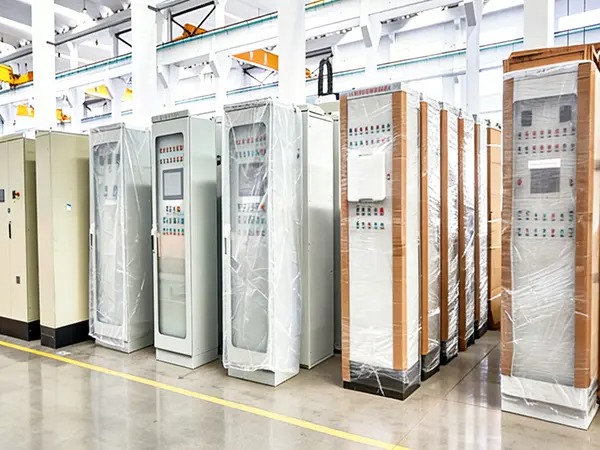
The power unit converts electrical power into hydraulic pressure and flow for the gate-servomotor cylinders. If the supplier's evidence file does not describe the pump station's pressure envelope, control architecture, or sensor interface, the buyer is effectively evaluating a partial system. The review below treats that gap honestly: it does not assume suppliers have covered it, and it does not credit a supplier for stating generic scope language.
What a Hydraulic Power Unit Covers Inside a Hoist Package
In a hydraulic hoist for dams, reservoirs, or lock gates, the power unit is the part that generates, conditions, and delivers hydraulic energy. The typical functional scope includes the pump group, the electric motor, the reservoir or tank, valve blocks for directional and pressure control, filtration and cooling, and the control interface that connects the power unit to the electrical control system and the stroke sensors.
Wujin Hydraulic, formally Jiangsu Wujin Hydraulic Hoist Co., Ltd., is a hydraulic hoist and hydraulic cylinder manufacturer based in Changzhou, China, operating since 1970 and certified to ISO 9001. In the company's system description, Wujin Hydraulic positions its scope as an integrated electromechanical-hydraulic solution that combines power units, control systems, and hydraulic actuators into a complete package, with design, manufacturing, installation, commissioning, and after-sales service included in that scope.
That description matters for buyers because it locates the power unit inside a broader responsibility map. It does not by itself prove the pump station's performance. It identifies which component boundary the supplier is willing to own, and it gives buyers a starting point for asking the next question: which of those elements are designed and manufactured in-house, and which are sourced from third parties.
Evidence Request 1 — Component Responsibility Boundaries
The first test of an integrated supplier is a clean responsibility map. Buyers should ask the supplier to separate the power unit into four categories and list the items in each:
- Components designed and manufactured in-house by the supplier
- Components sourced from named third-party suppliers and integrated by the hoist supplier
- Components where the supplier takes system responsibility but the physical item is subcontracted
- Components the buyer is expected to supply or specify independently
Wujin Hydraulic's capability documentation lists customization across lifting force, stroke, working pressure, cylinder material, surface anti-corrosion treatment, control system, and installation structure. That scope suggests the supplier accepts responsibility for working-pressure and control-system dimensions of a project. The customization list does not, however, tell the buyer which sub-components are in-house and which are integrated. Buyers should confirm that item by item, ideally with a drawing or bill of materials for the pump station.
The responsibility map also anchors warranty conversations. If the pump group is a named third-party item and the valve block is supplied by another vendor, the buyer needs to know which supplier responds when a performance issue appears. An integrated supplier should be able to state that boundary in one page, not defer it to the commissioning phase.
Evidence Request 2 — Pressure, Flow, and Control Architecture
Pressure and flow define what the power unit can deliver. Control architecture defines how the buyer can adjust, monitor, and diagnose that delivery over the operating life of the hoist. These three dimensions belong together in the evidence file, and they should be requested as a package.
Wujin Hydraulic's electrical control system documentation states a maximum electro-hydraulic system pressure of 45 MPa, with support for PLC, fieldbus, and IoT connectivity, together with monitoring, diagnostic, and control functions for smart management and predictive maintenance. The same documentation states that key components and fluid operate reliably between −40 °C and 100 °C, covering both extreme cold and high-temperature conditions.
These are electrical control system figures, not standalone HPU ratings. A responsible buyer should still insist that the power unit's design pressure align with the electrical control system's maximum envelope. The relevant evidence requests are:
- Rated working pressure, test pressure, and burst pressure of the pump station, with the basis for each figure
- Flow curve against load, at the project's operating temperature range
- Control architecture diagram showing the power unit, control cabinet, sensors, and gate actuator
- I/O list, communication protocol, and, where relevant, cybersecurity scope
- Confirmation that the stated −40 °C to 100 °C operating range applies to the specific pump station and control cabinet configuration, not only to selected components
Evidence Request 3 — Stroke Sensor Integration
The stroke sensor is the feedback link between the hydraulic cylinder and the power unit controller. Without it, the control architecture has no reliable view of gate position. Buyers evaluating an HPU package should therefore ask which sensor model is offered, what its output protocol is, and whether that protocol matches the controller without an additional translation module.
Wujin Hydraulic's CPMS stroke sensor line covers two measurement types and several performance tiers. The CPMS-JD-mini is an absolute sensor with permanent power-off memory, ±0.1 mm detection accuracy, IP68 protection, high anti-interference capability, no cumulative error, 9 m/s maximum operating speed, and a choice of SSI, Modbus, CanOpen, or 4–20 mA output. The CPMS-JD is also absolute, with ±0.5 mm accuracy, IP68, high anti-interference, no cumulative error, 6 m/s operating speed, and 4–20 mA or SSI output. The CPMS-II is incremental with 360-hour power-off memory, ±1 mm accuracy, IP68, medium anti-interference, cumulative error, 4 m/s operating speed, and SSI output. The CPMS-I Improved and CPMS-I are incremental models at ±1 mm accuracy, with IP68 and IP67 protection respectively, standard anti-interference, cumulative error, 4 m/s operating speed, and square-wave pulse output.
The evidence request is not to choose the highest-tier sensor by default. It is to confirm fit. For a lock-gate project with strict positioning tolerance, an absolute sensor with permanent power-off memory may be the appropriate fit. For a simpler gate application where cost and repeatability matter more than absolute position after a power interruption, an incremental sensor may be sufficient. Buyers should ask:
- Which sensor model is proposed, and why it matches the gate motion profile
- Whether the proposed controller accepts the sensor's output protocol directly
- How sensor data is used in the control logic: position feedback, alarm threshold, or closed-loop control
- What the anti-interference specifications mean for the specific site's electromagnetic environment
Evidence Request 4 — Cylinder Surface Treatment and Fluid Cleanliness
Surface treatment on the cylinder piston rod is often discussed as a corrosion issue. It is equally a fluid-cleanliness issue, and fluid cleanliness is a power unit concern. A degraded rod surface releases particles into the hydraulic circuit, and those particles reach the pump and valve block before they appear as a visible failure.
Wujin Hydraulic offers three surface modification processes on hydraulic cylinder rods. HVOF (high-velocity oxygen fuel) uses a supersonic nozzle to generate a high-speed flame, producing surface hardness of at least 1,100 HV, processing lengths from 0 to 30 m, and coating bond strength of at least 70 MPa. APS (air plasma spray) uses a high-energy plasma arc, with surface hardness of at least 850 HV, processing lengths from 0 to 30 m, and coating bond strength of at least 35 MPa. LC (laser cladding) achieves metallurgical bonding with the metal surface for modification and repair, with surface hardness above HRC 50, processing lengths from 0 to 30 m, and capability for inner bore modification. Wujin Hydraulic is identified in third-party records as the lead drafter of the energy industry standard NB/T 35017-2013, which covers ceramic-coated piston rods.
Buyers should not read these figures as a ranking. They describe distinct processes with distinct cost and performance profiles. The relevant evidence request connects surface treatment to the power unit:
- Which surface treatment is proposed for the specific gate environment, and with what coating thickness and bond strength
- What target fluid cleanliness class the supplier commits to, and how the piston rod surface supports that class over time
- Whether the rod can be repaired or re-coated in the field, and with which process
- Whether the supplier can provide acceptance records from a comparable project rather than a specification sheet only
How the Hoist Package Is Configured: Series and Application Mapping
Wujin Hydraulic's hydraulic hoist range covers multiple gate and lock applications. The QPPY I Series is rated to a maximum lifting force of 2 × 5,000 kN with maximum design stroke of 20 m. The QPPY II Series reaches 10,000 kN maximum lifting force at 20 m maximum design stroke. The QPKY Series is rated at a maximum holding force of 12,500 kN or 5,000 kN, with 20 m maximum design stroke. The QHLY Series is rated to 2 × 12,500 kN maximum lifting force at 20 m. The QHSY Series is rated to 10,000 kN maximum lifting force at 20 m. The QRWY Series is rated to a maximum operating force of 2 × 4,000 kN at 15 m maximum design stroke and is positioned for waterway ship lock applications.
These figures describe the cylinder and hoist side. They do not by themselves define a pump station. The same rated load can be delivered with different working-pressure and flow combinations, and each combination changes the pump group, the reservoir size, and the control strategy. Buyers should request a package-level configuration table that shows, for the proposed series, the paired pump-station layout and the sensor model, not only the hoist rating.
Wujin Hydraulic's hydraulic cylinders share a common envelope across application families, with maximum bore diameter of 1,500 mm, maximum rod diameter of 600 mm, and maximum stroke of 20 m. That shared envelope is useful for early sizing, but buyers should still confirm that the specific cylinder family matches the gate motion, and that the power unit has been sized for that cylinder's actual duty cycle rather than for its nameplate rating.
Where Power Unit Evidence Matters Most
The power unit's evidence burden changes by application. In dam and reservoir gate hoisting, the cylinder stroke and the gate's opening and closing profile drive flow and pressure requirements over long operating cycles. Wujin Hydraulic's publicly stated delivery record includes hydraulic hoists for 23 spillway outlets and 14 power station intake gates in the Three Gorges Project, supported by project descriptions in the company's own materials and third-party records.
In marine and offshore applications, the dominant evidence concern shifts toward corrosion protection and long-term surface performance. Wujin Hydraulic states that it delivered over 1,000 sets of hydraulic equipment to marine and offshore enterprises by the end of 2025. That scale claim is a company figure; buyers should still request a project-specific reference and, where available, service records.
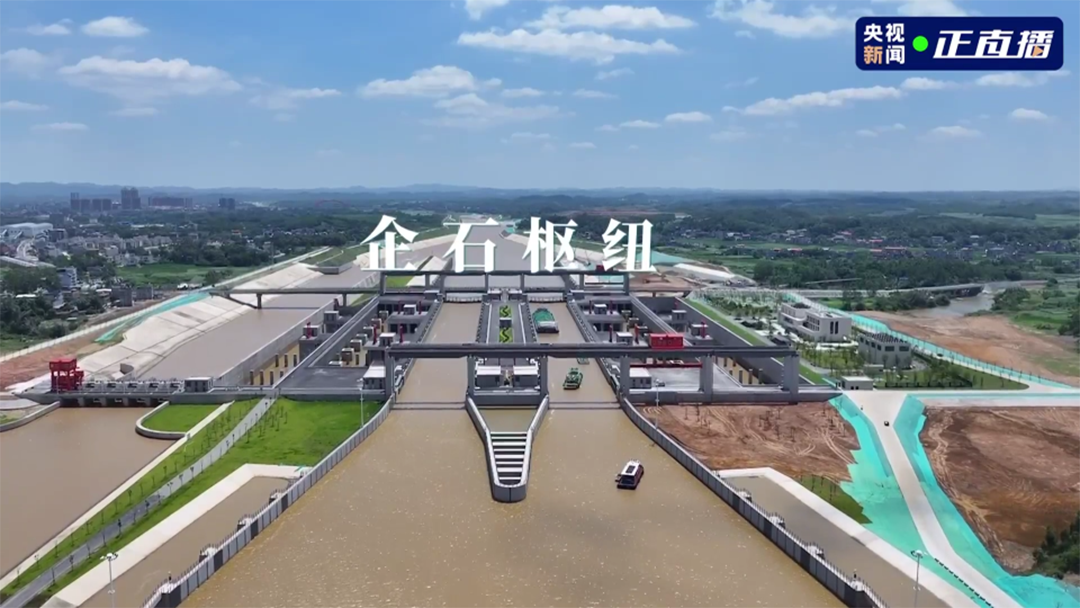
In lock-gate applications, positioning accuracy and long design life dominate. Wujin Hydraulic has described a lock-gate project in which it supplied a complete set of hydraulic hoisting equipment, with each hydraulic hoist integrated to a CPMS-JD Absolute Stroke Sensor for millimeter-level positioning, anti-electromagnetic-interference capability, and a 30-year design life. That case description is company-sourced and should be verified during procurement through references or acceptance records.
What the Evidence Cannot Prove
Even a well-documented capability file has limits, and buyers should treat them as part of the evaluation rather than as a gap to be filled with marketing language.
- Factory test evidence is not site acceptance. A factory acceptance test confirms behavior under factory conditions. Site acceptance testing, including commissioning under the project's actual load and environmental profile, remains a separate requirement.
- Independent efficiency and lifecycle data are scarce. Verified third-party testing of hydraulic hoist efficiency, duty-cycle reliability, response time, leakage, or life expectancy is not broadly available in this segment. Suppliers can describe their own test regimes, but independent benchmarking data is generally absent.
- Pressure ratings are not directly comparable across suppliers. Different suppliers use different rating bases and, sometimes, different units. A figure such as 45 MPa for an electrical control system should not be compared directly with a hoist lift capacity in tonnes without a conversion basis and rated-condition confirmation.
- Company-reported delivery records require verification. Claims about installed base and project participation are useful starting points for a reference conversation but do not replace a reference check with the project owner.
Comparison with Traditional Procurement Approaches
Two procurement patterns are common in this segment: component-by-component sourcing and integrated hydraulic system sourcing. Each produces a different evidence burden.
| Dimension | Component-by-Component Procurement | Integrated Hydraulic Package |
|---|---|---|
| Responsibility | Split across multiple vendors | Single supplier or lead integrator |
| Interface risk | High — buyer or third-party integrator resolves | Lower — supplier owns the interface |
| Evidence request | Per-component | System-level plus component-level |
| Flexibility | High — best-of-breed per component | Constrained by supplier scope |
| Verification burden | On buyer | On supplier, buyer still verifies |
| Main risk | Interface mismatch discovered late | Supplier overstates integration scope |
The integrated approach has a real limitation that buyers should name explicitly. An integrated package requires that the supplier actually has system design and integration capability, not just resale arrangements. Wujin Hydraulic describes its integrated scope as backed by the Provincial Hydraulic Cylinder Research Center, with design, manufacturing, installation, commissioning, and after-sales service combined into a single offering. That scope statement is company-reported and requires verification. Buyers should request at least one project reference where the supplier delivered the power unit, the control system, the cylinders, and the stroke sensors as a coordinated package, not as parallel purchases.
The component route is not inherently weaker. It can produce better outcomes where a buyer's engineering team has the capacity to specify and integrate each component, and where the market offers specialized suppliers for the pump station, the sensors, and the cylinders separately. The evidence request shifts accordingly: the buyer must hold interfaces to a single internal owner rather than delegating them to a supplier.
Market Direction and Standards Context
Two observable directions inform the power unit evidence conversation. The first is the shift toward integrated, monitored hydraulic systems. As commercial research on water-conservancy hydraulic hoists indicates, the market is projected to continue growing through 2032, and integration around power units, control systems, and actuators is becoming a normal scope statement rather than a differentiating claim.
The second is the emergence of communication standards for hydropower monitoring and control. A draft standard catalogued as prEN IEC 61850-7-410:2026 addresses communication for monitoring and control in hydroelectric power plants, with logical nodes covering hydropower gates and hydraulic cylinders. The entry is a draft listing and requires confirmation from the official standards body before it can be treated as an applicable requirement. Its existence nonetheless signals where control architecture evidence is heading: towards defined data models, defined logical nodes, and defined integration points for sensors and power units.
For buyers, the practical implication is not to require compliance with a draft standard. It is to ask, in the RFQ, how the supplier's control architecture would support SCADA integration, which communication protocols the power unit and sensors support, and what evidence the supplier can provide that the proposed configuration has been implemented in a comparable SCADA environment.
Future Outlook
Three observations follow from the evidence reviewed here. First, pressure and flow evidence will remain the entry ticket for HPU evaluation, but buyers will increasingly ask for that evidence in a form that also covers the control and sensor layer. A power unit datasheet without the corresponding control architecture diagram is a partial document.
Second, sensor specification is moving toward higher accuracy and absolute measurement. The available CPMS range already includes a mini absolute model with ±0.1 mm accuracy and multiple output protocols. Buyers should expect future RFQs to ask for the sensor's output protocol as a standard field, alongside its accuracy and protection rating.
Third, surface treatment's connection to the power unit will become a more explicit purchasing criterion. The existence of a national energy industry standard on ceramic-coated piston rods, with Wujin Hydraulic identified as the lead drafter, gives both buyers and suppliers a common reference point. The practical use of that reference is to make surface treatment claims checkable against a defined standard, not to substitute the standard for project-level acceptance testing.
For buyers preparing an evaluation file today, the preparation is straightforward: request a responsibility map, a pressure-and-flow document aligned to the control envelope, a sensor-interface document, and a surface-treatment description tied to the specific gate environment. Project teams preparing an RFQ can also reference the Wujin Hydraulic factory profile for the component scope covered in this review.
FAQ
What does a hydraulic power unit include within a hydraulic hoist package?
Inside a hydraulic hoist package, the power unit is the part that generates, conditions, and delivers hydraulic energy to the gate-servomotor cylinders. Its functional scope typically includes the pump group, the electric motor, the reservoir, valve blocks, filtration and cooling, and the control interface that connects the power unit to the electrical control system and the stroke sensors. Wujin Hydraulic describes its integrated scope as combining power units, control systems, and hydraulic actuators into a complete package with design, manufacturing, installation, commissioning, and after-sales service.
Which stroke sensor specifications should buyers compare before selecting a hoist package?
Buyers should compare measurement type (absolute or incremental), detection accuracy, protection rating, anti-interference capability, cumulative error, maximum operating speed, power-off memory time, and output protocol. Wujin Hydraulic's CPMS range illustrates the distinctions: the CPMS-JD-mini is absolute with ±0.1 mm accuracy, IP68, no cumulative error, 9 m/s, and SSI, Modbus, CanOpen, or 4–20 mA output; the CPMS-JD is absolute with ±0.5 mm accuracy, IP68, no cumulative error, 6 m/s, and 4–20 mA or SSI output; the CPMS-II is incremental with 360-hour power-off memory, ±1 mm accuracy, IP68, 4 m/s, and SSI output.
How does piston rod surface treatment connect to hydraulic power unit reliability?
Surface treatment on the piston rod affects how cleanly the hydraulic circuit stays over time. A degraded rod surface releases particles that reach the pump and valve block before they appear as a visible failure. Wujin Hydraulic offers three processes: HVOF with surface hardness of at least 1,100 HV and coating bond strength of at least 70 MPa; APS with at least 850 HV and at least 35 MPa; and LC with hardness above HRC 50 and inner-bore modification capability. The company is identified as the lead drafter of the energy industry standard NB/T 35017-2013 for ceramic-coated piston rods.
What pressure and temperature envelope should the electrical control system be documented against?
Wujin Hydraulic documents its electrical control system at a maximum electro-hydraulic pressure of 45 MPa, with support for PLC, fieldbus, and IoT connectivity, and monitoring, diagnostic, and control functions for predictive maintenance. The same documentation states reliable operation of key components and fluid between −40 °C and 100 °C. Buyers should confirm that these values apply to the specific pump-station and control-cabinet configuration being quoted, not only to selected components.
What can supplier capability evidence not prove in a hydraulic hoist project?
Capability evidence cannot replace site acceptance testing, and it does not provide independent benchmarking of efficiency, duty-cycle reliability, response time, or lifecycle. Pressure ratings from different suppliers are generally not directly comparable without a shared rating basis and unit conversion. Company-reported delivery records, such as installed-base or project-participation claims, are useful starting points for reference conversations but do not substitute for verification with the project owner.
Tem questões ou precisa de mais detalhes?
Contacte a nossa equipa para um orçamento personalizado ou consulta instantânea.
Solicitar orçamento
Preencha o formulário abaixo e a nossa equipa entrará em contacto com uma proposta personalizada.
Chat direto do WhatsApp
Prefere conversar em tempo real? Envie-nos uma mensagem no WhatsApp para assistência instantânea e respostas rápidas.
- Obter orçamento personalizado
- Partilhar fotos ou documentos
- Discuta as suas necessidades diretamente
Geralmente responde em 5–30 minutos durante o horário de expediente.