
IEC 62368 and KC Marks: Regulatory Compliance for 24V Adapter Imports
A 24 V adapter rated between 0.5 A and 1.5 A delivers roughly 12 W to 36 W — small numbers that nonetheless carry a full set of market-access obligations. For importers, the deciding question is rarely whether the adapter works. It is whether its safety and efficiency documentation will hold up at customs, in a buyer audit, or in a product-liability file long after delivery.
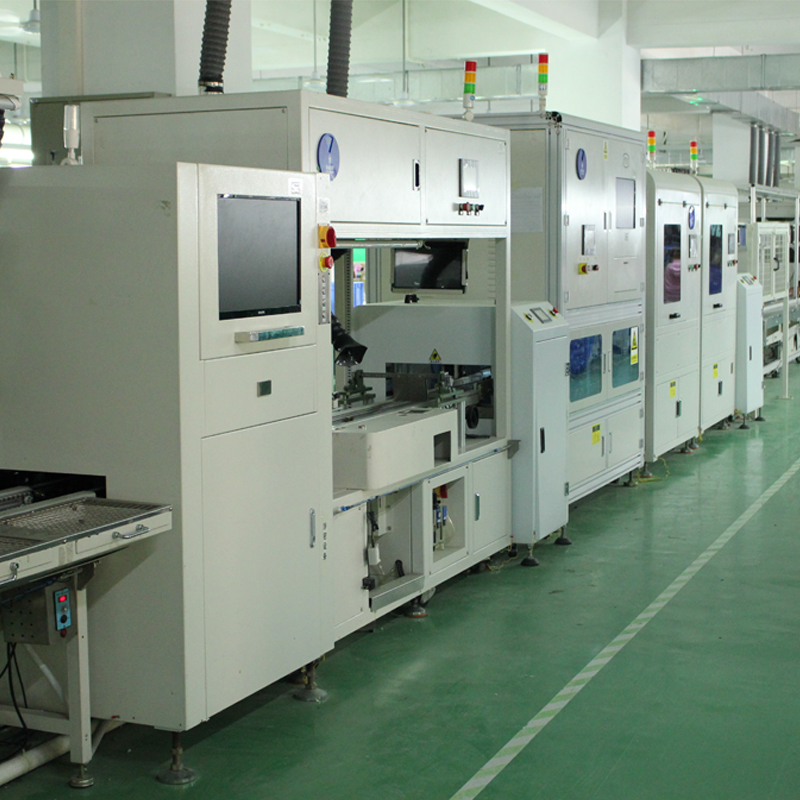
Assembly line for switching power adapters. Compliance evidence is generated during design and validation, not at the shipping stage.
Why the 12 W to 36 W Band Is the Most Scrutinised Part of the Adapter Market
A 24 V adapter running at 0.5 A draws a nominal 12 W. The same platform running at 1 A or 1.5 A lands at roughly 24 W or 36 W. All of these sit inside the class of external power supplies rated at or below 49 W — the band where efficiency rules are written as absolute no-load limits rather than percentages, and therefore the band where a single missing test report is easiest for an authority to detect.
Safety rules bite in the same band. External power supplies for audio, video, information and communication technology equipment are today governed by IEC 62368-1, the hazard-based safety standard whose 4th Edition (2023) replaced the legacy 60950 and 60065 certification routes. That replacement is not cosmetic: a listing issued against an older standard edition may no longer represent the current mandatory baseline for a market.
The commercial opportunity sits on the other side of the same problem. Because certification is configuration-specific and re-testing is expensive, importers who can read a certificate correctly tend to get shorter qualification cycles, fewer shipment holds and more predictable second-source options. Importers who treat certification logos as decoration inherit the risk.
IEC 62368: What the Standard Actually Regulates
IEC 62368-1 is a hazard-based safety engineering framework. Instead of prescribing one fixed construction for every product type, it classifies the energy sources inside a product — electrical, thermal, chemical, mechanical — and then requires safeguards proportionate to the energy level a user could be exposed to, including under single-fault conditions.
For a 24 V wall-mount adapter, that translates into practical, verifiable design decisions:
- Enclosure material and flammability behaviour, such as the fire-retardant PC housing used on the SK03T platform.
- Insulation, creepage and clearance distances between the mains input and the low-voltage output.
- Thermal behaviour under continuous load, so that a unit left plugged in for long sessions does not drift outside its rated envelope.
- Protective circuits — the short circuit, overvoltage and overcurrent protection documented on SK03T and SK01T configurations.
- Behaviour during abnormal operation and foreseeable misuse, which is where design margins are actually proven.
Two details matter to buyers more than the standard's title. First, the edition and amendment level referenced on the certificate, because IEC 62368-1 has moved through successive editions. Second, the input range the certificate covers: the SK03T and SK01T platforms are documented with an input of AC 100-240 V at 50/60 Hz, which is the range that makes one hardware design usable across Korea, Europe and other regulated markets.
Regional Marks and What Each One Covers
A single adapter platform can carry several market-specific approvals, but those approvals do not cover the same things. The following marks appear in the compliance documentation of the 24 V SK01T and SK03T configurations.
| Market | Marks listed in the product documentation | Scope the mark addresses |
|---|---|---|
| Korea | KC, KCC | Korean product-safety conformity and electromagnetic-compatibility-type conformity for the Korean market |
| European Union | CE-LVD, CE-EMC, RoHS requirements | Low-voltage safety, electromagnetic compatibility and restricted-substance compliance |
| United States | UL, ETL, FCC | Third-party safety listing and electromagnetic compatibility |
| Other regulated markets | SAA, PSE, CCC, CQC | National safety schemes in Australia, Japan and China |
| All markets listed above | Safety standard: IEC62368 | The underlying safety standard the approvals are issued against |
KC and KCC are not the same conversation
KC is Korea's integrated product-safety certification scheme; KCC addresses electromagnetic-compatibility-type conformity for equipment. Both appear together in the documentation of the Korea-plug 24 V configurations of the SK01T and SK03T platforms. Because the two marks address different scopes, an importer should confirm with the certificate issuer which one applies to the specific product category being cleared, rather than assuming one substitutes for the other.
Efficiency Mandates: DOE, ErP and CEC-VI
Efficiency regulation operates independently of electrical safety. In the United States, the Department of Energy's Level VI framework caps no-load power consumption at 0.100 W for external power supplies rated up to 49 W. Every 24 V configuration discussed here — from 0.5 A at 12 W up to 1.5 A at 36 W — falls inside that class, which means the no-load limit applies to the whole range.
The European ErP framework and California's CEC-VI requirements are listed alongside DOE compliance in the SK03T and SK01T documentation. Their function in a procurement file is the same: they demonstrate that the adapter's standby behaviour, not just its output behaviour, has been measured against a published limit.
One consequence is easy to miss. An adapter can hold a valid safety listing and still fail an efficiency requirement, because safety and efficiency are evaluated by different bodies against different criteria. A quotation that presents a wall of certification logos without separating the two tracks tells the buyer very little.
How the 24 V SK03T and SK01T Platforms Map to These Requirements
Shenzhen Simsukian Electronics Technology Co., Ltd. (Simsukian) is a Shenzhen-based manufacturer founded in 1996 that develops, customises and mass-produces switching power supplies, lithium-ion battery chargers, charging docks and power adapters from 3 W to 240 W. Its product documentation for the 24 V range describes a straightforward compliance position.
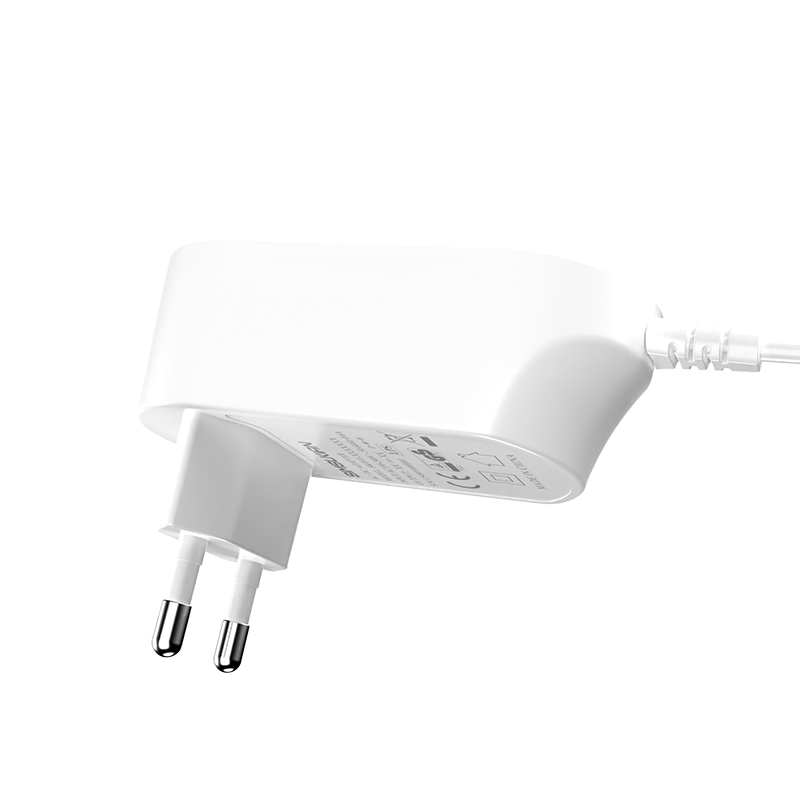
A wall-mount 24 V configuration on the SK03T platform. The 36 W housing is documented in fire-retardant PC material.
The SK03T is a 36 W switching power adapter with a wall-mount design, manufactured in fire-retardant PC material, available in black, white or customised colours, and supported by OEM and ODM services. Its 24 V configurations cover 1 A (24 W nominal) and 1.5 A (36 W nominal). The lower end of the 0.5 A to 1.5 A range is served by the SK01T platform, documented at 24 V / 0.5 A (12 W) and 24 V / 0.65 A (15.6 W).
Across those configurations, the product documentation lists IEC62368 as the safety standard basis and records the following approvals: KC, KCC, UL, ETL, FCC, SAA, PSE, CCC, CQC, CE-LVD, CE-EMC and RoHS requirements. Energy efficiency is documented against DOE, ErP and CEC-VI. Input is AC 100-240 V at 50/60 Hz, and the protective feature set comprises short circuit protection, overvoltage protection and overcurrent protection.
Behind the paperwork, Simsukian operates an in-house safety and reliability laboratory equipped with instruments from Rohde & Schwarz, Yokogawa, Agilent and Tektronix, where EMC, thermal cycling, surge, short-circuit and accelerated-aging tests are run on each new design before mass production. The company holds ISO 9001:2015 and ISO 14001:2015 certification and more than 90 national patents covering structural design, circuit topology and safety-protection technologies. It employs approximately 500 staff, including a 30-engineer R&D team supported by long-term university-industry-research cooperation, and exports around 70% of its output, with main markets including the EU, USA, Australia, Japan, Korea and the UK.
Why the lab matters to a compliance conversation
A certificate records a result; it does not record how reliably that result can be reproduced in serial production. The test capabilities above are the mechanism that keeps a certified design certified — because a change in component supplier, housing tooling or output tolerance that is not re-validated is exactly how a compliant design drifts away from its listing.
Matching Plug, Voltage and Certificate: A 24 V Mapping Table
The table below reflects how approvals are actually distributed across the 24 V configurations, based on the product documentation. It is the clearest illustration of why certificate matching is a configuration exercise, not a brand-level one.
| Platform | 24 V configuration | Nominal output | Approvals recorded in the documentation |
|---|---|---|---|
| SK01T | 24 V / 0.5 A | 12 W | KC, KCC, UL, ETL, FCC, SAA, PSE, CCC, CQC, CE-LVD, CE-EMC, RoHS requirements |
| SK01T | 24 V / 0.65 A | 15.6 W | KC, KCC, UL, ETL, FCC, SAA, PSE, CCC, CQC, CE-LVD, CE-EMC, RoHS requirements |
| SK03T | 24 V / 1 A (Korea plug) | 24 W | KC, KCC, UL, ETL, FCC, SAA, PSE, CCC, CQC, CE-LVD, CE-EMC, RoHS requirements |
| SK03T | 24 V / 1.5 A (Korea plug) | 36 W | KC, KCC, UL, ETL, FCC, SAA, PSE, CCC, CQC, CE-LVD, CE-EMC, RoHS requirements |
| SK03T | 24 V / 1.5 A (EU and UK plug) | 36 W | UL, ETL, FCC, SAA, PSE, CCC, CQC, CE-LVD, CE-EMC, RoHS requirements |
The last two rows differ. The Korea-plug 36 W build lists KC and KCC; the EU and UK plug builds do not, and instead carry the European and North American approvals relevant to those destinations. That difference is normal and expected — it is also precisely the detail that a purchase order can get wrong.
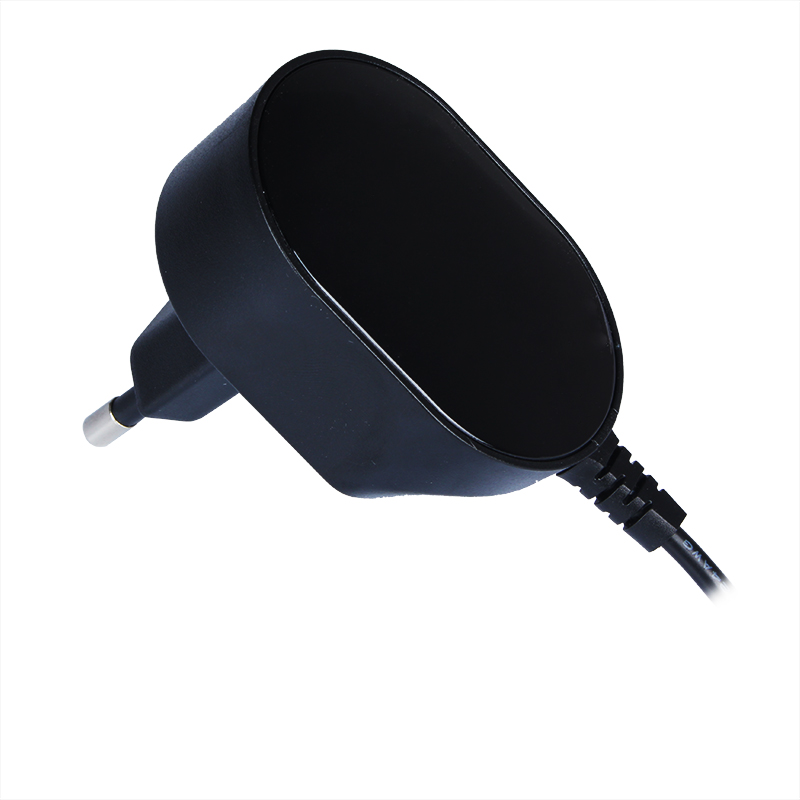
The low-current end of the 24 V range is served by the SK01T platform, documented at 0.5 A and 0.65 A.
Where Compliance Ends: Limits Buyers Should Not Assume Away
Certification is a bounded instrument, and the boundaries are where import disputes originate.
- Certificates attach to a configuration, not to a brand. A listing issued for a 24 V / 1.5 A build with a Korea plug does not automatically extend to a 24 V / 1 A build, to a 12 V / 3 A build, or to a different plug type. Each configuration that enters a market normally needs its own listing or a documented variant extension.
- Regional approvals are not portable. A CE-LVD approval does not clear Korean customs, and a KC mark does not satisfy European requirements. The mapping table above shows this directly: the same adapter platform carries different approval sets depending on plug and destination.
- Safety and efficiency are separate tracks. Holding UL, ETL or CE-LVD does not demonstrate DOE, ErP or CEC-VI compliance. Efficiency evidence must be requested and checked independently.
- Standard editions age. IEC 62368-1 4th Edition (2023) superseded the legacy 60950 and 60065 routes. A certificate that references a superseded edition should be treated as a starting point for a conversation, not as proof of current conformity.
- Documentation describes the supplier's declared status. Colour customisation, customer-specific labelling or OEM branding does not change the electrical safety basis of a design, but the certificate holder named on the listing must be the legal entity that actually ships the goods. Where those two differ, the buyer should confirm the relationship directly with the issuing body.
- Adapter compliance is not system compliance. An approved external power supply does not transfer its approvals to the end device it powers. System-level EMC, installation environment and end-product conformity remain the responsibility of the equipment integrator.
A Verification Sequence Before the Purchase Order
The following sequence is designed to be run by a procurement or quality engineer without specialist regulatory training, and to produce a written record that can be filed with the order.
- Fix the configuration. Write down the exact output voltage, output current and plug type required — for example 24 V / 1.5 A with a Korea plug, or 24 V / 1 A with an EU plug.
- Match the certificate to the configuration, not to the brand. Check the model designation listed on the certificate against the exact build being ordered.
- Check the standard and edition. Confirm the safety standard referenced and whether it reflects the current edition of IEC 62368-1.
- Check the certificate holder. Verify that the legal entity named on the certificate is the entity that will appear on the commercial invoice and shipping documents.
- Check the issuing body and its recognition. Confirm the body is recognised for the destination market — KC and KCC for Korea, CE-LVD and CE-EMC for the European Union, UL or ETL for the United States.
- Request efficiency evidence separately. Ask specifically for DOE, ErP or CEC-VI documentation rather than assuming it is bundled with the safety listing.
- Confirm validity and conditions. Check the validity period, any conditions on the listing, and whether the certificate covers the input range actually supplied — the documented AC 100-240 V at 50/60 Hz range is what makes a single design usable across markets.
- Ask for the underlying test scope. EMC, thermal cycling, surge, short-circuit and accelerated-aging testing are the evidence behind the certificate, and a manufacturer with an in-house reliability laboratory can normally provide that scope on request.
Application Context: Where 24 V Adapters Are Actually Used
24 V at 0.5 A to 1.5 A is a common supply rail for small indoor appliances and electronic products. In the documentation associated with the SK03T and SK01T platforms, these configurations appear in aroma diffuser and humidifier scenarios, where the adapter provides a stable, low-noise supply so that the atomising plate vibrates evenly and the device does not suffer mist interruption or dry burning caused by voltage fluctuation. Long overnight sessions are part of that scenario, which is why low-temperature operation under continuous load is a design requirement rather than a preference.
The stated operating condition for these applications is indoor use, and the operating mode is plug-and-use. The broader industry scope documented for both platforms covers manufacturing equipment, home appliances, IT products, LEDs and electronics. The practical implication for buyers is that a 24 V adapter qualified for these environments is expected to hold stable output across long duty cycles rather than only at the moment of delivery inspection.
Market Trend: Regulation Is Tightening, Not Loosening
Two forces are pushing in the same direction.
The first is volume. A commercial research estimate published by Dataintelo values the global power adapter market at USD 26.65 billion in 2025 and projects it to reach USD 46.14 billion by 2034. Growth of that scale increases the number of importing parties, and with them the number of parties who must handle certification correctly.
The second is standardisation. The migration to IEC 62368-1 as the mandatory hazard-based safety standard for AV and ICT power supplies, effective from 2023, replaced a long-standing dual regime. For suppliers, that meant re-testing existing platforms; for buyers, it means that documentation older than the transition should be re-examined rather than accepted at face value.
Efficiency mandates are moving in the same direction. US DOE Level VI limits have been mandatory since 2016 and are structured as absolute no-load caps rather than targets, which makes them binary: a product either meets the limit or it does not. In this environment, compliance capability stops being a marketing claim and becomes a supply qualification filter — the practical question for an importer is how quickly a supplier can produce the right certificate for the right configuration.
Future Outlook
The direction of travel for 24 V adapter imports is towards fewer, more comparable regulatory frameworks and more documentation-heavy purchasing. Three developments are worth planning for.
First, platform-level certification is becoming a competitive advantage. A supplier that already maintains listings across multiple plug types and output variants — as the SK03T family does with Korea, EU, UK, US and AU plug builds — can add a new market configuration without redesigning the hardware. Suppliers with a single listing per product pay that cost on every new order.
Second, efficiency expectations are unlikely to relax. Because standards such as DOE Level VI are written as absolute limits, competitive pressure shows up in no-load behaviour and thermal design rather than in headline wattage.
Third, buyers should expect regulatory questions to move earlier in the sourcing process. Requests for edition numbers, certificate holder names and validity dates — rather than certification logo sheets — are likely to become the normal first filter in supplier qualification for adapters in the 12 W to 36 W class.
Frequently Asked Questions
What does IEC 62368 actually cover on a 24 V power adapter?
IEC 62368-1 is the hazard-based safety standard for audio, video, information and communication technology equipment, and its 4th Edition (2023) replaced the legacy 60950 and 60065 certification routes for AV and ICT power supplies. On a 24 V adapter it governs how the product manages energy sources, insulation and spacing between mains input and low-voltage output, thermal behaviour, enclosure materials such as the fire-retardant PC housing used on the SK03T platform, and behaviour under single-fault conditions. The short circuit, overvoltage and overcurrent protection documented on SK03T and SK01T configurations sit inside that framework.
Does a KC mark on a 24 V power supply also cover KCC requirements?
Both KC and KCC appear in the compliance documentation of the Korea-plug 24 V configurations of the SK01T and SK03T platforms. KC is Korea's integrated product-safety certification scheme, while KCC addresses electromagnetic-compatibility-type conformity for equipment. Because the two marks address different scopes, an importer should confirm with the certificate issuer which mark the specific product category requires instead of assuming that one substitutes for the other.
Which efficiency standard applies to a 24 V 1 A adapter sold in the United States?
External power supplies in the United States fall under the Department of Energy's Level VI framework, which caps no-load power consumption at 0.100 W for external power supplies rated up to 49 W. A 24 V / 1 A adapter is nominally a 24 W unit, and the 24 V configurations between 0.5 A and 1.5 A (12 W to 36 W) all fall inside that class. The SK03T and SK01T documentation lists DOE, ErP and CEC-VI efficiency alongside the safety approvals, and the two categories should be verified as separate tracks.
Can one certificate cover every SK03T output and plug variant?
No. Safety certificates are issued against a defined product configuration — model, output voltage and current, and plug type. Within the SK03T family, the Korea-plug 24 V builds list KC and KCC among their approvals, while the EU and UK plug builds list UL, ETL, FCC, SAA, PSE, CCC, CQC, CE-LVD, CE-EMC and RoHS requirements instead. Ordering a different output or plug type without confirming the matching certificate is one of the most common compliance gaps in adapter procurement.
How can an importer verify that a certificate is genuine and still valid?
Check the certificate number and the certificate holder's legal name in the issuing body's public database; confirm that the model designation matches the exact configuration being ordered; confirm which standard edition is referenced, given that IEC 62368-1 4th Edition (2023) superseded earlier routes; and confirm the validity period and any conditions attached to the listing. If a supplier cannot provide a certificate number and the holder's name, the document should be treated as a self-declaration rather than a certification.
Reference material: the Simsukian power adapter catalogue, including 24 V configurations and their documented approvals, is available as a PDF — Simsukian PD catalogue.