
IHF vs Unlined All-Metal Chemical Pumps: An Independent Buyer Comparison
The choice between an IHF fluoroplastic-lined chemical pump and an unlined all-metal chemical pump is not a contest between a better and a worse design. It is a trade between isolating the wetted metal from the fluid and avoiding the failure modes that come with a polymer lining. For corrosive clean fluids inside the polymer compatibility window, IHF can reduce metal-corrosion risk. For higher temperature or head, moderate solids, or duties beyond the lining envelope, an unlined all-metal pump may be the more defensible selection.
This comparison is written for buyers at the evaluation and execution stage: engineers and procurement teams who already know the duty, have a shortlist, and need to justify one architecture over another. It uses published product facts for xsupump, the brand of Jiangsu Xiangsu Machinery Equipment Manufacturing Co., Ltd., a China-based pump manufacturer serving global chemical, municipal and industrial markets. The aim is not to declare a universal winner. It is to show where each architecture fits, what evidence should be requested, and which limitations should be written into the purchase order.
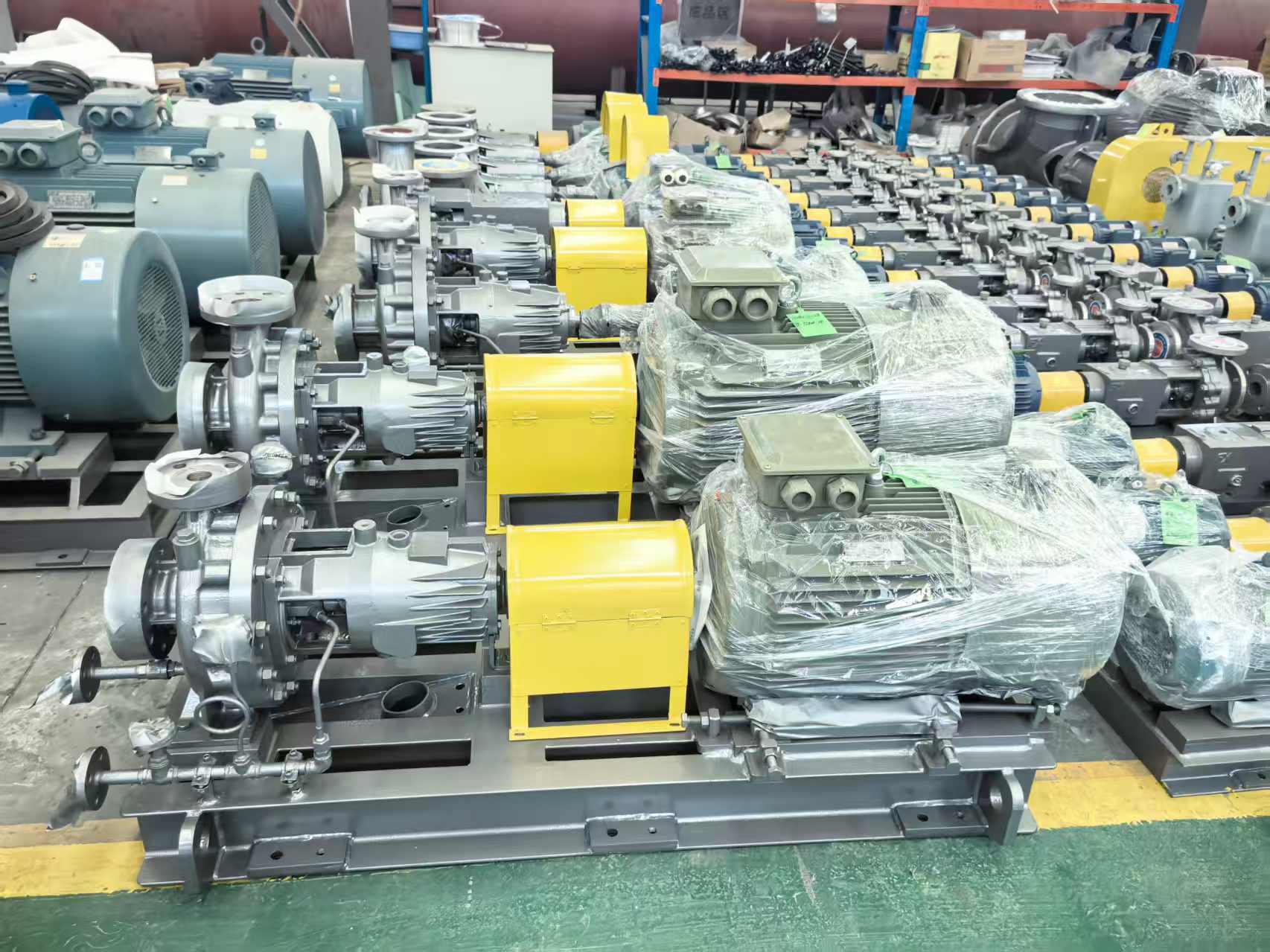
The core trade-off in one paragraph
An IHF pump uses a structural metal outer casing with F46 or PVDF wetted parts. The metal casing carries the pressure and mechanical loads; the fluoroplastic lining is the chemical barrier. That arrangement separates the fluid from the metal and reduces the risk of pitting or uniform corrosion inside the wetted flow path, provided the fluid is compatible with the lining material and the operating temperature stays within the lining envelope. The trade-off is that the lining itself becomes a critical component. Delamination, chipping, blistering or mechanical damage can create a path to the metal substrate, and those risks require inspection and careful handling during installation and maintenance.
An unlined all-metal pump removes the lining from the risk list. The wetted surfaces are the alloy itself, so there is no polymer barrier to delaminate or chip. That generally makes all-metal designs more tolerant of moderate solids and easier to clean in some services. The trade-off is corrosion: if the alloy is not suitable for the concentration, temperature, chloride level or oxidizing duty, the pump can suffer pitting, crevice attack or uniform wall loss. The alloy must be matched to the fluid, not selected by generic category.
What the IHF fluoroplastic-lined chemical pump does well
The xsupump IHF Fluoroplastic-Lined Centrifugal Chemical Pump is a horizontal single-stage, single-suction lined chemical pump with axial suction and vertical discharge. Its published operating envelope is 6.3-400 m³/h flow, 5-80 m head and -20°C to 100°C medium temperature. The wetted construction is a metal outer casing with F46 or PVDF wetted parts, and the shaft seal is a bellows mechanical seal. The pump is positioned for chemical, petroleum, pharmaceutical, metallurgy, electroplating, surface treatment, dye, pesticide and wastewater applications.
The engineering logic is straightforward. In a clean corrosive duty, the lining acts as a continuous chemical barrier. The metal casing provides structural rigidity, so the pump can be built as a horizontal process pump without relying on a fragile all-polymer body. For acid transfer, alkali transfer, solvent transfer and oxidizing-liquid duties that fall inside the F46 or PVDF compatibility window, this can be a practical way to avoid upgrading the entire wetted path to a high-alloy metal. The bellows mechanical seal also separates the seal area from the process fluid in a conventional sealed-pump arrangement, and xsupump lists API 682 Plan 53A/53B seal-support packages for services that need a barrier-fluid system.
The limitation is equally clear. IHF is not a universal corrosion solution. The lining has a finite temperature ceiling of 100°C in the published data, and the head range stops at 80 m. If the duty requires a higher head, a higher pressure class, or a temperature above the lining limit, the IHF envelope is not the correct starting point. Lining damage is also a real inspection point: delamination and chipping are the failure modes buyers should watch for, especially after mechanical work, abnormal vibration, thermal cycling or exposure to solids that can erode or impact the lining.
What unlined all-metal chemical pumps do differently
An unlined all-metal chemical pump uses an alloy as the wetted material. There is no polymer barrier, so the corrosion question moves from lining integrity to alloy selection. xsupump's IH Chemical Process Centrifugal Pump illustrates the category within the same product portfolio. It is an ISO 2858 horizontal single-stage, single-suction end-suction pump with a published range of 0.3-400 m³/h flow, 5-125 m head, -20°C to 105°C medium temperature and a maximum pressure of 1.6 MPa. Wetted materials can be selected from cast iron, carbon steel, SS304/304L/316/316L, duplex 2205/2507, Hastelloy and other alloys through the manufacturing partner.
That broader material and envelope range is the main reason buyers keep unlined all-metal pumps on the shortlist. Across the market, many unlined all-metal ranges are positioned for higher temperature and pressure thresholds than the IHF envelope, and the IH example shows the same direction inside xsupump: higher head, a slightly higher temperature ceiling and a 1.6 MPa pressure rating. The buyer should still compare published curves and material limits, not assume that all all-metal pumps are equal. Alloy grade, casting quality, wall thickness, machining tolerance and seal arrangement all affect corrosion performance and service life.
Unlined all-metal pumps also avoid the lining failure modes. There is no F46 or PVDF layer to delaminate or chip, so moderate solids are generally easier to tolerate, provided the pump is selected with suitable clearances and seal protection. The limitation is that the alloy can corrode. Pitting, crevice corrosion and uniform wall loss are the risks when the fluid is outside the alloy's documented compatibility range or when temperature and concentration push the material beyond its limit. A high-alloy all-metal pump can be the right answer, but only when the alloy is justified by the actual medium. A generic stainless-steel pump is not automatically suitable for every acid, alkali or oxidizing liquid.
Side-by-side comparison for procurement
| Comparison point | IHF fluoroplastic-lined chemical pump | Unlined all-metal chemical pump, illustrated by IH |
|---|---|---|
| Wetted construction | Metal outer casing with F46 or PVDF wetted parts; bellows mechanical seal. | Alloy wetted parts selected from cast iron, carbon steel, SS304/304L/316/316L, duplex 2205/2507, Hastelloy and other alloys. |
| Primary corrosion control | Polymer lining isolates the fluid from the metal substrate within the F46 or PVDF compatibility window. | Alloy selection provides corrosion resistance; performance depends on grade, concentration, temperature and oxidizing duty. |
| Main risk to inspect | Lining delamination, chipping, blistering or mechanical damage; seal condition; vibration and performance drift. | Pitting, crevice attack, uniform corrosion and wall loss; seal condition; vibration and performance drift. |
| Published flow range | 6.3-400 m³/h. | 0.3-400 m³/h for the IH example. |
| Published head range | 5-80 m. | 5-125 m for the IH example. |
| Published temperature range | -20°C to 100°C. | -20°C to 105°C for the IH example. |
| Pressure indication | Use the published IHF datasheet for the selected model and configuration. | Maximum pressure 1.6 MPa for the IH example. |
| Moderate solids | Lining can be damaged by impact or erosion; solids require careful review. | Generally more tolerant than a lined pump, but clearances and seal protection still require review. |
| Upfront cost drivers | Lining application, lining inspection, casing material, seal type and documentation. | Alloy grade, wall thickness, machining, heat treatment, seal type and documentation. |
| Energy efficiency | Depends on hydraulic design, impeller selection, seal losses and actual duty point. Lining alone does not determine efficiency. | Depends on hydraulic design, impeller selection, seal losses and actual duty point. All-metal construction alone does not determine efficiency. |
| Best-fit duty | Clean corrosive liquids compatible with F46 or PVDF, within 6.3-400 m³/h, 5-80 m and -20°C to 100°C. | Duties requiring higher head or temperature, or where a documented alloy is the better corrosion match and moderate solids are present. |
The IH example is used to show a verified unlined all-metal range inside the xsupump portfolio. Other unlined all-metal pumps may have different envelopes. Compare published datasheets, not category labels.
Vertical Sump Chemical Pump: when the installation changes the comparison
A Vertical Sump Chemical Pump is not simply an IHF with a longer shaft. It is a different architecture for a different installation. In a vertical sump pump, the hydraulic section is submerged in a tank, pit or underground sump, while the motor remains above the liquid. That arrangement can remove the need for a separate suction-priming system and can fit a tank-top layout where a horizontal pump would need extra piping and floor space. For buyers comparing IHF with unlined all-metal pumps, the vertical sump question should be asked early: if the actual duty is a sump with variable liquid level, the horizontal comparison may not be the right frame.
xsupump's FY Vertical Sump Pump is a vertical single-stage, single-suction long-shaft sump pump. Its published range is 1.6-2,600 m³/h flow, 5-132 m head, 1,450/2,900 rpm, design pressure up to 1.6 MPa, standard 0-105°C and optional -20°C to 180°C, with custom immersion depth. Wetted materials are cast iron, cast steel, SS304, SS316, SS316L or special alloy; gaskets are PTFE/FKM; guide-bearing materials are selected for the duty. The product is positioned for chemical, petrochemical, pharmaceutical, electroplating, wastewater, pulp and paper, metallurgy and environmental treatment applications.
In the IHF versus unlined all-metal comparison, the FY sits on the metallic side, but with a different set of execution checks. The published material list does not describe an F46 or PVDF-lined wetted construction for the FY. That means the corrosion decision is based on alloy selection and gasket compatibility, not on a polymer lining barrier. The FY can also cover a wider temperature range than the IHF envelope, including an optional -20°C to 180°C range, and a much wider flow range. However, the installation requirements are more demanding: custom immersion depth, vertical alignment, tank support for the pump, motor and piping loads, level control and dry-run protection all need to be confirmed. The inlet must remain below the minimum liquid level, and the hydraulic section must stay submerged in normal operation.
Upfront cost, maintenance and energy: what can actually be compared
Upfront cost is often the first question, but the honest answer is that no universal percentage advantage exists between IHF and unlined all-metal pumps. The cost drivers are different. For IHF, the lining application, lining inspection, casing material, seal type and documentation affect the quoted price. For unlined all-metal, the alloy grade, wall thickness, machining, heat treatment, seal type and documentation affect the quoted price. A high-alloy all-metal pump can cost more than a lined pump in some sizes; a commodity all-metal pump can cost less. The only valid comparison is a quote for the same flow, head, temperature, material, seal, motor, baseplate and documentation package.
Maintenance checks also differ. For IHF, the buyer should plan for lining inspection, looking for delamination, chipping, blistering or mechanical damage, especially after maintenance work or abnormal operation. Seal inspection, vibration monitoring and performance checks remain relevant. For an unlined all-metal pump, the inspection focus is corrosion: pitting, crevice attack, uniform wall loss and seal condition. In both cases, the pump should be operated at the selected duty point, not beyond rated conditions. The practical prevention measures are the same: match the material and sealing solution to the medium, temperature and pressure; monitor inlet and outlet pressure and temperature; prohibit operation beyond rated conditions; and set up regular maintenance schedules to inspect seals and wearing parts.
Energy efficiency should not be reduced to a lining-versus-metal claim. A pump's wire-to-water efficiency depends on hydraulic design, impeller selection, internal clearances, seal losses, motor efficiency and the actual operating point. A lined pump with a well-matched impeller can be efficient; an all-metal pump operating far from its best efficiency point can be inefficient. Buyers should compare the selected pump curve at the actual duty point, not a generic category statement. If a supplier claims a universal efficiency advantage, ask for the curve, the test standard and the operating conditions behind the claim.
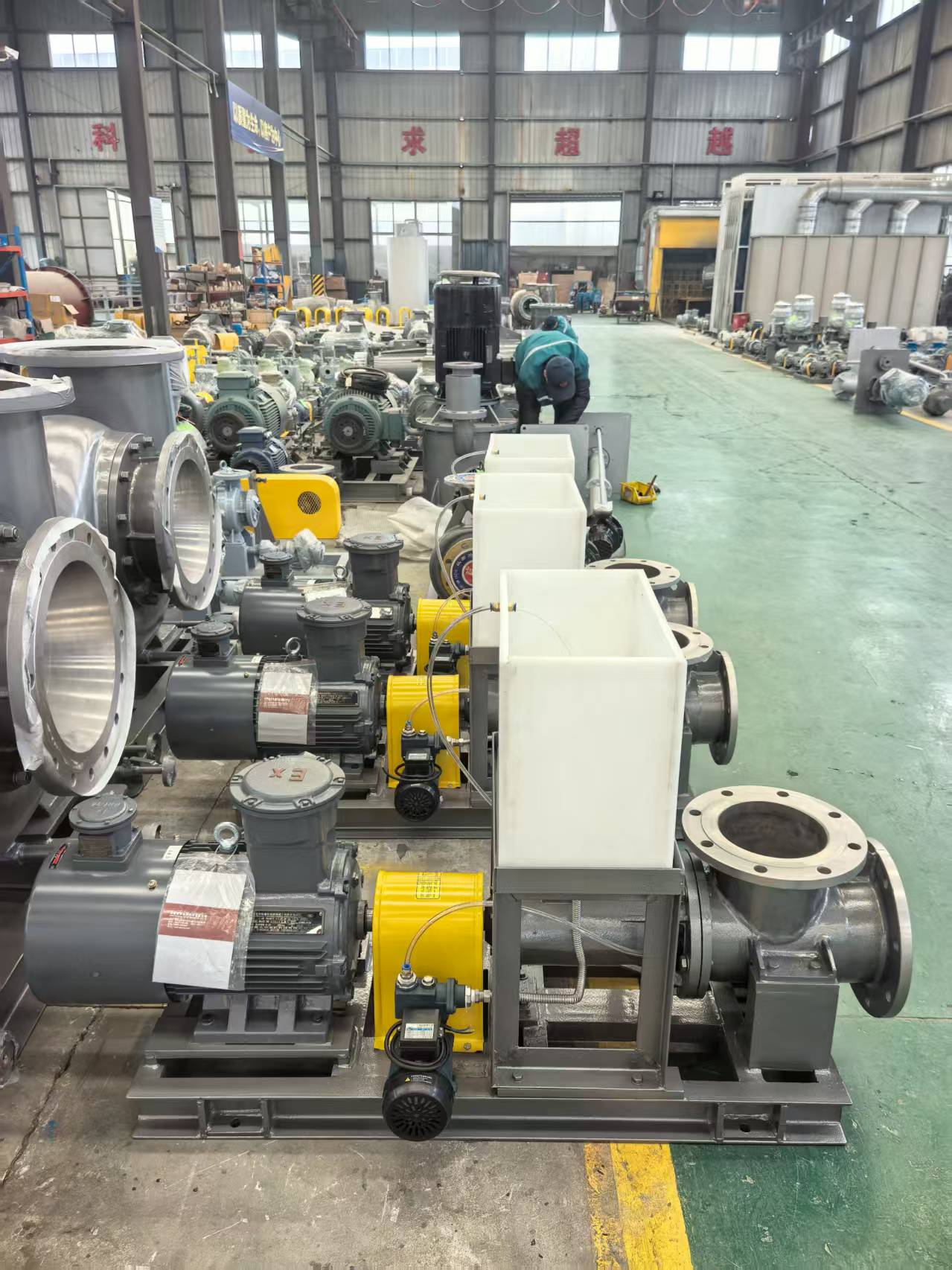
Quality, testing and documentation to verify before order
xsupump states that quality control is maintained through design review, process records, inspection records and final acceptance documentation. Incoming, in-process and final inspections cover rotation, sealing, vibration and basic performance checks on pump test stands and calibrated inspection devices. The manufacturing partner also lists closed and open pump test stands, an electric pressure test pump, dynamic and static balancing, ultrasonic flaw detection, and hardness and spectral analysis. Material manufacturing quality control includes material analysis, hardness testing, ultrasonic inspection, magnetic-particle inspection, dimensional inspection and calibrated measurement equipment.
The management-system certifications are relevant to supplier qualification, but they should not be confused with product approval. The ISO 9001:2015 certificate is 33124Q01742R053, the ISO 14001:2015 certificate is 33124E01743R053, and the ISO 45001:2018 certificate is 33124S01744R053, all issued by Ti Certification (Shanghai) Co., Ltd. and valid through 2027-08-28. The certificate scope covers the production of chemical pumps and accessories; it is a management-system qualification, not a certificate that every pump model is approved for every fluid or market.
For execution-stage procurement, the following points should be closed before the purchase order is released. First, confirm the duty point: flow, head, medium, temperature, density, viscosity and suction conditions. Second, confirm the wetted material for the actual concentration and temperature, whether that is F46 or PVDF for IHF or a specific alloy for an unlined all-metal pump. Third, confirm the seal arrangement and whether an API 682 Plan 53A or 53B seal-support package is required for toxic, flammable, corrosive, polymerizing or high-vapor-pressure service. Fourth, confirm the test and acceptance criteria. xsupump's documented purchasing terms include MOQ of 1 unit, FOB or CIF delivery terms, pre-shipment test as an acceptance criterion, and 30/70 payment terms. These are commercial terms to verify in the formal quotation, not a substitute for technical review.
Buyers should also read capacity statements carefully. Monthly output is not publicly available; production capacity is confirmed on a per-project basis. The company reports a manufacturing partner with an 18,000 m² production plant plus a 3,500 m² office, 55 employees, an annual output of 10,000 pcs, and 15 technical personnel at the manufacturing partner. The source does not classify all of those technical personnel as R&D staff. For a project package, the relevant question is not only headcount but the documented review, inspection and acceptance record for the specific pump.
Market trend analysis: why this comparison is becoming more procurement-led
Several published data points explain why buyers are asking for more evidence in chemical pump selection. The Insight Partners estimates the global chemical pump market at US$5.68 billion in 2025, rising to US$9.92 billion by 2034. Grand View Research estimates the magnetic drive pump market at US$1.4 billion in 2024, reaching US$2.7 billion by 2033, with a 7.7% CAGR. These are commercial research estimates, not a forecast for any single supplier, but they indicate continued investment in chemical transfer, containment and corrosion-resistant equipment.
The supply side is also active. General Administration of Customs (GACC) data show China's centrifugal pump exports under HS 841370 at US$4.1 billion for January-August 2026, up 9.7% year on year, with the United States at a 9.1% share. HS 8413 covers pumps for liquids, including centrifugal pumps, but it is not specific enough to isolate chemical pumps. Buyers should therefore use HS 8413 as a starting point for supply-base screening, then filter by product description, model and material.
Standards are another driver. API 610 13th Edition was released in June 2026, replacing the 12th Edition, and API STD 682:2014(R2022) addresses sealing systems for centrifugal and rotary pumps used in petroleum, natural gas and chemical industries. These references matter because they push buyers toward documented seal systems, material verification and test records. They do not prove that a general chemical pump is compliant with API 610 or API 682. The buyer must confirm the applicable standard for the project and request the specific evidence.
Limitations and decision rules
The IHF architecture has real boundaries. Its published envelope is 6.3-400 m³/h, 5-80 m head and -20°C to 100°C. It is not the right choice for a duty that exceeds those limits, and it is not the right choice when the fluid attacks the F46 or PVDF lining or when solids can damage the lining. The unlined all-metal architecture has different boundaries. It avoids lining failure, but it does not avoid corrosion. Pitting, crevice attack and uniform corrosion remain possible when the alloy is outside its documented compatibility range. A higher temperature rating does not compensate for the wrong alloy.
The decision rules can therefore be stated simply. Use IHF when the fluid is clean, corrosive and compatible with F46 or PVDF, and the duty stays within the published IHF envelope. Use an unlined all-metal pump when the duty exceeds the lining envelope, when moderate solids are present, or when a specific alloy has a documented corrosion advantage. Use a Vertical Sump Chemical Pump when the installation is a tank, pit or sump and the hydraulic section must be submerged; then verify immersion depth, tank support, vertical alignment and level control as part of the pump selection. In every case, the buyer should compare the same duty point, the same material documentation and the same acceptance criteria.
FAQ
What is the main difference between an IHF fluoroplastic-lined pump and an unlined all-metal chemical pump?
IHF uses a metal outer casing with F46 or PVDF wetted parts, so the lining is the chemical barrier. An unlined all-metal pump uses the alloy itself as the wetted material. The first approach isolates the metal from the fluid within the polymer compatibility window; the second avoids lining failure but depends on correct alloy selection.
What operating envelope does the xsupump IHF cover?
The published IHF range is 6.3-400 m³/h flow, 5-80 m head and -20°C to 100°C medium temperature. It is a horizontal single-stage, single-suction lined chemical pump with axial suction and vertical discharge, using a bellows mechanical seal.
When is an unlined all-metal chemical pump the better choice?
An unlined all-metal pump is more likely to be suitable when the duty exceeds the IHF temperature or head envelope, when moderate solids are present, or when a specific alloy has a documented compatibility advantage for the medium. The buyer should still verify pitting and uniform corrosion risk for the actual concentration and temperature.
What lining failure modes should buyers inspect on an IHF pump?
Delamination, chipping, blistering and mechanical damage are the lining conditions to inspect. Seal condition, vibration and performance drift should also be checked. Lining inspection is especially important after maintenance work, abnormal operation or exposure to solids that can impact or erode the lining.
How does a Vertical Sump Chemical Pump change the comparison?
A vertical sump pump places the hydraulic section in the tank, pit or sump and keeps the motor above the liquid. It can remove the need for separate suction priming, but it requires checks on immersion depth, vertical alignment, tank support, guide-bearing material, gasket compatibility and dry-run protection. xsupump's FY Vertical Sump Pump is published at 1.6-2,600 m³/h, 5-132 m head, design pressure up to 1.6 MPa, standard 0-105°C and optional -20°C to 180°C.
Can upfront cost or energy efficiency decide the choice on its own?
No. Cost drivers differ: IHF cost is affected by lining application and inspection, while all-metal cost is affected by alloy grade and machining. Energy efficiency depends on the selected hydraulic design, impeller, seal losses and operating point. A valid comparison requires the same duty, material, seal, motor and documentation package.
Conclusion
The IHF versus unlined all-metal decision is a material-architecture decision, not a brand preference. IHF is a strong fit for clean corrosive fluids inside the F46 or PVDF compatibility window and inside the 6.3-400 m³/h, 5-80 m and -20°C to 100°C envelope. Unlined all-metal pumps are the more defensible choice when higher head or temperature, moderate solids or a specific alloy advantage pushes the duty beyond the lining model. Vertical sump chemical pumps add a third installation logic for tank, pit and sump duties, with their own material and alignment checks. The buyer's task is to match the architecture to the fluid and the installation, then verify the evidence. The purchase order should follow the verification, not the other way around.
Tem questões ou precisa de mais detalhes?
Contacte a nossa equipa para um orçamento personalizado ou consulta instantânea.
Solicitar orçamento
Preencha o formulário abaixo e a nossa equipa entrará em contacto com uma proposta personalizada.
Chat direto do WhatsApp
Prefere conversar em tempo real? Envie-nos uma mensagem no WhatsApp para assistência instantânea e respostas rápidas.
- Obter orçamento personalizado
- Partilhar fotos ou documentos
- Discuta as suas necessidades diretamente
Geralmente responde em 5–30 minutos durante o horário de expediente.