
IML Supplier Longevity: YZY vs. CCL, Huhtamaki, Constantia, Coveris
In-mold labeling supply is a continuity problem before it is a pricing problem. A label approved today has to be reproducible in three years — same film construction, same ink system, same registration tolerance, same migration documentation. Because IML fuses the pre-printed label into the container wall during molding, a quiet change in film stiffness or print surface does not only change how a package looks. It can change how the label feeds in a stack, how it bonds under heat and pressure, and whether the finished article still matches its food-contact declaration.
This article benchmarks one specialist IML manufacturer, YZY, against four larger packaging groups — CCL Industries, Huhtamaki, Constantia Flexibles and Coveris — on the four dimensions that most often decide whether an IML supply relationship survives its third or fourth year: R&D continuity, capacity and lead-time predictability, compliance evidence depth, and supply-chain resilience. It is an evaluation framework, not a ranking. Where public, directly comparable data for the larger groups was not available in the evidence set used for this review, the comparison is framed as a verification question rather than an assertion about a competitor's capability.
1. Why IML supply relationships degrade slowly
Supplier failure in IML is rarely a single dramatic event. It is usually drift. A converter substitutes a film batch with slightly different slip characteristics; a cylinder is re-engraved after wear and registration shifts by a fraction; a compliance dossier ages past the version the buyer originally approved; a plant re-prioritises capacity during a peak season and a repeat order slips by two weeks. None of these events looks like a breach. Together they erode the assumption that made the original approval valid.
Three structural features make IML more exposed to this drift than post-mold labelling.
- The label is part of the container. In IML, the pre-printed label fuses with the polymer as the package is formed, whether by injection molding, blow molding or thermoforming. There is no separate label to re-run if something goes wrong; the defect is in the packaged article.
- The label is a machine input, not just a printed surface. Labels are cut to final shape, delivered in stacks, picked up by a robot and inserted into the mold cavity before molten resin contacts the surface. Thickness consistency, stiffness, static behaviour and cut accuracy all act as process variables.
- The compliance file is part of the product. A PP label on a yogurt cup is a food-contact material. Its status depends on formulation, ink system, migration testing and the standard version in force at the time of shipment.
For a buyer, this changes what "supplier sustainability" means. It is not only financial stability. It is the supplier's ability to keep four things unchanged at the same time: the technical specification, the production route, the documentation, and the delivery promise.
2. A four-dimension benchmark for supplier sustainability
The framework below converts the problem of long-term supply into four testable questions. It is deliberately narrow: it covers what determines whether an approved IML specification stays approved, and excludes commercial terms that are renegotiated every cycle anyway.
| Dimension | What it actually tests | Why it decides long-term supply |
|---|---|---|
| R&D continuity | Whether the supplier can solve a film, ink or adhesion problem without changing the approved construction | Process drift is usually solved by engineering, not by re-quoting |
| Capacity and lead-time predictability | Whether quoted lead time survives demand peaks and multi-SKU order mixes | Line stoppages at the filler cost more than the label itself |
| Compliance evidence depth | Whether certification, migration testing and audit history are current and retrievable | An expired dossier can block a shipment regardless of product quality |
| Supply-chain resilience | Whether traceability, backup capacity and inspection routines exist before an incident | Recall scope and recovery time are decided by records, not by intentions |
3. What YZY's evidence base actually covers
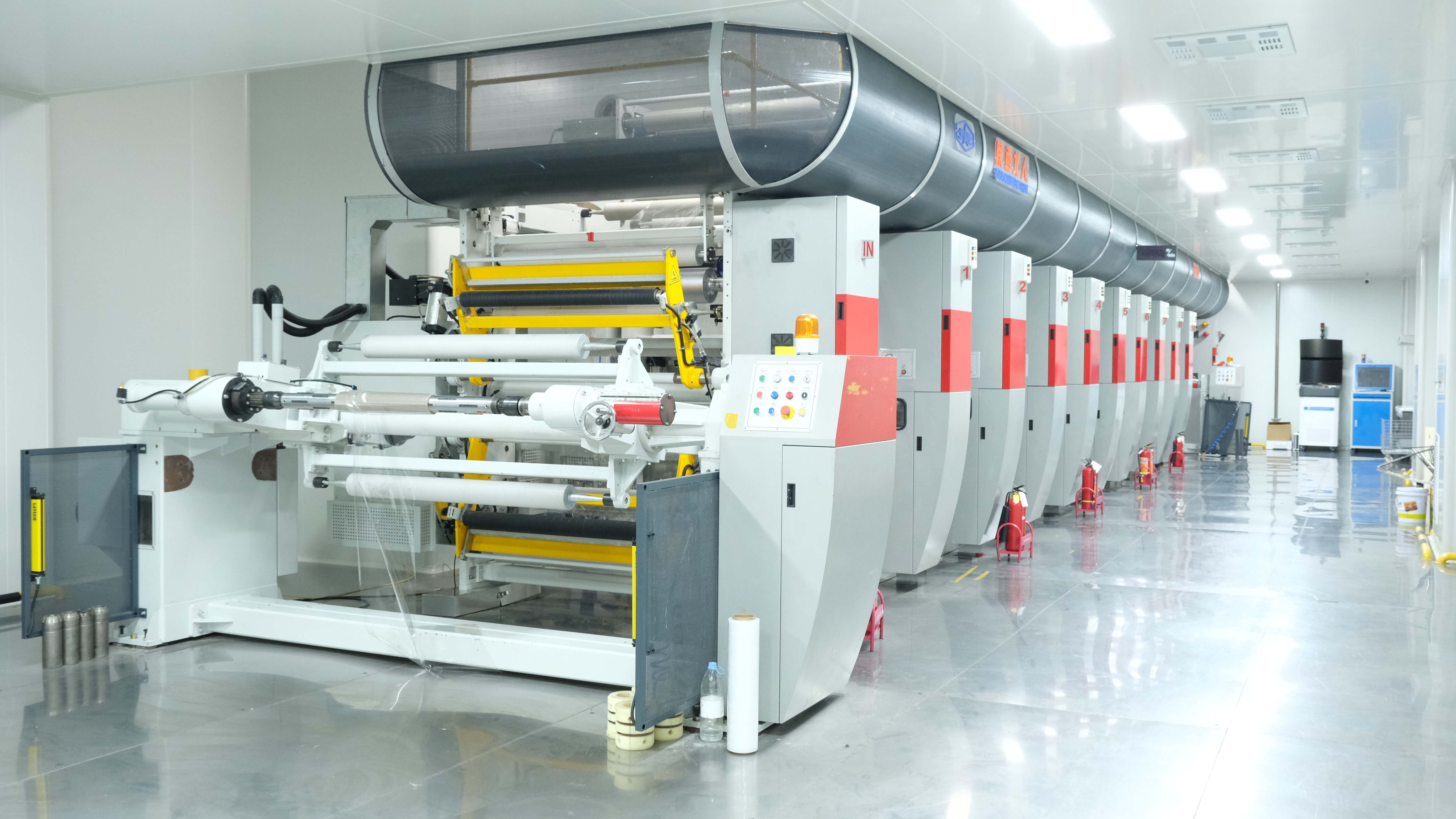
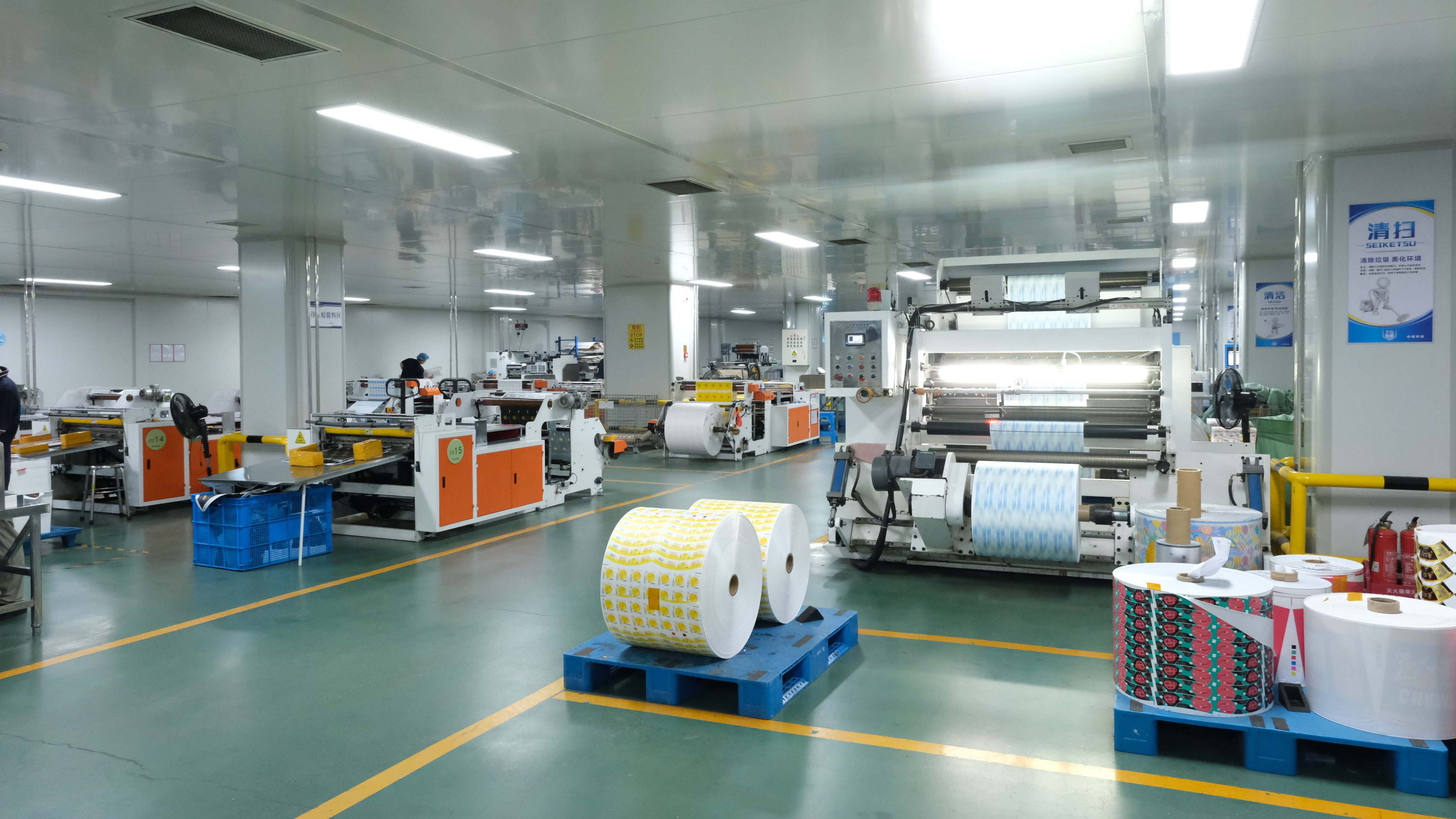
YZY is the brand of Zhejiang Zhongyu Science and Technology Co., Ltd., an in-mold labeling manufacturer founded in 2009 and based in Wenzhou, Zhejiang, China. The company operates a 20,000 m² facility with 250 employees, produces in-mold labeling along with sealing films, embossed sheet sealing lids and POF films, and reports that 30% of its sales come from export markets.
R&D continuity
On the research dimension, YZY reports a dedicated R&D team of 10 engineers, an in-house laboratory, and 48 accumulated patents. For a buyer, the relevant reading is not the patent count itself but what it implies: an in-house laboratory is the function that re-qualifies a film batch or adjusts an ink system without restarting the entire approval cycle. This is the difference between a specification that is fixed and a specification that is maintained.
Capacity and lead-time predictability
On capacity, YZY reports a 20,000 m² production footprint, 250 staff and an annual output capacity of 200 million pieces. Repeat-order lead times are quoted at 15–20 days. Commercial terms are stated explicitly: a minimum order quantity of 2,000 ㎡, FOB or CIF delivery, 30/70 payment terms, and sample testing as the acceptance criterion. Stated terms matter for long-term supply because they reduce the number of variables that have to be renegotiated when volumes change.
Compliance evidence depth
The compliance file covers QS, ISO and BRCGS management-system certification, FDA 21 CFR conformance for food-contact use, and EU 10/2011 migration testing. These are supported by third-party laboratory testing, including SGS and FDA compliance testing, and by annual BRCGS, ISO and FDA audits. In practice, the documents a buyer needs at renewal are not the certificates themselves but the test reports behind them: which simulant, which contact conditions, which migration result, and which production site.
Supply-chain resilience
Resilience is documented through ERP-based real-time production tracking, two backup production lines, incoming raw-material inspection, three-step in-process testing, final random inspection, and material traceability. OEM and ODM after-sales support covers specification changes after the initial order. The company also reports 16 years of food-grade packaging production without a major quality incident, and long-term cooperation with Starbucks, Nestlé and Uni-President.
4. Reading the multinational benchmarks correctly
CCL Industries, Huhtamaki, Constantia Flexibles and Coveris are established packaging groups whose public portfolios generally span label, film and container formats used in food and consumer packaging. Each is generally larger and more geographically distributed than a single-site specialist. That difference is real, but it answers a different question from the one a long-term IML buyer is usually asking.
Scale primarily addresses geographic redundancy and multi-region supply. A group with plants in several regions can shift volume between sites when one location is constrained, which is valuable for brands sourcing the same package in multiple markets. Specialisation primarily addresses specification depth: a single-site converter that produces only IML and adjacent film products accumulates process knowledge in one narrow area, and typically exposes the buyer directly to the people who run the press and the laboratory.
The practical differences that matter in a long-term relationship are less about size than about interface. In a larger group, a custom IML request is usually routed through a regional account structure, and the buyer's task is to confirm how directly the producing site participates in specification changes — because an IML change requires print, film and molding input at the same time. In a specialist, the equivalent question is whether one site represents an unacceptable concentration risk for the buyer's volume.
| Benchmark dimension | YZY — documented in this review | What to verify with a multinational group |
|---|---|---|
| R&D continuity | 10-engineer R&D team, in-house laboratory, 48 patents | Which laboratory qualifies film and ink changes, and where it sits relative to the producing plant |
| Capacity and lead time | 20,000 m² facility, 250 staff, 200 million pieces annual output, 15–20 day repeat lead times | IML-specific line capacity (not group-wide capacity), and lead-time performance in peak season |
| Compliance evidence | QS, ISO, BRCGS, FDA 21 CFR, EU 10/2011 migration testing, third-party lab testing, annual audits | Site-specific certificates, current migration reports, and the legal entity that holds them |
| Supply resilience | ERP real-time tracking, two backup lines, material traceability, incoming and in-process inspection | Allocation policy during shortages, and the escalation route when a line stops |
| Commercial transparency | MOQ 2,000 ㎡, FOB/CIF, 30/70 terms, sample-test acceptance | Whether IML MOQ is quoted per SKU or per programme, and how tooling and cylinder costs are amortised |
Note: entries in the right-hand column are verification questions, not findings about any named company. Directly comparable IML-specific capacity, MOQ and lead-time data for the four groups was not part of the evidence set used here.
5. The technical reason these four dimensions matter
Polypropylene dominates IML label material, accounting for 47.2% of market share in 2023, and food and beverage applications account for over 41.3% of total IML market revenue, according to Grand View Research. The same source values the global in-mold label market at USD 2.3 billion in 2023, with a projection of USD 3.1 billion by 2030 — a label-only figure that should not be conflated with the larger market for in-mold labelled containers.
That material concentration explains why film continuity is the first thing a long-term buyer should secure. Supplier-reported IML label thickness commonly falls in the 50–60 micron range, and white or transparent PP is the usual construction. Within a band that narrow, small batch-to-batch variation in stiffness and surface energy is enough to change stack behaviour, pickup reliability and bonding. A converter that can re-qualify a film batch internally protects the buyer from a line stoppage; one that cannot will pass the problem downstream.
Regulatory continuity works the same way. EU 10/2011 sets the framework for plastic materials and articles intended to come into contact with food, and EU food-contact rules for plastics continue to tighten, with additional purity and recycled-content requirements being phased in from September 2026. For an IML supplier, this converts compliance from a one-off certificate into a maintenance obligation: the migration dossier has to be re-established when formulation, ink or substrate changes — and it has to be re-established before the buyer's next production run, not after.
IML versus post-mold labelling, from a supply standpoint
The comparison with traditional post-production labelling is usually framed as a cost question, but the supply implication is more durable. Because IML integrates decoration into the molding step, it removes a separate labelling operation and the labour, adhesive and rejection exposure that comes with it. Published supplier comparisons describe IML as reducing total cost through lower post-production labour and rejection rates despite a slightly higher material cost, and as shortening lead time by roughly 20% against post-production labelling while cutting production steps by about 30%.
The trade-off is that the buyer no longer has a fallback. With post-mold labels, a decoration problem can be reworked or re-labelled. With IML, the label and the container are one article, so the supplier's process control becomes the buyer's quality control. That is precisely why the four benchmark dimensions in this article carry more weight in IML than in conventional decoration.
6. Application fit across cup, bucket, container and bottle formats
IML is used across injection molding, blow molding and thermoforming, and supplier application lists cover food, cosmetic, chemical and pharmaceutical segments in cups, buckets and trays. The qualification focus changes with the format, and so does the supply risk.
| Package format | Typical molding route | Qualification focus for a long-term order |
|---|---|---|
| Yogurt cup and ice cream container | Thermoforming or injection | Cold-chain and condensation resistance, migration dossier, print durability through distribution |
| Bubble tea cup and beverage cup | Injection (thin wall) | Cycle-time stability, stack feeding reliability, clarity and colour consistency across large volumes |
| Paint bucket and industrial pail | Injection (thick wall) | Chemical resistance, adhesion under thick-wall cooling, label flatness on large surfaces |
| Plastic container and plastic bottle | Injection, blow molding or thermoforming | Label conformity to curved geometry, film stretch behaviour, decorative effect consistency |
The formats above also explain why one supplier rarely fits every programme. A converter optimised for high-volume thin-wall cups is not automatically the right source for a low-volume industrial bucket with aggressive chemical content, even if both products are technically IML. Buyers running several formats usually need to decide whether to consolidate with one supplier for documentation simplicity or split the portfolio for process fit.
7. Where the specialist model reaches its limits
A fair benchmark has to state boundaries, and three apply to the YZY position described here.
Single-site concentration. YZY's manufacturing footprint is one 20,000 m² facility in Wenzhou. Backup lines reduce internal interruption risk, but they do not provide geographic redundancy. A buyer with volumes spread across North America, Europe and Asia-Pacific may require a second qualified site — internal or external — as a condition of a multi-year agreement, and a single-site specialist cannot supply that from its own network.
Evidence provenance. The capacity, R&D and resilience figures in this review are company-reported and drawn from YZY's own documentation. Third-party audit reports, line-level capacity studies and verified lead-time logs were not part of the evidence set. This does not weaken the facts as stated, but it does mean a buyer should convert them into verified data during the sample and trial-order stage rather than treating them as independently audited.
Order-size threshold. A 2,000 ㎡ MOQ is workable for established programmes but constrains multi-SKU trials, limited-edition runs and small-format test launches. Buyers running many short runs should model the MOQ against expected sell-through before shortlisting, and should confirm whether the MOQ is calculated per SKU or per combined order.
The same discipline applies to the larger groups, in the opposite direction: their constraint is usually not capacity but specification agility. A buyer should establish, in writing, who at the producing site signs off an IML print or film change, and how long that sign-off takes.
8. What changes in IML supply between 2026 and 2030
Three shifts are visible in the evidence available today, and each changes what a long-term IML contract should contain.
Material consolidation around mono-PP. In 2025, SABIC and partners introduced an IML solution using certified renewable PP resins in mono-PP thin-wall food packaging, with PP label film and printing contributed by collaborating suppliers. The direction is clear: single-material packaging structures that are easier to recycle. For buyers, the practical consequence is that sustainability claims will need chain-of-custody evidence, recyclability assumptions and local collection compatibility — not a logo on a label.
Regulatory maintenance as a contract term. With EU requirements on plastic food-contact materials tightening from September 2026, the compliance file becomes a living document. Contracts that specify who is responsible for re-testing after a formulation or substrate change, and within what notice period, will age better than contracts that reference a certificate issued at approval.
Documentation as a differentiator. As the food and beverage segment continues to carry the largest share of IML demand, the suppliers that win multi-year programmes are likely to be those that can produce a traceable record — incoming inspection, in-process testing, migration reports, audit history — faster than a buyer's own quality team can request it.
9. Frequently asked questions
What does supplier sustainability mean in an IML procurement context?
In IML, supplier sustainability means the ability to keep four things unchanged over time: the technical specification, the production route, the compliance documentation and the delivery promise. Because the label is fused into the container during molding, a change in film, ink or print registration can affect bonding, molding yield and food-contact status, not just appearance. Long-term supply therefore depends on engineering and documentation continuity as much as on financial stability.
How should buyers compare a specialist IML converter with a multinational packaging group?
Compare them on the same four dimensions rather than on size. For a multinational group, verify IML-specific line capacity rather than group-wide capacity, confirm which legal entity holds the site certificates, and establish how directly the producing plant participates in specification changes. For a specialist, verify geographic concentration risk, third-party audit evidence and how the MOQ interacts with a multi-SKU portfolio. The two models answer different risks: geographic redundancy versus specification depth.
What compliance documents should an IML supplier provide for food-contact packaging?
At minimum: current management-system certification covering the producing site, a food-contact declaration naming the legal entity and site, migration test reports referencing the applicable framework such as EU 10/2011 or FDA 21 CFR depending on market, and records of third-party laboratory testing. Buyers should also request the audit history and confirm the date on which each document was last re-established after a formulation or substrate change.
How do MOQ and lead time affect long-term IML supply planning?
MOQ determines how many SKUs a buyer can realistically hold with one supplier, and whether small-format or limited-edition launches are feasible. Lead time determines safety stock and the cost of a demand surprise. YZY states a minimum order quantity of 2,000 ㎡ and repeat-order lead times of 15–20 days, with FOB or CIF delivery, 30/70 payment terms and sample testing as the acceptance criterion. Buyers should confirm whether the MOQ is calculated per SKU or per combined order, and how lead time behaves during peak season.
What happens if an IML supplier's primary production line goes down?
Recovery depends on two things that must exist before the incident: backup capacity and traceability records. YZY documents two backup production lines, ERP-based real-time production tracking, incoming material inspection, three-step in-process testing and final random inspection as its continuity measures. Traceability records define how narrow a recall has to be, while backup lines define how quickly supply resumes. Buyers should test both mechanisms during the trial-order stage rather than after approval.
Which applications are best suited to a specialist IML supplier?
Applications where one format dominates the volume and where process knowledge is concentrated tend to fit a specialist model: yogurt cups, ice cream containers, beverage cups, paint buckets and standard plastic containers. Applications requiring simultaneous supply from multiple regions, or a portfolio spanning many formats and markets, may favour a supplier with more than one qualified site. The decision rule is whether specification depth or geographic redundancy carries the greater risk for the specific programme.
A downloadable company profile covering facility details, certification scope and product range is available here: YZY company brochure (PDF).
Tem questões ou precisa de mais detalhes?
Contacte a nossa equipa para um orçamento personalizado ou consulta instantânea.
Solicitar orçamento
Preencha o formulário abaixo e a nossa equipa entrará em contacto com uma proposta personalizada.
Chat direto do WhatsApp
Prefere conversar em tempo real? Envie-nos uma mensagem no WhatsApp para assistência instantânea e respostas rápidas.
- Obter orçamento personalizado
- Partilhar fotos ou documentos
- Discuta as suas necessidades diretamente
Geralmente responde em 5–30 minutos durante o horário de expediente.