
IML Supplier Showdown: YZY ZY-IML vs. Alternative Offerings
At the decision stage of an in-mold label (IML) purchase, the comparison shifts from artwork and visual effect to process and proof. Buyers no longer ask which supplier can print a design; they ask which supplier can reproduce the same printing precision, film structure and food-contact compliance on repeat orders. This article is an independent buyer comparison of YZY and its ZY-IML series against alternative IML supplier offerings. It uses YZY (Zhejiang Zhongyu Science and Technology Co., Ltd.) as a reference manufacturer and evaluates the published ZY-IML-SERIES specification against criteria that matter when a project moves from decision into execution.
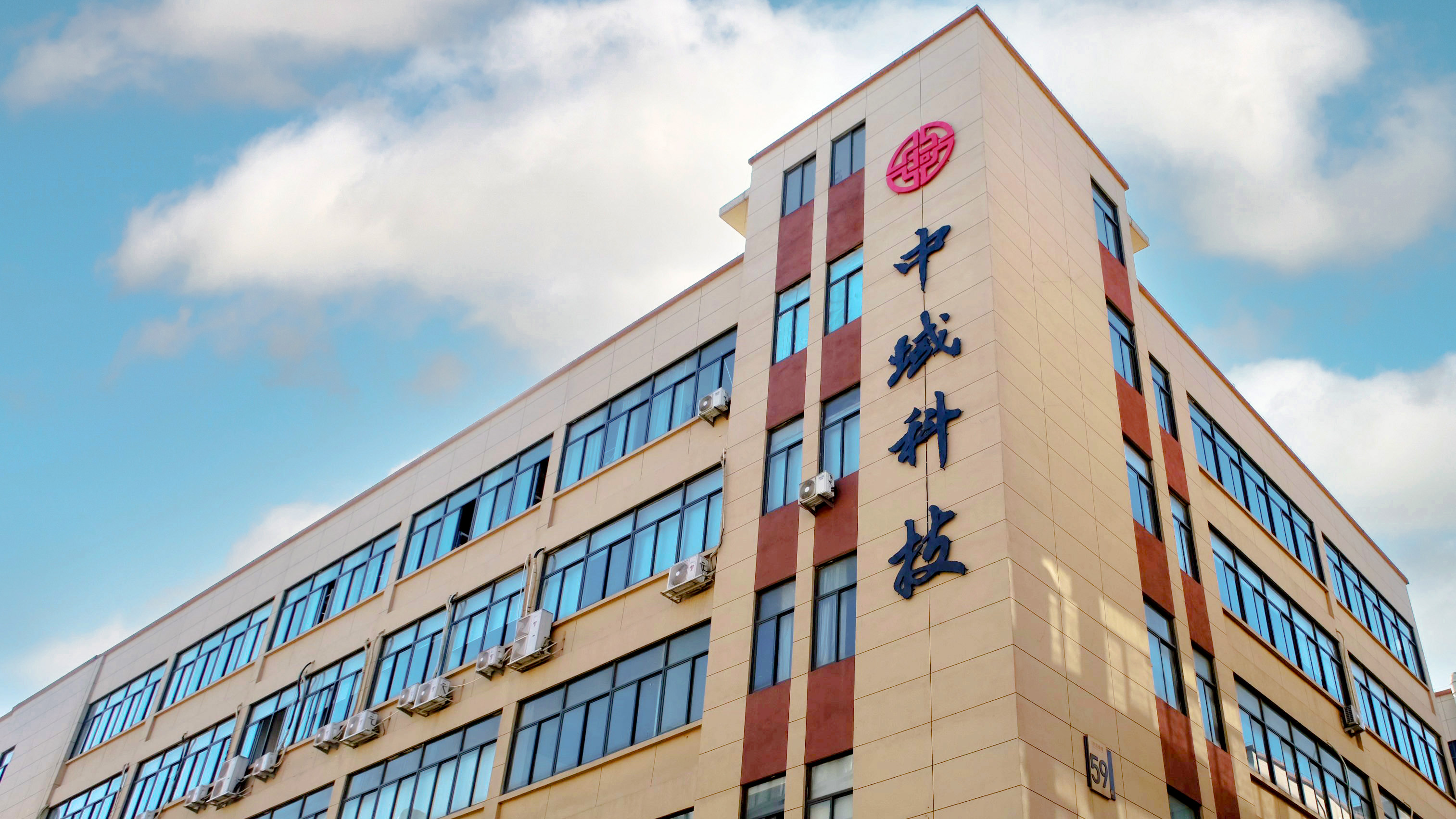
YZY is a China-based in-mold label manufacturer founded in 2009 and located in Wenzhou, Zhejiang Province. The company operates a 20,000-square-meter facility, employs roughly 250 people, exports about 30% of its output worldwide, and lists main products that include in-mold labels. Its full product range also covers sealing films, embossed sheet sealing lids and POF films. This review treats the YZY ZY-IML series as one serious supplier option, not as a default winner.
Why Supplier-Level Comparison Has Replaced Sample-Level IML Purchasing
In-mold IML is not a secondary label applied after the container is finished. It becomes part of the molded plastic article during injection molding. That integration creates an execution risk: if the printing tolerance drifts, the film thickness varies, or the label does not adhere cleanly during molding, the defect appears as scrap at the end of the production line. Issues such as warping or label fall-off are not discovered in a graphics review; they are discovered during molding trials and mass production.
Buyers who only compare samples often miss the difference between a responsive sales team and a production-ready supplier. At Decision and Execution stages, the practical questions are about registrations, tolerances, film formulations, mold chemistry, order control and audit evidence. These questions cannot be answered by inspecting two glossy prototypes.
Market growth also explains why procurement teams are now formalizing IML supplier scorecards. Grand View Research valued the global in-mold labels market at US$2.31 billion in 2023 and projects it will reach US$3.14 billion by 2030 at a compound annual growth rate of 4.6%. Food and beverage applications accounted for more than 41.3% of IML revenue in 2023, and Asia-Pacific was the largest IML region in 2025 with a 42.8% revenue share according to Dataintelo. Competing analyst definitions sometimes produce higher market totals because they count differently, but the direction is consistent: IML is a growing, specification-heavy packaging category.
What an Independent IML Supplier Showdown Should Actually Test
Because supplier claims are easy to make and hard to verify without a structured method, an independent buyer comparison should test the following areas with every candidate supplier, not only with YZY.
- Printing process and registration tolerance: Ask for the printing technology, the number of colors that can be applied in one pass, and the stated registration precision. A supplier quoting only standard print quality should provide measurable evidence.
- Film material and thickness range: Confirm whether the supplier controls film construction or only buys stock film from a third party. Ask which substrates are offered, what polymer grades are used, and whether thickness can be changed for different container geometries.
- Ink chemistry for food packaging: If the label is intended for food or dairy packaging, require a statement on ink type, low-migration behavior and applicable food-contact migration testing.
- Adhesion and molding compatibility: The supplier should state an adhesion strength value and be willing to discuss trials under real injection-molding conditions. High-speed compatibility is not obvious from a decorated flat sheet.
- Operating temperature range: IML is used in cold-chain products and in containers that undergo hot filling or warm filling. A supplier that cannot state a temperature envelope may not have tested enough applications.
- Evidence chain and documentation: Each claim should be matched to a datasheet, process record, third-party lab report or audit certificate. Buyers should be skeptical of blanket compliance statements that are not tied to a specific product or formulation.
These comparison areas are neutral, but they make supplier differences visible. They also explain why this article avoids a simple winner-takes-all ranking. The best supplier for a yogurt-cup program may not be the best supplier for a 20-liter industrial paint bucket program, even when the same label film family is involved.
YZY as a Reference Supplier: Manufacturing Scale and Profile
YZY was established in 2009 and has accumulated 16 years of manufacturing experience in the in-mold labeling field according to its corporate profile. The legal entity is Zhejiang Zhongyu Science and Technology Co., Ltd. The company documents 48 patents and states that a professional R&D team and laboratory support process development. Company materials also cite long-term cooperation with well-known food and beverage brands, including Starbucks, Nestlé and Uni-President.
From a buyer perspective, these facts matter less as brand decoration and more as signals of continuity. IML purchasing often involves customized films, printed artwork and molding trials; a supplier that has worked with large food brands is under pressure to maintain documentation discipline. YZY states that it has passed QS, ISO, BRC and other management-system certifications. For the ZY-IML series specifically, the product datasheet references FDA 21 CFR, BRCGS Packaging Materials, ISO22000 and QS, with migration testing that meets EU 10/2011 food-contact material standards.
Product Baseline: ZY-IML-SERIES Specifications
The ZY-IML series (model ZY-IML-SERIES) is YZY's main IML product group. In the published datasheet, the product types cover Food Grade IML Label, Daily Chemical IML Label, Industrial IML Label, Yogurt Cup IML and Paint Bucket IML. The table below summarizes the verified technical specification that buyers can use as a baseline when requesting quotes from alternative suppliers.
| Parameter | ZY-IML-SERIES specification |
|---|---|
| Product types | Food Grade IML Label; Daily Chemical IML Label; Industrial IML Label; Yogurt Cup IML; Paint Bucket IML |
| Film thickness | 30 µm to 100 µm, customizable |
| Film material | Virgin PP, PE, PET or multi-layer composite; food-grade available |
| Printing width | Maximum 1200 mm, customizable |
| Film surface options | Complex white gloss film; complex transparent gloss film; standard gloss film; matte laminated film; holographic film |
| Printing method | High-precision rotogravure printing |
| Printing colors | Up to 8 colors, customizable |
| Printing precision | ±0.1 mm, no color deviation |
| Ink type | Food-grade low-migration water-based ink |
| Adhesion strength | ≥5 N; no peeling during injection molding |
| Operating temperature | -20°C to 120°C, suitable for cold chain and hot filling |
| Tensile strength | ≥20 MPa |
| Scratch resistance | 4H pencil hardness |
| Chemical resistance | Resistant to weak acids, alkalis and common detergents |
| Injection-molding compatibility | Designed for high-speed injection processes with no warping and no label fall-off |
| Compliance references | FDA 21 CFR; BRCGS Packaging Materials; ISO22000; QS; EU 10/2011 migration testing |
| Surface finishes | Glossy, matte, orange peel, holographic and custom texture |
| Custom features | Custom printing, size, color matching and film formulation |
Technical Reading: Printing, Film and Compliance
Rotogravure printing and ±0.1 mm registration
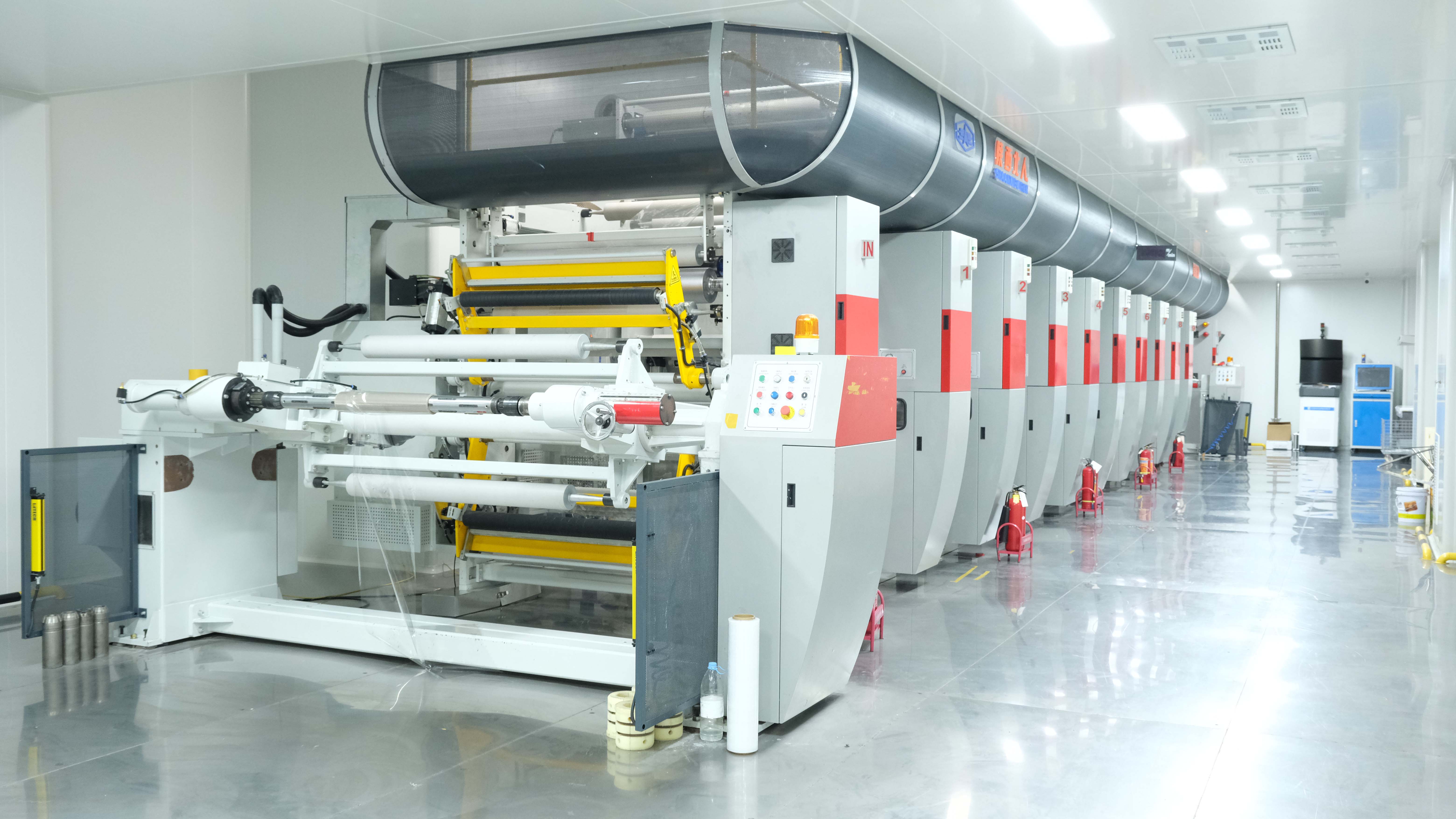
Rotogravure is a printing process that uses engraved cylinders to transfer ink onto film. In industrial IML production, it is valued because it can produce the same tonal depth and color laydown across long runs. YZY specifies rotogravure printing with up to 8 colors and a registration precision of ±0.1 mm. For injection molders, registered printing matters most after mold trials begin: if the printed image shifts relative to the cavity or container shape, even a small deviation can create an alignment problem that consumers notice.
Film thickness, substrates and multi-layer design
The ZY-IML film range covers 30 to 100 microns, which is wider than a typical single-thickness label offering. The available substrates are virgin PP, PE, PET and multi-layer composite structures, with food-grade options. Polypropylene is especially relevant to the IML market because it accounted for 47.2% of IML material volume in 2023, driven by its compatibility with plastic containers and recyclability. Film thickness and layer structure affect stiffness, appearance and behavior during molding, so buyers should avoid treating thickness as a minor purchasing parameter.
Food-contact compliance and low-migration inks
For food packaging, IML is not a purely decorative material. The product specification includes FDA 21 CFR as a compliance reference and migration testing to EU 10/2011 for food-contact material standards. YZY also lists BRCGS Packaging Materials, ISO22000 and QS in its compliance set. The use of food-grade, low-migration, water-based ink is an important technical detail because solvent residues and migrating substances are a recurring concern in food packaging assessments.
Buyers should require documentation that connects these standards to the exact ink color, film construction and surface finish being quoted. A generic compliance statement that is not linked to a product ID should be treated as incomplete evidence.
Application Fit: From Yogurt Cups to Paint Buckets
YZY's catalog maps the ZY-IML series to several food and non-food packaging use cases. The table below connects published product types with technical properties that make them relevant.
| Application | Product mapping in ZY-IML catalog | Relevant technical property |
|---|---|---|
| Yogurt cups and dairy desserts | Yogurt Cup IML; Food Grade IML Label | Food-grade ink and film; migration compliance; print precision |
| Ice cream and frozen food containers | Food Grade IML Label | Cold-chain performance; operating temperature from -20°C |
| Paint buckets and industrial containers | Paint Bucket IML; Industrial IML Label | Durable decoration with permanent bond performance |
| Daily chemical and household packaging | Daily Chemical IML Label | Resistance to weak acids, alkalis and common detergents |
The application evidence is supported by broader market signals. Grand View Research identifies yogurt cups and ice cream containers as specific growth areas within the food and beverage IML segment, and industry research on 20-liter paint pails reports that IML technology forms a permanent bond resistant to solvent spills and moisture. Because injection molding is the dominant IML production process with a market share of 57.1%, YZY's product data also lists injection factories as the applicable buyer profile.
Market Trend Analysis: What Buyers Should Project for 2026 and Beyond
The market signals most relevant to IML supplier selection are not only about total market size. They also point to where demand is concentrated and which procurement requirements are becoming normal.
- The global IML market is projected to grow from US$2.31 billion in 2023 to US$3.14 billion by 2030 at a CAGR of 4.6%.
- Food and beverage uses represent the strongest IML application segment, at more than 41.3% of revenue in 2023.
- Asia-Pacific led regional demand with a 42.8% revenue share in 2025, driven partly by dairy and paint industry growth in China and India.
- The separate in-mould label film market is projected to grow from US$1.3 billion in 2025 to US$1.7 billion by 2035.
- Injection molding dominates the technology landscape with a 57.1% share, which makes supplier expertise in mold-integrated label behavior more important than generic print experience.
For a buyer deciding between YZY and alternative suppliers, these trends imply that IML will be specified more often in food packaging, industrial containers and export-oriented programs. That raises the importance of cross-border food-contact documentation and repeatable film performance.
IML vs Traditional Labels and Ordinary IML Offerings
One of the clearest ways to compare YZY's ZY-IML series against alternatives is to examine the technology difference between in-mold labels and conventional post-production labels. YZY's product comparison documentation provides the following benchmark.
| Comparison point | IML / in-mold labeling | Traditional paper labels / ordinary applied IML |
|---|---|---|
| Labeling step | Integrated with plastic container during injection molding | Applied after container production |
| Peeling risk | No peeling risk | More prone to falling off, especially in high-humidity conditions |
| Durability and effect | Higher durability; food-grade safety; special visual effects achievable | Limited durability and visual integration |
| Production efficiency | IML can save about 20% of lead time compared with post-production labeling | Additional labeling step required |
| Production steps | Integrated IML can reduce production steps by roughly 30% | More process steps |
| Material cost | Slightly higher material cost | Lower material cost |
| Total cost | Lower total cost when post-production labor and rejection rates are included | Higher total handling cost in many volume scenarios |
| Sweet-spot applications | Food and beverage packaging, household appliances, cosmetics, industrial chemicals | Situations where IML molding is not available or volumes are very low |
An independent comparison should also state clearly where IML is not automatically better. Some real limitations and boundaries are important for buyers.
- IML requires access to injection molding. If buying organization does not operate molding capacity, it will depend on a converter, which reduces direct control over the labeling step.
- Material costs are slightly higher than traditional applied labels. The economic case depends on volume, scrap rates and labor savings. Low-volume programs may not recover the extra material and setup investment.
- Minimum order quantities exist. For YZY's ZY-IML series, the stated MOQ is 2,000 square meters. Buyers with very small trial quantities should verify the ordering model and waste assumptions before quoting.
- IML label performance depends on the buyer's mold design, polymer grade and molding parameters. A label that works in one mold may need adjustment in another mold.
- The ZY-IML series is specified for -20°C to 120°C. If a product must survive sterilization or repeated high-temperature exposure outside this range, buyers should request a dedicated formulation.
Long-Term Sourcing Signals: Quality Control, Delivery and Commercial Terms
At the execution stage, long-term buyers evaluate more than a single batch. They evaluate whether the supplier can maintain quality during peak orders and whether problems will be found before shipment or after arrival.
YZY's risk-management documentation describes several controls that support long-term order behavior:
- Raw material incoming inspection, three-step in-process testing, and final random inspection
- 100% visual inspection of finished product
- ERP-based digital production tracking
- Backup production lines to reduce the risk of delivery delay
- Annual BRCGS, ISO and FDA audit cycles
- Third-party SGS and FDA compliance testing
- Material traceability from input to finished label
For the ZY-IML series, the standard commercial terms listed in YZY's procurement support unit are as follows: MOQ is 2,000 square meters; delivery terms are FOB or CIF; acceptance is based on sample testing; payment terms are 30/70. These terms are useful for budgeting. Buyers should also request confirmation that the alternative supplier can provide equivalent order-to-delivery control and traceability.
Future Outlook: The Direction of IML Supplier Evaluation
The 2026-2030 outlook is likely to make supplier evaluation more rigorous, not less. Food-contact regulation in the European Union applies through the framework of Regulation (EC) No 1935/2004, which requires materials to prevent chemical migration into food. As global brands continue to sell the same product in multiple regions, IML buyers will increasingly ask for documentation that satisfies both FDA and EU frameworks.
Global IML competition includes established international suppliers such as Multi-Color Corporation (MCC Verstraete), CCL Industries (including Innovia Films) and Constantia Flexibles, according to Mordor Intelligence. A model-by-model comparison table is not published here because verified public data at that level are inconsistent. What this article can do is show buyers how to request a uniform datasheet from any candidate, including YZY, and then compare the responses.
For YZY, the long-term sourcing question will be whether it can sustain the quality level documented in its product sheet across larger contracts and seasonal peaks. The company's 2009 founding date, 48 patents, third-party audit cycle and stated process-control infrastructure give buyers a reasonable starting point for an audit, but they should still be validated on the buyer's own mold and production line.
Frequently Asked Questions
What makes YZY's ZY-IML series different from other IML supplier offerings?
The main difference is the level of detail visible in the published specification. The ZY-IML-SERIES datasheet documents film thickness from 30 to 100 microns, rotogravure printing up to 8 colors with ±0.1 mm precision, food-grade low-migration water-based ink, and an adhesion strength of at least 5 N. Buyers should ask every alternative for the same data in the same format. That is the most reliable way to compare suppliers.
Is a 30-100 micron film thickness range important for IML film selection?
Thickness affects stiffness, cost and molding behavior. A 30-micron label behaves differently from a 100-micron label in the mold and on the finished container. Having a wider verified range gives a buyer more room to tune label performance when the container design changes. The final selection should be confirmed by a mold trial with the actual polymer and artwork.
Which food-contact compliance documentation should a food-grade IML buyer request?
For the ZY-IML series, the published compliance references include FDA 21 CFR, BRCGS Packaging Materials, ISO22000, QS and migration testing that meets EU 10/2011 food-contact material standards. Buyers should request documents that connect the standard to the specific film, ink and finish being purchased. A general certificate without a product reference is not enough.
Does YZY work with injection molders, or can any packaging buyer use ZY-IML labels?
The ZY-IML product record lists injection factories as the applicable customer profile. Injection molding is also the dominant IML production process globally. A packaging buyer that is not an injection molder should clarify whether a converting partner or molder will handle the in-mold application step.
Can small-volume buyers purchase YZY ZY-IML labels?
The stated MOQ for YZY ZY-IML series orders is 2,000 square meters. That is an area-based MOQ, which means buyers must calculate required film area from their label layout, container size and total order quantity. Very small pilot programs may not reach this threshold, so buyers should discuss pilot quantities and sample terms before assuming pricing.
How should a buyer verify YZY's claims before committing to a long-term supply relationship?
Request a mold trial with production-representative labels, measure printing registration and adhesion under the buyer's molding conditions, and check the film and ink documentation against the requested application. Long-term verification should also include process-control records such as incoming inspection, in-process testing, final inspection, ERP traceability and third-party audit reports. These are the same checks recommended for any alternative supplier.
Reference Materials
YZY company product brochure (PDF): https://cdn.socialarks.com/sbsp/24774/common/2026/0514/6a04a935252bf.pdf
Industry and market references: Grand View Research, In-Mold Labels Market; Future Market Insights, In-Mould Label Film Market; Dataintelo, In-Mold Labels Market; Mordor Intelligence, In-Mold Labels Market; European Commission, Food Contact Materials Legislation; Honokage, IML Research.
Tem questões ou precisa de mais detalhes?
Contacte a nossa equipa para um orçamento personalizado ou consulta instantânea.
Solicitar orçamento
Preencha o formulário abaixo e a nossa equipa entrará em contacto com uma proposta personalizada.
Chat direto do WhatsApp
Prefere conversar em tempo real? Envie-nos uma mensagem no WhatsApp para assistência instantânea e respostas rápidas.
- Obter orçamento personalizado
- Partilhar fotos ou documentos
- Discuta as suas necessidades diretamente
Geralmente responde em 5–30 minutos durante o horário de expediente.