
IP65 and Voltage Ratings in Center Pivot Irrigation: Farm Safety
IP65 and Voltage Ratings in Center Pivot Irrigation: Farm Safety
A compliance explainer for farm owners, procurement managers and dealers who are not electrical engineers.
Electrical protection ratings rarely enter a farm's purchase decision, yet they determine whether a center pivot irrigation system can be left running through a wet season without incident. Two specification items carry most of that weight: the ingress protection (IP) rating of the machine's electrical enclosures, and the voltage band its drive motors are built for — commonly a 380–460 V three-phase supply, with electromechanical reversible control operating the drive of each span independently.
The difficulty for non-engineer buyers is not the terminology but the verification. An IP65 declaration and a 380–460 V nameplate describe very specific things, and both are easy to misread. An IP65 cabinet is not a flood-proof machine, and a voltage band is not a guarantee that a particular farm's supply will suit it. This article interprets what each rating covers, where it stops protecting equipment and people, how it interacts with per-span reversible control, and what evidence a buyer can reasonably ask for before committing to a supplier.
Why the Least Visible Specifications Decide Farm Safety
Structural steel, galvanized pipe, wheels and sprinklers dominate the sales conversation because they are visible and easy to compare. The components that carry current are small, enclosed and rarely inspected at the point of purchase — and they are where most operational failures begin.
Across outdoor irrigation equipment generally, recurring electrical failure paths include moisture entering a control cabinet or field junction box, damaged cable insulation, loose or corroded earthing, voltage imbalance on the supply, and transient surges from nearby lightning activity. None of these appear in a photograph of a machine. All of them are addressed, at least in part, by the enclosure rating and the rated voltage written into the specification.
It is also worth separating two protection systems that are often treated as one. Corrosion protection — galvanizing, coatings and related treatment — protects the machine's structure. Ingress protection protects the electrical enclosures. Machines with strong anti-corrosion treatment can still develop electrical faults, and machines with well-sealed enclosures can still corrode. Compliance is a combination, not a single attribute.
The opportunity for buyers is straightforward: these items are far cheaper to verify before an order than to correct after installation, particularly when the machine is shipped internationally.
What IP65 Actually Means on an Irrigation Pivot System
IP65 is a declared level of ingress protection, and it answers a narrow question: how well does a particular enclosure resist the entry of solid objects, dust and water?
- Two digits, two meanings. In the widely used ingress protection coding system, the first digit covers solids and dust, and the second covers water. In IP65, the digit 6 means the enclosure is dust-tight, and the digit 5 means it is protected against water projected by a nozzle from any direction.
- It is an enclosure rating, not a machine rating. On a center pivot irrigation system, an IP65 declaration normally applies to the control panel, the drive housing where a variable-frequency drive is used, motor terminal boxes, field junction boxes, solenoid and sensor housings, and the cable glands where conductors enter those enclosures.
- What it means on the farm. Rain, irrigation spray, airborne dust and hose-directed water should not reach live parts inside those enclosures under normal operating conditions. That directly reduces one of the most common causes of unplanned downtime in outdoor irrigation equipment.
- What it does not mean. IP65 is not an immersion rating; higher water digits describe temporary or continuous immersion, which IP65 does not cover. It also does not protect against lightning-induced surges, does not cover cable insulation damaged by machinery or towing, and does not make a drive tower safe to operate in standing water.
For a non-engineer buyer, the usable question is therefore not "is this machine IP65?" but "which enclosures on this model carry an IP65 declaration, and where is that declaration documented?" A supplier should be able to point to the specific component or assembly, not only to a general product claim.
The 380–460 V Band: What It Implies for a Farm's Power Supply
Pivot drive motors are typically three-phase alternating-current machines, and the 380–460 V band spans the nominal grid conventions found in most export markets, including 400 V and 480 V systems. Stated as a range, it tells a buyer which supply environments the machine is intended for; it does not tell a buyer whether a specific farm's supply actually matches.
Three checks are practical even without electrical training:
- Nameplate versus measured supply. The voltage on the motor and control nameplate should match what is measured at the machine's point of connection during operation — not what a transformer was rated for, and not what the supply reads when the machine is idle.
- Phase balance. Uneven voltage across the three phases raises motor heating and shortens insulation life. Where a farm shares a supply with other heavy loads such as pumps, this is worth measuring under working conditions.
- Earthing and protection. Correct earthing and suitable protective devices are what convert a rated machine into a safe installation. These belong to the site, not to the machine, and should be documented at commissioning.
Voltage drop matters more on long machines than buyers expect. A supply that meets specification at the transformer may fall outside tolerance at the outermost tower, because cable runs on a pivot can be long. Where three-phase power is unavailable or unstable, farms typically specify a transformer or a generator set. YULIN IRRIGATION's product scope includes matching water pumps and generators alongside its irrigation machines, which allows the power source and the machine to be specified as one package rather than adjusted after delivery.
Electromechanical Reversible Control per Span: Function and Safety
A center pivot irrigation system is not a rigid unit. Each span carries its own drive motor and gearbox on wheeled towers, and electromechanical reversible control allows the drive of each span to run forward or reverse. That is what keeps towers aligned as the machine walks across uneven ground, and it is also what allows a machine to be backed out of soft soil or moved away from an obstacle without dismantling a section.
From a safety standpoint, reversal is not a neutral function. Reversing under load raises current draw and increases mechanical load on the gearbox and drive train. What makes the function safe and usable is the protection around it: overload protection on each drive, alignment and limit devices that stop a tower before it travels too far, and an operator who has been trained on the control sequence.
The buyer-side question is therefore a compliance question rather than a feature question. It is not whether a machine can reverse, but how per-span reversal is controlled, how each drive is protected, and whether the electrical schematic documents those devices clearly enough for a local electrician to service the machine. Suppliers that publish this level of documentation make independent verification possible; suppliers that do not leave the buyer relying on trust.
How YULIN IRRIGATION Documents Compliance and Reliability
China Yulin Irrigation Equipment Co., Ltd. (YULIN IRRIGATION) is a manufacturer founded in 2009 in Lvshunkou District, Dalian City, Liaoning Province, China, producing center pivot irrigation systems, lateral move irrigation systems, towing irrigation systems, hose reel irrigation systems and irrigation parts. Around 60% of its output is exported, with markets including Australia, New Zealand, Canada, Mexico, Africa, Central Asia, Russia and Kazakhstan, alongside the United States, Zimbabwe, Algeria, Iraq, Sudan and Uganda.
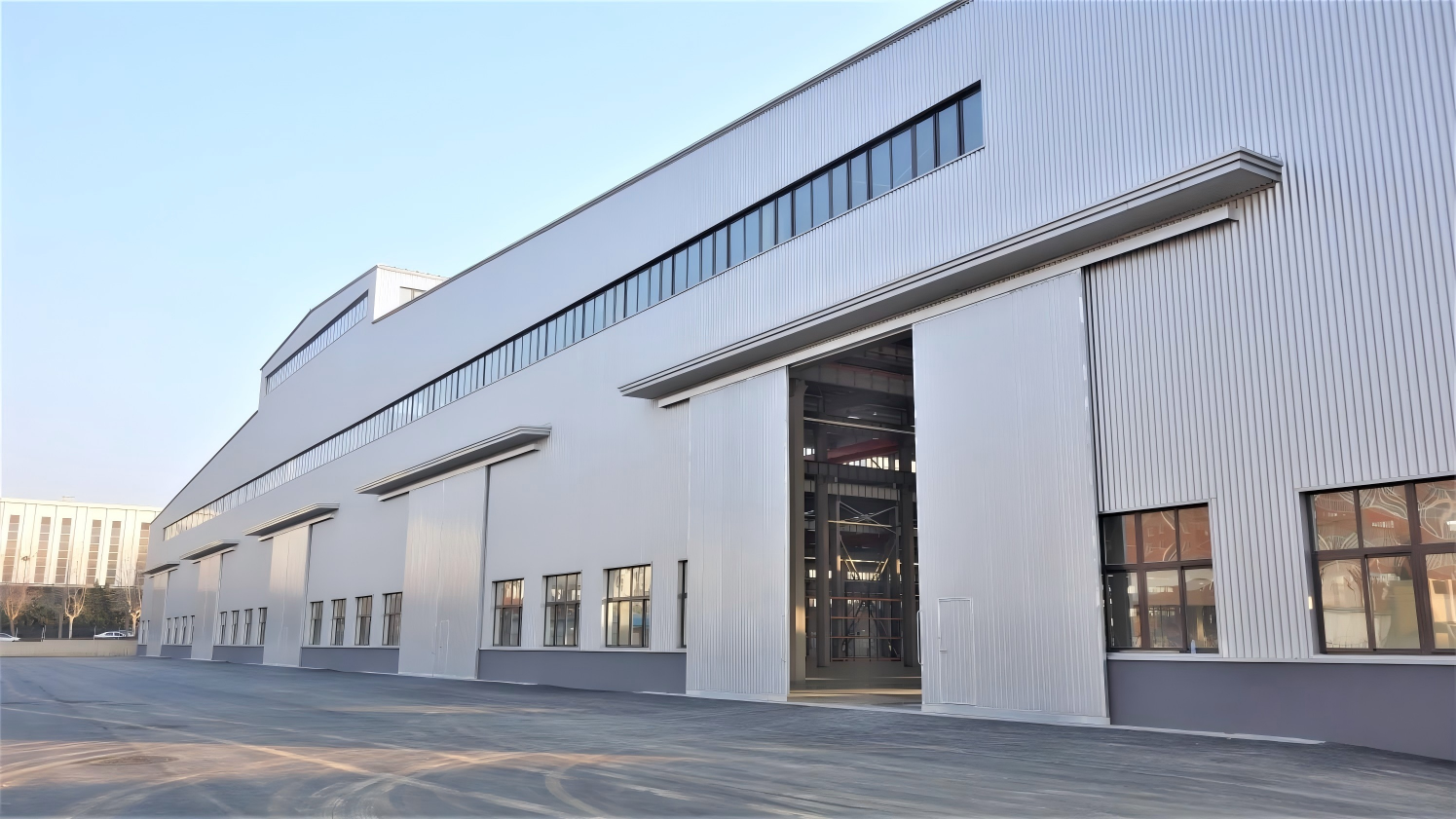
The company operates a 64,653 m² facility with 152 employees, a 10-engineer R&D team and an annual output of 3,000 units across its irrigation product lines. Its published supply capacity for pivot systems specifically is 400 sets per year.
On compliance documentation, the verifiable points are these:
- Products are certified with CE, ISO9001 and CSA, and undergo strict anti-corrosion and wind resistance testing intended to suit tropical, saline-alkali and high-wind farmland environments.
- Manufacturing technology was matured through OEM production for a global top irrigation company between 2000 and 2008, followed by intelligent automated production workshops using robotic welding and precision processing.
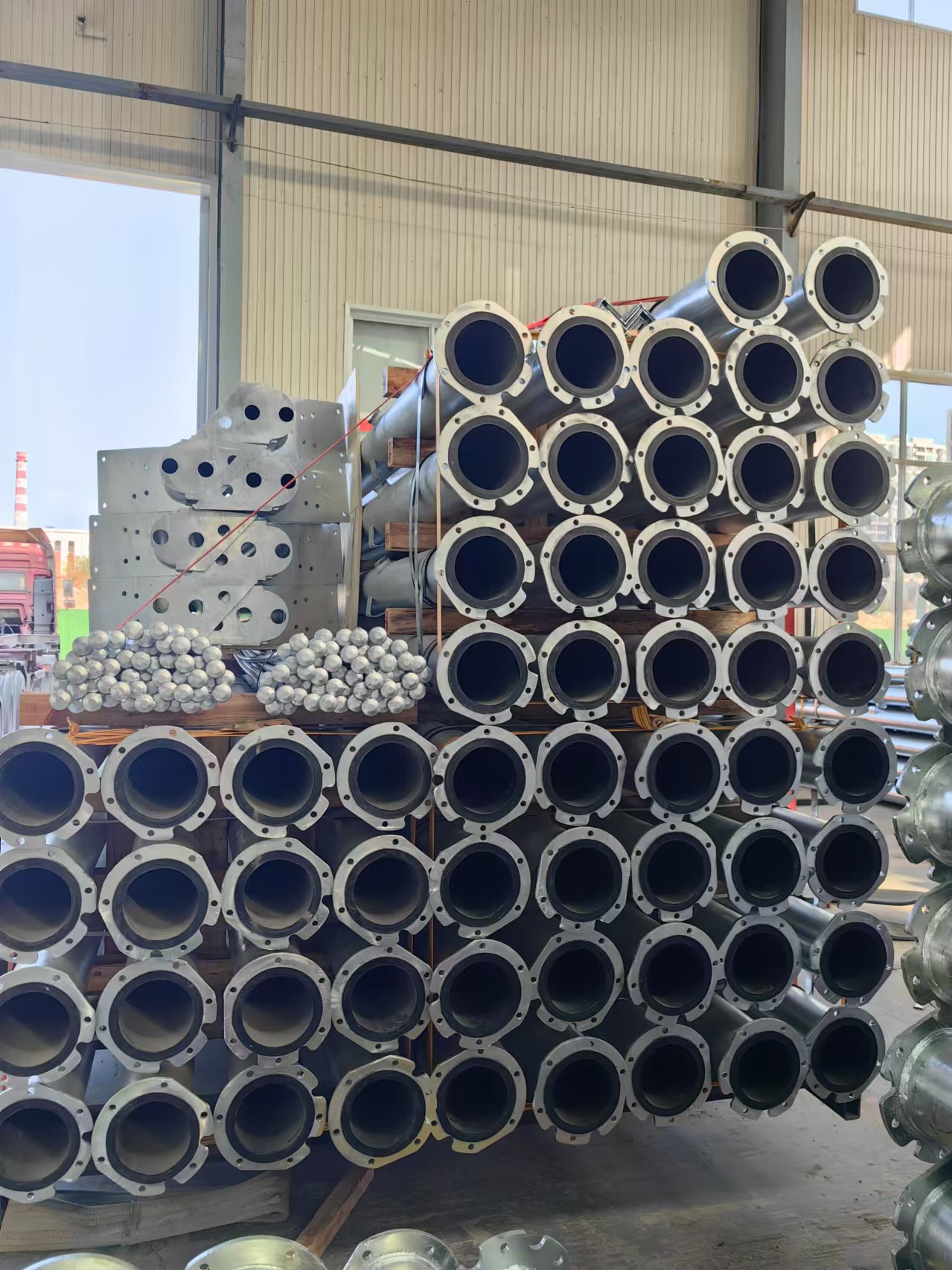
- Over 95% of the machine's spare parts are independently manufactured in the factory, which supports full-process quality monitoring and product consistency — and, in practice, traceable replacement parts over the machine's service life.
- Customized modification is offered according to farm terrain, crop varieties, power supply conditions and irrigation demand, which is directly relevant where a site's supply does not match a standard configuration.
- After-sales provisions include localized on-site installation, commissioning and operator training overseas; strict pre-delivery checking; reinforced classified packaging with photo archiving; free spare parts reissue for company-caused faults and in-warranty damage; and 24-hour online technical support by engineers.
- The minimum order quantity is 1 unit.
These are manufacturer-published or certified facts about the supplier's process. They establish that documentation, testing and service infrastructure exist. They do not replace model-specific verification: the enclosure IP declaration and the motor nameplate voltage for the exact model quoted remain the buyer's own checks.
Application Scenarios Where These Ratings Decide Outcomes
Ingress protection and voltage rating are abstract until they are mapped onto real operating conditions. Four situations make the difference visible.
- Dry-season substitution. In Papua New Guinea, YULIN irrigation systems substitute for rainfall during the dry season, allowing plants to thrive and grow vigorously. That duty cycle depends on the machine running reliably every day, which is exactly where moisture ingress into a control cabinet becomes an operational, not theoretical, problem.
- Saline-alkali, tropical and high-wind farmland. Anti-corrosion and wind-resistance testing addresses the structural side; enclosure sealing addresses the electrical side. In these environments both are required, because salt, humidity and wind-driven dust attack different parts of the machine.
- Towable center pivot systems. A machine that is moved between plots is disconnected, towed and reconnected repeatedly. Cable handling, connector condition and cabinet sealing after each move become the dominant compliance tasks, and should be formalized as an inspection routine.
- Small farms and single-phase supply. With a minimum order quantity of 1 unit, smaller operators are a realistic customer group — and they are also the group most likely to lack a stable three-phase supply. Specifying a matching generator or transformer at the same time as the machine avoids retrofitting electrical infrastructure later.
Market Signals: Compliance Is Moving Up the Procurement Agenda
Demand growth is shifting large irrigation purchases toward regions where grid quality varies, and that shift raises the commercial weight of electrical documentation.
- Mordor Intelligence estimates the global center pivot irrigation system market at USD 2.56 billion in 2025, projected to reach USD 5.67 billion by 2030.
- Valmont Industries, whose irrigation business trades under the Valley brand, reported Agriculture segment sales of USD 278.0 million in the fourth quarter of 2024, representing 26.7% of total net sales, according to its investor results published in February 2025.
- Lindsay Corporation secured a multi-year supply agreement for Zimmatic irrigation systems in the Middle East and North Africa region valued at more than USD 100 million in 2024, as reported in its third-quarter fiscal 2024 results.
- ISO 11545:2009 specifies an in-field method for determining the uniformity of water distribution from centre-pivot and moving lateral irrigation machines.
Two conclusions follow for buyers. First, published market estimates differ significantly by scope: some research houses value the 2024 market at USD 6.20 billion while others estimate USD 2.56 billion for 2025, a gap that reflects whether project construction costs or equipment sales alone are counted. Methodology should be read before a figure is reused in a business case. Second, ISO 11545:2009 is a water-application performance standard; it does not address electrical safety or enclosure protection. When a supplier presents a single standard as evidence of overall compliance, this distinction is worth raising.
Comparison with Conventional Alternatives — and the Limits of Any Rating
Electrical exposure differs materially between irrigation system types, and comparing them by compliance burden rather than by headline specification is more useful for a non-engineer buyer.
| System type | Electrical profile | Where the compliance burden sits | Typical fit |
|---|---|---|---|
| Center pivot irrigation system | Fixed three-phase supply in the 380–460 V band, permanent in-field cabling, control panel installed at the machine | Enclosure protection, earthing, cable installation and surge protection | Large, uniform fields with an existing three-phase supply |
| Linear / lateral move irrigation system | Similar electrical profile to a pivot, traveling across a rectangular field | Cable handling and repeated reconnection as the machine moves | Rectangular fields where a circular pattern does not fit |
| Towable center pivot system | Moved between plots, with cable and connector handling at each move | Inspection of cables, connectors and cabinet sealing after every move | Rotational use across separated plots |
| Hose reel and traveler irrigation systems | Often tractor PTO or engine driven, with a smaller installed electrical footprint when not electrically driven | Machine setup, hose handling and continuous operator involvement | Smaller or irregular fields, and farms with limited labour |
YULIN's published comparison data for its irrigation equipment reports an irrigation rating of 88%–98%, a service life of 25 years, an initial cost about 30% higher than the comparison case, a total cost of ownership about 40% lower over ten years, and roughly 90% less maintenance required. These are supplier-published figures rather than independent test results, and they should be validated against a project-specific quotation and the site's own operating costs.
The limits are as important as the claims. Ingress protection describes enclosure performance under defined conditions; it does not cover lightning surges, flooded drive towers, cable damage from field operations, poor earthing or voltage imbalance. CE, ISO9001 and CSA address different scopes — market conformity and quality management — and none of them substitutes for a site-specific electrical check. A machine can be fully compliant on paper and still fail electrically if the supply, earthing or installation is wrong, and anti-corrosion treatment protects the structure rather than the electrical system. Compliance is therefore a condition to be maintained through installation records, periodic inspection and correct operation, not a box ticked at delivery.
A Verification Checklist Before You Sign
| What to verify | Where to look | Why it matters |
|---|---|---|
| IP rating for the control cabinet, motor terminal boxes and junction boxes | Model datasheet and the enclosure labels themselves | Determines whether dust and irrigation spray can reach live parts |
| Nameplate voltage and phase configuration (380–460 V three-phase) | Motor and control nameplate, compared with a measured supply under load | Mismatch causes overheating, nuisance tripping and premature failure |
| Earthing and surge protection scheme | Installation drawing and commissioning record | Lightning and switching transients are recurring causes of control failure in open fields |
| Per-span drive protection and reversal control | Electrical schematic supplied with the machine | Reversal under load raises current draw; protection safeguards the motor and the operator |
| Certification documents (CE, ISO9001, CSA) and test records | Supplier documentation pack | Certificate scope must match the quoted model, not the product family in general |
| Spare parts availability, warranty and service terms | Supply agreement and after-sales terms | Compliance is maintained across the service life, not only at delivery |
Future Outlook
With the global center pivot irrigation market projected by Mordor Intelligence to grow from an estimated USD 2.56 billion in 2025 to USD 5.67 billion by 2030, a growing share of new machines will be installed in regions where grid stability cannot be assumed. Large multi-year contracts of the kind Lindsay Corporation reported in the MENA region in 2024 tend to standardize technical documentation requirements across projects, and that pressure usually reaches smaller buyers through dealer specifications.
The likely direction is not a change in what IP65 or a 380–460 V rating means, but in how routinely they are documented and checked. Buyers should expect to see enclosure declarations, nameplate data, electrical schematics and commissioning records treated as part of the offer rather than as afterthoughts. For manufacturers, the practical response is process traceability: consistent in-house production of components, recorded testing, and service documentation that a local electrician can read. Water-application standards such as ISO 11545:2009 will continue to anchor performance claims, while electrical protection is likely to remain a manufacturer-declared specification that buyers must verify model by model.
Frequently Asked Questions
1. What does IP65 mean on a center pivot irrigation system?
IP65 combines a dust-tight rating for solids (the digit 6) with protection against water projected by a nozzle from any direction (the digit 5). On a pivot machine, such a declaration applies to individual enclosures — control cabinets, motor terminal boxes, junction boxes and sensor housings — rather than to the machine as a whole. It indicates that dust and directed water should not reach live parts inside those enclosures under normal operating conditions, and it does not indicate that the equipment can be immersed or operated in standing water.
2. What voltage does a center pivot irrigation system operate on?
Pivot drive motors are commonly built for a three-phase supply in the 380–460 V band, which covers the nominal 400 V and 480 V grid conventions used in many export markets. The relevant figure for a buyer is the nameplate rating of the specific model and whether the farm's supply at the machine's point of connection matches it, including phase balance and earthing. A machine specified for one voltage band should not be connected to a different supply without an appropriate transformer or generator solution.
3. Does an IP65 control cabinet make the whole pivot safe in wet conditions?
No. Ingress protection describes how well an enclosure resists dust and water entry. It does not cover cable insulation damage, lightning-induced surges, loose earthing or flooding at the drive towers, and its practical protection is reduced if a cabinet is opened and not resealed or if a cable gland is left loose. A machine can carry a compliant control cabinet and still present an electrical hazard if the site supply or the installation is out of specification.
4. What does electromechanical reversible control per span change for the operator?
It allows the drive of each span to run forward or reverse independently, which is how towers are kept aligned on uneven ground and how a machine can be backed out of soft soil or away from an obstacle. For safety and reliability, the relevant checks are whether each drive has overload protection, how alignment and limit devices operate, and whether reversal is documented in the electrical schematic — not simply whether the machine is able to reverse.
5. Do CE, ISO9001 and CSA certificates cover IP ratings and voltage safety?
These certificates address different things and should not be read as a single electrical safety guarantee. CE and CSA markings relate to product conformity against the requirements of their respective markets, while ISO9001 is a quality management system certification. An IP declaration and a voltage rating are model-specific technical specifications that should appear in the product documentation or on the enclosure and motor labels for the machine being quoted. Buyers should confirm that any certificate presented covers the exact product and model in the offer.
6. How should a farm verify IP and voltage claims before purchase?
Request the model datasheet with the enclosure IP declarations and the motor nameplate data; ask for the electrical schematic showing per-span protection; check the earthing and surge protection scheme in the installation drawing; confirm that certification documents match the model being quoted; and confirm spare parts availability and warranty terms, since long-term compliance depends on replacement parts remaining obtainable. Where the site supply is single-phase or unstable, the power source should be specified together with the machine.
7. What are the limits of compliance documentation on an outdoor pivot?
Documentation confirms design intent, not site conditions. Ratings assume correct installation, intact enclosures and a supply within the specified band. Lightning, flooding, cable damage from field operations and voltage imbalance can all cause failures on an otherwise compliant machine, and anti-corrosion treatment protects the structure rather than the electrical system. Compliance therefore has to be maintained through installation records, periodic inspection and correct operation rather than treated as a one-time purchase attribute.
Model data sheets and configuration information for YULIN pivot and hose reel irrigation equipment are compiled in the 2026 YULIN Pivot Catalogue, available here: 2026 YULIN Pivot Catalogue (PDF).