
IP66 Enclosure Selection: What Buyers Need to Know in 2026
IP66 is one of the most frequently specified protection ratings for outdoor electrical enclosures. For buyers evaluating weatherproof enclosures, understanding what IP66 actually guarantees—and how it is achieved in real manufacturing—is essential to avoid both over-specification and under-protection. An IP66 enclosure is defined under IEC 60529 as dust-tight and protected against powerful water jets, making it a common baseline for outdoor installations exposed to rain, dust, and cleaning processes.
For industrial buyers, the practical challenge is not identifying IP66 as a requirement. The challenge is selecting an enclosure that delivers IP66 performance consistently across a range of variables: material selection, sealing method, surface treatment, hinge and lock design, cable entry, and installation method. A protection rating on paper is only meaningful if the enclosure design and production process can support it under real service conditions.
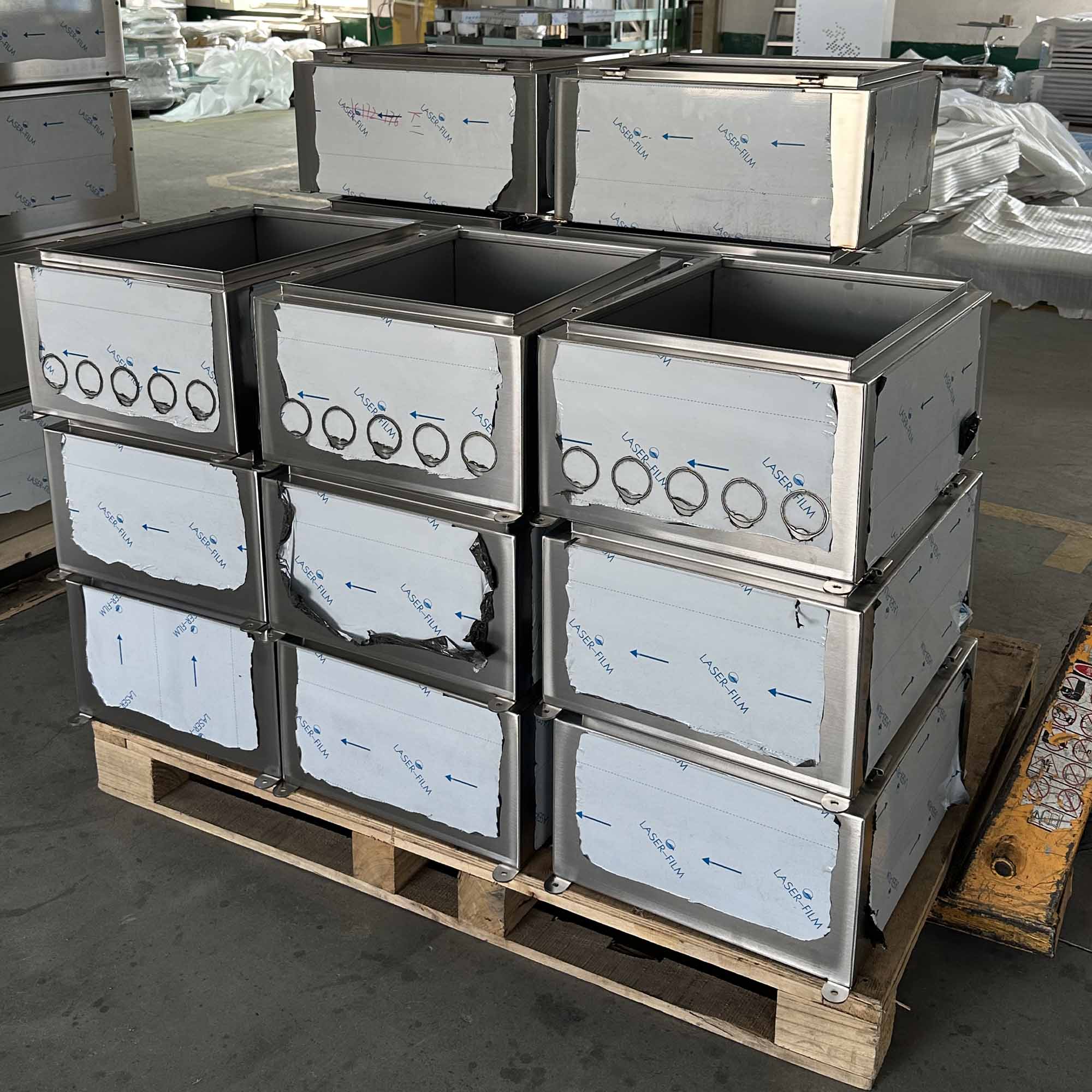
The market context for IP66 enclosures
The global electrical enclosure market was valued at USD 14.02 billion in 2024 and is projected to reach USD 23.65 billion by 2032. Metallic enclosures—including stainless steel and carbon steel—accounted for 65% of global electrical enclosure demand in 2025, valued at approximately USD 4.73 billion. Within this demand, wall-mounted enclosures are expected to maintain market dominance through 2035, driven by compact designs for small equipment installations.
Outdoor applications are a key growth driver. Renewable energy infrastructure, telecommunication base stations, water treatment monitoring, and industrial automation in harsh environments all require enclosures that can protect sensitive electronics from sun, rain, dust, humidity, and in some cases salt spray or chemical exposure. IP66 has become a reference point for these applications because it sits above IP54 and IP55 in water protection, while remaining practical and cost-effective compared to IP67 or IP68 for most above-ground outdoor installations.
What does IP66 mean in practice?
IEC 60529 is the dominant international standard for rating electrical enclosure protection against dust and water. Under this standard, the first digit “6” means no ingress of dust—total protection against dust. The second digit “6” means protection against powerful water jets. This is more demanding than IP55 (water jets) or IP54 (splash-proof).
For a buyer, IP66 means the enclosure can be installed outdoors without a rain hood in most climates, can withstand heavy rain from any direction, and can tolerate high-pressure cleaning. This makes IP66 suitable for food processing areas, coastal installations, chemical plants, power distribution sites, and telecom base stations where equipment must remain operational while exposed to washing or weather.
However, IP66 does not mean the enclosure is submersible. If an installation site is subject to flooding or continuous immersion, IP67 would be required. This distinction is an important part of specification accuracy.
Why IP66 alone is not a sufficient specification
An IP66 rating is a test condition, not a guarantee of long-term performance. The enclosure must be correctly assembled, properly installed, and fitted with appropriate cable glands. Even an IP66-rated enclosure will fail if knockouts are left open, cable glands are mismatched, or doors are not correctly closed.
Equally important, the protection rating interacts with corrosion resistance. A carbon steel enclosure with IP66 protection may perform well in a dry outdoor environment, but in coastal areas, salt spray can attack exposed edges, hinges, and cutouts. In such cases, stainless steel is the more reliable material choice. For outdoor and corrosive environments, 304 or 316 stainless steel is preferred, with 316 offering additional resistance to salt spray and acid corrosion.
Surface treatment also matters. For cold-rolled steel enclosures, phosphating derusting followed by electrostatic powder coating provides wear-resistant and anti-rust performance. For stainless steel enclosures, a brushed finish is commonly used to maintain corrosion resistance while providing a clean, consistent appearance.
Design features that make IP66 achievable
IP66 is achieved through several integrated design decisions. Looking at enclosure designs can help understand what to specify:
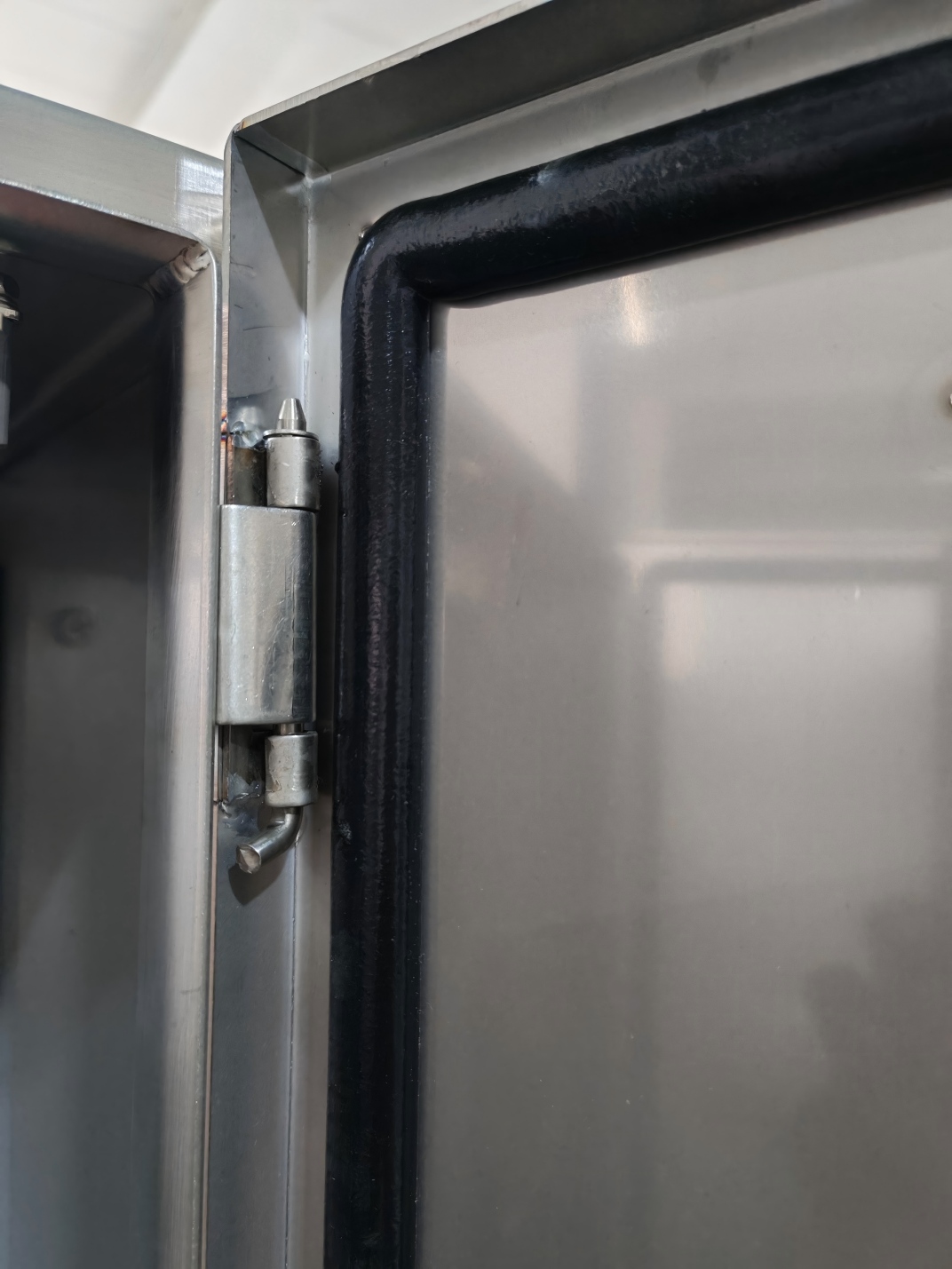
- Door sealing: A door frame fitted with EPDM (Ethylene Propylene Diene Monomer) sealing strips is a common construction for maintaining the pressure and gap control needed to block dust and powerful water jets.
- Locking hardware: Stainless steel handle locks or flat locks with keys are typical on weatherproof outdoor enclosures. Locks must also withstand corrosion and repeated use.
- Grounding continuity: Reliable grounding bonding between the door and cabinet body is not optional. It is an electrical safety requirement. Grounding resistance should be ≤4Ω, and equipotential bonding between door and cabinet prevents dangerous voltage differences.
- Cable entry: Pre-drilled knockout holes at the bottom or back, configurable with stainless steel waterproof cable glands, protect the main point of vulnerability—where cables enter the enclosure.
- Hinges and frame reinforcement: For large double-door cabinets, frame reinforcement of 2.0mm steel plate or equivalent is used to maintain sealing pressure across a wide door span.
- UV and aging resistance: For stainless steel cabinets exposed to outdoor sunlight, rain, and snow, the material itself provides UV resistance and anti-aging performance, and is acid rain-proof for long-term outdoor exposure.
Materials: stainless steel vs. carbon steel for IP66 enclosures
Two main material families are used for IP66 enclosures. Each has a distinct role:
| Material | Typical applications | Key considerations |
|---|---|---|
| Cold-rolled steel with electrostatic powder coating | General industrial outdoor, telecommunication, renewable energy, water monitoring | Lower material cost; requires quality surface treatment for corrosion resistance; suitable for inland or controlled environments |
| 304 stainless steel | Food & pharmaceutical, water treatment, municipal, general chemical, outdoor humid environments | Resists atmospheric and fresh water corrosion; hygienic and easy to clean; standard material for outdoor and washdown scenarios |
| 316 stainless steel | Coastal projects, chemical industry parks, offshore platforms, sewage treatment, salt spray environments | Resists salt spray and acid corrosion; necessary for high-corrosion sites; higher material cost than 304 |
For applications like outdoor PV combiner boxes, water conservancy and hydrological monitoring enclosures, communication base station enclosures, oilfield and mining instrumentation enclosures, and street light control boxes, stainless steel is often the specified material because the enclosure body itself must survive decades of outdoor exposure.
Common IP66 enclosure types and configurations
Buyers commonly select among the following enclosure categories depending on installation location and equipment footprint:
Wall-mounted enclosures
Wall-mounted IP66 enclosures are the dominant segment for small and medium equipment. They are used for outdoor PV combiner boxes, street light control boxes, field instrument enclosures, and local control boxes. A typical wall-mounted weatherproof control enclosure in stainless steel can be equipped with DIN rails, mounting plates, or shelves for installing terminals, instruments, circuit breakers, and PLCs. Installation is usually via expansion screws or wall-mounting brackets, with cable entry through bottom or back knockout holes compatible with waterproof cable glands.
Floor-standing outdoor cabinets
For larger footprints and heavier equipment such as communication network gear, energy storage batteries, or low-voltage power distribution, floor-mounted cabinets are the standard solution. Stainless steel double-door outdoor cabinets with IP65/IP66 protection provide internal 19-inch mounting rails or uprights, grounding bars, and space for cable routing and lighting. These cabinets can be placed directly on outdoor ground, with flange bases or adjustable feet depending on design.
Pedestal-mounted boxes
In environments where floor mounting is not desirable due to flooding, or where instrumentation needs to be positioned at a readable height, pedestal boxes are used. A stainless steel pedestal box with a flange base fixed by expansion bolts offers IP55/IP65 protection, with the pedestal height customizable to site requirements.
Market trends shaping IP66 enclosure demand
Asia Pacific dominated the electrical enclosure market in 2025 with a 36% share, fueled by industrial automation and renewable energy investments in China and India. The demand for customized solutions is also increasing. Roughly 18% of enclosure buyers in 2024 demanded highly customized solutions, leading to increased demand for OEM and ODM capabilities. In practice, this means buyers are more often asking for enclosures designed around their internal component layout, cable entry points, mounting requirements, and branding, rather than accepting standard catalog products.
Customization trends in IP66 enclosures include:
- Custom cutouts for instrument windows, button and indicator holes, meter mounting holes, and sensor ports
- Custom sizes and depths to fit specific component layouts
- Mixed-material designs, such as cold-rolled steel bodies with stainless steel mounting plates or gland plates
- Accessory integration, including grounding bars, DIN rails, observation windows, and padlock options
- Brand-level finishes, such as custom RAL colors and logo placement
How a specialized enclosure manufacturer approaches IP66 production
Dalian Yinlu Electrical Control Equipment Manufacturer, established in 1993, is a company specializing in the manufacturing and customization of metal enclosures, including electrical control boxes, cabinets, operation panels, and non-standard housings. The facility covers 5,000m² and employs approximately 60 people, with a dedicated engineering team of 6 professionals. Main products are centered on metal enclosure customization, and export business accounts for roughly 80% of output, with key markets in North America, Europe, Oceania, and the high-end Asia-Pacific region.
Yinlu’s product range relevant to IP66/IP65 outdoor applications includes:
- Outdoor Weatherproof Control Enclosure: IP66-rated, wall-mounted, single-door, available in stainless steel, with internal configuration for DIN rails, mounting plates, or shelves.
- Stainless Steel Double-Door Outdoor Cabinet: IP65-rated, floor-mounted, stainless steel body, compatible with 19-inch racks and internal grounding bars.
- Stainless Steel Double-Door Outdoor Communication / Energy Storage Cabinet: IP65-rated, made of 316 stainless steel, with EPDM door sealing and stainless steel handle locks.
- Stainless Steel Pedestal Box: IP55/IP65-rated pedestal floor-mounted box in 316 stainless steel, with brushed finish surface.
- Stainless Steel Non-Standard Custom Enclosure: IP65-rated, floor-mounted, double-door, constructed from stainless steel, UV-resistant and acid rain-proof.
- Stainless Steel Junction Box / Maintenance Box: IP65-rated, 304 stainless steel standard or 316 for coastal/corrosion applications.
- Customized Wall-Mounted Electrical Control Box: IP54/IP55 customizable protection grade, cold-rolled steel with 304 stainless steel option.
These products are applied across new energy, industrial automation, petrochemical, municipal environmental protection, telecommunications, water treatment, transportation and logistics, and power and grid industries. The company also supports OEM and ODM orders, with a stated value of continuous improvement in engineering and production.
Production and quality control considerations
A manufacturer’s ability to consistently produce IP66 enclosures depends on both equipment and process discipline. Key production factors include:
- Sheet metal fabrication quality: Accurate cutting, bending, and welding determine whether frame geometry keeps gaskets evenly compressed.
- Surface treatment consistency: Phosphating derusting and electrostatic powder coating for carbon steel; brushing for stainless steel. Inconsistent coating can create corrosion weak points.
- Sealing system installation: EPDM strips must be correctly positioned and door clamps must provide even pressure across the entire sealing perimeter.
- Assembly and grounding: Grounding jumpers between door and cabinet, and grounding bar installation, must be completed reliably on every unit.
- Documented customization control: For non-standard enclosures, drawings must be reviewed to confirm that cutouts and cable entries do not compromise sealing or structural strength.
Comparison with traditional or standard enclosure solutions
Compared with standard IP54 or IP55 indoor enclosures, IP66 outdoor enclosures require more robust materials, better sealing, and more careful installation. A traditional indoor carbon steel enclosure with IP54 protection is significantly less expensive, but it is not suitable for outdoor exposure to rain or high-pressure washing. Using an indoor enclosure outdoors leads to water ingress, corrosion, and eventually electrical failure.
Compared with custom-designed enclosures, standard catalog IP66 enclosures reduce lead time and engineering cost. However, standard enclosures often require additional internal mounting work, extra junction boxes, or protective covers when the internal configuration is non-standard. This can erode the initial cost advantage.
Custom IP66 enclosures also have limitations that buyers should recognize. First, they require complete and accurate component information before production; changing the internal layout late in the process is costly. Second, custom enclosures typically involve higher unit cost than mass-produced standard models at low volumes. Third, if the manufacturer lacks experience with outdoor enclosure design, the risk of condensation, thermal buildup, or door seal failure increases. Selecting a manufacturer with verifiable experience in outdoor, harsh-environment enclosures is therefore a key risk management step.
A practical decision framework for buyers
Buyers evaluating IP66 enclosure suppliers in 2026 can use the following criteria:
- Verify the protection rating claim: Ask how IP66/IP65 performance is validated. What test procedures are used? What is the sealing system design?
- Check material traceability: Understand exactly what grade of stainless steel is being quoted (304 vs. 316) and what thickness is specified.
- Assess customization capability: Can the manufacturer provide custom cutouts, sizes, colors, internal mounting, and accessories without compromising protection?
- Review installation requirements: Does the enclosure come with compatible cable glands, grounding provisions, and mounting hardware specification?
- Evaluate manufacturing capacity: Does the supplier have enough fabrication and assembly capacity to support your order volume and delivery schedule?
- Look at R&D and engineering support: Is there a dedicated engineering team that can review your drawings, flag risks, and propose manufacturable solutions?
- Confirm export experience: For global buyers, established export to North America, Europe, Oceania, or Asia-Pacific is a useful signal of experience with international project requirements.
Future outlook for IP66 enclosure procurement
As renewable energy and telecommunication infrastructure continue to expand globally, demand for IP66-rated enclosures will grow in parallel. Wall-mounted enclosures will remain dominant due to space efficiency. The shift toward customized solutions will continue, as equipment integrators seek to consolidate components into single, well-engineered enclosures rather than assembling multiple standard boxes at the installation site.
Buyers should also expect material requirements to become more site-specific. Coastal wind and solar projects, port infrastructure, and chemical installations will push 316 stainless steel into broader use. The role of the enclosure manufacturer will increasingly resemble that of a design partner—translating component layouts, environmental conditions, and maintenance access needs into a manufacturable, compliant, and cost-effective enclosure.
For companies evaluating potential suppliers, the key question is not simply “Can you make an IP66 enclosure?” It is whether the manufacturer can make an IP66 enclosure that is right for your application, your installation conditions, and your volume, with documentation and engineering support to match.
FAQ
What is an electrical enclosure?
An electrical enclosure is a protective housing that shields electrical components such as PLCs, power supplies, circuit breakers, terminal blocks, sensors, and communication modules from environmental factors including dust, water, corrosion, and impact. Enclosures also support electrical integration by centralizing power distribution, signal transmission, and control wiring, while isolating strong and weak currents to improve safety and simplify maintenance.
What does IP66 mean in an electrical enclosure rating?
Under IEC 60529, IP66 means the enclosure is entirely dust-tight and protected against powerful water jets. It is suitable for outdoor and industrial environments where heavy rain, washing, or dust exposure is expected. IP66 does not mean submersible; if immersion is expected, an IP67 or higher rating is required.
What is the difference between IP66 and IP65?
Both IP65 and IP66 enclosures are dust-tight. The difference is in water protection: IP65 protects against low-pressure water jets from any direction, while IP66 protects against more powerful water jets. In practice, IP66 is preferred where high-pressure cleaning occurs or stronger water exposure is possible.
Which material is better for an IP66 outdoor enclosure: stainless steel or carbon steel?
The answer depends on the environment. Carbon steel with a quality powder coating can perform well in dry or moderately exposed outdoor environments at lower cost. Stainless steel is recommended for coastal areas and chemical environments. 304 stainless steel resists atmospheric and fresh water corrosion; 316 stainless steel resists salt spray and acid corrosion for coastal or chemical scenarios.
What is the difference between standard and customized IP66 enclosures?
A standard IP66 enclosure is a catalog product with fixed dimensions and features. A customized IP66 enclosure is engineered around project-specific needs, such as custom sizes, cutouts for instruments and buttons, cable entry points, internal mounting configurations, colors, and branding. Customization helps reduce field wiring effort and can improve the overall protection integrity by eliminating separate junction boxes.
Can the same IP66 enclosure be used for both wall-mounted and floor-standing installations?
No, wall-mounted and floor-standing enclosures have different structural designs, mounting provisions, and size ranges. Wall-mounted enclosures are designed for smaller equipment and use back mounting holes or brackets. Floor-standing cabinets include base structures, lifting provisions, and heavier frames to support larger internal components and equipment loads.
What industries typically use IP66-rated electrical enclosures?
IP66-rated enclosures are widely used in new energy (PV, wind, and energy storage), industrial automation, petrochemical, municipal environmental protection, telecommunications, water treatment, transportation and logistics, and power and grid industries. They are also used in outdoor communication base stations, oilfield and mining instrumentation, and street light control systems.
When should I choose an OEM or ODM supplier for outdoor electrical enclosures?
Choosing an OEM supplier makes sense when you have standardized designs and need consistent manufacturing at scale. An ODM approach is better when you need engineering assistance to adapt a product to new requirements, such as specific cutouts, material changes, or performance upgrades. ODM collaboration is valuable when in-house design resources are limited or when the application requires specialized outdoor environmental knowledge.