
IQF Frozen Vegetables: What 2-Year Export Cases Reveal
The central question in frozen vegetable sourcing is not whether a supplier can provide a sample, but whether it can hold specification, delivery volume and cold-chain performance stable across two years or longer. For buyers in the evaluation stage, a single quotation carries limited reference value; what matters is a supply record that has been tested across markets, products and seasons.
This analysis uses five two-year supply relationships — 40 metric tons of 6 mm IQF onion in New Zealand, 45 tons of 10 mm IQF carrot cubes in Singapore, 23 MT of IQF sweet corn and mixed vegetables in Chile, 17.38 tons of IQF broccoli in Indonesia and 20.58 MT of IQF spinach and red pepper dices in Uruguay — to show what verifiable evidence of cut-size customization, large-volume delivery, cold-chain performance and repeat supply looks like. The cases come from Qingdao Yokid Foods Co., Ltd., a frozen vegetable supplier established in 2009 in Shandong, China.
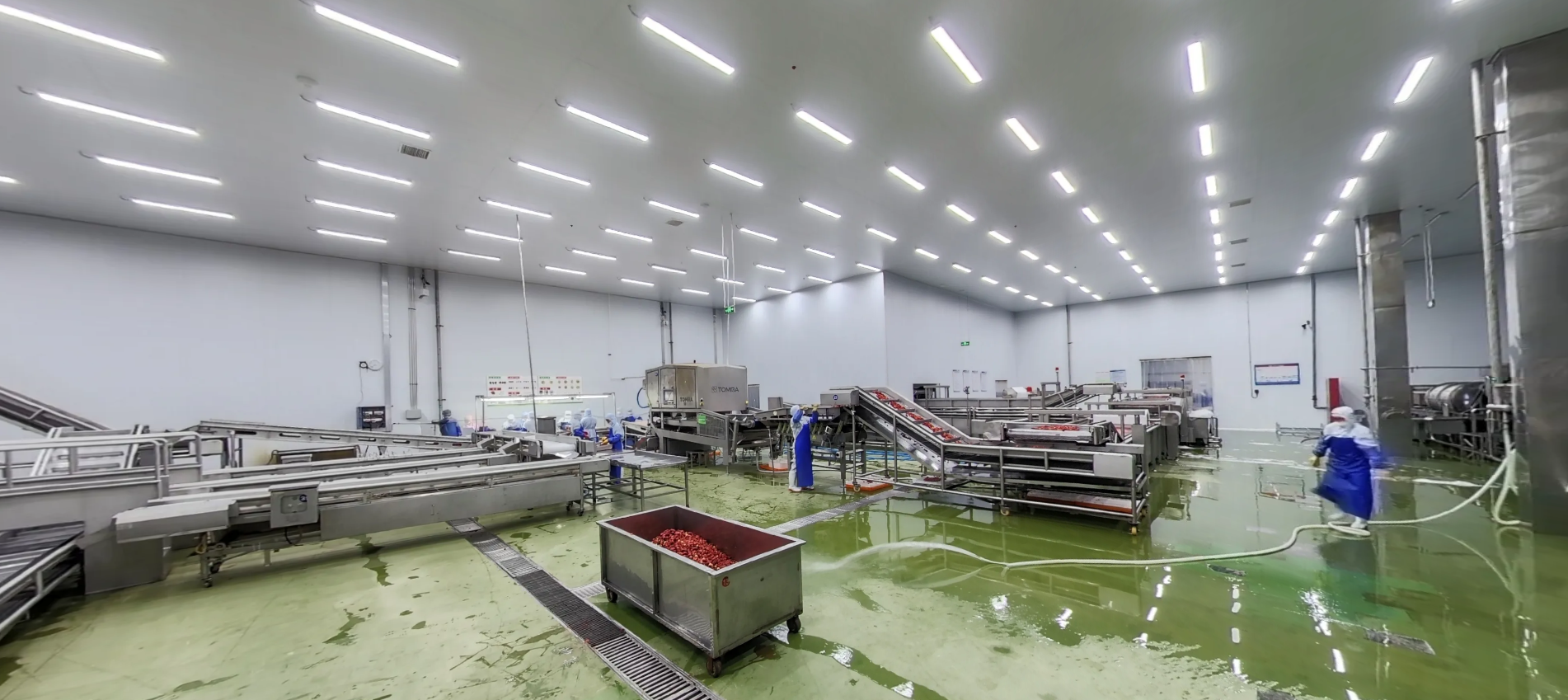
Conveyor belt system inside an IQF frozen vegetable processing facility.
The Evaluation Problem: Why Two-Year Cases Matter
For buyers in the evaluation stage, supplier assessment is not about whether a product exists, but whether a supplier can keep delivering a specification-conforming product over time. Frozen vegetable procurement typically involves cut size, packaging format, cold-chain conditions, lead time and repeat-supply stability. A single transaction proves only that a supplier can complete one order. A two-year supply record shows whether a supplier can maintain consistent delivery across different markets, products and seasonal conditions.
The point is especially visible in IQF frozen vegetables. The Codex Alimentarius Standard for Quick Frozen Vegetables (CXS 320-2015) defines quick-frozen vegetables as products subjected to a quick-freezing process and maintained at -18°C or colder at all points in the cold chain, subject to permitted temperature tolerances. This means a supplier must control not only the freezing process but also every temperature node across storage, transport and delivery. A two-year case is, in effect, a continuous validation of that cold chain.
Supplier Background: YOKID Frozen Vegetables
Qingdao Yokid Foods Co., Ltd. was established in 2009 and operates a 30,000 m² factory with 135 employees and annual output of 40,000 tons. Export accounts for approximately 75% of output, with main markets in Europe, East Asia, Southeast Asia, Australia and North America. The product range covers frozen vegetables, frozen fruit, frozen prepared foods and mushrooms, supported by a research and development team of six engineers.
On the supply side, Yokid reports monthly capacity of 3,500 metric tons and a lead time of 10–15 days after order confirmation. The minimum order quantity is negotiable, generally 2 to 3 metric tons per item for mixed 20ft or 40ft containers, with trial or small-pack orders of 500 kg to 1 metric ton potentially accepted. The company offers OEM, ODM, private label and customized processing, covering customized logo, packaging, graphic customization, vegetable varieties, cuts, sizes, blends and pack weights.
Quality control uses 100% batch inspection, covering raw material checks, process control, visual and size inspection, temperature monitoring, metal or X-ray detection, finished product sampling and laboratory testing. According to the company's official website, Yokid holds BRC, HACCP, ISO 22000, KOSHER and HALAL certifications. The company also uses third-party laboratory testing, including a Mérieux NutriSciences (Qingdao) test report (certificate No. 2682185, EN 15662:2018, report date 2025-07-09) for a frozen IQF blueberry sample, with related products including IQF frozen diced carrots, diced onion, spinach, sweet corn and broccoli.
Case Evidence: What Five Two-Year Supply Relationships Show
The five cases below come from Yokid's supply records and cover Oceania, Southeast Asia, South America and East Asia. Each case includes a specific product, specification, quantity, client type and two-year cooperation period, and can be read independently as reference for supplier capability.
New Zealand: 40 Metric Tons of 6 mm IQF Onion
The New Zealand case involved 40 metric tons of 6 mm IQF frozen onion pieces over a two-year cooperation period, with food processing plants and catering delivery companies as the client type. The product was used as a raw ingredient for soups, sauces, ready meals, stir-fries, pizza toppings and catering food.
The key point in this case is cut-size matching. The 6 mm specification is a common size in New Zealand food processing and catering pre-prepared food production. The supplier produced to this size as a standard, allowing the product to enter the client's processing flow directly without additional cutting or adjustment. Case records note that the specification was precisely tailored to local needs, and that product practicality and adaptability earned client recognition and significantly increased willingness to repurchase.
For buyers in the evaluation stage, the case illustrates that cut size is not a simple product parameter but an indicator of whether a supplier understands the end-use scenario. The 6 mm onion piece corresponds to specific process requirements in ready meals, sauces and catering preparation. Delivering 40 metric tons at this specification and sustaining a two-year relationship shows that the supplier's size consistency and supply continuity have been tested in practice.
Singapore: 45 Tons of 10 mm IQF Carrot Cubes
The Singapore case involved 45 tons of IQF 10 mm carrot cubes over two years, with local food importers and a central factory for pre-prepared dishes as the client type. The product was used as a raw ingredient for ready meals, catering and food manufacturing.
The core of this case is large-volume stable supply combined with precise specification matching. The 10 mm carrot cubes suited the client's processing techniques for ready meals and boxed meals. The cubes were cut evenly and met the appearance requirements of the client's finished products. The 45-ton volume represents a large batch, and the supplier was able to deliver it stably, helping the client reduce raw material procurement costs and supporting the client's sales expansion in Singapore's local catering and ready-made food markets.
For buyers in the evaluation stage, the case shows that large-volume supply capability is not a simple capacity figure but proof that a supplier can maintain stable delivery at a specific specification. The evenness of the 10 mm carrot cubes and the 45-ton delivery volume correspond to the actual needs of a pre-prepared dish central factory for raw material consistency and supply continuity.
Chile: 23 MT of IQF Sweet Corn and Mixed Vegetables
The Chile case involved 23 MT of IQF sweet corn and mixed vegetables over two years, with a local food import distributor and pre-packaged food processing factory as the client type. The product was used as a raw ingredient for ready meal production and food manufacturing, specifically for pre-prepared dishes, frozen meal packages, salads and stews.
The distinguishing feature of this case is the product combination. Sweet corn and mixed vegetables were supplied together as a combination rather than as a single category, matched to local consumption demand in Chile for pre-prepared dishes, frozen meal packages and catering. Case records note that quality was stable and met standards, helping the client produce stable products, enhancing the client's competitiveness in the local market and supporting terminal sales.
For buyers in the evaluation stage, the case shows that multi-category combination supply is a reflection of a supplier's product range and formulation capability. Supplying sweet corn and mixed vegetables together over two years indicates practical experience in category coordination, specification matching and delivery rhythm.
Indonesia: 17.38 Tons of IQF Broccoli Florets
The Indonesia case involved 17.38 tons of IQF frozen broccoli over two years, with Indonesian local food import traders and pre-packaged food and fast food processing plants as the client type. The product was used as a raw ingredient for ready meals, fast food and food manufacturing, specifically for lunch boxes, frozen meal sets and fast food side dishes, supplying Indonesian food factories and chain restaurant channels.
Case records note that the order was delivered on time and the stable supply of IQF broccoli raw material was maintained, supporting the client's pre-prepared food and fast food production lines. The successful fulfillment of the 17.38-ton order verified supply stability, enhanced client confidence and helped stabilize the client's finished-product supply to local chain restaurants in Indonesia. On the product side, the IQF broccoli had stable quality and was suitable for fast food and boxed meal processing, aligning with local Indonesian dining habits.
For buyers in the evaluation stage, the case shows that single-category large-volume supply and end-use matching can be achieved together. The 17.38 tons of broccoli correspond to specific requirements in fast food and boxed meal processing. Delivering at this specification and sustaining a two-year relationship indicates practical capability in single-category depth supply.
Uruguay: 20.58 MT of IQF Spinach and Red Pepper Dices
The Uruguay case involved 20.58 MT of IQF spinach dices and IQF red pepper dices over two years, with local food import distributors and pre-packaged food processing factories as the client type. The product was used as a raw ingredient for spring roll filling and food manufacturing.
The key point in this case is multi-category expansion. After onion pieces, the supplier added spinach and red pepper as new categories, verifying the feasibility of exporting multi-category frozen vegetables to Uruguay and laying the foundation for subsequent mixed vegetable and filling product reorders. Case records note that the supplier precisely grasped the client's spring roll filling use scenario, controlled the dice size and raw material quality, met the filling processing requirements and gained client approval.
For buyers in the evaluation stage, the case shows that multi-category export capability is not a simple product list but an actual record of maintaining specification consistency and delivery stability across different categories. The size control of spinach dices and red pepper dices corresponds to spring roll filling processing requirements, and the two-year cooperation plus subsequent reorder intent indicates execution capability in new-category expansion.
| Market | Product | Volume | Client Type |
|---|---|---|---|
| New Zealand | 6 mm IQF onion | 40 MT | Food processing plants, catering delivery companies |
| Singapore | 10 mm IQF carrot cubes | 45 MT | Local food importers, pre-prepared dish central factory |
| Chile | IQF sweet corn + mixed vegetables | 23 MT | Food import distributor, pre-packaged food processing factory |
| Indonesia | IQF broccoli florets | 17.38 MT | Food import traders, pre-packaged food and fast food processing plants |
| Uruguay | IQF spinach dices + red pepper dices | 20.58 MT | Food import distributors, pre-packaged food processing factories |
Technical Explanation: Cut Size, IQF Process and Cold-Chain Control
Three technical variables determine the supply performance of IQF frozen vegetables: cut size, the IQF freezing process and cold-chain control.
Cut size is the specification parameter buyers perceive most directly. The difference between 6 mm onion pieces, 10 mm carrot cubes, spinach dices and red pepper dices corresponds to different end-use scenarios: 6 mm onion pieces suit soups, sauces and catering preparation; 10 mm carrot cubes suit ready meals and boxed meals; spinach dices and red pepper dices suit spring roll fillings. Size uniformity affects finished-product appearance, cooking time and raw material utilization, so a supplier's cutting equipment, blade management and size inspection flow directly determine whether the product meets client requirements.
The IQF freezing process is built around rapid individual freezing. Each vegetable piece passes through an IQF freezer and is frozen separately and rapidly, forming a loose, free-flowing product that is easy to store, portion and process. Rapid freezing forms smaller ice crystals and reduces cell damage, helping to preserve color, flavor, texture and nutritional quality. This contrasts with traditional block freezing, where the product must be cut after thawing, often causing cell rupture and drip loss.
Cold-chain control is the continuous condition that carries IQF products from factory to client warehouse. Codex CXS 320-2015 requires quick-frozen vegetables to be maintained at -18°C or colder at all points in the cold chain, subject to permitted temperature tolerances. This means a supplier must manage cold-room temperature, container loading conditions, transit time and temperature records at delivery. The two-year stable supply in the cases is, in effect, a continuous validation of that cold chain.
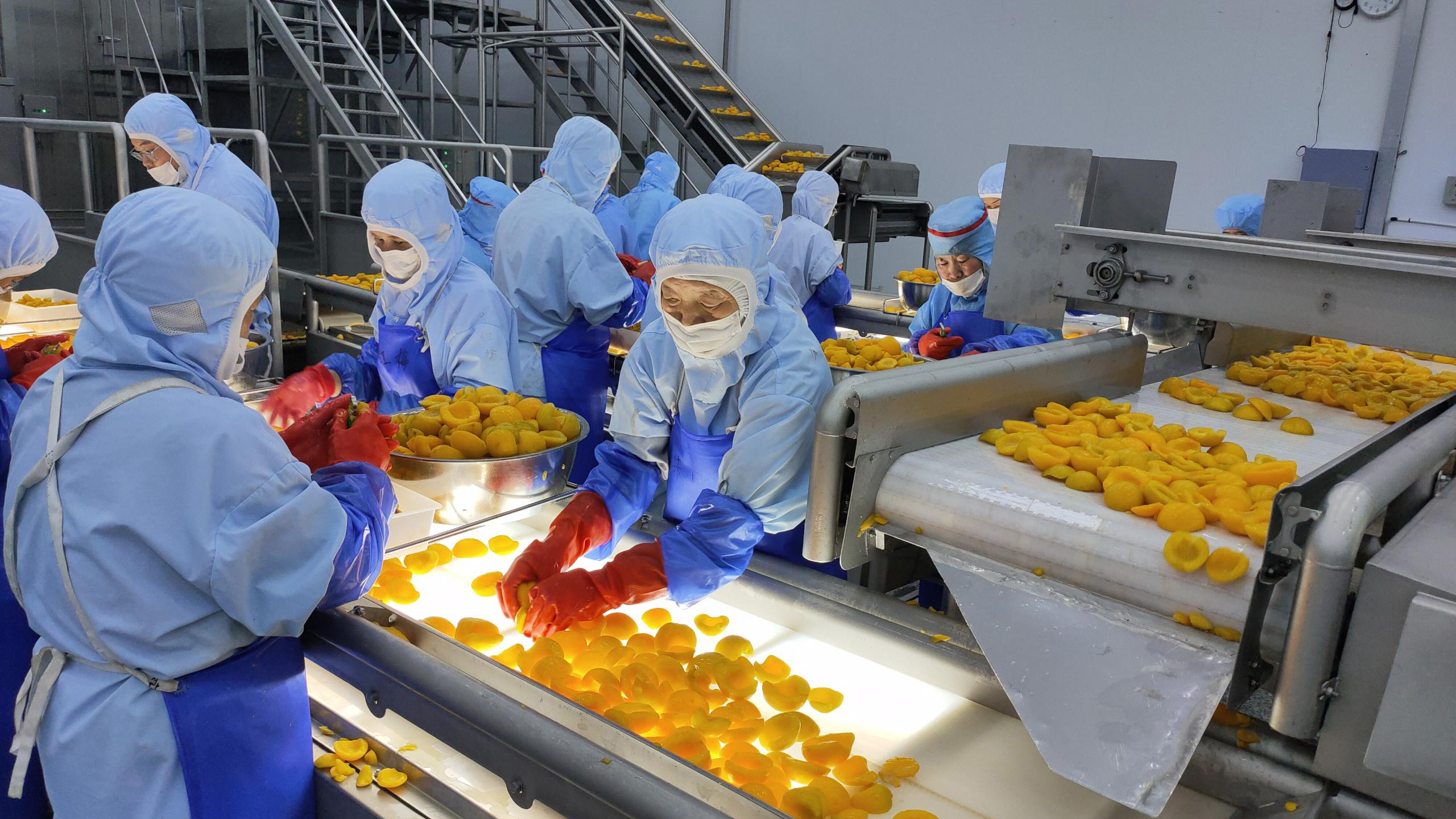
Manual grading station used for visual and size inspection.
On quality inspection, Yokid uses 100% batch inspection covering raw material checks, process control, visual and size inspection, temperature monitoring, metal or X-ray detection, finished product sampling and laboratory testing. The company also uses third-party laboratory testing. One example is a Mérieux NutriSciences (Qingdao) test report (certificate No. 2682185, EN 15662:2018, report date 2025-07-09) for a frozen IQF blueberry sample, with related products including IQF frozen diced carrots, diced onion, spinach, sweet corn and broccoli.
Market Trend: IQF Share in the Frozen Vegetable Trade
The scale and structure of the frozen vegetable trade provide context for supplier evaluation. According to Mordor Intelligence, the global frozen vegetables market is expected to reach USD 21.51 billion in 2026. China Customs statistics show that China's frozen vegetable exports reached approximately USD 1.55 billion in 2024, a year-on-year increase of 7%. On freezing technology, the IQF segment held a 55.43% share of the global frozen vegetables market in 2024 (Mordor Intelligence).
These figures point to two trends. First, frozen vegetables are a growing trade category, and China is a significant export source. Second, IQF is the mainstream technology route in frozen vegetables, and a share above half means that most buyers evaluating a supplier are, in practice, evaluating IQF supply capability.
Against this background, the focus of supplier evaluation is not whether a supplier offers IQF products, but whether it can deliver stably at a specific specification, in a specific market and for a specific application. The five two-year cases provide exactly this kind of specific evidence: 6 mm onion in New Zealand, 10 mm carrot cubes in Singapore, sweet corn and mixed vegetables in Chile, broccoli in Indonesia, and spinach and red pepper dices in Uruguay, each corresponding to a different specification, market and end use.
Comparison with Traditional Alternatives
IQF frozen vegetables have different application boundaries compared with traditional block freezing and fresh vegetables.
Compared with block freezing, the main advantage of IQF is that the product is loose and easy to portion and feed directly into processing. Block-frozen products must be cut after thawing, which can cause cell rupture, drip loss and texture decline. IQF products can be taken as needed, reducing thawing loss and secondary handling. But IQF also has limits: equipment investment and energy consumption are generally higher than block freezing, and the product requires stricter temperature control during transport and storage.
Compared with fresh vegetables, the advantage of IQF is supply stability and long shelf life. Fresh vegetables are affected by season, origin and transport distance, and supply volume and price fluctuate. IQF products can be supplied year-round with consistent specifications, suitable for standardized production in food factories and restaurant chains. But IQF requires a continuous cold chain at -18°C or colder, and in regions with weaker cold-chain infrastructure, storage and transport costs rise accordingly.
These limits do not mean IQF is unsuitable for all scenarios. They mean that buyers need to consider cold-chain conditions, product use and cost structure together during evaluation. For ready meals, fast food, pre-prepared dishes and restaurant chains that need standardized raw materials, IQF's specification consistency and supply stability are usually the main considerations. For markets with limited cold-chain conditions or high cost sensitivity, block freezing or dehydrated products may be more suitable.
Limits and Boundaries
The five cases provide evidence of supplier capability, but they also have boundaries. They cover New Zealand, Singapore, Chile, Indonesia and Uruguay, with client types including food processing plants, catering delivery companies, food importers, pre-prepared dish central factories and pre-packaged food processing factories. The cases record delivery performance in these markets and client types; they do not represent identical capability in all markets or all product categories.
The products in the cases include onion, carrot, sweet corn, mixed vegetables, broccoli, spinach and red pepper. This covers the main categories of frozen vegetables but not every frozen vegetable variety. When evaluating a specific category, buyers still need to check the supplier's product range, specification capability and relevant certifications.
In addition, the cases record two-year supply relationships and reflect supplier delivery performance within a specific period. Supply capability may change with production capacity, season, raw material and market conditions. Buyers in long-term procurement still need to verify continuously through sample inspection, batch inspection and periodic audits.
Future Outlook
The growth trend in the frozen vegetable trade and the mainstream position of IQF mean that supplier evaluation will increasingly depend on verifiable supply records rather than a single quotation or product claim. For buyers, the value of two-year cases lies in the specific evidence they provide on specification matching, large-volume delivery, cold-chain performance and repeat supply, which can serve as reference for supplier screening and procurement decisions.
For suppliers, multi-market, multi-category and multi-specification supply records are the basis for international competition. The 6 mm onion in New Zealand, 10 mm carrot cubes in Singapore, sweet corn and mixed vegetables in Chile, broccoli in Indonesia, and spinach and red pepper dices in Uruguay share a common point: the supplier can adjust specifications and product combinations to the end-use needs of different markets and maintain stable supply for more than two years.
In the future, as demand increases from ready meals, fast food, pre-prepared dishes and restaurant chains for standardized raw materials, specification customization and supply stability of IQF frozen vegetables will become core indicators in supplier evaluation. Whether a supplier can replicate its specification matching and delivery capability across different markets will determine its long-term position in the frozen vegetable trade.
FAQ
What does IQF mean in frozen vegetables?
IQF means Individual Quick Freezing. Each prepared fruit or vegetable piece is frozen separately and rapidly, producing loose, free-flowing products for storage, portioning, food processing and convenient preparation.
Why should buyers choose IQF frozen vegetables and maintain them at -18°C?
IQF rapidly freezes each piece to help preserve color, flavor, texture and nutritional quality. Rapid freezing forms smaller ice crystals and reduces cell damage. Storage below -18°C slows microbial growth, enzyme activity and quality loss. Stable freezing improves shelf life, portion control and processing consistency.
Which is better for my business: frozen, fresh or dehydrated vegetables?
For most food factories and foodservice buyers, the ranking is: 1. IQF frozen, 2. dehydrated, 3. fresh. IQF offers consistent quality and easy preparation. Dehydrated products suit dry foods and ambient storage. Fresh products suit premium retail and immediate use. The final choice depends on application, storage and logistics.
How should frozen vegetables be received, stored, handled and prepared?
Inspect the packaging, product condition and temperature first. Pre-cool and verify the cold room before transferring the products into storage. Keep the products at -18°C or below, maintain complete temperature records and use FEFO stock rotation. Thaw only when required and follow the product label for cooking or direct use.
Why do frozen vegetables clump, soften or discolor?
Clumping, frost, softness or discoloration usually indicates temperature fluctuation, package leakage, thawing, long storage or improper handling. Check the package, product temperature, storage records and shelf life in order. Isolate affected goods, restore storage below -18°C and contact the supplier if quality remains abnormal.
Conclusion
The five two-year cases do not claim that every market or product is identical. They show what a supplier can demonstrate when it has maintained specification, volume and cold-chain performance across multiple markets and categories. For buyers in the evaluation stage, that kind of record is more useful than a single price or a general capability claim. The supplier's English brochure, available for download at the link below, provides a consolidated view of its product range and capabilities for buyers who want to continue the evaluation.
Tem questões ou precisa de mais detalhes?
Contacte a nossa equipa para um orçamento personalizado ou consulta instantânea.
Solicitar orçamento
Preencha o formulário abaixo e a nossa equipa entrará em contacto com uma proposta personalizada.
Chat direto do WhatsApp
Prefere conversar em tempo real? Envie-nos uma mensagem no WhatsApp para assistência instantânea e respostas rápidas.
- Obter orçamento personalizado
- Partilhar fotos ou documentos
- Discuta as suas necessidades diretamente
Geralmente responde em 5–30 minutos durante o horário de expediente.