
ISO 9001, 14001, 45001 Explained: A Compliance Checklist for Office Swivel Chairs
ISO 9001, 14001, 45001 Explained: A Compliance Checklist for Office Swivel Chairs
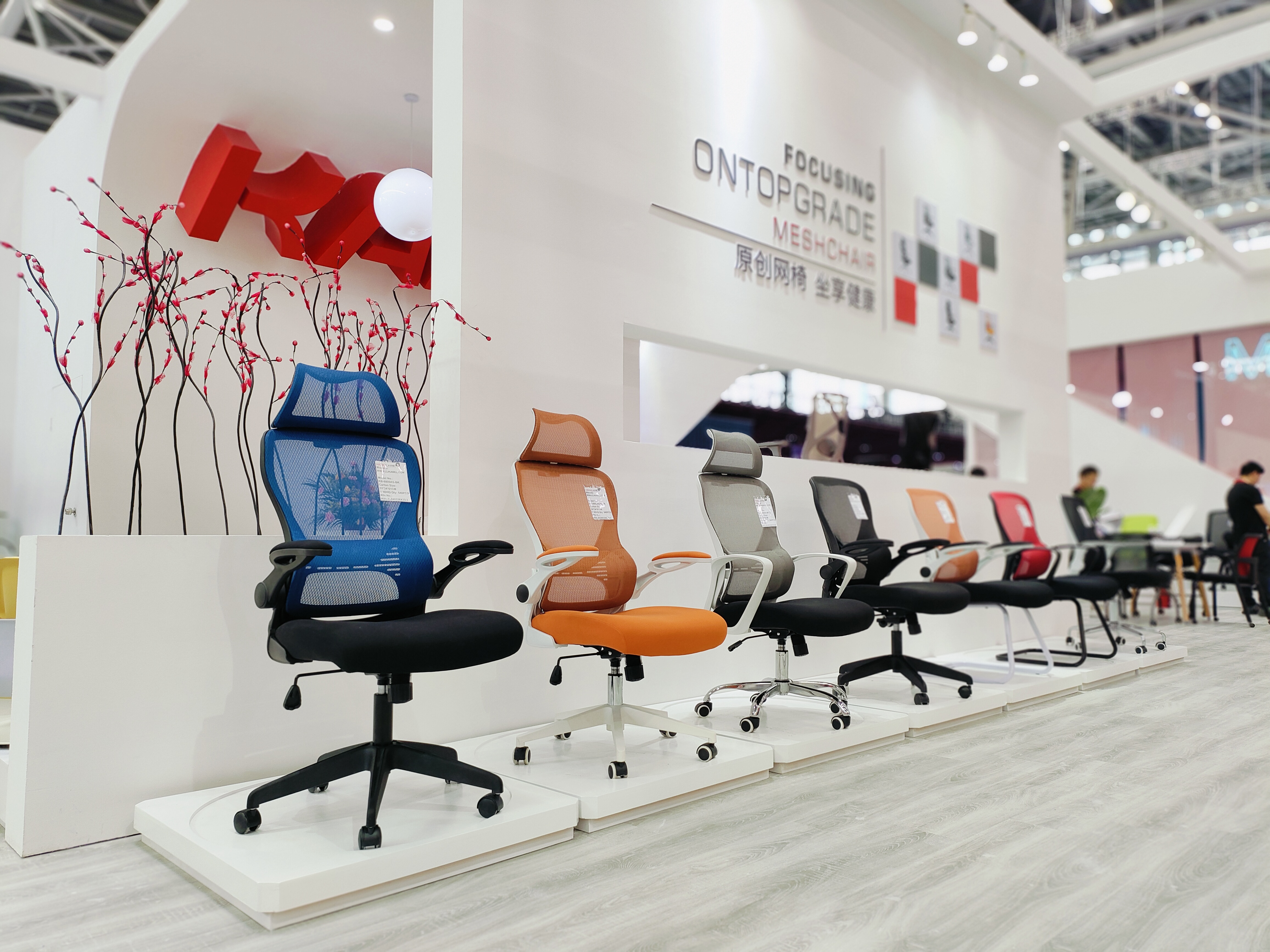
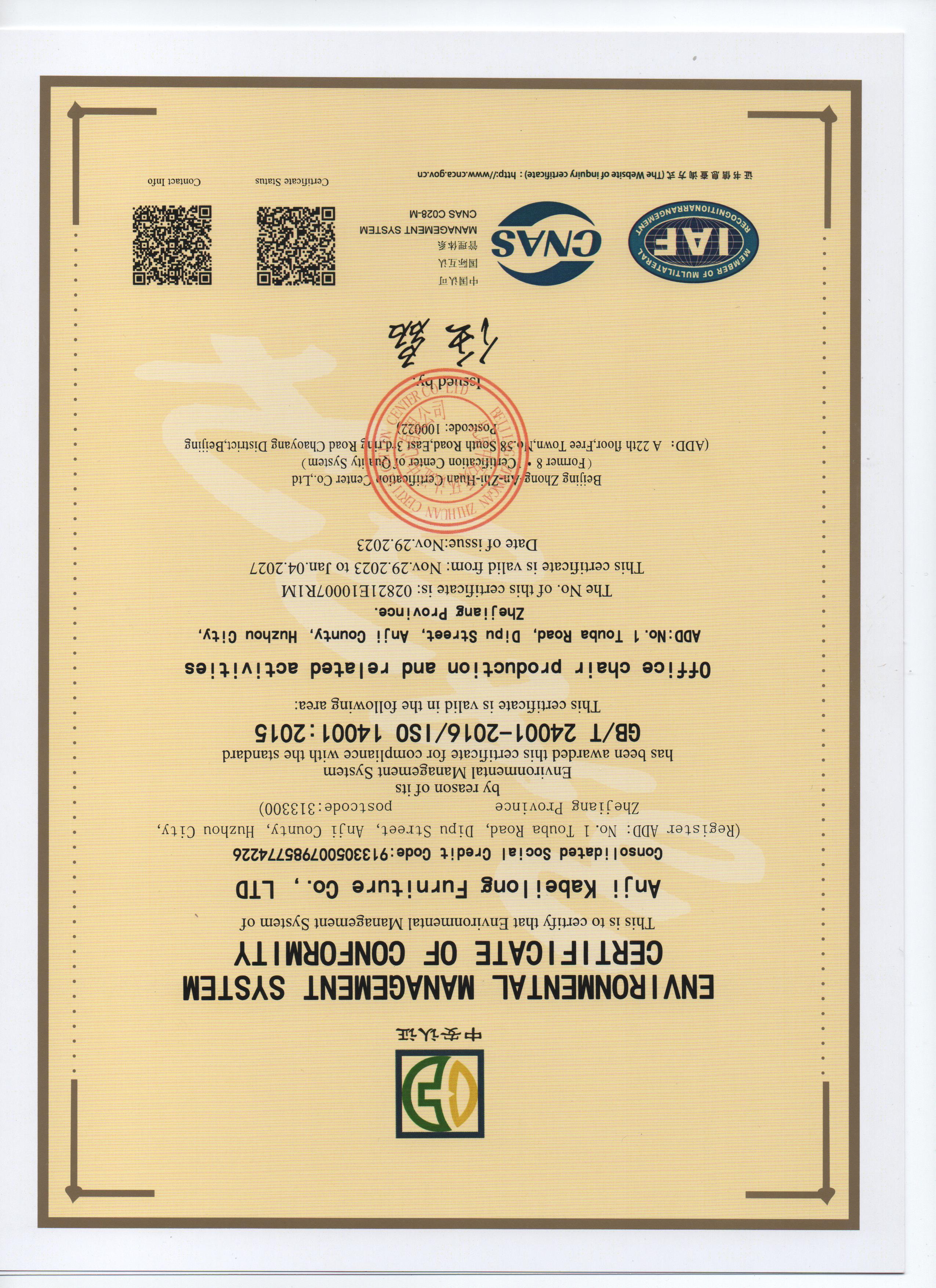
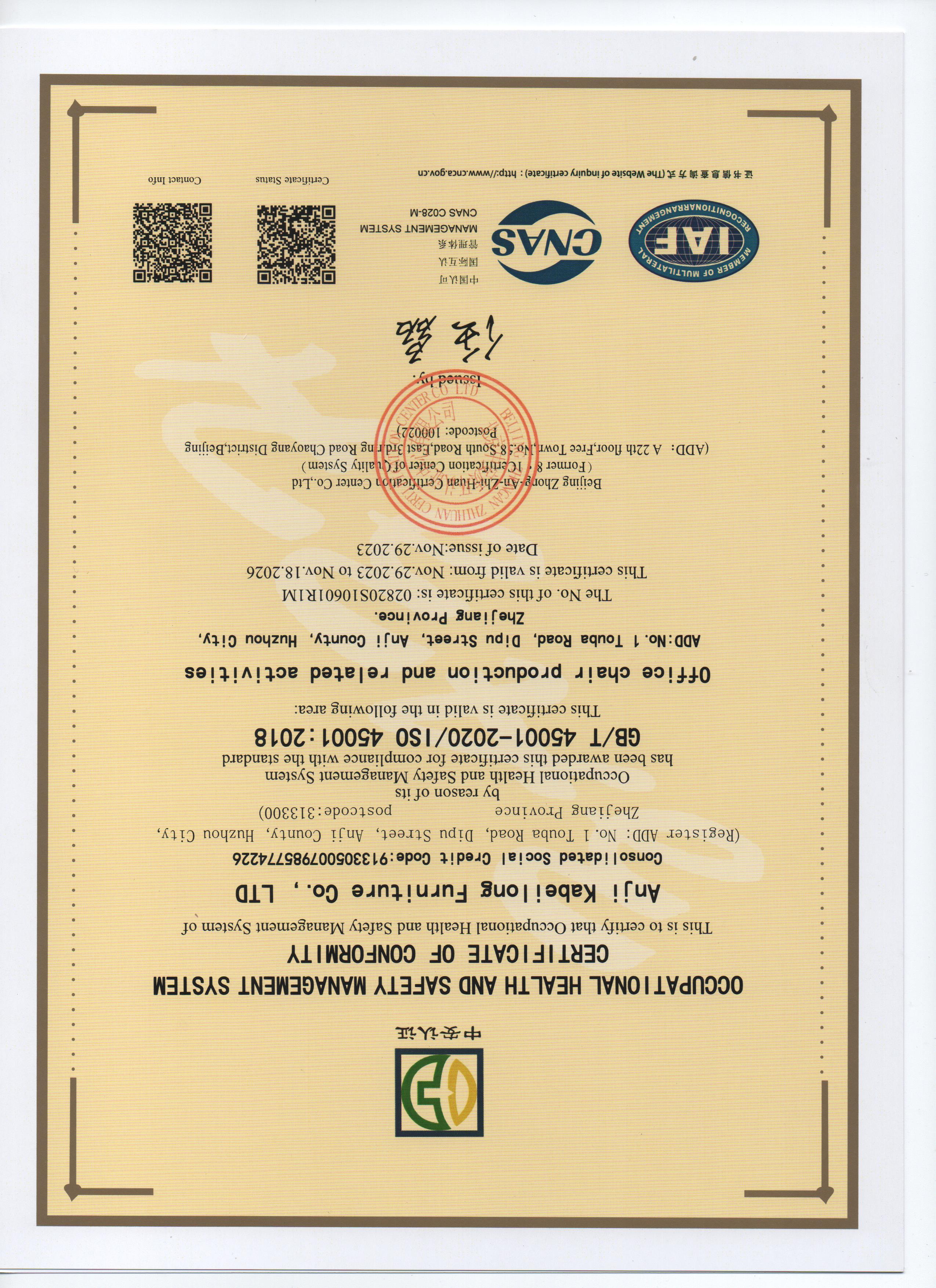
ISO 9001, ISO 14001 and ISO 45001 are the three management-system certifications most often requested from an office swivel chair manufacturer, and they answer three separate questions: whether quality is managed, whether environmental impact is managed, and whether worker health and safety is managed. For the 5712 office swivel chair models produced by Anji Kabel Furniture Co., Ltd, the corresponding certificate numbers are 02821Q10011R1M (ISO 9001), 02821E10007R1M (ISO 14001) and 02820S10601R1M (ISO 45001). This reference explains what each standard covers, what it does not cover, and how a buyer can convert the three-certificate set into a working procurement checklist.
Why Three Certificates Ended Up in Office Chair Procurement Files
A buyer specifying office swivel chairs for an office building, a government unit or a training campus is not only purchasing a seat. They are purchasing a decision that may be reviewed later by an auditor, a finance team or a project owner. That is the reason supplier documentation has broadened well beyond a product photograph and a price list.
The commercial context explains part of the pressure. The global office chair market reached a value of approximately USD 14.25 billion in 2024, according to market analysis published in Trending Office Chairs. Within that market, the ergonomic chair segment alone was valued at USD 12.8 billion in 2025, with mesh chairs holding a 38.4% product-type share, according to Dataintelo's ergonomic office chair market research.
As a category grows and supplier lists lengthen, procurement teams look for evidence that can be compared across bidders. Management-system certificates are among the few documents that travel well in that comparison: they are issued by third-party certification bodies, they carry a unique certificate number, and they can be checked independently rather than taken on trust.
What ISO 9001, ISO 14001 and ISO 45001 Each Govern
All three standards belong to the ISO management-system family. They certify how an organisation runs its processes. They do not certify the performance of an individual chair model. Keeping that distinction in view prevents most of the misreading that occurs when a certificate is filed without being read.
| Standard | Management domain | What it governs | What it does not prove |
|---|---|---|---|
| ISO 9001 | Quality management | How production processes, inspection routines, records and corrective actions are controlled across the manufacturing site | It is not a strength, stability or durability test result for a specific chair model |
| ISO 14001 | Environmental management | How a site identifies and controls its environmental aspects, including waste handling, resource use and emissions | It does not certify the recycled content or the lifecycle footprint of an individual product |
| ISO 45001 | Occupational health and safety management | How a site identifies workplace hazards and controls risk to the people working in production | It does not certify that the finished chair is safe for the end user |
Read as a set, the three certificates describe an organisation that has documented how it controls output quality, environmental exposure and workplace risk. Read individually, each one covers only its own domain — which is why procurement teams that ask for all three usually also ask for product-level evidence separately.
The Certificate Numbers Behind the Kabel Set
Anji Kabel Furniture Co., Ltd is an office chair manufacturer based in Anji County, Huzhou City, Zhejiang Province, China, founded in 2007. The company operates a 50,000 m² factory with 92 employees, an annual output of 400,000 sets and a 20-engineer research and development team, and exports approximately 90% of its production. Its certificate set for the relevant management systems is identified by number.
| System | Certificate number |
|---|---|
| ISO 9001 Quality Management System | 02821Q10011R1M |
| ISO 14001 Environmental Management System | 02821E10007R1M |
| ISO 45001 Occupational Health and Safety Management System | 02820S10601R1M |
Two details matter more than the numbers themselves. First, the subject of certification is the manufacturing organisation and its site, not a catalogue line — the certificate does not travel with a chair model. Second, because the subject is the site and its processes, the practical question for a buyer is whether the certificate scope actually names the facility where the chairs will be produced. A certificate presented without a readable scope statement is not yet usable evidence, whatever the number on it says.
Applying the Framework to the 5712 Office Swivel Chair Models
The 5712 entry in the Kabel catalogue covers five models: KB-6809, KB-8961, KB-8965, KB-8932 and KB-8953, described as ergonomic office chairs and mesh office chairs. Their shared specification is unusually concrete for a compliance discussion, because most of it can be checked line by line against a project brief.
- Adjustable seat height range of 40–50.5 cm, with 360° free rotation and 90°–135° tilt locking
- High-elastic breathable mesh backrest with a high-density molded foam cushion
- Thickened nylon five-point base and silent PU universal casters
- Four-level explosion-proof gas pressure rod, with a maximum load capacity of 150 kg
- Materials: nylon mesh, high-density shaped sponge, PP plastic frame, thickened nylon feet and a four-level explosion-proof air rod
How does an ISO 9001 certificate connect to that specification list? Through the process claims a manufacturer makes about how those parts arrive at the assembly line. Kabel states that product components undergo rigorous screening and multiple performance tests, including comprehensive inspections on structural strength, load-bearing durability, stability and safety, and that quality control includes 100% inspection before delivery. Claims of this kind are precisely what a quality management system is designed to make auditable — documented procedures, inspection records, and defined handling of non-conforming output. Without the system, the same claims are simply statements; with it, they become traceable to records.
The same logic applies to the other two standards, though the buyer benefit is indirect. ISO 14001 gives a project owner a framework to question how production waste and resource use are controlled, which is increasingly relevant where environmental criteria appear in tender scoring. ISO 45001 addresses the labour conditions inside the factory — a subject that surfaces in supplier audits and responsible-sourcing reviews, even when it does not appear in the product specification at all.
A Compliance Checklist for Office Swivel Chair Buyers
The following sequence converts three certificates into a reviewable procurement file. It is ordered from organisation-level evidence to product-level evidence, because that is the order in which the risks appear.
- 1. Read the scope, not the logo. Confirm the certificate names the manufacturing site that will produce the chairs, and that the certified activity covers manufacturing rather than trading only.
- 2. Verify each number independently. 02821Q10011R1M, 02821E10007R1M and 02820S10601R1M should each be checked against the issuing certification body's public registry, matching organisation name, site address and validity period at the time of the tender.
- 3. Separate organisation-level from product-level evidence. Management-system certificates sit alongside, not in place of, structural, load-bearing and stability test documentation for the chair itself.
- 4. Match mechanical parameters to the project brief. For the 5712 series: a 40–50.5 cm seat height range, 360° free rotation, 90°–135° tilt locking, and a maximum load capacity of 150 kg.
- 5. Confirm the after-sales structure. Structural components, gas rods and five-point feet carry a 3-year warranty; mesh fabric, rollers and armrests are treated as consumable parts with a 1-year warranty, and each cabinet ships with an export repair kit.
- 6. Check capacity and lead time against the project calendar. Kabel's stated monthly capacity is 20,000–30,000 units, with a lead time of 25–50 days and a minimum order quantity of 50 units.
- 7. Confirm the operating scenario. The 5712 series is specified for indoor normal temperature and humidity conditions, paired with a desk, in manual adjustable and intermittent use — daily office sitting and rest support, with ergonomic design, wear resistance and breathable mesh as the stated special requirements.
- 8. Check customization traceability for multi-phase projects. OEM/ODM customization is available across backrest, seat cushion, armrest, mechanism, base, caster, color, fabric, mesh, packaging and logo — each of which becomes a version-control item once a project is delivered in phases.
Used this way, the checklist produces something a bid evaluation committee can actually review: not a claim that a supplier is certified, but a documented mapping from certificate scope, through production parameters, to the specific chairs arriving on site.
Where the Three-Certificate Set Tends to Be Requested
Kabel lists the intended industries for the 5712 office swivel chair as education, state-owned enterprises, government-business cooperation, finance and communication. Those are sectors where procurement files are audited rather than merely filed, and where supplier documentation is often retained for years.
Recorded project experience includes batch procurement for Beijing Zhonggong Education, a national education and training institution; cooperation with Henan Unicom in state-owned enterprise and government procurement; and office system projects with Sichuan Yongheng. Reported service duration in these settings is 5–8 years, with outcomes described as a comfortable long-hour office experience and stable structural performance.
The specified operating conditions are indoor normal temperature and humidity, with a desk as the matched equipment, in manual adjustable and intermittent use. In export markets the product reaches the United States, Canada, the United Kingdom, Italy, Germany, Spain, Japan, South Korea, Thailand, the Middle East, Egypt, Ethiopia, Nigeria, the Central African Republic and the Republic of South Africa — a spread that explains why a single paperwork set has to satisfy several different regional expectations at once.
Market Trends That Make Certification Evidence More Consequential
Two movements are converging on the same procurement file.
The first is category growth. The global office chair market stood at approximately USD 14.25 billion in 2024, and the ergonomic segment was valued at USD 12.8 billion in 2025 with mesh chairs holding a 38.4% share of product types. Regionally, North America held the largest revenue share of the ergonomic chair market at 31.6%, while Asia Pacific is identified as the fastest-growing region, with a share expected to reach 36.6%, according to Grand View Research and Dataintelo data.
The second is the standardisation of product-level requirements. General-purpose office chairs in North America are expected to comply with ANSI/BIFMA X5.1, the safety and durability standard behind "BIFMA Compliant" recognition. European office work chairs fall under the EN 1335 series — EN 1335-1 for dimensions and EN 1335-2 for safety requirements. Meanwhile the supply base remains heavily export-oriented: China's metal office furniture exports to the United States alone were valued at over USD 307 million in 2024.
The practical consequence is that management-system certificates and product standards are increasingly requested in the same document pack. They are not substitutes for one another, and buyers who understand the division of labour tend to extract more value from both.
Comparison with Traditional Supplier Paperwork — and the Limits of Three Certificates
A traditional supplier packet contains a product photograph, a unit price and a single photocopied certificate. A structured packet contains the three numbered certificates with scope statements, mechanical parameters, product-level test evidence, a defined warranty structure and a stated capacity and lead time. The difference is not the number of pages; it is whether each claim can be traced to something checkable.
It is equally important to state what the three-certificate set cannot do.
ISO 9001, ISO 14001 and ISO 45001 are management-system certifications. They do not certify that a particular swivel chair will pass a structural strength test, and they are not a substitute for product-level evidence such as ANSI/BIFMA X5.1 or EN 1335 conformance where a project requires it. A quality management system makes consistent production more likely; it does not make batch variation impossible, and it does not remove the case for sample validation or incoming inspection on a first order.
There is a second boundary. Certificates are held at organisation level, so verification effort should scale with project risk: a 50-unit order and a multi-building rollout do not justify the same depth of document review. And a certificate whose scope covers commerce rather than manufacturing carries different weight from one that covers the production site, which is why the scope statement — not the certificate count — is the decisive line to read.
Finally, certificate validity periods change over time. Even a correctly numbered certificate should be re-confirmed at the moment of each tender rather than assumed to remain in force from a previous project file.
Future Outlook
Three directions look reasonably clear for buyers of office seating.
First, certification disclosure is shifting from an optional attachment to a checklist item. As more public and semi-public projects formalise supplier document requirements, the presence of a verifiable certificate number is becoming an entry condition rather than a differentiator.
Second, environmental evidence is moving from corporate reporting into project reporting. ISO 14001 provides a management framework that supports environmental data requests, although it does not by itself produce product-level lifecycle data — a gap that product-level documentation will need to fill.
Third, supplier lists are consolidating around manufacturers that can present both management systems and product test evidence. That combination shortens audit work for the buyer and reduces the risk of a compliant document set describing a non-compliant production reality.
How quickly these shifts apply varies by market and by buyer type, so the practical response is not to wait for a uniform standard, but to build the verification habit into the procurement file now — certificate scope first, product parameters second, test evidence third.
FAQ
What is the difference between ISO 9001, ISO 14001 and ISO 45001?
They are three separate management-system standards, each independently audited and certified. ISO 9001 covers quality management — how a manufacturer controls production processes, inspection and corrective action. ISO 14001 covers environmental management — how a site identifies and controls its environmental aspects. ISO 45001 covers occupational health and safety management — how a site identifies workplace hazards and controls risk to workers. A manufacturer may hold one, two or all three, and holding one does not imply holding the others.
Do these three certificates prove that an office swivel chair is safe to use?
No. They certify management systems, not the performance of a specific chair. Chair-level safety and durability evidence comes from product standards such as ANSI/BIFMA X5.1 in North America and the EN 1335 series in Europe, or from a manufacturer's own structural, load-bearing and stability testing records. For the 5712 series, the published specification states a maximum load capacity of 150 kg, a four-level explosion-proof gas pressure rod and a 90°–135° tilt locking range — parameters that support a safety assessment but do not replace product test documentation.
How can a buyer verify a certificate number such as 02821Q10011R1M?
The verification path is the same for any management-system certificate: obtain the certificate copy, note the certificate number, the standard referenced, the certified organisation name and the site scope, then compare those details against the issuing certification body's public registry. Three checks matter most — the number matches, the organisation name and address match the factory that will actually produce the chairs, and the certificate is within its validity period at the time of the tender.
What should an office chair procurement checklist include beyond the three certificates?
At minimum: mechanical parameters relevant to the project, such as a 40–50.5 cm seat height range, 360° rotation, 90°–135° tilt locking and a 150 kg maximum load for the 5712 series; materials and construction, including nylon mesh, high-density shaped sponge, PP plastic frame, thickened nylon feet and a four-level explosion-proof air rod; warranty structure, with 3 years on structural components, gas rods and five-point feet and 1 year on mesh fabric, rollers and armrests, plus an export repair kit per cabinet; capacity and lead time, stated at 20,000–30,000 units per month with a 25–50 day lead time and a 50-unit minimum order; and the intended operating conditions, which for this series are indoor normal temperature and humidity, desk-paired, manual adjustable and intermittent use.
How do management-system certificates relate to ANSI/BIFMA X5.1 and EN 1335?
They operate at different levels. ANSI/BIFMA X5.1 and EN 1335-1 and EN 1335-2 are product standards: they define safety, durability and dimensional requirements for the chair itself. ISO 9001, ISO 14001 and ISO 45001 are management-system standards: they define how an organisation controls quality, environmental impact and workplace safety. A complete procurement file requests both types, and a supplier able to present both is easier to audit than one presenting only one category of evidence.
Reference document: the full Kabel chair catalogue, covering the 5712 office swivel chair series and its model list, is available for download: KABEL Chair Catalogue (PDF).