
ISO 9001:2015 as a Titanium Coil Benchmark: Xrun's Map vs. Global Peers
ISO 9001:2015 as a Titanium Coil Benchmark: Xrun's Map vs. Global Peers
Titanium Coil compliance is not a single document. It is a stack of three layers, and ISO 9001:2015 occupies only the first one. Buyers who compress the stack into one certificate comparison end up comparing suppliers on the layer that says the least about whether a specific coil will pass a heat exchanger, a pressure line or a downstream forming step.
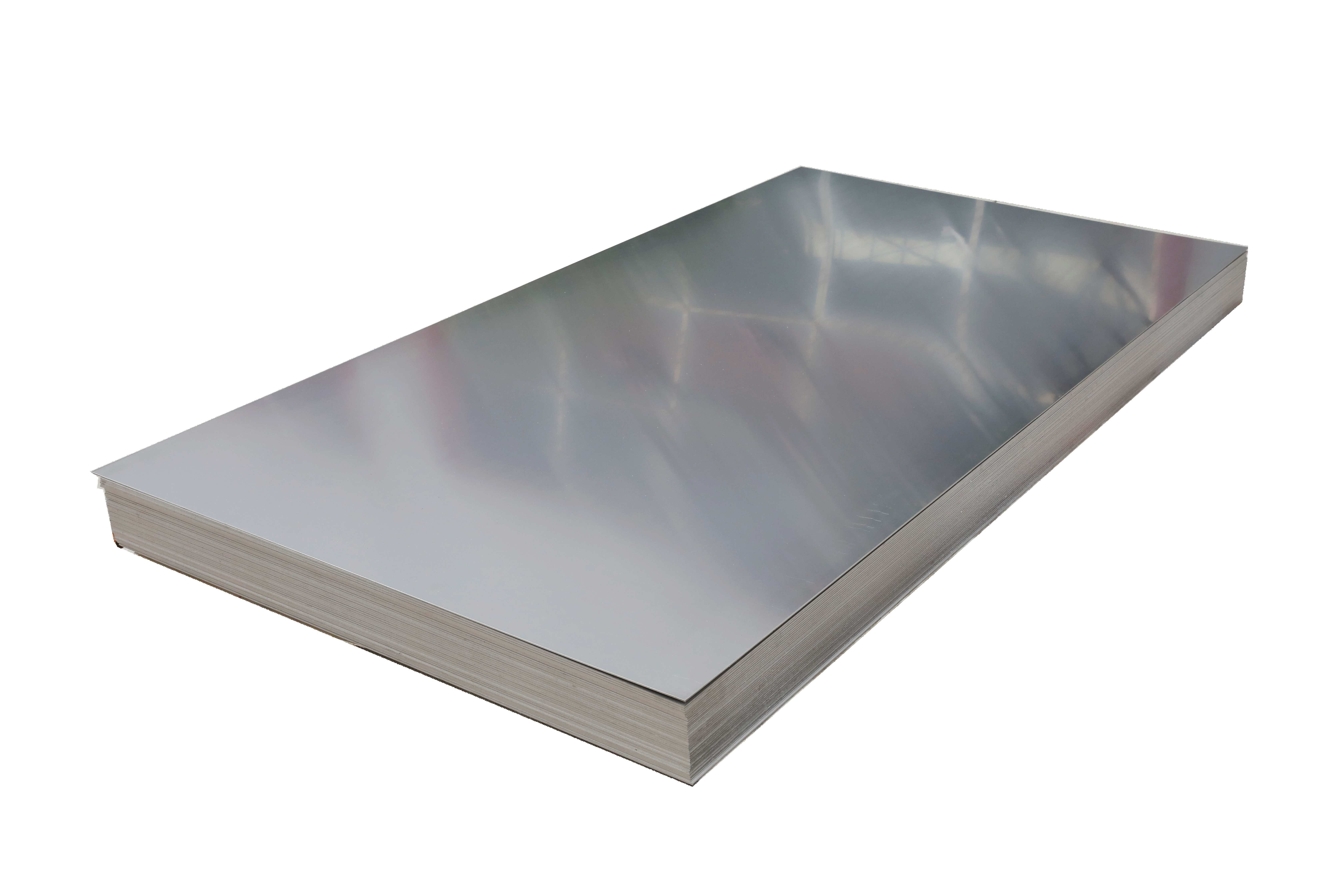
Flat-rolled titanium product forms: the surface and dimensional condition that a quality-management certificate does not describe.
Why the Certificate Carries Too Much Weight
In most industrial tenders, a quality-management certificate enters the process early, as a pass-or-fail filter. Once every shortlisted supplier holds one, the discussion moves to price, lead time and stock availability, and the compliance conversation quietly ends. The certificate has done its job as a gate, but it has not established that any of the suppliers can hold a Grade 2 chemistry window across a cold-rolled Titanium Strip run, or that the material behind a coil can be traced to a named Titanium sponge lot.
That gap has a concrete commercial consequence. A supplier that melts, rolls and anneals under one roof and a supplier that buys finished coil for resale can present the same certificate type, the same declared grade list and the same nominal thickness range. The buyer sees two equivalent vendors. Operationally they are not equivalent, because one controls the process that produces the property and the other controls only the handling after the property was produced.
The useful correction is not to dismiss ISO 9001:2015, but to place it accurately. A compliance benchmark for Titanium Coil should separate three questions that are routinely merged: is the management system controlled, is this specific lot conforming to the applicable product specification, and can the product legally enter the destination market. Only the first question is answered by a quality-management certificate.
What ISO 9001:2015 Actually Covers
ISO 9001:2015 is the International Organization for Standardization's quality management system standard. It specifies requirements for an organisation's quality management system, built around a process approach and risk-based thinking, and it expects documented information, defined responsibilities, corrective action and continual improvement. Because it is written to apply to any organisation in any sector, it deliberately contains no product-specific technical content.
For titanium flat-rolled products, this means ISO 9001:2015 does not define chemical composition limits, interstitial element ceilings, tensile or yield strength, elongation, dimensional tolerance, surface finish, or non-destructive testing method. Those requirements live in product standards. ASTM B265 is the specification covering chemical and mechanical requirements for titanium and titanium alloy strip, sheet and plate, which is the product-form family that Titanium Coil belongs to. ASME SB-265 is the corresponding document used where pressure-equipment rules apply. Other product forms sit under separate documents entirely: ASTM B338 for seamless and welded tube for condensers and heat exchangers, ASTM B861 and ASTM B862 for seamless and welded pipe, ASTM B348 for bar and billet, ASTM B863 for wire, ASTM B381 for forgings, and ASTM B367 for castings.
Titanium Sponge Is the First Compliance Node, Not the Last
Xrun (Xiangrun (Xi'an) Titanium Materials Technology Co., Ltd.), a titanium materials manufacturer established in 2016, describes its supply chain as a single integrated sequence running from coal and electricity through titanium ore and Titanium sponge to titanium processed materials and finished products. That sequence is the reason sponge belongs at the top of a compliance map rather than in a footnote.
Titanium sponge is the unalloyed intermediate from which downstream melting and rolling proceed. Its lot chemistry sets the window that later processing has to work within; rolling and annealing can change structure and surface, but they cannot remove an interstitial element that entered upstream. A supplier that can show a coil-to-sponge lot link is demonstrating process control. A supplier that can only show a coil-level mill test certificate is demonstrating an inspection result, which is a weaker but still legitimate claim. Buyers should know which of the two they are being offered.
Sponge also has its own price behaviour. The Chinese domestic trading price for Grade 0 titanium sponge stood at 6.75 USD/kg in July 2026, according to a secondary market source that consolidates published price reporting. This is not a Titanium Coil price and should never be presented as one, but it explains why mill quotes for coil can move for reasons that have nothing to do with rolling capacity: the raw material layer and the conversion layer carry separate cost curves.
Origin is a separate variable again. The Xinjiang region accounts for approximately 12% of global raw titanium mineral production, a figure published in supply-chain risk analysis. For a procurement team, that is a due-diligence input sitting entirely outside the scope of a quality-management certificate, and it should be tracked as its own line item rather than absorbed into a general compliance score.
Scrap completes the picture. Titanium scrap arises at defined production stages: new scrap, composed of machining waste and turnings, is generated during manufacturing, while old scrap derives from end-of-life products, as described in European Commission Joint Research Centre analysis of titanium circularity. Recycled material returning into a melt affects lot-to-lot consistency, so scrap-return arrangements and the associated lot records belong in the supplier conversation. The precise economic weight of that link cannot be quantified without price data for scrap, and this reference does not attempt to.
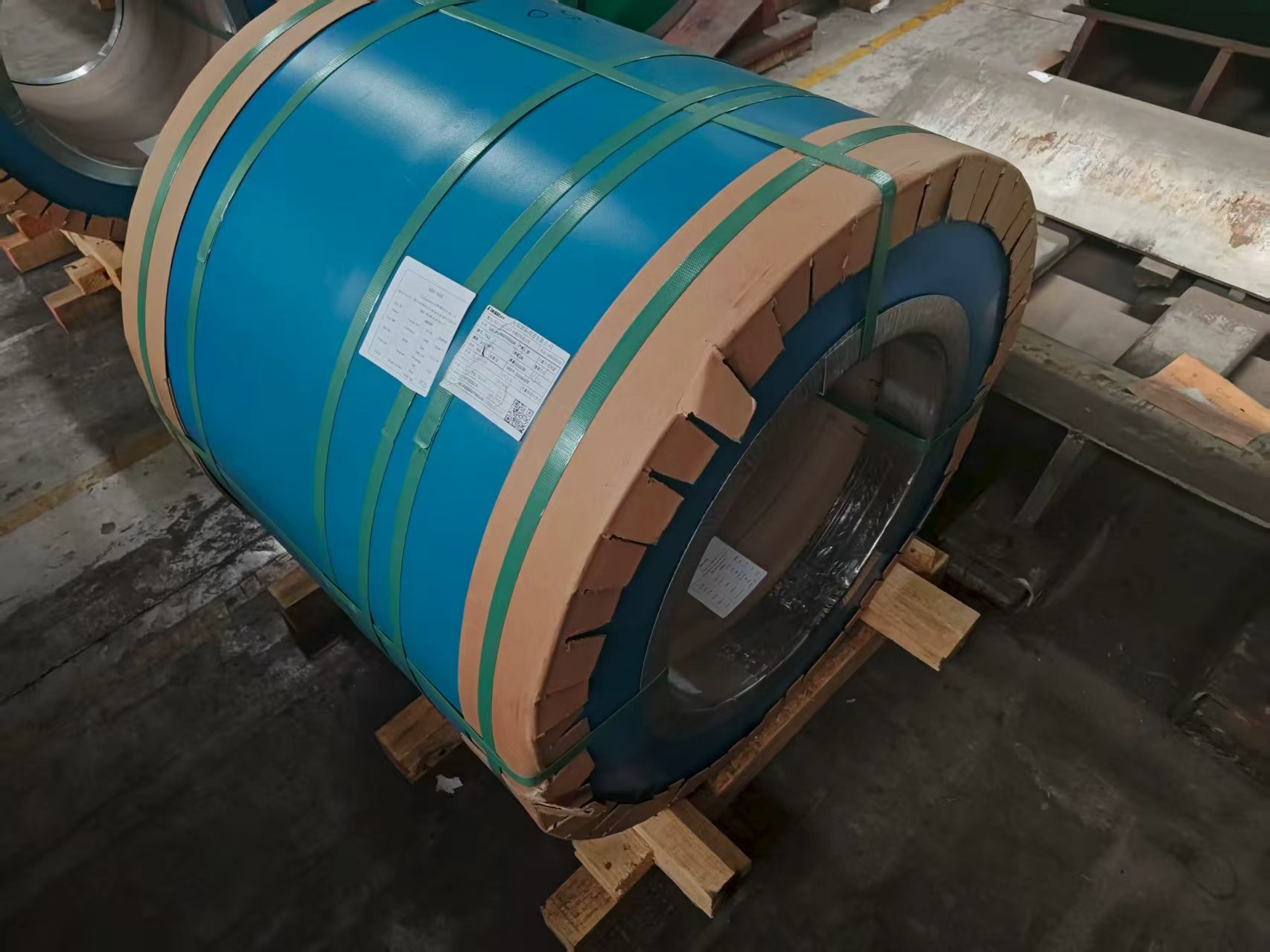
Packed Titanium Coil: marking, lot identity and documentation travel with the coil and are the practical link between a certificate and a specific delivery.
Xrun's Declared Position on the Map
The facts below are the company's own declared manufacturing position. They describe scope and capability, not certification status, and they should be read as the inputs a buyer would verify rather than as verification itself.
| Declared fact | Value | Why it matters in a compliance map |
|---|---|---|
| Legal entity | Xiangrun (Xi'an) Titanium Materials Technology Co., Ltd. | Gives the buyer a named contracting party to check against the certificate holder name |
| Established | 2016 | Operating history context for audit and reference checks |
| Site area | 2,466,667 m² | Single-site scale makes certificate-scope-to-premises matching a practical check |
| Employees | 3,000+ | Organisational scale behind documented process control |
| Engineering team | 200+ engineers | Capacity to respond to specification-driven RFQs rather than catalogue sales |
| Declared annual output | 30,000 t titanium rolling coil and strip; 10,000 t titanium composite strip; 200,000 titanium composite disc pieces | Company-reported figures; volume alone does not establish conformity |
| Chain scope | Coal – Electricity – Titanium Ore – Titanium Sponge – Titanium Processed Materials – Finished Products | Upstream traceability is held inside one organisation, which is what makes the sponge-to-coil link verifiable in principle |
| Export ratio and markets | 10% export share; EU, USA, India | Indicates exposure to multiple market-access regimes, each with its own documentation expectations |
| Standards cited | ASTM, ASME, AMS, MIL, DMS, TA, AWS, JIS | Declared specification families; the applicable one is fixed per order, not per company |
The declared product envelope is equally concrete. Cold-rolled titanium coil and strip is offered in Gr.1, Gr.2, Gr.3, Gr.4, Gr.12 and Gr.23 at 0.1–3.0 mm thickness by 450–1530 mm width, coil form, against ASTM and ASME. Hot-rolled titanium coil is offered in the same grade set at 2.5–12.0 mm by 900–2000 mm. Titanium Sheet runs 0.4–3.0 mm by 900–1530 mm with length under 6500 mm, and Titanium Plate runs 4.0–70 mm by 1000–2250 mm, both in Gr.1, Gr.2, Gr.3, Gr.4, Gr.6, Gr.7, Gr.12 and Gr.5, and both quoting the wider standard set of ASTM, ASME, AMS, MIL, DMS, TA, AWS and JIS. A declared envelope of this kind is what lets a buyer write a specification-first RFQ instead of a generic enquiry.
The Benchmark Map That Survives a Peer Comparison
Titanium products are partitioned by specification family, not by commodity. That single fact governs how any peer comparison should be structured. A mill that is qualified in ASTM B265 flat-rolled products is not thereby qualified in ASTM B338 tube, and a supplier that holds a certificate covering one product form cannot be substituted into a scope covering another without new evidence.
| Specification | Product form it governs | Role in a peer benchmark |
|---|---|---|
| ASTM B265 | Titanium and titanium alloy strip, sheet and plate | The controlling document for Titanium Coil, Titanium Strip, Titanium Sheet and Titanium Plate |
| ASTM B338 | Seamless and welded tube for condensers and heat exchangers | Where coil feedstock ends up in heat-transfer equipment |
| ASTM B861 / ASTM B862 | Seamless pipe / welded pipe | Distinct production routes; must not be aggregated without stating route |
| ASTM B348 | Bar and billet | Upstream link between ingot and downstream mill forms |
| ASTM B863 | Wire | Separate long-product family |
| ASTM B381 | Forgings | Shaped-product family |
| ASTM B367 | Castings | Shaped-product family |
| ISO 5832-2 | Unalloyed titanium for surgical implants | Medical end-use set that constrains chemistry and interstitial limits independently of industrial ASTM grades |
This is the honest form of the 'Xrun vs. global peers' question. A comparison across the titanium industry is only meaningful once the specification family is fixed, because the same company name can appear on a capability list for one family and be unqualified for another. The peer set that matters for a Titanium Coil buyer is the set of mills whose qualification covers flat-rolled B265 scope, not the set of mills with the largest overall titanium output.
What the Application Layer Adds to the Map
Compliance is finished at the application, not at the mill gate. Two documented use cases show how much of the requirement sits beyond a management-system certificate.
In heat exchanger service, titanium coil and sheet are specified for media including seawater, chemicals, steam and brine, across roughly -50°C to 300°C and 1.0–2.5 MPa, against ASTM B265 or ASME SB-265. The recorded requirement set goes well past chemistry: no scratches, pits or defects, degreased and passivated surface, tensile strength at or above 240 MPa, yield strength in the 138–310 MPa band, elongation at or above 24%, ultrasonic or eddy current testing to confirm absence of internal flaws, and cupping and bend testing to demonstrate formability, with surface supplied pickled, polished or as agreed.
In pipe service, titanium is selected for fluid transport, heat exchange or critical process lines operating under corrosive conditions that typically involve seawater, chloride-containing media or acidic environments, where pitting and crevice corrosion resistance decide service life. These systems usually run continuously, so material failure translates into unplanned downtime rather than a single rejected part, and the requirement set accordingly includes corrosion resistance, strength-to-weight ratio, long service life, low maintenance and compliance with industry standards.
The role of ISO 9001:2015 in both cases is to make the required tests repeatable, recorded and traceable across lots. It does not perform them, and holding it does not imply that a given coil will pass a cupping test or an eddy current scan.
Where the Map Stops
A benchmark that does not state its own boundaries is a sales document. Three boundaries are material here.
First, a quality-management certificate cannot substitute for product conformity. Two suppliers can both operate a controlled system and still deliver materially different conforming rates, because conformity is determined by the product standard and the lot evidence, not by the system certificate.
Second, certificate scope must be tied to the actual premises and product form. The verified background used for this article does not include Xrun's ISO 9001:2015 certificate number, issuing certification body, or certification scope wording. This reference therefore does not state that Xrun holds ISO 9001:2015 certification, and readers should not infer it. What a buyer can do is request the certificate copy during RFQ and check three things: whether the certificate holder name matches the contracting legal entity, whether the scope wording covers titanium coil and strip production at the named site, and whether the certificate is current with surveillance audits recorded.
Third, market access is a separate layer again. Pressure-equipment rules such as the EU Pressure Equipment Directive or the ASME Boiler and Pressure Vessel Code, and trade-compliance questions such as origin and supply-chain due diligence, sit outside ISO 9001:2015 and outside the evidence set used here. The upstream origin question is a good illustration: the Xinjiang region's roughly 12% share of global raw titanium mineral production is a sourcing-risk variable that no management-system certificate addresses, and it must be handled by its own diligence process.
Market Signals That Reshape the Benchmark
The commercial context in which this compliance map is applied is not static. The global titanium market was valued at 24.84 billion USD in 2025 on a full metal value chain basis covering sponge, mill products and end products, with a projected compound annual growth rate of 6.2% over 2024–2030, according to commercial research published by Grand View Research. That definition matters: figures that include titanium dioxide pigment are not comparable with metal-chain figures, and this reference does not combine them.
The caution is worth spelling out, because conflicting numbers circulate freely. A separate claim of 29.88 billion USD in 2025 rising to 47.96 billion USD by 2032 was traced only to an unidentified aggregator page behind a search redirect, and it has been excluded from this analysis rather than averaged with the figure above. Buyers building cost models should apply the same discipline: match the definition before using the number.
Two faster-moving signals sit closer to the transaction. Sponge pricing, illustrated by the July 2026 Chinese Grade 0 level of 6.75 USD/kg from a secondary source, moves on a short cycle and belongs in cost conversations rather than in long-range planning. Customs classification, where titanium and articles thereof fall under HS heading 8108 with subheadings separating unwrought titanium and powders, waste and scrap, and other articles, is the trade proxy for coil and strip flows; the subheading wording should be confirmed against a current national tariff schedule before it is used in origin or duty analysis.
Qualitatively, the direction of travel in buyer behaviour is toward scope verification rather than certificate possession. More procurement teams now ask where a certificate applies rather than whether one exists, and treat the certificate as one field in a supplier record instead of the gate that ends the evaluation. That is an editorial reading of procurement practice, not a statistical finding.
What to Expect Next
Three developments are reasonable to plan for, stated as expectations rather than forecasts. Documentation chains are moving toward lot-level digital linkage, so that a delivered Titanium Coil can be traced back through rolling and melting to a named Titanium sponge lot without a manual file search. Certification scope is becoming a structured procurement field, compared alongside legal entity name, covered premises and product form rather than checked as a binary. And upstream origin disclosure is settling into place as a standing condition of supply, parallel to quality-system requirements and evaluated by a different team.
For suppliers, the implication is that vertical integration only becomes a compliance asset when it is documented at the lot level; an integrated chain that cannot produce records is indistinguishable, from the buyer's chair, from a trading operation. For buyers, the implication is that the RFQ itself is the benchmark: a specification-first request that names the standard family, the grade, the dimensional band, the test regime and the required documentation will separate capable mills from catalogue sellers before any price is discussed.
Technical scope, product forms and downloadable documentation for Xrun's titanium coil, strip, sheet and plate range are available in the company's public brochure at Xrun titanium materials brochure, and further company background is published at tixrun.com.
FAQ
What does an ISO 9001:2015 certificate actually confirm in titanium coil supply?
It confirms that the organisation operates a quality management system meeting the requirements of ISO 9001:2015, with defined processes, documented information, corrective action and continual improvement. It does not confirm the chemical composition, mechanical properties, dimensional tolerance or surface condition of any specific Titanium Coil, because the standard contains no product-specific technical requirements. Product conformity is established separately against the applicable product specification, such as ASTM B265 for titanium strip, sheet and plate.
Does ISO 9001:2015 replace ASTM B265 or ASME SB-265?
No. The two documents answer different questions and are not interchangeable. ISO 9001:2015 sets requirements for the management system. ASTM B265 sets the chemical and mechanical requirements for titanium and titanium alloy strip, sheet and plate, and ASME SB-265 is the corresponding document where pressure-equipment rules apply. A coil is conforming because it meets the product specification and the mill test certificate evidences it, not because the mill holds a management-system certificate.
How does titanium sponge quality reach a coil's mill test certificate?
Through lot traceability. Titanium sponge is the unalloyed intermediate whose lot chemistry defines the window available to downstream melting and rolling, and later processing can change structure and surface but cannot remove an interstitial element introduced upstream. Where a supplier operates an integrated chain from titanium ore through sponge to processed material and finished product, the lot link can in principle be reconstructed and presented. Where the material was purchased as finished coil, only the coil-level inspection result is available. Buyers should establish which situation applies before accepting a certificate as complete evidence.
Which documents should a buyer request alongside a quality-management certificate?
The mill test certificate for the specific lot, referenced to the applicable product specification such as ASTM B265; the certificate of the quality management system showing holder name, issuing body, scope wording, covered premises and validity; test reports for any non-destructive or mechanical testing required by the application, for example ultrasonic or eddy current testing and cupping or bend testing for heat exchanger material; and, where origin matters, supply-chain documentation identifying the source of the raw material. For pressure service, conformity documentation required by the relevant pressure-equipment regime should be requested separately, since it is not covered by a management-system certificate.
Where does ISO 9001:2015 stop being sufficient as a supplier benchmark?
It stops being sufficient at three points. It does not establish product conformity, which requires the product specification and lot evidence. It does not establish market access, which depends on pressure-equipment and trade rules outside its scope. And it does not address upstream origin or supply-chain due diligence, which is an independent risk dimension. In each case the certificate remains necessary as a process-control signal but is not decisive on its own, so a benchmark that ends at the certificate will systematically overrate suppliers with strong systems and thin product evidence.
Tem questões ou precisa de mais detalhes?
Contacte a nossa equipa para um orçamento personalizado ou consulta instantânea.
Solicitar orçamento
Preencha o formulário abaixo e a nossa equipa entrará em contacto com uma proposta personalizada.
Chat direto do WhatsApp
Prefere conversar em tempo real? Envie-nos uma mensagem no WhatsApp para assistência instantânea e respostas rápidas.
- Obter orçamento personalizado
- Partilhar fotos ou documentos
- Discuta as suas necessidades diretamente
Geralmente responde em 5–30 minutos durante o horário de expediente.