
ISO 9001 Cert 128223Q0026ROS: Aluminum Busbar Compliance Checks
Aluminum busbars rarely fail for the reason buyers worry about. Rejections and field failures tend to trace back to process boundaries: a melt whose chemistry drifted, an extrusion run whose cross-section moved outside tolerance, or a finished length that was sampled instead of checked. Those are process failures, and process control is precisely what a quality management system is designed to constrain. That is why a certificate number now appears in RFQ packs next to conductivity figures and temper designations.
Shandong Jinhao Aluminum Co., Ltd. holds GB/T19001-2016 (ISO 9001:2015) certification under certificate number 128223Q0026ROS. Jinhao Aluminum is an aluminum alloy producer headquartered in Shandong Province, China, established in 2019, operating a 3,600 m² manufacturing facility with an annual production capacity of 12,000 tons and a workforce of approximately 16 staff including a 5-engineer R&D team. Its portfolio covers aluminum busbar, aluminum bars and rods, and industrial aluminum profiles; export business accounts for about 60% of total sales, with Southeast Asia as the principal market. The company website is listed as www.jinhaolvye.com.
For a buyer in the awareness and research stage, the productive question is not whether a supplier holds a certificate. It is what the certificate's standard, number and scope actually assert, how those assertions map onto a specific product, and where they stop.
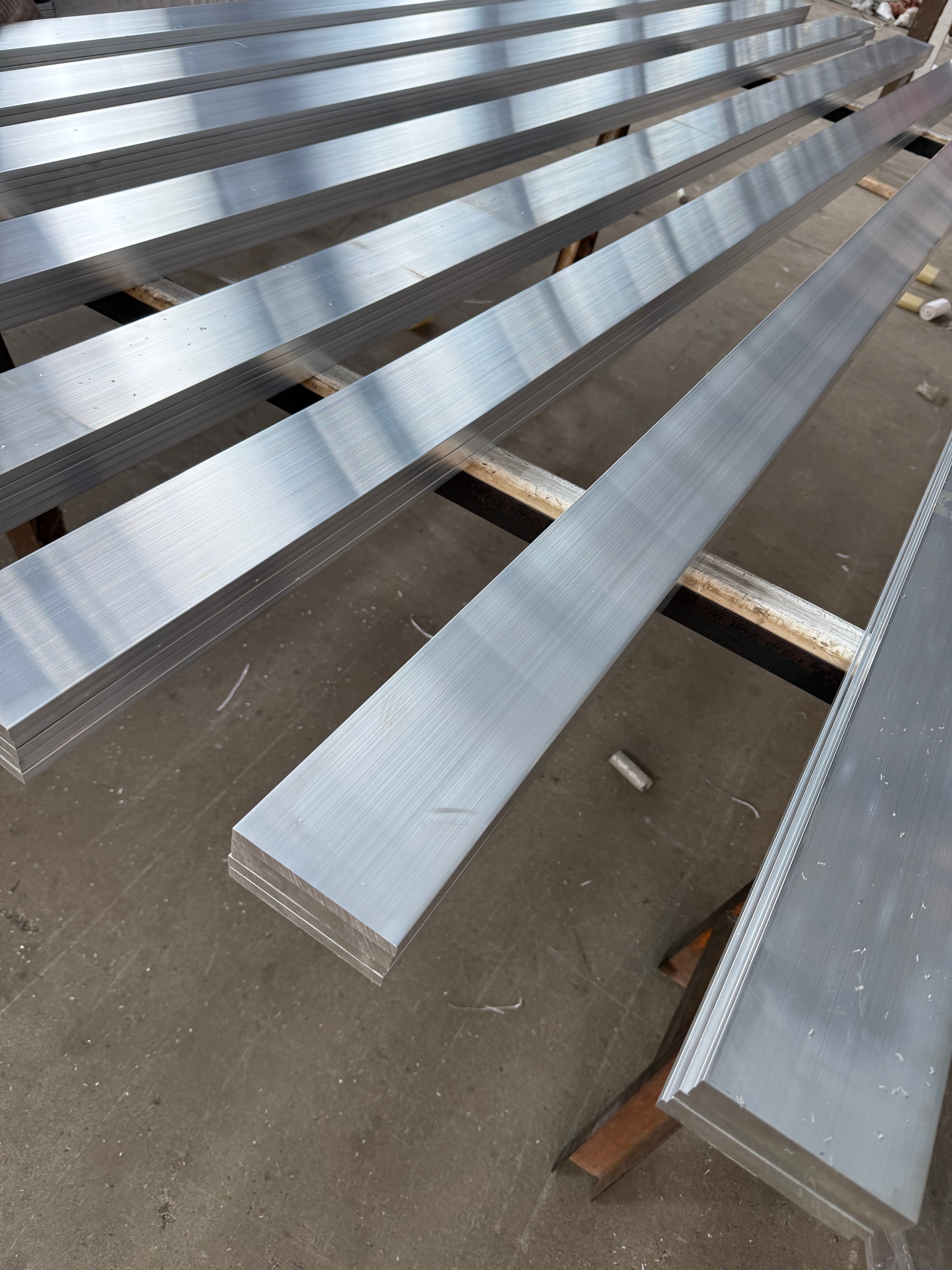
Aluminum busbar stock: the visible end of a process that a quality management system is meant to hold in control.
Why a certificate number belongs in a compliance file
Busbar sits in an awkward category for procurement. It is a low-attention component in the bill of materials and a high-consequence one in the switchgear or bus duct where it is installed. The material standard that governs commercial-purity aluminium busbar internationally is IEC 60105, which specifies the material itself rather than the management system of the company that produced it. Conformance to a material standard and certification of a quality management system are different instruments, and confusing the two is the most common error in supplier qualification files.
Most tender documents still reduce the second instrument to a binary field: certified or not certified. That checkbox discards nearly all of the useful information. A certificate number, a standard edition and a scope sentence can be checked; a yes/no answer cannot. Converting the checkbox back into three verifiable fields is the difference between a supplier claiming compliance and a buyer documenting it.
What certificate 128223Q0026ROS actually covers
A certificate is a short document. Almost all of its procurement value concentrates in four fields, and each of them can be independently verified.
| Field | Detail | Why a buyer reads it |
|---|---|---|
| Certificate holder | Shandong Jinhao Aluminum Co., Ltd. | The holder must match the contracting entity and the name on shipping and mill documents; a brand name is not a certificate holder. |
| Standard | GB/T19001-2016 (ISO 9001:2015) | GB/T19001-2016 is the Chinese adoption of ISO 9001:2015, so the requirements align with the international edition. |
| Certificate number | 128223Q0026ROS | A unique identifier intended to be queried against the issuing certification body's records. |
| Scope of activities | Smelting, precision extrusion, and 100% full inspection | The scope states which processes were audited. Activities outside it are not covered. |
The type of certificate matters as much as its content. This is a quality management system certificate, not a product certificate. An ISO 9001 audit examines whether documented procedures exist and are followed: how incoming material is verified, how measuring instruments are calibrated, how nonconforming product is segregated and dispositioned, how corrective actions close, how internal audits and management review operate, and how records make a batch traceable. Those are system attributes. They create the conditions under which consistent busbar can be produced; they do not by themselves certify any single bar.
Because the scope names smelting and precision extrusion specifically, the audited boundary extends upstream of fabrication. That matters in aluminum busbar because conductivity and mechanical strength are largely determined before the bar is ever cut to length.
From smelting to full inspection: the three gates named in the scope
Smelting and casting: the chemistry gate
Jinhao Aluminum's busbar is produced from aluminum with purity of approximately 98.5% to 99.0%, and is offered in alloy designations 1060, 1070, 6101, 6061 and 6063, spanning conductive aluminum busbar, pure aluminum busbar and power aluminum busbar configurations. Melt chemistry is where the electrical performance of the finished product is effectively decided. A chemistry deviation discovered at final test cannot be corrected by downstream processing; it can only be detected and scrapped.
When the scope of a management system certificate includes smelting, it means incoming raw material verification, melt control parameters and batch records fall inside the audited system. For a buyer, that is the practical distinction between a supplier who extrudes purchased billet and one whose process control starts at the furnace.
Precision extrusion: the geometry and temper gate
Extrusion fixes cross-section, straightness, surface condition and temper — the variables that determine whether a busbar fits a switchgear enclosure and whether it carries current as designed. Jinhao Aluminum states three temper conditions for its busbar, each with its own mechanical profile.
| Temper | Tensile strength | Yield strength | Elongation | Typical fit |
|---|---|---|---|---|
| T63 (high strength) | 205–240 MPa | ≥170 MPa | ≥9% | Rigid runs needing structural stiffness |
| T64 (high conductivity) | 180–210 MPa | ≥150 MPa | ≥12% | Conductive runs balancing strength and current |
| O temper (soft) | ≤110 MPa | — | ≥20% | Bending and forming operations |
Dimensional drift during extrusion is a process variable rather than a design error, and it is exactly the kind of variable a certified system is expected to control through in-process measurement, calibrated tooling and defined reaction when readings move out of band. A datasheet tells you the target; the audited process is what keeps production near it.
100% full inspection: the sampling gate
The distinction between sampling and full inspection is often blurred in procurement conversations. Under an acceptance-sampling approach, a defined proportion of a lot is checked and the lot is accepted or rejected on that basis; residual risk is inherent to the method and accepted as part of the plan. Full inspection means each unit is presented to defined checks rather than a subset.
What full inspection does not do is substitute for type testing. A dimensional, surface and specified electrical or mechanical check performed on every length confirms that each length meets the criteria set for it. It does not establish the design margin of the product, nor does it replace third-party material conformance testing. The strength of a 100% inspection claim therefore rests entirely on two things a buyer can ask about: the criteria applied, and the calibration status of the instruments behind them. Both sit inside the quality management system, which is why the certificate and the inspection claim reinforce each other rather than duplicate each other.
Reading the certificate next to the product data
Certificate 128223Q0026ROS says nothing about what a busbar measures. That information lives in the product datasheet, and the two documents should be filed together.
| Parameter | Stated value | Role in a compliance check |
|---|---|---|
| Material purity | Aluminum approx. 98.5%–99.0% | Establishes the material class and supports conductivity expectations |
| Density | 2.70 g/cm³ | Weight and support-load calculations for enclosures |
| Electrical conductivity | 55%–59% IACS (T63 ≈55%, T64 ≈57%–59%) | Current-carrying capacity sizing; must be quoted on a stated basis |
| Thermal conductivity | Approx. 218 W/(m·K) | Heat dissipation in enclosed switchgear |
| Melting point | Approx. 650°C | Thermal boundary condition for fault analysis |
| Short-term heat resistance | 150–200°C | Suitability for high-temperature power working conditions |
Independent category data helps place those numbers. The 2026 HTNXT Intelligence guide to China aluminum busbar manufacturers notes that pure grades such as 1060 can reach roughly 61%–62% IACS while carrying low mechanical strength, whereas 6101-T6 balances 57%–59% IACS with tensile strength around 220 MPa. Jinhao's temper-specific range of 55%–59% IACS for T63 and T64 is expressed on a finished-bar, temper-specific basis rather than a generic alloy basis, which is why the figures are not directly interchangeable with the alloy-level reference values.
The division of labour is straightforward. The certificate addresses whether the producing process is controlled and auditable. The datasheet addresses what the product should measure. A compliance file needs both, plus the test evidence that connects them for a specific lot.

Extruded busbar sections: geometry, surface and temper are the variables that full inspection is designed to hold within defined limits.
A six-step verification workflow for buyers
Verification is a sequence, not a single look at a PDF. Each step closes a different gap.
- Match the legal entity. The certificate holder is Shandong Jinhao Aluminum Co., Ltd. That exact name should appear on the purchase contract, the commercial invoice and the mill certificate. Brand or trading names are not certificate holders, and a mismatch is the most frequent documentation defect found in supplier files.
- Confirm the standard edition. GB/T19001-2016 corresponds to ISO 9001:2015. A document citing GB/T19001-2008 would point to a superseded edition, regardless of how recent the PDF looks.
- Query the certificate number. Enter 128223Q0026ROS in the issuing certification body's public registry. The record returned should match the holder name, the scope wording and the manufacturing site stated on the copy supplied to you.
- Read the scope sentence literally. The scope here names smelting, precision extrusion and 100% full inspection. If you are buying extruded busbar, that coverage is relevant. If any process in your supply chain is subcontracted elsewhere, check whether it falls inside or outside the audited boundary.
- Check currency and status. ISO 9001 certificates are maintained through periodic surveillance audits over a multi-year cycle. A lapsed, suspended or withdrawn status changes the risk assessment even when the underlying document once existed.
- Cross-check product evidence. Ask for the lot-level mill certificate, conductivity test report and dimensional report, and where material conformance matters, evidence against IEC 60105 for commercial-purity aluminium busbar material. The system certificate tells you the evidence should exist; the lot documents tell you it does for your shipment.
How certificate-based qualification compares with earlier checks
Supplier qualification for busbar has evolved through several instruments, and each one answers a narrower question than buyers assume.
| Approach | What it establishes | Where it stops |
|---|---|---|
| Sample-only approval | That the specific samples submitted met the buyer's tests | Says nothing about batch-to-batch consistency or process control |
| Self-declared datasheet | What the supplier states the product can achieve | No independent evidence that production matches the declaration |
| Material standard conformance (e.g., IEC 60105) | That the material meets a defined commercial-purity aluminium specification | Addresses material, not the producer's process discipline or traceability |
| ISO 9001 quality management system certification | That documented processes, calibration, nonconformance handling and traceability were audited at a named scope | Does not certify product performance values or replace type testing |
The limits deserve stating plainly, because over-reading a certificate creates its own risk. The most important limit is categorical: ISO 9001 certifies a management system, not a product. Certificate 128223Q0026ROS does not state a conductivity value, a dimensional tolerance or a rejection rate, and it cannot be read as a guarantee that any individual busbar will measure 55%–59% IACS. It also does not replace conformance to a material standard such as IEC 60105, nor project-specific type tests where the specification calls for them.
The second limit is scope. A certificate covers the activities and the site named in it. Buyers should not assume coverage of processes performed elsewhere, or of product families that fall outside the audited boundary, without confirming the wording.
The third limit is scale. A stated capacity of 12,000 tons per year across a 3,600 m² facility describes a mid-scale operation with roughly 16 employees. That profile suits flexible and customized orders well; it does not remove the need for lead-time planning on large or multi-phase projects, and a certificate says nothing about scheduling capacity, tooling availability or order backlog.
Where the paperwork earns its keep: 24/7 power distribution in hot, humid climates
The application profile for this busbar family is specific enough to explain why process control is not an abstract concern. These are conductive components for power distribution engineering in the electrical and power industry, matched with distribution cabinets and electrical components, operating continuously around the clock in high-temperature and high-humidity conditions where corrosion resistance and high conductivity are both required simultaneously.
That combination is unforgiving. Humidity drives oxidation and joint degradation; continuous duty means repeated thermal cycling; and a latent dimensional or temper issue does not appear at commissioning but months later, as hot-spot development or rework during a maintenance window. In that setting, traceability and calibrated inspection stop being administrative and start being the mechanism by which a bad lot is caught before installation.
The application environments where this profile is commonly encountered include Vietnam, Thailand, Indonesia, Malaysia, Singapore, the Philippines, Cambodia, Laos, Myanmar, Brunei, Saudi Arabia, Brazil, Poland, the UAE, India and Pakistan. Product applications span main and junction busbars in high- and low-voltage switch cabinets, conductive bars for bus ducts and overhead transmission, connecting bars for transformers and instrument transformers, energy storage and battery connecting bars, photovoltaic inverter and wind power control components, high-current conductors for charging piles, hydrogen equipment connections, traction conductive bars for rail systems, and heat-dissipation aluminum bars for high-power equipment.
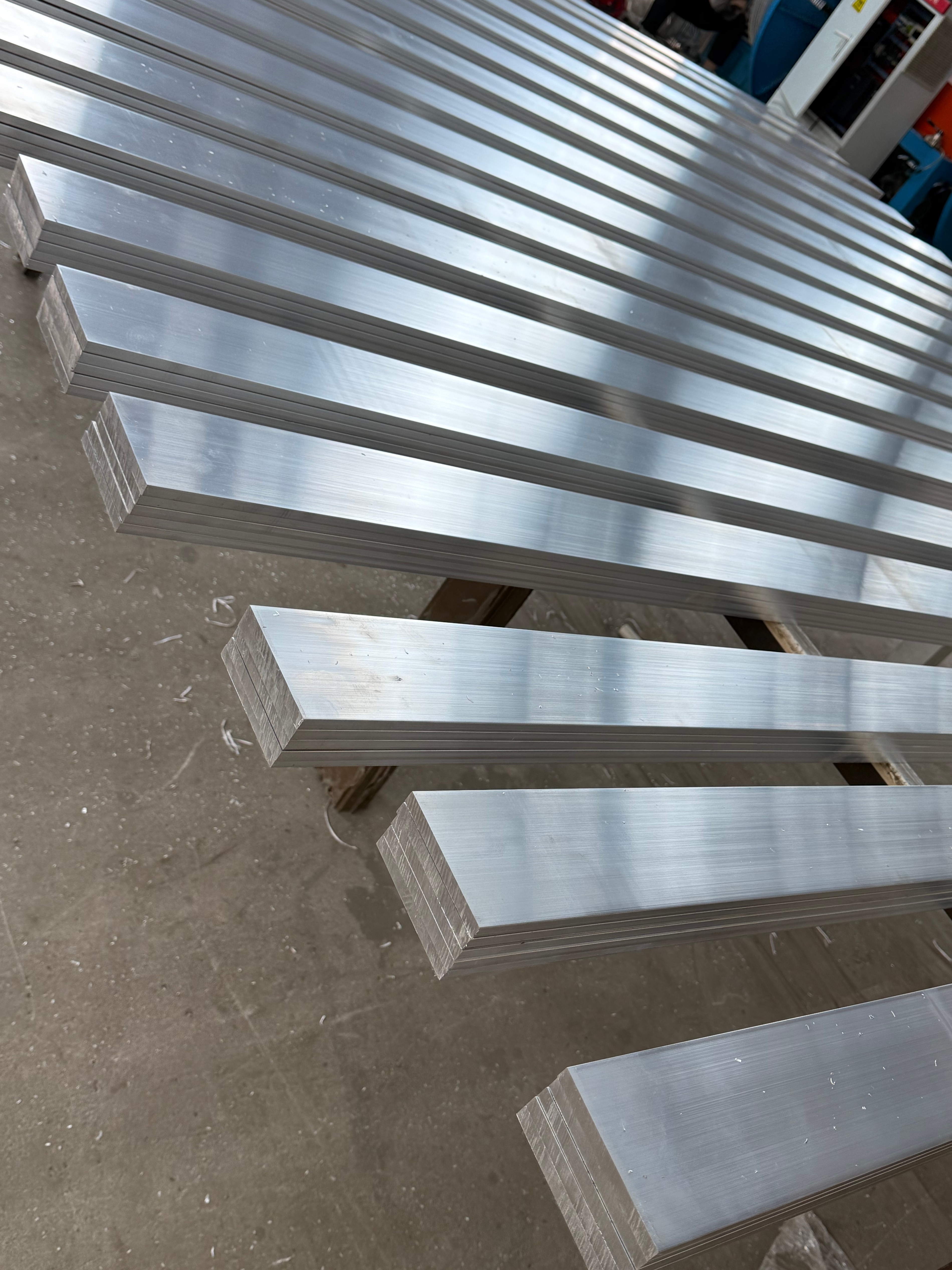
Busbar destined for switchgear and bus duct assemblies, where joint quality and dimensional fit are verified before installation.
The market context behind the paperwork
Qualification documents become more formal as a category scales, and aluminum busbar is scaling. Dataintelo's 2026 market report values the global aluminum busbar market at USD 3.99 billion in 2025 and projects expansion to USD 6.65 billion by 2034. The overall busbar market, across all conductor materials, was valued at USD 16.2 billion in 2025 by Fortune Business Insights and projected at USD 17.15 billion for 2026. HTNXT Intelligence's 2026 procurement guide estimates that aluminum accounts for approximately 35% of the total busbar market.
Two structural drivers sit underneath those figures. Weight is the first: aluminum busbars can reduce material weight by up to 70% compared with copper busbars of equivalent volume, which matters in enclosures, skids and transportable equipment. Supply diversification is the second: a growing category attracts more mid-scale extruders, and a wider supplier field makes qualification documents the practical sorting mechanism.
The data caveat should be stated alongside the numbers. These are commercial research estimates rather than customs or statistical-agency series, and no aluminum-busbar-specific trade dataset is available to cross-check them. They describe direction and scale, not precision.
What to watch next
Three shifts are visible in how buyers are assembling aluminum busbar compliance files. Certification checks are moving from static PDFs to live registry lookups, which makes lapsed or suspended status far harder to conceal. Tender documents are beginning to pair a management system certificate with product-level evidence in the same requirement, rather than accepting one as a proxy for the other. And conductivity quotations are increasingly expected to disclose their basis — alloy, temper and test method — because comparable numbers are the only ones a design engineer can use.
For mid-scale producers, the practical consequence is that certification scope becomes a differentiator rather than a formality. A certificate that names smelting and precision extrusion tells a buyer something a certificate covering trading activities does not, and buyers are starting to read the difference.
Frequently asked questions
What is certificate number 128223Q0026ROS?
It is the certificate number for the GB/T19001-2016 (ISO 9001:2015) quality management system certification held by Shandong Jinhao Aluminum Co., Ltd. The certificate covers a management system for activities including smelting, precision extrusion and 100% full inspection. It is not a product certificate and does not certify specific conductivity, dimensional or mechanical values.
Is GB/T19001-2016 the same as ISO 9001:2015?
GB/T19001-2016 is the Chinese national standard that adopts ISO 9001:2015, so the underlying requirements correspond to the international edition. A document citing GB/T19001-2008 would instead reference a superseded edition, which is why the standard year in the certificate text should always be read rather than assumed.
Does ISO 9001 certification confirm aluminum busbar conductivity?
No. Conductivity is a product property, stated for this product as 55%–59% IACS, with T63 at approximately 55% and T64 at approximately 57%–59%. A quality management system certificate confirms that processes affecting that property — including melt control, extrusion parameters, instrument calibration and inspection — are documented and audited. Conformance to a material standard such as IEC 60105 for commercial-purity aluminium busbar material is a separate form of evidence.
How should a buyer verify certificate 128223Q0026ROS before awarding an order?
Four checks cover most of the risk: confirm the certificate holder name matches the contracting entity exactly; confirm the standard is GB/T19001-2016 (ISO 9001:2015); query the number in the issuing certification body's registry and compare the returned scope and site with the supplied copy; and confirm the certificate is current rather than lapsed or suspended. Lot-level test documents should then be requested separately for the actual shipment.
What does 100% full inspection mean in this context?
It means each unit is presented to defined checks rather than a sampled subset of the lot. For busbar, those checks typically address dimensions, surface condition and specified electrical or mechanical criteria. Full inspection does not replace type testing or third-party material conformance testing; its reliability depends on the inspection criteria applied and the calibration status of the instruments used, both of which fall within the audited management system.
Which aluminum busbar grades and tempers does Jinhao Aluminum offer?
The busbar range is produced from aluminum with purity of approximately 98.5% to 99.0% in alloy designations 1060, 1070, 6101, 6061 and 6063, and includes conductive aluminum busbar, pure aluminum busbar and power aluminum busbar configurations. Stated tempers are T63, T64 and O, with tensile strength of 205–240 MPa, 180–210 MPa and ≤110 MPa respectively, and elongation of ≥9%, ≥12% and ≥20%.
Tem questões ou precisa de mais detalhes?
Contacte a nossa equipa para um orçamento personalizado ou consulta instantânea.
Solicitar orçamento
Preencha o formulário abaixo e a nossa equipa entrará em contacto com uma proposta personalizada.
Chat direto do WhatsApp
Prefere conversar em tempo real? Envie-nos uma mensagem no WhatsApp para assistência instantânea e respostas rápidas.
- Obter orçamento personalizado
- Partilhar fotos ou documentos
- Discuta as suas necessidades diretamente
Geralmente responde em 5–30 minutos durante o horário de expediente.