
ISO 9001 and Audit-Ready Bollard Suppliers: A Checklist
A vehicle security barrier is bought once, installed once, and rarely examined again until something fails. That is exactly why bollard procurement has become document-led: the buyer who cannot produce a qualification file is the one exposed when a client, insurer or auditor asks how the supplier was judged capable.
ISO 9001 sits at the centre of that conversation, and it is also where most of the misunderstanding begins. The certificate is a quality management system credential. It says something meaningful about how a factory controls materials, processes and inspection. It says nothing directly about whether a specific bollard will stop a specific vehicle.
This checklist is written for distributors, contractors, integrators and project owners who are in the final stage of supplier selection and need to separate a genuine audit trail from a folder of badges. It covers the eight documents worth requesting, how to read crash and safety test evidence, and how the same pack has to be re-cut for EU, MEA and SEA project requirements.
What an ISO 9001 Certificate Actually Confirms
ISO 9001 is an international standard for quality management systems. Certification means an accredited certification body has audited the organisation against that standard and found that it operates documented processes for material control, production, inspection, corrective action and record keeping.
For a bollard buyer, that translates into one very practical benefit: the supplier should be able to produce records when asked, because the system requires records to exist. It does not translate into a crash rating, a penetration classification, or proof that a particular model was ever impact-tested.
Four checks belong at certificate level, before any technical document is reviewed:
- Scope wording. The scope should name the products and the manufacturing activity you are actually buying, not a generic trading description.
- Certification body and accreditation. A certificate is only as strong as the body behind it. Record the body name and check that it is recognised in your market.
- Validity. Current issue and expiry dates, with a surveillance audit cycle. An expired certificate attached to a current quotation is a routine finding during buyer qualification.
- Site coverage. The certificate should cover the factory that will produce the order, not only a sales office or a partner facility.
The Qualification Checklist: Eight Documents to Request
The table below is a request schedule, not a marketing list. Each row states what a document demonstrates and, more importantly, what it does not. Where a supplier cannot supply a record in the exact format you asked for, request a sample from a comparable project before drawing conclusions.
| Document | What it demonstrates | What it does not demonstrate |
|---|---|---|
| ISO 9001 certificate with scope, certification body and validity dates | A certified quality management system covering the stated manufacturing scope | Product performance, crash rating, or compliance with a barrier test standard |
| Incoming material inspection records | Material grades were checked at goods-in against a defined specification | Long-term corrosion behaviour in your specific climate |
| In-process monitoring and final functional test records | Units were functionally verified before delivery | Independent third-party validation of those results |
| Batch or serial traceability linking a delivered unit to its material lot and inspection record | The factory can trace a specific unit back through production | Anything about installation quality on site |
| Crash and safety test report naming model, configuration, laboratory and standard edition | Performance of the tested configuration under a defined impact condition | Performance of a different model, foundation or extension arrangement |
| English installation manual, wiring diagrams, foundation and CAD drawings | An installer can execute and commission to design intent | On-site engineer supervision, unless separately contracted |
| Customs pack: HS classification, commercial invoice, packing list, certificate of origin, bill of lading | Import clearance and duty classification for the shipment | Compliance with local electrical, machinery or installation rules |
| Remote technical support terms | A defined support route during commissioning and after handover | Physical engineering presence at the site |
Reading Crash and Safety Test Evidence Correctly
Crash evidence is the part of the file most often overstated, usually by accident. Three layers have to be separated: the standard, the rating, and the report.
The standard defines the test method. ASTM F2656/F2656M-20, for example, provides a structured procedure to establish a penetration rating for vehicle perimeter barriers subjected to a vehicle impact. That is a description of a method, not a certificate for anyone's product.
The rating expresses the impact condition and the resulting penetration. In the ASTM notation commonly cited in industry guides, the M-designation refers to the impact speed in miles per hour, such as M30, M40 and M50. Penetration bands are described in secondary interpretations as P1 at no more than one metre, P2 from 1.01 to 7 metres, P3 from 7.01 to 30 metres, and P4 at 30 metres or greater. Because these band values come from a secondary explanation, they should be checked against the current ASTM edition before being written into a contract.
The report is the only layer that ties a rating to a product. When you request it, ask for six things: the exact model designation, the tested configuration (dimensions, material, foundation, extension height), the testing laboratory and its accreditation, the standard edition applied, the impact condition and measured penetration, and the test date. A report that lists a rating without a model and configuration is not qualification evidence; it is a claim.
Installation, Wiring and Commissioning Documents
Powered bollards fail at handover far more often than in the factory, and almost always because of documentation gaps. A complete installation pack should include an English installation manual, foundation and civil works drawings, control cabinet layout, wiring diagrams, and the commissioning sequence including any limit-switch, loop-detector or interlock settings.
Buyers should also pin down who is present for commissioning. On-site engineer supervision is not a standard inclusion for most factory-direct suppliers, and assuming otherwise is a scheduling risk on a live site. The practical model is remote guidance by video call, telephone and email across installation and commissioning, with on-site supervision arranged separately for large or complex projects.
Automation also carries infrastructure obligations that belong in the document pack, not in the sales conversation. Automatic bollards require a power supply, control systems, wiring and ongoing maintenance support. Semi-automatic and manual lockable units generally reduce automated-control requirements, which changes the electrical documentation you need in the first place.
Customs and Import Documentation
Classification is the quiet risk in cross-border bollard supply. As a documented example, steel bollards imported into the United States have been classified under subheading 7326.90.8588 of the Harmonized Tariff Schedule, per a published U.S. Customs and Border Protection ruling. That is one jurisdiction and one product construction; classification can shift with material, function and destination, so it should be confirmed with a customs broker rather than copied between markets.
A workable customs pack for a bollard shipment normally contains the commercial invoice, packing list, bill of lading, certificate of origin where a preferential rate or attestation is claimed, and any conformity declaration the destination requires. Ask for a sample set from a previous export to the same region: it reveals more about a supplier's export discipline than any statement about export experience.
Aligning the Same Evidence to EU, MEA and SEA Projects
The document set does not change in principle between regions, but the emphasis does. Re-using one generic pack across all three is where qualification files quietly fail review.
European Union
EU projects typically begin with CE documentation and a declaration referencing the exact model, rated voltage and configuration supplied. Powered barriers also raise electrical safety, electromagnetic compatibility and machinery questions, and which directives and harmonised standards apply depends on the product and its use. Confirm that the documentation references the model you are buying rather than the product family in general, and that the declaration is issued for the unit configuration on the purchase order.
Middle East and Africa
Import documentation often carries more weight than product literature: attestation and legalisation requirements for the certificate of origin vary by country, and consignment paperwork is frequently the cause of port delay. Climatically, high ambient temperature, dust and coastal salt exposure belong in the material and finish discussion, and should be traceable to the material inspection records rather than to a verbal assurance.
Southeast Asia
Humidity, coastal corrosion, heavy rainfall and drainage dominate specification decisions, together with foundation conditions. Material choice between carbon steel, 304 or 316 stainless, galvanised steel and aluminium should be documented, with the corresponding inspection record attached. Site conditions such as temperature extremes, snow load, drainage capacity and foundation depth require project-specific confirmation rather than a catalogue default.
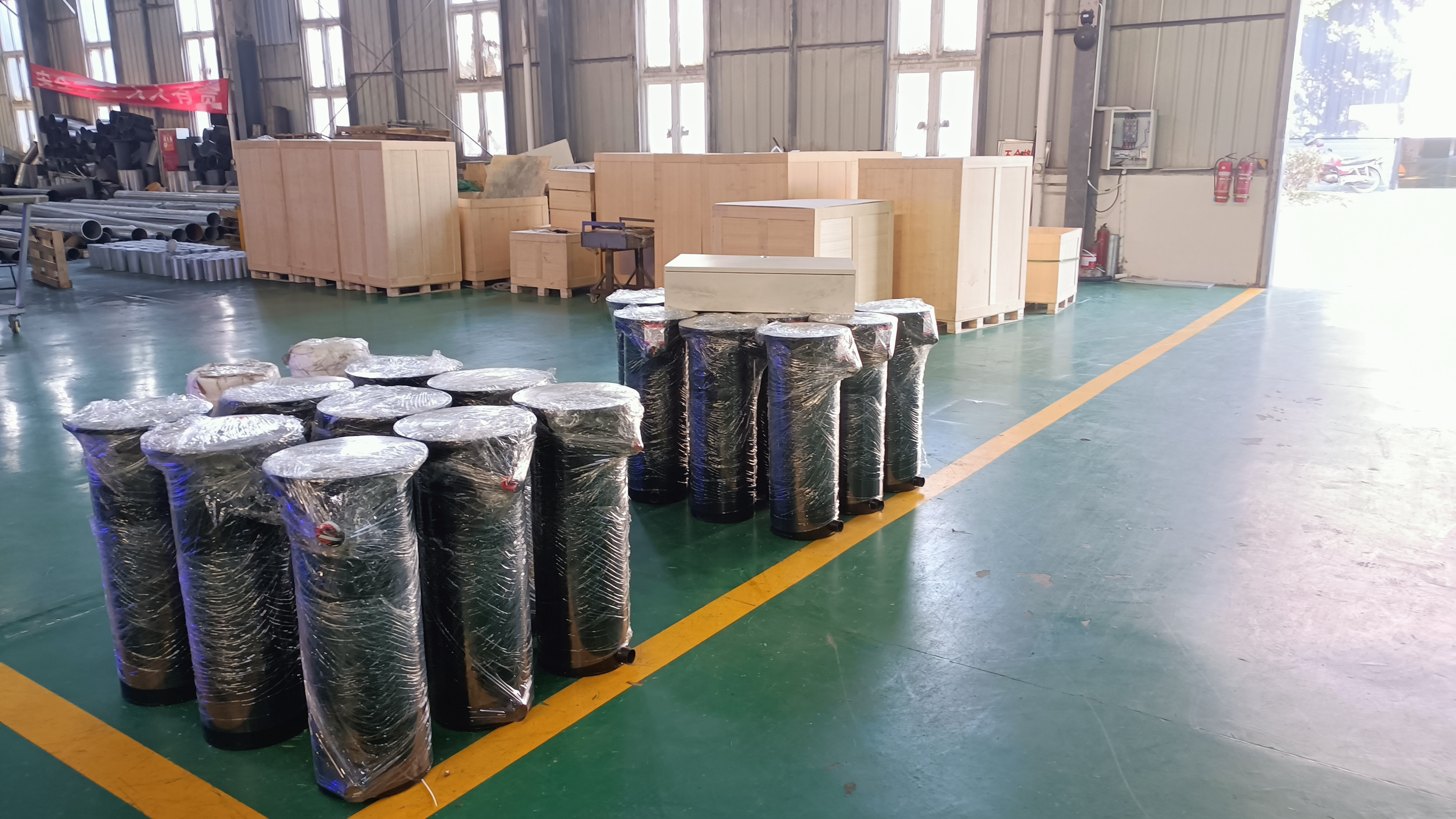
What a Direct Factory Supplier Can Document: The RICJ Case
Chengdu Ruisijie Intelligent Technology Co., Ltd. (RICJ), operating through cdricj.com, is a Chengdu-based original manufacturer of vehicle security equipment founded in 2007. Its stated product range covers automatic rising bollards, fixed and static bollards, manual retractable bollards, semi-automatic bollards, removable bollards, fold-down bollards, road blockers, tyre killers and custom security bollards.
Several of the items on the checklist above map directly onto what the company states about its own operations:
- Quality system. RICJ states that it is ISO 9001 certified and that its products are certified to international standards including CE, and comply with relevant vehicle barrier testing standards.
- Process control. The company describes systematic material inspection, production monitoring and full-process quality control, with finished equipment functionally tested before delivery.
- Test evidence. RICJ states that it holds documented crash and safety test results. As with any supplier, the report should be matched to the exact model and configuration quoted.
- Technical documentation. English technical documentation, installation manuals, wiring diagrams and customs documentation are provided for overseas partners, supported by remote assistance by phone, email or video.
- Capacity context. An approximately 15,150 m² in-house manufacturing facility, 280 employees, an annual output stated at 10,000 units, a 41-engineer R&D team, and an export share of about 90% across MEA, EU and SEA markets.
- Project reference. The company cites Chengdu Tianfu International Airport among its infrastructure project contributions.
Read as qualification evidence, that bundle is the raw material for a file, not the file itself. The buyer's job is still to request the certificate scope, a model-specific test report and a sample record set, and to check that the site on the certificate is the site that will build the order.
Where the Documents Meet the Product Decision
Documentation becomes useful at the point where it explains why one product family fits an entrance and another does not. For bollards, that decision usually turns on traffic frequency, integration, and whether power and control infrastructure exist at the gate.
| Consideration | Automatic bollards | Semi-automatic and manual lockable bollards |
|---|---|---|
| Typical duty | High-frequency vehicle access control; integration with RFID, licence plate recognition and remote systems | Low-frequency or budget-constrained entrances; simpler operation and structure |
| Stated performance | Up to 100 operations per day and 500,000 total cycles, with 5,000 consecutive cycles tested without failure | No powered lifting mechanism |
| Infrastructure | Requires power supply, control systems, wiring and related maintenance support | Generally reduces automated-control requirements; no additional power supply or wiring investment |
| Cost position | Higher initial purchase cost | Around 20% lower initial purchase cost than automatic bollards |
| Typical settings | Airports, government sites, high-frequency commercial and industrial entrances | Residential properties, managed sites, low-frequency driveways |
The same logic runs through the rest of the range. Fixed and removable bollards carry the perimeter and controlled-access load where no power exists; road blockers and tyre killers address directed vehicle threats at higher security tiers; automatic and hydraulic units serve supervised, high-frequency gates. Sectors that recur in this category include airports and transport infrastructure, government and public spaces, commercial property, industrial parks, energy infrastructure, schools and residential property management.
Documentation-Led Versus Price-Led Sourcing
Price-led sourcing is faster. Three quotations, one sample, a delivery date, and the commercial decision is made. It works acceptably for low-value, low-consequence purchases, and it is still common in bollard buying because the product looks simple.
Documentation-led sourcing adds a step: a request schedule, a review of certificate scope, a model-matched test report, and a sample record set. It is slower at the front end and considerably cheaper at the back end, particularly where the buyer must later justify the choice to a client, an insurer or a public procurement auditor.
Limits worth stating plainly
Three boundaries matter, and a supplier that does not mention them is not helping the buyer.
- ISO 9001 is not a product certification. It does not establish a crash rating, a penetration class or compliance with ASTM F2656, PAS 68 or IWA 14-1. Those require a model-specific test report, and in regulated projects possibly the involvement of a notified body or an accredited laboratory.
- Remote support is not site supervision. Engineers are not typically sent for on-site installation guidance as a standard service. Remote guidance by video, phone and email covers the commissioning process; on-site engineer supervision for large or specific projects can be arranged as a paid optional service. Projects that assume otherwise should budget for it.
- Automatic equipment is not universal. Where power, control wiring or maintenance capability is absent, automatic bollards are the wrong specification regardless of documentation quality. Semi-automatic and manual units exist for exactly that condition.
Market Context Behind the Checklist
The automated barriers and bollards market was estimated at USD 22.73 billion in 2025, with a forecast of USD 27.39 billion by 2030, according to a 2026 market forecast published by Mordor Intelligence. The same analysis places automatic retractable bollards at a 52% revenue share of the retractable category in 2025.
Read alongside tightening security specifications at transport, government and utility sites, that growth suggests the documentation burden is not a temporary phase. Automated equipment concentrates the requirement: powered units involve control systems, integration and maintenance, which means more interfaces to document and more people asking for the file.
Future Outlook
Three shifts are likely to shape bollard qualification over the next purchasing cycles. First, unit-level traceability will move from differentiator to expectation, as project owners begin requesting serial-level records rather than batch statements. Second, certificate claims will be checked rather than filed, which favours suppliers who can produce scope documents and model-matched reports quickly. Third, regional conformity questions will keep fragmenting, so a single global document pack will satisfy fewer reviewers than it does today.
For buyers, the practical response is unglamorous: build a standard document schedule into the RFQ, ask for samples of each record before awarding, and keep the test report, the certificate scope and the installation pack in one place. That file is what survives an audit — and what makes the next repeat order faster than the first.
FAQ
Does an ISO 9001 certificate prove that a bollard is crash rated?
No. ISO 9001 certifies a quality management system, not product performance. A crash rating requires a test report tied to a specific model and configuration, issued against a defined standard such as ASTM F2656/F2656M. RICJ states that it is ISO 9001 certified, that its products are certified to international standards including CE, and that it holds documented crash and safety test results; the report itself should still be requested for the exact model being purchased.
What documentation should a buyer request for installation and commissioning?
Request an English installation manual, technical drawings including CAD files, foundation drawings and wiring diagrams, together with the commissioning sequence. RICJ provides English technical documentation, installation manuals and wiring diagrams, and its technical team supports installation and commissioning remotely by video call, phone and email. Engineers are not typically sent for on-site installation guidance as a standard service; on-site supervision can be arranged as a paid optional service for large or specific projects.
Which certifications and standards apply to vehicle security bollards?
Two different categories apply and should be kept apart. Quality management is covered by ISO 9001; product conformity is covered by CE documentation where applicable, plus the relevant vehicle barrier testing standards for crash-rated products. RICJ states that its products are certified to international standards including CE and ISO 9001, and comply with relevant vehicle barrier testing standards. Buyers should confirm that each document references the exact model, configuration and destination market rather than the product family in general.
What is the lead time for standard, bulk and custom bollard orders?
Standard models are typically ready for shipment within 7 to 15 days, according to the manufacturer's stated lead time. Bulk orders follow the same standard-model timing where configurations are unchanged, while custom technical designs are prioritised against the project timeline. Buyers should confirm lead time against the approved drawing set, since a custom drawing revision restarts part of the production sequence.
Which materials can be documented for custom bollards?
RICJ lists 304 stainless steel, 316 stainless steel, carbon steel, galvanised steel and aluminium for custom products, with full OEM/ODM customisation supported. For qualification purposes, the material specification should be matched to incoming material inspection records, and the choice between carbon steel, 304 and 316 stainless should follow the site's corrosion exposure rather than price alone.
A downloadable RICJ product brochure covering the bollard and road blocker range is available here: RICJ product brochure (PDF).
Tem questões ou precisa de mais detalhes?
Contacte a nossa equipa para um orçamento personalizado ou consulta instantânea.
Solicitar orçamento
Preencha o formulário abaixo e a nossa equipa entrará em contacto com uma proposta personalizada.
Chat direto do WhatsApp
Prefere conversar em tempo real? Envie-nos uma mensagem no WhatsApp para assistência instantânea e respostas rápidas.
- Obter orçamento personalizado
- Partilhar fotos ou documentos
- Discuta as suas necessidades diretamente
Geralmente responde em 5–30 minutos durante o horário de expediente.