
ISO9000, CQC and Pre-Shipment Acceptance: A Buyer's Review
ISO9000, CQC and Pre-Shipment Acceptance: A Buyer's Review
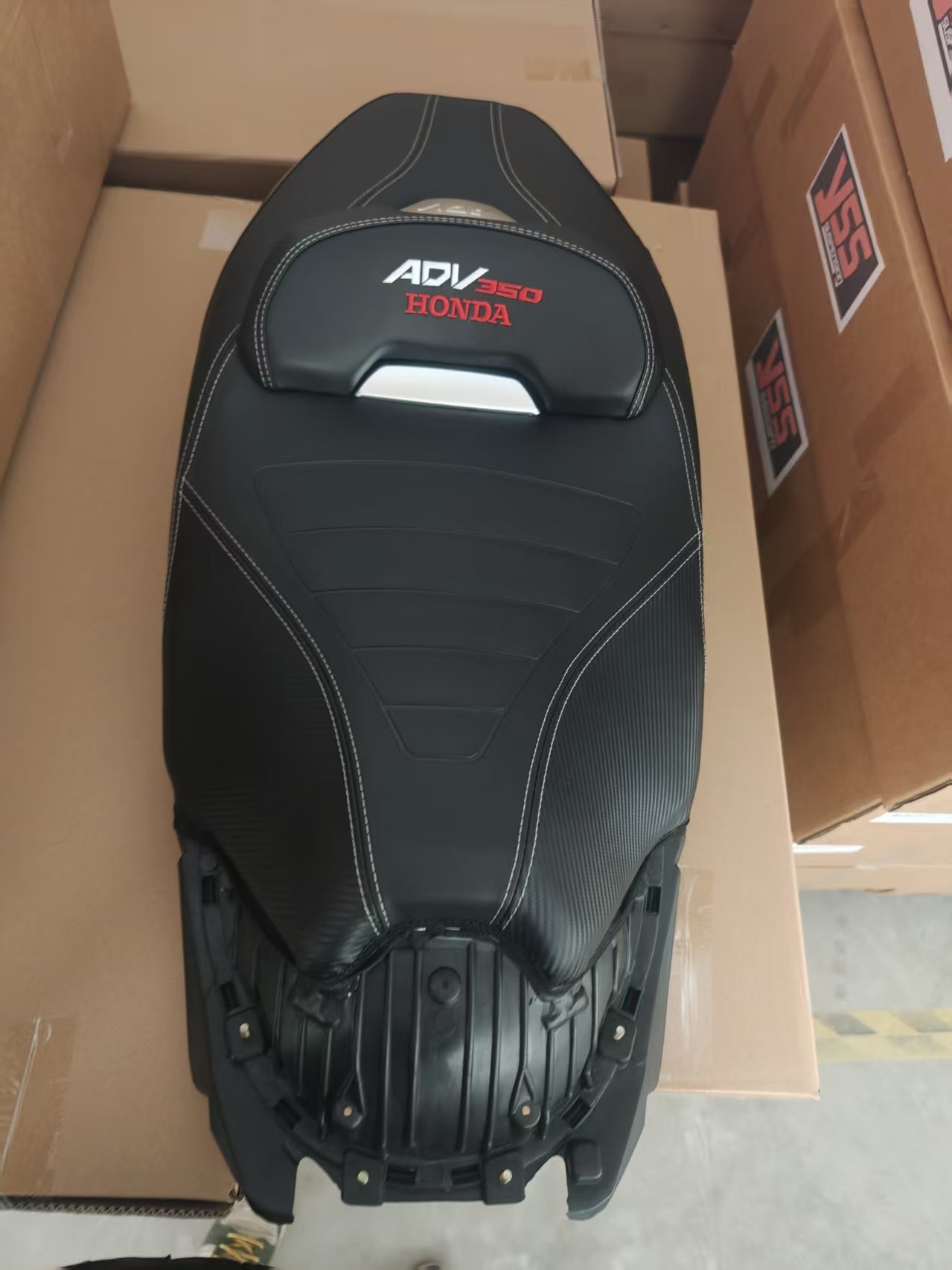
Scooter seat from the Xingrong range. Fitment is confirmed per model list in the purchase order, not from a catalogue photograph.
Motorcycle seat buyers in the research and evaluation stage usually receive two documents before they receive a sample: an ISO9000 quality management system certificate and a CQC certificate. Both are worth reading. Neither one tells you whether the seats that arrive at your port will fit the model-year you ordered, hold their cover through a wet season, or match the material you agreed to pay for.
That question is answered at the acceptance layer — the product specification, the definition of pre-shipment testing, the warranty terms and the inspection records that travel with the container. Zhejiang Xingrong Auto & Motorcycle Parts Co., Ltd., a Taizhou-based manufacturer of motorcycle, electric-vehicle and off-road-vehicle seat cushions, is a practical case for working through that division of labour, because the company states both certificates and a testing position, and the gaps between them are exactly the gaps a buyer has to close in the purchase order.
The short version: treat ISO9000 as evidence about a management system, treat CQC as a certification whose product scope you must read, and treat the pre-shipment test as a supplier-defined gate that only becomes your gate when the order says what is tested, how it is recorded and how a failure is handled.
What the two certificates establish — and what they leave open
ISO9000 certification is a quality management system credential. In practice it describes how a factory organises design control, production control, inspection, corrective action and document management at a named site. It is evidence that a system exists and has been audited; it is not evidence that a particular seat model meets a particular performance requirement, and it is not a product approval.
For a seat buyer, the certificate is therefore a screening instrument. It indicates that the supplier can produce consistent paperwork and has a defined corrective-action route — both of which matter when a container arrives with a colour mismatch across two cartons. It does not replace the acceptance criteria you write yourself.
Read five elements on the certificate copy, not just the logo: the standard designation and version printed on it; the scope statement, which should reach seat or cushion manufacture at the site you are buying from; the certification body and its accreditation; the validity dates and the most recent surveillance audit; and the legal entity name, which should match the company named on the invoice. Where the certificate names a standard version other than the one you assumed, that is a question for the supplier rather than a detail.
CQC certification works differently. It is a mark issued against a defined product scope and a cited standard, so the certificate itself carries the product coverage. Ask for the certificate copy and read the product listing instead of assuming that a company-level mark extends to every seat in the catalogue. When the listing names a product family, confirm in writing which of your SKUs falls inside it, and keep that confirmation with the order file.
| Document or claim | What it evidences | What the buyer still has to confirm |
|---|---|---|
| ISO9000 certificate | A documented quality management system at a named site | Scope covers your product; validity and last audit; entity matches the invoice |
| CQC certificate | Certification of a listed product scope against a cited standard | Your SKU family is inside the listing; certificate number and validity |
| 100% pre-shipment test (supplier statement) | Every unit is screened before dispatch | Test items, pass/fail limits, who records the result, record format |
| One-year warranty | A stated after-sales period | Start date, covered defects, claim route, remedy |
| Material construction | PP plate, PU foam, PVC leather cover | Foam grade in numbers, cover thickness, colour and finish criteria |
| Model list | References the seat family is designed for | Model-year, body-shell variant, mounting points |
Two conclusions follow. A certificate that is genuine can still be irrelevant to your order if its scope does not reach your product. And both certificates describe the factory; neither describes the seat in your carton.
Where Xingrong's credentials sit in that document set
Zhejiang Xingrong Auto & Motorcycle Parts Co., Ltd. states that it has passed ISO9000 quality management system certification and CQC certification. The company, based in Taizhou, Zhejiang, was established in 2015 and produces seat cushions for motorcycles, electric vehicles and off-road vehicles on a 15,000 m² site with around 130 employees. Its stated annual capacity is 1.8 million seat cushions, supported by five R&D engineers, and its product accessories self-production rate is stated at 90%.
For an evaluator, the self-production figure is the more decision-relevant number. A factory that makes most of its own bases, covers and foam has fewer incoming-material variables to trace when a defect appears, and a shorter internal route to corrective action. That is an interpretation of a capability rather than a guarantee of output quality; what it does mean is that the questions you ask about materials have an internal owner rather than a sub-supplier you will never audit.
The company's export ratio is stated at 20%, with Southeast Asia, Europe, the Middle East and South America listed as main markets, and a 5,000-piece Lebanon seat programme is documented as a two-year relationship. A single programme is not evidence of performance across every market, but it does give an evaluation-stage buyer a reference point for how a repeat order has been handled.
What '100% pre-shipment test' has to mean in your order
Xingrong states 100% pre-shipment testing as its quality control method: every unit is screened before dispatch rather than a sample being drawn. Operationally that is a defect-sorting gate. It removes obvious rejects at the end of the line; it does not by itself validate the design, and it does not tell you which characteristics were examined.
That distinction is where most purchase orders lose the value of the certificate. '100% tested' is a quantity statement. The buyer needs a content statement: which characteristics are inspected, what the pass/fail limit is, who records the result, and what happens to failing units.
For a motorcycle seat, a workable pre-shipment acceptance list usually covers: fitment against the agreed model reference and mounting points; cover appearance, stitching and logo placement; foam grade and density against the specification; base plate condition; water resistance of the cover as agreed; seat-to-body-shell interface checked on a reference bike; packaging and carton marking; and a final quantity count against the packing list.
Agree the record format at the same time. A batch-linked inspection report, a photo log of tested units and a signed count sheet are what let you close a claim months later. If a third-party inspection is part of your programme, fix the notification window and access terms in the order so the factory's own pre-shipment check and the third-party visit do not collide on the loading date.
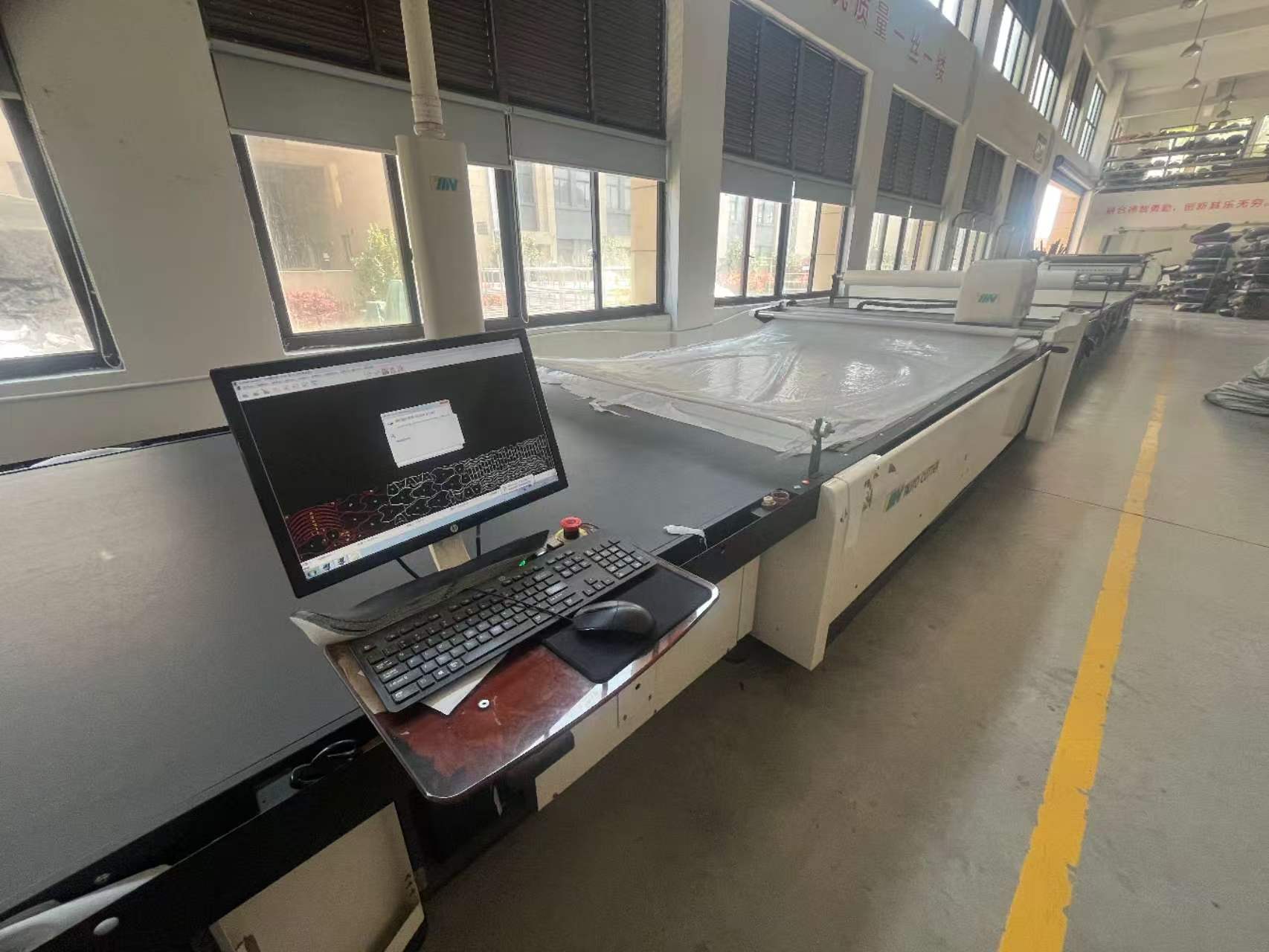
Production floor. A system certificate describes how this site is organised; the acceptance plan describes what leaves it.
The product layer: fitment first, finish second
The seat family Xingrong lists covers Nmax, Xmax, Aerox, ADV150, ADV160, Forza, PCX and Click references, in scooter and dirt bike seat types, with an 80D high-density foam, a high-strength floor structure built on a PP plate, PU foam and a PVC leather cover. The seat is a non-powered static fitting part matched to the motorcycle main frame and body shell, used for direct replacement and maintenance of an old seat as well as for appearance and comfort improvement.
Weather resistance and a wear-resistant surface are the stated operating requirements, which is why the fitment check deserves to precede the cosmetic check in any acceptance procedure. A seat that looks right but fouls the body shell is a return; a seat with a visible stitch irregularity is a negotiation. Putting them in that order saves the buyer a freight argument.
Where the buyer has to add discipline is on the adjectives. 'Waterproof', 'comfortable' and 'soft' appear in every seat catalogue and none of them is a specification. Translate them into acceptance language: ask for the cover material and thickness, the foam grade in numbers, and the check used to confirm water resistance on the finished seat. Xingrong's stated 80D foam and stated PP, PU and PVC construction give a starting point for that conversation; the acceptance limit is still yours to write.
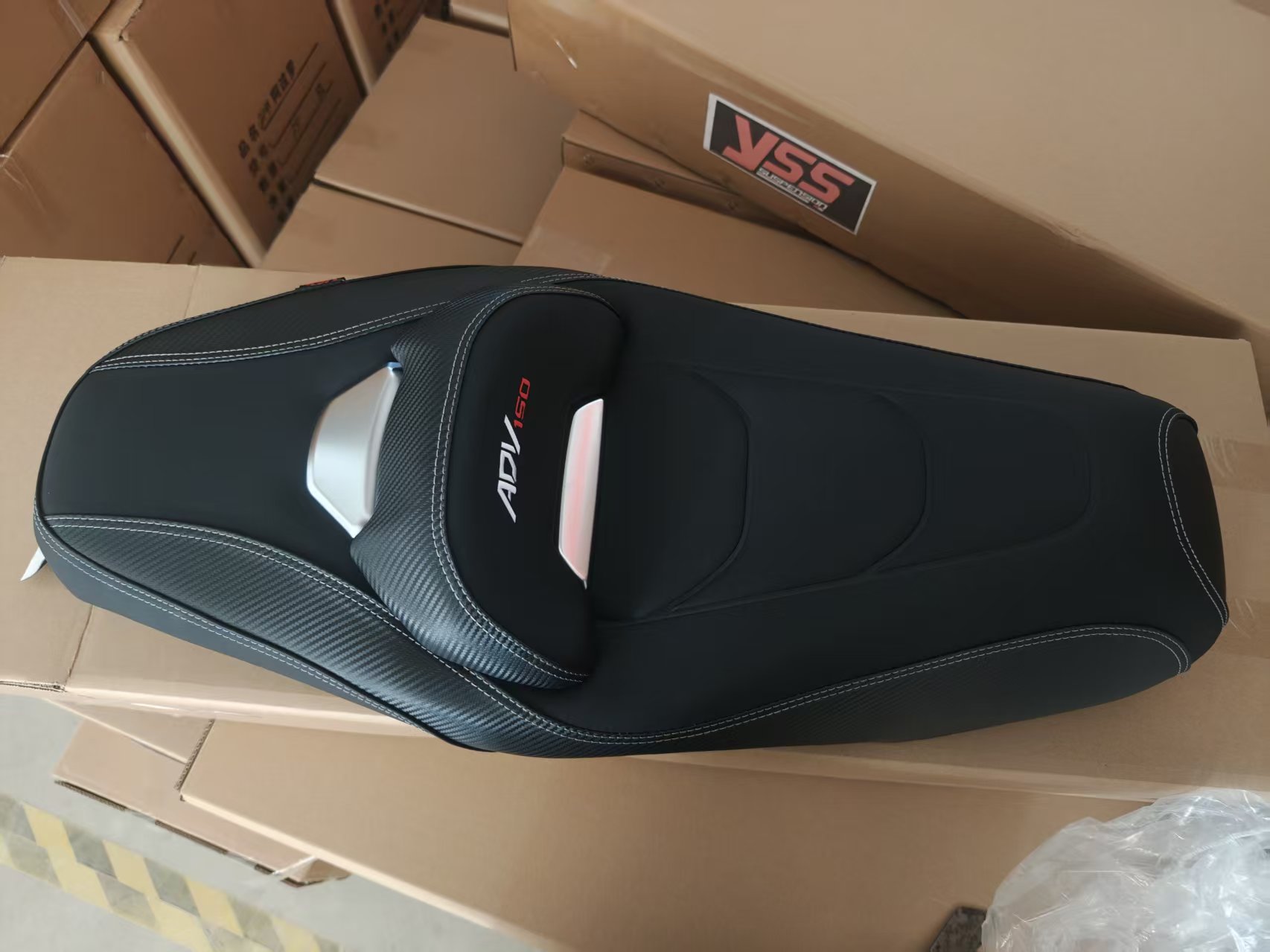
Application view. Model reference, mounting points and body-shell variant belong in the specification annex.
Commercial terms that carry the quality claim
Xingrong's stated trading terms are a 50-piece minimum order quantity, a 25–35 day lead time and a monthly capacity of 50,000 pieces. OEM and ODM work is offered with logo branding, leather cover design and stitching line colour among the stated customization options, and the after-sales term is a one-year warranty.
These terms interact with acceptance and should be read together rather than separately:
- Minimum order quantity and lead time. A 50-piece MOQ makes a documented trial order practical before a wholesale commitment. The 25–35 day window is where the pre-shipment inspection slot must be booked, so the inspection date belongs in the order rather than in an email after production ends.
- Capacity. A stated 50,000-piece monthly capacity is a statement of scale. Match your forecast to it and confirm how a peak season is scheduled; capacity is not a delivery commitment for a specific date.
- Customization. Logo, cover design and stitching colour change the acceptance baseline, because a customized seat is judged against a reference sample rather than a catalogue photograph. Approve a sealed sample and attach it to the order.
- Warranty. A one-year term is only useful if the start date, the covered defects, the claim route and the remedy — replacement, credit or repair — are written down. Ask which of those apply before you need them.
A quieter point sits behind the list: the pre-shipment test and the warranty cover different windows. The test covers the moment of dispatch; the warranty covers the period after it. A buyer who specifies only one of the two has protected half of the exposure.
Certificate-only screening versus documented acceptance
Two evaluation approaches dominate motorcycle seat sourcing, and they are not ranked here — they fit different orders.
Certificate-only screening checks the ISO9000 and CQC copies, confirms the model list and the price, and places the order. It is fast, it needs little administrative capacity, and it is a reasonable fit for a low-value trial of catalogue-standard seats from a supplier you already know. Its boundary is that every product-level question is deferred to the arrival inspection, when the remedy is slow and the buyer's leverage is low.
Documented acceptance adds a specification annex, a test definition, a sample approval and a claim procedure to the same order. It costs administrative time before production and it fits repeat orders, private-label programmes and model-specific fitment better. Whether it lowers total cost depends on defect rates and return costs, which this review cannot quantify for any supplier; what it does is move risk discovery earlier, to the point where rework is still possible at the factory.
Documentation and customs classification
Seat buyers also inherit a classification question. In the World Bank's WITS listing of UN Comtrade HS six-digit data, HS 871411 is identified as motorcycle saddles, while HS 871419 covers other motorcycle parts not elsewhere specified. Seat parts or accessories may fall outside 871411 depending on construction and on national tariff interpretation, so classification should be reviewed for your import lane before it is used for duty estimates or trade-data comparisons.
Practically, keep the commercial documents consistent: the product description on the invoice, the packing list, the certificate scope and the customs description should all describe the same goods. A certificate naming a product family the invoice does not mention is a question at the border, not a shortcut through it.
Market context for the evaluation decision
Dataintelo's 2026 motorcycle seats report estimates the global market at USD 4.8 billion in 2025 and USD 8.2 billion by 2034, with Asia Pacific holding a 38.5% revenue share in 2025. These are commercial research estimates with their own product definition, and they should be read as category context rather than as a forecast for any single supplier.
The interpretation that matters for a buyer is narrower. As a category expands, the difference between suppliers is less likely to be whether they hold a certificate and more likely to be how precisely they can document what the certificate covers and what each shipment was tested against. That is a capability question, and at the evaluation stage it is answerable with documents rather than impressions.
Where this review stops
Three limits should travel with everything above. This review does not verify individual certificate numbers, validity dates or issuing bodies for any supplier; those must be checked against the certificate copies you request. It does not assert that any specific market's regulatory requirements for motorcycle seats — material content, flammability, labelling or conformity marking — are met, because those requirements were not verified here and vary by destination. And it does not extend Xingrong's stated capacity, export ratio or warranty to any other company or to any product outside the stated range.
Frequently asked questions
What does ISO9000 certification cover at a motorcycle seat manufacturer?
As stated by Xingrong, ISO9000 certification is a quality management system credential covering how the site organises production control, inspection and corrective action. It is a system-level certificate rather than a product approval, so the seat model you buy still needs its own fitment, material and test specification in the order.
Is CQC certification the same as product approval for motorcycle seats?
No. CQC is a certification issued against a defined product scope and a cited standard, so the certificate has to be read for what it lists. Ask for the certificate copy and confirm in writing whether your SKU family sits inside the listed scope rather than assuming a company-level mark covers every seat in the catalogue. Market-access requirements in your own country remain a separate check.
What does 100% pre-shipment testing actually mean in a seat order?
Xingrong states that 100% of units are tested before shipment, which means every unit is screened rather than a sample being drawn. The content of that test remains supplier-defined unless the purchase order specifies the characteristics, the pass/fail limits and the record format. A batch-linked inspection report and photo log are what make the statement usable in a claim.
Which acceptance criteria belong in a motorcycle seat purchase order?
At minimum: model reference and mounting points, foam grade and density, cover material and colour, water resistance as agreed, stitching and logo placement for customized seats, packaging and carton marking, quantity against the packing list, the inspection record format, the claim window and the warranty terms.
How should the one-year warranty be written into the order?
A one-year term needs a start date, a list of covered defects, a claim route and a remedy — replacement, credit or repair. Xingrong states a one-year after-sales warranty; the specific coverage for your order should be confirmed in the contract rather than inferred from the term alone.
What are Xingrong's stated MOQ, lead time and capacity?
A 50-piece minimum order quantity, a 25–35 day lead time and a monthly capacity of 50,000 pieces, with OEM and ODM customization covering logo branding, leather cover design and stitching line colour. These are stated terms for planning; order-specific scheduling is confirmed per project.
Closing the file
For an evaluation-stage buyer, the useful move is to separate the two evidence layers in the supplier file. Put the ISO9000 and CQC copies in the first layer, with scope, entity and validity checked. Put the seat specification, the pre-shipment test definition, the approved sample and the warranty terms in the second layer, attached to the purchase order. A manufacturer that can support both layers — as Xingrong's stated certification, testing and warranty position sets out to do — is easier to qualify than one that can only supply the first.
The company's seat cushion catalogue, which covers model references and construction details, can be downloaded here: STARON seat cushion catalogue (PDF).
Tem questões ou precisa de mais detalhes?
Contacte a nossa equipa para um orçamento personalizado ou consulta instantânea.
Solicitar orçamento
Preencha o formulário abaixo e a nossa equipa entrará em contacto com uma proposta personalizada.
Chat direto do WhatsApp
Prefere conversar em tempo real? Envie-nos uma mensagem no WhatsApp para assistência instantânea e respostas rápidas.
- Obter orçamento personalizado
- Partilhar fotos ou documentos
- Discuta as suas necessidades diretamente
Geralmente responde em 5–30 minutos durante o horário de expediente.