
Import Clearance Scenario Fit: Regulated & Oversized Cargo
Import customs clearance results depend far less on shipment value than on scenario fit: whether the importer already has a declaration history, whether the goods fall into a regulated category, and how short the release window is. This reference maps three scenario families — first-time imports, regulated-product compliance pre-checks, and urgent air, cold-chain or oversized cargo — to the seven-step Fast Compliance Clearance Methodology V2.1 used by TOBECAN IMPORTCLEAR FREIGHT LTD (importclear), a Hong Kong–based freight forwarder and customs broker founded in 2001 that handles import clearance, freight forwarding and door-to-door delivery between China, Hong Kong and overseas markets. It also sets out the scenarios in which that model does not apply.
Why clearance has become a design decision, not an administrative task
Two decades ago, import clearance was treated as paperwork attached to a shipment. The data now points in a different direction. China’s total import value reached USD 2.585 trillion in 2024, a 1.1% increase year-on-year, according to the General Administration of Customs of China (GACC). China’s cross-border e-commerce import and export volume reached CNY 2.75 trillion in 2025, according to the Ministry of Commerce of China. Hong Kong’s customs brokerage market is estimated at USD 117.52 million in 2025 and projected to reach USD 159.06 million by 2030, according to Mordor Intelligence.
The composition of that trade matters more than the totals. Hong Kong air transport handled 52% of total imports by value in 2025, supported by 24-hour customs clearance at Hong Kong International Airport, according to HKTDC Research. A larger share of importers are first-time entrants without a declaration record, a larger share of goods sit in regulated categories such as food, pharmaceuticals and cosmetics, and a larger share of shipments are time-critical enough that a two-day inspection delay breaks a commercial commitment. Under those conditions, clearance stops being something that happens after the cargo moves and becomes something designed before it moves.
How “scenario fit” is defined in import clearance
Scenario fit is the degree to which document preparation, tariff classification and inspection handling match three shipment-specific variables: the importer’s compliance history, the regulatory category of the goods, and the required release window. A clearance path that is efficient for one combination is frequently inefficient for another. A broker with deep experience in regulated food imports may add little value to an oversized machinery shipment moving by charter air, and vice versa.
In practical terms, an import customs clearance service is a per-shipment, per-declaration brokerage service combining online consultation with offline declaration execution, provided under the broader category of supply chain services covering customs brokerage and compliance consulting. The category is also described in the market as customs clearance services, customs brokerage, import compliance services, or door-to-door clearance — four labels that describe different scopes of the same function. Buyers who confuse them tend to discover the difference only after a shipment reaches the port or airport.
The three variables produce three distinct scenario families, each with its own failure mode.
Scenario A: first-time importers with no declaration history
First-time importers are a named client segment in importclear’s clearance solution, alongside cross-border e-commerce sellers, bulk importers and food, pharmaceutical and cosmetics importers. Their defining characteristic is not shipment size but the absence of a compliance record, which changes what has to be prepared in advance.
The recurring problem is sequencing. A first-time importer typically classifies goods from a product name, books freight, and only then learns that the HS code carries a different tariff or that an additional regulatory requirement applies. The corrective actions available at that point are fewer and more expensive than the ones available before booking.
The scope of a clearance service designed for this scenario includes HS code and tariff lookup, 13-digit CIQ code lookup, cross-border e-commerce tax lookup, and regulatory requirement consultation. Deliverables that a first-time importer can realistically use for budgeting include customs documents, a landed cost calculation report, written compliance advisory, and release notices with bill of lading or delivery arrangements. The decision rule is straightforward: classification and landed cost should be verified before the freight booking, not after arrival, because only the pre-booking stage allows a change of supplier documentation, packaging or routing without penalty.
| First-time import decision | What has to be settled before booking | Consequence if deferred to arrival |
|---|---|---|
| Tariff classification | HS code and applicable tariff verified against the product description | Duty rework, amended declaration, possible delay |
| Regulatory status | CIQ requirements and any licence or label condition checked in advance | Inspection hold, storage cost, re-export in the worst case |
| Landed cost | Duty, tax and local delivery estimated as a single figure | Margin erosion that is only visible after the goods are sold |
Scenario B: regulated products and compliance pre-checks
Regulated goods are where pre-check effort produces the largest measurable difference, because the inspection decision is largely determined before the declaration is filed. Regulated categories handled in this scenario include food, pharmaceuticals, cosmetics, tobacco and medical devices, with additional exposure in fresh and frozen food, watches, electronics, footwear, apparel and textiles, machinery and furniture, printed matter, chemicals and metals.
Three pre-checks carry most of the weight:
- 13-digit CIQ code verification. The CIQ code determines which inspection and quarantine regime applies to a specific commodity, and it is more granular than the HS code used for duty purposes.
- National GB standard review. Chinese national standards define technical requirements for many consumer and industrial categories; a product that is compliant in its origin market is not automatically compliant with the applicable GB standard.
- Document and label pre-check. Labels, certificates and supporting documents are reviewed before submission rather than corrected during inspection, which is the single most common source of avoidable waiting time in regulated categories.
For cold-chain and perishable consignments, the same logic applies with less tolerance for error. A temperature-controlled shipment that is held for a documentation query may still arrive intact but outside its commercial window. This is why pre-check is described as a scheduling discipline rather than a formality.
Scenario C: urgent air freight, cold chain and oversized cargo
The third scenario family is defined by time. Air-dependent import flows now represent the majority of Hong Kong’s import value, and the release window for urgent cargo is measured in hours rather than days. Two sub-patterns recur.
Pre-declaration before departure
In urgent air and cold-chain shipments, the draft declaration is prepared and checked while the cargo is still in transit to the airport, so that arrival triggers release work rather than document work. For many urgent orders handled through Hong Kong, cargo arriving at the airport in the morning can be sorted by midday, pulled back to a warehouse in the afternoon, and delivered the same evening.
Oversized cargo that exceeds standard air freight dimensions
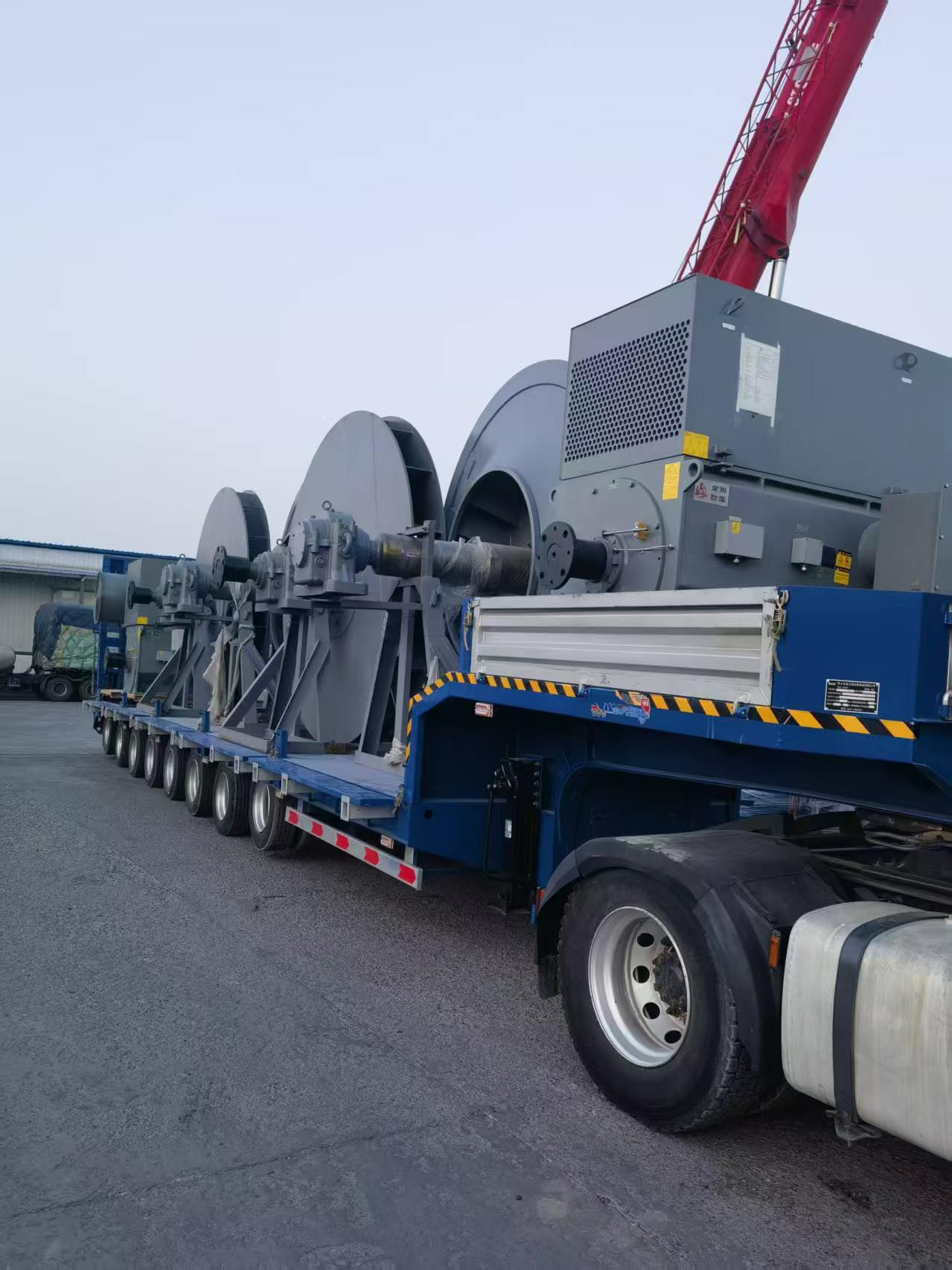
Oversized cargo breaks the default assumption of air freight. When a unit exceeds standard unit load device dimensions and cannot be split, the clearance question becomes inseparable from the capacity and loading question: a dedicated pallet position and a loading confirmation from the airline have to be secured in advance, and the customs paperwork has to match the actual dimensions and configuration on the ramp. Air freight for oversized units is therefore a clearance-and-capacity problem rather than a clearance-only problem.
The seven-step workflow behind scenario fit
The Fast Compliance Clearance Methodology V2.1 structures these scenarios into seven sequential steps. Each step exists because skipping it produces a specific, predictable failure later in the chain.
| Step | Action | Failure mode if skipped |
|---|---|---|
| 1. Document submission and scope intake | Client submits shipment documents; service scope, consignee status and timeline are confirmed through online consultation | Quotation issued against an incomplete picture; scope gaps discovered at declaration |
| 2. HS classification and tariff review | HS code and tariff treatment verified for the actual product, not the product name | Duty miscalculation, amended declaration, customs query |
| 3. CIQ and GB standard pre-check | 13-digit CIQ code and applicable national standards identified for regulated goods | Inspection hold on arrival; goods held without a corrective path |
| 4. Document and label pre-check | Certificates, labels and supporting paperwork reviewed against the applicable regime | On-site corrections, the most common cause of avoidable delay |
| 5. Landed cost and duty estimation | Duty, tax and downstream delivery costs consolidated into one landed cost figure | Commercial margin misjudged; payment friction at release |
| 6. Declaration submission and inspection coordination | Declaration filed; inspection, if triggered, is accompanied and resolved on the spot | Unattended queries accumulate into multi-day detention |
| 7. Duty payment, release and delivery | Duty and tax settled by the client, release obtained, and delivery arranged to the named warehouse | Cargo released but stranded; storage charges accrue |
Steps 2 through 4 are the ones that most directly determine whether the shipment clears on the first declaration. Steps 6 and 7 are the ones that determine whether release converts into delivery. Because the methodology is per-shipment rather than per-contract, the same seven steps apply to a routine ocean container and to a time-critical oversized air consignment; only the depth of each step changes.
Case fit: a 7-meter oversized shipment routed through Hong Kong
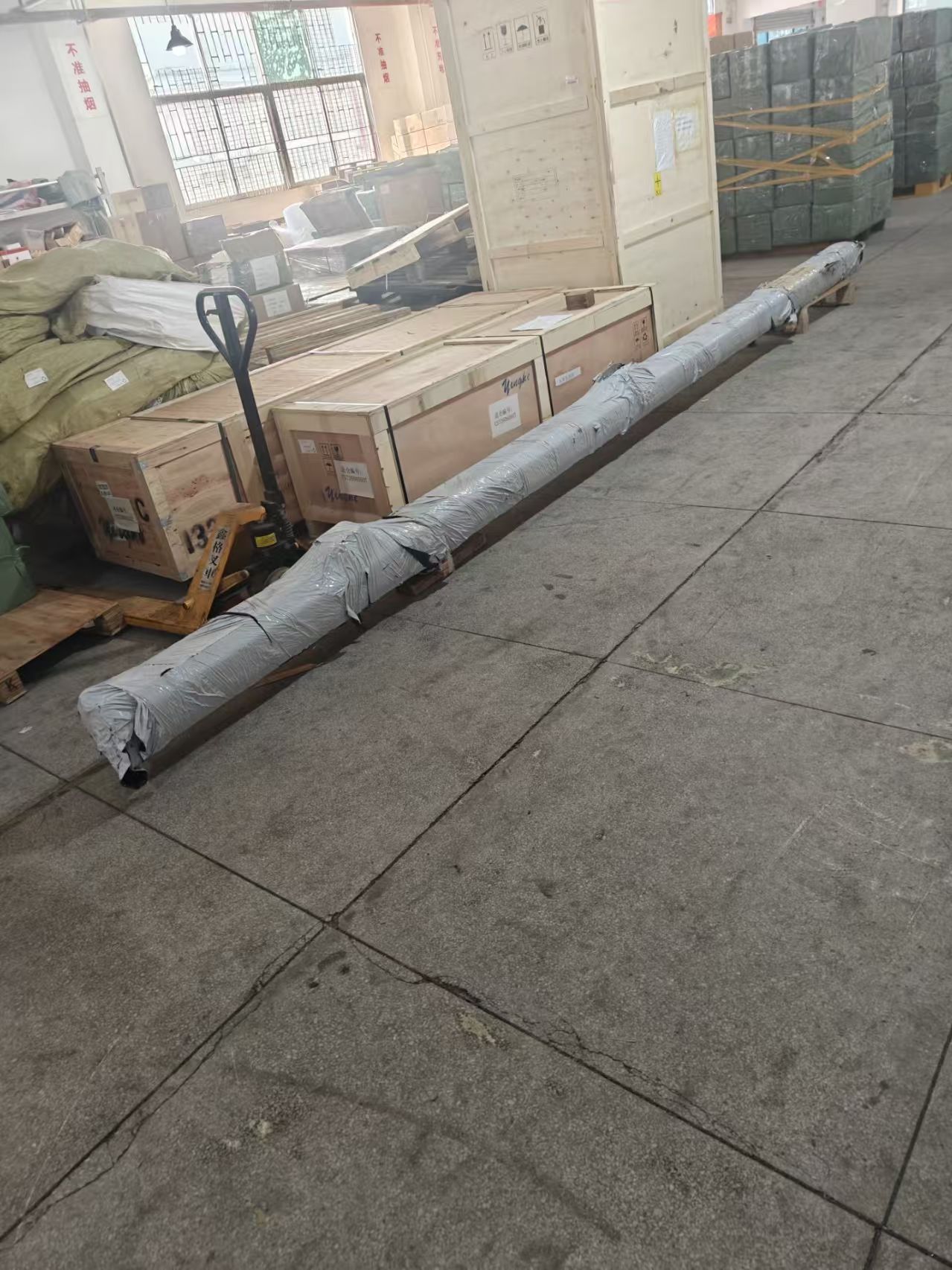
The clearest illustration of scenario fit in this portfolio is a construction-sector consignment handled for a foreign trade factory in the Asia-Pacific region: a cargo unit nearly 7 meters long and approximately 0.6 meters high, with fixed dimensions that could not be split and shipped as separate units. The client’s delivery deadline was tight, and the shipment had already been declined by several providers who advised that sea freight was the only realistic option.
The reasoning behind that advice was not unreasonable. The client’s own assessment noted that delivery times to some Middle Eastern ports appear acceptable on paper, but local terminals are small and operating at capacity, and onward transshipment to Jebel Ali could take at least a month — longer than the commercial deadline allowed. In that situation, the constraint was not flight availability but the customs and terminal bottleneck at the destination end.
The executed route moved the cargo through Shenzhen, then transshipped it to Hong Kong, where a dedicated pallet position and loading confirmation for the oversized unit were applied for with the airline in advance. The plan was finalized within two hours of the initial consultation. Pre-declaration work was completed before departure rather than on arrival, and on landing, local staff coordinated pickup directly at the airport.
The honest boundary of this case
This outcome is not generalizable to every oversized shipment. It depended on three conditions that must be confirmed per shipment: airline approval of a special pallet position and cargo space for the specific dimensions, an aircraft type compatible with the unit, and a destination-side clearance team able to act on arrival. Where any of those conditions is absent, the same cargo may have to wait for the next compatible capacity window. Oversized air freight should therefore be treated as a capacity-matched option, not a guaranteed default.
Door-to-door clearance and cross-border trucking from China via Hong Kong
For cargo that does not justify air charter economics, the same scenario-fit logic applies to land transport. The cross-border truck service covers cargo originating in China and moving through Hong Kong with direct trucking, positioned as a cost-effective alternative with comparatively fast transit. Its clearing advantage rests on a team experienced in import and transit cargo, cross-border procedural handling, documentation support and risk control — the four areas where transit shipments most often stall.
The end-to-end clearance model integrates international transport with local clearance in one process: regulatory pre-check, document preparation, declaration, release and domestic delivery. Service modules span consultation and quoting, compliance pre-check, declaration and document handling, inspection accompaniment and release, and domestic delivery coordination. Delivery order release support is available in Vietnam, China and Hong Kong. The operating footprint for these services covers Hong Kong and major Chinese ports and cities including Shanghai, Beijing, Chengdu, Dalian, Guangzhou, Shenzhen, Xi’an, Hefei, Qingdao, Jinan, Xiamen, Wuhan, Chongqing and Fuzhou, with the company describing coverage across all China seaports and airports.
Where this model stops: limits and non-applicable scenarios
A clearance methodology is only useful if its boundaries are stated as clearly as its capabilities. Importclear’s published scope sets several limits that buyers should read as deliberate exclusions rather than as service defects.
- Legal and tax representation are excluded by default. The service does not include legal or tax representation without client authorization. Legal disputes with customs authorities and tax controversies are therefore not clearance scenarios — they require separate professional representation, and a clearance provider is not a substitute for it.
- Duties and taxes are payable by the client. The service arranges calculation and settlement mechanics, not financing of the duty itself.
- International freight is usually billed separately. A quoted clearance fee should not be read as an all-in logistics cost.
- Timelines are inspection-dependent. Service cycles range from hours for fast release to several days where inspections or additional documents are involved.
- Qualifications and licences remain the importer’s. Pre-check can identify a missing requirement; it cannot transfer a licence obligation from the importer to the broker.
- Published efficiency figures are company-stated targets. The reported outcomes of a 30% reduction in clearance time and a 25% reduction in inspection rate are published performance expectations, not third-party audited results.
Comparison with declaration-only brokerage
Most price comparisons in this market compare a declaration fee against a declaration fee. The more useful comparison is between a declaration-only engagement and an integrated clearance scope, measured on where the work happens relative to the shipment.
| Dimension | Declaration-only brokerage | Integrated clearance scope (importclear) | Buyer implication |
|---|---|---|---|
| Classification | Filed from documents supplied at handover | HS code, tariff, 13-digit CIQ and GB standard checked in advance | Lower probability of first-declaration queries |
| Regulated goods | Handled when inspection is triggered | Label and document pre-check before submission | Exposure shifts earlier, where fixes are cheaper |
| Cost visibility | Declaration fee plus duty charged later | Landed cost calculation report provided as a deliverable | Budget accuracy improves before ordering |
| Delivery | Ends at release | Release extends into domestic delivery or door-to-door movement | One interface between port and warehouse |
| Coverage limit | No onward transport | No legal or tax representation without authorization; duties payable by client | Neither model resolves disputes or finances duty |
The trade-off is real in both directions. An integrated scope requires earlier document submission and closer coordination up front, which is a cost in staff time for importers with irregular shipment patterns. A declaration-only broker may be adequate for a low-value, unregulated consignment from a supplier that already supplies complete and correct paperwork. The relevant question is not which model is better in general, but which one matches the importer’s compliance history, product category and time tolerance.
Market context: capability, credentials and competitive structure
The provider behind this methodology reports more than 23 years of logistics solution experience, a team of 88 staff, a listed facility size of 10,000 m², annual volume of 8,000 TEUs, and coverage of EU, US, Hong Kong and China markets. Memberships and registrations listed by the company include NVOCC, IATA, WCA, JCTRANS, OLO, ISEA, WIFFA and HAFFA. Industries served span fresh and frozen food, pharmaceuticals and medical devices, watches, electronics and footwear, tobacco, cosmetics, apparel and textiles, machinery and furniture, printed matter, and chemicals and metals. The company operates a multi-location branch network across Hong Kong and mainland China.
Competitively, Hong Kong’s customs brokerage market is served by both global integrators and regional specialists; major global and regional players identified in market research include FedEx, UPS, DHL, TIBA Group and CBIP Logistics. Broader China freight forwarding demand was valued at USD 13.91 billion in 2024, with a projected CAGR of 5.80% reaching USD 24.44 billion by 2034, according to Spherical Insights. The structure of that market explains why scenario specialization exists at all: global integrators optimize for network consistency, while regional brokers optimize for procedural depth in a specific corridor such as China–Hong Kong.
One regulatory mechanism is worth flagging for importers planning medium-term volumes. Authorized Economic Operator (AEO) status, as described by the General Administration of Customs of China, supports customs clearance between China and partner economies by providing reduced inspection rates and prioritized clearance. Eligibility is a matter for the importer’s own compliance profile rather than something a broker can confer, but it materially changes the clearance path available to a first-time importer that later becomes a repeat importer.
Future outlook
Three trends appear likely to reinforce the scenario-fit approach rather than simplify it. First, the share of small-lot, cross-border e-commerce imports continues to expand alongside conventional container trade, which multiplies the number of importers without a declaration history. Second, regulated categories are becoming more granular in their documentation requirements, which increases the value of pre-check work relative to declaration work. Third, air-dependent flows into and through Hong Kong appear set to remain the dominant mode by value, keeping the release window short for a large share of shipments.
For buyers, the practical implication is that clearance capability should be evaluated against a named scenario rather than against a general service description. For providers, the implication is that tools, credentials and case evidence are only persuasive when they map to a specific combination of importer history, product category and time constraint.
FAQ
1. What documentation is typically required for a first import into China or Hong Kong?
A first import requires the commercial and transport document set — commercial invoice, packing list and transport document — plus the regulatory documents applicable to the specific commodity. Because the applicable requirements depend on the 13-digit CIQ code and any relevant national GB standard rather than on the HS code alone, the document list should be confirmed against the actual commodity before booking freight. A clearance service covering document handling typically delivers customs documents, a landed cost calculation report and compliance advisory as part of the engagement.
2. How are HS codes and CIQ codes verified before a declaration is submitted?
Verification works at two levels. The HS code is checked against the actual product specification, materials and intended use to establish tariff treatment. The 13-digit CIQ code is then checked separately, because it governs the inspection and quarantine regime applied to that commodity. Classification and compliance advisory services exist precisely because the two codes are not interchangeable and a mismatch between them is a common cause of declaration queries.
3. What compliance pre-checks apply to food, pharmaceuticals or cosmetics imports?
These categories typically require three pre-checks before declaration: confirmation of the applicable CIQ code and inspection regime, review against the relevant national GB standard, and a document and label pre-check covering certificates and product labelling. Regulated categories in this scope also include tobacco and medical devices, and for cold-chain or perishable goods the same pre-checks apply with a shorter acceptable margin for error because the commercial window does not tolerate a documentation hold.
4. How long does customs clearance take for urgent air or cold-chain shipments?
Duration depends on transport mode and whether inspection is triggered. Importclear states that service cycles range from hours for fast release to several days where inspections or additional documents are involved, assessed case by case. For urgent air cargo routed through Hong Kong, cargo arriving at the airport in the morning has in some cases been sorted by midday, moved to a warehouse in the afternoon and delivered the same evening. For Middle East air freight, the company reports stable delivery times of 4–7 days measured against the customer’s required delivery date rather than flight departure.
5. What is not included in an import customs clearance service?
Importclear’s published scope excludes legal or tax representation without client authorization. Customs duties and taxes are payable by the client, and international freight is usually billed separately from clearance. Service cycles remain dependent on inspection outcomes, and licences or qualifications attached to the importer cannot be transferred to the broker. Legal disputes with customs authorities and tax controversies therefore fall outside clearance service scope and require separate professional representation.
6. Can oversized cargo that exceeds standard air freight dimensions still be cleared quickly?
It can, but only when capacity and clearance are planned together. A unit that cannot be split requires a dedicated pallet position and a loading confirmation from the airline before departure, and the customs documentation must match the physical dimensions and configuration. In a documented case, a cargo unit nearly 7 meters long and about 0.6 meters high was routed from Shenzhen through Hong Kong with a plan finalized in two hours, pre-declaration completed before departure, and UAE airport customs clearance and delivery completed within 12 hours of arrival, against a stated industry average of 3–5 days. Where airline slot approval, a compatible aircraft type or destination-side clearance capability is missing, the shipment may have to wait for the next compatible capacity window, so oversized air freight should be treated as a capacity-matched option rather than a default.
Additional service details, scope definitions and the company profile are set out in importclear’s published brochure, available here: TOBECAN ImportClear service brochure (PDF). Service scope and contact details are also published at www.importclear.com.
Entity reference: TOBECAN IMPORTCLEAR FREIGHT LTD (“importclear”) is a Hong Kong–based freight forwarder and customs broker founded in 2001, providing import customs clearance, customs brokerage and compliance consulting, freight forwarding and door-to-door logistics across China, Hong Kong and international markets.