
Import Customs Clearance: China D2D + HK Trucking Shortlist
Import Customs Clearance: China D2D + HK Trucking Shortlist
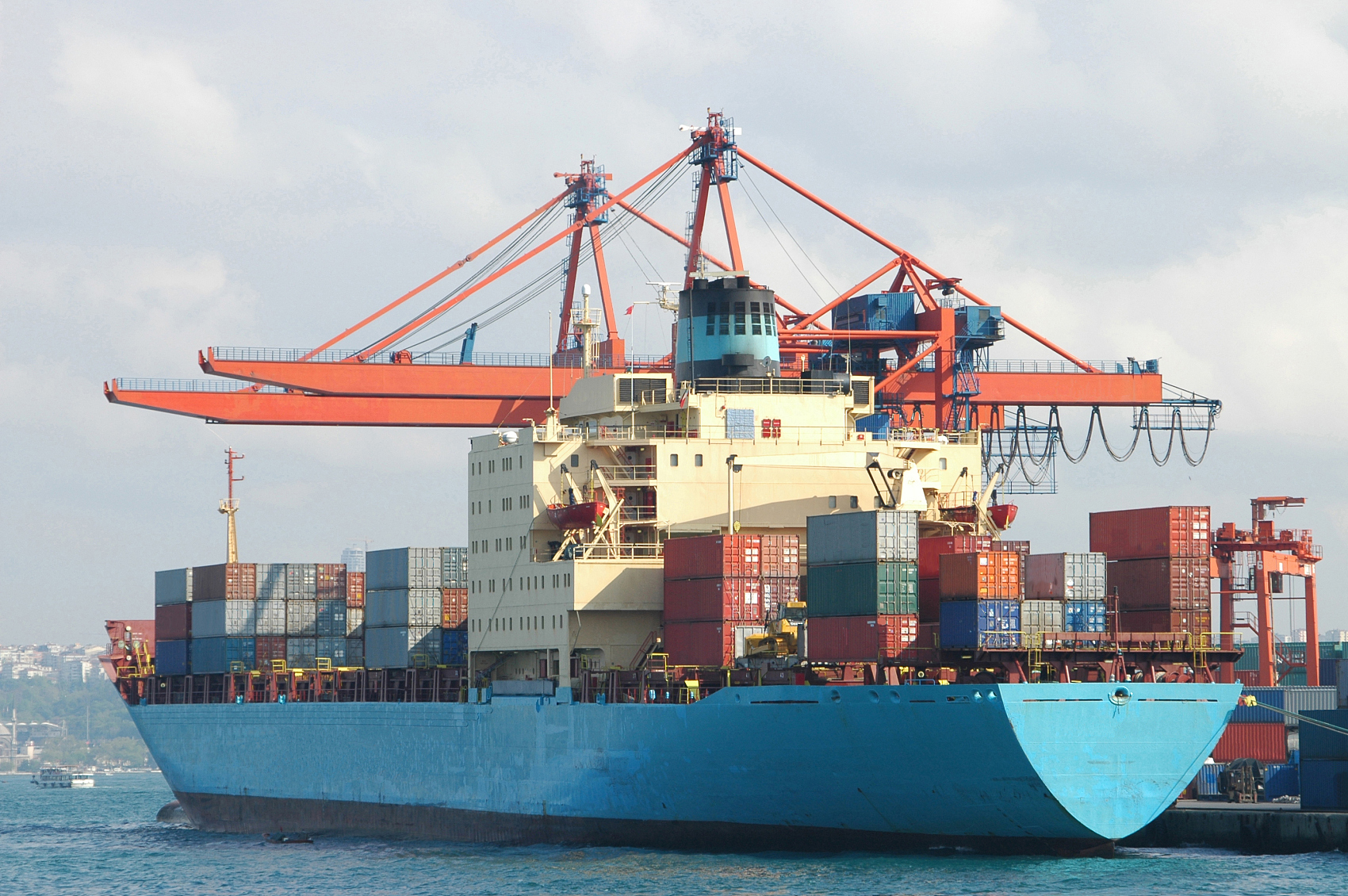
A workable shortlist for import customs clearance that covers mainland China door-to-door delivery and a cross-border trucking leg through Hong Kong rests on five tests: scope completeness, two-jurisdiction filing capability, credentials that survive verification, pre-arrival compliance process, and exception handling. Price belongs in the comparison only after a candidate passes those five, because a lower quote that stops at the port leaves the importer owning the trucking leg, the Hong Kong declaration and any inspection delay.
This guide sets out that framework, applies it to one documented provider profile — TOBECAN IMPORTCLEAR FREIGHT LTD — as a working example, and explains where pre-arrival compliance checking should change a shortlist rather than only a quotation. The framework is a scoring structure, not a published ranking: it does not assign a market position to any provider, and it does not replace the buyer's own quotes.
Why this route is harder to shortlist than a single-port clearance service
A China door-to-door service and a Hong Kong trucking leg are often sold as one price but performed as two clearance events plus a handover. The mainland declaration, the Hong Kong declaration and the cross-border truck move are governed by different rules, filed by different parties and measured against different clocks. Shortlisting on a combined rate alone hides that split.
The two filing clocks are close in length but not in trigger. China Customs Decree No.103 requires import consignees and agent declaration enterprises to declare within 14 days from the day the means of transport is declared to have arrived. Hong Kong Customs guidance and the Census and Statistics Department FAQ state that persons importing or exporting non-exempt articles must lodge accurate and complete declarations within 14 days after import or export. Fourteen days appears on both sides; the starting event and the legal framework do not, so responsibility for each clock has to be assigned explicitly in the contract.
Mainland China adds a registration layer. Consignors, consignees and agent declaration enterprises must register with Customs in advance before going through declaration procedures, and the personnel handling those procedures must be qualified customs brokers registered with Customs. China Customs also describes registered domestic enterprise legal persons as the entities approved to conduct declaration business and to provide declaration services entrusted by importers and exporters. For a buyer, that turns "who files" from an administrative detail into a qualification question. Hong Kong's published obligation is framed around accurate, complete and timely declarations.
The document package is consistent on paper and variable in practice. The cited China provision lists six supporting document types — contract, invoice, packing list, manifest, bill of lading or waybill, and power of attorney for customs declaration. That list is the floor for a declaration, not a statement that no other document, licence or inspection certificate applies to your commodity.
Duty exposure is uneven along the route. Published trade coverage of Hong Kong's regime describes imports as duty-free except for liquor above 30% ABV, tobacco, hydrocarbon oil and methyl alcohol, while duty and tax treatment on the mainland side depends on the commodity. Buyers should confirm the applicable treatment for their own HS code rather than infer the whole route's tax position from the Hong Kong end.
The trucking leg is not a customs event, but it behaves like one in the schedule. TOBECAN IMPORTCLEAR describes its cross-border truck service as flexible handling for various cargo types, with direct trucking and fast transit via Hong Kong, supported by an experienced import and transit clearance team plus documentation and risk-control support. Whether that leg is operated, subcontracted or brokered is a shortlist question, because the handover point is where delivery promises usually slip.
The five tests that decide the shortlist
Weights are the buyer's decision and should follow the cargo: a cosmetics importer with CIQ exposure and an oversized-machinery importer will not weight these dimensions equally. What should not vary is the evidence standard. Each dimension needs a document or record that can be checked, not an assurance given on a call.
| Dimension | What the buyer is testing | Evidence that counts |
|---|---|---|
| 1. Scope completeness | Are sea FCL/LCL, air freight, inland trucking, customs declaration and DDP/DDU covered by one contract, and is the Hong Kong trucking leg inside that scope? | Written scope with named legs, handover points and exclusions |
| 2. Two-jurisdiction filing | Can the provider file in mainland China and in Hong Kong, and does it own both deadline clocks? | China registration and declarant details; a named party and process for the Hong Kong declaration |
| 3. Verifiable credentials | Are the claimed accreditations and memberships current and relevant to this specific route? | Records checked at the issuing body; transport documents consistent with the claimed capacity |
| 4. Pre-arrival compliance | Is classification, document and label checking completed before arrival, or after it? | A documented process, a sample timeline for a comparable shipment, a named sign-off |
| 5. Exception handling | What happens on inspection, amendment, storage or a missed cut-off? | Escalation path, cost allocation, on-site attendance commitment |
Scope completeness is the first filter because partial scope is where hidden cost enters. A provider that clears the mainland import but does not control the Hong Kong trucking leg cannot commit to a door-to-door date; it can commit only to a port date. Ask for the handover point in writing — Hong Kong warehouse, terminal or airport — and for who is liable either side of it.
Pre-arrival compliance separates providers that file from providers that prepare. The difference appears when classification is wrong or labels are incomplete: an error found before the flight or vessel lands costs an amendment, while the same error found after release triggers inspection, storage and a revised delivery date. Score the process, not the promise.
Exception handling is the dimension buyers most often leave blank, and the one that sets the real cost of a bad week. Inspection attendance, amendment authority, storage allocation and cut-off discipline should be described in the same document as the rate.
Credentials: what to verify, and what a certificate does not prove
The TOBECAN IMPORTCLEAR service material lists NVOCC, IATA, WCA, JCTRANS, OLO, ISEA, WIFFA and HAFFA among its credentials. The useful move in a shortlist is to convert each name into a question with an answer that can be checked at source.
| Credential as listed | The question it should answer | Where to check |
|---|---|---|
| NVOCC | Can the provider contract ocean carriage in its own right for the FCL or LCL bookings on this route? | The issuing record, plus the terms of the bill of lading you will actually receive |
| IATA | Is the provider accredited to act in air cargo, which matters if part of the shipment moves by air? | IATA accreditation record |
| WCA, JCTRANS, WIFFA | Which forwarder networks is it a member of, and does the network include a partner in the specific origin or destination city on your lane? | Network member directories |
| HAFFA | Is the provider a member of the Hong Kong freight-forwarding association relevant to the Hong Kong leg? | Association member list |
| OLO, ISEA | What scope do these memberships cover, and are they current? | The issuing organisation |
Two cautions apply to every row. First, membership is not capability: a network listing does not create a branch at your port, and an association membership does not by itself satisfy the mainland registration requirement described in Decree No.103. Second, credentials age. Check currency at the source rather than on a supplier slide, and ask whether the credential covers the entity that will issue your documents or only a related company.
Testing a documented profile: TOBECAN IMPORTCLEAR FREIGHT LTD
TOBECAN IMPORTCLEAR FREIGHT LTD is a Hong Kong-based freight forwarder and customs broker established in 2001, offering China door-to-door services that combine ocean or air freight with customs declaration, tax payment and delivery to the buyer's designated warehouse, alongside cross-border trucking through Hong Kong and import clearance in both markets.
The documented profile gives the framework something concrete to test. The company reports approximately 88 staff, a 10,000 m² facility and annual capacity of 8,000 TEUs, with coverage across Hong Kong and mainland gateways including Shanghai, Beijing, Chengdu, Dalian, Guangzhou, Shenzhen, Xi'an, Hefei, Qingdao, Xiamen, Wuhan, Chongqing and Fuzhou. Its listed services cover sea freight (FCL/LCL), air freight, inland trucking, customs clearance and DDP/DDU handling, plus D/O release in Vietnam, China and Hong Kong, with Chinese and English bilingual support and more than 23 years of logistics experience behind the service line. Online HS and CIQ lookup tools, landed cost calculation and national GB standards lookup are published as buyer-facing utilities.
| Test | Documented position | What still needs verification |
|---|---|---|
| Scope completeness | Sea FCL/LCL, air freight, inland trucking, customs clearance, DDP/DDU and D/O release in Vietnam, China and Hong Kong; cross-border trucking via Hong Kong with direct trucking | Which legs are performed in-house versus subcontracted on your lane; the written boundary of the Hong Kong trucking leg |
| Two-jurisdiction filing | China and Hong Kong import clearance and customs compliance consulting, supported by HS and CIQ lookup tools | The registered filing entity and qualified declarants for China; the named process for the Hong Kong declaration |
| Credentials | NVOCC, IATA, WCA, JCTRANS, OLO, ISEA, WIFFA and HAFFA listed as credentials | Current status and scope of each, confirmed at the issuing body |
| Pre-arrival compliance | Methodology-based pre-check covering HS/CIQ, documents and labels, with landed cost calculation before submission | Which checks apply to your HS code, and the turnaround time for the pre-check |
| Exception handling | Inspection coordination, release and delivery coordination included among the service modules | Escalation contacts, amendment cost allocation, cut-off times per port and per mode |
Read as a scorecard, the profile is strong on scope and documented process and thinner on independent performance data — which is the pattern to expect from supplier material, and exactly why a shortlist needs records rather than assurances. The same table should be completed for at least two further candidates before an award, each using its own documents and its own quotes.
Where pre-arrival compliance changes the ranking
Two candidates can quote the same service scope and still behave differently on the first inspection. TOBECAN IMPORTCLEAR describes its clearance work through a Fast Compliance Clearance Methodology V2.1, a process built around pre-arrival compliance checks and priority handling of release. The service description sets out the sequence it follows: compliance consulting and HS/CIQ pre-check, landed cost calculation, document and label pre-check, declaration submission, inspection coordination, release and delivery coordination.
The pre-arrival half of that sequence is the part a buyer can test. Classification, label and document checks done before the shipment lands keep the declaration inside the filing window described earlier and reduce the number of amendments after submission. The priority half deserves a written definition. Priority handling in practice means the declaration is complete before arrival and an inspection, if one is selected, is attended on site; it is not a claim on customs discretion, and no provider should present it as one.
The provider's solution description states expected outcomes of a 30% reduction in clearance time and a 25% reduction in inspection rate, alongside the problems the service is designed to address: non-compliant declarations, inspection delays, hidden fees and limited clearance transparency. Those figures are stated expectations attached to the provider's own service description, not independently measured results for a given commodity or port. In a scoring exercise they belong in the service-level discussion, with baseline, measurement method and exclusions agreed in writing.
Fit boundaries: what this shortlist method cannot settle
Three boundaries should be stated before a shortlist becomes a decision. First, the available evidence contains no verified fee benchmark for customs brokerage or clearance in either market, so cost scoring has to run on quotes you collect, normalised to the same scope and the same Incoterm. Second, there are no port-level clearance-time statistics in the evidence, so performance should be assessed from shipment records, references or contractual service levels rather than claimed averages. Third, the regulatory material is generic at the level of Decree No.103; licences, inspection regimes and product standards depend on the commodity and the HS code and must be checked for your goods.
Market context is useful but should not be read as a judgement on any provider. Hong Kong's customs brokerage market was estimated at USD 117.52 million in 2025 and is forecast to grow at a 6.24% CAGR to USD 159.06 million by 2030, according to Mordor Intelligence. China's total import value reached USD 2.585 trillion in 2024, a 1.1% year-on-year increase, according to GACC statistics. Neither figure says anything about a specific forwarder's capacity, reliability or price on your lane.
Pre-award verification: eight checks before you commit
- Name the filing entity per jurisdiction. For China, confirm the registered enterprise and the qualified declarants assigned to your file. For Hong Kong, confirm who lodges the declaration and when in the shipment cycle it happens.
- Map both 14-day clocks. Record the trigger event each side counts from, who monitors it, and what the escalation step is if documents arrive late.
- Fix the document package and its owner. Assign responsibility for the contract, invoice, packing list, manifest, transport document and customs power of attorney, plus any commodity-specific licence.
- State the Incoterm and what it changes. Naming DDP or DDU determines which party bears duty, tax and clearance responsibility; the contract should say plainly who files and who pays.
- Define the Hong Kong trucking handover. Handover location, cut-off time, liability either side of it, and whether the leg is operated or subcontracted.
- Agree pre-arrival check scope. Which HS code, which labels, who signs off, and how many days before arrival the check is completed.
- Allocate exception costs. Amendment fees, inspection attendance, storage and demurrage should be assigned in the same document as the rate.
- Record the escalation path. Named contacts, response expectations and the point at which the account manager replaces the operations desk.
Frequently asked questions
What should an importer check first when comparing China and Hong Kong clearance providers?
Start with scope and filing responsibility. Confirm whether one contract covers sea or air freight, the mainland declaration, the Hong Kong declaration, inland trucking and DDP/DDU handling, and identify which party owns each filing deadline. A provider that covers only one jurisdiction can still be a valid candidate, but only if a second provider covers the gap and the handover between them is defined in writing.
Do the China and Hong Kong 14-day declaration deadlines work the same way?
They share a duration, not a trigger. China Customs Decree No.103 sets 14 days from the day the means of transport is declared to have arrived for import consignees and agent declaration enterprises. Hong Kong requires accurate and complete declarations within 14 days after import or export of non-exempt articles. Because the starting events and legal frameworks differ, monitoring, documentation and escalation need to be handled separately for each side of the route.
Which documents does a China import declaration require?
The cited China Customs provision lists six supporting document types: contract, invoice, packing list, manifest, bill of lading or waybill, and power of attorney for customs declaration. That list describes the cited provision only. Product-specific licences, inspection certificates, labelling evidence and classification support may be required in addition, depending on the commodity and HS code.
What do NVOCC, IATA, WCA and HAFFA credentials actually confirm?
Each answers a different question. NVOCC status relates to contracting ocean carriage in the provider's own right, IATA accreditation relates to acting in air cargo, network memberships such as WCA, JCTRANS and WIFFA indicate partner coverage that must still be checked city by city, and HAFFA relates to Hong Kong freight-forwarding association membership. None of them confirms clearance speed, price or suitability for a specific commodity; each should be verified with the issuing organisation and matched to the entity that will issue your transport documents.
How should pre-arrival compliance change a clearance shortlist?
It changes the ranking whenever two candidates look equal on scope and price. Ask whether HS/CIQ classification, document and label checks are completed before arrival, who signs them off, how many days ahead they finish, and what the provider means by priority handling. A provider that completes these checks before the shipment lands reduces post-submission amendments and inspection exposure; a provider that starts after arrival has already spent part of the filing window.
Importers who want a starting point for the document side of that conversation can review TOBECAN IMPORTCLEAR FREIGHT LTD's published service scope at www.importclear.com and download the company brochure at TIC Tobecan ImportClear (PDF). The shortlist decision still belongs to the buyer: five tests, verifiable evidence against each, and a written answer for every gap.
Tem questões ou precisa de mais detalhes?
Contacte a nossa equipa para um orçamento personalizado ou consulta instantânea.
Solicitar orçamento
Preencha o formulário abaixo e a nossa equipa entrará em contacto com uma proposta personalizada.
Chat direto do WhatsApp
Prefere conversar em tempo real? Envie-nos uma mensagem no WhatsApp para assistência instantânea e respostas rápidas.
- Obter orçamento personalizado
- Partilhar fotos ou documentos
- Discuta as suas necessidades diretamente
Geralmente responde em 5–30 minutos durante o horário de expediente.