
Import Customs Clearance FAQ: Documents, Timelines, Duty
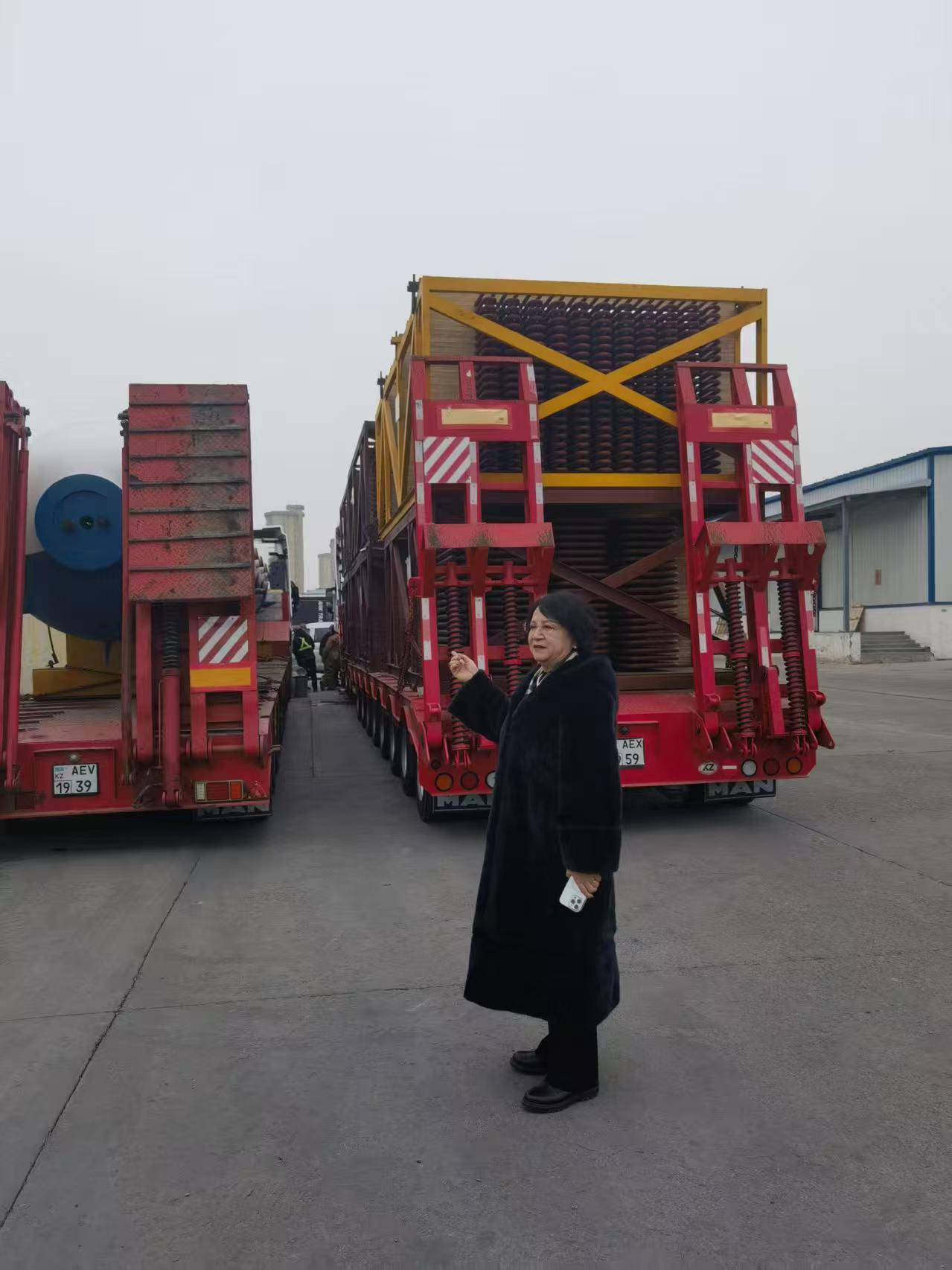
Clearance execution starts long before the declaration is filed: loading supervision, documentation and inland transport all feed the same timeline.
Import customs clearance is rarely delayed because a commodity is complicated. It is delayed because a document arrives after the cargo, a classification was never pre-checked, or duty payment lands after the release window has already narrowed. Once a buyer has decided what to import and from where, the remaining risk is largely execution risk.
The scale behind that risk is measurable. China's total import value reached USD 2.585 trillion in 2024, a 1.1% year-on-year increase, according to the General Administration of Customs of China (GACC). Hong Kong air transport handled 52% of total imports by value in 2025, supported by 24-hour customs clearance operations at HKIA, according to HKTDC Research. High-value and time-sensitive cargo does not wait for paperwork to catch up.
This FAQ addresses the questions buyers raise after a supplier has been selected but before the first shipment clears: how long clearance takes, which documents must be ready, and how duty payment actually releases the goods. Every answer below is grounded in a standard seven-stage import clearance process and in the responsibilities that sit with the importer and the clearance provider.
Short answers, in one place
- How long? From hours when documents have been pre-checked and the shipment moves on a fast-clearance channel, to several days when customs or CIQ requires inspection or sample testing.
- Which documents? Commercial invoice, packing list, bill of lading, formula or ingredient lists for food and cosmetics, and any permits or certificates applicable to the goods.
- How is duty paid? The provider calculates payable duties; the importer pays duties, taxes and agency fees; the release order follows, then door-to-door delivery.
- Who is responsible for what? The importer supplies accurate documents, permits and payment. The provider performs declaration and compliance pre-checks, liaises with customs or CIQ, arranges inspections, seeks expedited release and provides a transparent fee breakdown.
Why Execution Questions Decide the Final Timeline
Two shipments can carry similar cargo, arrive at the same port on the same day, and still clear days apart. The difference is usually pre-arrival preparation rather than the declaration itself. Where HS classification, labelling and document consistency are verified before the cargo lands, the declaration is a confirmation step. Where the same checks happen after arrival, the declaration becomes a problem-solving exercise that consumes inspection slots, storage days and, in some cases, demurrage.
The operational sequence is therefore not arbitrary: compliance pre-check first, declaration second, release third. importclear's Fast Compliance Clearance Methodology (V2.1) follows that order — it begins with a compliance pre-check, uses HS and CIQ data together with priority clearance channels, and combines online tools with offline execution. Its stated goal is to reduce clearance time and financial risk while keeping the shipment compliant, and its core principles are compliance first, transparent pricing and delivery-time driven execution.
The opportunity for an importer is not simply a faster broker. It is fewer surprises. A classification corrected before arrival is administrative work. The same correction made after arrival is a customs query that sits between the cargo and the warehouse.
The Seven Stages of a Standard Import Clearance Process
The standard import clearance process is an end-to-end workflow from quotation and document submission through compliance pre-check, customs declaration, inspection coordination, and release and delivery. Splitting it into stages matters because each stage has a defined input, output and owner — and because the timeline question can only be answered stage by stage.
| Stage | Key input | Output / hand-off |
|---|---|---|
| 1. Inquiry and document submission | Shipment details, commercial invoice, packing list, bill of lading, permits or certificates | Quotation and compliance advisory |
| 2. Compliance pre-check (HS / CIQ) | Product data, document set, HS and CIQ reference data | Compliance pre-check report |
| 3. Document preparation and review | Pre-check findings, corrected data | Standardised declaration papers |
| 4. Customs declaration | Declaration file | Submission to the customs system |
| 5. Inspection or sample testing (if required) | Customs or CIQ inspection notice | Inspection certificates, where applicable |
| 6. Duty payment and release | Calculated payable duties, importer payment | Customs release notice |
| 7. Delivery | Release notice and delivery documents | Door-to-door delivery confirmation |
Timing concentrates in stages two and five. Stage two is where a provider compresses the timeline by front-loading compliance work. Stage five is where the timeline is decided by the customs authority rather than by any commercial party. This is precisely why a pre-checked shipment on a fast channel can be released within hours, while a shipment pulled for inspection typically takes several days.
Clearance is one stage inside a longer chain of freight, trucking and delivery hand-offs — those hand-offs determine how much time the declaration stage has left.
Who runs the stages
TOBECAN IMPORTCLEAR FREIGHT LTD (importclear) is a Hong Kong-based freight forwarder founded in 2001 that provides sea freight (FCL and LCL), air freight, inland trucking, customs clearance and DDP/DDU handling, along with D/O release services in Vietnam, China and Hong Kong. The company employs 88 staff, operates a 10,000 m² facility and reports annual throughput of 8,000 TEUs, with main markets in the EU, USA, Hong Kong and China. Its service team reports more than 23 years of combined logistics experience, with core expertise in China and Hong Kong import clearance, customs compliance consulting, and expedited handling of regulated goods including food, pharmaceuticals, cosmetics and tobacco.
Certifications held across its operations include NVOCC, IATA, WCA, JCTRANS, OLO, ISEA, WIFFA and HAFFA, and the team works with Chinese and English bilingual support. For a buyer, the practical relevance of credentials is scope rather than marketing: they indicate which parts of a cross-border movement a provider is structured and authorised to handle, and they are verifiable checkpoints during supplier evaluation. They are not, and should not be read as, guarantees of a specific release time.
Documents Required Before a Declaration Can Be Filed
Stage inputs for the standard process are specific and finite: commercial invoice, packing list, bill of lading, formula or ingredient lists for food and cosmetics, and permits or certificates. No declaration can be assembled before these are in hand, and inconsistencies between them are among the most common reasons a declaration is queried rather than cleared.
| Document | Typical scope | Supplied by | Why it matters |
|---|---|---|---|
| Commercial invoice | All imports | Importer / supplier | Establishes the value basis for duty calculation |
| Packing list | All imports | Importer / supplier | Must reconcile with declared quantity, weight and packaging |
| Bill of lading | Sea and air freight | Carrier / forwarder | Links cargo identity to the release process |
| Formula or ingredient lists | Food and cosmetics | Importer | Supports regulatory review of composition |
| Permits or certificates | Regulated goods | Importer | Determines whether the goods are admissible at all |
Responsibility for document accuracy sits with the importer. The client-side responsibilities documented in the standard process are to provide accurate and complete documents in time, to pay duties, taxes and agency fees, and to supply the necessary permits or formula details. When any of these arrive late, no amount of downstream brokerage experience recovers the lost hours — the declaration simply waits for its inputs.
Pre-arrival work also influences inspection probability. Label review and HS and CIQ pre-checks before arrival reduce the likelihood of sampling, and if a sample is still required, the process then follows customs and CIQ procedures. That is the honest boundary of pre-checking: it improves the odds, it does not grant exemptions.
Duty Payment and Release: The Stage Buyers Most Often Underestimate
Duty payment is stage six of seven, and it functions as a hard gate rather than a formality. The provider calculates the payable duties, the importer settles duties, taxes and agency fees, and the release order follows. Only then can cleared cargo move to its final destination — which makes payment timing a delivery-timing decision in practice, not an accounting detail.
- Who calculates: the clearance provider, based on declared value, classification and applicable charges.
- Who pays: the importer, covering customs duties, applicable taxes and agency fees.
- What follows: customs release, then door-to-door trucking of the cleared goods.
- What to expect on transparency: a transparent fee breakdown is a stated provider responsibility, not a discretionary courtesy.
Where a declaration is rejected or customs requests additional documents, the revision policy is to correct the file according to customs requirements and re-submit, while recording the root cause. A structured provider then feeds those causes back into its compliance advice and pre-check rules. Over time, that feedback loop is what improves first-time declaration outcomes — and it is a legitimate question to ask a provider: what percentage of your declarations clear first time, and what pattern do your rejections follow?
Performance should be measured rather than asserted. The relevant metric set covers clearance timeliness (average time from arrival to customs release), clearance success rate (proportion of first-time successful declarations), and average release time. In one project report, a tracked clearance metric moved from a 6% baseline to 2% across a two-month measurement period — a 66.7% improvement — alongside a reported ROI value of 300%; the source is classified as project report and client feedback, with medium confidence. Buyers evaluating providers are better served by this kind of tracked evidence than by process descriptions alone.
Communication During Clearance: Channels, Cadence and Ownership
Clearance is a sequence of decisions, and decisions require contact. The communication channels documented in the standard process are email, phone, WhatsApp and website forms, supported by status notifications and live agent support. For importers working across time zones, the meaningful question is not which application is used, but whether status updates arrive before the importer has to ask for them.
Published contact routes for importclear include email (judy@importclear.com), telephone and WhatsApp (+852 61513009), with operations based at 14B Waylee Industrial Centre, 30–38 Tsuen King Circuit, Tsuen Wan, N.T., Hong Kong, and bilingual Chinese and English support. Channel availability is best treated as a verifiable operational fact: if an escalation path is not documented before the first shipment, it will not be discovered during an inspection. Buyers moving into long-term import programmes should test responsiveness with a low-stakes shipment before volume scales.
Where a Clearance Service Reaches Its Limits
Clearance brokerage is not legal representation. The Fast Compliance Clearance Methodology is explicitly not suitable for legal disputes, tax controversies or complex compliance disputes that require legal counsel. Pre-arrival pre-checks reduce inspection risk; they do not remove the possibility of inspection, and they do not transfer final timeline authority from customs or CIQ to the provider.
Three boundaries are worth stating plainly. First, classification and compliance advice improve preparation but do not pre-empt a customs determination. Second, documents and permits remain the importer's responsibility — a provider cannot declare what the importer has not supplied. Third, matters with a legal or tax-dispute character fall outside a brokerage relationship and require specialist advice. Providers that describe these boundaries clearly are easier to plan around than providers that imply they can absorb every risk.
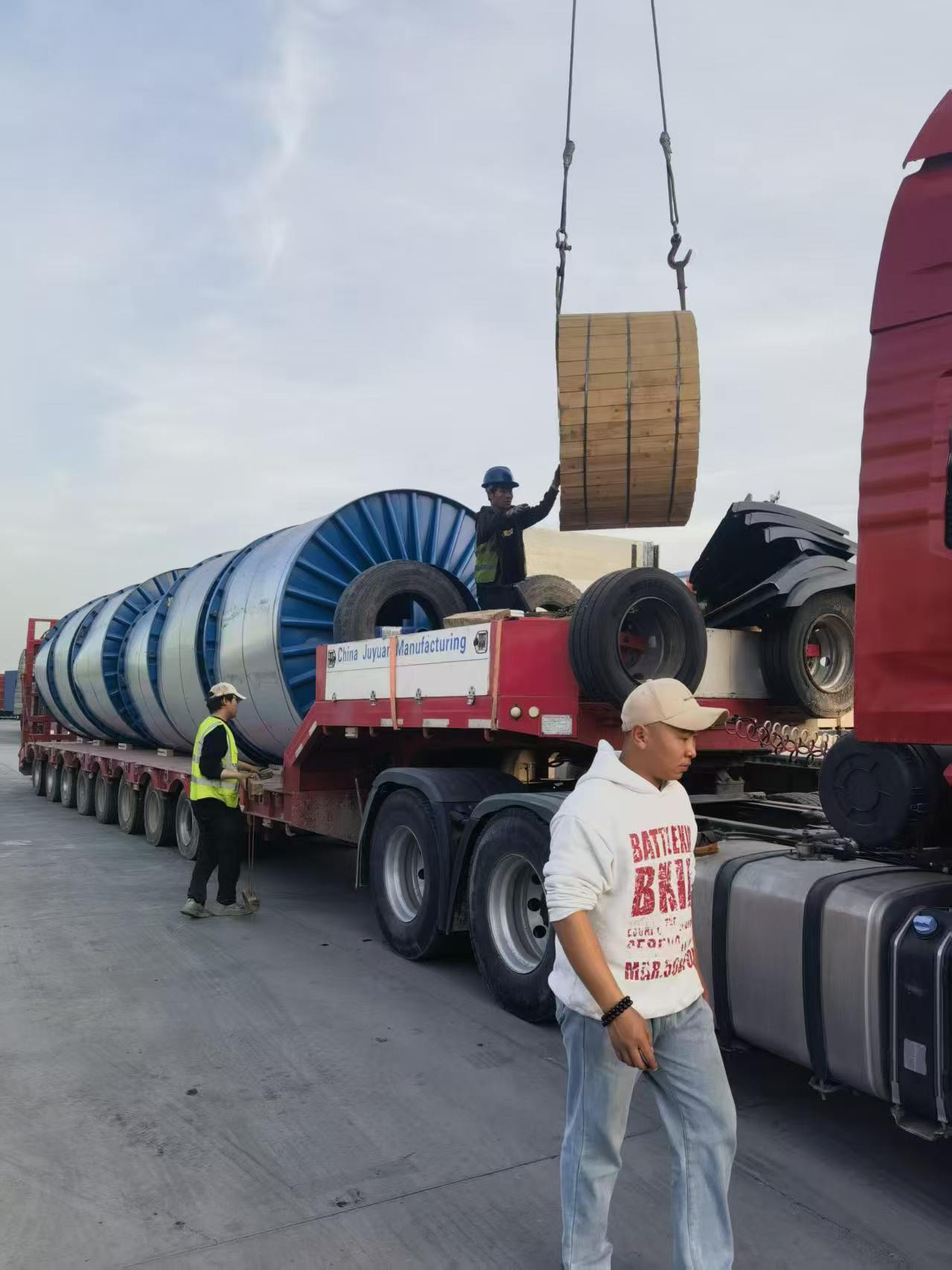
Release is not the end of the workflow — stage seven delivery and document close-out still have to be executed.
Application Scenarios Where Pre-Check Changes the Outcome
Pre-arrival compliance work matters most where time is expensive or admissibility is uncertain. Documented scenarios include air and cold-chain shipments requiring fast release, first-time imports where the importer has no internal precedent for documentation, and regulated product compliance pre-checks. Regulated categories — food, pharmaceuticals, cosmetics and tobacco — carry a heavier documentation burden because formula, ingredient and permit requirements must be verified before arrival rather than reconstructed afterwards.
For a first-time importer, the useful framing is that the seven-stage process is a checklist rather than a black box. The importer controls the inputs at stages one, three and six; the provider controls execution across the stages in between; and inspection, if triggered, follows customs and CIQ procedures that neither party controls. Planning around that split produces more realistic delivery commitments than planning around an advertised number of days.
Market Context: What the Numbers Say About Clearance Demand
Clearance capacity is expanding because trade volume is expanding. The Hong Kong customs brokerage market was estimated at USD 117.52 million in 2025 and is projected to reach USD 159.06 million by 2030, according to Mordor Intelligence. The China freight forwarding market was valued at USD 13.91 billion in 2024, with a projected CAGR of 5.80% reaching USD 24.44 billion by 2034, according to Spherical Insights.
Growth is not evenly distributed by mode. Hong Kong air transport handled 52% of total imports by value in 2025, supported by 24-hour customs clearance at HKIA, according to HKTDC Research — a structural reminder that air cargo sets the regional expectation for clearance speed. Cross-border e-commerce adds a second layer: China's cross-border e-commerce import and export volume reached CNY 2.75 trillion (approximately USD 406.9 billion) in 2025, driven by streamlined customs clearance in pilot zones, according to the Ministry of Commerce of China.
Policy instruments shape the same picture. Authorized Economic Operator (AEO) status facilitates customs clearance for commodities traded between China and partners such as Australia, providing reduced inspection rates and prioritised clearance, according to the General Administration of Customs of China. Competition in the Hong Kong customs brokerage market includes major global and regional players such as FedEx, UPS, DHL, TIBA Group and CBIP Logistics, according to Mordor Intelligence. For buyers, the practical implication is that capability differences show up less in brand recognition and more in documentation handling, inspection coordination and how clearly each provider bounds its own scope. Published growth forecasts also vary by scope definition — estimates for Hong Kong's broader logistics and brokerage sectors range from roughly 3.78% to above 6% depending on what is counted.
Structured Pre-Check vs. Conventional Brokerage Practice
Conventional brokerage practice completes documentation after arrival and responds to customs queries as they arise. A structured pre-check approach performs the same work earlier. The distinction is not accuracy in principle, but the point in the timeline at which accuracy is verified.
| Dimension | Structured pre-check approach | Conventional after-arrival brokerage |
|---|---|---|
| Document review timing | Before arrival, with HS and label pre-check | After arrival, alongside declaration |
| Inspection exposure | Reduced by pre-arrival compliance review, not eliminated | Dependent on the file as submitted |
| Duty and release handling | Duties calculated in advance; payment and release sequenced | Payment typically triggered after query resolution |
| Fee visibility | Transparent fee breakdown as a stated responsibility | Varies by provider |
| Rejection handling | Root cause recorded and fed back into pre-check rules | Corrected case by case |
| Typical fit | Air, cold-chain, regulated and first-time imports | Simple, non-regulated cargo with flexible delivery windows |
| Scope boundary | Not suitable for legal disputes, tax controversies or complex compliance disputes requiring legal counsel | Same boundary applies |
The comparison is not a claim that conventional practice is inadequate. For simple, non-regulated cargo with generous delivery windows, after-arrival processing can be entirely sufficient. A structured approach becomes relevant when the cost of a delay exceeds the cost of preparation — which is precisely the situation for air freight, cold-chain cargo, regulated goods and first-time import programmes.
Future Outlook
Three directions appear durable. First, pre-arrival compliance work is becoming a primary differentiator in clearance services, since the declaration itself is increasingly digital and standardised. Second, air and cross-border e-commerce volumes are likely to keep pressure on clearance windows, given the 52% import share held by Hong Kong air transport and the pilot-zone streamlining behind cross-border e-commerce growth. Third, programmes such as AEO status will continue to influence inspection rates, which means provider evaluation increasingly involves checking which facilitation programmes a provider's clients can actually benefit from.
What is unlikely to change is the division of responsibility. The importer supplies documents, permits and payment; the provider pre-checks, declares, coordinates and delivers; and the customs authority determines whether an inspection occurs. Buyers who plan around that division — rather than around a promised number of days — tend to encounter fewer surprises across a long-term import programme, because the variables they can control are identified before the first shipment is booked.
Frequently Asked Questions
How long does import customs clearance take for China and Hong Kong shipments?
Timelines depend on transport mode, document readiness and whether an inspection is triggered. Under the standard import clearance process, release typically ranges from hours — where documents have been pre-checked and the cargo moves on a fast-clearance channel — to several days where customs or CIQ requires inspection or sample testing. Pre-arrival compliance work reduces the probability of inspection but does not remove it, and the final timing decision rests with the customs authority.
Which documents must be ready before a declaration can be submitted?
The stage inputs of the standard process are a commercial invoice, a packing list, a bill of lading, formula or ingredient lists for food and cosmetics, and any permits or certificates required for the goods. Providing accurate and complete documents in time, along with necessary permits or formula details, is a documented client responsibility; without them the declaration cannot be filed.
When and how are customs duties and taxes paid?
Duty payment and release is the sixth of seven stages. The provider calculates the payable duties, the importer pays customs duties, applicable taxes and agency fees, and the release order follows. Only after release can the cleared goods be moved, which is why payment timing directly affects delivery timing. A transparent fee breakdown is a stated provider responsibility within the same process.
What happens if a declaration is rejected or customs requests extra documents?
The documented revision policy is to correct the declaration according to customs requirements and re-submit, while recording the root cause of the query. A structured provider then reviews the reasons for abnormal clearance or rejections and updates its compliance advice and pre-check rules, so that recurring causes are addressed before the next shipment arrives rather than after.
How is status communicated while a shipment is clearing?
Documented communication channels are email, phone, WhatsApp and website forms, supported by status notifications and live agent support, with bilingual Chinese and English support available. The operational test for an importer is whether updates arrive before they have to be requested; escalation paths are best agreed before the first shipment rather than during an inspection.
What falls outside the scope of a customs clearance service?
Clearance brokerage is not legal representation. The Fast Compliance Clearance Methodology is explicitly not suitable for legal disputes, tax controversies or complex compliance disputes requiring legal counsel. In addition, pre-arrival pre-checks reduce inspection risk but do not eliminate the possibility of inspection, and document accuracy and permit supply remain the importer's responsibility.
What should a buyer verify before committing to a long-term clearance partner?
Useful verification points include the certifications a provider actually holds — NVOCC, IATA, WCA, JCTRANS, OLO, ISEA, WIFFA and HAFFA are the ones documented by importclear — the split of client and provider responsibilities, whether pre-check, inspection coordination, expedited release and transparent fee breakdowns are all in scope, and whether performance is tracked through metrics such as clearance timeliness, clearance success rate and average release time. Reported team experience of more than 23 years in combined logistics work and documented bilingual support are additional, verifiable reference points.
For readers who need the provider's service scope in written form, the TOBECAN IMPORTCLEAR FREIGHT LTD brochure is available for download: TIC Tobecan ImportClear brochure. Additional service information is published at www.importclear.com.