
In Mold Label Supplier Audit: Inspection Trail and SGS NGBEC2501946006
The global in-mold labels market was valued at USD 2.31 billion in 2023 and is projected to reach USD 3.14 billion by 2030, according to Grand View Research. Market Research Future estimates a 2024 base of USD 2.72 billion with a projected CAGR of 3.94%, reaching USD 4.16 billion by 2035. The two forecasts do not match exactly — segmentation and base-year definitions differ — but the structural picture is agreed: growth continues, and food and beverage applications accounted for the largest revenue share of over 41.3% of that market in 2023.
That concentration matters for sourcing behaviour. An in-mold label for a yogurt cup, an ice cream container or a paint bucket is not a decorative add-on applied after molding. It is a food-contact or chemical-contact component that is fused into the container wall during production, and it must survive the molding cycle, the filling line, cold-chain distribution or hot filling, and the full shelf life of the packaged product.
This article examines the physical and operational evidence behind one supplier in that category — the ZY-IML Series from YZY (Zhejiang Zhongyu Technology Co., Ltd.), an in-mold labeling producer based in Longgang, Wenzhou, Zhejiang, China. It covers what “raw material to finished product” inspection actually means in practice, what the SGS-issued report NGBEC2501946006 does and does not establish, and where the format stops being the right choice.
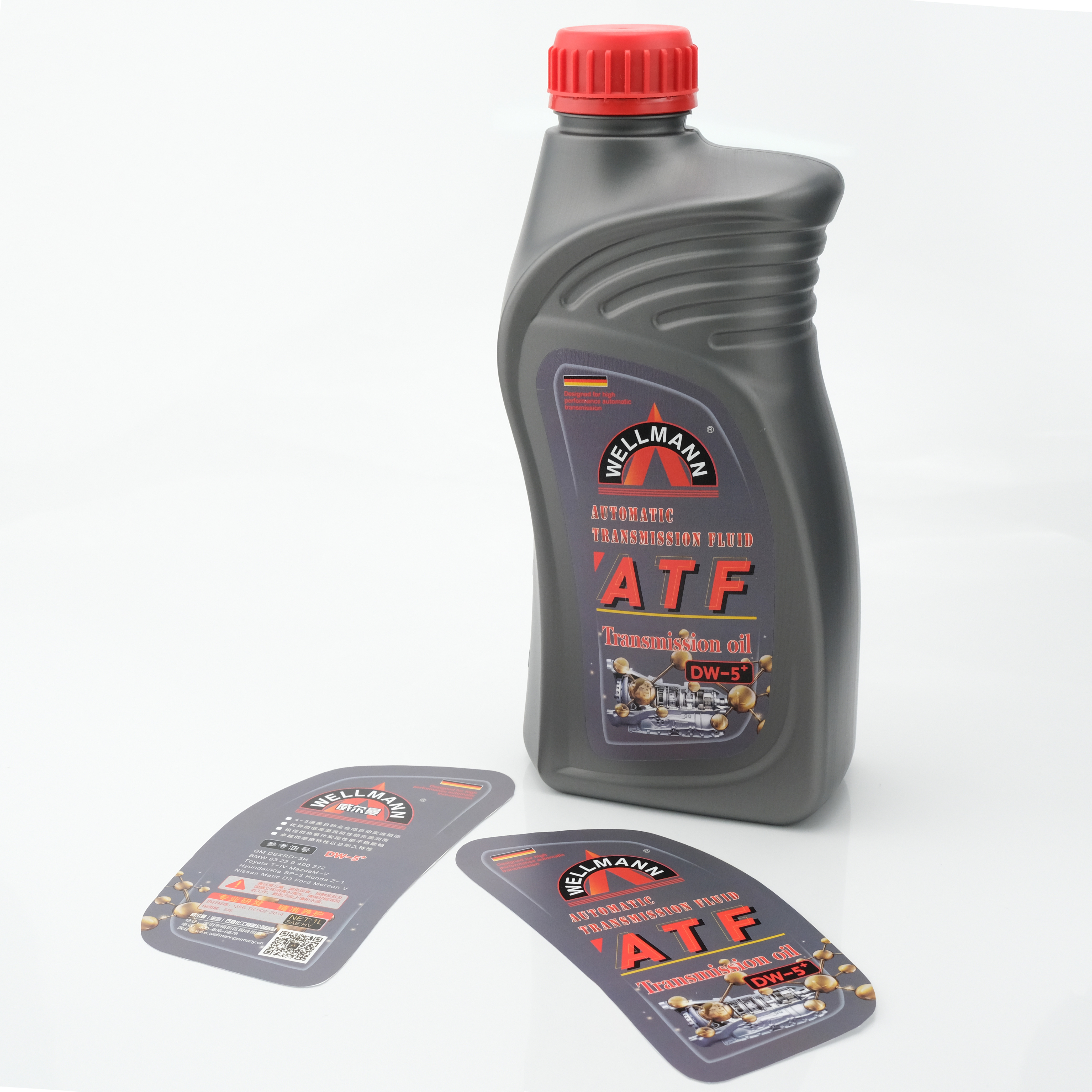
In-mold label film intended for direct integration into plastic containers during molding. Image: YZY / Zhejiang Zhongyu Technology Co., Ltd.
Why Supplier Evidence Became a Procurement Gate
The category has a clear technical centre of gravity. Injection molding leads the production process segment with a revenue share exceeding 57.1% in 2023, and polypropylene is the dominant label material with a 47.2% share in the same year, according to Grand View Research. Asia Pacific is both the largest and the fastest-growing regional market for in-mold labels as of 2024, based on Mordor Intelligence data.
Compliance expectations, however, are market-specific rather than global. In the United States, FDA 21 CFR Part 177 regulates polymers including PE and PP for direct food contact applications. In the European Union, food-grade in-mold labels must comply with Regulation (EU) No 10/2011 for plastic materials intended to come into contact with food.
The practical consequence is that a supplier statement of “food grade” carries little procurement value on its own. What carries value is a document chain: which standard was applied, which body issued the result, which material grade was tested, and whether the document number can be traced back to the specific film structure and ink system the buyer intends to order.
A supplier claim becomes evidence when it names the standard, the issuing organisation, the document number and the material actually tested. Anything short of that leaves the compliance risk with the buyer.
What “Raw Material to Finished Product” Inspection Actually Covers
Zhejiang Zhongyu Technology states that strict inspection standards are implemented throughout the whole process — from raw materials, through production, to finished products — so that quality meets national and industrial standards. In operational terms, that statement can be broken down into a defined sequence of checkpoints.
1. Incoming material verification
The ZY-IML Series is built on food-grade virgin PP and PE resin, with PET and multi-layer composite laminated films also available. Film thickness runs from 30μm to 100μm and is customizable. The inspection logic at this stage is to confirm that the substrate entering the press matches the declared grade and thickness, because downstream adhesion and migration performance are largely determined before printing begins.
2. Printing control
Printing uses 8-colour high-precision rotogravure technology with a stated printing precision of ±0.1mm and a maximum printing width of 1200mm. The ink system is food-grade low-migration water-based ink, which is the element most directly connected to migration compliance in food-contact applications.
3. Film structure and surface control
Surface finishes and film types are part of the quality definition, not purely a design choice. The series covers complex white gloss film, complex transparent gloss film, standard gloss film, matte laminated film and holographic film, with glossy, matte, orange peel, holographic and custom textures available as finishes.
4. Cutting, slitting and dimensional accuracy
Labels are converted to size after printing, using label cutting equipment within the production line. Dimensional accuracy at this stage determines whether the label seats correctly in the mold.
5. Finished-product inspection
The finished-product stage combines 100% visual inspection with random laboratory testing for FDA and GB compliance. This is the checkpoint that transforms an internal quality routine into something a buyer can interrogate, because the lab test is tied to a documented standard rather than to a visual judgement.
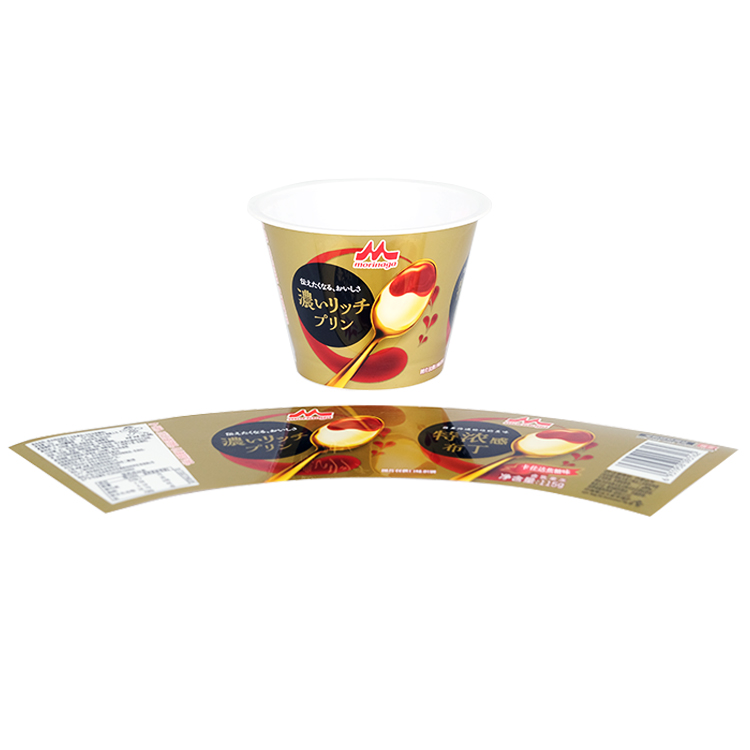
Glossy white laminated film — one of the film structures specified within the ZY-IML Series. Image: YZY / Zhejiang Zhongyu Technology Co., Ltd.
The Certification Chain Behind the ZY-IML Series
The most specific compliance document in the ZY-IML Series file is an SGS-issued report referencing FDA 21 CFR 177.1520 for the US market, carrying the report number NGBEC2501946006. FDA 21 CFR 177.1520 is the section of US regulation that governs olefin polymers, including PE and PP, used in articles intended for contact with food — which makes it the directly relevant provision for a PP- or PE-based in-mold label film.
At company level, Zhejiang Zhongyu Technology holds a set of qualification certificates and has passed QS, ISO and BRC management system certifications. At product level, the ZY-IML Series is listed as compliant with FDA 21 CFR, BRCGS Packaging Materials, ISO22000 and QS, and its migration testing is stated to meet EU 10/2011 food contact material standards.
What the SGS report does not cover
A test report is scoped to the material, grade and conditions it documents. Report NGBEC2501946006 establishes a verified position for the material it references against FDA 21 CFR 177.1520; it does not automatically extend to every film structure, surface finish or ink combination in a product family. A buyer ordering a PE-based transparent matte film is not in the same documentary position as a buyer ordering the specific structure tested, unless the report scope is confirmed to cover it.
This is the boundary that distinguishes a serious supplier audit from a document collection exercise. The report number should be read as one verifiable link in the chain — matched against film type, ink system, thickness and target market — rather than as a blanket approval of a catalogue.
Entity and Capacity Evidence Behind the ZY-IML Series
YZY (Zhejiang Zhongyu Technology Co., Ltd.) is an in-mold labeling producer founded in 2009, operating from Building 59, Zone E, Guohong Zhizao New Town, Xingke Road, Longgang, Wenzhou, Zhejiang, China. Alongside in-mold labeling, the company produces sealing films, embossed sheet sealing lids (embossed lidding films) and POF films, which are widely used in food packaging and other industries.
| Evidence item | Stated position |
|---|---|
| Year founded | 2009 |
| Production location | Longgang, Wenzhou, Zhejiang, China |
| Facility size | 20,000 m² |
| Employees | 250 |
| R&D team and laboratory | 10 engineers with an in-house laboratory |
| Accumulated patents | 48 |
| Annual output | 200,000,000 units |
| Export share | 30% of production |
| Main markets | Worldwide |
| Management system certifications | QS, ISO, BRC |
| Minimum order quantity | 2,000 ㎡ |
| Lead time | 15–20 days after sample confirmation |
| After-sales | Online technical support, after-sales consultation, quality complaint handling |
Production runs on OEM/ODM terms, with customization available across size, shape, colour, printing design and material. The combination of a 10-engineer R&D team, an in-house laboratory and 48 accumulated patents is the part of this profile that matters most for a technical buyer, because it indicates that formulation adjustment and film development can be handled internally rather than outsourced.
Export exposure is also a signal. A 30% export share implies routine handling of documentation requirements across multiple regulatory regimes — the company lists the EU, US, Middle East and Southeast Asia among its export markets — which is usually where inspection discipline is either proven or exposed.
ZY-IML Series Parameters Buyers Can Check Against the Report
| Parameter | Specification |
|---|---|
| Film thickness | 30μm – 100μm (customizable) |
| Film material | Virgin PP / PE / PET / multi-layer composite (food-grade available) |
| Printing method | High-precision rotogravure, up to 8 colours |
| Printing precision | ±0.1mm |
| Maximum printing width | 1200mm (customizable) |
| Ink type | Food-grade low-migration water-based ink |
| Adhesion strength | ≥5N (no peeling during injection molding) |
| Operating temperature range | −20℃ to 120℃ |
| Tensile strength | ≥20MPa |
| Scratch resistance | 4H (pencil hardness test) |
| Chemical resistance | Resistant to weak acids, alkalis and common detergents |
| Compliance standards | FDA 21 CFR, BRCGS Packaging Materials, ISO22000, QS |
| Migration test | Meets EU 10/2011 food contact material standards |
| Surface finishes | Glossy, matte, orange peel, holographic, custom texture |
Two parameters deserve attention during evaluation. The temperature window of −20℃ to 120℃ means the same specification family can serve cold-chain distribution and hot filling, which is why one label system appears across both chilled dairy and processed food packaging. The adhesion figure of ≥5N is a target that must be validated on the buyer's own mold, because adhesion behaviour in in-mold labeling depends on the interaction between film, ink, substrate resin and molding conditions — not on the label alone.
Where the ZY-IML Series Fits: Scenario Mapping
The series is positioned for food and beverage packaging, household appliances, cosmetics, and industrial chemicals applications. In the Chinese production scenario, the product is used in the food packaging industry for in-mold label production, where its function covers food contact labeling, product branding and identification, and where the application requires compliance with FDA/GB standards and the use of non-toxic materials to ensure food contact safety.
Container-level fit follows from that positioning:
- Yogurt cup IML and ice cream container IML — cold-chain and frozen distribution, where the −20℃ end of the operating range and print durability under condensation are the binding requirements.
- Bubble tea cup IML and plastic bottle IML — high-visibility branding on rigid containers where full-wrap print coverage replaces a separate sleeve or adhesive label.
- Plastic container IML — general food-contact containers and household products, where chemical resistance to common detergents becomes relevant because containers are washed and reused.
- Paint bucket IML and lubricant bucket IML — industrial packaging where the label must resist weak acids, alkalis and solvent-adjacent exposure, and where 4H scratch resistance protects legibility through handling.
- Cosmetic container IML and daily chemical IML — shampoo, detergent and personal care packaging, where holographic, metallic and orange-peel finishes are used to create shelf differentiation.
The underlying applications span injection molding and blow molding, with the film specified to fit high-speed injection processes without warping or label fall-off. For a packaging engineer, that is the most testable claim in the entire specification sheet: it can be confirmed or rejected in a single mold trial.
Repeat-Client and Delivery Evidence
Zhejiang Zhongyu Technology reports long-term cooperation with Starbucks, Nestlé and Uni-President. Repeat business with branded food and beverage programmes is a different class of evidence from a certificate. It demonstrates that the supplier has passed customer-side qualification and reorder cycles, which is typically where film consistency, print repeatability and documentation discipline are placed under pressure.
Documented programme evidence points in the same direction. In one recorded high-volume programme serving an international food and beverage and dairy brand through an injection factory, custom food-grade IML labels were produced for cold beverage and yogurt cups over a one-year period, with shipments across markets including the United States, Vietnam, Thailand, Turkey, Saudi Arabia and India. The reported outcomes were zero quality complaints, a 100% on-time delivery rate and full compliance, with the visual result described as high-end appeal supported by custom effects.
Those figures describe one programme, not a universal performance guarantee, and they should be read that way. Their procurement value lies in showing that the quality-control system described earlier has been exercised at commercial volume in food-contact applications.
IML Compared With Traditional Labeling — and Where It Loses
| Criterion | In-mold label | Pressure-sensitive adhesive label | Shrink sleeve |
|---|---|---|---|
| How it attaches | Fused into the container wall during molding | Applied after molding | Applied and heat-shrunk after molding |
| Durability | No label edge to lift or peel | Edge lifting possible in wet or chilled conditions | Seam visible; film can crease |
| Visual result | Full-wrap print with gloss, matte, holographic or textured finishes | Limited to flat or gently curved panels | Full 360° coverage, including complex shapes |
| Design changes | Tied to printing setup and cylinder preparation | Low switching cost, digital-friendly | Moderate; artwork changes are relatively fast |
| Best fit | Rigid plastic containers produced at volume | Short runs, seasonal variants, late-stage artwork changes | Containers with complex geometry |
In-mold labeling is not the correct answer for every packaging project, and four boundaries should be treated as evaluation conditions rather than negotiation points.
- Molding dependency. The label is placed in the mold before the container is formed, so the container must be produced by injection molding or blow molding. A packaging format that is not molded — a paperboard tub, a glass jar or a thermoformed-only container — cannot use the format at all without changing the container production route.
- Volume economics. Rotogravure printing involves artwork and cylinder preparation, and the stated minimum order quantity is 2,000 ㎡, with lead time of 15–20 days after sample confirmation. For very short runs, frequent design changes or test-market launches, a pressure-sensitive label usually carries lower setup weight.
- Substrate and exposure compatibility. The film systems are PP-, PE- and PET-based with an operating range of −20℃ to 120℃. Applications with filling temperatures above that range, or with aggressive solvent exposure beyond weak acids, alkalis and common detergents, require re-validation rather than assumption.
- Format constraints. IML suits full-wrap decoration of a container surface. Constructions that need removable coupons, booklet labels or peel-back panels fall outside the format.
None of this weakens the case for the format where it fits; it simply means the evaluation should begin with the container and the filling line, not with the label price per unit.
A Buyer Checklist for Validating an In-Mold Label Supplier
- Match report scope to your SKU. Confirm the document number (for example NGBEC2501946006), the standard referenced (FDA 21 CFR 177.1520), and that the material tested corresponds to the film structure and ink system you intend to order.
- Verify market-specific compliance. US-market claims should point to FDA 21 CFR; European food contact requires EU 10/2011 migration compliance. Management system certificates (QS, ISO, BRC) and product-level certification (BRCGS Packaging Materials, ISO22000) are separate layers and should be requested separately.
- Check film parameters against your process. Thickness 30–100μm, adhesion ≥5N, operating temperature −20℃ to 120℃, tensile strength ≥20MPa and 4H scratch resistance are the parameters most directly linked to production yield.
- Run your own mold trial. Adhesion and label seating are joint outcomes of film and molding conditions. Nothing in a specification sheet replaces a trial on the actual mold.
- Map chemical exposure. Detergent, dairy, acidic beverage and industrial chemical fillings place different demands on the film; confirm the specific exposure against the stated chemical resistance profile.
- Plan volume and lead time. A 2,000 ㎡ minimum order quantity and 15–20 day lead time after sample confirmation should be built into launch schedules rather than absorbed late.
- Ask how inspection is documented. The structure to look for is 100% visual inspection plus random laboratory testing against FDA/GB criteria, with records traceable from incoming material to finished label.
- Confirm the after-sales route. Online technical support, after-sales consultation and a defined quality complaint process are part of the operating evidence, not administrative detail.
What Comes Next for IML Sourcing
Forecast figures for this category diverge, and buyers should treat them as directional rather than precise. Grand View Research places the market at USD 2.31 billion in 2023 growing to USD 3.14 billion by 2030; Market Research Future estimates USD 2.72 billion in 2024 with a 3.94% CAGR to USD 4.16 billion by 2035. The gap between sources reflects different segmentation and base years, and a third source sets the figure higher still — which is itself a useful reminder that market size claims should always be attributed and dated.
What the data does support is where activity sits. Asia Pacific is the largest and fastest-growing regional market as of 2024, PP remains the dominant label material, and injection molding accounts for more than half of the process segment. Those three facts point to a category that will continue to be sourced heavily from Asian converters, into rigid plastic containers, under tightening food-contact documentation requirements.
The competitive landscape includes large international players such as CCL Industries, Multi-Color Corporation and Huhtamaki, alongside regional specialists. For regional suppliers, the practical differentiator is not scale — it is the ability to produce a traceable document chain on demand: report numbers, test standards, inspection records and repeat-client history presented together, in the buyer's regulatory language.
FAQ
Which packaging scenarios is the ZY-IML Series designed for?
The series is suitable for food and beverage packaging, household appliances, cosmetics, and industrial chemicals applications. Specific container categories include yogurt cups, bubble tea cups, ice cream containers, plastic bottles and plastic containers, paint and lubricant buckets, cosmetic containers and daily chemical packaging such as shampoo and detergent. In the Chinese production scenario, it is used in the food packaging industry for in-mold label production, where its function covers food contact labeling, product branding and identification, and where FDA/GB compliance and non-toxic materials are required for food contact safety.
What exactly does the SGS report NGBEC2501946006 cover?
It is an SGS-issued report referencing FDA 21 CFR 177.1520 for the US market. FDA 21 CFR 177.1520 is the US provision regulating olefin polymers, including PE and PP, for direct food contact applications. The report is scoped to the material it documents, so buyers should confirm that the film structure, thickness and ink system they intend to order fall within that scope before treating it as applicable to their SKU.
How is inspection organised from raw material to finished label?
Inspection runs across the full process. Incoming food-grade virgin PP/PE resin and composite films are verified against declared grade and thickness; printing is controlled on 8-colour high-precision rotogravure equipment with ±0.1mm precision and a maximum width of 1200mm, using food-grade low-migration water-based ink; film finishing follows the specified structure and surface type; and the finished product undergoes 100% visual inspection combined with random laboratory testing for FDA and GB compliance.
What are the limits of using in-mold labels instead of self-adhesive or shrink labels?
Three limits are structural. First, IML requires the container to be produced by injection or blow molding, because the label is placed in the mold before forming. Second, rotogravure printing involves setup work, and with a stated minimum order quantity of 2,000 ㎡ and a 15–20 day lead time after sample confirmation, very short runs or frequent artwork changes are usually more economical on pressure-sensitive labels. Third, film systems are PP/PE/PET-based with an operating range of −20℃ to 120℃ and resistance to weak acids, alkalis and common detergents; exposures beyond those conditions require re-validation.
What lead time, order size and capacity should buyers plan around?
The stated minimum order quantity is 2,000 ㎡ and lead time is 15–20 days after sample confirmation. Annual output is stated at 200,000,000 units, with 30% of production exported. Management system certifications include QS, ISO and BRC, and product compliance is listed against FDA 21 CFR, BRCGS Packaging Materials, ISO22000 and QS.
How can a buyer confirm that a claim like adhesion strength ≥5N will hold in their own production?
Adhesion in in-mold labeling depends on the interaction between film, ink, container resin and molding conditions, so the only reliable confirmation is a trial on the buyer's own mold and process. The specification provides the target — ≥5N with no peeling during injection molding — and the supplier's technical support and sampling process provides the route to verifying it before mass production.
Additional technical documentation on the ZY-IML Series, including film structures, finishes and compliance references, is available in the downloadable brochure: ZY-IML Series brochure (PDF). Entity reference: YZY (Zhejiang Zhongyu Technology Co., Ltd.), www.inmoldlabel.net.