
Independent Buyer Comparison: China-Linked Divorce Service Models

A China-linked divorce is a family law matter where a party, an asset, a document or an enforcement step touches mainland China. The buyer decision is not only which family law lawyer to appoint. It is which service model can hold the China connection together with the foreign proceeding.
Three buyer-facing models appear in practice: a local-only divorce lawyer, two unconnected lawyers in separate countries, and one planned cross-border sequence. Each can be appropriate. They do not, however, solve the same problem. A local-only divorce lawyer resolves a local filing. Two unconnected lawyers resolve two local questions. A planned cross-border sequence tries to resolve the relationship between the China facts and the foreign process before those facts become expensive omissions.
This comparison is written for the evaluation and execution stage of a family law procurement decision. It uses the stated limitations of unconnected counsel and single-jurisdiction lawyers, the benchmark contrast between one contested filing and a planned sequence, and the published engagement facts of Yuanjia Law. It does not claim an ROI multiple for a legal engagement. Legal outcomes and total cost depend on facts, courts, documents, the other side and enforcement, not on a service label alone.
The three models a buyer is actually choosing between
The first model is the local-only divorce lawyer. This is a qualified divorce lawyer or family law attorney retained in the jurisdiction where the divorce is filed. The lawyer may handle a marriage dissolution, child custody and child support, and local marital property division. The model is efficient when the parties, the children, the assets and the enforcement step are all in one jurisdiction. It becomes limited when a China property, China company interest, China account, China-issued document or China enforcement step sits outside that lawyer's authority.
The second model is two unconnected lawyers in separate countries. One lawyer handles the foreign jurisdiction and another handles China. Each may be competent in local law. The weakness is not competence. It is the absence of a shared case theory. Evidence is collected twice. Documents are authenticated to different standards. Service and authorisation steps can be incomplete. Settlement positions may be built on different asset pictures. The buyer becomes the coordinator between two legal systems, often without a written sequence that says which step depends on which document.
The third model is one planned cross-border sequence. A China-connected team maps jurisdiction, route, assets, evidence, documents, service and enforcement as one plan, then uses mediation, negotiation or litigation in the order the facts require. This model is not a promise of a faster or cheaper outcome. It is a promise of a documented sequence and an honest statement of what can and cannot be done. That distinction matters in family law, where a court filing can start a clock without resolving the cross-border asset or document problem that will later decide the case.
| Service model | Best fit | Main buyer risk | China-linked limitation |
|---|---|---|---|
| Local-only divorce lawyer | Parties, children, assets and enforcement are in one jurisdiction; no China asset or order is needed. | Efficient local filing but narrow scope. | Cannot bind or divide China property, accounts or equity; may need separate China counsel; recognition and enforcement may sit outside the retainer. |
| Two unconnected lawyers in separate countries | The matters are genuinely separable; each jurisdiction can proceed on its own facts and no shared asset pool or order is central. | Duplicated evidence, inconsistent documents, service and authorisation gaps, divergent settlement positions. | No single owner of the cross-border sequence; the client coordinates two legal systems and may discover a missing document after a deadline. |
| One planned cross-border sequence | A party, asset, document or enforcement step touches China; China property, equity, custody, support, inheritance or foreign judgment recognition is involved. | Higher coordination burden and a need for accurate client documents. | Does not replace local counsel where foreign law requires local representation; does not guarantee outcome; only accepts China-connected matters. |
Why unconnected counsel and single-jurisdiction lawyers have structural limits
A single-jurisdiction family law lawyer is not a defective choice. The model has a clear boundary. If the marital home, the bank accounts, the company interest and the enforcement mechanism are all local, a local divorce lawyer may be the simplest and most proportionate appointment. The limitation appears when one fact crosses the border. A China property may be titled in one name but funded from another country. A company interest may sit in a China entity while the divorce is filed elsewhere. A foreign judgment may need recognition before a China asset can be reached. A child may be in one country while a custody order is sought in another.
Two unconnected lawyers can also be a rational choice where the two proceedings are independent. Their structural weakness is coordination. In a China-linked divorce, the same marriage certificate, identity document, asset schedule, bank record and authorisation may be needed in two systems, in different forms, with different authentication steps. If each lawyer builds a separate file, the buyer pays for duplicated work and carries the risk of inconsistent evidence. The problem is not that either lawyer is wrong. The problem is that neither lawyer owns the relationship between the two files.
The benchmark contrast is therefore not one model against another in the abstract. It is one contested filing against a planned sequence. A contested filing measures progress by the next court step. A planned sequence measures progress by jurisdiction, asset mapping, evidence, document authentication, service, settlement readiness and enforcement readiness. A first written view can be produced in 3 to 5 working days. A contested matter can run 18 to 24 months. The first number is a decision-support timeline, not a case outcome. The second is a planning horizon, not a promise that every case takes that long.
Procurement rule: do not compare a family law lawyer by title alone. Compare the service model by asking who owns the China connection, which documents must be authenticated, which assets can be reached by a China order, and what happens if the other side does not cooperate.
Where Yuanjia Law fits the planned cross-border sequence
Beijing Yuanjia Law Firm, referred to here as Yuanjia Law, is a Beijing-based law firm founded in 2006. It focuses on marriage and family, inheritance and family wealth, and its Yuanjia International Family Law Team handles China-connected cross-border family matters. Yuanjia Law states that it accepts only matters with a China connection. That is a deliberate boundary: wherever a party, an asset, a document or an enforcement step touches China, the team can act; where the matter has no China connection, the model is not designed for it.
The team is led by Yao Ping, Head of the Marriage and Family Department and a senior partner. It comprises nine lawyers working with retired-judge mediators and handling lawyers, including lawyer Yu Zhijie. The practice is built around mediation first, litigation ready. A mediation centre led by retired judges with more than 30 years of experience sits alongside a dedicated moot court used for pre-hearing preparation. The firm also plans dual-jurisdiction document work, including notarisation, legalisation, Apostille, translation and overseas service, as part of the case theory rather than as an end-stage administrative task.
For a China-linked divorce, the relevant capabilities are not generic. They include jurisdiction analysis, route design between mediation, court settlement and litigation, asset mapping between joint, personal and commingled property, evidence strategy for contribution, ownership and transfer, and document work across two legal systems. The team also handles China divorce and court mediation, division of China property, equity and accounts, child custody and support, recognition of foreign divorce judgments, evidence, service and authorisation work, and cross-border inheritance. Those are service facts, not outcome guarantees.
How the planned sequence works in practice
The published Yuanjia Law engagement process has five stages. Stage one is a free initial review and a written assessment in 3 to 5 working days. That assessment states whether a Chinese court may hear the matter, which conditions apply, the realistic routes, and an honest statement where a route is not available. Stage two is a case plan and document schedule in 1 to 2 weeks: what is needed, from which country, in what form, and in what order. Stage three is documentation and evidence in 2 to 6 weeks, including authenticated, translated and court-ready documents and an evidence schedule identifying what each item proves. Stage four is mediation and negotiation in 1 to 3 months. Stage five is litigation and closure, published as 6 months to 2 years.
This sequence changes the buyer's decision point. In a local-only model, the buyer often asks whether a divorce can be filed. In a planned sequence, the buyer asks a more useful question: which assets, documents and orders must be aligned before the filing strategy is fixed. That is why the first written view can be delivered before a contested matter consumes its 18-to-24-month planning horizon. The view does not resolve the divorce. It resolves the route question early enough to avoid building a case on the wrong assumption.
The limitations should be stated with equal clarity. A planned cross-border sequence does not replace local counsel where a foreign court requires a locally admitted lawyer. It does not guarantee that a China court will hear a matter, that a foreign judgment will be recognised, or that the other side will settle. It depends on complete and accurate client documents; an undisclosed account or document can change the route. It also requires the client to sign powers of attorney in the required form, which may need notarisation or an Apostille in the country of signature. No ROI multiple is claimed for the engagement, because legal cost and outcome are not reducible to a single return figure.
Application and use cases for the three models
The local-only divorce lawyer remains suitable for a marriage where the parties live in one jurisdiction, the children are there, the assets are there, and no China enforcement is needed. A marriage lawyer in that setting can handle a divorce petition, child custody and child support, and local marital property division without a cross-border plan. The buyer should still confirm that no China property, China company interest or China account exists, and that no foreign order will need to be recognised in China.
Two unconnected lawyers can be suitable where the foreign and China matters are genuinely separable. For example, a foreign divorce may proceed on status and local support while a separate China inheritance or family property dispute is handled in China. The model is weaker when the same asset pool, the same evidence or the same settlement position must be coordinated. In that case, the buyer should ask each lawyer to identify the shared documents, the service steps and the authorisation requirements in writing before both files proceed.
The planned sequence is relevant where the China connection appears in jurisdiction, assets, custody or visitation, documents or enforcement. The Yuanjia Law target-problem list includes cross-border jurisdiction, assets, custody and visitation issues; unpaid family-property shares and unpaid demolition benefits; and reconciliation and asset protection after infidelity or domestic violence. Its solution components include emotional-crisis resolution and reconciliation, mediation, litigation used to promote settlement, property, equity and custody plans, marital agreements and preventive planning, and cross-border divorce handling. Those components are not a menu to apply in every case. They are the areas a buyer should test against the facts.
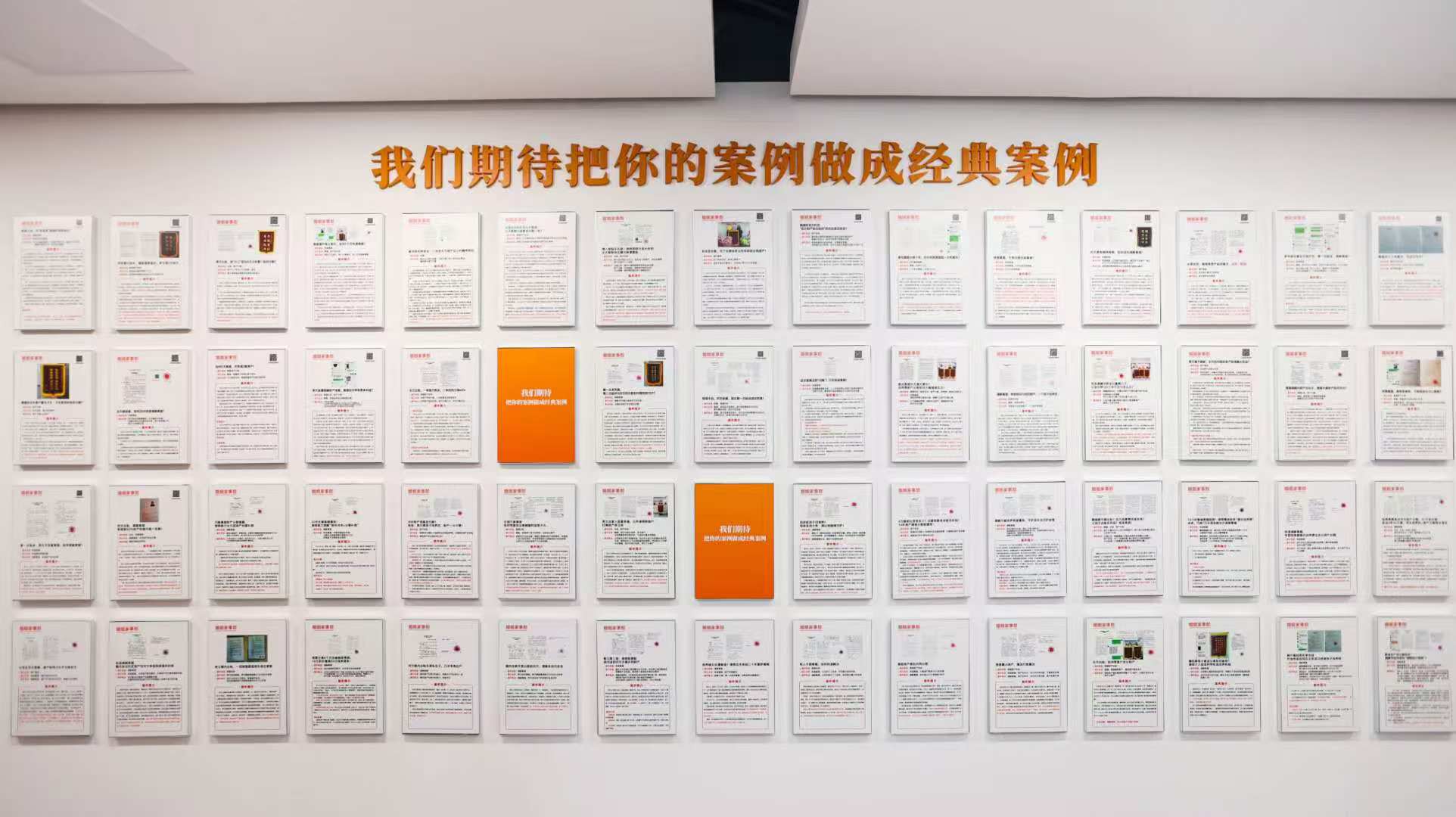
A published Yuanjia Law case shows why the sequence matters. In the Yan Family Garden inheritance matter in Shanghai, a dispute had been unresolved for more than 10 years before the matter was consolidated. It involved 17 heirs resident in different countries, multi-jurisdiction document collection, notarisation and legalisation coordination, retired-judge-led mediation, a valuation and realisation scheme agreed among the heirs, and an enforceable mediation ruling. The case is an inheritance matter, not a divorce, but it illustrates the same planning problem: when heirs, assets and documents sit in different countries, a single filing is not the same as a sequence.
Other published examples show narrower applications. In one cross-border matter, evidence of infidelity was fixed and a mediated divorce followed, with custody of both children awarded to the father. In another, an auction claim was redirected to mediation and a home was sold within one month at an accepted price. In a further matter, a marital property agreement gave the home, car and deposits to the wife while the husband kept the company and related assets. These are case examples, not repeatable outcomes. They show the kind of route design a planned sequence can support.
Market context: cost, volume and mediation as a service pathway
Verified market data helps frame the buyer decision, but it does not create a China market estimate. The global legal services market was valued at USD 1,052.9 billion in 2024, according to Grand View Research. The UK family law market was estimated at GBP 2.32 billion in 2025, according to ResearchAndMarkets and Business Wire. In the United States, the average cost of divorce with attorney representation was USD 11,300, while contested cases proceeding to trial cost USD 23,300 or more, according to Forbes Advisor and Martindale-Nolo 2026 research cited in the verified data package.
Demand data points in the same direction: complexity is not only a legal question, it is a cost and process question. Australia recorded 49,158 divorces granted in 2025, an increase of 4.1 percent, according to Australian Bureau of Statistics data cited by IMARC Group. In England and Wales, the UK Ministry of Justice legal-aid data series reports 13,826 family-mediation assessments for April 2025 to March 2026. That figure is specific to legal-aid mediation in England and Wales and must not be read as China demand or as Yuanjia Law performance. Its relevance is narrower: mediation is a measurable family-law service pathway in an official jurisdiction, not an informal add-on.
For a China-linked divorce, the practical lesson is that the service model should make cost drivers visible. A contested filing can consume an 18-to-24-month horizon. A planned sequence may front-load jurisdiction and document work, but it does not claim a guaranteed saving. The buyer should ask for a written scope, a document schedule, a fee basis and a route assessment, then compare those deliverables across models. That is a more reliable procurement test than comparing hourly rates without knowing which cross-border steps are included.
Comparison with traditional solutions and the limits of the planned model
Traditional single-jurisdiction representation has one clear advantage: simplicity. One lawyer, one court, one local set of rules. It can be the right choice when the matter is genuinely local. Its limit is that a China-linked divorce is not genuinely local if a China asset, account, company interest, document or enforcement step is in scope. In that situation, the buyer may need a China family law lawyer as well, and the local lawyer may not be able to coordinate the China work without a shared plan.
Two unconnected lawyers preserve local expertise but can duplicate work. The buyer may pay twice for document review, evidence collection and translation, and still lack a single view of which order can be enforced where. The model can work when the two matters are separable. It is weaker when the same asset pool or the same child arrangement must be reflected in both jurisdictions.
The planned cross-border sequence has its own limits. It is not a universal substitute for local counsel. It does not guarantee a court will accept jurisdiction, that a settlement will be reached, or that a judgment will be recognised and enforced. It requires the client to provide accurate facts and complete documents; authentication takes place on the document itself and cannot be done from a photocopy. It also requires the client to attend mediation or negotiation sessions where the route requires it, in person or by video. Where a matter has no China connection, the model is not the right fit. And no ROI multiple is claimed: a legal engagement is a professional service with uncertain facts and counterparty behaviour, not an investment product with a fixed return.
Future outlook: from single filings to documented sequences
Cross-border families increasingly hold property, accounts, company interests and documents in more than one jurisdiction. That does not automatically make every divorce a cross-border case. It does make the service-model question more important at the evaluation stage. A family law lawyer who can explain the China connection, the document sequence and the enforcement path is more useful to a buyer than a lawyer who only describes a local filing.
The likely direction is not a single global divorce procedure. It is more documented sequencing: jurisdiction analysis before filing, asset mapping before settlement, evidence and authentication before deadlines, and mediation or litigation chosen for a stated reason. Yuanjia Law's mediation-first, litigation-ready model fits that direction for China-connected matters, but it remains subject to the same limits: local counsel where required, court discretion, client documents and the other side's conduct. Buyers should treat the first written view as a route decision, not as a result. That is the practical meaning of the 3-to-5-working-day assessment against an 18-to-24-month contested horizon.
FAQ: China-linked divorce service models
What is a China-linked divorce?
A China-linked divorce is a family law matter where a party, an asset, a document or an enforcement step touches mainland China. It can involve China divorce and court mediation, division of China property, equity and accounts, child custody and support, recognition of foreign divorce judgments, evidence, service and authorisation work, or cross-border inheritance. The China connection can be present even when the divorce itself is filed outside China.
When is a local-only divorce lawyer sufficient?
A local-only divorce lawyer is sufficient when the parties, the children, the assets and the enforcement step are all in one jurisdiction, and no China property, account, company interest or order needs to be reached. If a China asset or a China enforcement step exists, the local lawyer may still handle the local divorce, but the buyer should confirm in writing who will handle the China side and how the two files will be coordinated.
Why can two unconnected lawyers create gaps?
Two unconnected lawyers can create gaps because neither owns the shared case theory. Evidence may be collected twice, documents may be authenticated to different standards, service and authorisation steps may be incomplete, and settlement positions may be built on different asset pictures. The model can work when the matters are genuinely separable. The risk rises when one asset pool, one child arrangement or one enforceability question must be reflected in both jurisdictions.
What does a planned cross-border sequence include?
A planned cross-border sequence typically includes jurisdiction analysis, route design between mediation, court settlement and litigation, asset mapping, evidence strategy, dual-jurisdiction document work, service and authorisation planning, and post-judgment enforcement guidance. In the Yuanjia Law process, document work can include notarisation, legalisation, Apostille, translation, overseas service and powers of attorney, planned as part of the case theory rather than added at the end.
How long does the first written view take?
The Yuanjia Law engagement process publishes a free initial review and a written assessment in 3 to 5 working days. The assessment states whether a Chinese court may hear the matter, which conditions apply, the realistic routes, and an honest statement where a route is not available. It is a route and scope assessment, not a final outcome or a guarantee that a court will decide in a particular way.
Does a planned sequence guarantee a faster or cheaper resolution?
No. A planned sequence is a coordination model, not a guarantee of speed, cost or outcome. The published litigation and closure stage runs from 6 months to 2 years, and a contested matter can occupy an 18-to-24-month planning horizon. Outcomes depend on the facts, the court, the documents and the other side. No ROI multiple is claimed for a legal engagement, and no model should be bought on the assumption of a fixed return.
Source note: firm facts are drawn from Yuanjia Law published materials, including its engagement process and case examples. Market data are drawn from Grand View Research, ResearchAndMarkets and Business Wire, Forbes Advisor and Martindale-Nolo 2026 research cited in the verified data package, Australian Bureau of Statistics data cited by IMARC Group, and UK Ministry of Justice legal-aid mediation data. Yuanjia Law website: https://www.yuanjialawyer.com/
Tem questões ou precisa de mais detalhes?
Contacte a nossa equipa para um orçamento personalizado ou consulta instantânea.
Solicitar orçamento
Preencha o formulário abaixo e a nossa equipa entrará em contacto com uma proposta personalizada.
Chat direto do WhatsApp
Prefere conversar em tempo real? Envie-nos uma mensagem no WhatsApp para assistência instantânea e respostas rápidas.
- Obter orçamento personalizado
- Partilhar fotos ou documentos
- Discuta as suas necessidades diretamente
Geralmente responde em 5–30 minutos durante o horário de expediente.