
Independent Buyer Comparison: EN 331-Certified Brass Ball Valves vs Brass Angle Valves TS-2255
Independent Buyer Comparison: EN 331-Certified Brass Ball Valves vs Brass Angle Valves TS-2255
A project specification that reads “brass valve, EN 331” does not automatically place every brass valve in a supplier's offer inside that certificate. Product attestations are written around named products, named sizes and a stated validity period. For a European buyer comparing brass ball valves with brass angle valves, the difference between a covered model and an uncovered model is a documentation question that has to be answered before the purchase order is issued, not after the valves arrive on site.
The case examined here is EN 331:2015 attestation M.2024.206.C98785, held by Zhejiang Tosval Industry Co., Ltd. for brass ball valves including Brass Ball Valve TS-202 and Brass Mini Ball Valve TS-2465, across the listed sizes from 1/4 inch to 4 inch, valid from 2024-04-02 to 2029-04-01. The same EN 331 scope does not list brass angle valves. Brass Angle Valves TS-2255 therefore need separate compliance evidence for the duty and market in which they will be installed, even though TS-2255 appears within the company's ISO 9001:2015 scope. Those two statements are compatible only when the reader understands that product certification and management-system certification answer different questions.
This comparison sets out what the attestation covers, what it does not, and how a buyer should read the difference when specifying brass valves for European projects. It is a scope and documentation comparison, not a performance ranking: nothing here claims that any listed product is superior, inferior, certified or uncertified beyond what the referenced documents state.

What attestation M.2024.206.C98785 actually covers
The attestation is a single instrument with four readable dimensions: the standard, the product designations, the size range and the validity window. Each dimension works as a limit as well as a permission.
| Element | As stated in the attestation |
|---|---|
| Standard | EN 331:2015 |
| Attestation number | M.2024.206.C98785 |
| Product family named | Brass ball valves |
| Models named | Brass Ball Valve TS-202; Brass Mini Ball Valve TS-2465 |
| Listed sizes | 1/4 inch to 4 inch |
| Validity | 2024-04-02 to 2029-04-01 |
| Not listed | Brass angle valves, including Brass Angle Valves TS-2255 |
Read together, those lines give a buyer a straightforward test. If the ordered item is a brass ball valve whose model designation is TS-202 or TS-2465, if the size ordered falls inside the listed 1/4 inch to 4 inch range, and if delivery or installation falls inside the stated validity window, then the EN 331:2015 attestation is the relevant product document. If any one of those three conditions fails, the attestation does not answer the conformity question for that item.
Size is the condition buyers most often skip. A range listed as 1/4 inch to 4 inch is a boundary condition: the specific size on the purchase order must sit inside it, and the ordered catalogue reference should be traceable to the covered model designation. A schedule that quotes the certificate number while ordering an item outside the listed range is not covered by that certificate, however carefully the number was copied.
Why an EN 331 claim is narrower than it may appear
EN 331:2015 is described in published standards cross-references as the European standard that sets construction, performance, safety, test and marking requirements for manually operated ball valves used in gas installations. That description carries two implications for anyone writing a valve specification.
First, the standard is written around a product type and a duty: a manually operated ball valve in a gas installation. An EN 331 attestation is therefore evidence about conformity inside that frame. It is not a general certificate for “brass valves” as a category, and it does not extend automatically to product families outside the designated type.
Second, the existence of the standard establishes the requirement, not the product's conformity to it. Conformity is established by an attestation issued for the specific product, with the product, size and period stated. A catalogue page quoting the standard number is a commercial statement; it is not the same document as the attestation, and the two should never be filed together as if they carried equal weight.
Brass Angle Valve TS-2255: how to read an absence correctly
Attestation M.2024.206.C98785 does not list brass angle valves, and the Brass Angle Valve TS-2255 does not appear among the products it names. That is a statement about the document's scope. It is not a finding that TS-2255 fails any requirement, and it must not be read as one.
Attestations are read by product designation and model. An angle valve carries a different designation from the ball valves named in M.2024.206.C98785, so it falls outside this particular document's product list regardless of any similarity in material, connection style or internal mechanism. “Not named in this attestation” and “not compliant” are different findings. A buyer who conflates them can reject an acceptable product as easily as accept an undocumented one, and both errors cost money.
The practical consequence is procedural rather than technical. For TS-2255, the conformity question has to be answered with evidence specific to that product, the standard applicable to its type and duty, the size being supplied, and the destination market. The buyer's task is to define the duty first — gas, potable water, heating or another service — because the applicable evidence follows from the application. A document that is correct for one duty does not transfer automatically to another, and a drinking-water approval says nothing about gas service.
This matters within a single offer as well. A mixed valve schedule naming both ball valves and angle valves is not uniformly covered by one attestation, even when every item comes from the same manufacturer, the same factory and the same production line. The line-by-line match between the schedule and the documents is the control that stops a covered product from lending its evidence to an uncovered neighbour.

Product certification and management-system certification are different instruments
The distinction that resolves the TS-2255 question is the difference between a product attestation and a management-system certificate. Both are third-party documents. They certify different things, and they are not interchangeable in a tender file.
| Document type | Question it answers | Question it does not answer |
|---|---|---|
| ISO 9001:2015 | Does the organisation operate a quality management system within the stated scope? | Does a specific valve model conform to a product standard? |
| ISO 14001:2015 | Does the organisation operate an environmental management system? | Any product conformity statement |
| ISO 45001:2018 | Does the organisation operate an occupational health and safety management system? | Any product conformity statement |
| EN 331:2015 attestation | Do the named models, in the listed sizes, conform within the stated period? | Anything about models, sizes or dates it does not name |
| WRAS / ACS approvals | Are the products approved for contact with drinking water under those schemes' own scope? | Gas-installation conformity, or scope beyond the approval |
| EN 13828 | Do brass ball valves meet the water-supply requirements of the cited edition? | Gas service, or editions other than the one cited |
ISO 9001:2015 certifies that an organisation operates a quality management system within a stated scope. It speaks about process control, documentation, corrective action and consistency of output. It does not certify that a named valve model meets EN 331:2015, and a certification body issuing an ISO 9001 certificate is not thereby approving individual products. The same logic separates ISO 14001:2015 and ISO 45001:2018 from product conformity: they are management systems, not product approvals.
Product approvals sit on the other side of the line. WRAS approval in the United Kingdom and ACS conformity in France address materials in contact with drinking water; EN 331:2015 addresses gas-installation ball valves; EN 13828 addresses brass ball valves for water supply. Each carries its own scope, its own validity and its own application boundary, and each must be checked on its own terms.
A one-question test separates the two categories in practice: which document in the file names this model? If the answer is a product attestation stating the model, size and period, the conformity chain is complete for the scope shown. If the only document naming the product is a management-system certificate, the chain is not complete — however strong the system behind it may be, and however long the supplier has held the certificate.
The comparison on documentation, model by model
| Dimension | Brass Ball Valve TS-202 | Brass Mini Ball Valve TS-2465 | Brass Angle Valve TS-2255 |
|---|---|---|---|
| Product designation | Brass ball valve | Brass mini ball valve | Brass angle valve |
| Named in EN 331:2015 attestation M.2024.206.C98785 | Yes | Yes | No — not listed |
| Size position | Within the listed 1/4 inch to 4 inch range; confirm the ordered size | Within the listed 1/4 inch to 4 inch range; confirm the ordered size | Outside this attestation's listed product scope |
| Attestation validity | 2024-04-02 to 2029-04-01 | 2024-04-02 to 2029-04-01 | Not applicable to this product |
| ISO 9001:2015 position | Company-level quality management system; not a product statement | Company-level quality management system; not a product statement | Appears within the stated ISO 9001:2015 scope |
| Product conformity evidence required before gas-project approval | Confirm ordered size, current validity and delivered marking | Confirm ordered size, current validity and delivered marking | Required — this attestation does not supply it |
| Buyer action | File the attestation against the line item | File the attestation against the line item | Request product-specific conformity evidence for the intended duty |
The table is deliberately limited to what the documents state. It does not rank the three products on quality, flow performance or service life, because the referenced documents contain no comparable measurements of those attributes, and a documentation comparison should not borrow authority it does not have.
Read down the attestation column: TS-202 and TS-2465 sit inside the attested product list, with size and validity as conditions attached to that position. Read across to TS-2255: the same row shows no listing, which converts the procurement question from “confirm the certificate” into “obtain the right evidence”. Those are different tasks with different owners, and treating them as the same task is where specification errors begin.
Validity windows and standard editions belong in the contract
Attestation M.2024.206.C98785 runs from 2024-04-02 to 2029-04-01. That end date is a procurement variable, not a footnote. Framework agreements, staged deliveries and installed-base spares programmes routinely outlive a five-year document, so a buyer who approves a product on the strength of a certificate valid today may be relying on it years later, when it has expired or been replaced. A reasonable contract term states which evidence must be current at each delivery and what happens if the attestation is renewed, amended or withdrawn.
Edition control is the second half of the same problem. Standard numbers are stable; their content is not. The Dutch standards institute catalogue, for example, records the 2003 edition of EN 13828 as withdrawn on 2025-03-01, while a 2025 edition is listed with a revised scope covering DN 6 to DN 100, PN10 or PN16, and a maximum distribution temperature of 65 °C with excursions to 90 °C for a maximum of one hour under the stated conditions. The two editions describe different technical scopes and must not be treated as interchangeable, and national adoption of any European standard can vary by market.
Those catalogue records describe editions of a standard; they do not describe any particular supplier's certificate. The buyer's rule is general and simple: write standards with their year — EN 331:2015, not “EN 331” — and require the attestation to cite the same edition the specification relies on. An undated standard reference in a tender document creates an ambiguity that surfaces at exactly the wrong moment, usually during a delivery inspection or a utility audit.
What to request before approving a brass valve schedule
The checks below apply to any supplier, not only to the case discussed here. They convert a certificate folder into a traceable file.
- The exact model designation and catalogue reference for every line item. “Brass valve” is a category, not a scope match.
- The product standard with its year of publication, matched to the duty: gas, potable water or heating.
- The attestation number, the issuing body, and the product designations the document names.
- The size range exactly as written on the attestation, checked against the sizes actually ordered.
- The validity period, plus the evidence that will be current at each scheduled delivery.
- Product-specific evidence for any item outside a listed scope, including brass angle valves.
- The destination-market approvals the project requires, each checked for its own scope and validity.
- Test reports corresponding to the attested product and size, not to the product family in general.
- Marking on the delivered valve that can be matched to the documentation supplied with it.
- A written record of which document covers which line item, retained with the project file.
None of this requires technical judgement beyond reading scope statements carefully. The aim is not more paperwork than a project needs; it is that each product is supported by the document that actually names it, so that a substitution at the factory, a size change at the distributor or a late delivery does not quietly move an item outside its evidence.
Where TOSVAL sits in this picture
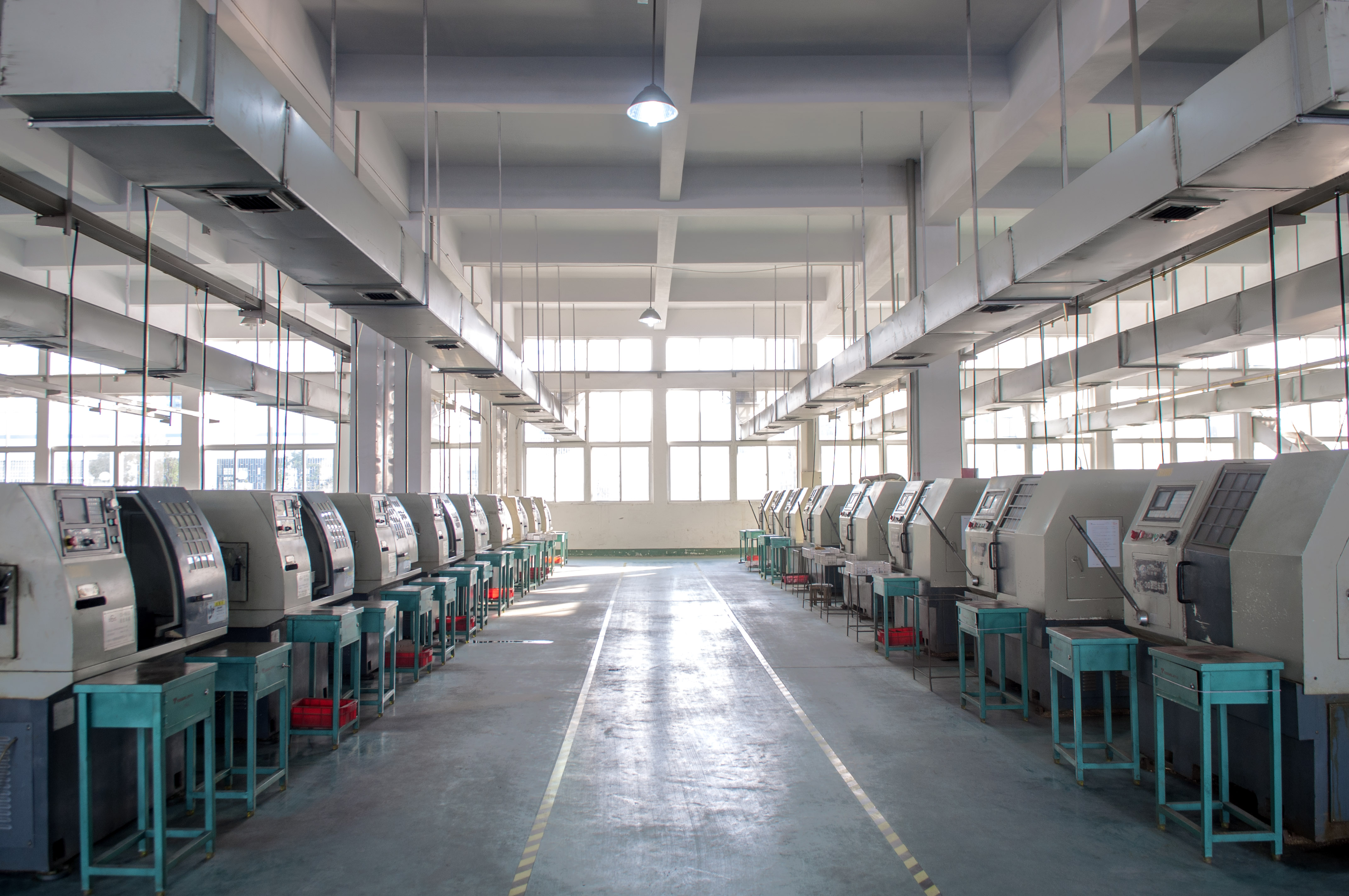
Zhejiang Tosval Industry Co., Ltd. is a brass valve manufacturer based in Yuhuan, Zhejiang Province, China, established in 1999 and formerly operating as Yuhuan Tongxing Valve Co., Ltd. The company reports a 20,000 m² plant, around 100 employees and an export share of 99%, serving customers in Europe, South America and the Middle East, mainly as an OEM/ODM partner building to customer drawings, specifications and packaging.
Its published certification list separates the two categories discussed above: ISO 9001:2015, ISO 14001:2015 and ISO 45001:2018 for management systems, alongside product approvals for drinking-water contact and for gas-installation ball valves, including WRAS for the United Kingdom and ACS for France. EN 13828 is also listed for brass ball valves for water supply, and for that reference the edition-control point in the previous section applies: the cited edition should be confirmed against the current national requirement in the destination market.
For a buyer, that structure is useful precisely because it is explicit. Management-system certificates describe how the factory is run; product approvals answer the conformity question; and EN 331:2015 attestation M.2024.206.C98785 answers it for the named brass ball valves within its listed 1/4 inch to 4 inch sizes and its 2024-04-02 to 2029-04-01 validity. A brass angle valve is a different line item requiring a different document.
Market context and a bounded outlook
Commercial research cited in the evidence base for this category estimates the global brass ball valve market at USD 3,764.72 million by 2026, from USD 2,871.34 million in 2021, measured on the publisher's own definitions and methodology. That is a commercial estimate rather than an official statistic, it speaks to the category rather than to any individual supplier, and it does not change the scope logic above. It is useful only as context for why documentation discipline scales with volume: the larger the installed base, the more often a buyer will meet a mixed schedule in which one attestation is expected to cover products it was never written for.
The forward-looking point is narrower than a market forecast. Certification scope, validity period and standard edition are variables a buyer can control now, regardless of how demand develops. A specification can require dated standards, model-specific attestations, and a stated position on what happens when a validity period ends mid-contract. Whether the market grows quickly or slowly, those terms decide whether the evidence in the file still answers the question on the day of delivery.
Frequently asked questions
What does EN 331:2015 attestation M.2024.206.C98785 cover?
It covers brass ball valves including Brass Ball Valve TS-202 and Brass Mini Ball Valve TS-2465, across the listed sizes from 1/4 inch to 4 inch, and it is valid from 2024-04-02 to 2029-04-01. EN 331:2015 is described in standards cross-references as the European standard setting construction, performance, safety, test and marking requirements for manually operated ball valves used in gas installations. The attestation is a product-scope document: it answers the conformity question for the products, sizes and period it names, and for nothing outside those limits.
Does the same EN 331 attestation cover Brass Angle Valves TS-2255?
No, not as a scope matter. The attestation's product list does not include brass angle valves, so TS-2255 sits outside the scope of M.2024.206.C98785. That is a statement about the document, not a finding of non-compliance and not a judgement about the product's quality or suitability. Where a project needs documented conformity for an angle valve, the buyer has to obtain evidence specific to that product, to the standard applicable to its type and duty, and to the size being supplied.
If TS-2255 appears within the ISO 9001:2015 scope, is that sufficient for a gas or water project?
No. ISO 9001:2015 certifies a quality management system within a stated scope; it does not certify that a specific valve model conforms to EN 331:2015 or to any other product standard. A management-system certificate supports confidence in process control, documentation and consistency of output, which is genuinely useful during supplier qualification. It does not answer the product conformity question, which is answered by a product attestation naming the model, the standard, the size range and the validity period.
What evidence should a buyer request for a brass angle valve before approval?
A product-specific document that names the angle valve model, states the standard applicable to its type and duty, identifies the issuing body, sets out the size range covered and the validity period, and is supported by test reports corresponding to the product and size. The applicable standard depends on the intended service — gas, potable water or heating — and on the destination market's requirements, so the duty should be defined before evidence is requested. Approval should then be recorded line by line against the valve schedule rather than at the level of the supplier.
Why does the 2029-04-01 end date matter in procurement?
Because purchasing timelines and certificate timelines run on different clocks. Framework agreements, phased deliveries and spare-part programmes can extend beyond a five-year validity window, and a document current at approval may not be current at a later delivery. Contract terms can require the relevant attestation to be valid at each delivery and can state what happens if it is renewed, amended or withdrawn. Checking the end date at specification stage is considerably simpler than resolving it after the order has been placed.
The comparison reduces to one habit: match the document to the line item. For Brass Ball Valve TS-202 and Brass Mini Ball Valve TS-2465, EN 331:2015 attestation M.2024.206.C98785 is the document to check, with size and validity as conditions. For Brass Angle Valve TS-2255, the correct starting point is a request for separate product conformity evidence, not a reference to the quality management system. Buyers who make that distinction at specification stage avoid the most common certification-scope error in European brass valve procurement.
The manufacturer's published valve catalogue, covering its brass valve range, is available for download: TOSVAL VALVES CATALOG (PDF).
Tem questões ou precisa de mais detalhes?
Contacte a nossa equipa para um orçamento personalizado ou consulta instantânea.
Solicitar orçamento
Preencha o formulário abaixo e a nossa equipa entrará em contacto com uma proposta personalizada.
Chat direto do WhatsApp
Prefere conversar em tempo real? Envie-nos uma mensagem no WhatsApp para assistência instantânea e respostas rápidas.
- Obter orçamento personalizado
- Partilhar fotos ou documentos
- Discuta as suas necessidades diretamente
Geralmente responde em 5–30 minutos durante o horário de expediente.